Crypto World
U.S. Investigates Deadly Strike on Wedding in Iran, Vance Says


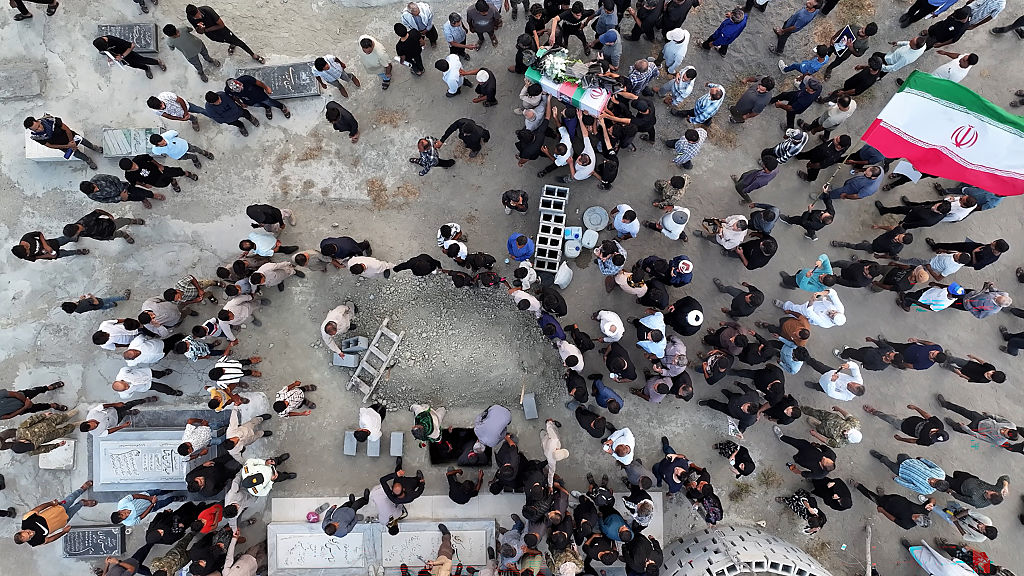
The U.S. is investigating a strike on a wedding in southern Iran, Vice President J.D. Vance said Thursday, as reports suggest American weapons killed at least five people and injured dozens of others.
“We’re investigating it because obviously we care,” Vance told reporters. “We want to know.”
The strike represents the U.S.’s latest controversial action in its war with Iran, raising questions about its conduct and civilian harm. Washington and Tehran have escalated their attacks this week, ending a lull in hostilities since July.
But Vance said he was “extremely skeptical” about reports coming from Iranian state media, arguing they have “not been a very good scribe about what’s happened in the conflict thus far.”
Iranian state media reported that a residential building in Kuhestak was attacked on Tuesday evening, where a wedding was being celebrated. Among the casualties was a 4-year-old kid. Reuters and the New York Times independently verified footage from the scene and found that a wedding was taking place when the building was struck.
Iran’s Ministry of Foreign Affairs said that it “will respond to these savage crimes with firmness”—and responded to a broader barrage of American attacks by launching missiles and drones at sites used by the U.S. in Middle East states. The Iranian Red Crescent Society, a humanitarian group, also urged a probe from the International Criminal Court to assess potential violations of international law.
The U.S. Central Command said Wednesday it was already looking into reports of the incident but argued that the “U.S. military never targets civilians, unlike the [Islamic Revolutionary Guard Corps],” referring to Iran’s armed forces branch.
Vance also defended U.S. military action, telling reporters: “If we do make mistakes, again, this is a big difference between us and Iran: when our military makes mistakes, they learn from them to try to get better from them.”
What we know about the strike
On the evening of Sept. 1, CENTCOM reported strikes on military targets, including “air defense sites, radar systems, maritime assets and facilities, mine laying capabilities, and communications sites.”
Iranian media later reported four deaths and at least 68 injured in Kuhestak, a coastal town on the Strait of Hormuz, where trade has been bottlenecked since the start of the U.S.-Iran war in late February. The strikes happened at around 9:30 p.m. local time, per the Red Crescent.
Analyses of footage from the incident conducted by Reuters and the New York Times reveal that wedding guests were gathered in a Kuhestak building. Amid the celebration, what was likely a U.S. munition hit the building and, as the Times put it, “brought down the roof.”
Experts told Reuters and the Times that weapon fragments seen in Iranian media were consistent with what Americans have used.
The attacks on Kuhestak also hit a communications tower roughly 100 m away from the building. A human rights group told the Associated Press that one of the four people initially reported killed—a 16-year-old—was struck by shrapnel near the tower rather than at the wedding. Iranian state television said Thursday that a 22-year-old woman had since died in hospital following the strike, bringing the reported death toll to five.
Axios reported that CENTCOM Commander Adm. Brad Cooper ordered an internal review of the strike.
Civilian casualties raise concern
The Red Crescent sent a letter to the International Criminal Court Wednesday calling for “an independent, impartial, thorough, and effective investigation,” citing the “civilian character” of the strike’s location.
The organization also argued that under the Rome Statute, intentionally directing attacks on civilians and knowingly launching a clearly excessive attack may constitute “war crimes.” However, both Iran and the U.S. are nonparties to the Rome Statute, so the ICC does not have automatic jurisdiction over them.
Still, “the laws of war state that civilians are protected from military attacks,” Melanie O’Brien, a professor of international law at the University of Western Australia, tells TIME. “A wedding is not a military objective, particularly in a civilian residential building. It is clear that there was a direct missile hit to the home. This would render the attack unlawful.”
It’s also not the U.S.’s first involvement in strikes that hit civilian structures without obvious military use and that endangered or killed civilians. On the first day of the war with Iran on Feb. 28, a U.S. Tomahawk missile hit a primary school in Minab—just 30 km (18 mi) away from Kuhestak—where more than 100 children were killed.
O’Brien, however, says she is skeptical about any result from the U.S.-led investigation of the wedding strike: “The U.S. track record is to only investigate when allegations gain significant public traction, and even when any convictions occur, the penalties are minor or pardons are given.”
You must be logged in to post a comment Login