
Crypto World
USDT Payments Feature in Polish Energy Giant’s Failed $230M Oil Deal

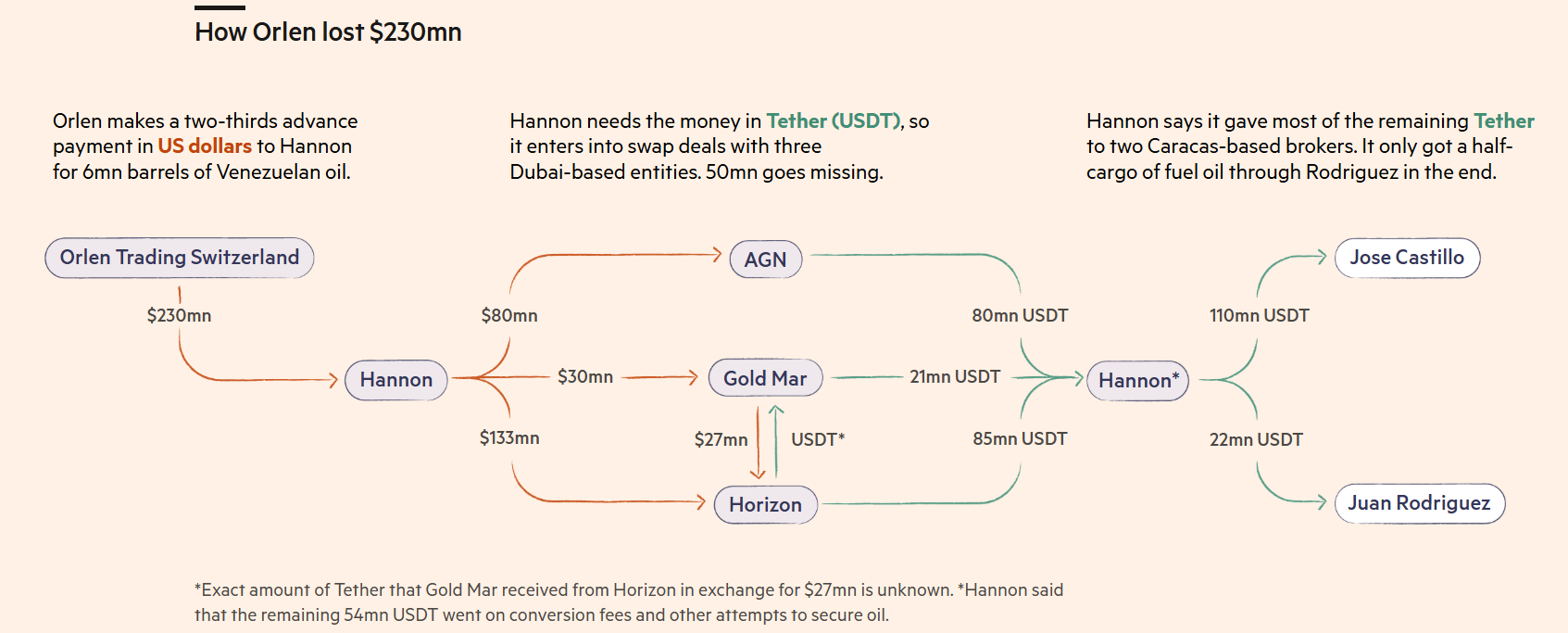
The world’s largest stablecoin by market cap, Tether’s USDt, was reportedly used in a failed Venezuelan oil trade that cost Poland’s largest energy giant $230 million in late 2023, according to the Financial Times.
That was after the Caracas-based state oil company, PDVSA, began demanding partial payments in USDT as a workaround to US financial sanctions.
The $230 million was an advance payment paid largely in Tether USDt (USDT) in an oil trade orchestrated by Samer Awad, a former executive at Orlen Trading Switzerland (OTS), a trading subsidiary of Poland’s state-controlled energy giant, Orlen, to acquire 6 million barrels of Venezuelan crude oil in November 2023 from state-owned PDVSA, the news outlet reported on Tuesday.
Orlen sent the $230 million advance payment to Hannon International Middle East, the Dubai-based seller, on Dec. 4, 2023. Hannon approached various crypto brokers and intermediaries to obtain the USDT necessary to buy the crude oil, but most funds disappeared into a maze of crypto transfers, while Orlen only received about $29 million worth of oil before eventually terminating the contract.
Cointelegraph has approached Tether and Orlen for comment on the matter.
“Hannon became involved in the transaction at Orlen’s request” and was not responsible for the “transaction’s failure,” David McCoy, managing partner at ADG Legal Abu Dhabi, the legal representative of Hannon, told Cointelegraph.
“Hannon has since taken significant steps, at its own expense, to recover the funds paid in connection with the transaction and remains open to a constructive dialogue with Orlen about resolving this matter amicably.”
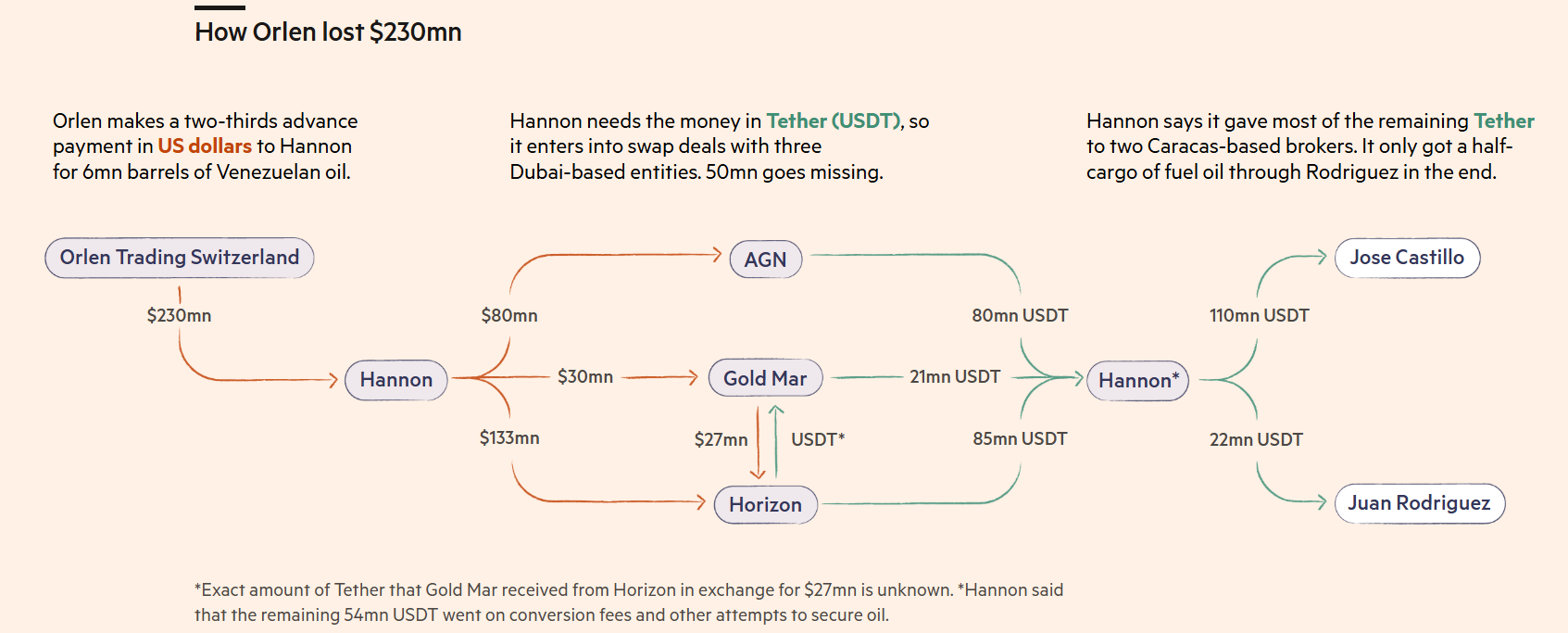
Payment flows that led to the $230 million loss. Source: Financial Times
Tracing missing $230 million through crypto intermediaries
After Orlen wired the $230 million in December 2023, Hannon reportedly obtained $80 million USDT, paying a $400,000 commission, from a Dubai-based financial services company he previously dealt with.
Hannon later sent Dubai-based Horizon Global $135 million, but claimed it only received $85 million in USDT, leaving a $50 million shortfall. Horizon has contested these claims.
Hannon also said it sent Dubai-incorporated Gold Mar International Trading $30 million, expecting a USDT conversion and onward payment for the oil to PDVSA. Hannon said it later recovered $21 million of the USDT from Gold Mar in February 2024.
In January 2024, Hannon employees reportedly gave a Caracas broker two USB sticks, containing $60 million and $50 million USDT, respectively. The next month, it gave access to $11 million in USDT to another Caracas broker.
Related: Fragmented regulations limit stablecoin adoption in international finance: WTO head
On March 8, Orlen’s ship was finally loaded with about 500,000 barrels of fuel oil, worth only about $28.8 million. The same day, another $11 million in USDT was allegedly handed to the broker. Orlen Trading Services finally terminated the contract with Hannon on March 28, 2024, after only receiving a fraction of the crude oil.
In January 2025, the Warsaw Regional Prosecutor’s Office announced an investigation into the oil contracts related to Orlen Trading Services, for damages of 1.5 billion Polish zloty ($378 million).
McCoy told Cointelegraph that Hannon “is not involved in the investigation in Poland and therefore cannot comment on it.”
In August 2026, three former managers at Orlen and Orlen Trading Services were reportedly indicted over crude oil contracts that caused $378 million in damages, according to Reuters. The managers, identified under Polish privacy laws by last initial, have all denied wrongdoing. The trio, Michal R., a former member of Orlen’s management board, Marcin O., a former member of OTS’ board, and Filip W, a former executive at Orlen and OTS, face up to 25 years in prison.
Magazine: Inside the ‘fake police raid’ that forced a $1M Bitcoin transfer



Hong Kong-based cryptocurrency exchange CoinEx said it will cease operations, citing the “increasingly difficult” conditions of running a crypto exchange.
CoinEx users have until Dec. 22 to withdraw their funds, when the exchange will formally close, nine years to the day after it went live, founder and CEO Haipo Yang wrote on X Tuesday.
“CoinEx did not become one of the industry’s leading exchanges and the security and compliance risks of running a crypto exchange have become increasingly difficult to contain,” Yang said.
He added that he did consider selling CoinEx, but did not feel that would be “the right way to end this journey. A clean ending is the right ending.”
ConEx’s 24-hour trading volume sits at just over $70 million, according to CoinGecko, some way short of leading Asia-based exchanges like CoinW ($1.18 billion) and Gate ($1.6 billion).
The closure reflects a trend of well-established exchanges struggling to maintain their place in the market as the industry matures and consolidates. Bitmart and BitMEX, which had been around since 2017 and 2014, respectively, both announced their closures in July, with indications that they were casualties of a decline in spot trading volume by retail users.


The US is seizing $61 million worth of cryptocurrency linked to a scheme that allegedly laundered funds through Binance to facilitate the black-market sale of Iranian oil.
A civil forfeiture complaint filed yesterday claims that the selling of Iranian crude oil has generated over $1.5 billion in illicit crypto proceeds and helps the country fund its nuclear program and military.
As such, the US wants to deprive Iran of these profits and weaken its power.
Two Chinese companies, Blessed Trust and Hexa Whale, were allegedly central to transferring and managing the funds in question.
They apparently used Binance to launder the proceeds and distribute them to Iran’s government and other linked proxies.
The civil forfeiture complaint doesn’t target Binance with any alleged wrongdoing.
Binance wasn’t happy with reporting on links to Iran
The alleged links between Iran and the two Chinese companies were revealed by the Wall Street Journal (WSJ), Fortune, and the New York Times in February this year.
In May, the WSJ reported that Iran-linked funds were continuing to move through Binance in 2026.
Read more: US sanctions firms behind Iran’s Strait of Hormuz BTC insurance scheme
The report also highlighted a major Iranian financier who used Binance to move $850 million worth of transactions in 2024 and 2025.
Binance has repeatedly called these reports inaccurate. It filed a lawsuit against the WSJ in the same month that the Department of Justice launched a probe into the transfers on the exchange.
These reports have led to US senators questioning whether Binance has lied before Congress, and whether it’s avoiding money laundering recommendations.
Got a tip? Send us an email securely via Protos Leaks. For more informed news and investigations, follow us on X, Bluesky, and Google News, or subscribe to our YouTube channel.


An attacker exploited a Gnosis Safe wallet on Ethereum, removing about 2,900 rsETH, worth roughly $7.8 million, on Tuesday.
An automated bot known as “yoink” front-ran the attack transaction and extracted the tokens, security firms BlockSec, Blockaid and SlowMist said.
The victim’s wallet was set up to let a helper contract move money for it, an ordinary arrangement for people who automate their trading. The helper was meant to verify that the caller had permission, but SlowMist and BlockSec found the check approved anyone who named the helper itself as the target.
The attacker then dumped around 2,900 rsETH into a trading pool built minutes earlier around a worthless token called Permissionless Attacker Token, leaving the wallet with a receipt worth nothing. Yoink’s bot paid roughly $47,000 to jump the queue and took the tokens, sending 2,882 rsETH to a separate address.
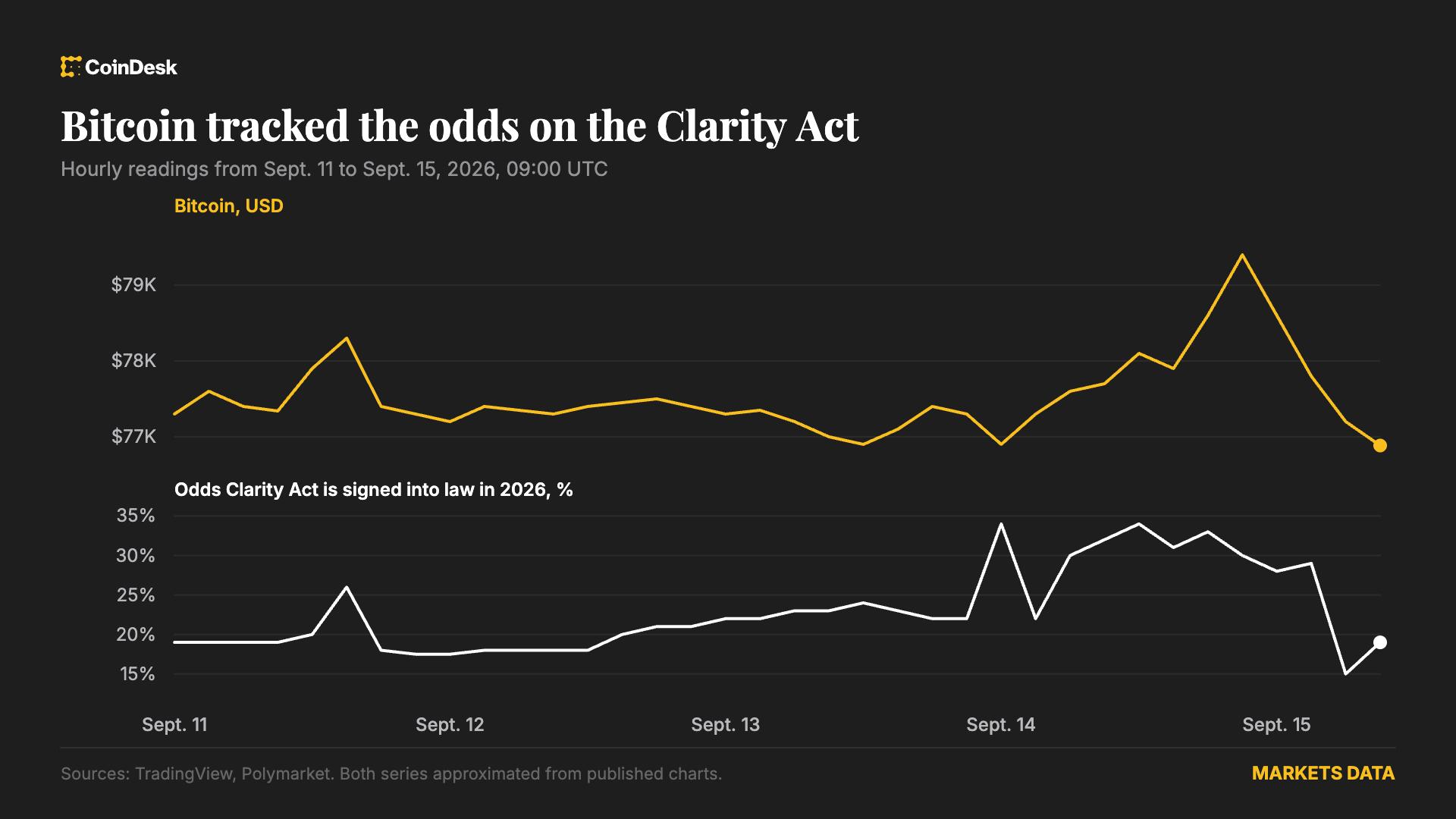
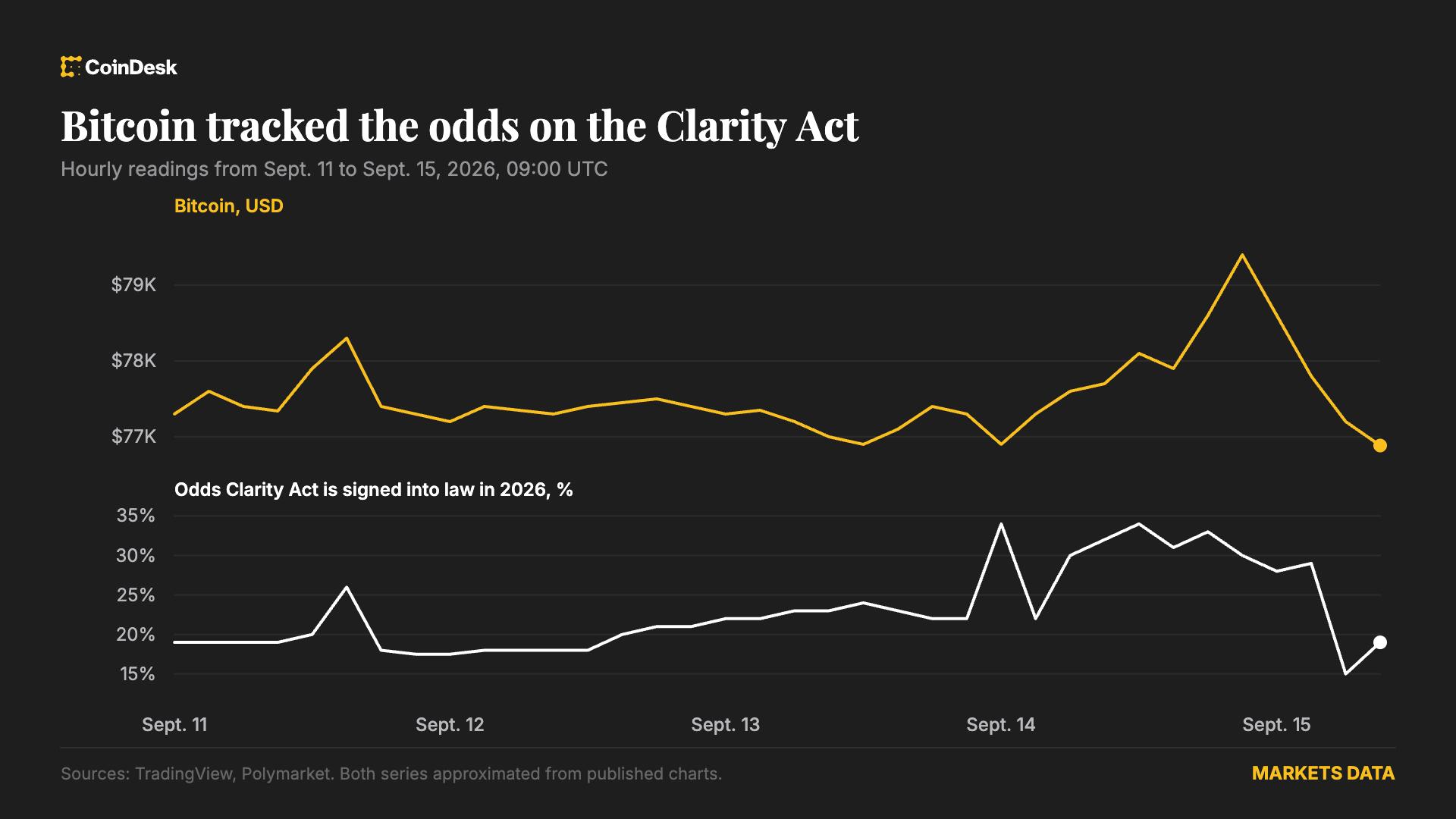
A rally that carried bitcoin to $79,427 on Monday unwound on Tuesday, leaving the largest cryptocurrency at $76,862, down 1.7% since midnight UTC and 6.6% below the month’s $82,284 high set on Sept. 4. Ether fell 1.6% to $2,474.76 and solana (SOL) lost 2% at $100.43.
Polymarket odds on the U.S. Clarity Act being signed into law this year followed a similar trajectory, reaching 34% on Monday before sliding back to 17%. The drop was caused by news that Democrats had crafted a counterproposal after rejecting a revised draft Republican negotiators circulated on Sunday. The sticking point is the ethics language governing officials’ crypto holdings rather than the market structure provisions themselves.
The Senate votes at 2:15 p.m. ET on whether to invoke cloture, or force a vote, on the bill. If the bill passes, that would move the industry closer to its first clear set of U.S. rules on who regulates what. A failure would likely shelve market structure legislation until after the midterm elections in November.
Selling pressure was near universal on Tuesday, with 92 of the CoinDesk 100 constituents lower on the day and the index itself down 1.6%.
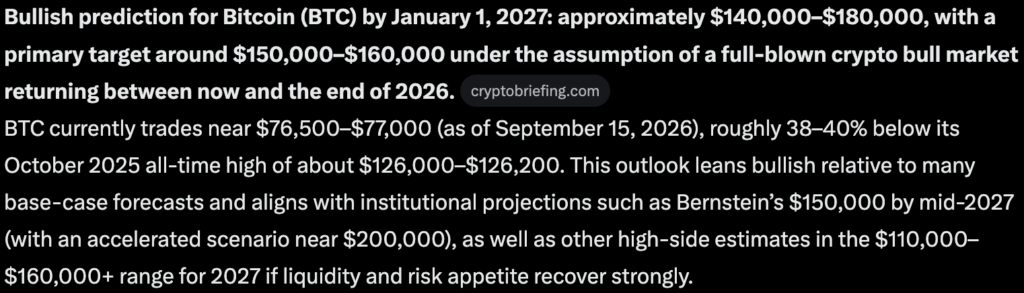
This week in Washington and one day of ETF flows explain why the calendar suddenly matters. Meta AI predicts the next three months will be unusually consequential, and it projects Bitcoin to range from $78,000 to $92,000 by the end of 2026, with $85,000 as the base case.
Today (September 15) is the first trigger. The Senate is expected to test whether the Clarity Act can clear the 60-vote threshold. The passage would remove a major U.S. policy overhang. That alone changes the risk calculus for allocators who have stayed on the sidelines.

ARMA is the bigger Bitcoin-specific catalyst. The House proposal would authorize Treasury purchases of up to 1 million BTC over five years.
It also requires a 20-year federal hold on those coins. Buying at that scale with a two-decade lockup would remove supply permanently, not temporarily.
Flows are already turning. U.S. spot Bitcoin ETFs pulled in $159.9M to start the week on September 14, a strong start as we move through the month.
The bear case paints a different picture. Renewed ETF outflows are the first pressure point.

Discover: Everyone’s Got a Take. Get Free $25 to Actually Trade Yours
Meta AI Predicts the Bitcoin Price: Three Months, Two Bills, And One Very Large Buyer
The weekly chart shows a cycle that has already peaked. Bitcoin topped near $126,000 in mid-2025 and has trended lower since.
Late 2025 broke the structure, taking the price from $120,000 toward $84,000. Early 2026 delivered the deepest leg down near $58,000.
Spring produced a recovery attempt to roughly $82,000. That failed by June, and the price returned to the low $60Ks.
Recent weeks have built a shallow base. Higher lows are forming, though without any strong upward push behind them.
The weekly close reads $63,078, down 2.74% and $1,780. The weekly range covered $62,470 to $65,333.
Support sits at $72,000, then $68,000 and $66,000, as the zone Meta AI flags. Resistance appears at $80,000, then $82,000 and $87,000.
RSI reads 39.06 with its signal line just above at 39.32. The two lines have converged almost exactly, separated by roughly a quarter point.
That reading sits well below the midline and is near oversold. Momentum is weak, though the flattening suggests the decline is losing force.
Meta AI predicts that the base case sits +35% above this level. September 15 is the first date that will tell you whether the market starts pricing it in.
DISCOVER: Your Market Calls Are Worth Something. Start with a free $25 on Kalshi
If Today (September 15) Is the Trigger, Kalshi Lets You Trade the Decision Before Bitcoin Reacts
Bitcoin holders are waiting for Washington to move first. Kalshi lets traders take a position on the event itself.
The platform lets users trade on real-world outcomes across politics, economic data, Fed decisions, crypto, and other market-moving events. That matters when the Bitcoin thesis is increasingly tied to specific dates rather than vague expectations.
If the market is watching whether legislation clears Congress, whether policy shifts, or whether another macro catalyst lands, Kalshi turns that uncertainty into a tradable probability. You are no longer forced to buy BTC and hope the eventual reaction matches your thesis. You can trade the outcome directly.
With today shaping up as one of Bitcoin’s most important near-term dates, that distinction matters. Eligible new users who sign up through CryptoNews can also receive $25 through our referral link.
Earn $50 and Enter $300K Prize Draw on EdgeX
The post Mark Zuckerberg Meta AI Predicts an Explosive End to 2026 for Bitcoin appeared first on Cryptonews.


In Trump AI news, the US President has argued for faster AI development with fewer guardrails, while several people involved in developing advanced systems have called for stronger safeguards. The contrast was visible in recent comments from the president, who described fears about AI safety as a hoax.
Trump made the remarks in social media posts reported by the BBC. They followed comments from Jack Clark, an Anthropic co-founder, who said a shutdown mechanism for dangerous AI that a third party can check may eventually need to become mandatory across the industry.
Trump AI News: President Compares AI Safety to Climate Change Warnings
Trump’s comments arrived amid warnings from executives and staff at leading AI firms about potential risks from the technology. The BBC reported that those concerns contributed to a selloff in shares of some technology companies, as investors weighed the possible effect of slower AI development.
In his posts, Trump compared the AI safety debate with his criticism of climate-change warnings and presented himself as a challenger of what he describes as hoaxes.
He also argued that AI needs a strong and smart president rather than additional guardrails. That is a political argument about how the United States should approach AI development, rather than evidence of a new binding policy.
Microsoft AI took a different approach on the same day by publishing an outline document for what it calls humanist AI. Its chief executive, Mustafa Suleyman, told CNBC the company had developed the guidance for months and published it amid the current debate over the technology. The move put another major company in a discussion about how advanced models should be developed and limited.
Earn $50 and Enter $300K Prize Draw on EdgeX
Trump AI Debate: Voluntary Guardrails, Not a Binding Regime
The evolving AI safety landscape is marked by varied company practices and calls for regulation rather than a unified enforcement framework.
Clark emphasized the need for an independent shutdown mechanism for dangerous AI systems, suggesting lawmakers may need to mandate such measures.
Dario Amodei of Anthropic advocates for slower AI development and monitoring while ensuring firms retain their competitive edge. Sam Altman of OpenAI and Elon Musk of xAI support similar industry-wide deceleration and independent oversight.
However, despite agreement on principles, no shared enforcement system exists. OpenAI’s safety practices highlight the difference between internal frameworks and external regulation, as they will not release models exceeding the Medium risk threshold without sufficient interventions.
Make Your Prediction Count With $25 For Free on Kalshi
What Would an AI Kill Switch Actually Require?
Clark’s proposal is more specific than a general call to turn off a system when concerns arise. He described a way of shutting off AI software completely if it becomes too dangerous, with the possibility of third-party checking. The independent element matters because an internal shutdown capability remains under the control of the company operating the model.
The reporting does not set out the technical design of existing shutdown mechanisms at individual labs, how they would be independently verified, or how a common requirement would be implemented. Clark’s view that lawmakers may need to enforce such a capability underscores that the evidence provides no industry-wide mandatory standard.
Independent monitoring is similarly a proposal rather than a single operating system shared across the industry. Lab leaders have endorsed the concept, but the available reporting does not identify one common mechanism that all frontier developers have adopted.
US Vs. China AI Wars: The Political Choice Now Facing AI Policy
Trump views AI as a competition in which rapid advancement is key to national advantage. In contrast, Chinese state media argue that U.S. concerns over China’s AI progress might skew its policy priorities. Experts like Xin Qiang of Fudan University suggest that U.S. officials fear that slowing down could allow China to catch up.
This situation highlights the tension surrounding voluntary limits on AI development. While stakeholders may agree on the need for safeguards, there’s concern that such constraints could benefit competitors that don’t adhere to the same regulations.
Current evidence points to a clash of incentives rather than a clear consensus. Trump has dismissed the need for stricter regulations, and while some leaders propose measures to slow development and increase monitoring, these remain voluntary and unverified.
The main policy question is whether voluntary measures will become enforceable rules, especially since safety measures could affect commercial interests and development speed.
Discover: The Best Token Presales
The post Is the President Blocking America’s Last Chance to Control Superintelligence? appeared first on Cryptonews.

The XRP Ledger’s Batch V1.1 amendment is one validator vote short of reaching the 80% threshold needed to begin its 14-day activation countdown, after a security rebuild that followed a critical flaw in the original version.
The revised code has gone through senior engineering review, adversarial testing, two external security reviews, and AI-assisted analysis before its current validator vote.
Batch V1.1 Reaches Final Vote Before Activation Countdown
RippleX developer Mayukha Vadari said the amendment shipped with xrpld 3.3.0 and is now up for voting. The update replaces Batch V1.0, whose signature-validation bug was found in February while the amendment was still pre-mainnet, meaning no funds were at risk.
The original flaw involved an early return in the checkBatchSign function. If a signer account did not yet exist on the ledger, validation could return success without checking the remaining signers. That could have allowed transactions to be executed on behalf of other accounts without their private keys.
Batch V1.1 removed that flaw and also addressed several other issues found during the rebuild. The process included review by four senior engineers, a Sherlock Batch Attackathon, a Halborn reassessment, a Common Prefix audit, Cantina AI scanning, and Devnet and testnet regression testing.
Vadari also said the team fixed additional bugs found through its newer AI red-teaming work. The changes include fixes for MPT validation bypasses, node crashes, path size validation, signature verification, signer ordering, and transaction hashing.
Validator sentiment is close to the required threshold, with one account, FrancisBovineSwift, describing the Batch voting as “nearly there,” with the most recent snapshot showing 27 trusted validators have voted for the amendment and eight against it, putting support at roughly 77% against the 80% threshold required to sign off on changes, with just one more vote needed to hit that mark.
Why the Batch Amendment Matters to XRPL Developers
Batch, also known as XLS-56, allows multiple transactions from different accounts to execute atomically in a single ledger close. If one transaction in an all-or-nothing batch fails, the entire operation reverts. The design does not require smart contracts.
The feature is intended for atomic swaps, coordinated settlements, and other transactions where multiple parties need to act together. It could also reduce the number of steps needed for NFT minting and transfers.
The security rebuild follows other recent XRPL scrutiny, after the network pulled its Permission Delegation amendment when a high-severity bug was found before mainnet deployment, with V1.1 undergoing additional review.
Furthermore, an XRPL testing dashboard launched this month has also made amendment testing more visible by tracking which transaction types, fields, and result codes have been exercised on Devnet.
The post XRP Ledger Batch V1.1 Nears Activation After Security Rebuild appeared first on CryptoPotato.
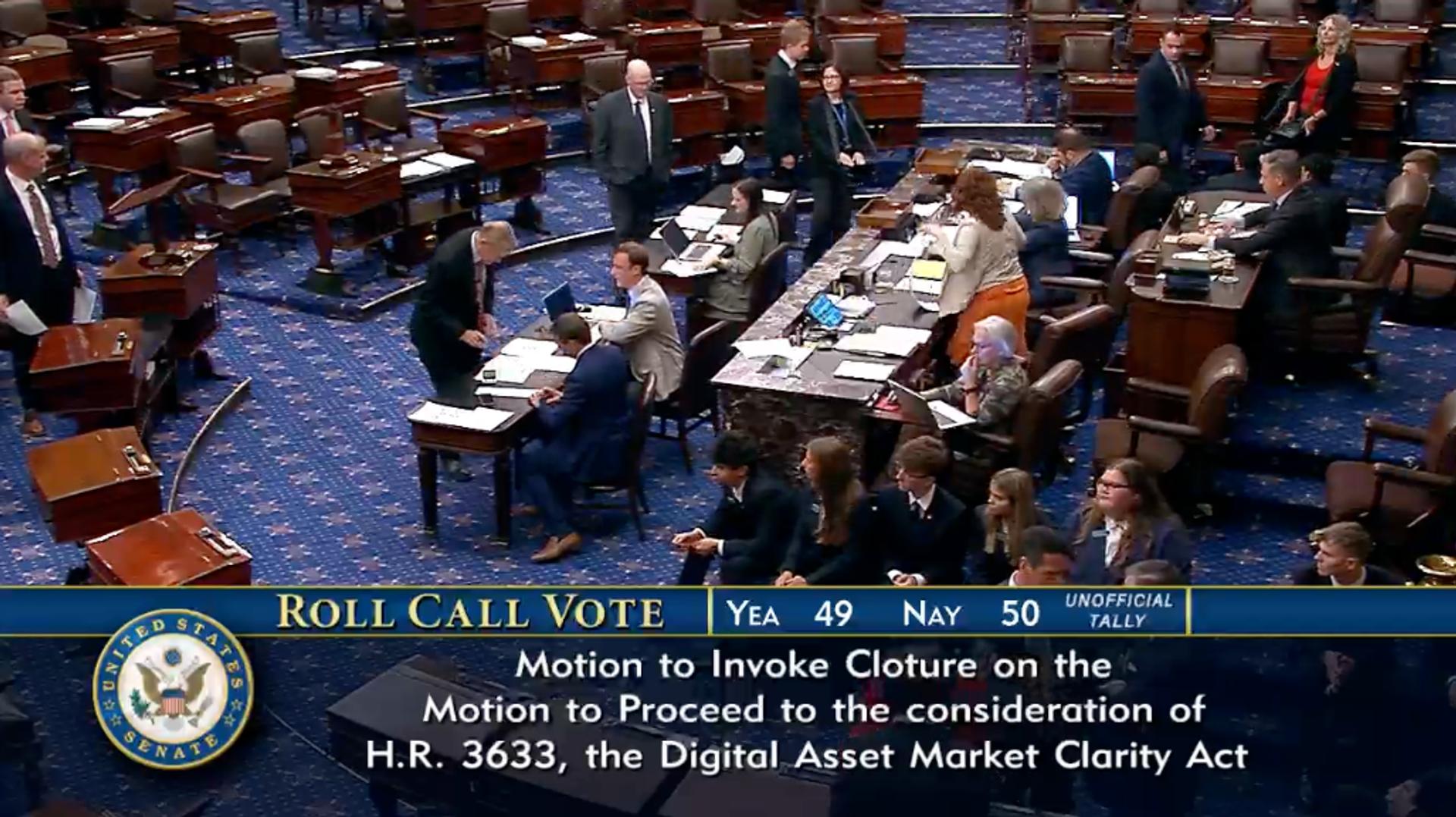
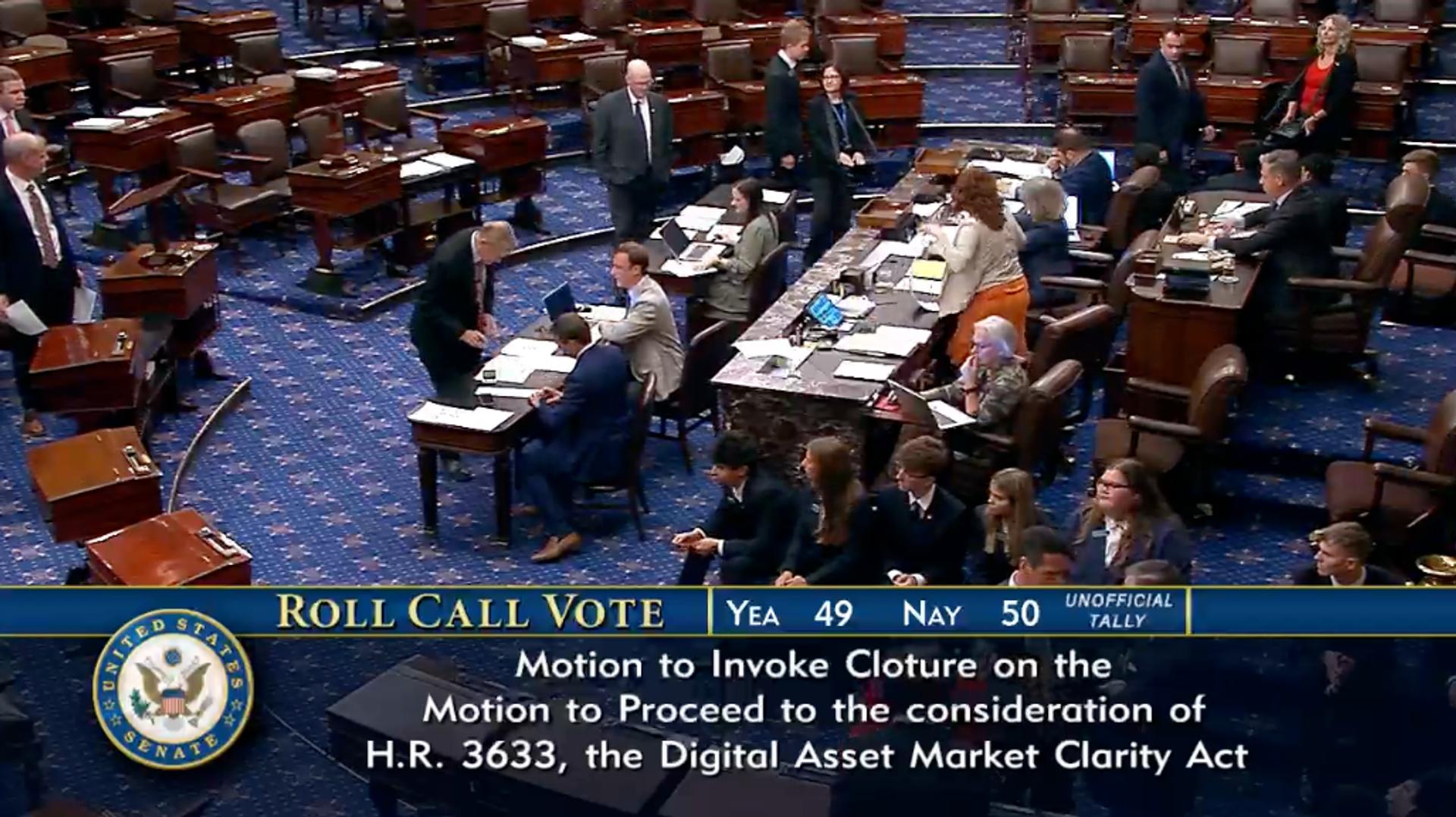
When the legislative talks picked up pace again, it was already late in the congressional session, with lobbyists and lawmakers well aware that the election was looming that would make it harder to secure bipartisan legislative work. All along, the ethics question stood as the center of debate and the aspect that needed to be ironed out if the rest were to proceed.
In that process, President Trump agreed to concessions twice, including a second batch of changes over the weekend. But judging from the sentiments from Gallego, one of the chief Democratic negotiators on this point, it wasn’t nearly enough.
“All President Trump wants is for the Senate to give him time to crime, and I won’t support any piece of legislation that enables him,” the Arizona senator said.
During the negotiations, Gallego and other Democrats had to turn their backs on Senator Elizabeth Warren, the senior Democrat on the Senate Banking Committee, who favored strong opposition to Clarity. She kept up that view, continually underlining the crypto ties between Trump and the crypto industry from which he earned more than a billion dollars during the first year of his second term.
“I believe we can get crypto legislation that both Republicans and Democrats can agree on. But not this bill,” she said on the Senate floor on Tuesday. “This bill will turbocharge Donald Trump’s unprecedented corruption.”
Researchers at the Bank for International Settlements found that estimates of Bitcoin onchain transfer values can vary by as much as sixfold depending on how transactions are measured.
The finding concerns onchain Bitcoin transfer values, rather than trading volume on crypto exchanges. The sixfold gap reflects differences between measurement methods, including how change outputs and other transfers back to the sender are treated.
The discrepancy stems largely from Bitcoin’s transaction structure. When users spend Bitcoin, unspent funds are often returned to the sender as change, which can be counted as another output even though it does not represent funds being transferred to another party.
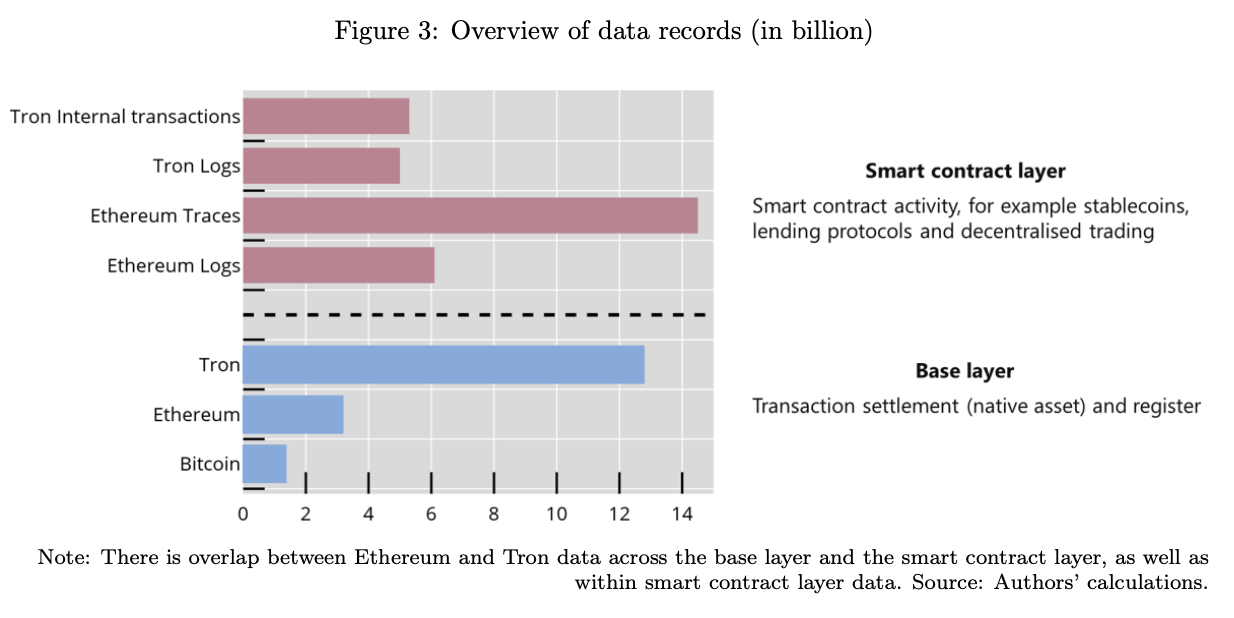
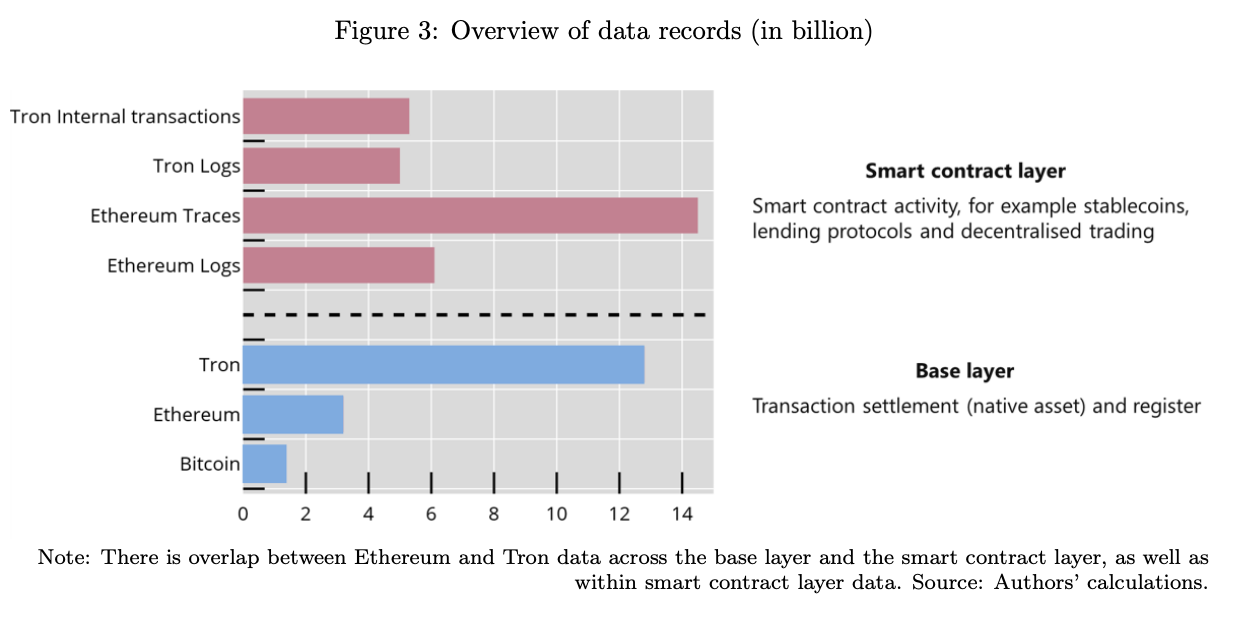
Breakdown of blockchain records analyzed in the BIS study. Source: BIS
“Metrics such as transaction volumes, market capitalisation and total value locked often suggest a degree of accuracy that is not supported by the nature of the underlying data,” the researchers wrote.
The measurement problem also extends to Bitcoin’s market capitalization. The researchers found that the conventional measure has at times been as much as four times higher than realized capitalization, which values each coin at the price when it last moved.
The study, based on 100 billion blockchain records across Bitcoin, Ethereum and Tron, found that similar measurement challenges extend across the broader crypto ecosystem.
Related: Stablecoins not credible for payments at scale, BIS chief says
Ethereum and stablecoins present additional challenges
Ethereum presented a separate measurement challenge because of the proliferation of smart contracts. Of roughly 67.5 million active contracts examined, about 54 million could not be categorized using the classifications in the study.
Interpreting stablecoin activity presents another challenge, as the same asset can serve different purposes across blockchains. USDT on Ethereum was more closely linked to DeFi activity, while USDT on Tron was associated more with payment-like and store-of-value purposes.
The differences were particularly stark in smart contract holdings. The share of USDT held by smart contracts on Ethereum exceeded 20% in 2022, compared with around 1% on Tron. Because of the different use cases, the researchers said aggregating USDT activity across blockchains can conflate different types of economic activity and obscure how stablecoins are actually being used.
The BIS researchers concluded that onchain indicators should be treated as “noisy approximations rather than direct measures of economic activity.”
Visa filters stablecoin data to reflect economic activity
Some analytics providers already distinguish between raw blockchain activity and adjusted measures intended to better represent economic activity.
Visa’s Onchain Analytics dashboard, powered by data from Allium Labs, displays both total and adjusted stablecoin transaction volumes. Visa says its adjusted methodology aims to remove potential distortions from activity including high-frequency trading, bots, bridge routing and internal exchange operations.
The dashboard currently shows $6.4 trillion in total stablecoin transaction volume across the networks it tracks over the past 30 days, compared with $313.1 billion in adjusted volume.
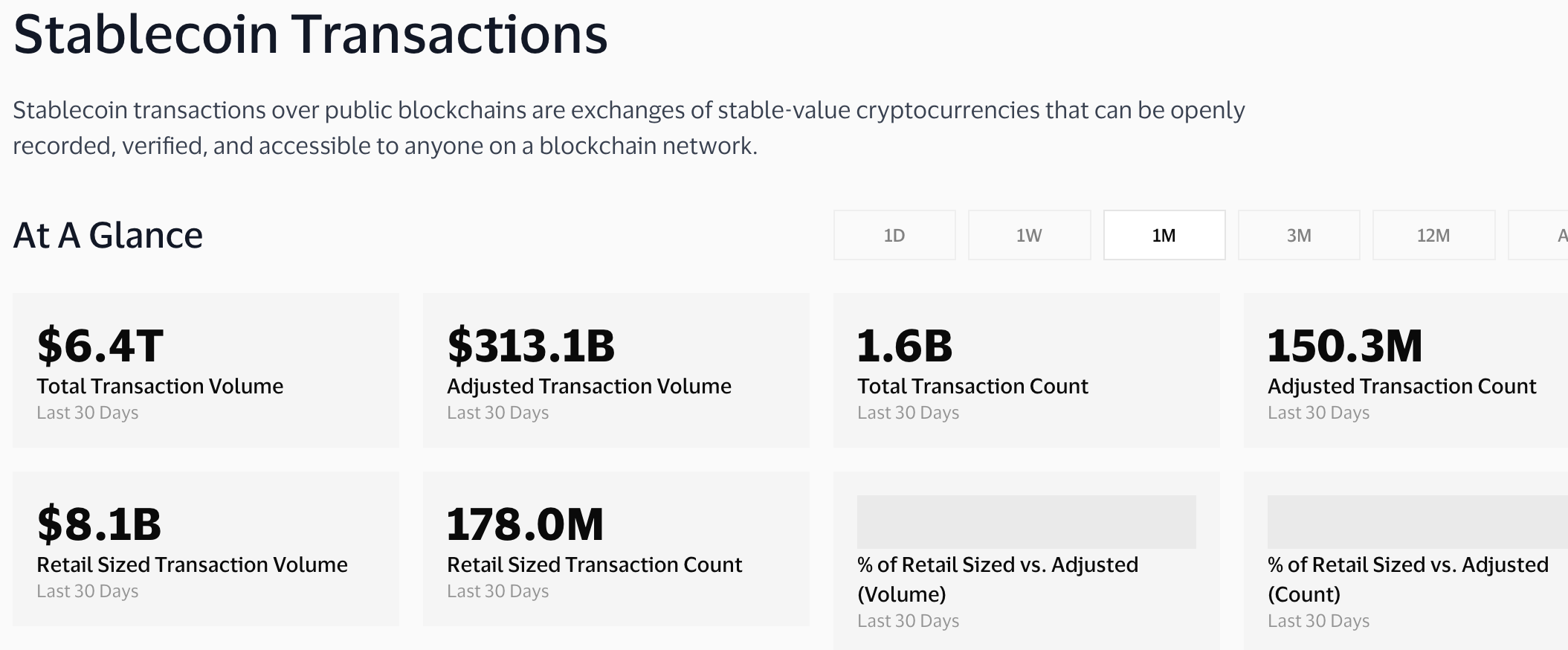
Stablecoin transaction volumes. Source: Visa Onchain Analytics

New research from the Bank for International Settlements (BIS) suggests many of the headline metrics used to describe crypto activity—especially onchain “transfer” values—can be misleading depending on how the underlying blockchain data is counted. The BIS team reports that estimates of Bitcoin transfer values can differ by as much as six times when measurement methods change, driven largely by how transaction outputs are interpreted.
The study also highlights broader problems across the crypto ecosystem, extending beyond Bitcoin to Ethereum and stablecoins. BIS researchers warn that onchain indicators should often be treated as “noisy approximations rather than direct measures of economic activity,” rather than precision readouts of real-world flows.
Key takeaways
- Bitcoin onchain transfer values can swing by up to 6x based on how outputs—such as change back to the sender—are counted.
- Common market-cap style measures may overstate realized value; BIS finds conventional capitalization has at times been up to 4x higher.
- Ethereum’s smart-contract environment complicates classification, with tens of millions of active contracts that BIS could not categorize using the study’s framework.
- Stablecoin activity varies by chain and purpose, so aggregating across networks can blur how USDT is actually used.
- Some analytics providers already adjust raw volumes to remove distortions tied to behaviors like internal exchange routing or bot-driven activity.
Why “transfer value” can mean very different things
In the BIS working paper, the researchers focus on a measurement gap: when analysts try to estimate how much Bitcoin is being transferred onchain, the result depends heavily on the rules used to parse transactions. BIS’s key point is not that onchain data is absent, but that the same data can produce drastically different “economic activity” estimates.
The sixfold discrepancy reported by BIS is tied to differences in transaction measurement methods. One major driver is Bitcoin’s transaction structure. When a user spends Bitcoin, the transaction often includes unspent funds returned to the sender as a “change” output. Depending on the methodology, that change can be counted as an additional output—despite not representing value sent to another party.
BIS argues that this kind of counting convention can create the appearance of greater transfers than what actually reflects third-party movement. The researchers underline that metrics frequently presented as straightforward—such as transaction volumes, market capitalization, and total value locked—may carry more certainty than the structure of the underlying data actually supports.
Bitcoin market capitalization: a similar measurement mismatch
The BIS paper extends the measurement theme beyond transfer values to capitalization. The researchers report that a conventional market-cap approach has, at times, been as much as four times higher than realized capitalization.
According to BIS, realized capitalization values each coin at the price at the time it last moved. That distinction matters because it ties the valuation method to activity timestamps, rather than assuming a single uniform pricing snapshot. The implication for investors and market observers is that onchain-linked metrics can diverge from how value is actually being reflected in usage—especially when measurement assumptions are treated as neutral.
Cross-chain complications: Ethereum classification and stablecoin aggregation
While Bitcoin’s transaction design creates ambiguity around change outputs, Ethereum presents a different kind of complexity: smart contracts. BIS examined roughly 67.5 million active contracts and found that about 54 million could not be categorized using the classifications used in the study.
This matters because any attempt to interpret stablecoin flows or onchain transfers often depends on understanding whether activity belongs to known contract patterns—such as decentralized finance interactions, custody, payment services, or other use cases. When classification fails at scale, the risk increases that analytics will treat diverse behaviors as if they were homogeneous.
Stablecoins add another layer. The BIS researchers note that the same asset can serve different functions across networks. In their observations, USDT on Ethereum was more closely tied to DeFi activity, while USDT on Tron showed stronger association with payment-like and store-of-value purposes. BIS further highlights that the split is visible in smart contract holdings: in 2022, the share of USDT held by smart contracts on Ethereum exceeded 20%, compared with around 1% on Tron.
The practical takeaway is that aggregating stablecoin activity across chains can conflate distinct economic behaviors. BIS frames the resulting indicators as approximations that may obscure how stablecoins are being used in practice.
Overall, BIS’s conclusion is that onchain indicators should be approached as noisy estimates rather than direct measurements of economic activity—particularly when the indicators are presented as if they map cleanly to real-world transfers.
Adjusted analytics: how some dashboards try to correct distortions
Not all analytics treat raw blockchain activity as a final truth. Some providers attempt to separate “raw” transaction counts from adjusted volumes designed to better represent underlying economic activity.
Visa’s Onchain Analytics dashboard—powered by data from Allium Labs—shows both total and adjusted stablecoin transaction volumes. The dashboard’s adjusted methodology is intended to remove distortions from activity that may not reflect broad economic transfer, including high-frequency trading, bots, bridge routing, and internal exchange operations.
On the dashboard, Visa reports $6.4 trillion in total stablecoin transaction volume across the networks it tracks over the past 30 days, versus $313.1 billion in adjusted volume. The size of that gap illustrates the central theme of the BIS study: depending on counting rules and filtering approaches, “activity” can look dramatically larger or smaller.
Importantly, this does not automatically validate any specific methodology as “correct.” Instead, it reinforces BIS’s broader warning: without careful definitions and adjustments, common onchain metrics can overstate what the data actually means for economic interpretation.
For readers tracking crypto adoption using onchain indicators, the key next step is to pay closer attention to methodology—especially whether metrics account for change outputs, smart-contract classification limits, chain-specific usage patterns, and filtering for bot-driven or internal operations. BIS’s findings suggest that as dashboards and analytics products mature, the real differentiator will be how transparently they define what they measure and how their measurement choices shape the numbers.
Mum tells missing daughter she’s ‘not in any trouble’ as search continues for 13-year-old

Foreign Secretary Ed Miliband on Gaza and his mother

Hong Kong crypto exchange CoinEx to cease operations after 9 years in business



-

 Fashion4 days ago
Weekend Open Thread – Corporette.com
-

 Business6 days ago
Micron Stock Climbs Above $1,031 as AI Memory Crunch and a $50 Billion Outlook Fuel the Rally
-

 Tech2 days ago
The Latest Weird Thing to Play Doom Is the Mapped-Out Brain of a Fruit Fly
-

 Business6 days ago
AMD Stock Climbs After Management Lifts 2027 Data Center Outlook Toward $70 Billion in AI Sales
-

 Crypto World7 days ago
Bitcoin price risks $76K drop as $78K support weakens
-

 Crypto World5 days ago
XAG/USD: Silver’s Short-Term Rally Meets Its Moment of Truth
-

 Crypto World5 days ago
2 Chip Stocks Broke Out This Week. Neither Was Nvidia
-

 Crypto World7 days ago
Ethereum price stalls below $2,500 as ADX drops to 11
-

 Business5 days ago
10 Most-Streamed Songs On Spotify In 2026 So Far, Led By Ella Langley’s Dominant Run On The Charts This Year
-

 Tech5 days ago
Battery life is the only iPhone 18 Pro and iPhone Duo upgrade I care about. Apple didn’t disappoint
-

 Crypto World6 days ago
Pi Network ships Protocol 27 on a network with 14 million users and zero DeFi
-

 Crypto World5 days ago
OKX launches 10x OpenAI, Anthropic X-Perps in Europe
-

 Crypto World5 days ago
Diesel Tops $6 a Gallon for the First Time as 28 States Set Records
-

 Tech6 days ago
Apple Watch Ultra 4 vs Watch Ultra 3: Should you really spend another $799?
-

 News Videos4 days ago
Facing Financial Fears
-
 Tech7 days ago
Modders have already found two ways to make DLSS 5 playable, and neither one is Nvidia’s
-

 Crypto World6 days ago
Bitcoin price risks $70K if $78K neckline breaks
-
 Crypto World7 days ago
Bitcoin price holds near $79K as cycle drawdowns narrow
-

 NewsBeat7 days ago
What went right this week: an ‘historic’ fall in violent crime, plus more
-

 Entertainment6 days ago
Case Sees Major Update As Jury Deliberations Begin
You must be logged in to post a comment Login