

Crypto World
VanEck’s Sigel rejects MARA BTC buy claims amid AI expansion

VanEck’s Matthew Sigel has disputed claims that MARA Holdings purchased 1,000 Bitcoin, saying the transaction likely involved returned collateral from a BTC-backed loan rather than a new market acquisition.
Summary
- VanEck’s Matthew Sigel said MARA did not purchase 1,000 BTC, calling the transfer a returned loan collateral.
- MARA remains focused on AI and data center expansion rather than Bitcoin accumulation.
- Nvidia and other miners are increasing investments in AI infrastructure and HPC services.
According to a June 16 X post by VanEck Head of Digital Assets Research Matthew Sigel, the recent speculation surrounding Bitcoin mining firm MARA having purchased an additional 1,000 BTC is incorrect.
Sigel made the comment in response to on-chain analytics platform Lookonchain, which had highlighted a 1,000 BTC transfer involving FalconX and suggested it appeared to be a purchase by the miner.
Lookonchain noted that the transaction followed MARA’s first-quarter sale of 20,880 BTC for roughly $1.5 billion at an average price of $70,137 per coin.
As crypto.news previously reported, that sale came as the company increasingly directed attention toward artificial intelligence and high-performance computing infrastructure.
Providing additional context, Sigel said the transferred coins were returned-lent assets rather than Bitcoin acquired on the open market.
“MARA will be monetizing its DC portfolio: Starwood in the US, Exaion in the EU. Bitcoin accumulation is the last thing on their mind.”
Historical wallet activity also appears to support that interpretation. MARA has typically moved Bitcoin purchases into newly created wallets, while the latest transaction did not follow that pattern. Based on that behavior, market participants suggested the company may have closed a BTC-backed loan and received collateral back instead of adding to its treasury through direct purchases.
MARA continues prioritizing AI infrastructure
Attention has increasingly turned to MARA’s infrastructure strategy as the company expands beyond traditional Bitcoin mining operations.
Commenting on the latest speculation, market analyst Matt Allen said the company is no longer accumulating Bitcoin in the manner many investors assume. Allen stated that MARA is focused on developing its AI data center business, reinforcing a direction that has become more visible throughout the year.
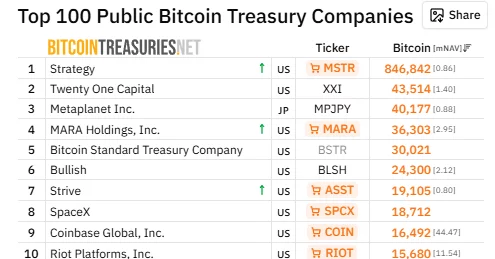
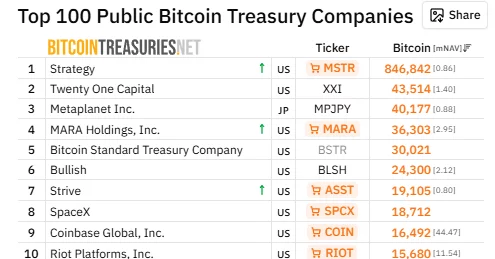
Earlier this year, MARA announced its $1.5 billion acquisition of Long Bridge, a transaction that significantly expanded the company’s AI and data center footprint. Even with that strategic repositioning, the miner remains one of the largest corporate Bitcoin holders. Data from Bitcoin Treasuries shows MARA holds more than 36,000 BTC, placing it behind only Strategy, Twenty One Capital, and Metaplanet among public Bitcoin treasury firms.
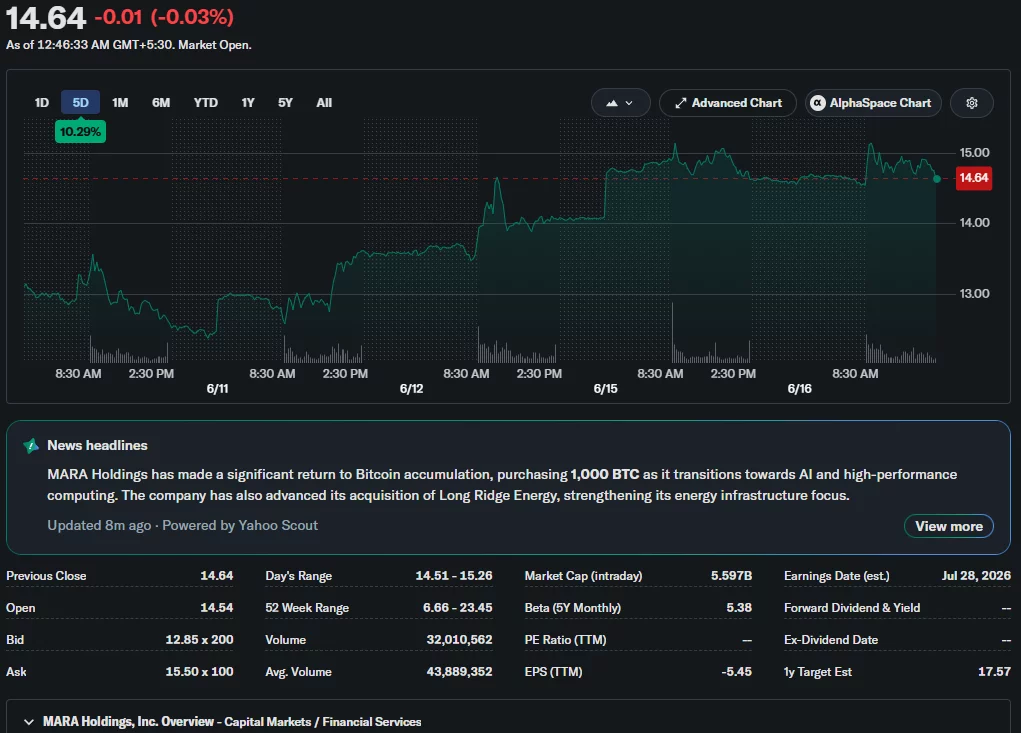
Investor enthusiasm around that strategy has helped support the stock. According to data from Yahoo Finance, MARA shares have gained more than 63% year-to-date and have risen over 10% during the last five trading sessions.
Bitcoin miners increasingly pursue AI revenue
MARA’s approach comes as a growing number of mining companies seek opportunities in AI infrastructure and high-performance computing.
Recent industry developments suggest that access to power and data center capacity is becoming as valuable as cryptocurrency production itself. As reported by crypto.news, IREN recently completed its acquisition of Spain-based Nostrum Group, adding around 490 megawatts of secured grid-connected power and establishing its first operating base in Europe for AI cloud services.
At the same time, capital continues flowing into AI infrastructure. Nvidia is preparing a bond offering worth at least $20 billion to finance AI-related investments and refinance existing debt.
The chipmaker plans to issue notes across seven maturities ranging from two to 30 years, underscoring the scale of spending taking place across the sector.
Against that backdrop, companies including HIVE Digital, TeraWulf, Hut 8, and CleanSpark have increasingly promoted AI and high-performance computing services alongside mining. By repurposing facilities originally built for Bitcoin operations, these firms are pursuing revenue streams that are less dependent on cryptocurrency market conditions while making use of existing power agreements and data center assets.

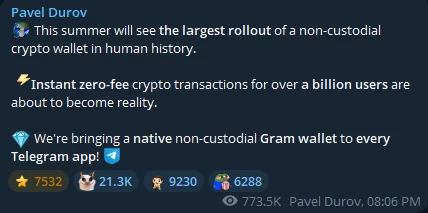
Telegram has announced plans to introduce a native, non-custodial Gram wallet to more than 1 billion monthly users this summer, enabling instant cryptocurrency transfers without fees.
Summary
- Telegram plans to launch a fee-free, non-custodial Gram wallet for over 1 billion users.
- Pavel Durov called it the largest self-custody wallet rollout ever attempted.
- The wallet deepens Telegram’s TON integration following Toncoin’s rebrand to Gram.
Pavel Durov, writing on Telegram on Wednesday, described the planned integration as the “largest rollout of a non-custodial crypto wallet in human history.” The Telegram founder did not provide a fixed release date, list supported assets, or explain how the app would cover network costs while offering fee-free transfers.
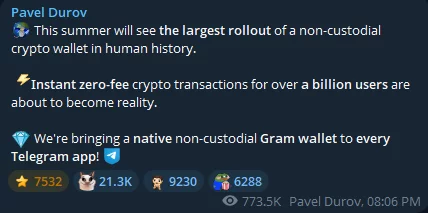
Unlike a custodial service, the proposed wallet would let users control their crypto rather than leaving their assets with Telegram or another company. Durov’s announcement places the feature directly inside the messaging app, removing the need for users to download a separate wallet before sending funds to their contacts.
Telegram reported more than 1 billion monthly active users in 2025, giving the Gram wallet access to an audience few standalone crypto products can match. While Durov did not publish an adoption target, the company’s user count means even a small uptake could introduce millions of people to self-custody and peer-to-peer crypto transfers.
Exact launch conditions remain unclear because Telegram has not explained whether the wallet will become available worldwide at once or arrive through a phased release. The company has also not disclosed its recovery system, security safeguards, regional restrictions, or whether users will need to complete identity checks for certain services.
Gram wallet places distribution at the center of TON adoption
Telegram’s announcement follows The Open Network’s decision to rename its native Toncoin token as Gram, restoring the name used in Telegram’s original 2018 blockchain white paper. Durov presented the change as a return to the project’s early identity, while TON has stated that the blockchain itself will retain The Open Network name.
According to reporting from crypto.news, the token transition was scheduled to take about three weeks and did not require holders to swap their existing coins. The publication reported that Gram climbed as much as 19% after Durov disclosed the change, reaching $2.21 as traders reacted to Telegram’s renewed involvement.
Gram’s return carries regulatory history because Telegram previously used the name for the token attached to its first blockchain project. After Telegram raised $1.7 billion from investors, the US Securities and Exchange Commission sued the company in 2019 and alleged that its planned token distribution involved unregistered securities.
Under a 2020 settlement cited by the SEC, Telegram agreed to return more than $1.2 billion to investors and pay an $18.5 million civil penalty. Telegram then withdrew from the project, while independent developers continued the open-source code that eventually became the present TON network.
Since leaving the original project, Telegram has gradually brought TON-based services into its app. The Financial Times reported that Telegram advertising can be purchased with the network’s token, while creators can receive crypto payments and developers can build games, stores, and other services tied to TON.
Durov has also promoted investment in the network. He reported in 2025 that venture capital firms had invested more than $400 million in Toncoin, naming groups including Sequoia Capital, Benchmark, Ribbit Capital, Draper Associates, and Vy Capital.
TON is extending wallet control to automated Telegram services
TON’s payment plans have expanded beyond person-to-person transfers through an Agentic Wallets standard introduced by TON Tech on April 28. As crypto.news reported in May, the system allows AI agents operating through Telegram bots to control user-funded wallets and carry out limited financial actions.
TON Tech described the products as “self-custody wallets designed for autonomous AI agents on TON.” Under its documentation, a user funds an agent’s separate on-chain wallet and grants permission to perform selected tasks, including transfers, token swaps, and interactions with decentralized finance applications.
Control remains tied to the user’s main wallet, according to TON Tech, which allows the owner to set a spending budget, withdraw the remaining balance, or cancel the agent’s access. The infrastructure team said no intermediary holds the funds and existing TON wallets do not require an upgrade because the design uses a standard smart-contract structure.
Agentic Wallets and the planned Gram wallet serve different functions, but TON Tech’s April release shows how the network is building payment tools for both people and automated services inside Telegram. The main Gram wallet would give users direct control over routine transfers, while the agent standard assigns limited permissions to bots without handing them master keys.
Telegram has yet to disclose whether the summer wallet will connect directly with Agentic Wallets or other TON-based products. Until the company publishes technical documentation and rollout terms, Durov’s announcement establishes the intended scale and fee model but leaves the wallet’s security, availability, and complete feature set unresolved.

Bitcoin and the broader crypto complex staged a rebound on Tuesday as optimism around proposed US legislation helped lift risk sentiment, while some analysts argued that cooling momentum in AI-linked equities could redirect investor attention toward digital assets.
Price action reflected that shift: Bitcoin briefly traded above $67,000, and Ether neared $1,950. Crypto-related stocks also surged, with Coinbase shares up about 12%, American Bitcoin rising roughly 14%, and Cipher Digital gaining around 17%.
Key takeaways
- Regulatory clarity expectations in the US boosted crypto sentiment, with Treasury Secretary Scott Bessent signaling lawmakers are close to action on the CLARITY Act.
- Bitcoin outperformed in the same session crypto equities rallied, suggesting the move was broad rather than isolated to spot trading.
- Analysts cited a potential rotation away from AI-linked equities as AI trade momentum cools.
- The Philadelphia Semiconductor Index’s pullback may be a signal that AI infrastructure enthusiasm is losing traction.
US legislative momentum lifts crypto risk appetite
The immediate catalyst for Tuesday’s turnaround was renewed confidence that US lawmakers could move forward on a long-debated framework for digital-asset regulation.
According to Bloomberg, US Treasury Secretary Scott Bessent said lawmakers were at the “1-yard line” regarding the CLARITY Act, a proposal intended to define the regulatory roles of the Securities and Exchange Commission (SEC) and the Commodity Futures Trading Commission (CFTC) across digital assets.
That kind of legislative direction matters to crypto markets because it can reduce uncertainty about how tokens are classified, which agencies have oversight, and what rules exchanges and custodians must follow. In the near term, even statements that suggest progress can improve investor confidence and translate into higher demand for crypto exposure—whether through spot or through equities that track the sector.
The stock reaction was pronounced. Coinbase’s reported jump of around 12% and similar gains in other crypto-linked companies indicated the market was responding to more than just token price moves; equities tied to the industry often react quickly to perceived regulatory and market-structure developments.
Rotation thesis: AI trade cooling could free up capital
Beyond regulation, some market commentators pointed to cross-asset rotation. As traders reassess the crowded “AI trade,” they may look for alternatives that previously attracted less speculative appetite.
FRNT Financial CEO Stephane Ouellette, speaking to Bloomberg, argued that with Bitcoin trading toward the top end of its recent range, the “path of least resistance” could be higher. He also suggested an “elevated likelihood” of a breakout as the AI trade slows and investors become more comfortable with the broader environment for interest rates.
This matters because the last year has seen AI narratives pull capital into specific equity segments, particularly chipmakers and AI infrastructure. If that momentum fades—whether due to valuation concerns, earnings expectations, or spending risk—capital can reallocate toward areas that offer a different risk/return profile, including crypto.
Semiconductors’ pullback signals AI momentum is weakening
The clearest supporting data for the rotation argument comes from the Philadelphia Semiconductor Index (SOX), described as a widely watched benchmark for chipmakers tied to the AI boom. According to the article, the SOX index surged roughly 110% over the past year, reflecting strong investor enthusiasm for AI-driven demand.
However, the same report highlighted that the rally has begun to stall. It notes that last week the SOX entered a technical bear market after dropping more than 20% from its recent high. Investors, it said, have grown more concerned about high valuations and the risk of overcapacity in AI infrastructure spending.
That development is important for crypto investors because AI-linked equity weakness can change market perception of speculative growth. When expectations around AI spending cool, speculative flows can loosen—making it easier for other themes, including digital assets, to attract new buyers.
It also reframes Tuesday’s move: rather than treating crypto strength as purely idiosyncratic, the market appears to be reacting to a broader shift in speculative leadership—from AI back toward regulated or macro-sensitive narratives like US policy progress.
What to watch next
Traders will likely watch whether CLARITY Act momentum translates into concrete legislative steps rather than rhetorical optimism, and whether AI-related equity weakness persists. If the semiconductor selloff continues and regulation expectations become more tangible, crypto may find follow-through beyond a single-session rebound—otherwise Tuesday’s rally could prove harder to sustain.
Bitcoin and the broader cryptocurrency market looked poised for a recovery on Tuesday as progress on landmark US crypto legislation boosted sentiment, with analysts also pointing to a slowdown in the AI trade as a potential catalyst for capital rotating back into digital assets.
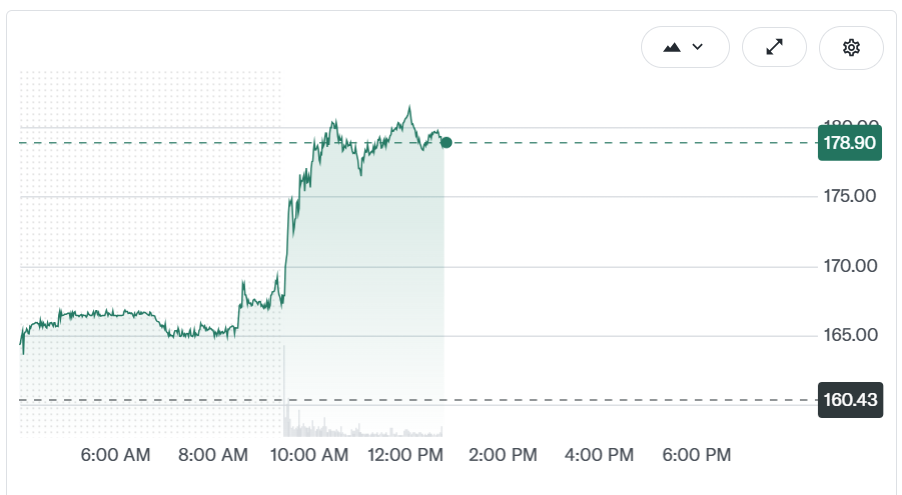
Bitcoin (BTC) briefly climbed above $67,000 and Ether (ETH) neared $1,950, while crypto-related stocks rallied sharply. Coinbase shares rose 12%, American Bitcoin gained 14% and Cipher Digital jumped 17%.
The gains came after US Treasury Secretary Scott Bessent said lawmakers were at the “1-yard line” on the long-debated CLARITY Act, which would define the regulatory roles of the Securities and Exchange Commission and Commodity Futures Trading Commission over digital assets.
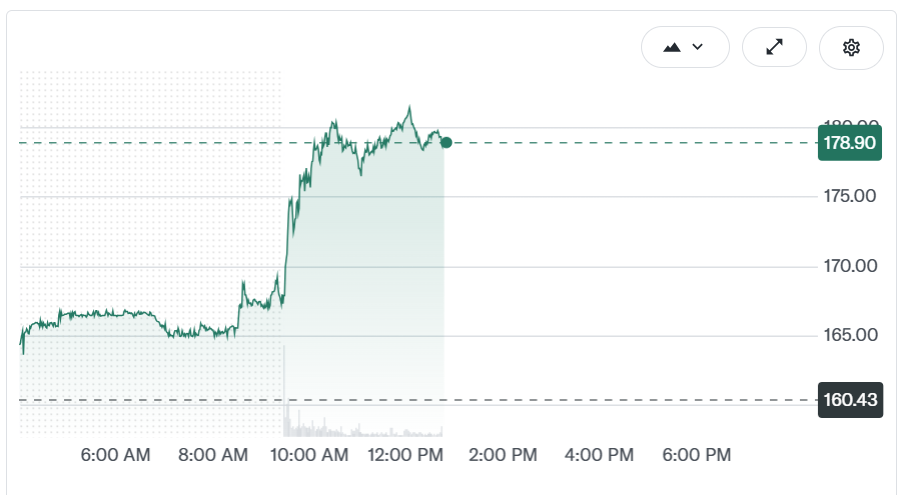
Coinbase (COIN) was among the market’s top-performing stocks on Tuesday. Source: Yahoo Finance
Beyond the regulatory tailwinds, some analysts said crypto could also benefit from investors shifting capital away from AI-linked equities.
“With Bitcoin at the top end of the range, we see the path of least resistance being higher and an elevated likelihood of a breakout of the range as the AI trade slows and the market becomes more comfortable with the path of interest rates,” FRNT Financial CEO Stephane Ouellette told Bloomberg.
Related: Hut 8, IREN deals lift AI-focused Bitcoin mining stocks
AI trade loses momentum as chipmakers fall
AI-related stocks have dominated speculative markets over the past year, with the Philadelphia Semiconductor Index (SOX) — a widely watched benchmark for chipmakers powering the AI boom — surging roughly 110%.
However, the rally has begun to lose momentum. Last week, the SOX index entered a technical bear market after falling more than 20% from its recent high, as investors grew increasingly concerned about lofty valuations and the risk of overcapacity in AI infrastructure spending.
This follows an extended period in which AI largely overshadowed digital assets. Since the launch of ChatGPT in late 2022, a wave of innovation, venture capital investment and retail enthusiasm has shifted much of the market’s speculative appetite toward AI.
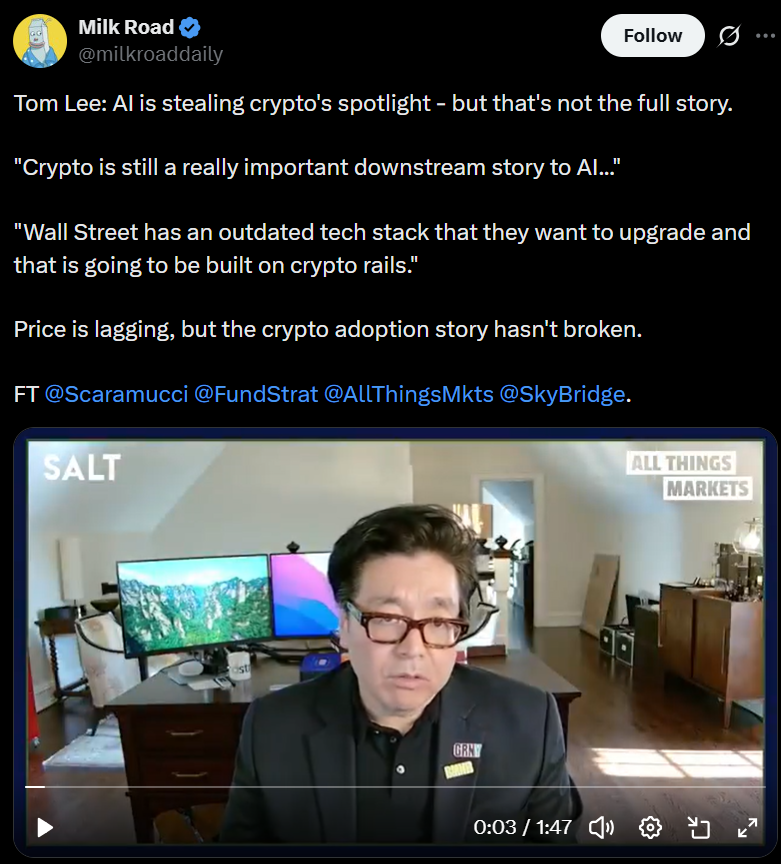
Source: Milk Road
Related: Will the US get CLARITY this week? Bitcoin’s new $80K target: Hodler’s Digest, July 19


Telegram founder Pavel Durov said the messaging platform will roll out a native non-custodial Gram wallet this summer, bringing self-custody crypto transactions to its more than 1 billion users.

NIGHT, the token behind Cardano’s privacy-focused Midnight network, plunged more than 43% earlier today to hit an all-time low of $0.01524.
Speculation then mounted that the Midnight blockchain may have been hacked, causing the steep selloff, but according to The Midnight Foundation, the price drop came after roughly 2% of NIGHT’s supply was moved out of a two-year-old contract tied to Wanchain’s Cardano-to-BNB Chain bridge.
Foundation Says Blockchain Was Not Hacked
Independent on-chain researcher Paul was among the first to flag the withdrawal and noted in his preliminary findings that between 14:46 and 14:55 UTC on Monday, some 515 million NIGHT tokens had been withdrawn from a contract identified as Wanchain’s Cardano-side bridge lock address, which backs the Wanchain-wrapped NIGHT on BNB. Nothing else in that contract, including Mynth, XER, and WMT, was touched.
According to his analysis, around 290 million tokens were then sold across decentralized exchanges, sending the price down, while another 200 million were transferred to a second wallet, leaving what he described as a large unsold overhang. Furthermore, he said that the total NIGHT supply itself did not change, meaning no new tokens had been minted.
Soon after, the Midnight Foundation published a community update on X, saying it was aware of reports involving the Wanchain Cardano-to-BNB bridge and stressed that the available information pointed to a cross-chain bridge issue and not a problem with the Midnight network. It also urged users to only rely on official updates and to watch out for phishing attempts while investigations were going on.
In a second statement, issued a few hours later, the organization confirmed that Midnight’s protocol, validator network, consensus mechanism, and core infrastructure were all operating normally.
CoinGecko data shows that before the plunge, NIGHT had traded as high as $0.026, with the sudden sale of 290 million tokens dragging it down to $0.01524, its lowest ever price level. It has since pulled back some of those losses and was trading more than 28% above that ATL at the time of writing, although it was still 27% in the red over 24 hours. It has also erased all the gains it had made in the last year and is about 34% lower than where it was a week ago.
Bridge Security Back in the Spotlight
Cardano co-founder Charles Hoskinson also weighed in, saying an automated alert on his phone had flagged NIGHT’s unusual price action, after which the Midnight Foundation and other parties set up an informal war room to track the situation as it unfolded.
His message boiled down to three points: that Midnight’s own smart contracts had kept on running without interruption; the problem came from one of the four components in Wanchain’s bridge architecture; and that the industry needs to be more vigilant given how fast AI tools can now find such flaws.
According to Hoskinson, bridge infrastructure is one of the weakest points in crypto because it depends on trust assumptions outside the underlying blockchain. But he believes that technologies, including zero-knowledge proof-based bridges and trusted execution environments, as well as multisig systems, could reduce such risks.
His point on AI is something OpenZeppelin co-founder Manuel Aráoz touched on in late May, when he warned people to get out of DeFi, saying AI-powered coding agents have tilted the security game in favor of attackers, making it difficult for any protocol to hold user funds with any level of confidence. DeFi Investor, an analyst who monitors the sector, repeated the warning recently when Anthropic announced the launch of its Mythos AI, which experts say is extremely good at finding software vulnerabilities.
The post Cardano’s NIGHT Hits All-Time Low After 290M Token Dump appeared first on CryptoPotato.
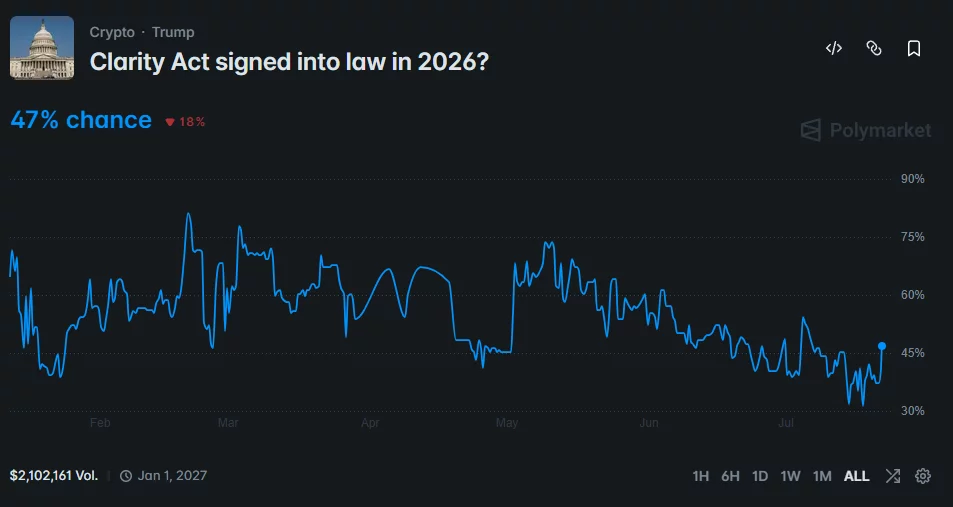
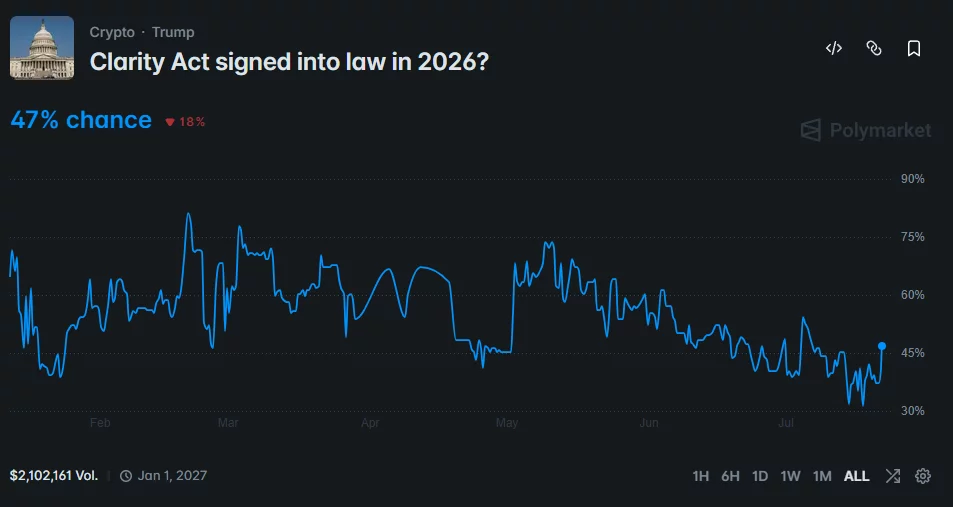
Senate negotiations over the CLARITY Act have produced new customer safeguards and an ethics agreement, raising Polymarket’s odds of enactment this year to 43% as lawmakers pursue a bipartisan floor vote.
Summary
- John Thune sees a good chance of reaching a bipartisan CLARITY Act agreement.
- Democrats secured stronger customer protections, while lawmakers agreed on ethics provisions.
- Polymarket traders place the bill’s chance of becoming law in 2026 at 43%.
CNBC reported that Democratic senators secured additional customer protection measures during negotiations over the Digital Asset Market Clarity Act, although unresolved details have continued to delay the release of the Senate’s final text.
Speaking to CNBC on Monday, Coinbase Vice Chair Ryan VanGrack described the revised protections as giving the bill “more teeth.” According to VanGrack, the changes address gaps in the current rules governing digital asset users, but he did not explain what requirements lawmakers had added.
Senate Majority Leader John Thune has also voiced cautious confidence that Republicans and Democrats can reach an agreement. In comments shared through an X post, Thune said there was a “good chance” of a deal, while warning that the talks could still take a different course.
Lawmakers are working with Democratic senators to secure enough support to bring the legislation to the floor, according to Thune. The majority leader has previously indicated that he wants a bipartisan agreement before committing valuable Senate floor time to the bill.
Republicans control 53 Senate seats but would need support from at least seven Democrats to reach the 60 votes generally required to overcome a filibuster. That arithmetic has given Democratic negotiators considerable influence over the customer protection and ethics sections of the legislation.
Bipartisan support has moved closer
An agreement covering elected officials’ involvement in digital assets has removed one of the main obstacles in the negotiations, crypto.news reported. Democratic lawmakers had pressed for rules addressing potential conflicts connected to President Donald Trump’s crypto interests and the participation of public officials in the sector.
According to Punchbowl News, Trump accepted the inclusion of ethics provisions, helping negotiations advance after weeks of disagreement. The report did not publish the full language, and the final restrictions will remain unclear until senators release the updated bill.
Senator Kevin Cramer offered further details about the enforcement structure, stating that negotiators had reached an agreement on the ethics language. Under the approach described by Cramer, the Justice Department would enforce the provision instead of leaving enforcement to individual state attorneys general.
Cramer argued that the bill was becoming clearer as lawmakers resolved each disputed issue. Commenting on the progress, the North Dakota Republican said, “I think we’re almost there.”
At the same time, Treasury Secretary Scott Bessent urged Congress to complete the legislation before senators leave Washington for their August recess. Bessent described lawmakers as being at the “1-yard line,” indicating that only a limited number of disputes remained in the negotiations.
Coinbase has presented the customer protection concessions as evidence that Democratic participation has changed the legislation rather than simply supplying Republican sponsors with the votes they need. VanGrack told CNBC that Democrats had used the process to strengthen protections for people who hold or trade digital assets.
Earlier Senate work has already included rules governing customer property, fair and transparent pricing, advertising standards and fraudulent conduct. A draft published by the Senate Agriculture Committee also requires digital commodity brokers, dealers and exchanges to register with the Commodity Futures Trading Commission, subject to exemptions written into the proposal.
The Senate Agriculture Committee advanced its portion of the market structure package in January. Committee Chair John Boozman stated at the time that the legislation built on the bipartisan, House-passed CLARITY Act and included provisions negotiated with Senate Democrats.
Final text still controls the timeline
Despite the latest agreements, CNBC reported that the Senate has not released the completed legislative text. Ethics rules remain part of the delay, leaving lawmakers, crypto companies and consumer groups unable to assess the precise restrictions or enforcement powers under discussion.
Thune has said he hopes to bring the CLARITY Act to the Senate floor before August, but his comments indicate that scheduling depends on Democrats committing enough votes. A floor vote without that support could stall the bill before the chamber considers amendments or final passage.
The House has already approved its version of the CLARITY Act, while the Senate is preparing its own text. Any differences between the two chambers would have to be resolved before Congress could send a common version to Trump for his signature.
The legislation seeks to establish federal rules for digital asset markets and clarify the roles of the Securities and Exchange Commission and the CFTC. Senate Agriculture Committee materials show that its portion would give the CFTC authority over digital commodity intermediaries and impose registration, custody, anti-fraud, and customer property requirements.
Traders on Polymarket currently assign a 43% probability that Trump will sign the CLARITY Act into law during 2026, down from the 47% figure cited earlier in the negotiations. Prediction-market odds can change quickly and do not establish whether Congress will meet Thune’s preferred timetable.
For now, the ethics agreement and Democratic customer protections have improved the path to a bipartisan vote, but the unpublished text and Senate calendar continue to determine whether the bill can reach the floor before the August recess.
Crypto World
Former Coinbase CTO Loses Malaysia License After Alleged Israel Link Sparks Investigation


Malaysian authorities have revoked the business license of Network School, a technology community founded by former Coinbase CTO Balaji Srinivasan.
The decision followed scrutiny over alleged links to Israeli participants. However, local officials said they cancelled the license over business and premises violations.
The Iskandar Puteri City Council ordered NS0 Malaysia Sdn Bhd to stop all operations at Forest City from July 22. Officials said the company operated from two premises. One site did not have the required business license.
Meanwhile, inspectors found that the company carried out activities beyond those approved under its existing license. Authorities also found problems with its advertising signboard.
Israeli Claims Trigger Investigation
The case began after pro-Palestinian activists raised concerns about possible Israeli participation at Network School.
Online posts alleged that Israeli entrepreneurs had entered Malaysia using passports issued by other countries. The claims also raised questions about the school’s admission process and its interest in Israel, politics and military technology.
However, Malaysian immigration officials later inspected 266 foreign residents from 40 countries.
They said everyone checked had valid travel documents. Authorities did not publicly confirm that any participant had entered Malaysia illegally as an Israeli national.
Malaysia does not recognise Israel and generally does not allow entry using Israeli passports. However, Israeli dual nationals may enter using valid passports from other countries if they meet Malaysian immigration rules.
Prime Minister Anwar Ibrahim said authorities would expel any Israeli national found breaking local laws.
What is the Network School?
Network School opened in Forest City, Johor, in 2024.
Despite its name, Malaysia’s Higher Education Ministry said it was not a registered university or private education provider. Officials described it as a residential and co-working community for technology founders, investors and startup workers.
The project became known for promoting Srinivasan’s “network state” idea. The concept involves online communities building physical settlements and developing their own economic and governance systems.
The school offered accommodation, meals, workspaces, startup programmes and fitness activities. It attracted people from the crypto, technology and investment sectors.
Srinivasan Rejects Allegations
Srinivasan denied the claims about Israeli links before the license was cancelled.
He said anonymous social media accounts had spread false allegations. He also warned that the investigation could damage Malaysia’s reputation among international technology investors.
According to Srinivasan, Network School had invested more than 100 million Malaysian ringgit in Forest City. He said the company had planned a further 500 million ringgit expansion.
The company placed those plans on hold during the investigation.
Srinivasan joined Coinbase in 2018 after the crypto exchange acquired Earn.com, where he served as chief executive.
Coinbase appointed him as its first CTO. His role focused on technology strategy, crypto advocacy and recruitment. He left the company in May 2019.
Malaysia and Israel’s Diplomatic Roadblocks
Malaysia has a long-standing policy of refusing formal diplomatic relations with Israel and strongly supporting Palestinian statehood. Israeli passport holders are generally barred from entering without special permission, and Malaysian passports have historically excluded travel to Israel.
The Gaza war intensified public pressure for boycotts and restrictions involving Israeli entities or companies accused of supporting Israel.
In 2024, 22 Malaysian civil-society organisations urged the government to block a consortium’s proposed privatisation of Malaysia Airports because one consortium member, Global Infrastructure Partners, was being acquired by BlackRock.
Campaigners alleged that BlackRock had significant Israeli connections and investments.
The government did not cancel the airport transaction solely on that basis. Global Infrastructure Partners later said BlackRock would not participate in the deal.
The post Former Coinbase CTO Loses Malaysia License After Alleged Israel Link Sparks Investigation appeared first on BeInCrypto.

Bitcoin and the wider crypto market started Tuesday on a firmer footing as expectations for US regulatory progress reignited risk appetite, lifting both digital assets and shares tied to crypto activity.
Bitcoin briefly pushed above $67,000 and Ether neared $1,950, while crypto-related equities rose sharply. Coinbase stock climbed about 12%, American Bitcoin gained roughly 14%, and Cipher Digital jumped around 17%.
Key takeaways
- Shares and tokens rallied after US Treasury Secretary Scott Bessent said lawmakers are approaching a key vote on the CLARITY Act.
- The proposed law would clarify which regulator—SEC or CFTC—oversees different categories of digital assets.
- Analysts also cited weakening momentum in AI-linked equities as a potential driver of capital rotation back into crypto.
- The Philadelphia Semiconductor Index’s pullback suggests speculation in AI infrastructure may be cooling after a strong run.
Regulatory optimism lifts the whole complex
The immediate catalyst for Tuesday’s rebound came from remarks by Scott Bessent, reported by Bloomberg, indicating that lawmakers were at the “1-yard line” on the long-debated CLARITY Act. The bill aims to define the regulatory roles of the Securities and Exchange Commission (SEC) and the Commodity Futures Trading Commission (CFTC) for digital assets.
For investors, that kind of clarity matters because it can reduce uncertainty around enforcement risk and the classification of tokens and trading venues. It also has second-order effects: when regulators’ boundaries look more clearly drawn, capital formation—whether in exchanges, custody, or institutional products—tends to improve as participants better price compliance and operational costs.
Crypto’s rebound runs alongside stock strength
Market-wide optimism showed up most visibly in equities connected to the crypto ecosystem. Coinbase’s stock led gains among major crypto market proxies, while companies exposed to mining, trading, or related infrastructure also outperformed.
That strong correlation between crypto prices and crypto-linked equities often reflects a common driver: when policy expectations shift, both asset holders and equity investors adjust their assumptions about future regulation, adoption, and market structure.
Rotation risk: why AI-linked stocks may be losing steam
Beyond US legislative headlines, some analysts pointed to a separate potential driver—investors dialing back exposure to AI-linked equities—which could free up liquidity for other high-beta trades, including digital assets.
Bloomberg quoted FRNT Financial CEO Stephane Ouellette arguing that when Bitcoin is near the upper end of its range, the “path of least resistance” can turn upward. Ouellette also said the likelihood of a breakout may increase if the AI trade slows and investors become more comfortable with the broader interest-rate outlook.
The “AI trade” explanation has a concrete benchmark behind it. According to coverage cited by the article, the Philadelphia Semiconductor Index (SOX)—a widely watched measure for chipmakers tied to AI demand—surged roughly 110% over the past year. But momentum has started to slip: the SOX entered a technical bear market last week after falling more than 20% from its recent high, with investors reportedly increasingly worried about lofty valuations and the risk of overcapacity in AI infrastructure spending.
That matters because much of the speculative appetite in financial markets has been concentrated in AI during the last year. Since the public launch of ChatGPT in late 2022, the mix of rapid innovation, venture capital activity, and retail enthusiasm helped shift attention away from crypto and toward AI narratives across trading desks and risk budgets.
What to watch next
Tuesday’s bounce looks tied to two threads: near-term expectations for the CLARITY Act’s progress in Washington and signs that AI-linked equity momentum may be cooling. The next signal for traders and longer-term investors will be whether crypto price strength holds through subsequent US legislative developments—and whether the broader market continues to rotate attention from semiconductors back toward risk assets like digital currencies.
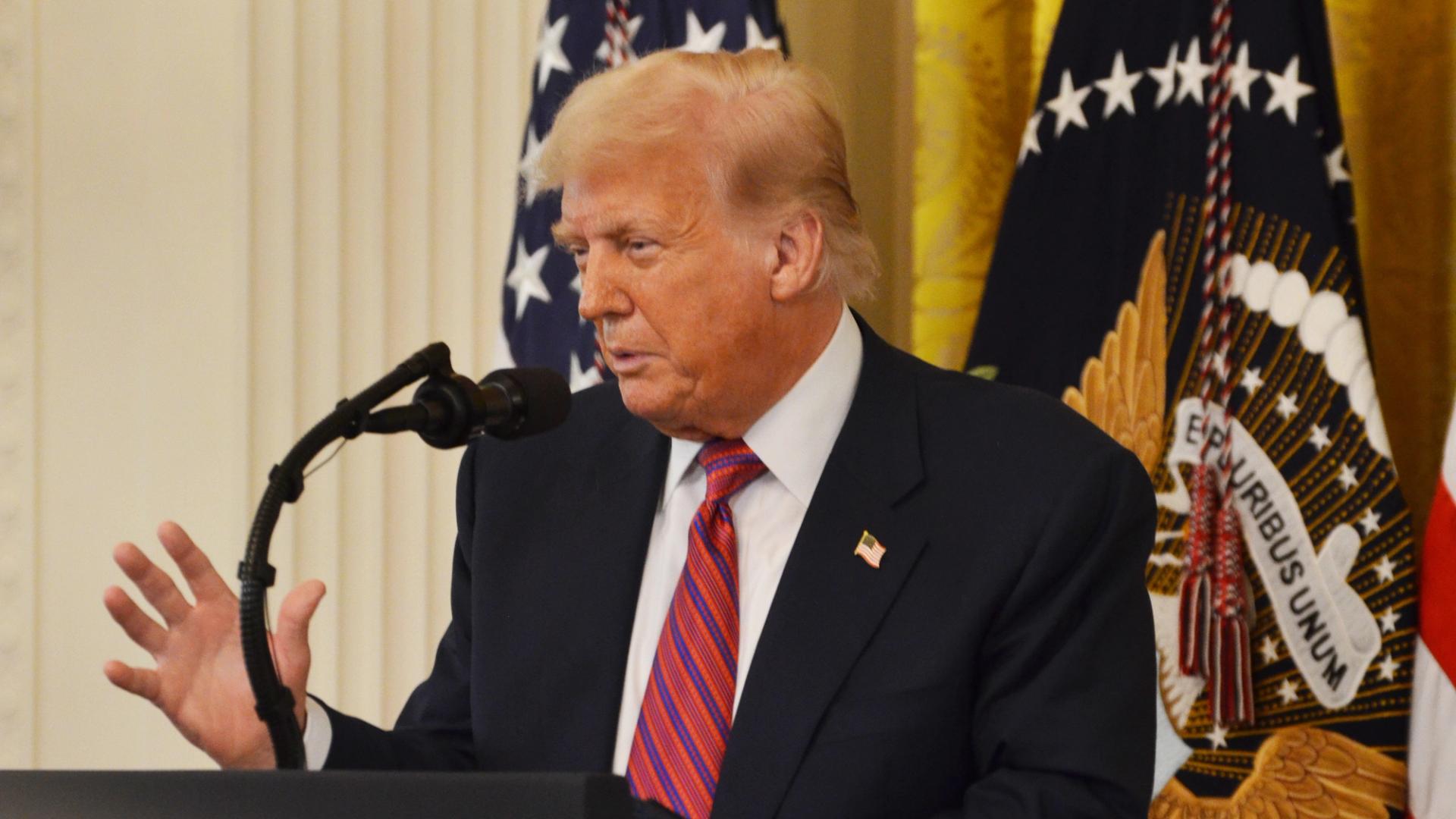
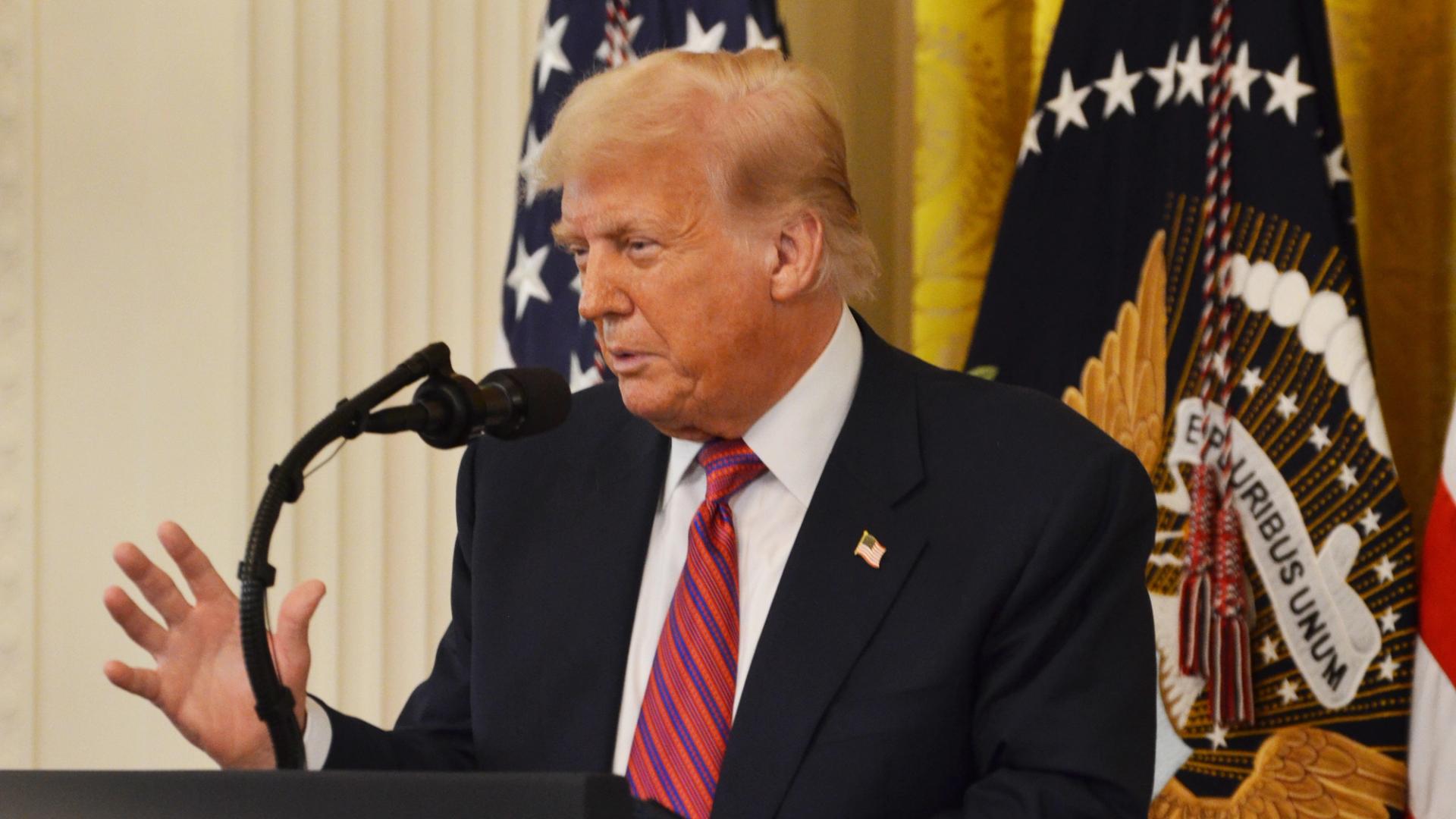
“If Senate Democrats block this historic legislation after the administration has bent over backward to accommodate their concerns, stakeholders should make no mistake: It is the Democrats who are blocking this legislation because they were never serious about a legislative outcome,” the White House official said.
Democratic negotiators such as Senators Kirsten Gillibrand, Ruben Gallego and Angela Alsobrooks reportedly haven’t received details of the agreement with Trump, who’d met personally with Republican senators last week. But many of the Democrats have drawn a line in the sand that the ethics provision — driven primarily by Trump’s own deep crypto connections — needs to be strong.
The dispute was heightened recently by the president’s disclosures that he’d pocketed more than $1 billion last year from his crypto interests.
The White House, Republicans and their crypto industry allies are already building their case against any Democrats who don’t accept the new answer to their ethics demands. It’s unclear when they’ll get to see it.
The industry is expecting full circulation of the Clarity Act legislative language as soon as Tuesday night or Wednesday, though that expectation has been repeatedly delayed since last week.
The Senate has fewer than three weeks to finish the bill, including the ethics piece, and get it through the political gauntlet of a floor vote before lawmakers leave town for their reelection campaigns. There’s technically enough time, but even without significant further debate, it would be tight.
Bitcoin is displaying the same technical conditions that have historically marked major market bottoms, even as some on-chain indicators continue to point to the possibility of further downside.
In his latest analysis, crypto analyst Ali Martinez said that metrics such as MVRV and Cumulative Value-Days Destroyed (CVDD) still place BTC’s potential cycle bottom in the $40,000 to $50,000 range. However, the crypto asset’s monthly chart is now showing a technical setup that has consistently appeared near the end of previous bear markets.
Rare Technical Trifecta Returns
According to Martinez, this pattern consists of three important signals occurring together: the monthly Relative Strength Index (RSI) falling to around 43.65, the Chande Momentum Oscillator (CMO) dropping to roughly -71, and Bitcoin testing its 50-month moving average.
In the three previous market cycles, this combination coincided with major long-term bottoms. For example, back in March 2015, the setup appeared when BTC traded at $235. Although the price later briefly declined to $162, Martinez said the signal preceded an 8,300% macro expansion.
A similar pattern emerged in January 2019, when the crypto asset was near $3,333, slightly above the cycle low of $3,124 recorded a month earlier, before beginning a rally of 1,911%. The same technical cluster also appeared in December 2022, when it stood at $16,270, just above the $15,473 cycle bottom while hovering near the 50-month moving average. The analyst said that move was followed by a 675% rally.
Interestingly, Bitcoin’s correction to $58,000 last month triggered the same historical setup once again.
According to the analysis, the monthly RSI has now fallen below 43.65, the Chande Momentum Oscillator has cooled to -71, and Bitcoin is trading around its 50-month moving average. While Martinez acknowledged that on-chain indicators still leave room for the crypto asset to revisit the $40,000 to $50,000 range in what he described as a “sweep of the CVDD floor,” he said the current technical alignment has represented a dominant accumulation zone.
Based on that combination of signals, Martinez stated,
“Shifting focus away from short positions and toward spot BTC accumulation offers a highly favorable risk-to-reward ratio at these levels.”
Buying Opportunity
Martinez is not alone in seeing the current market as a buying opportunity. Crypto analyst Doctor Profit also recently noted that investors waiting for a traditional four-year cycle bottom in September or October could miss the opportunity. While he acknowledged that a large liquidity zone remains around $54,000 and said Bitcoin could still decline about 15% from current levels, he does not expect the crypto asset to fall below $50,000.
Instead of waiting for lower prices, Doctor Profit suggested accumulating Bitcoin gradually rather than investing all at once. He also said the next major rally is unlikely to begin immediately. The analyst said several upcoming events could strengthen market sentiment before the asset reaches its expected cycle low.
These include the planned rollout of tokenized stocks involving BlackRock, the New York Stock Exchange, the S&P, Nasdaq, and the DTCC. He also mentioned speculation surrounding the CLARITY Act’s possible passage in August.
The post Bitcoin Just Triggered Three Rare Signals That Previously Marked Market Bottoms appeared first on CryptoPotato.

Pavel Durov brings fee-free Gram wallet to 1 billion Telegram users

Nancy Grace Reacts To Comments About Highlighting Nolan Wells

Andy Burnham live: New PM and Cabinet make tax decision to remove VAT on electricity bills


-
 NewsBeat5 days ago
London Mayor Sadiq Khan handed a peerage by Keir Starmer alongside 15 other Labour figures… just days before the PM leaves No10
-

 Fashion4 days ago
Weekend Open Thread – Corporette.com
-

 Politics3 days ago
The House | The City of London can help the new chancellor deliver growth in every postcode
-

 Politics6 days ago
Young campaigners urge incoming PM to act on outdoor junk food ads
-

 Crypto World6 days ago
CFTC blocks Kalshi from unwinding Michigan trades after court order
-
 Crypto World4 days ago
Two July Windows Left: The CLARITY Act’s Senate Fight and What Failure Means
-

 Crypto World3 days ago
Ripple Payments Joins MiCA With 14 Firms, Does It Mean Anything For XRP?
-

 Business6 days ago
Nvidia Stock Slips After Big Tuesday Rally as Huang Confirms Vera Rubin Chip Is Now in Production Today
-

 Politics2 days ago
Democrats look to World Cup watch parties to register thousands of voters
-
 Entertainment6 days ago
Disney’s Most Ambitious Failed Star Wars Attraction Is Coming to SDCC
-

 Crypto World4 days ago
Ripple wins EU-wide access as ESMA adds it to MiCA register
-

 Crypto World11 hours ago
Grayscale Files For Worldcoin ETF, WLD Registers Sharp Rise
-

 Crypto World5 days ago
Injective Submits SEC Transfer-Agent Registration to Onchain Ownership Records
-

 Business6 days ago
Palantir Shares Rise After Expanded Nvidia Partnership and Fresh Analyst Upgrades Ahead of Earnings Day
-

 Tech19 hours ago
Sail Virtually Aboard The “Itanic” With IA-64 Emulator
-
 Tech16 hours ago
Turtle Beach Command Series KB7 review: a nifty screen-equipped gaming keyboard
-

 Tech7 days ago
Dark Secrets Emerge When Jailbreaking LLMs
-

 NewsBeat4 days ago
Registration is now open for March for Men with Kev 2026
-

 News Videos7 days ago
XRP BOMBSHELL… XRP OMBOARDED FOR TRANSACTIONS!!!
-

 NewsBeat1 day ago
Unregistered fitter used Gas Safe logo on business flyers
You must be logged in to post a comment Login