
Crypto World
Vesu oracle incident triggers $3M in liquidations



Starknet lending protocol Vesu has reported that a faulty Pragma price feed triggered the abnormal liquidation of 47 positions holding $3 million in collateral on Sept. 4.
Summary
- 47 Vesu positions were liquidated across several pools during a two-minute oracle failure.
- $3 million in collateral was affected before the Pragma price feed corrected itself.
- Vesu said its contracts worked as programmed and contained no protocol vulnerability.
- Vesu and other Starknet organizations are trying to recover funds for affected users.
Vesu traces $3M liquidation to Pragma price feed
Vesu said in a Sept. 5 incident disclosure that the liquidations occurred between 04:08 and 04:10 UTC on Sept. 4 after an upstream price source operated by Pragma supplied incorrect data.
During the two-minute incident, the faulty prices reached several Vesu liquidity pools and made 47 borrowing positions appear eligible for liquidation. Automated liquidators then removed approximately $3 million in collateral before the feed returned to the correct value.
According to the protocol, the price source corrected itself within two minutes and has operated normally since then. Vesu did not identify the affected assets or provide a pool-by-pool breakdown in its initial statement.
The company also did not disclose how far the incorrect prices differed from market rates, the amount of debt attached to the liquidated positions, or how much collateral liquidators retained. A technical report covering the incident is expected to provide more information about the affected markets and the sequence of on-chain transactions.
Pragma has since worked with the relevant organizations to deploy a fix addressing the source of the error, Vesu said. Liquidity pool curators suspended affected pools as a precaution, with Vesu expecting them to remove the restrictions after reviewing the fix.
Because Vesu uses isolated and curated lending pools, decisions on reopening individual markets rest with their curators. The initial update did not identify which curators had paused their pools or provide an exact timetable for restoring normal activity.
Vesu says its contracts contained no vulnerability
Separating the incident from a smart contract exploit, Vesu said its contracts were “operating as designed” and did not contain a vulnerability. The protocol added that it had no contract patch to deploy because the liquidation engine responded to the prices it received.
In an overcollateralized lending market, a borrower deposits assets worth more than the value of a loan. The protocol uses an external price feed to measure the collateral ratio, and a liquidation may begin when that ratio falls below the pool’s required level.
Vesu attributed the Sept. 4 liquidations to bad inputs rather than faulty execution. Under its account, the contracts received incorrect collateral prices and processed the affected positions according to the rules already written into the protocol.
A July 2026 liquidation risk explainer from crypto.news described price data as the central input used to calculate a DeFi loan’s health factor. The report noted that stale or manipulated data can liquidate a healthy position or prevent an unsafe one from being closed.
Oracle dependence also extends beyond lending markets. An August 2026 report on blockchain oracles explained that smart contracts cannot independently read off-chain market prices, leaving them reliant on outside systems that collect, combine and publish data on-chain.
According to that report, an oracle normally handles data sourcing, aggregation, and on-chain delivery. A failure at any of the three stages can pass an inaccurate value to an otherwise functional smart contract, which may then complete a trade or liquidation based on the faulty input.
Recovery talks involve Starknet organizations
Following the incident, Vesu said it began coordinating with Pragma, StarkWare, the Starknet Foundation, and the curators of the affected pools to recover funds collected through the liquidations.
The protocol has not yet explained how the recovery process will operate, how much of the $3 million remains recoverable, or whether liquidators have agreed to return any assets. Its statement also stopped short of announcing a guaranteed reimbursement amount or payment date.
For users with deposits in Vesu’s Earn product, the protocol advised keeping their positions open. Closing an Earn position before the recovery process is complete may remove the user’s eligibility for a refund, according to Vesu.
Borrowers whose positions were liquidated during the two-minute window were asked to open a support ticket through Vesu’s Discord server. The protocol did not specify what records users must submit, though wallet addresses and transaction details can identify affected positions on-chain.
Vesu’s response differs from an automatic reversal because blockchain transactions generally remain final after confirmation. Any restoration would therefore require recovered assets, voluntary returns from liquidators, protocol-controlled funds, or another compensation arrangement agreed upon by the parties. Vesu has not said which route it plans to use.
A comparable oracle-related event occurred on Aave in March 2026, when a stale parameter caused an estimated $26 million to $27 million in unintended wstETH liquidations. An August 2026 review of the incident reported that Aave later examined oracle update rates and fallback systems while using several oracle sources for major collateral types.
Vesu has not announced comparable changes to its oracle structure. Pragma’s root-cause fix was the only technical measure confirmed in the initial disclosure.
US users depend on Vesu’s recovery process
For users in the United States, the incident involves a permissionless DeFi product rather than an insured bank account. The SEC’s Investor.gov website states that the FDIC insures deposits at eligible banks but does not protect securities or similar investments against a decline in value.
Vesu did not point to any government-backed protection for affected users. Instead, it directed them to its own support process and said the organizations involved were working to recover the collateral taken during the abnormal liquidations.
The protocol has not disclosed whether it restricts recovery by nationality or residence. Its instructions apply to users whose positions were liquidated during the identified window and to Earn depositors seeking to preserve possible refund eligibility.
At the network level, Vesu forms part of Starknet’s DeFi infrastructure. Starknet identified the lender as one of the protocols supporting its STRK20 privacy rollout in June 2026, alongside decentralized exchanges avnu and Ekubo and staking provider Endur.
Vesu said it will publish a complete technical report after its investigation, while affected borrowers can submit Discord support tickets, and Earn users have been told not to close their positions.

Crypto World
Bitcoin Rally Faces Profit-Taking Pressure as Short-Term Holders Deposit 467,000 BTC to Exchanges
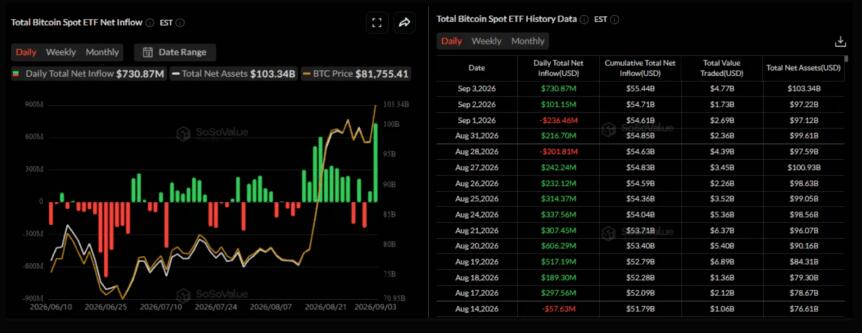
Bitcoin’s latest recovery is encountering increased profit-taking activity as short-term holders have transferred approximately 467,000 BTC, worth about $35.4 billion, to exchanges since August 17.
The shift comes as Bitcoin recently tested the $82,000 level while institutional demand through spot ETFs remains strong.
Bitcoin climbed roughly 4% over the course of September 3–4 before pulling back. At the time of writing, the cryptocurrency was trading around $79,673, reflecting a 0.41% drop over the past 24 hours.
Key Takeaways
- Short-term holders have sent approximately 467,000 BTC worth $35.4 billion to exchanges since August 17.
- The share of profitable Bitcoin exchange inflows increased from 35% to 92% after August 20.
- Short-term holders are currently depositing around 27,500 BTC per day, about 29% above the previous three-month average.
- Bitcoin ETF demand remains a counterweight, with approximately $730 million flowing into spot Bitcoin ETFs during the latest trading session.
Bitcoin Tests $82,000 as Selling Activity Changes
Bitcoin’s recent move higher has brought the cryptocurrency back toward levels last seen earlier in the year. The asset tested $82,000 between September 3 and 4 before giving up part of the advance.
The move occurred alongside a significant increase in demand for U.S.-listed spot Bitcoin ETFs. The products attracted approximately $730 million during the previous trading session, according to the market data cited in recent coverage.
However, the on-chain picture suggests that the rally is also giving some investors an opportunity to lock in profits.
CryptoQuant said short-term holders have moved from a period of capitulation toward profit-taking as Bitcoin recovered from its recent weakness.
“Bitcoin Short-Term Holders (STH) flipped from Capitulation to Profit-Taking. Since August 17, Short-Term Holders sent ~467K BTC ($35.4B) to exchanges. The key shift: profitable coins now dominate these flows.”
The distinction is important because exchange deposits can reflect different market conditions depending on whether the coins are being transferred at a profit or a loss.
Profitable Exchange Inflows Rise Sharply
CryptoQuant’s data shows a substantial change in the profitability of Bitcoin entering exchanges.
When Bitcoin was trading below the short-term holder realized price, only around 35% of exchange inflows were in profit. Since August 20, that proportion has climbed to approximately 92%.
This suggests that the current wave of exchange transfers is being driven predominantly by holders who acquired Bitcoin at lower prices and are now sitting on unrealized gains.
The shift followed Bitcoin’s recovery above the short-term holder realized price of approximately $67,600. CryptoQuant said the cost basis for this group subsequently increased to around $70,600 within 15 days.
As newer market participants entered at progressively higher prices, their unrealized gains increased alongside Bitcoin’s recovery.
Daily Bitcoin Deposits Remain Above Average
The increase in profit-taking is also reflected in daily exchange activity.
CryptoQuant estimates that short-term holders are currently sending approximately 27,500 BTC to exchanges each day, representing around $2.2 billion based on the firm’s calculations.
That daily flow is approximately 29% higher than the previous three-month average, indicating that short-term holder activity has become more pronounced during the recovery.
Despite the elevated deposits, Bitcoin has continued to trade at higher levels. This suggests that demand has so far been sufficient to absorb much of the Bitcoin being transferred toward exchanges.
CryptoQuant also placed the short-term holder MVRV ratio at 1.15, meaning the average investor within this group has an estimated unrealized profit of about 15%. Historically, the firm has observed that readings above 1.19 have accompanied more durable rallies, while levels below 1.12 have tended to coincide with shorter-lived moves.
ETF Demand Provides a Counterweight
The increase in short-term holder selling is occurring alongside strong demand from spot Bitcoin ETFs.
The approximately $730 million recorded during the latest trading session represents a significant inflow and provides an important source of demand while other market participants are realizing gains.
This creates a contrasting flow pattern.
Short-term holders are moving profitable Bitcoin toward exchanges, potentially increasing available supply, while ETF investors are directing fresh capital into Bitcoin exposure.
The ability of demand to absorb these coins has so far allowed the market to maintain its recovery.
What to Watch Next as Profit-Taking Increases
The key question is whether Bitcoin can continue absorbing elevated exchange deposits if short-term holders maintain their current pace of profit-taking.
The latest CryptoQuant data does not establish that the rally has ended. Instead, it shows that the character of selling has changed from capitulation toward profit realization.
Investors will likely watch short-term holder exchange flows, the $70,600 realized-price level, and continued ETF demand for indications of how the balance between available supply and new buying develops.
Disclosure: This content is provided by a third party. Neither crypto.news nor the author of this article endorses any product mentioned on this page. Users should conduct their own research before taking any action related to the company.
Since the start of September, the cryptocurrency market has once again been influenced by macroeconomic news from the Federal Reserve.
Summary
- XRP rebounded to about $1.45 after Fed rate-hike concerns eased.
- The token gained roughly 5% weekly and 37% over the past month.
- Traders are monitoring $1.35–$1.38 support and resistance near $1.70.
- EX DeFi advertises cloud-mining contracts and support for several digital assets.
On Sep. 3, Federal Reserve Governor Christopher Waller stated that he favors maintaining current interest rates rather than immediately raising them further. This stance alleviated market concerns regarding a potential September rate hike and boosted Bitcoin and other major crypto assets, with XRP briefly rebounding to around $1.45.
Waller’s comments drew market attention because interest rate expectations have long been a key factor influencing digital assets. A pause in rate hikes could ease upward pressure on the US dollar and Treasury yields, further heightening investor interest in digital assets, including cryptocurrencies.
Why is XRP back in the spotlight?
Amid shifting expectations regarding Fed policy, XRP has returned to investors’ radar. Recent market data shows XRP rebounding to approximately $1.45 in early September, posting a gain of about 5% over the past week and a cumulative rise of roughly 37% over the last month. Meanwhile, continued inflows into XRP spot ETFs have further intensified focus on institutional participation.
From a technical perspective, the $1.35–$1.38 range remains a critical support zone. If XRP can hold above this level and break through recent resistance, it could challenge higher price points.
Many traders and analysts are now watching to see if XRP can retest the $1.70 level and move closer to $2.00. For investors concerned that XRP might not break the $2.00 mark in the short term, a practical question arises: rather than simply waiting for price appreciation, are there more flexible ways to utilize their digital assets and explore opportunities for additional long-term returns?
Against this backdrop, an increasing number of XRP holders are shifting their investment strategies toward the EX DeFi cloud mining platform, seeking a more stable path for asset growth that is insulated from cryptocurrency market volatility.
Why might Fed policy impact XRP?
The cryptocurrency market is highly sensitive to changes in interest rates. When the market anticipates further interest rate hikes, capital typically gravitates toward traditional assets offering higher yields and relatively lower risk; conversely, when expectations for rate hikes subside, some capital may seek opportunities in risk assets such as stocks and digital assets.
In a speech on Sep. 3, Waller noted signs that recent inflation data has begun to cool. If this trend persists, he favors maintaining current interest rate levels. This statement alleviated some traders’ concerns regarding further rate hikes and drove simultaneous gains in both stock and cryptocurrency markets that day.
For XRP, Federal Reserve policy is just one factor influencing its price. ETF inflows, regulatory developments, and market expectations regarding XRP’s long-term utility are also key drivers of its price appreciation.
XRP holders are seeking additional ways to grow their asset value
As XRP price volatility increases, some holders are exploring ways to engage with digital assets beyond simple holding and trading.
The EX DeFi cloud mining platform focuses on digital asset mining via cloud-based computing power. It allows users to participate without purchasing or maintaining specialized mining hardware and enables account management via mobile phones—a streamlined approach that is attracting growing interest from investors.
Key features of the platform include:
New user experience: Receive $17 worth of trial computing power upon registration.
No specialized hardware required: Users manage cloud computing power via mobile phones, eliminating the need to deploy specialized equipment like ASICs.
Security and compliance: The platform adheres to international security standards—including McAfee®, Cloudflare®, and 2FA verification—and utilizes cold wallet isolation to enhance fund security.
Affiliate rewards program: Users can earn affiliate rewards of up to 5% by inviting friends.
Green energy philosophy: Mining operations utilize green energy infrastructure to minimize the environmental impact of energy consumption.
Support for multiple digital assets: The platform supports a wide range of mainstream digital assets, including XRP, BTC, ETH, USDT, USDC, BNB, DOGE, LTC, and SOL.
About EX DeFi
Founded in 2021, EX DeFi is a platform specializing in cloud mining and digital asset-related services. It currently provides fully automated cloud mining solutions to over 2 million users across more than 180 countries and regions worldwide.
The platform’s core philosophy is to lower the hardware and technical barriers associated with traditional mining, allowing users to participate in cloud mining services online without the need to purchase their own mining rigs.
How do you get started with EX DeFi?
1. Register an account
Create an account using your email address on the official EX DeFi platform. Upon registration, you will receive a $17 trial credit.
2. Select and activate a contract
Choose a cloud mining contract that suits your needs and start automated mining with a single click.
3. View earnings
Once the cloud mining contract is activated, the system automatically allocates computing power to the mining pool and settles earnings within 24 hours. You can choose to withdraw your mining profits or reinvest them.
Mining contract plans:
Investment: $100 | Duration: 2 days | Daily return: $4 | Total profit: $100 + $8
Investment: $500 | Duration: 6 days | Daily return: $6.5 | Total profit: $500 + $39
Investment: $1,000 | Duration: 10 days | Daily return: $13.5 | Total profit: $1,000 + $135
Investment: $5,000 | Duration: 20 days | Daily return: $73.5 | Total profit: $5,000 + $1,470
Investment: $10,000 | Duration: 30 days | Daily return: $161 | Total profit: $10,000 + $4,830
Click here to visit the EX DeFi platform and view more details about the mining contracts.
What to watch for in the future?
As we enter September, the market environment for XRP is shifting. XRP ETF capital flows and developments regarding US regulatory policies in mid-September could serve as significant catalysts influencing XRP’s price. With improvements across the macroeconomic landscape, capital inflows, and regulatory expectations, XRP is poised for further upside potential.
For XRP holders, beyond monitoring price fluctuations, there are also opportunities to explore additional ways to generate returns on digital assets. EX DeFi Cloud Mining offers users an alternative way to participate in digital asset returns, helping them further grow their assets.
What are you waiting for? Visit https://exdefi.com/ today and put your digital assets to work generating passive income.
Disclosure: This content is provided by a third party. Neither crypto.news nor the author of this article endorses any product mentioned on this page. Users should conduct their own research before taking any action related to the company.

Bloom Energy, Illumina and Everpure will join the S&P 500 index, S&P Dow Jones Indices announced late Friday. The three stocks rose in after-hours trading. Bloom Energy (BE), Illumina (ILMN) and Everpure (P) will be added to the benchmark index before the open on Monday, Sept. 21, as part of a quarterly rebalancing of S&P indexes. They’ll replace Molson Coors…
Copyright ©2026 Investor’s Business Daily, LLC. All rights reserved. 87990cbe856818d5eddac44c7b1cdeb8

Despite surging oil prices and Treasury yields marking new highs, the major indexes largely weathered an up and down week. Meanwhile, several stocks showed bullish signs, including software giant ServiceNow (NOW). Digital bank Dave Inc. (DAVE), commodities trading platform Marex Group (MRX), senior living REIT Welltower (WELL) and cancer treatment developer Exelixis (EXEL) round out the list of stocks to…
Copyright ©2026 Investor’s Business Daily, LLC. All rights reserved. 87990cbe856818d5eddac44c7b1cdeb8
Solana co-founder Anatoly Yakovenko has criticized Robinhood Chain fees, arguing that the brokerage profits from network congestion rather than charging users openly within its own app.
Robinhood Chain transaction fees now average roughly $0.40. Yakovenko says Solana handles the same work for a fraction of a cent.
Why Robinhood Chain Fees Keep Climbing
Robinhood Chain went live on mainnet on July 1, 2026. The network runs on Arbitrum technology, settles to Ethereum, and uses Ether (ETH) for gas.
Usage has climbed hard since. Robinhood Chain fees reached $4.22 million in one day against roughly 10.4 million transactions, data shows. That lands near $0.40 each.
Median costs point the same way. Currently, the network ranks first among 27 chains at $0.24, ahead of every rival. Congestion sets that price, not a posted rate.
Growth explains part of the pressure. Grayscale recently named Robinhood Chain among the three leading venues for tokenized stock trading, alongside BNB Chain and Solana.
Meanwhile, Solana charges a base fee of 5,000 lamports per signature. Lamports are Solana’s smallest unit, and 1 SOL equals 1 billion lamports.
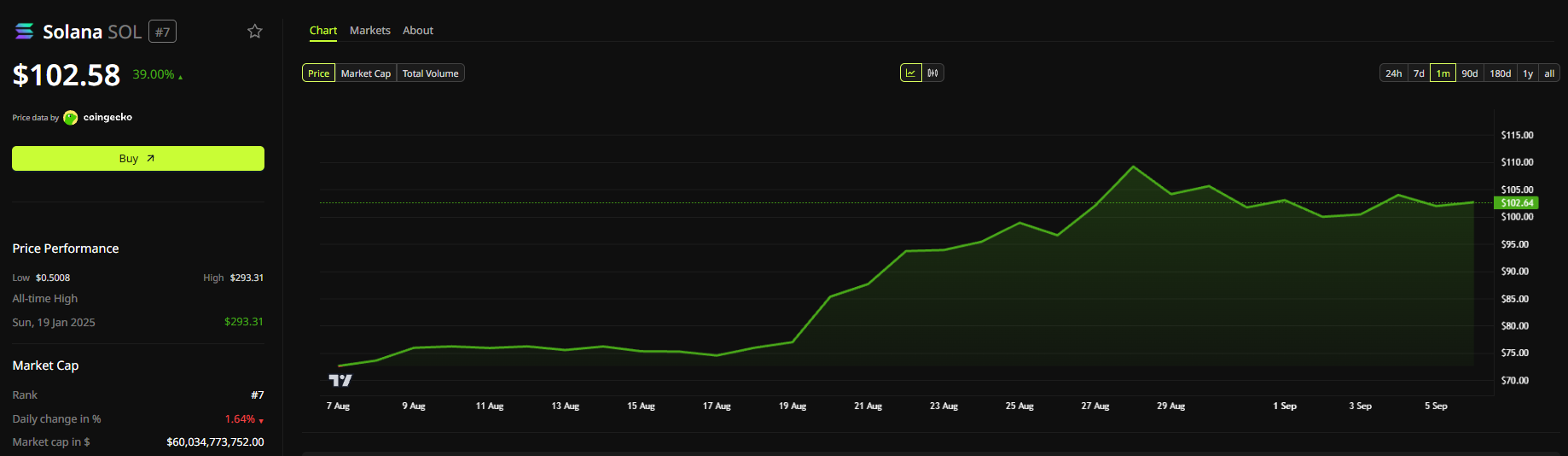
At the current Solana price near $102, that fee stays well under a cent. Solana (SOL) is down 1.64% on the day.

Solana Co-Founder Points at the Arbitrum Revenue Share
Robinhood Chain fees also feed Arbitrum. The brokerage hands over 10% of net revenue under its licensing terms. Of that, 8% goes to the Arbitrum DAO treasury, and 2% funds the Developer Guild.
Those payments have already revived Arbitrum’s ARB token, which climbed 90% off its record low. Yakovenko argues the same slice would cover Solana fees four times over.
Not everyone reads Robinhood Chain fees that way. Gnosis co-founder Martin Köppelmann noted Robinhood earns money rather than giving the service away. He doubted the pitch would land.
Yakovenko replied that front ends typically charge 50 to 80 basis points. For example, Uniswap ranks among the busiest network apps, alongside Relay.
Still, Robinhood Chain fees are only one strain. The chain also stalled block production briefly this week, and users paid $0.40 anyway.
The wider question is who ends up paying. Users cover the $0.40, Ethereum takes its settlement cost, and Robinhood keeps the rest.
The post Solana Co-Founder Slams Robinhood Chain Fees, Calls Congestion Profits ‘Brain Dead' appeared first on BeInCrypto.
Crypto World
Dow Jones Futures: Nvidia, Micron, Sandisk Flash Buy Signals; Apple, Inflation Reports Ahead

Dow Jones futures will open Sunday evening, along with S&P 500 futures and Nasdaq futures. An Apple iPhone event and key inflation reports headline the coming week. The stock market had a mixed week, but showed promising action after a difficult start. The major indexes rebounded back above their 21-day moving averages. That’s despite surging oil prices and Treasury yields…
Copyright ©2026 Investor’s Business Daily, LLC. All rights reserved. 87990cbe856818d5eddac44c7b1cdeb8
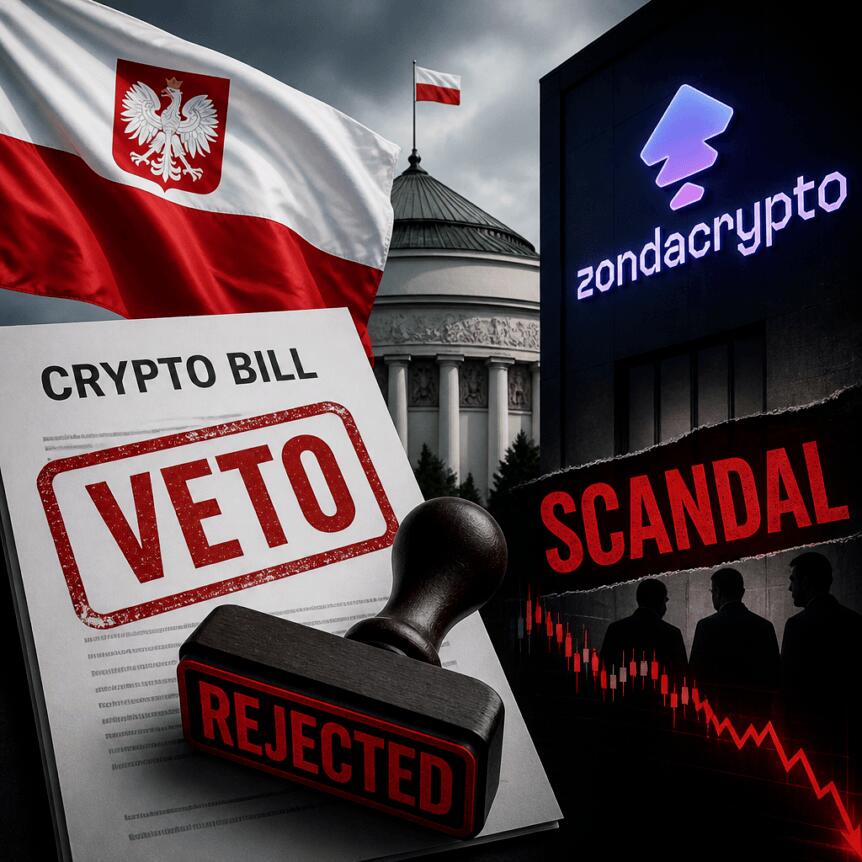
Poland’s lawmakers have again fallen short of the supermajority required to overturn President Karol Nawrocki’s veto of a bill intended to tighten crypto oversight. On Friday, the Sejm voted 241-198 to override the veto, but with three abstentions the measure missed the 266 votes needed by 25—marking yet another failed push to set a national framework for applying the EU’s Markets in Crypto-Assets Regulation (MiCA).
The renewed vote comes as Poland grapples with fallout from the Zondacrypto scandal. The case has widened amid bankruptcy proceedings against Zondacrypto’s Estonian operator and references by Prime Minister Donald Tusk to testimony alleging improper attempts to influence political figures.
Key takeaways
- The Sejm’s override attempt failed 25 votes short of the 266 needed for passage, leaving Nawrocki’s veto in place.
- The bill would have assigned crypto market supervision to Poland’s Financial Supervision Authority (KNF) as MiCA applies across the EU.
- KNF has said Poland still lacks a designated authority responsible for supervising cryptoassets, despite MiCA already taking effect in the EU.
- Meanwhile, prosecutors are investigating alleged fraud and money laundering tied to Zondacrypto, with losses previously estimated at no less than 350 million PLN.
- Zondacrypto’s operator, BB Trade Estonia, was declared bankrupt by an Estonian court, according to the public notice released in August.
A veto override misses the threshold again
Friday’s parliamentary vote was the latest attempt to advance Poland’s crypto regulatory plan after Nawrocki vetoed related legislation three times, arguing the rules would overregulate the industry. The president has said he supports regulating crypto but believes the bill’s approach goes too far, including concerns about compliance costs and the authorities’ ability to block websites.
In the Sejm’s vote, lawmakers backed the override 241-198, with three abstentions. The constitutional requirement of a three-fifths majority was therefore not met, preventing the bill from moving forward despite parliamentary support.
For market participants, the repeated vetoes underline a central uncertainty: while MiCA is the EU-wide backbone, domestic legislation is still needed to determine who will supervise crypto activity and enforce the rules in practice. Without that clarity, firms may face continued regulatory ambiguity around licensing, oversight procedures, and enforcement coordination.
Poland still has no designated crypto supervisor under MiCA
At the heart of the dispute is how MiCA should be implemented in Poland. The vetoed legislation aimed to establish Poland’s national framework for applying MiCA, including placing oversight of the crypto market under the Polish Financial Supervision Authority (KNF).
KNF said Friday that Poland still lacks a designated authority responsible for supervising the cryptoasset market, despite MiCA already applying across the European Union. The statement is significant because MiCA’s effectiveness for businesses depends not only on EU-level rules but also on national enforcement structures and supervisory responsibilities.
Nawrocki’s position contrasts with the urgency emphasized by regulators and government stakeholders. While the president does not oppose crypto oversight outright, his vetoes repeatedly cite concerns that the proposed Polish framework would impose excessive burdens or grant powers he views as too broad.
Investors and crypto firms watching Poland should pay attention to how this supervisory gap is handled in the absence of an operational national regime. The longer Poland remains without a designated supervisor, the more likely it becomes that compliance and enforcement decisions could be delayed or fragmented compared with other EU member states that have already implemented their supervisory arrangements.
Zondacrypto investigation expands as operator heads to bankruptcy
Friday’s parliamentary vote took place against the backdrop of a deepening criminal investigation linked to the failed crypto exchange Zondacrypto. Prime Minister Donald Tusk disclosed excerpts from what he described as testimony from a key witness, alleging payments and attempts to influence politicians connected to Poland’s previous government.
Tusk said the witness alleged a 2 million Polish zloty ($550,000) payment arrangement involving a foundation linked to former Justice Minister Zbigniew Ziobro. In separate testimony cited by Tusk, the witness alleged an unnamed person promised to secure a presidential pardon if the witness were convicted.
Polish prosecutors are investigating suspected fraud and money laundering connected to Zondacrypto. Earlier in the process, prosecutors merged the Zondacrypto case with a probe into the 2022 disappearance of Sylwester Suszek, founder of BitBay, which was later renamed Zondacrypto.
Prosecutors in April estimated that losses linked to Zondacrypto were no less than 350 million PLN ($95 million). Such figures are likely to keep pressure on policymakers to strengthen oversight and enforcement mechanisms—particularly around exchanges and custody-related risks.
In parallel with the criminal investigations, the exchange’s operator, BB Trade Estonia, has been pushed toward formal insolvency. An Estonian court declared the company bankrupt in August, with the first creditors’ meeting scheduled for Sept. 17, according to a public notice.
For users and creditors, bankruptcy can shift priorities from tracing wrongdoing toward asset recovery and claims verification. For regulators and legislators, the Zondacrypto episode adds urgency to establishing clear oversight structures—especially if supervisory authorities are expected to monitor compliance risks that failed entities allegedly exploited.
Why the regulatory fight matters beyond one country
Poland’s standoff is not just a domestic political contest. It highlights a broader tension in the EU’s post-MiCA transition: even when the rulebook is defined at the European level, member states still control the speed and structure of enforcement through domestic legislation and supervisory mandates.
With KNF previously stating that a designated authority for supervising cryptoassets is still missing, the impact is practical. Firms aiming to comply with MiCA may find it difficult to map responsibilities when the supervisor’s role is uncertain, while regulators may face challenges coordinating enforcement without a clear institutional lead.
The Zondacrypto case also raises the political salience of crypto oversight. As criminal investigations expand and insolvency proceedings develop, policymakers may come under increased pressure to align regulatory authority, investigative capacity, and compliance requirements—particularly for platforms operating at the center of investor funds and custody arrangements.
What readers should watch next is whether lawmakers attempt another override vote or if the government and regulators pursue an alternative path to assign supervisory responsibility. The key uncertainty remains who will ultimately supervise cryptoassets in Poland as MiCA obligations move from EU law into day-to-day enforcement.

Following the strong US jobs report from Friday and the hawkish stance taken by Federal Reserve Chair Kevin Warsh the week prior, the odds for a rate hike have grown significantly in just seven days.
Bitcoin’s price reacted to both developments with a minor leg down before it recovered some of the losses. An actual rate increase, though, could have a much more profound effect.
What Happens to BTC
The previous FOMC meeting in July was quite condensed, as it was described as the most unpredictable one in over six years. At the end, though, the Fed refused to change the rates, leaving them at 3.50%-3.75% following a 9-3 vote.
However, the fact that there were 3 policymakers in favor of such a monetary pivot was the first hint at a potential change. The rest came in the past week or so, as Warsh was quite hawkish during his first Jackson Hole speech at the end of August. The blowout US jobs report from yesterday only tilted the odds further, currently being at over 50% for a hike, since it gives the central bank leeway to keep fighting the stubborn inflation through a tighter monetary policy.
Next week’s CPI data will be crucial. The FOMC meeting will take place on September 15-16, and ChatGPT believes BTC’s initial reaction will be a nosedive. However, the AI platform added that it “would not expect another catastrophic bear-market leg.”
Instead, it noted that the key part of bitcoin reaction will be from the fact of whether the hike is “already fully priced in by then, and what Kevin Warsh says about what comes next.”
“At the moment, markets are putting roughly a 60% probability on a September hike after the surprisingly strong August jobs report. BTC is around $79,650 after already falling from above $81,000 as that probability increased.”
Precise Prediction
The popular AI chatbot noted that another 2%-5% decline is expected in ten days after the conclusion of the FOMC meeting if the Fed indeed proceeds with hiking the rates. This means that bitcoin would test the $75,000 support at first.
Another leg down to $72,000 could be in the cards if yields continue climbing by the end of September. Moreover, it could slip below $70,000 for the first time since mid-August if Warsh remains hawkish. Those scenarios are in case the Fed increases the benchmark by 25 bps.
In the more unexpected scenario in which the central bank hikes it by 50 bps, then ChatGPT expects BTC to slump by up to 15% very quickly, going to under $70,000 within a day or so.
“A drop to $68,000 could be instant, with leveraged liquidations potentially producing a temporary wick into the mid-$60Ks,” it warned.
Although all of those predictions sound quite worrisome for BTC, which finally had some fresh air during the mid- to late-August rally, it’s worth noting that the cryptocurrency is known for often moving in the opposite direction of what people expect from it.
The post We Asked AI: What Happens to Bitcoin’s Price if the Fed Hikes Rates in 11 Days? appeared first on CryptoPotato.
Crypto World
British investor thought he lost $2,000 in bitcoin in 2012. He just recovered $4.5 million


CEL Solicitors says it has identified a wallet holding more than 5,500 BTC linked to former Intersango users.
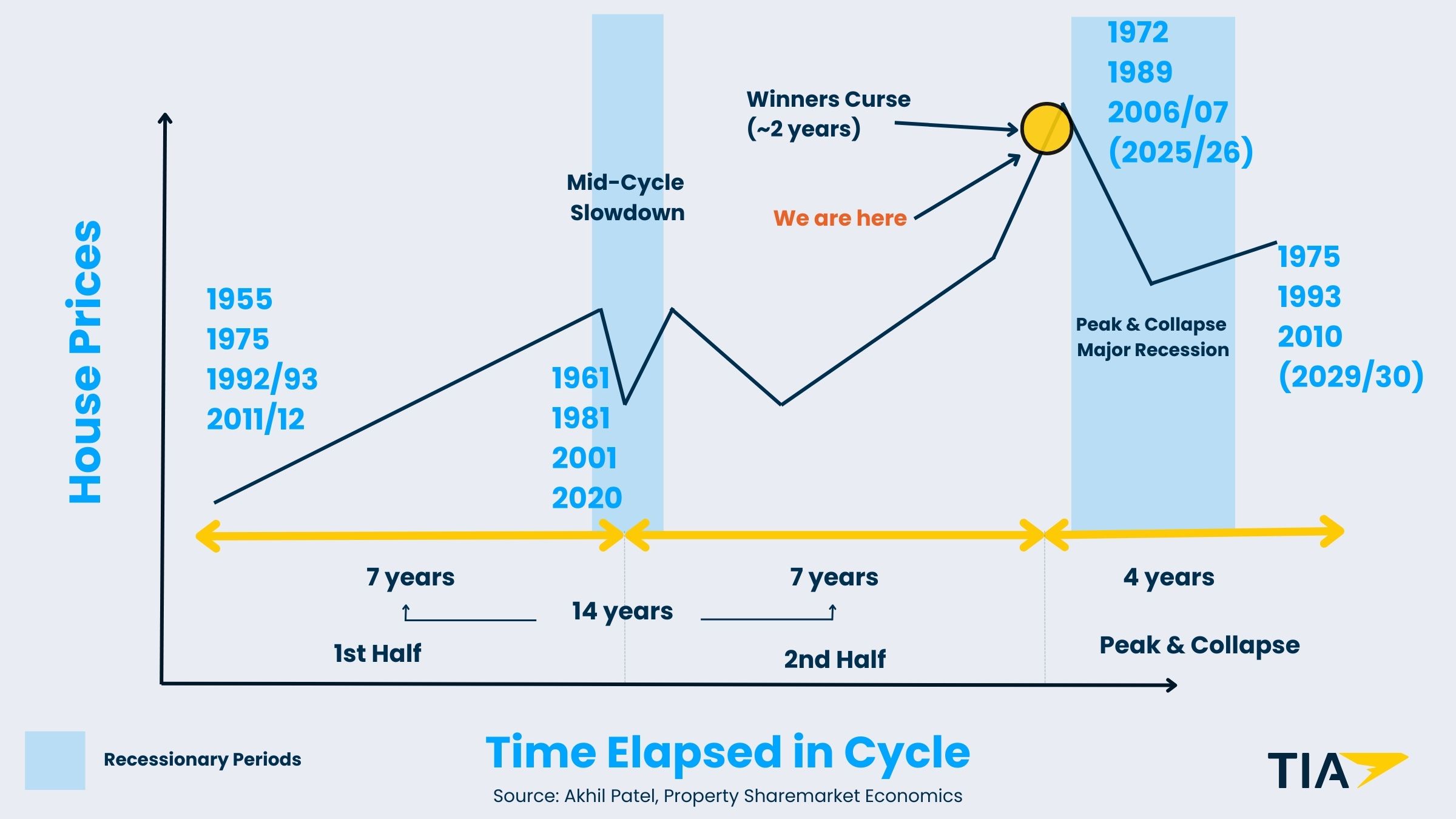
Investors are watching stocks and Bitcoin for the next major peak. Popular macro analyst Jason Pizzino thinks the first warning has already arrived from US housing.
His thesis uses an 18-year property cycle drawn from roughly 220 years of US sales data. The current cycle began around 2011–2012 and places the housing peak in 2025–26, with a possible trough around 2029–30.
“Once everyone’s in, you’re at the peak,” Pizzino said.
The latest data does not prove the cycle. But it does make the call harder to dismiss. US home prices rose 1.5% year-on-year in June, while falling in real terms for a 13th straight month.
July new-home sales dropped 10.5%. The median price fell to $393,800, its lowest in five years. Builder confidence sits at 35, far below the neutral 50 line.

Housing First. Stocks Could Be Next
Pizzino’s key signal is D.R. Horton. The homebuilder peaked before the broader market during the last housing cycle. Its late-2024 peak, using the same pattern, points to a possible stock-market top around late 2026 or early 2027.
D.R. Horton closed Friday at $142.75. Pizzino says a break below roughly $130 would strengthen his case.
Stocks remain near records. The S&P 500 closed at 7,718.60 on Friday, about 1% below its August 13 record. Strong August jobs data also pushed market odds of a September Fed rate hike to around 60%.

Bitcoin Is the Wild Card
Bitcoin trades near $79,700 today, up sharply from its July low around $57,700. It has also reclaimed its 200-day moving average.
Pizzino thinks Bitcoin can rally further, though with smaller returns. His rough scenario reaches about $120,000 from the July low. He sees $180,000 as much harder if credit keeps tightening.
Another analyst, Benjamin Cowen, is more cautious about treating the cycle as a trading signal.
“I buy index funds every single month… even if I think we’re going to have a correction,” said Cowen.
That may be the most useful takeaway. The cycle gives investors a warning zone, not an expiry date. Pizzino’s own advice is simpler: have a plan before the credit disappears.
“Trade the market you have,” Cowen said, “not the market you want.”
The post The 18-Year Housing Cycle Says the Next Market Crash Is Close appeared first on BeInCrypto.

David Valadao fights for reelection after years of defying the odds

Qualcomm: A Long-Term Play That Demands Patience (NASDAQ:QCOM)

Bitcoin Rally Faces Profit-Taking Pressure as Short-Term Holders Deposit 467,000 BTC to Exchanges

Weekend Open Thread – Corporette.com

Weekend Open Thread: Brooks Brothers

London Mayor Sadiq Khan handed a peerage by Keir Starmer alongside 15 other Labour figures… just days before the PM leaves No10

Bitcoin Pushes for 82k! Live Trading & TA

“FINANCE EXPLAINED IN 5 MINUTES !” #trending #viral #youtuber #yt #viralvideo #youtubeshorts

XRP TURBO MODE! GLOBAL STAGE IS SET! THIS BUY SIGNAL HAS A 100% SUCCESS RATE AND IT JUST ACTIVATED!
-
 Crypto World1 day ago
Bitcoin price stalls near $82K as key resistance holds
-

 Politics1 day ago
Best Gaming Laptops, CPUs, TVs, And Keyboards To Upgrade Your Set Up For GTA VI
-

 Tech1 day ago
The Birds Outside, Drawn For You Automatically
-

 Crypto World1 day ago
IMF Says El Salvador’s Post-Review Bitcoin Purchases Used No Public Funds
-
 Crypto World1 day ago
U.S. added stronger than expected 162,000 jobs in August as labor market bounced back
-

 Sports1 day ago
Alexandre Pato consortium’s Northampton Town investment approved
-

 Sports23 hours ago
Golden Eaglets Drawn in Group B for 2026 WAFU B U17 Championship
-

 Sports1 day ago
Commanders’ Chig Okonkwo is a top breakout fantasy football candidate
-
 Crypto World23 hours ago
XRP price breaks falling channel as bulls target $1.53
-

 Fashion19 hours ago
Weekend Open Thread: Beyond Yoga
-

 Politics1 day ago
A new European chapter for Gibraltar
-

 Politics1 day ago
The House | Bin the lectures, bring gossip and be ready to banter: how the new PM should prepare for his Trump encounter
-

 Politics23 hours ago
How To Avoid Winter Colds: 4 Everyday Habits That Spread Germs, Says Pharmacist
-

 Crypto World23 hours ago
From warning to listing: UK’s largest retail investment platform opens access to crypto ETNs
-

 Tech1 day ago
A Worthy Android Ereader, With Some Tradeoffs
-

 Crypto World24 hours ago
FinCEN flags $12.7B tied to Southeast Asia crypto investment scams
-

 Crypto World23 hours ago
Trezor Data Breach Impacts 67,000 More US Customers
-

 Politics1 day ago
33 Cosy Autumn Home Decor Ideas: Blankets, Pumpkin Decorations, And Candles
-

 Sports1 day ago
Seven wickets in 21 balls: Sri Lanka’s Chamari Athapaththu scripts history with record-breaking spell
-

 Tech1 day ago
How To Edit Claude’s Memory
You must be logged in to post a comment Login