

Crypto World
What is a bonding curve? Memecoin pricing explained



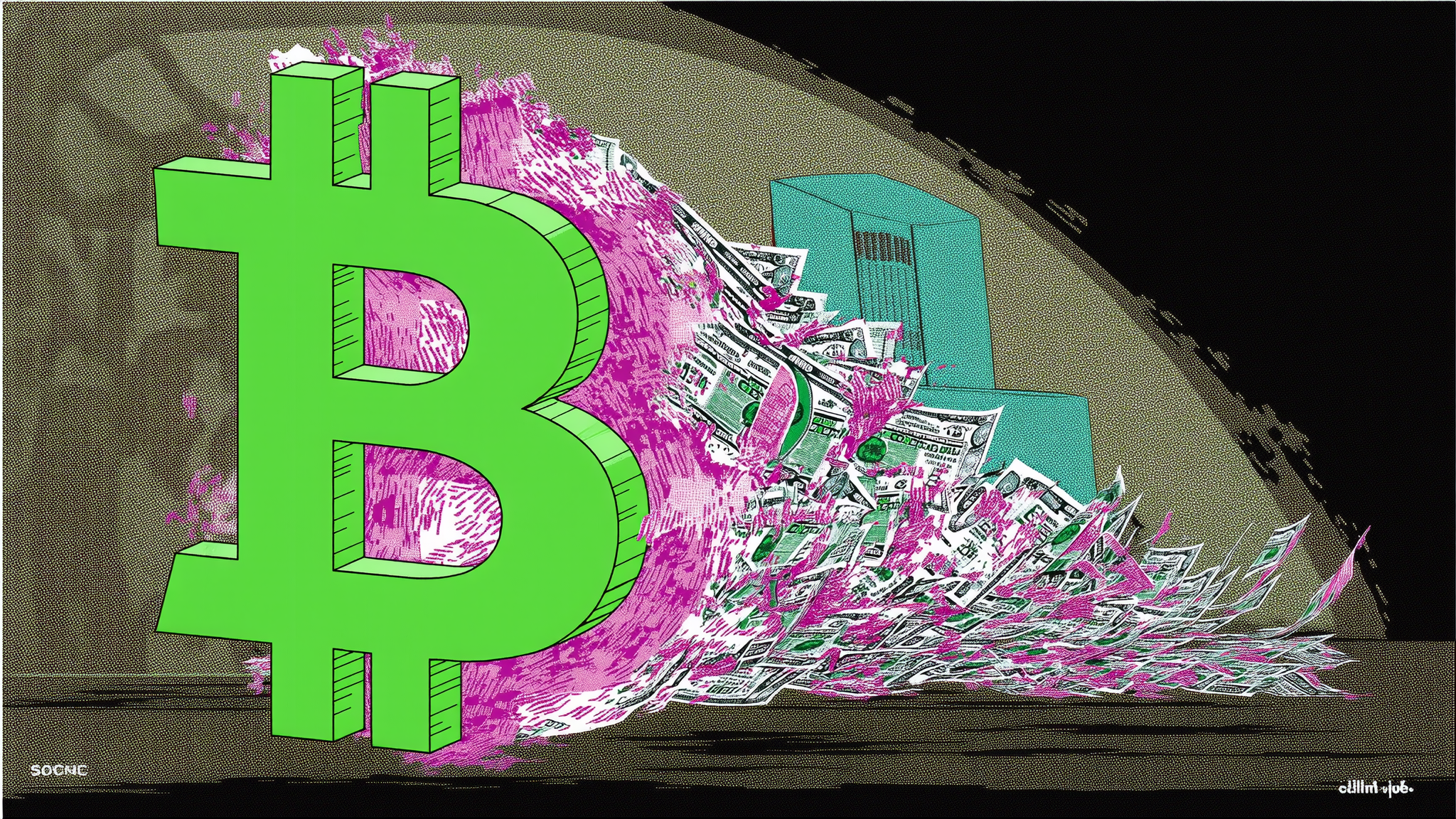
Before a memecoin reaches a normal exchange, its price is not set by buyers and sellers meeting in a market. It is set by a formula. That formula is the bonding curve, and it is the engine behind nearly every Solana memecoin launch. Here is how a bonding curve works, why launchpads use it, and why understanding it is the difference between trading and reacting late.
Summary
- A bonding curve is a mathematical formula that sets a token’s price automatically based on how much of its supply has been bought, so the price rises as people buy and falls as they sell.
- It lets a token launch with instant liquidity and no pre-funded pool, because buyers trade against the curve’s contract rather than against other traders.
- On the leading Solana launchpad, a token sells along its curve until it “graduates,” at which point its accumulated liquidity moves to a normal exchange and the curve is left behind.
- Curves come in shapes, mainly linear and exponential, that determine how violently the price moves and how brutally late buyers are punished.
- A bonding curve is a pricing mechanism, not a safety mechanism, and the large majority of tokens launched on curves lose most of their value within days.
A bonding curve is a mathematical pricing formula that sets a token’s price automatically based on how much of its supply has already been bought, so that the price rises as people buy and falls as people sell, without needing the traditional matching of buyers and sellers in an order book or a pre-funded pool of liquidity. That definition contains the whole idea, but its consequences are profound, because the bonding curve is what made the modern memecoin explosion possible. In an ordinary market, a token’s price emerges from buyers and sellers placing orders that meet at an agreed price, which requires liquidity to exist before trading can happen. A bonding curve removes that requirement.
It lets a brand-new token trade from the very first moment, with its price determined by a formula rather than by a market, and with liquidity created automatically as people buy. This is why a person with no technical skill and a small amount of money can launch a coin that is instantly tradable, and it is why tens of thousands of new tokens can appear every day. The bonding curve is the mechanism underneath all of it. Because the bonding curve governs how a memecoin behaves in its earliest and most volatile phase, understanding it is the single most useful piece of technical knowledge for anyone trying to make sense of memecoin launches, even from a safe distance.
This guide explains what a bonding curve is and how trading against one works, why launchpads adopted the model, how it operates in practice on the dominant Solana launchpad including the all-important moment of graduation, the different curve shapes and why they matter, a worked example that traces a buy through the curve, the uses of bonding curves beyond memecoins, and the risks the curve does and does not protect against. The point is not to encourage trading these tokens, most of which lose nearly all their value, but to make the mechanism legible, because a person who understands the curve can at least see what is happening when a fresh token rockets and collapses, instead of reacting late to forces they cannot name. The curve is the rule of the game, and knowing the rule is the beginning of not being its victim.
What a bonding curve actually is
Start with how trading against a bonding curve differs from trading in a normal market, because the distinction is the key to everything. In a conventional exchange, when you buy a token, you are buying it from another person who is selling, and the price is whatever buyers and sellers agree on through their orders. With a bonding curve, there is no counterparty on the other side; you are trading against a smart contract that follows a formula. When you buy, you send the network’s currency, on Solana that is SOL, to the bonding curve contract, and the contract issues you tokens at a price determined by the formula, then moves the price up the curve.
When you sell, you send your tokens back to the contract, which removes them from circulation and returns SOL to you at the formula’s current price, then moves the price down the curve. The price is purely a function of how far along the curve the supply has been bought; more buying pushes it up, more selling pulls it down, automatically and without any human market-maker. The reason this is called a bonding curve is that the price follows a curve plotted against the supply sold. As more of the token’s supply is purchased and moves out along the curve, each successive token costs more than the last, so the price climbs as the coin sells.
Crucially, the currency that buyers send in does not go to a seller; it stays locked in the contract, where it serves as the token’s liquidity, the pool of value that backs the ability to sell tokens back later. This is how a bonding curve creates liquidity automatically: every purchase adds to the locked pool, so the token is tradable from its first moment without anyone having to fund a liquidity pool in advance. That self-contained quality, a contract that prices the token, holds the liquidity, and handles both buying and selling by formula, is what makes the bonding curve such a powerful launch mechanism. It collapses everything a normal token launch requires, smart-contract deployment, liquidity provision, market-making, into a single automated curve that anyone can use.
Why launchpads use bonding curves
The appeal of the bonding curve to a launchpad, and to the people launching coins, comes down to removing barriers, and seeing why clarifies the model’s role. Traditionally, issuing a token that people could actually trade was involved: a developer had to write and deploy a smart contract, then pre-fund a liquidity pool with a meaningful amount of capital so the token had something to trade against, since without liquidity a token cannot be bought or sold at a stable price. This required both technical skill and money up front, which kept token creation in the hands of relatively few. The bonding curve demolishes both barriers.
Because the curve provides liquidity automatically as people buy, no one has to pre-fund a pool, and because the launchpad handles the contract, no one has to write code. A creator needs only a name, an image, a ticker, and a tiny amount of the network’s currency to cover a creation fee. This is why bonding-curve launchpads turned token creation into a one-click activity and unleashed the flood of memecoins now defining parts of Solana. The model also delivers what the platforms call a fair launch, in the sense that every buyer enters through the same curve from the same starting point, with no presale or insider allocation funded in advance, so the earliest public buyer and the latest both interact with the same automated pricing.
One launchpad even folds in a measure against the oldest memecoin scam by having creators buy their own tokens through the same curve as everyone else at launch, rather than secretly hoarding a huge allocation to dump later, which levels the starting field somewhat even though it does not remove all risk. The bonding curve, then, is the technology that made memecoin creation cheap, instant, and open to anyone, which is simultaneously the source of its creative energy and the reason the space is flooded with low-quality and predatory tokens. The same mechanism that empowers a hobbyist empowers a scammer, because the curve does not care who is using it. The fees around that system also matter, which is why the fees layered on each curve trade became a central debate for memecoin launchpads.
How it works on the leading launchpad
To see the bonding curve in action, it helps to follow how it operates on the dominant Solana launchpad, where the mechanics are well defined. When a coin is created there, it is issued with a large fixed supply, commonly 1 billion tokens, and a major portion of that supply, around 800 million tokens, is placed on the bonding curve to be sold. As buyers send the network’s currency to the curve, they receive tokens and the price rises along the curve, climbing as more of those 800 million are purchased. In the early phase, the coin exists only on the curve, not on any normal exchange, so all of its trading happens against the formula.
Some launchpads add gamified milestones to this phase; one highlights a coin prominently on its homepage once the coin reaches a certain threshold of buying, which functions as free visibility that can attract more buyers and accelerate the climb. The pivotal event in a curve’s life is graduation, and understanding it is essential. A coin graduates when enough of its curve supply has been bought to reach a set threshold, often described as around a particular market-cap level. At graduation, the liquidity that has accumulated in the curve, the pool of currency buyers sent in, migrates out of the curve and into a normal liquidity pool on a decentralized exchange, where the token then trades like a conventional market with buyers and sellers instead of against the curve.
On the leading launchpad, the accumulated liquidity moves to its associated exchange and the liquidity-pool tokens are burned, which is meant to assure traders that no one controls and can withdraw that liquidity. Reaching graduation typically requires the curve to fill with a meaningful amount of the network’s currency, and migrating costs a small additional amount in fees, so a coin whose creator cannot or will not push it over the line can stall on the curve indefinitely, a state traders sometimes call limbo. Graduation is a meaningful milestone because it signals a coin attracted enough buying to reach a normal market, but as the risk section stresses, it is emphatically not a guarantee of safety. Once graduation happens, the next question is where liquidity goes after graduation, because the token leaves the formula-driven phase and enters a pool-based market.
Curve shapes and why they matter
Not all bonding curves are the same shape, and the shape determines how the price behaves, which has direct consequences for anyone trading on it. The two broad types are linear and exponential curves, and the difference is intuitive once you picture it. A linear curve raises the price by a steady increment for each unit of supply sold, so the price climbs in a straight, predictable line. To use a simple illustration that explainer sources cite, with a linear formula where the price starts at $1 and rises by a fixed step, the first token might cost $1 and the hundredth token $11, a smooth and modelable progression.
Because the increase is steady, a linear curve is easier to reason about: a trader can estimate how much the price will move as they buy, and can scale into a position with some idea of their average entry and the slippage they will incur. An exponential curve behaves very differently and more dangerously for latecomers. On an exponential curve, the price does not just rise; it accelerates, so each additional unit of supply pushes the price up by a larger amount than the last. This creates powerful incentives to buy early, because the earliest buyers get in before the acceleration, and it punishes late buyers brutally, because by the time social attention arrives and a crowd rushes in, the price may already have moved far up the steepening curve.
Latecomers pay dramatically more and have far less room for the price to rise further before they are underwater. The practical lesson is that the curve’s shape is itself information a trader should read: a linear curve allows methodical, sized entries, while an exponential curve rewards speed and savagely penalizes the momentum traders who arrive after the supply has already climbed. Notably, on the leading launchpad, linear-style curves have been associated with higher survival rates than fixed-price launches, because the automated, progressive pricing resists the instant dumps that plague other launch formats. The shape of the curve, in short, is not a technicality; it is a map of where the danger lies, including why curve entries move against you when the formula changes the price as demand arrives.
A worked example: tracing a buy through the curve
To make the mechanics concrete, follow a single buyer through a bonding curve, using simplified numbers for clarity. Imagine a fresh coin on a launchpad with a linear curve, early in its life, where only a small fraction of the 800 million curve tokens have been bought, so the price per token is still very low. A buyer, call her the early entrant, sends a modest amount of SOL to the curve contract. The contract issues her a large number of tokens at the current low price and nudges the price up the curve as her purchase moves the supply further along.
Because she bought early on a curve that has barely moved, her tokens are cheap and her average entry price is low. The currency she sent stays locked in the contract as liquidity. Now imagine the coin starts trending. A wave of new buyers sends SOL to the same curve, each purchase moving the supply further along and ratcheting the price higher.
A later buyer, the latecomer, arrives after the coin has been featured and hyped, when much of the curve supply has already been bought. He sends the same amount of SOL the early entrant did, but because the price has climbed far up the curve, he receives far fewer tokens at a much higher average price. If the curve is exponential, the gap is even more extreme, because the price accelerated as the crowd bought in. Should the hype fade and buyers start selling back to the curve, the price slides back down it, and the latecomer, who paid the high price, is underwater long before the early entrant is.
This is the core dynamic of bonding-curve trading laid bare: the curve mechanically rewards those who buy when the supply is low and punishes those who buy after attention has already pushed the price up. The early entrant’s advantage is not skill but position on the curve, and the latecomer’s disadvantage is structural. The example shows why, in this arena, timing relative to the curve matters more than the quality of the coin, and why so many people who chase a trending token arrive precisely when the curve has already made the trade dangerous. For a cultural view of that behavior, trading the curve in practice is what traders call life in the trenches.
Bonding curves beyond memecoins
Although memecoins are where most people encounter bonding curves, the mechanism is a general tool with legitimate uses, and recognizing that gives a fuller picture. The core idea, pricing a token by formula against its supply and providing liquidity automatically, is useful anywhere a project wants continuous, demand-driven issuance instead of a single fixed launch event. Some projects use bonding curves so that demand determines access and pricing over time, letting a token be issued gradually as people buy in, instead of forcing everything through one launch moment. This continuous-issuance model has appeared in corners of crypto beyond memecoins, including in social applications where the curve priced access to a creator or community, with one well-known social-token experiment matching the curve mechanism to its product in a way many later copycats did not.
The honest framing is that the bonding curve is a neutral piece of financial engineering whose character depends entirely on what it is attached to. On its constructive side, it solves a real problem: it lets a project bootstrap liquidity and discover price without a pre-funded pool or a centralized market-maker, which is genuinely useful for certain launch and issuance designs. On its speculative side, the same mechanism can price anything, including tokens with no purpose, and it works mechanically even when it works economically against the people buying. As one analysis put it, a bonding curve can price anything, but it cannot create lasting demand for something nobody wants to hold once the launch excitement fades.
That is the crux. The curve is excellent at manufacturing a price and a tradable market out of nothing, which is exactly why it powers both legitimate continuous-issuance designs and the endless churn of disposable memecoins. The technology is the same; the outcomes diverge based on whether there is any real reason to hold the token after the novelty wears off. Most of the time, in the memecoin context, there is not, even when a curve launch that went parabolic briefly makes the mechanism look like a wealth machine.
Risks: the curve is a mechanism, not a safety net
The most important thing to understand about a bonding curve is what it does not do, because misreading its protections is how people get hurt. A bonding curve sets a price and provides liquidity; it does not make a token safe, valuable, or likely to succeed. The hard data on this is sobering. Analyses of Solana memecoin launches have found that the large majority of tokens launched on bonding curves, on the order of 80% or more, lose more than 90% of their value within about a week, often tied to creators or insiders dumping once the curve phase ends and conditions change.
So the default expectation for a fresh curve launch should be a temporary opportunity at best and a near-certain loss at worst, not a durable asset. The curve’s automated pricing does nothing to change the fact that most of these tokens have no purpose and no reason for anyone to hold them once the initial excitement fades. Several specific risks deserve naming. Creator and insider dumping is common: once a curve completes or conditions shift, those holding large early positions may sell into the buyers who arrived later, collapsing the price.
Whale-driven distortion is another: a large buyer can push the price quickly up the curve to create the appearance of demand, then unwind into the crowd that follows. Graduation, despite feeling like a milestone, is not safety; a graduated coin trading on a normal exchange can still collapse if hype fades, whales sell, or new buyers stop arriving, and post-graduation liquidity can be thin. The curve’s shape compounds these dangers, with exponential curves punishing latecomers especially hard. And the broader environment is one in which, by some estimates, the overwhelming majority of launchpad tokens are scams, pump-and-dumps, or jokes with no lasting viability.
The clear-eyed conclusion is that a bonding curve is a clever pricing and liquidity mechanism, not a protective one, and that understanding the curve should make a person more cautious, not more confident. Knowing how the curve works lets you see the trap; it does not disarm it. The only reliable protection is to treat curve-launched tokens as high-risk speculation, to check holder concentration, liquidity, and curve shape before doing anything, and to never commit money you cannot afford to lose entirely.
Frequently asked questions
What is a bonding curve in simple terms?
A bonding curve is a formula that sets a token’s price based on how much of its supply has been bought, so the price rises as people buy and falls as they sell. Instead of trading against other people in a market, you trade against a smart contract that follows the formula: you send currency and receive tokens at the curve’s current price, which then moves up. The currency you send stays locked in the contract as the token’s liquidity. This lets a brand-new token be tradable instantly, with no pre-funded liquidity pool and no order book, which is why bonding curves power the one-click memecoin launches common on Solana
How does a token graduate from a bonding curve?
A token graduates when enough of its curve supply has been bought to reach a set threshold, often described around a particular market-cap level. At that point, the liquidity accumulated in the curve, the currency buyers sent in, migrates out of the curve into a normal liquidity pool on a decentralized exchange, where the token then trades like a conventional market between buyers and sellers instead of against the curve. On the leading Solana launchpad, the liquidity-pool tokens are burned at graduation so no one can withdraw that liquidity. Reaching graduation requires the curve to fill with a meaningful amount of currency, and a coin that never gets there can stall on the curve indefinitely.
What is the difference between linear and exponential curves?
The difference is how fast the price rises. A linear curve raises the price by a steady, fixed increment for each unit of supply sold, so the price climbs in a predictable straight line, which makes it easier to estimate slippage and scale into a position. An exponential curve accelerates, raising the price by a larger amount with each unit sold, so the price rises faster and faster. Exponential curves strongly reward early buyers and brutally punish late ones, because by the time a crowd arrives, the price may have already climbed steeply, leaving latecomers paying far more with much less upside.
Does a bonding curve make a token safe?
No. A bonding curve is a pricing and liquidity mechanism, not a safety mechanism. It sets a price and provides liquidity, but it does nothing to make a token valuable or likely to succeed. Analyses of Solana launches found that the large majority of bonding-curve tokens, around 80% or more, lose over 90% of their value within about a week, often when creators or insiders dump after the curve phase. Graduation is not safety either, since a graduated coin can still collapse.
Why do launchpads use bonding curves?
Because they remove the two big barriers to launching a tradable token: technical skill and upfront capital. Normally a creator would have to deploy a smart contract and pre-fund a liquidity pool so the token had something to trade against. A bonding curve eliminates both, because it provides liquidity automatically as people buy and the launchpad handles the contract, so a creator needs only a name, image, ticker, and a tiny fee. This turned token creation into a one-click activity and unleashed the flood of memecoins on Solana.
Can bonding curves be used for things other than memecoins?
Yes. The bonding curve is a general tool for any project that wants continuous, demand-driven token issuance instead of a single fixed launch, because it lets demand determine pricing and access over time while providing liquidity automatically. It has been used beyond memecoins, including in social applications where a curve priced access to a creator or community. The mechanism itself is neutral financial engineering; its character depends on what it is attached to. It can support legitimate continuous-issuance designs, and it can equally price tokens with no purpose.
This article is educational information, not financial advice. Descriptions of bonding-curve mechanics, launchpad behavior, and failure statistics reflect reporting available as of June 29, 2026, and can change. Tokens launched on bonding curves are extremely high-risk and the large majority lose most or all of their value. Nothing here encourages trading such tokens. Verify any specific platform’s mechanics independently and consult a qualified professional before making any decision.



Pakistan’s Federal Investigation Agency has created a dedicated cryptocurrency investigation unit as the country builds a broader system for regulating and policing digital assets.
Summary
- Pakistan’s FIA created a specialist crypto unit to investigate money laundering and terrorism financing cases.
- The new unit will operate alongside PVARA as Pakistan expands oversight of licensed digital assets.
- Officials also want cybercrime and anti-narcotics agencies to build dedicated teams for crypto-linked criminal investigations.
The new unit sits within the FIA’s National Command and Control Centre, or NC3, and will investigate the suspected use of cryptocurrencies in money laundering, terrorism financing and other crimes, Dawn reported. The move separates criminal investigations from the work of the Pakistan Virtual Assets Regulatory Authority, which oversees the country’s regulated digital asset sector.
Muhammad Athar Waheed, director of the FIA’s Counter-Terrorism Wing, said PVARA remains responsible for digital asset regulation, while the FIA will focus on possible criminal activity involving cryptocurrencies. He also called for the National Cyber Crime Investigation Agency and the Anti-Narcotics Force to create similar specialist teams for cybercrime and drug-related cases involving digital assets.
FIA builds dedicated capacity for crypto investigations
The cryptocurrency investigation team forms part of a wider upgrade at the FIA’s NC3. The command centre brings several investigative and monitoring functions onto one platform. These include anti-money laundering teams, border monitoring, intelligence coordination, cyber patrols, dark web investigations and cooperation with Interpol.
Officials said the system allows the agency to coordinate cases across its offices and monitor investigations in real time. The FIA is also introducing new rules aimed at completing inquiries within set timeframes. One official said “many new things are in the pipeline” as the agency continues expanding its investigative capacity.
The agency’s move comes as governments and law enforcement bodies worldwide increase their focus on how criminals move funds through digital assets. Crypto transactions remain visible on public blockchains in many cases, but investigators often need specialist tools and training to trace funds across wallets, exchanges, bridges and different networks.
In Pakistan, the FIA’s new unit gives law enforcement a team focused specifically on that work. Meanwhile, PVARA will continue handling licensing and supervision rather than criminal investigations. This creates separate roles for market regulation and law enforcement as Pakistan develops its formal crypto framework.
Pakistan expands its regulated digital asset market
The launch follows months of changes to Pakistan’s cryptocurrency rules. The Virtual Assets Act 2026 established PVARA as the federal authority responsible for supervising virtual asset service providers, including exchanges, custodians, brokers and token issuers. The regulator has also been working on operating standards for companies seeking to serve local users.
As crypto.news previously reported, the State Bank of Pakistan also allowed regulated banks to provide accounts to PVARA-licensed digital asset companies in April. Banks must verify licences, monitor accounts and keep customer funds separate from company money. They must also continue following anti-money laundering and counterterrorism financing requirements.
The banking decision followed Pakistan’s earlier effort to bring international trading platforms into a licensed market. As previously reported, PVARA invited global exchanges and other virtual asset service providers to apply for approval to operate in the country. Applicants must provide information on compliance records, security systems, financial details and local business plans.
These regulatory steps have created a formal route for licensed crypto activity while the FIA builds tools to investigate suspected crimes. The two systems serve different functions: PVARA sets and enforces rules for registered businesses, while law enforcement investigates possible violations of criminal law.
Stablecoins and Bitcoin remain part of Pakistan’s plans
Pakistan has also explored wider uses for blockchain-based financial systems. As crypto.news reported, the government signed an agreement in January with SC Financial Technologies, an affiliate of World Liberty Financial, to study the possible use of the USD1 stablecoin for cross-border payments.
The country has also discussed plans for a state-held Bitcoin reserve and the use of surplus electricity for Bitcoin mining and artificial intelligence data centres. Earlier policy discussions also covered cooperation with international crypto companies as Pakistan sought to bring more digital asset activity into a regulated system.
However, the rapid expansion of the sector has also brought closer attention to financial crime controls. The State Bank requires regulated institutions to report suspicious activity under existing anti-money laundering rules, while the FIA’s new unit will investigate cases where authorities suspect digital assets played a role in criminal activity.
Pakistan’s latest move therefore adds a dedicated law enforcement layer to its developing crypto framework. PVARA will continue supervising licensed companies, while the FIA’s specialist unit will focus on alleged criminal use of digital assets. Other federal agencies could also establish their own crypto-focused teams if they follow the recommendation made by the FIA’s Counter-Terrorism Wing director.
Sky Frontier Foundation, the entity handling reporting for the Sky Ecosystem, disclosed a record $419.08 million annualized gross revenue run-rate in its June 2026 Financial & Operational Update, published Friday. Sky, formerly MakerDAO and now a $6.12 billion-TVL lending and stablecoin protocol… Read the full story at The Defiant
Polymarket has applied for a US futures commission merchant license to offer margin trading on its prediction markets, Bloomberg reported Thursday. The move would let traders open positions without posting full collateral upfront. The application, filed July 3 with the National Futures Association… Read the full story at The Defiant
Crypto World
Franklin Templeton Suggests Altcoins Could Be the Missing Piece of the Agentic AI Trade


Franklin Templeton says investors chasing artificial intelligence (AI) growth should look beyond AI stocks. The $1.8 trillion manager suggests cryptocurrencies and altcoins may be key to capturing the potential of agentic AI.
The argument comes from Sandy Kaul, head of digital assets at Franklin Templeton. She contends that agentic AI could become the “killer” use case that drives blockchain adoption.
Why Franklin Templeton Points to Crypto
Kaul’s thesis rests on how AI agents will transact. Autonomous software will make constant micropayments for compute, data, and services.
Standard card networks charge roughly 2% to 3% plus a flat fee per payment. Those costs make tiny machine payments impractical. Blockchains can settle sub-cent transactions in seconds and automatically record them.
“Agentic AI will likely need to rely on crypto technologies and blockchains to enable their activities as these rails are ideally suited for these use cases. Indeed, blockchains and crypto technologies are likely to become the foundational delivery layer for these transactions,” Kaul said.
Emerging standards support the idea. Coinbase built the x402 payment protocol and moved it to the Linux Foundation. Backers now include Visa, Mastercard, Stripe, Google, and Circle.
Follow us on X to get the latest news as it happens
The Case for Altcoins
The investment logic follows the transaction demand. To record activity on a chain, an agent pays fees in that network’s native token.
Kaul uses Solana (SOL) as her example. Rising agent activity could lift demand for the tokens of the chains that host it. She expects enterprise software to drive the first wave.
“Today, investors have positioned their portfolios to capture the AI growth opportunity by buying the stock of AI-aligned companies,” she noted. “To capture the potential of agentic AI, those same portfolios should consider extending their exposure to cryptocurrencies and the alt coins being generated by blockchain-based apps and projects.”
The opportunity remains largely forward-looking. McKinsey estimates agentic commerce could orchestrate $3 trillion to $5 trillion in revenue by 2030.
If a meaningful share of those transactions runs on blockchain networks, demand for the cryptocurrencies powering those ecosystems could rise, potentially strengthening the investment case for digital assets beyond traditional AI stocks.
Subscribe to our YouTube channel to watch leaders and journalists provide expert insights
The post Franklin Templeton Suggests Altcoins Could Be the Missing Piece of the Agentic AI Trade appeared first on BeInCrypto.
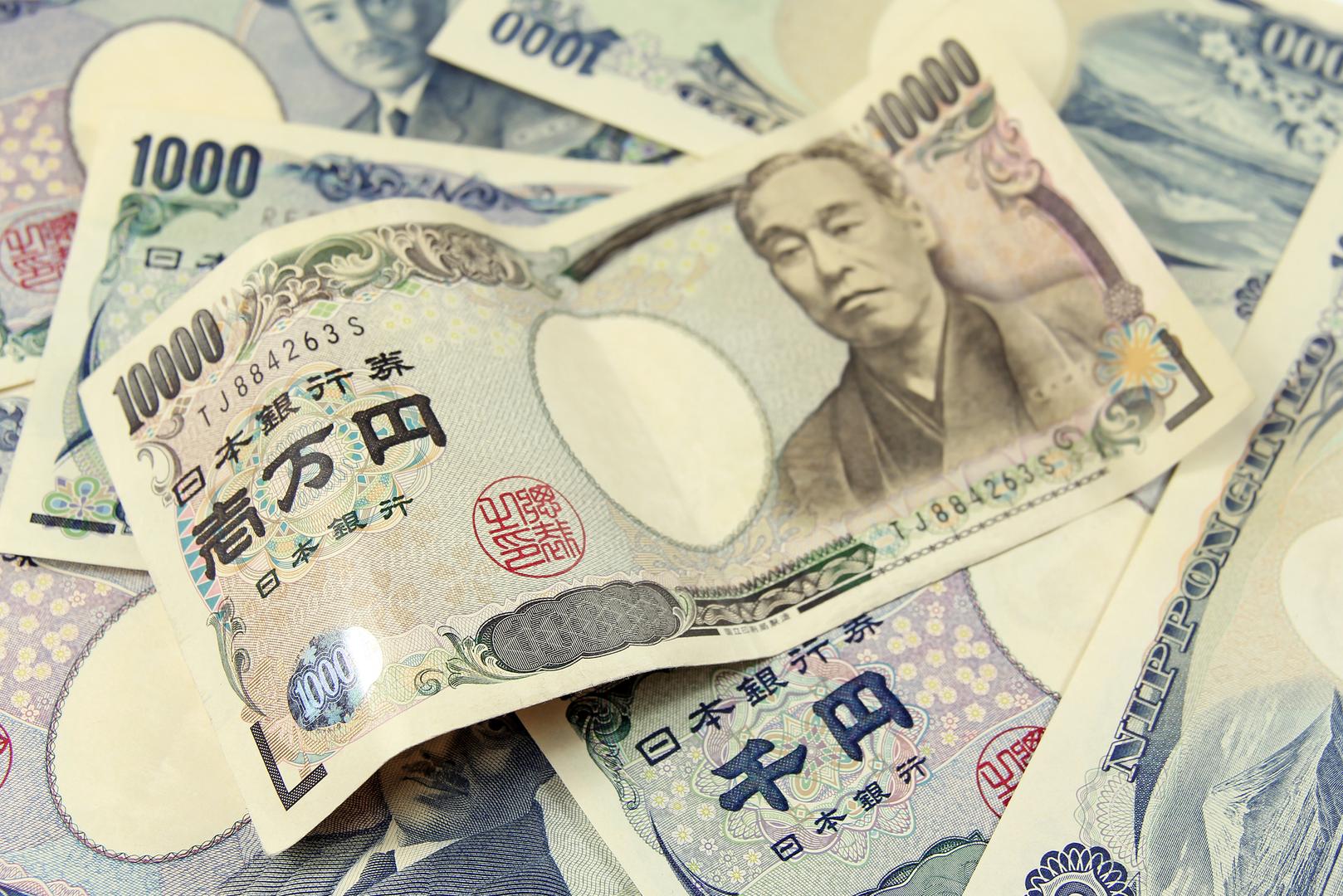
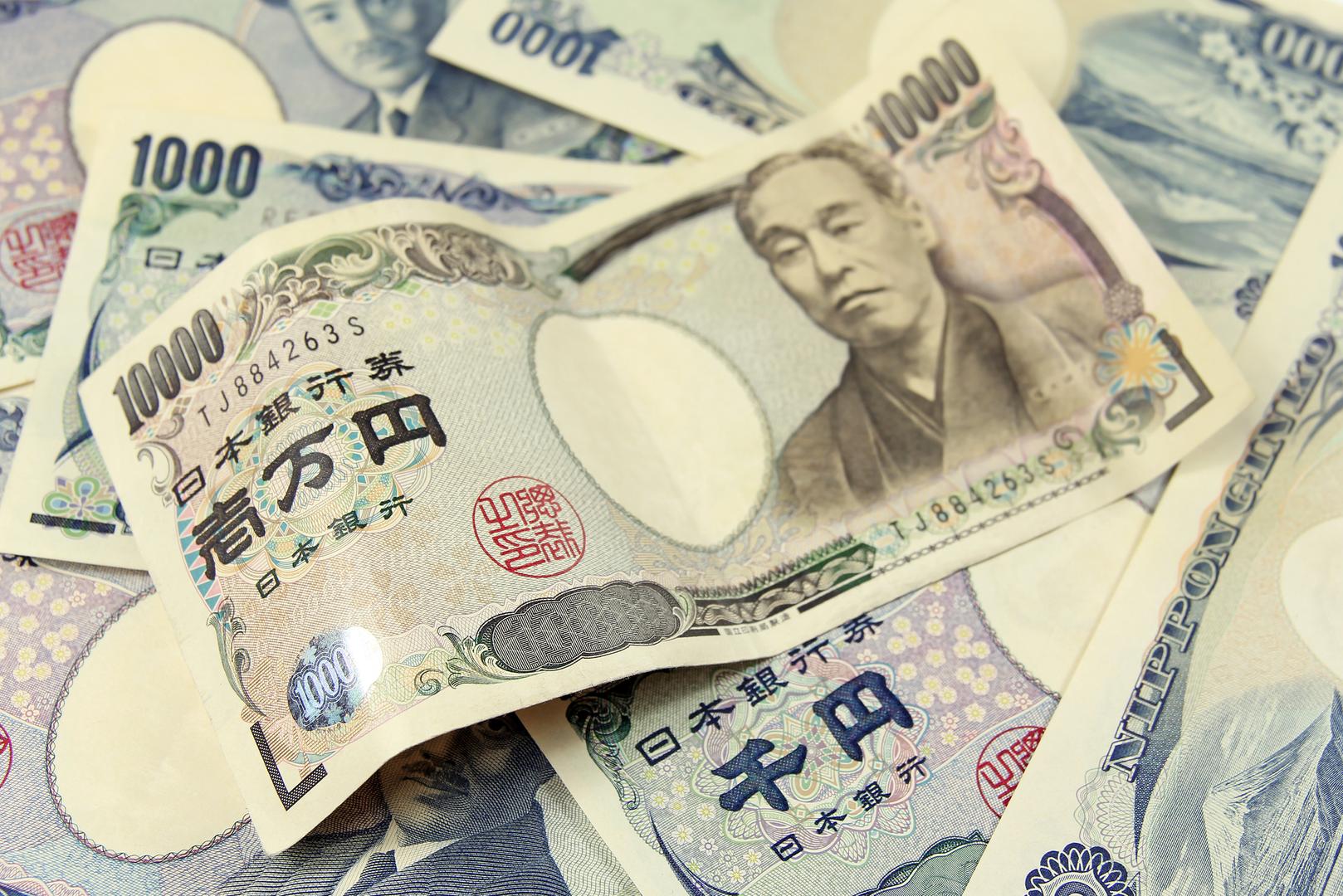
Bitcoin held near $66,300 on Wednesday, consolidating a two-week high, as the semiconductor rally that has driven crypto all month extended into a second session and the Japanese yen sank to its weakest level in four decades.
The largest cryptocurrency was up nearly 1% on the day and 3% on the week, with about $31 billion changing hands and a 24-hour range of roughly $65,400 to $66,900.
Ether traded near $1,935, up 3% on the week. XRP added 2% to $1.14 and TRON edged up, while the day’s laggard was hyperliquid’s HYPE, down 4% to $60 and off 10% over seven sessions. Bitcoin’s dominance and the majors’ muted daily moves point to a market drifting higher on macro rather than any crypto-native catalyst.
The engine is still the chip trade. MSCI’s Asia Pacific equities gauge rose 1%, extending Tuesday’s biggest one-day gain in a month, with South Korea’s Kospi jumping 5% as a leveraged-position unwind that had pulled the benchmark nearly 30% off its peak appeared to be ending.
Samsung and SK Hynix led, following a more than 5% jump in a U.S. semiconductor gauge on Tuesday that clawed the index back out of a technical bear-market territory.


Balance Coin (BLC), an algorithmic stablecoin designed to track the U.S. dollar, lost more than 99% of its value after blockchain security firms reported a suspected exploit involving 42DAO.
Summary
- Balance Coin lost more than 99% after security firms linked its collapse to 42DAO exploit.
- Attackers reportedly minted unbacked BLC before swapping tokens for USDT and BTCB through PancakeSwap pools.
- Two suspicious transactions on BNB Chain reportedly extracted about $915,000 as Balance Coin rapidly depegged.
PeckShield said the incident caused about $915,000 in losses and linked the BLC collapse to an exploit affecting 42DAO, the decentralized organization connected to the Balance Protocol ecosystem. The security firm said Balance Coin “has plummeted -99%” following the reported attack.
The price fell from close to its intended $1 peg to a record low of $0.001209 on July 22. At the time of checking, CoinMarketCap showed BLC trading near $0.00247, down 99.75% over 24 hours. Its 24-hour range stretched from $0.001209 to $0.9955.
Security firms trace suspected attack to two transactions
TenArmor reported detecting two suspicious transactions involving GemJoin and 42DAO on BNB Chain. Onchain data cited in reports showed that the first transaction minted about 4.5 million BLC from a null address before moving the tokens to PancakeSwap V2.
The attacker then reportedly swapped the newly created BLC for Binance-pegged USDT, also known as BSC-USD, and Binance Bitcoin (BTCB). Around two hours later, a second transaction allegedly used the same method to mint another 5,900 BLC and extract more assets from available liquidity.
The reported minting increased the number of BLC tokens available for sale without the normal controls expected from the protocol. As the newly created tokens entered decentralized exchange pools, selling pressure pushed BLC sharply away from its dollar target.
PeckShield estimated the losses at about $915,000. However, the security firms described the event based on their analysis of onchain activity, and a detailed post-incident report from 42DAO had not been identified in the latest available public information reviewed for this report.
Balance Coin loses its U.S. dollar peg
Balance Coin operates as the stablecoin at the center of the Balance Protocol ecosystem. CoinMarketCap describes BLC as an algorithmic stablecoin on BNB Chain designed to maintain a stable value against the U.S. dollar, while 42DAO describes the token as part of its wider financial ecosystem.
The token’s fall left it trading at a small fraction of its intended value. Although its price recovered slightly from the intraday low, it remained more than 99% below the level recorded before the reported exploit when checked.
The incident resembles other cases in which unauthorized token creation placed sudden pressure on market liquidity. As crypto.news reported, Resolv’s USR stablecoin lost its peg in March after an attacker minted millions of unbacked tokens and exchanged them through DeFi markets. Resolv later paused protocol functions while investigating the breach.
Unauthorized minting remains a recurring attack method
Other crypto projects have also faced sharp price declines after attackers created tokens without authorization. As previously reported by crypto.news, MAPO fell 96% in May after attackers exploited a bridge flaw to create unauthorized tokens and sell them into decentralized exchange liquidity.
In another case, Stake DAO faced an exploit in May after an attacker reportedly minted trillions of vsdCRV tokens before swapping them for ETH. These cases involved different technical weaknesses, but each allowed an attacker to create tokens outside the expected supply process.
For Balance Coin, the immediate focus remains on the reported 42DAO exploit and the status of BLC after its near-total depeg. The available onchain reports point to two suspected attack transactions,
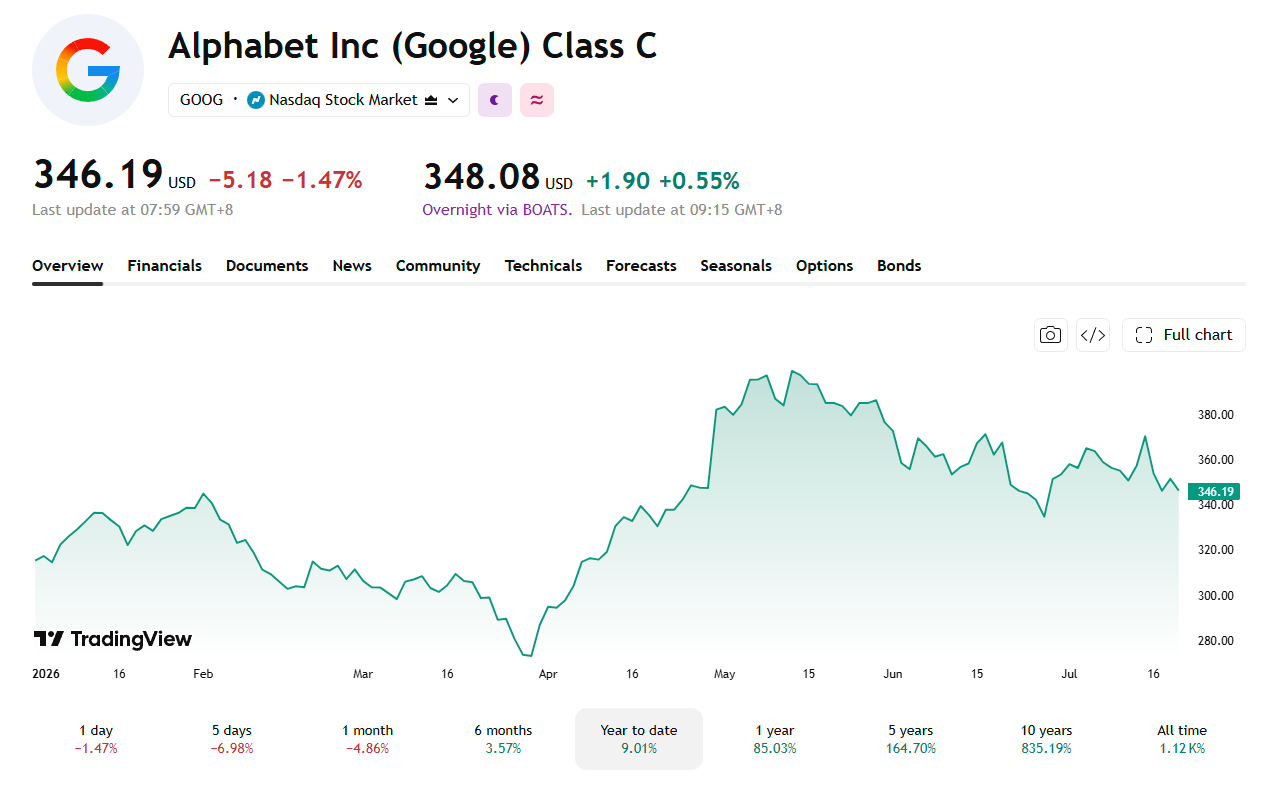
Alphabet (GOOGL), Google’s parent company, reports second-quarter earnings today after the market closes. Wall Street expects double-digit growth. But investors are watching one thing more closely: can the company’s massive artificial intelligence spending start to pay off?
The stock has climbed sharply over the past year. It has also pulled back from its May highs heading into the print. Here is what a general investor should watch for.
The Numbers Analysts Expect
Consensus estimates point to revenue of roughly $116.8 billion, up about 21% from a year earlier. Analysts expect earnings of approximately $2.89 per share. Alphabet has beaten estimates for several straight quarters. That track record raises the bar for today’s report.

Google Cloud grew 63% year over year last quarter, the fastest pace among major cloud providers. Total company revenue rose 22% to $109.8 billion. The cloud unit’s profit margin nearly doubled too.
Net income also jumped, but unrealized gains on Alphabet’s stakes in companies like SpaceX drove much of that increase. Investors will look past the headline profit number today. They want to gauge how much came from actual operations, not paper gains. Cloud growth, not the profit headline, is the number that matters most this quarter.
AI Spending Is the Real Story
Alphabet has guided for $180 billion to $190 billion in 2026 capital spending. That’s the money it spends building data centers and AI chips, however, thatfigure has tested investor patience. The company recently raised fresh equity to help fund the buildout, a move that broke a decades-long habit of funding growth internally.
Cloud’s roughly $460 billion order backlog fuels the bull case and points to years of future revenue already booked. The bear case is simpler; slow profit conversion, or a Gemini rollout that keeps slipping, could send the stock lower regardless of today’s headline numbers.
What Else Could Move the Stock
Search advertising remains Alphabet’s largest business and Investors want reassurance that AI-generated search summaries aren’t eroding traditional ad revenue. Some Wall Street desks have also rotated out of Meta stock and into Google because they’re betting Alphabet’s cloud and chip business offers a clearer path to AI profits than its rivals.
Alphabet’s custom AI chips, called Tensor Processing Units, add another wrinkle. The company recently started selling this chip technology to outside customers. Any update on that business could reshape how analysts view Alphabet’s AI strategy beyond its own products.
The takeaway for most investors is simple. The market wants proof that Alphabet’s AI bet is turning into durable profit, not just bigger bills, so Strong revenue alone won’t be enough today.
Watch how management addresses capex, Cloud backlog conversion, and the Gemini timeline on today’s call. Those answers could move the stock more than the quarterly numbers themselves.
The post Google Earnings Today: What to Expect as AI Spending Faces Scrutiny appeared first on BeInCrypto.
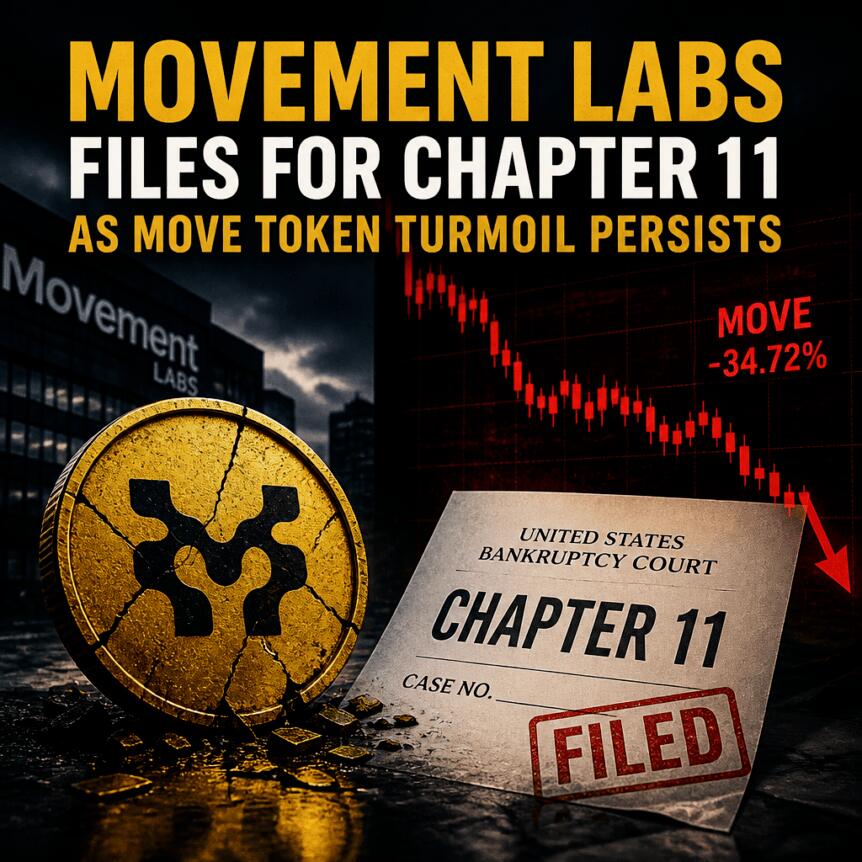
Movement Labs, the team behind the Movement Ethereum layer-2 blockchain, has filed for Chapter 11 bankruptcy protection in the US Bankruptcy Court for the District of Delaware, according to court records. The filing, made July 15, uses Subchapter V—an expedited reorganization track intended for qualifying small businesses—while the company restructures under court supervision.
The court has already approved interim requests that allow Movement Labs to keep operating through the process. Those approvals include maintaining bank accounts and cash management systems, along with access to debtor-in-possession (DIP) financing to fund continued operations. Creditors have until Sept. 14 to submit claims.
Key takeaways
- Movement Labs filed for Chapter 11 under Subchapter V, enabling continued operations while it restructures.
- Interim court approvals cover cash handling and DIP financing to support day-to-day operations during bankruptcy.
- The petition applies to Movement Labs only, according to Move Industries CEO Torab Torabi.
- Multiple earlier setbacks tied to MOVE token trading and market-making concerns preceded the bankruptcy filing.
Court-supervised reorganization begins under Subchapter V
In its Chapter 11 filing, Movement Labs sought protection as it reorganizes following a period of disruption for the Movement ecosystem. The petition was filed July 15 in the District of Delaware and placed the company under court oversight, with Subchapter V designed to streamline the path to reorganization for eligible businesses.
Per the court approvals reported in the filing process, Movement Labs was allowed to continue using its banking and cash management arrangements. The court also authorized debtor-in-possession financing—an important step in Chapter 11 cases because it can help preserve operational continuity while liabilities are addressed.
The timeline for creditors is set at Sept. 14 to file claims, giving holders of potential debts a defined window to participate in the bankruptcy process.
What “Chapter 11” means for the ecosystem
After the bankruptcy filing became public, Move Industries CEO Torab Torabi clarified that the court protection applies only to Movement Labs. Torabi wrote on X that Move Industries—described as having taken over development and operations of the Movement ecosystem—continues to operate normally.
Earlier coverage and Movement’s own communications indicate that Move Industries assumed responsibility for development and operations from Movement Labs in December 2025, through a transfer described in a post on the Movement Network website: Movement Network Foundation and Move Industries announce completion of.
That distinction matters for readers trying to separate the corporate entity in bankruptcy from the broader project. While Chapter 11 may affect contracts, liabilities, and certain company-held assets, it does not automatically mean all ecosystem activity halts—especially where another operator is already handling development and operations.
A market-making controversy and listing actions preceded the filing
Movement Labs’ bankruptcy comes after months of controversy connected to the launch of Movement’s MOVE token and a market-making agreement that drew scrutiny.
According to earlier reporting from Cointelegraph, Movement Labs suspended co-founder Rushi Manche in May 2025 over a deal he helped broker with Web3Port. The market maker reportedly received 66 million MOVE—about 5% of the token’s supply—and later sold the holdings. Cointelegraph noted this was followed by an independent investigation, with the reported sales creating downward pressure on the token’s price.
Cointelegraph also reported that Coinbase suspended trading for MOVE later in May 2025 after determining the token no longer met its listing standards, while review into the market-making arrangement was ongoing.
In the period since those events, the MOVE token faced prolonged weakness. Cointelegraph cited a continued decline, stating the token has fallen more than 94% over the past year to roughly $0.01. The article referenced CoinGecko for the one-year price chart: CoinGecko.
Investors and users: what to watch next
Chapter 11 filings often signal the beginning of a longer restructuring process, and this one is likely to add a layer of legal complexity to questions around Movement Labs’ obligations and any assets under its control. Even if Move Industries continues operating, the bankruptcy proceedings can still influence how related contracts are handled and how remaining stakeholders are treated.
With creditors now having until Sept. 14 to file claims, the next steps worth monitoring are the bankruptcy court’s ongoing approvals, the scope of DIP financing over time, and whether subsequent filings clarify what parties will be prioritized during restructuring.


President Donald Trump called on the Senate to pass the Clarity Act "in honor of Senator Lindsey Graham, a big supporter" of the crypto market structure bill, in a Truth Social post Monday. Graham, the South Carolina Republican and Senate Banking Committee chair, died unexpectedly on July 11. Trump… Read the full story at The Defiant
Strategy sold $466.7 million worth of MSTR common stock between July 6 and July 12, 2026, lifting its USD reserve to $3 billion while leaving its bitcoin holdings unchanged at 843,775 BTC, according to a Form 8-K the company filed with the SEC on July 13. The company sold roughly 4.82 million… Read the full story at The Defiant

Jennifer Love Hewitt Unveils Bold Hair Transformation

Harper Beckham’s, 15, beauty brand name is ‘revealed’ as she prepares to follow in Victoria’s footsteps – after her first choice was ‘denied trademark in America’

Removing tax from sanitary products ‘pointless’, senator says


-
 NewsBeat6 days ago
London Mayor Sadiq Khan handed a peerage by Keir Starmer alongside 15 other Labour figures… just days before the PM leaves No10
-

 Fashion4 days ago
Weekend Open Thread – Corporette.com
-

 Politics4 days ago
The House | The City of London can help the new chancellor deliver growth in every postcode
-

 Politics7 days ago
Young campaigners urge incoming PM to act on outdoor junk food ads
-
 Crypto World5 days ago
Two July Windows Left: The CLARITY Act’s Senate Fight and What Failure Means
-

 Crypto World6 days ago
CFTC blocks Kalshi from unwinding Michigan trades after court order
-

 Crypto World4 days ago
Ripple Payments Joins MiCA With 14 Firms, Does It Mean Anything For XRP?
-

 Business6 days ago
Nvidia Stock Slips After Big Tuesday Rally as Huang Confirms Vera Rubin Chip Is Now in Production Today
-

 Politics3 days ago
Democrats look to World Cup watch parties to register thousands of voters
-
 Entertainment7 days ago
Disney’s Most Ambitious Failed Star Wars Attraction Is Coming to SDCC
-

 Crypto World4 days ago
Ripple wins EU-wide access as ESMA adds it to MiCA register
-

 Crypto World21 hours ago
Grayscale Files For Worldcoin ETF, WLD Registers Sharp Rise
-

 Crypto World5 days ago
Injective Submits SEC Transfer-Agent Registration to Onchain Ownership Records
-

 Business6 days ago
Palantir Shares Rise After Expanded Nvidia Partnership and Fresh Analyst Upgrades Ahead of Earnings Day
-

 Tech1 day ago
Sail Virtually Aboard The “Itanic” With IA-64 Emulator
-
 Tech1 day ago
Turtle Beach Command Series KB7 review: a nifty screen-equipped gaming keyboard
-

 NewsBeat5 days ago
Registration is now open for March for Men with Kev 2026
-

 NewsBeat2 days ago
Unregistered fitter used Gas Safe logo on business flyers
-
 Sports6 days ago
New Cornerback Enters Vikings Trade Rumor Mill
-

 News Videos5 days ago
Money | Class 12 Economics | CBSE Board Exam 2026-27
You must be logged in to post a comment Login