
Crypto World
which 2026 IPO era bet actually pays


SpaceX is trading below its $135 IPO price. Marathon Digital is down 34% year to date. Coinbase has outperformed both. The math on which tech bet delivers risk adjusted returns has not been done until now.
Summary
- SpaceX stock (SPCX) trades at approximately $131 as of mid August, 3% below its $135 IPO price from June 2026, after peaking at $225.64 and declining 48% from that high, giving early investors a negative return two months into the listing.
- Coinbase (COIN) has returned roughly 18% year to date through August 2026, outperforming SpaceX, Marathon Digital, Riot Platforms, and every other publicly traded crypto company, driven by exchange volume and stablecoin custody revenue rather than bitcoin price appreciation alone.
- Marathon Digital (MARA) and Riot Platforms (RIOT) have declined 34% and 29% respectively in 2026, tracking bitcoin’s flat to negative price action while absorbing rising energy costs and post halving margin compression.
- A dollar invested in bitcoin on January 1, 2026 would have returned approximately 4% by mid August, while a dollar invested in MARA would have lost 34 cents, meaning the underlying asset outperformed the company that mines it by 38 percentage points.
- ARK Invest has deployed over $475 million into SpaceX stock since the IPO despite the price decline, while simultaneously reducing its COIN position, creating a measurable bet that SpaceX will outperform crypto equities over the next 12 months.
The largest IPO in history arrived in June 2026 and immediately became the most traded stock in the world. SpaceX priced at $135, opened above $190, touched $225.64 within two weeks, and then fell 48% to a post IPO low of $119.79 before stabilizing near $131. Two months after listing, buyers at the IPO price are underwater. Buyers at the peak have lost nearly half their position.
During the same period, the crypto industry’s publicly traded companies followed their own trajectory. Coinbase gained 18% year to date. Marathon Digital lost 34%. Riot Platforms lost 29%. MicroStrategy, which rebranded to Strategy and now holds over 500,000 bitcoin on its balance sheet, moved roughly in line with bitcoin itself. The performances diverge sharply enough to raise a question that retail investors have been asking without receiving a rigorous answer: which of these bets actually pays?
The question matters because SpaceX and crypto stocks are competing for the same capital. They attract the same cohort of retail investors who seek asymmetric returns in technology. They trade on the same platforms. They appear in the same ARK Invest portfolios. And they share a common vulnerability: both are priced on narratives that have not yet been validated by sustained cash flow, which means the math on returns, volatility, and risk adjusted performance determines which narrative deserves the premium.
The SpaceX return that was not
SpaceX reported $7.8 billion in second quarter revenue, exceeding Wall Street estimates. The company completed a $60 billion stock based acquisition of Anysphere, the company behind the Cursor coding platform, adding an AI business to its rocket and satellite operations. Starlink, its satellite internet division, crossed 5 million subscribers. By every operational metric, SpaceX is performing.
The stock is not. At $131, SPCX sits 3% below its IPO price. The gap between operational strength and stock weakness has a specific cause: the 911.5 million insider shares that became eligible for sale in early August. The lockup expiration created a supply overhang that the market has not yet absorbed.
Cathie Wood’s ARK Invest responded by buying more. The firm has deployed over $475 million into SPCX since the IPO, purchasing through the decline and adding $52.1 million in a single week in mid July. Raymond James set an $800 price target, the highest on Wall Street, implying a 510% return from current levels.
But the return that matters for comparison purposes is the one investors have actually received: negative 3% over two months for IPO buyers, negative 42% for buyers at the $225 peak, and negative 11% for the median entry price across the first month of trading. The SpaceX IPO has been, for most participants, a losing trade.
The crypto stock scorecard
The publicly traded crypto sector offers a wider range of outcomes than SpaceX, and the dispersion reveals which business models are working and which are not.
Coinbase (COIN): Up approximately 18% year to date. The exchange benefits from trading volume that scales with market volatility rather than market direction. Stablecoin custody revenue, institutional prime brokerage fees, and the Base L2 network’s transaction revenue have diversified the company beyond pure exchange commissions. COIN is the only major crypto stock that has consistently outperformed bitcoin in 2026.
Marathon Digital (MARA): Down 34% year to date. The largest publicly traded bitcoin miner by hash rate has been squeezed by the April 2024 halving, which cut block rewards from 6.25 to 3.125 BTC. Energy costs in Texas, where Marathon operates its largest facilities, have risen 12% year over year. The company mines bitcoin at an all in cost of approximately $43,000 per coin, leaving thin margins at current prices near $58,000.
Riot Platforms (RIOT): Down 29% year to date. Similar dynamics to Marathon, with the additional pressure of a protracted proxy fight that diverted management attention through the first half of the year. Riot’s Corsicana facility in Texas is the largest single mining site in the world by capacity, but capacity does not equal profitability when the bitcoin price is flat and energy costs are rising.
Strategy (formerly MicroStrategy, MSTR): Roughly flat year to date, tracking bitcoin. The company holds over 500,000 BTC on its balance sheet, making it a leveraged proxy for bitcoin price. Its stock trades at a persistent premium to net asset value, which is a bet that the company will continue acquiring bitcoin at favorable terms. The premium has compressed from over 100% in late 2024 to roughly 40% in August 2026.
CleanSpark (CLSK): Down 22% year to date. The company has focused on acquiring distressed mining facilities at discount prices, building hash rate more cheaply than Marathon or Riot. The strategy is sound on paper, but the stock has not rewarded it because the market is pricing all miners on the same metric: bitcoin price minus energy cost, and both variables are working against the sector.
The arithmetic nobody performed
Here is the comparison that matters and that no coverage has assembled in one place. Consider a hypothetical investor with $10,000 on January 1, 2026, choosing among five options: buy bitcoin directly, buy COIN, buy MARA, buy RIOT, or wait for the SpaceX IPO and buy at the $135 listing price.
Bitcoin directly: $10,000 becomes approximately $10,400. A 4% return with no management fee, no dilution risk, and no operational leverage. The holder owns the asset and bears only price risk.
COIN: $10,000 becomes approximately $11,800. An 18% return, reflecting Coinbase’s diversified revenue and its position as the primary institutional on ramp for U.S. crypto markets.
MARA: $10,000 becomes approximately $6,600. A 34% loss, despite Marathon mining a total of approximately 6,700 bitcoin in the first half of 2026. The company produced the asset but destroyed shareholder value relative to simply holding it.
RIOT: $10,000 becomes approximately $7,100. A 29% loss, with similar dynamics to Marathon.
SpaceX (from IPO): $10,000 becomes approximately $9,700. A 3% loss over two months, with a maximum drawdown of 48% from the peak.
The result is stark. The best performing option is a crypto company that does not mine, hold, or produce bitcoin. The worst performing options are companies whose entire business model is producing bitcoin. And the underlying asset itself outperformed three of the four equities tied to it, despite returning only 4%.
This pattern has repeated in every bitcoin cycle since mining stocks became publicly traded. Miners underperform bitcoin during flat or declining markets because their costs are fixed in dollars while their revenue is fixed in bitcoin. When bitcoin rises sharply, miners outperform because of operational leverage. But the periods of underperformance are longer and deeper than the periods of outperformance, which means a buy and hold investor in mining stocks has historically been better served by holding bitcoin directly.
What SpaceX and crypto stocks have in common
The comparison is not arbitrary. SpaceX and crypto stocks share structural characteristics that make them substitutes in retail portfolios.
Both are narrative driven. SpaceX is priced on the Starlink subscriber trajectory, the Starship program’s success rate, and Elon Musk’s ability to execute on a vision that includes Mars colonization. Crypto stocks are priced on bitcoin’s next cycle, Ethereum’s fee revenue, and the assumption that regulatory clarity will unlock institutional capital. In both cases, current cash flows do not justify current valuations. The premium is a bet on a future that has not arrived.
Both attract the same investor cohort. Retail trading platforms report that SpaceX and crypto stocks are among their most traded instruments. ARK Invest, which is the largest institutional holder of both COIN and SPCX, treats them as part of the same “disruptive innovation” thesis. The capital that flows into SpaceX on IPO day is capital that does not flow into COIN or MARA that week.
Both are accessible through synthetic instruments on crypto rails. Hyperliquid’s SPCX perpetual future tracked the IPO tick for tick, hosting a $14 million leveraged short that no brokerage would have offered. The existence of equity perps on crypto venues means that the distinction between “stock” and “crypto” is blurring for the traders who move the most volume.
And both are vulnerable to the same macro risk. With the CLARITY Act’s passage odds falling to 10% and regulatory certainty fading, the political tailwind that crypto stocks relied on is weakening. Higher interest rates compress the valuation multiples of unprofitable or marginally profitable growth companies. SpaceX’s AI spending hit $15.8 billion in the second quarter, raising questions about burn rate. Mining companies face rising energy costs that erode already thin margins. If the Fed holds rates higher for longer, both sectors suffer.
Where they diverge
The differences matter as much as the similarities.
SpaceX generates real revenue from real customers. Starlink’s 5 million subscribers pay monthly fees. Government launch contracts provide predictable income. The Cursor acquisition adds AI revenue. SpaceX’s revenue base is diversified across industries that have nothing to do with each other. This is not true of any crypto stock: every publicly traded crypto company derives the majority of its revenue from a single source (bitcoin mining, exchange volume, or token holdings).
SpaceX has a capital structure problem that crypto stocks do not. The 911.5 million insider shares that unlocked in August represent roughly 30% of the company’s outstanding stock. This supply overhang will take months to absorb. Crypto stocks have their own dilution issues (MARA has repeatedly issued shares to fund mining equipment purchases), but none faces a single lockup expiration of this magnitude.
Crypto stocks offer direct exposure to an asset class that SpaceX does not touch. A bet on COIN is partly a bet on bitcoin, partly a bet on Ethereum, partly a bet on stablecoin adoption, and partly a bet on DeFi volume. A bet on SpaceX is a bet on rockets, satellites, and AI. The correlation between these bets is low, which means they serve different portfolio functions even if they attract the same investors.
The ARK Invest signal
ARK Invest’s portfolio moves provide a measurable signal about how at least one major institutional investor is weighing these bets. Cathie Wood has bought SpaceX aggressively through the decline while reducing her COIN position during its rally. The trades imply a view that SpaceX is cheaper relative to its growth potential than Coinbase is.
The logic is not unreasonable. At $131, SpaceX trades at roughly 17 times trailing revenue, compared to Coinbase at approximately 12 times trailing revenue. But SpaceX’s revenue is growing faster (estimated 40% year over year versus Coinbase’s 25%), and its addressable market (global internet access, government launch, AI infrastructure) is arguably larger than Coinbase’s (U.S. crypto trading and custody).
The counterargument is that SpaceX’s valuation was set by a controlled IPO process in which demand was artificially constrained, while Coinbase’s valuation has been set by three years of public market price discovery. The IPO price may simply have been too high, and the current decline is a correction to fair value rather than a buying opportunity.
ARK’s bet will be judged over 12 to 36 months, not two. But the size of the position ($475 million and growing) means that ARK’s performance in 2027 will be materially affected by whether SpaceX recovers from its post IPO decline. If it does, the SpaceX bet will look prescient. If it does not, the opportunity cost of not holding COIN or bitcoin directly will be significant.
What to watch
SpaceX insider selling volume. The 911.5 million unlocked shares represent the largest near term risk to the stock. Watch weekly SEC filings for the pace and size of insider sales. If selling decelerates before September, the supply overhang is being absorbed.
Bitcoin mining profitability after the halving. Marathon and Riot report all in mining costs quarterly. If costs exceed $50,000 per bitcoin and the price stays below $60,000, expect further share price declines and potential consolidation in the mining sector.
Coinbase revenue diversification. Base L2 transaction revenue, stablecoin custody fees, and international exchange volume are the metrics that determine whether COIN continues to outperform. Watch the Q3 earnings report in November.
Equity perps volume on Hyperliquid. If synthetic stock trading on crypto venues grows, it creates a feedback loop: more crypto native capital flows into stock exposure, potentially reducing demand for crypto stocks as a proxy for traditional market access.
ARK Invest rebalancing. Any reduction of the SpaceX position or increase in COIN would signal a shift in Wood’s relative conviction and would move both stocks given ARK’s position size.
Why compare SpaceX stock to crypto stocks?
SpaceX and crypto stocks compete for the same pool of retail capital seeking asymmetric returns in technology. They trade on the same platforms, appear in the same institutional portfolios, and share structural characteristics including narrative driven valuations and sensitivity to interest rate changes.
Has SpaceX stock been a good investment since its IPO?
No, as of mid August 2026. SPCX trades at approximately $131, below its $135 IPO price, after peaking at $225.64 and declining 48%. Most retail buyers who purchased in the first month of trading are underwater.
Which crypto stock has performed best in 2026?
Coinbase (COIN) has returned approximately 18% year to date, outperforming every other major publicly traded crypto company. The outperformance reflects diversified revenue from exchange commissions, stablecoin custody, institutional services, and the Base L2 network.
Why do bitcoin mining stocks underperform bitcoin?
Mining stocks have fixed dollar costs (energy, equipment, labor) and revenue denominated in bitcoin. When bitcoin’s price is flat or declining, miners face margin compression that does not affect holders of the underlying asset. This structural mismatch causes mining stocks to underperform bitcoin during sideways and bearish markets.
Can you buy SpaceX stock on crypto platforms?
Not directly, but Hyperliquid and other decentralized venues offer perpetual futures contracts that track SpaceX’s stock price. These synthetic instruments provide leveraged exposure without equity ownership, dividends, or voting rights.
How much has ARK Invest put into SpaceX?
ARK Invest has deployed over $475 million into SpaceX stock since the June 2026 IPO, purchasing through the price decline. The firm has simultaneously reduced its Coinbase position, signaling a relative preference for SpaceX’s growth potential.
Is it better to hold bitcoin or bitcoin mining stocks?
Historically, holding bitcoin directly has outperformed holding mining stocks on a buy and hold basis. In 2026, bitcoin returned approximately 4% while Marathon Digital lost 34% and Riot Platforms lost 29%. Mining stocks offer leveraged upside during strong bull markets but deeper drawdowns during flat or bearish periods.
What is the biggest risk to SpaceX stock right now?
The 911.5 million insider shares that became eligible for sale in August 2026. This supply overhang represents roughly 30% of outstanding shares and could suppress the stock price for months as insiders gradually sell their positions. This is educational analysis, not investment advice.
Disclaimer: This article is for informational purposes only and does not constitute financial, legal, or investment advice. Stock and cryptocurrency investments carry significant risk. Always conduct your own research before making investment decisions. Information is accurate as of August 19, 2026.

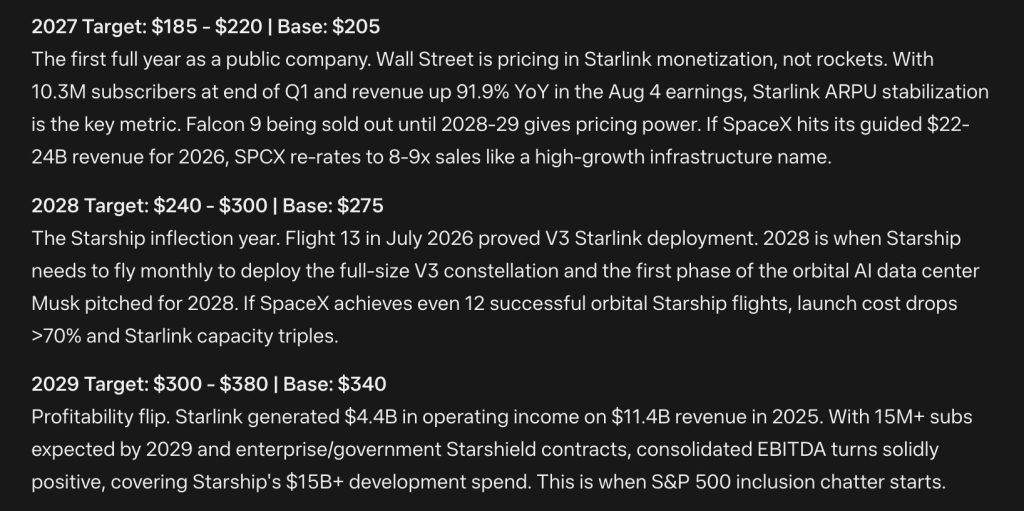
Wall Street has stopped valuing this company of rockets, Meta AI, however, predicts the market prices of Starlink monetization, and the price prediction ladders from $205 in 2027 to $410 by 2031.
The 2027 case rests on subscriber economics. Starlink ended Q1 with 10.3M subscribers and revenue up 91.9% year over year in the August 4 earnings.
ARPU stabilization is the metric that matters there. Falcon 9 is being sold out until 2028 and 2029, with supplies pricing power alongside it.

If SpaceX hits guided revenue of $22B to $24B for 2026, Meta AI expects SpaceX to re-rate to 8x or 9x sales. The 2028 target of $275 depends on Starship.
Flight 13 in July 2026 proved the V3 Starlink deployment. Monthly flights would deploy the full-size V3 constellation and the first phase of the orbital AI data center.
Twelve successful orbital flights would cut launch costs by more than 70% and triple Starlink capacity. By 2029, the base case reaches $340 as profitability flips, with 15M subscribers expected and Starshield contracts covering Starship’s $15B development spend.
The 2030 target of $385 turns on the AI narrative, converting a $3.2B loss-making division into orbital compute revenue. The bear case is grounded, where Starship failures or FAA delays keep the $4.9B net loss lingering and push SPCX toward $95 to $110.

Discover: Everyone’s Got a Take. Get Free $25 to Actually Trade Yours
SPCX Price Prediction: Meta AI Predicts Satellites Matter More Than Rockets Now
The 2-hour chart shows a stock that has round-tripped. SPCX spiked above $225 in mid-June before selling off hard.
Late June and July delivered a sustained decline. Price fell from $170 toward $107 by the end of July.
August reversed that entirely. Buyers drove a sharp recovery from $107 back above $150 within two weeks.
Recent sessions have cooled. Price now consolidates in the low $140s after that run.
The close reads $143.31, up 0.27% and $0.39. The session range covered $141.92 to $143.72, with post-market at $143.12.
Support sits at $135, then $125 and $110. Resistance appears at $150, then $160 and $170.
RSI reads 55.62 with its signal line above at 58.94. The oscillator trails by more than 3 points, showing the August rally losing intensity.
Both lines sit above the midline. Momentum remains positive but is fading rather than building.
Meta AI’s 2027 base case needs a 43% move. The next earnings print and Starship cadence are what turn that ladder into something the market underwrites.
Discover: Your Market Calls Are Worth Something. Start with a free $25 on Kalshi
SpaceX Has a Long List of Catalysts. Kalshi Lets Traders Focus on What Happens Next.
The SpaceX thesis now depends less on distant promises and more on a sequence of events the market can actually watch: subscriber growth, earnings, Starship launches, regulatory approvals, and deployment milestones.
That is exactly the kind of event-driven thinking Kalshi is built around.
Rather than taking a position in an asset and absorbing every variable that comes with it, Kalshi lets users trade directly on real-world outcomes across markets, economics, politics, technology, and other major events.
The question becomes simpler: what do you think happens next, and what probability is the market assigning to it?
For a company like SpaceX, where one successful launch or delayed approval can change the valuation narrative quickly, separating the event from the stock reaction can offer traders a different way to express conviction.
Eligible new users who join Kalshi through CryptoNews can also receive $25 through our referral link.
The post Mark Zuckerberg Meta AI Predicts Where SpaceX Stock Could Be in 5 Years appeared first on Cryptonews.
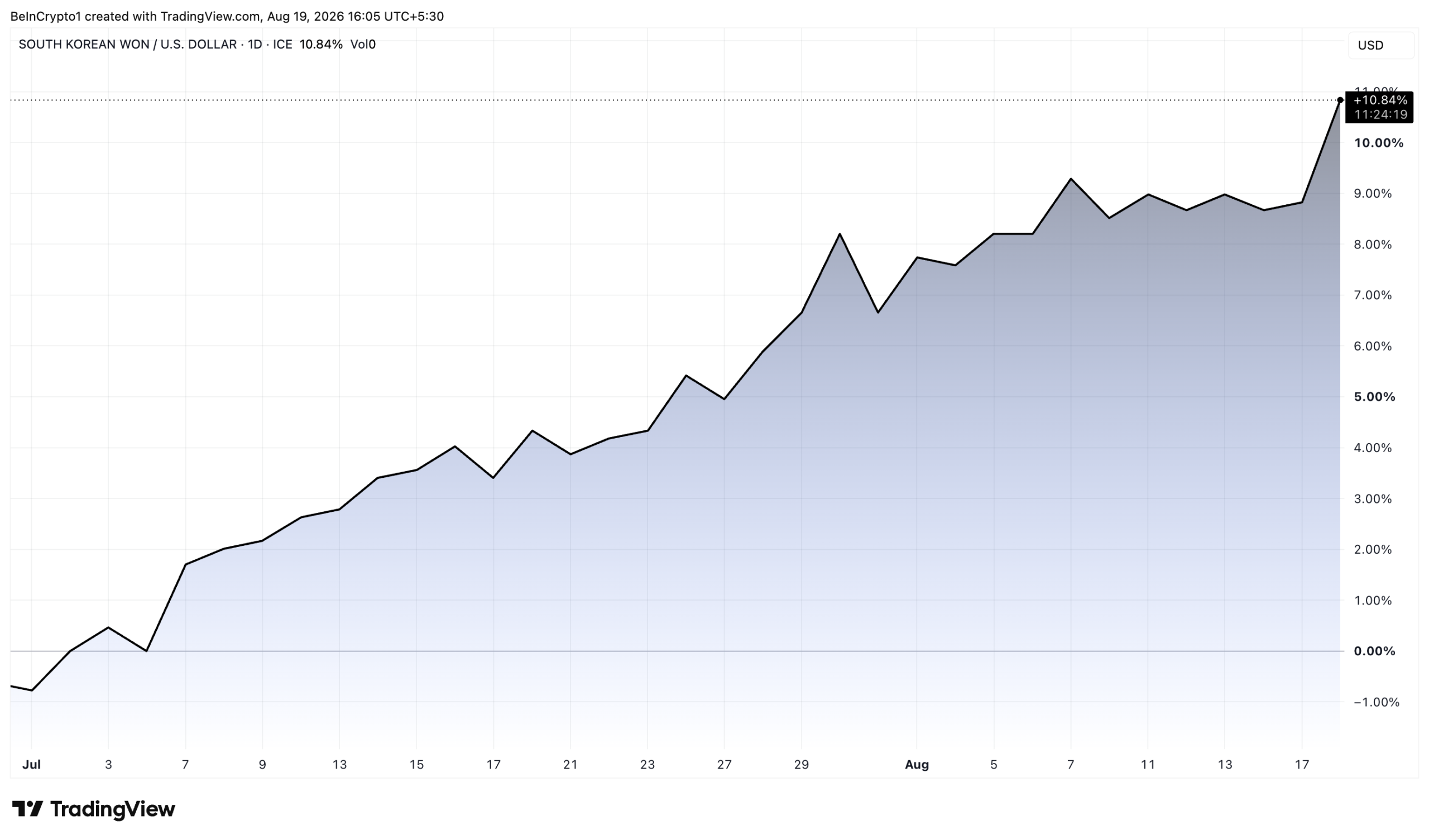
South Korea’s won hit its strongest level against the dollar in more than 10 months on Wednesday. The currency strengthened past the 1,400 mark, a level last seen in late September 2025.
A booming semiconductor industry is helping drive the currency’s recovery, even as the same sector comes under heavy selling pressure in South Korean equities.
Chip Dollars Reach the Currency Market
The won has gained 10.8% since early July. The currency traded as weak as 1,557.9 per dollar on July 2 before strengthening to 1,396.6 at press time.
Follow us on X to get the latest news as it happens

Export earnings explain the move. Korea shipped $98.89 billion of goods in July, up 63% from a year earlier. Semiconductor exports rose 179% to $41 billion.
Those dollars are now reaching the domestic market. SK Hynix raised $26.5 billion through a US depositary receipt listing. The firm said that it will use the funds from the listing to fund projects in the country.
Chip Stocks Pull the Other Way
The picture is markedly different in South Korea’s stock market. The same AI-driven semiconductor boom that is boosting export earnings has also left chip stocks vulnerable to sharp swings in investor sentiment.
The KOSPI has experienced significant volatility in recent months. The index plunged 22% in July, its steepest monthly decline since the global financial crisis.
The selling pressure continued on Wednesday, prompting the Korea Exchange to activate a sell-side trading curb. At press time, the KOSPI stood at 6,490.63, down 5.52%.

Chipmakers led the decline. Samsung Electronics fell 7.64% to 248,000 won, while SK Hynix dropped 9.09% to 1,511,000 won. Together, the two companies account for roughly half of the KOSPI’s weight.
The sell-off followed a sharp overnight decline in US semiconductor stocks. SK Hynix’s depositary receipts fell 9.2% in New York, while Micron Technology declined 7.02%.
The divergence highlights an unusual dynamic in South Korea’s markets. The semiconductor boom is supporting the won through stronger export earnings and dollar inflows, while concerns over the global technology sector are weighing heavily on the country’s chip-heavy stock market.
Subscribe to our YouTube channel to watch leaders and journalists provide expert insights
The post Why Is South Korea’s Won Rising While Its Chip Stocks Collapse? appeared first on BeInCrypto.
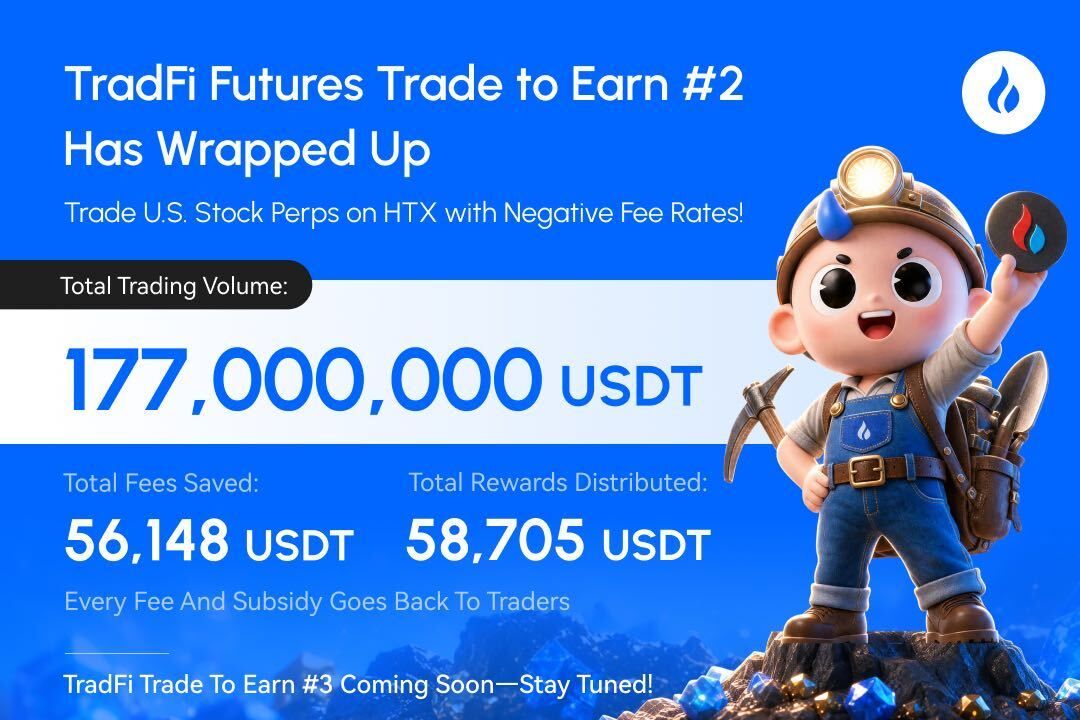

HTX, a leading global cryptocurrency exchange, recently announced the successful conclusion of Phase 2 for its popular TradFi Trade to Earn campaign. The second phase delivered significant growth in trading volume, user engagement, and platform incentives, demonstrating the ability of the Trade to Earn model to drive trading activity among TradFi futures traders and further highlighting the market potential of this innovative trading incentive model.
Nearly 59,000 USDT Returned to Users as Volume Posts a Steep Growth Curve
Designed specifically for TradFi traders, HTX’s TradFi Trade to Earn ties active futures trading directly to fee rebates and bonus incentives, helping users cut costs and trade more efficiently.
During Phase 2, cumulative trading volume for TradFi futures on HTX surpassed 177 million USDT, nearly triple the volume recorded in Phase 1, representing a 179% increase. The rapid growth in volume reflects rising user engagement with TradFi futures.
Alongside the volume surge, platform reward distributions grew. HTX distributed nearly 59,000 USDT in total rewards during Phase 2, including more than 56,000 USDT dedicated to trading fee rebates. Compared with the first phase, total fee rebates and cumulative rewards distributed both grew by over 150%, reflecting the platform’s growing commitment to providing greater incentives.
For TradFi futures traders, fees are a meaningful part of their trading costs. Particularly in high-frequency trading and fast-moving markets, increased trading frequency often means higher trading costs. HTX’s TradFi Trade to Earn turns a portion of these trading costs into user incentives through fee rebates and rewards, lowering the barrier to participation while further enhancing capital efficiency for traders.
From Cutting Costs to Adding Returns: A New Stage for TradFi Trade to Earn
Moving from lowering the cost of trading to increasing traders’ overall returns, TradFi Trade to Earn is becoming a key incentive tool within the HTX futures ecosystem.
As markets continue to evolve, traders are placing greater emphasis on liquidity, trading costs, and capital efficiency. In response to changing trading needs, HTX continues to expand its TradFi offerings and refine its incentive mechanism, providing traders with a flexible and efficient way to participate in these markets through a broad selection of assets and compelling user benefits.
HTX now offers more than 170 TradFi assets, spanning precious metals, commodities, indices, and U.S. equities to meet a wide range of trading needs.
Notably, Phase 3 of HTX TradFi Trade to Earn is set to launch soon.
Building on the continued growth in trading volume across the first two phases, the upcoming event will carry forward the core “trading + incentives” model, offering users another round of fee rebates and rewards. As the range of TradFi assets continues to expand, users gain access to an increasingly diverse range of trading opportunities, further broadening the potential of the TradFi Trade to Earn model.
About HTX
Founded in 2013, HTX has evolved from a virtual asset exchange into a comprehensive ecosystem of blockchain businesses that span digital asset trading, financial derivatives, research, investments, incubation, and other businesses.
As a world-leading gateway to Web3, HTX harbors global capabilities that enable it to provide users with safe and reliable services. Adhering to the growth strategy of “Global Expansion, Thriving Ecosystem, Wealth Effect, Security & Compliance,” HTX is dedicated to providing quality services and values to virtual asset enthusiasts worldwide.
To learn more about HTX, please visit https://www.htx.com/ or HTX Square , and follow HTX on X, Telegram, and Discord.
The post HTX Distributes Nearly 59,000 USDT in Rewards as TradFi Trade to Earn #2 Concludes appeared first on BeInCrypto.
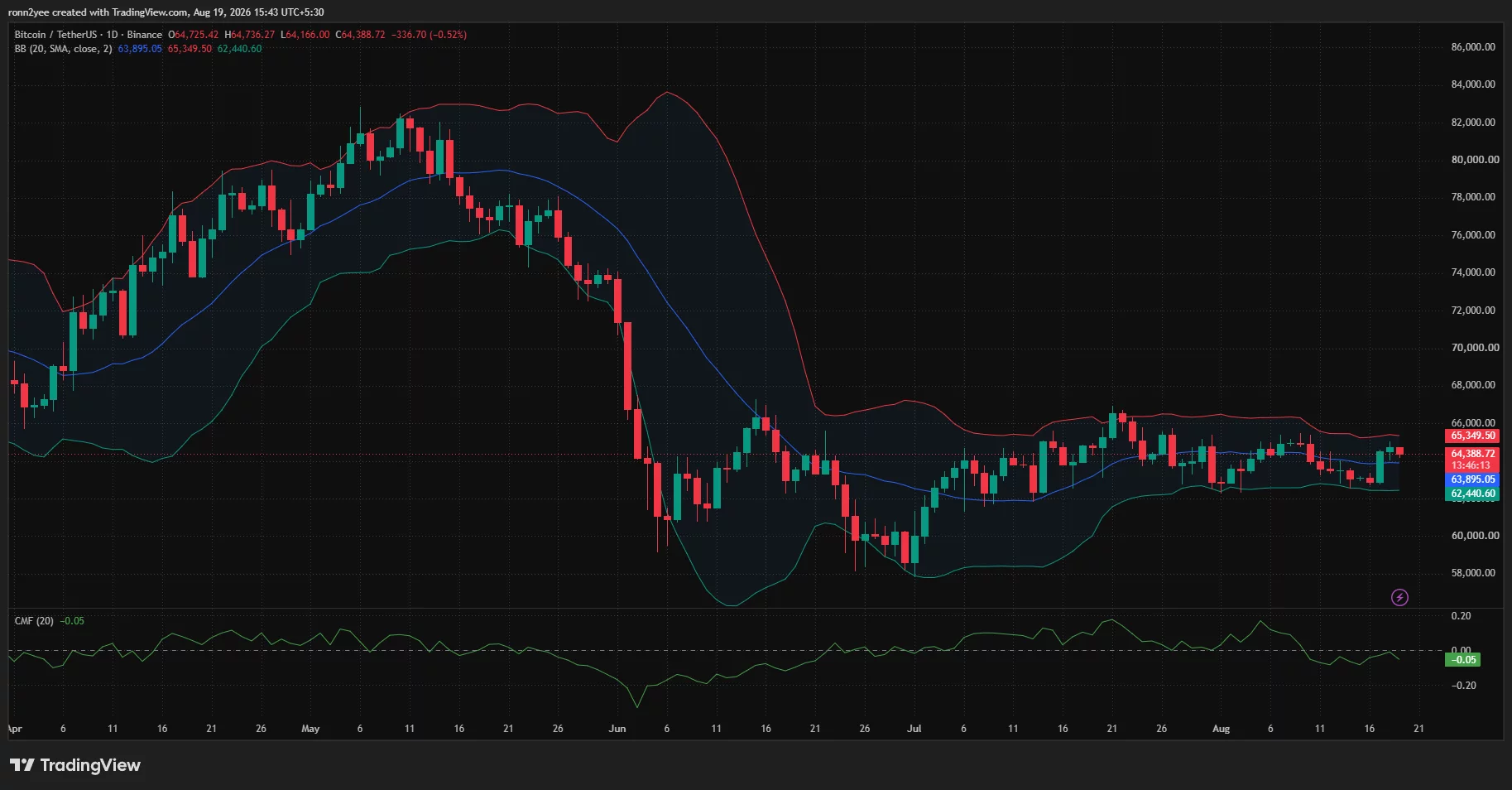
Bitcoin price pulled back to about $64,300 on Aug. 19 after failing to hold above $65,000, as weak spot demand, rising bond yields, and resistance near $65,400 limited the rebound.
Summary
- Bitcoin price retreated to $64,300 after briefly approaching $65,000 during the latest recovery.
- Bollinger Bands place resistance at $65,350 and near-term support around $63,900.
- CoinGlass data shows liquidation clusters near $65,400, $66,000, and $62,200.
- Traders are awaiting the Federal Reserve’s July meeting minutes for interest-rate signals.
Bitcoin price stalls below $65,000
According to data from crypto.news, Bitcoin (BTC) price was trading at about $64,390 on Binance on Wednesday afternoon in Asia, down roughly 0.5% on the daily candle. The price had reached an intraday high of $64,736 before sellers pushed it lower.
The retreat followed a rebound from the $62,700 area earlier in the week. Bitcoin moved through $64,000 and approached $65,000 on Aug. 18, but the rally did not attract enough buying pressure to clear the upper end of its recent range.
Trader Lennaert Snyder said Bitcoin had again been rejected from the high of its compression range. He identified $65,400 as the level keeping the asset inside the range and said a loss of the $64,000 previous-day low could send the price back toward the lower boundary.
Snyder said he was maintaining a short position opened near $65,000 but planned to move it to breakeven if possible. His downside scenario depends on Bitcoin losing $64,000, while another defense of the $62,500 range low would leave the market increasingly compressed.
Bitcoin has traded mostly between $62,500 and $65,400 since late July, aside from brief moves outside the range. Repeated reversals have reduced the value of entries near the middle, where neither buyers nor sellers have established control.
Low trading volume limits the Bitcoin rebound
Thin spot activity remains one of the main obstacles to a sustained breakout. Analyst Gerla said Binance spot volume had declined for years, even as Bitcoin continued to hold around $64,000.
Gerla interpreted the decline as possible seller exhaustion rather than an immediate bearish signal. However, lower volume also means that the recovery has received limited confirmation from buyers.
Binance data published earlier in August showed how activity has shifted toward leveraged products. Bitcoin futures volume on the exchange reached about $57.82 billion in one session, compared with $6.08 billion in spot volume.
The resulting futures-to-spot ratio reached 7.82, according to CryptoQuant data. Futures therefore accounted for almost eight times as much activity as spot trading, leaving short-term price moves more exposed to leveraged positioning and liquidation-driven volatility.
Institutional demand has also weakened. U.S. spot Bitcoin exchange-traded funds recorded about $385.2 million in net withdrawals during the week through Aug. 14. The outflows followed $853.5 million in inflows in the previous five trading sessions.
Lower ETF demand and weak exchange volume have reduced the buying pressure available near resistance. Both measures would need to improve for a breakout above $65,400 to receive stronger market confirmation.
Bitcoin charts identify $65,350 as resistance
The daily chart shows Bitcoin trading just above the middle Bollinger Band at $63,895. The upper band stands at $65,350, closely matching the resistance that stopped the latest recovery.
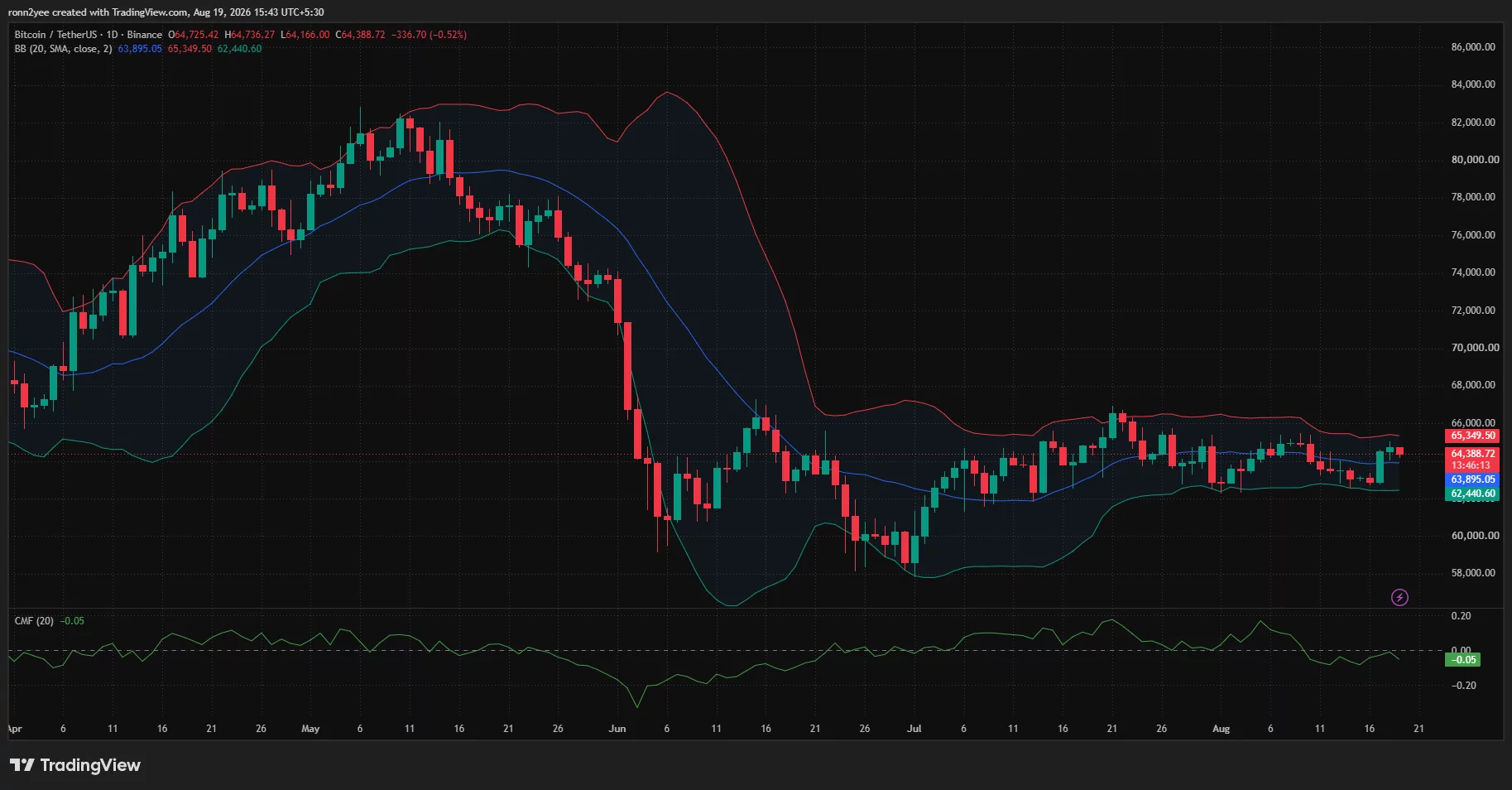
A daily close above $65,350 would place Bitcoin outside the upper edge of its recent volatility range. Such a move could open a path toward $66,000, followed by the late-July swing area near $67,000.
The lower Bollinger Band sits at $62,440, creating a broader support zone between $62,400 and $62,700. A daily close below that area would weaken the range structure and expose $61,000, followed by the June and July lows near $58,000.
Chaikin Money Flow was at minus 0.05 on the daily chart. The reading indicates that capital flows remain slightly negative and offers little evidence of sustained accumulation despite Bitcoin’s rebound.
The 4-hour chart presents a firmer short-term setup. Bitcoin remains above the Supertrend support at $63,466, while the Awesome Oscillator is positive at 951.
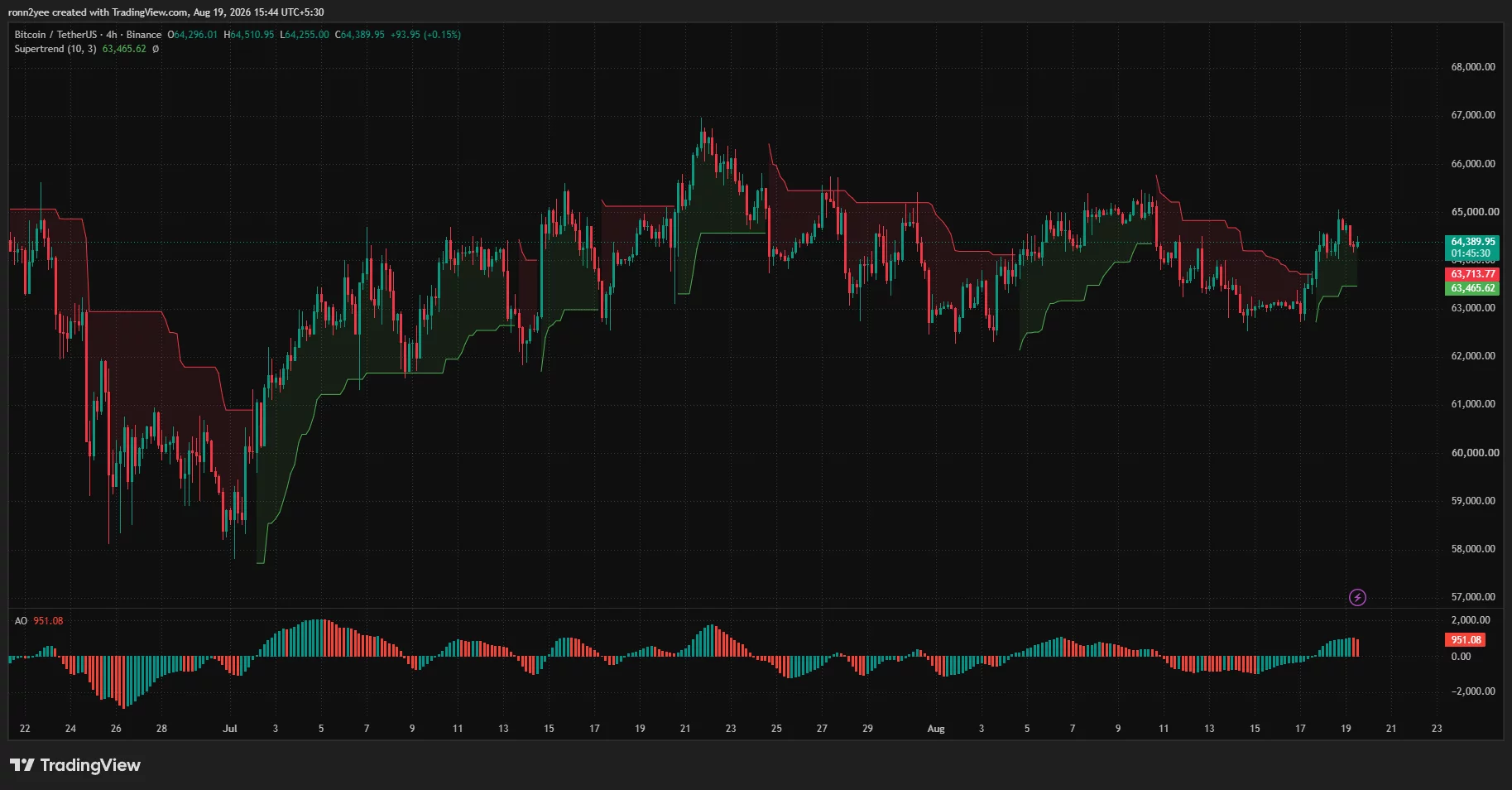
Recent red bars on the Awesome Oscillator show that bullish momentum is slowing after the advance from $62,700. Buyers would need to defend the $63,450–$64,000 region to preserve the short-term recovery.
Liquidation levels could determine the next move
CoinGlass’ one-week liquidation heatmap shows several concentrations of leveraged positions surrounding Bitcoin’s current price.
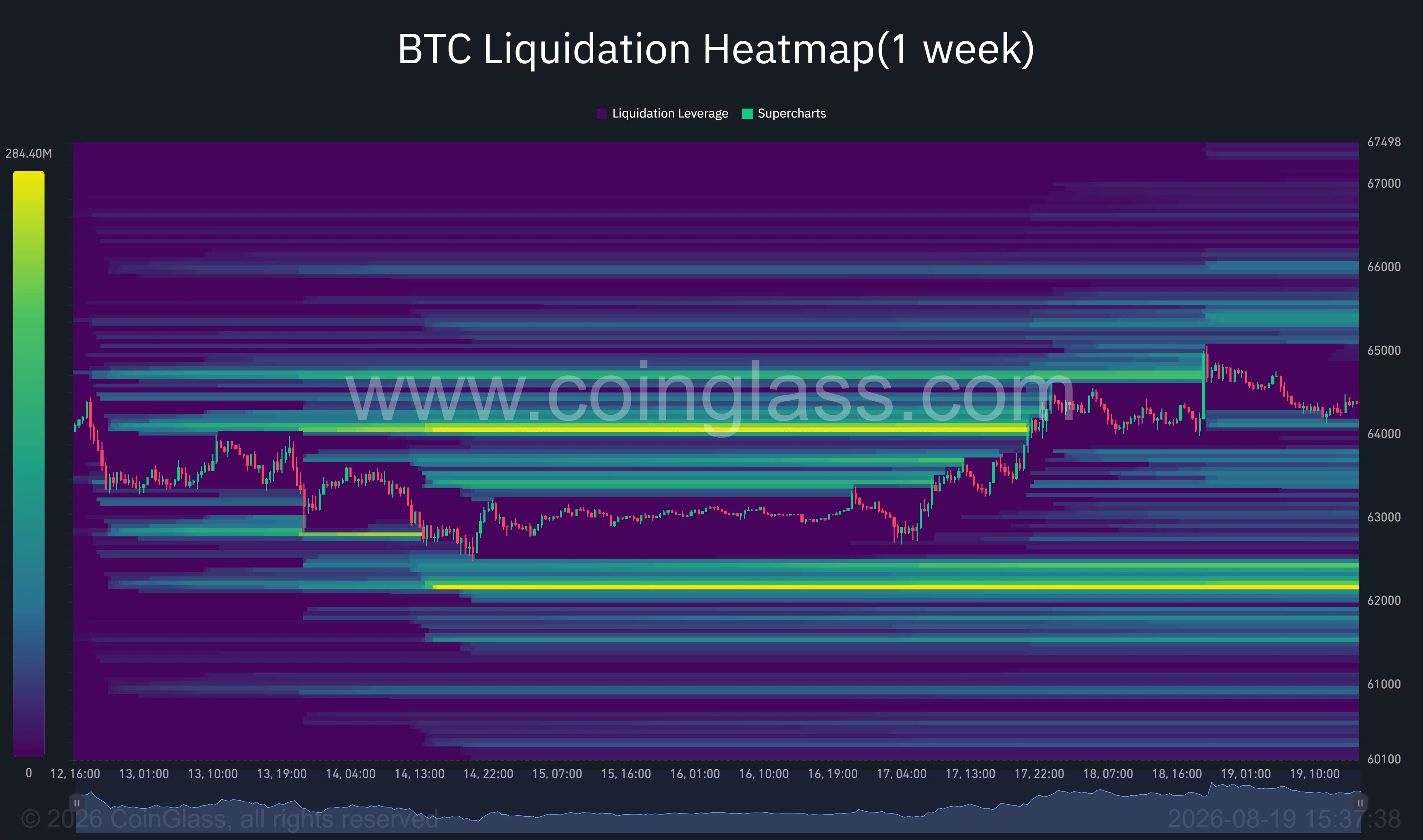
The closest overhead liquidity appears between approximately $65,300 and $65,600, with another cluster around $66,000. A move through $65,400 could trigger short liquidations and accelerate the price toward the second cluster.
The strongest nearby downside concentration sits around $62,200. Additional liquidity is visible between $63,400 and $64,000, making that region a possible target if Bitcoin loses its current 4-hour support.
Liquidation heatmaps identify areas where leveraged positions may be closed, but they do not determine which price level will be reached first. Bitcoin’s position between large clusters on both sides supports Snyder’s view that the market remains compressed.
Fed minutes remain the next US market catalyst
Bitcoin’s retreat also followed a broader pullback in U.S. risk assets. LSEG data cited by Barron’s placed BTC near $64,306 as rising global bond yields and Middle East tensions weighed on markets.
Treasury yields eased on Wednesday after the previous session’s global bond selloff, with the U.S. 10-year yield around 4.686%. Brent crude remained above $91 as renewed U.S.-Iran tensions maintained concerns about energy-driven inflation.
U.S. investors are now waiting for minutes from the Federal Reserve’s July meeting. The release could provide more information on how officials view inflation and the path of interest rates.
A softer policy signal, improving ETF flows, and a close above $65,400 would strengthen Bitcoin’s breakout case. Renewed pressure on bonds and a loss of $64,000 would instead shift attention toward $62,500 and the large liquidation cluster near $62,200.
Disclosure: This article does not represent investment advice. The content and materials featured on this page are for educational purposes only.

“The U.S. side should abandon the Cold War mentality and foster an open, fair and non-discriminatory environment for educational, scientific and people-to-people exchanges between China and the United States,” it added.
Here’s what to know about the raft of policies aimed at curbing institutional ties to China.
Order targets primarily Chinese institutions
The foreign institutions the U.S. seeks to blacklist were identified by the Pentagon last month. Eighty-eight of the 130 institutions are in mainland China, while the remaining institutions are in Russia and Iran. The list has been updated annually since an earlier version was first released in 2023. It was established under Section 1286 of the 2019 National Defense Authorization Act, which was enacted during President Donald Trump’s first term.
While some Chinese universities on the list have more explicit ties to the military, others are prominent civilian institutions with extensive international research partnerships. These include Fudan University and Shanghai Jiao Tong University. The updated list also added a number of other Chinese institutions with varying links to China’s defense and security establishment, including Shandong University, Hangzhou Dianzi University, Shenyang Aerospace University, and the University of International Relations.
Target earnings easily beast fiscal second-quarter earnings views early Wednesday, while revenue, same-store sales and guidance also were strong. But TGT stock tumbled in premarket trade. TJX Cos. (TJX) earnings are also due before the markets open. Among other retail earnings, Walmart (WMT) and Ross Stores (ROST) follow on Thursday. Target Earnings Target earnings doubled to $4.11 a share, crushing…
Copyright ©2026 Investor’s Business Daily, LLC. All rights reserved. 87990cbe856818d5eddac44c7b1cdeb8


Japanese BTC treasury company Metaplanet has disclosed a deal that will put a man Bloomberg describes as “Tokyo’s King of Death Spiral Financing” on both sides of the takeover.
Metaplanet wants to take control of Nasdaq gaming company Super League Enterprise in a $135 million deal.
Once the takeover is complete, Evo Fund, a Cayman islands fund launched by Princeton graduate and former Barings trader Michael Lerch, will pick up warrants for up to 10 million Super League shares.
It also financed Metaplanet’s BTC buying in Tokyo, putting Lerch on both sides of the deal.
Moreover, Evo’s fund bought into Super League in September 2025 via a “$10 million strategic equity investment.”
That infusion helped Super League, which will change its name to Superplanet once the deal passes shareholder approval, regain compliance with Nasdaq’s equity rules.
Read more: MetaPlanet tanking 35% sparks fury: ‘Short squeeze them to Valhalla!’
Evo Fund’s warrants dilute shareholders
Japanese business press has nicknamed Lerch the “mysterious alchemist” for how his fund’s warrants dilute companies.
Indeed, Evo is Japan’s largest buyer of floating-strike equity warrants. Bloomberg describes Lerch as synonymous with the death spiral financing trading strategy.
Specifically, his warrants often price using a moving, rather than static, strike price. As a result, rights built into clauses of Lerch’s contracts allow Evo to exercise convertability into stock at a lower price as shares fall.
Each exercise dilutes existing holders even more as the price declines.
For scale, consider that Evo’s 2025 warrant transactions in Japan exceeded ¥1 trillion, or roughly $6.3 billion. That captured more than 80% of the country’s floating-warrant market.
On the Super League side, Evo is now a named counterparty. Lerch’s fund will probably receive warrants under the filing that hands Metaplanet control.
Super League’s disclosure lists two subscription agreements dated the same day.
Metaplanet’s Florida subsidiary, Metaplanet Holdings, subscribes for 44,859,400 common shares at $3 each. It also gets 100 shares of convertible preferred stock and four 10-year warrants covering up to 381 million shares.
Evo’s agreement grants two two-year warrants for up to 10 million shares, at fixed prices of $3 and $5.55. That is, and somewhat uncharacteristic for the “Tokyo’s King of Death Spiral Financing,” not a floating strike on this deal.
Sadakazu Osaki, a researcher at Japan’s Nomura Research Institute, warned that floating-strike warrants like Evo’s are “the last financing resort for underperforming companies.”
Metaplanet has used exactly that instrument, at enormous scale, to fund its BTC purchases.
Got a tip? Send us an email securely via Protos Leaks. For more informed news and investigations, follow us on X, Bluesky, and Google News, or subscribe to our YouTube channel.
Telegram has applied for its own top-level domain. Founder Pavel Durov said approval would give the app’s one billion users a personal web address like yourname.gram.
Durov posted the news on X. The filing entered ICANN’s 2026 round, the first such window since 2012.
What the Telegram .gram Domain Would Unlock, and When
The Internet Corporation for Assigned Names and Numbers (ICANN) governs the internet’s address system. Its 2026 application window closed on August 12 after 15 weeks.
ICANN counted more than 1,600 primary applications in that round. Applicants filed a further 1,100 requests for backup strings. Therefore, .gram now waits in a crowded queue.
Durov built the pitch around Telegram usernames. Holders could claim yourname.gram, then publish an interactive site that Telegram hosts. Those usernames already work as identity across the app. A matching web address would carry that handle beyond chat.
Moreover, he promised that a single artificial intelligence prompt would generate those pages. The plan stretches Telegram’s TON blockchain push from payments into web publishing. Telegram would run the hosting itself. That setup keeps users off outside providers and inside the app’s orbit.
Brand top-level domains already exist, and Google and Amazon run their own. Telegram’s version would differ, since it opens the space to ordinary account holders.
ICANN has approved nothing yet. The body will publish the list of cleared strings by mid-October. Evaluation, contention resolution, and contracting follow. Those stages can take months.
Durov cannot set a launch date, because ICANN controls the schedule. On that path, a working .gram address looks unlikely before 2027. He also gave no word on whether every account would receive one for free.
GRAM Trades 84% Below Its Record
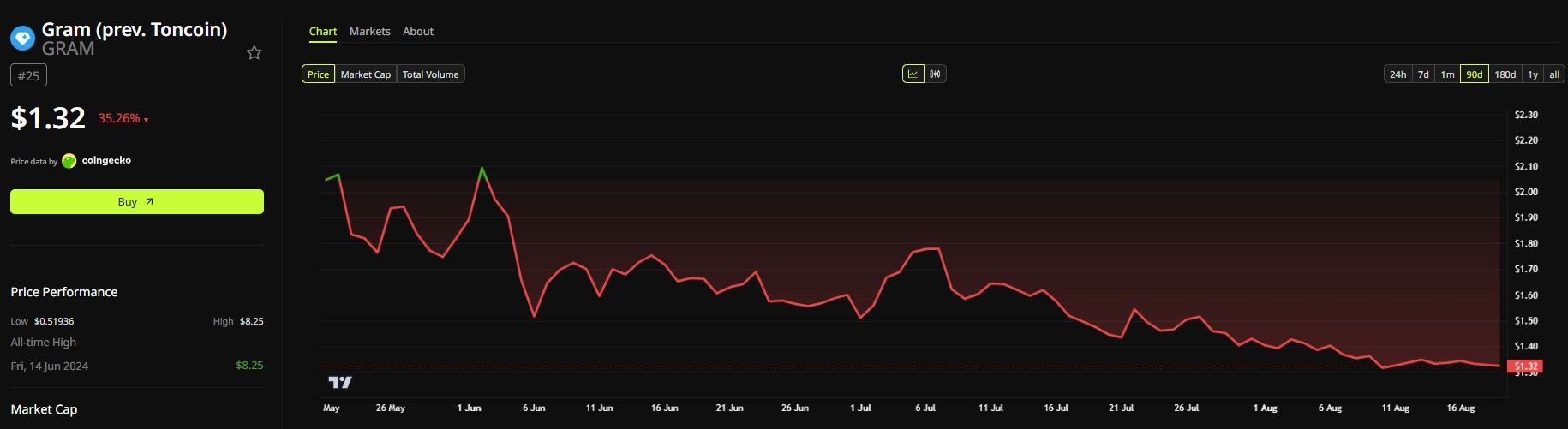
Gram (GRAM), the token Durov rebranded from Toncoin in June, changed hands near $1.32. It has shed about 35% over the past 90 days, though it edged up 0.7% on the day.
That level sits 84% under the record high of $8.25 from June 2024. The token still holds a $3.65 billion market value and ranks 25th by size. Its full trading range runs from $0.52 to $8.25.

So far, traders have shown little conviction since the post. The ecosystem keeps widening regardless. Telegram pledged a native non-custodial wallet inside every app this summer, and it now runs the network’s largest validator.
Meanwhile, Durov fights on another front. Russia charged him with facilitating terrorism in July, and he rejected Moscow’s surveillance demands in a public reply.
Durov spent 2026 expanding the Telegram ecosystem on his own terms. A green light would hand every user a personal corner of the web, built from a single prompt.
The post Telegram .gram Domain Bid Could Give 1 Billion Users a Website in One Prompt appeared first on BeInCrypto.


Nexo Australia launched crypto-backed credit lines after becoming a credit representative under Australia’s National Consumer Credit Protection Act, the company said in a Tuesday announcement shared with Cointelegraph.
The new credit lines allow eligible clients to borrow Australian dollars or stablecoins by using their cryptocurrencies as collateral without having to sell them.
Funds are generally available within 24 hours with flexible repayments, with no fixed term or origination fees. Interest rates range from 0.9% to 21.9%, depending on the credit line and the client’s loyalty tier.
Clients can choose between Smart and Standard credit lines, Peter Stanhope, general manager at Nexo Australia, told Cointelegraph.
“The main differences are in rates, asset selection, and how client collateral is managed if their [loan-to-value ratio] rises,” Stanhope said.
Nexo said borrowing against digital assets carries margin-call and liquidation risks, meaning clients could lose some or all of their collateral if its value falls.
The milestone makes Nexo one of the few crypto platforms to offer regulated crypto-backed credit lines to Australian users. In May 2026, Block Earner became the first crypto company in Australia to secure its own Australian Credit License from ASIC.
Nexo Australia is registered with the country’s anti-money laundering watchdog, AUSTRAC, as a virtual asset service provider and is a member of the Australian Financial Complaints Authority (AFCA).
Magazine: Why Australia’s $17B crypto opportunity depends on regulation
Ripple Prime’s inaugural senior notes carried an investment grade rating and drew institutional investors across key financial markets.

Buc-ee’s Billboard Near Beaver’s Mini Mart Vandalized As Corporation Gaslights Mayor

Investigators find track defect in area where Lewes train derailment took place
TJX earnings beat by $0.03, revenue topped estimates





-

 Fashion5 days ago
Weekend Open Thread: Ann Taylor
-
 Sports6 days ago
This U.S. Amateur is a glimpse into golf’s future in more ways than you think
-
 NewsBeat4 days ago
Myanmar says over 300,000 Rohingya refugees verified for repatriation as exodus enters ninth year
-
 Tech5 days ago
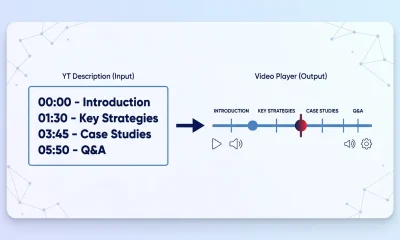
11 Ways to Rank Your Videos
-

 Sports4 days ago
Birmingham 2026: Day 6 Timetable for Irish Athletes
-

 Politics4 days ago
SEQ Code: The Three Letter Boarding Pass Code That Could Give You The Worst Seat
-

 Tech6 days ago
DeepSeek Harness launches as open source rival to Claude Code, alongside V4-Pro on API with higher prices
-

 Sports7 days ago
DeQuan Jones in ‘high spirits’ after successful leg surgery
-
 Crypto World7 days ago
Perplexity AI Predicts an XRP Scenario Few Analysts Are Discussing
-
 Entertainment7 days ago
2026’s Most Ambitious Fantasy Movie Officially Scores Sequel Update
-

 Crypto World2 days ago
OCC Greenlights Trump Family Crypto Firm for Trust Charter
-
 Entertainment7 days ago
All 10 Hayao Miyazaki Fantasy Movies, Ranked
-

 Fashion7 days ago
Why Botanical Fashion Never Goes Out of Style
-
 Entertainment7 days ago
Travis Kelce Breaks Silence On ‘Crazy’ Taylor Swift Wedding
-
 Entertainment5 days ago
10 Netflix Shows That Quietly Became Modern Classics
-

 Fashion5 days ago
Weekly News Update, 8.14.26 – Corporette.com
-

 Fashion7 days ago
Wednesday’s Workwear Report: Stretch-Cotton Pleated-Waist Top
-

 Fashion6 days ago
The Details Do the Dressing
-
 Entertainment4 days ago
Marvel Studios Reveals New X-Men Cast Including Adam Driver and Sadie Sink
-

 Tech1 day ago
Qwen3.8-27B runs frontier-class coding agents and reasoning locally, no cloud API required
You must be logged in to post a comment Login