

Crypto World
Which Crypto Platform Stands Out?


The crypto casino market has grown well past its experimental phase. Multiple platforms now compete for the same audience of crypto-native players, and the differences between them are no longer just about whether they accept Bitcoin. The real competition is about how many games you can play, what your loyalty earns, how generous the welcome offer is, and whether the platform treats every player well or just the ones at the top. Roobet and ZunaBet both operate in this space, but the experience each delivers tells a different story about what a crypto casino can be. One established its name through viral marketing and a youthful brand. The other launched in 2026 with a platform built to outdeliver on the metrics that matter most to everyday crypto gamblers.
Roobet: The Social Media Casino
Roobet launched in 2019 under a Curaçao license and quickly carved out a distinctive niche in the crypto gambling world. Where other platforms relied on traditional marketing channels, Roobet grew largely through social media, influencer partnerships, and a brand personality that skewed younger and more internet-native than most competitors. The platform’s playful aesthetic, featuring its kangaroo mascot, gave it an identity that resonated with a generation of gamblers who discovered crypto casinos through Twitch streams and YouTube content.
The gaming experience at Roobet combines proprietary original games with third-party content. Roobet Originals including Crash, Mines, and Towers follow the same fast, simple gameplay model that has become standard among crypto casino proprietary titles. Third-party games from providers like Pragmatic Play and others supplement the originals, though the total library sits well below what some competitors now offer. The platform has historically prioritised a curated, streamlined experience over maximum game volume.
The sportsbook at Roobet covers major sports including football, basketball, tennis, MMA, and others. Esports betting is available with markets on popular competitive titles. The betting product is functional and integrates with the casino, though it has not been positioned as aggressively as the sportsbooks at some competing crypto platforms.
Roobet supports cryptocurrency payments including BTC, ETH, LTC, and USDT. Transactions process without platform fees at blockchain speed. The payment experience meets crypto-native expectations without standing out from what other platforms in the space provide.
The loyalty programme at Roobet operates through a rakeback system and promotional offers. Players receive a base rakeback percentage with occasional boosts and promotional events. The system provides some ongoing return but has drawn mixed feedback regarding the transparency of how rakeback rates are determined and how players advance to better reward levels. Higher-tier benefits are available but the pathway to them is not always clearly communicated.
Roobet has offered welcome bonuses at various points, though the structure and availability have changed over time and may depend on the player’s region. The welcome offering has generally been more modest compared to what some newer crypto platforms have introduced.
ZunaBet: Maximum Value From Maximum Scale
ZunaBet launched in 2026 under Strathvale Group Ltd with an Anjouan gaming license. Built by a team with over 20 years of combined gambling industry experience, the platform was designed on crypto-native infrastructure with a straightforward objective — deliver more content, more bonus value, and more transparent rewards than what currently exists in the crypto casino market. Every system was built to serve that goal.
The game library is where the scale becomes immediately apparent. ZunaBet hosts 11,294 titles from 63 providers. Pragmatic Play, Evolution, Hacksaw Gaming, BGaming, and Yggdrasil headline the collection, supported by more than fifty additional studios. Slots claim the largest portion, but live dealer tables and RNG games carry genuine depth across the board. The sheer size of the catalog places ZunaBet among the largest crypto casino libraries available anywhere, giving players a breadth of choice that smaller platforms cannot approach.

Sports betting was developed as a co-equal product alongside the casino. Football, basketball, tennis, hockey, and major global sports receive comprehensive market coverage. Esports are permanently integrated with dedicated markets on CS2, Dota 2, League of Legends, and Valorant. Virtual sports and combat sports push the range wider. The sportsbook was not added as a checkbox feature — it was built to serve serious bettors on its own merits.
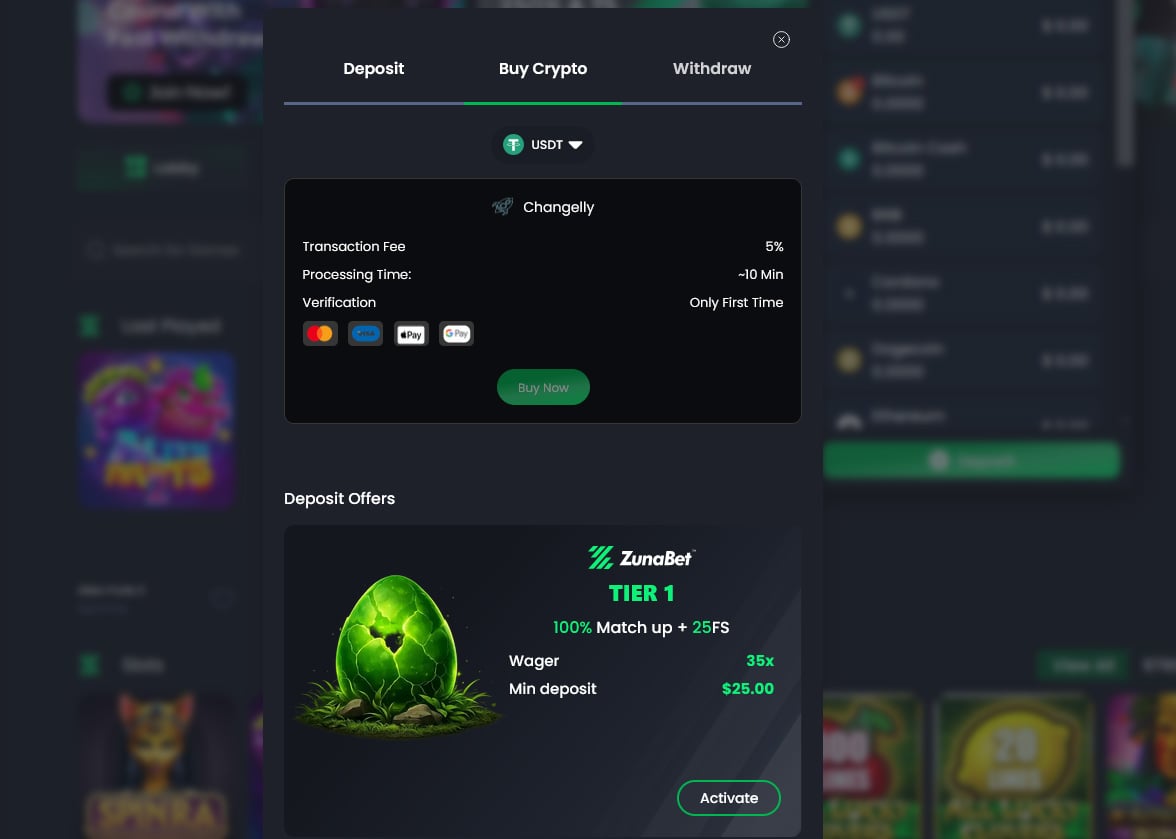
The welcome package makes a clear statement about player value from the first interaction. Up to $5,000 plus 75 free spins across three deposits gives new players a starting advantage that most crypto casinos do not match. First deposit earns 100% up to $2,000 with 25 spins. Second earns 50% up to $1,500 with 25 spins. Third earns 100% up to $1,500 with 25 spins. Three distinct bonus events sustain value well past the initial sign-up moment.
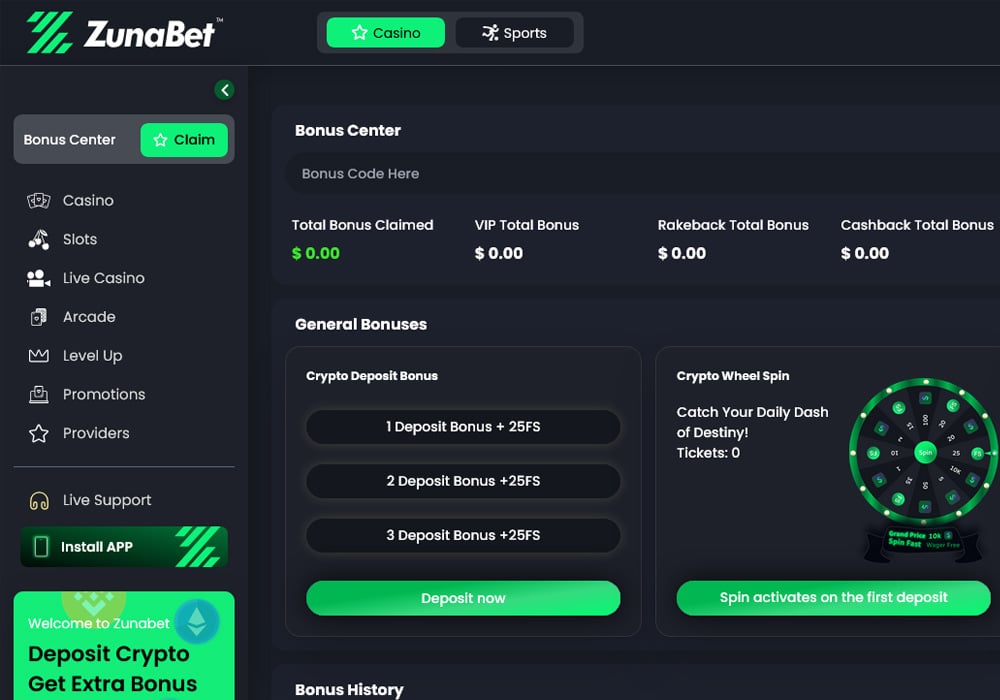
Over 20 cryptocurrencies are supported — BTC, ETH, USDT across multiple chains, SOL, DOGE, ADA, XRP, and many more. No platform fees on any transaction. Blockchain-based withdrawals process quickly and consistently. The breadth of coin support exceeds what Roobet offers, providing flexibility for players with diverse crypto holdings.
Native apps run on iOS, Android, Windows, and MacOS. The dark-themed responsive interface loads fast on every device. Live chat support operates 24/7.
Welcome Value: Setting the Tone
The welcome bonus establishes how a platform values new players from the very first deposit. The difference between Roobet and ZunaBet on this front is significant.
Roobet’s welcome offerings have varied over time and across regions. When available, they have generally been modest in scale compared to what newer competitors now provide. Players arriving at Roobet may find some introductory value, but the platform has not consistently positioned a large welcome package as a core part of its player acquisition strategy.
ZunaBet’s three-deposit structure totalling $5,000 plus 75 free spins treats the welcome period as a sustained investment in the player relationship. Each deposit triggers its own match and spins allocation, creating three separate waves of added value. For any new crypto gambler comparing their options, ZunaBet’s welcome package provides substantially more starting runway and a longer window of bonus-enhanced play.
Loyalty: Partial Transparency vs Complete Clarity
Both platforms offer rakeback, which puts them ahead of crypto casinos that rely solely on promotional cycles. But the structure and accessibility of that rakeback differ in ways that affect what regular players actually receive.
Roobet provides a base rakeback with opportunities for enhancement through promotions and tier advancement. The system returns some value to regular players, but the specifics of how rates are determined and how players progress to better levels have not always been communicated with full clarity. Some players report uncertainty about what their current rate is and what they need to do to improve it.
ZunaBet eliminates every source of ambiguity. The dragon evolution loyalty programme publishes six tiers with explicit rakeback rates — Squire at 1%, Warden at 2%, Champion at 4%, Divine at 5%, Knight at 10%, and Ultimate at 20%. A dragon mascot named Zuno evolves as players progress through each stage. Higher tiers unlock additional perks including up to 1,000 free spins, VIP club access, and double wheel spins.
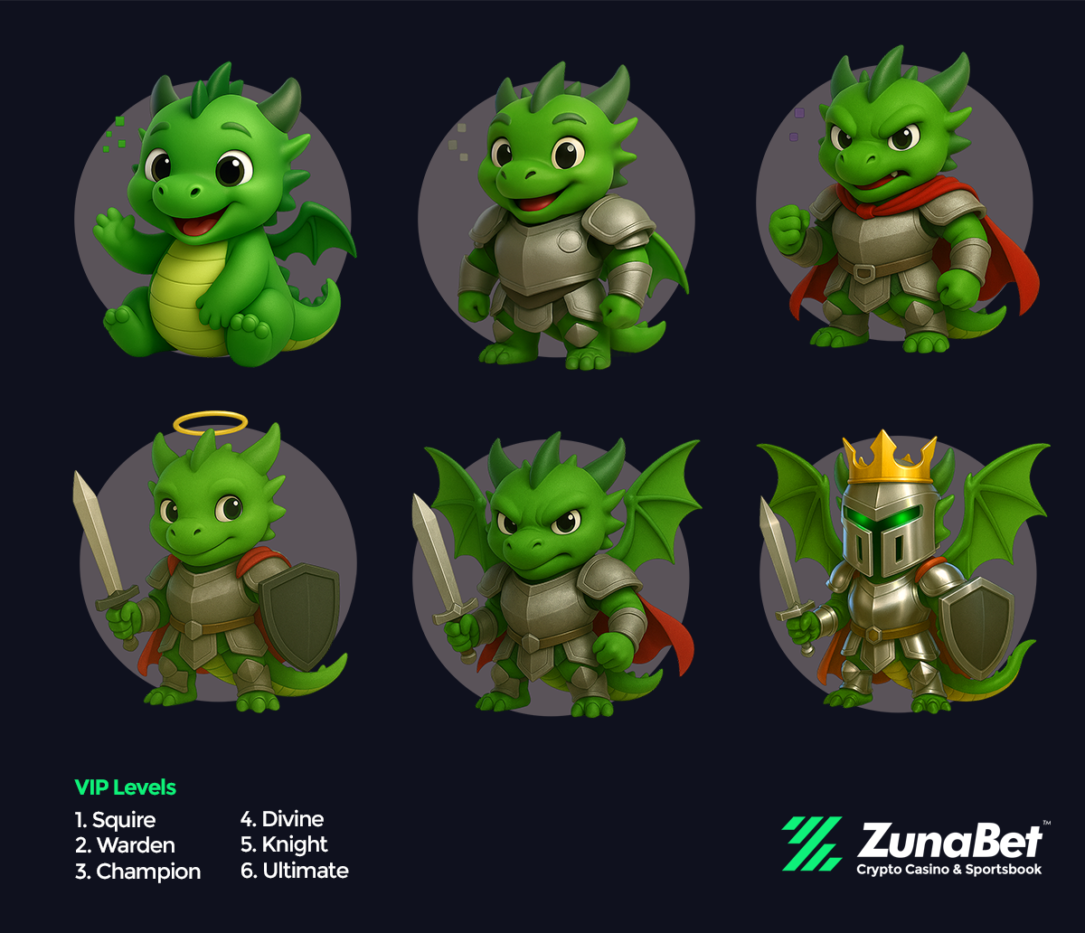
Every player at every tier knows exactly what their wagering returns. No uncertainty about current rates. No confusion about advancement criteria. No wondering whether better rewards exist behind an opaque threshold. The system operates with complete transparency at every level, and at rates that scale to 20% — a figure that exceeds what most crypto casinos offer even at their most generous tiers.
Content Depth: Curated vs Comprehensive
Roobet has taken a more curated approach to its game library. The combination of proprietary originals and selected third-party titles creates a focused experience that avoids overwhelming players with choices. For some players, that streamlined approach is a positive. For others, it means hitting the edges of available content sooner than they would like.
ZunaBet goes in the opposite direction entirely. With 11,294 games from 63 providers, the platform offers a level of variety that virtually guarantees players will discover new content for months. The range spans every major game category with depth from dozens of studios. Players who value having options — and who enjoy the process of exploring new games and providers — will find a fundamentally different scale of experience at ZunaBet.
The choice comes down to preference. A tighter, more focused library, or an expansive catalog that prioritises maximum variety. For the majority of players who equate more choice with more value, ZunaBet’s approach delivers a richer content experience over time.
Crypto Infrastructure: Common Ground With Key Differences
Both platforms are crypto-native and process transactions on blockchain infrastructure without platform fees. The core payment experience is comparable in terms of speed and cost.
Where ZunaBet pulls ahead is in the range of supported coins. With over 20 cryptocurrencies accepted — including USDT across multiple chains, SOL, ADA, XRP, and others that Roobet does not natively support — ZunaBet provides more flexibility for players whose crypto holdings extend beyond the most common tokens. For a player holding SOL or ADA who wants to gamble without converting to BTC or ETH first, ZunaBet removes a friction point that Roobet’s more limited coin support does not address.
Platform Maturity vs Platform Ambition
Roobet has spent several years building a brand with genuine personality. The social media presence, the community engagement, and the influencer-driven growth strategy created an identity that resonates with younger crypto-native audiences. The platform works, the games are fun, and the community feels active. These are real strengths that contribute to player retention.
ZunaBet arrives with less brand history but significantly more platform substance. A game library that dwarfs Roobet’s offering. A welcome bonus that provides materially more starting value. A loyalty system that publishes exactly what every tier earns without ambiguity. Broader cryptocurrency support. A sportsbook built to compete with dedicated betting platforms. Native apps across every major operating system.
Brand personality attracts attention. Platform substance keeps players. Roobet excels at the former. ZunaBet was engineered to excel at the latter. For players who evaluate crypto casinos based on what they measurably receive — in games, bonuses, loyalty returns, and payment flexibility — ZunaBet delivers a more complete package.
Where Crypto Gamblers Should Look in 2026
Roobet has earned its community through years of social engagement and a brand voice that feels genuine. The proprietary games are entertaining, the vibe is unique, and the platform has a loyal following that values the culture as much as the content. For players who prioritise community feel and brand personality, Roobet continues to offer something that bigger platforms often lack.
ZunaBet competes on a different axis entirely — raw value delivery. Over 11,000 games from 63 providers. A $5,000 welcome bonus across three deposits. Published rakeback scaling to 20%. Over 20 supported cryptocurrencies. A full sportsbook with embedded esports. Native apps on every platform. Each of these individually would strengthen any crypto casino. Together, they create a proposition that redefines what players should expect from the category.
Roobet built a community. ZunaBet built a platform that gives that community more than it has ever been offered in one place. For crypto gamblers in 2026 deciding where their deposits deliver the most value, ZunaBet makes the case that is hardest to argue with.
Disclaimer: This is a Press Release provided by a third party who is responsible for the content. Please conduct your own research before taking any action based on the content.



TLDR:
- A fully collateralized stablecoin can still depeg if its reserves cannot be accessed during a run.
- The BIS compares stablecoins to Eurodollars, noting they lack central bank settlement and repo facilities.
- Stablecoins mirror 19th-century wildcat banks, operating across fragmented jurisdictions with no shared backstop.
- Emerging stablecoin regulations follow the same path that brought lasting stability to traditional banking systems.
Stablecoins face a structural vulnerability that full collateralization alone cannot resolve. The Bank for International Settlements raised this concern in a recent paper titled “On Par: A Money View of Stablecoins.”
Crypto research firm Delphi Digital shared the findings on social media, noting reserves mean little without proper access mechanisms.
The analysis draws parallels between stablecoins and historical banking failures. It compares them to both Eurodollars and 19th-century wildcat banks, pointing to regulation as the path forward.
The Collateral Problem Stablecoins Cannot Escape
A stablecoin can hold enough reserves to cover every dollar in circulation and still depeg. The critical question is whether those reserves can be accessed when market pressure demands it.
Without that access, even fully backed stablecoins remain vulnerable to sudden redemption runs. Collateral ratios alone do not guarantee stability during a crisis.
The BIS paper compares stablecoins directly to Eurodollars — private dollar deposits held offshore outside U.S. regulatory reach. Traditional banking maintains par value through central bank settlement and primary dealer networks.
Standing repo facilities and a lender of last resort further stabilize the system under stress. Stablecoins currently have none of these tools available.
Delphi Digital stated on X that “if there’s a run, there’s no forward market, no credit facility, and no mechanism to absorb the pressure before it hits the reserves directly.”
That absence of institutional backstops creates a fragility that reserve ratios cannot address. The gap between holding reserves and deploying them quickly remains a central, unresolved problem.
This vulnerability becomes most visible during periods of sharp market stress. When redemption demand spikes, issuers must liquidate reserves quickly and under pressure.
Without any institutional buffer, that process can accelerate a depeg rather than prevent it. The result is a feedback loop that turns a manageable outflow into a broader crisis.
Wildcat Banking and the Road to Stablecoin Regulatory Stability
The BIS paper extends its comparison beyond Eurodollars, likening stablecoins to the wildcat banks of 19th-century America.
Those institutions operated across fragmented jurisdictions without uniform oversight or shared infrastructure. The parallel to today’s stablecoin market is direct and observable.
Delphi Digital noted that wildcat banking, despite its early instability, eventually gave way to federal oversight and consolidation.
That regulatory evolution made the traditional banking system functional at the national scale over time. The trajectory for stablecoins appears to follow the same historical pattern.
The current fragmentation across different blockchains and jurisdictions mirrors that earlier era of banking. Multiple issuers operate under differing rules, with no shared settlement layer or system-wide backstop in place. That inconsistency makes achieving broader, durable stability difficult without coordinated oversight.
Regulatory frameworks now taking shape across major markets aim to address these structural gaps directly. Legislation in the U.S., Europe, and Asia is beginning to impose reserve standards and licensing requirements on stablecoin issuers.
These measures closely echo the same principles that brought lasting stability to traditional banking over the past century.
TLDR:
- Proof-of-Stake requires acquiring over $80 billion in ETH to mount a successful attack on the Ethereum network.
- Ethereum’s slashing mechanism automatically burns the coins of validators who sign two conflicting messages.
- If one-third of validators censor the chain, a community-coordinated soft fork can restore honest operations.
- Proof-of-stake security scales with network value, making Ethereum harder to attack as ETH’s price rises.
Proof-of-stake has become one of the most discussed topics in blockchain security. Ethereum co-founder Vitalik Buterin recently outlined why it offers stronger protection than proof-of-work.
His explanation covered attack costs, the slashing mechanism, and network recovery options. Currently, more than 37 million ETH are staked on Ethereum, with another 3 million waiting in the validator queue. Some estimates suggest the cost to attack Ethereum now exceeds even the cost of attacking Bitcoin.
Why Attacking a Proof-of-Stake System Is Economically Prohibitive
Buterin made clear that an attacker must acquire a stake comparable to the rest of the network. To threaten Ethereum today, that means sourcing well over $80 billion worth of ETH. This kind of capital requirement creates an enormous barrier that is difficult to overcome in practice.
Buterin explained the concept directly, stating: “I think proof of stake is very secure because to attack the system, you need to have basically as much stake as the rest of the network. Right now, for example, we have 5 million ETH staking, which means you have to come up with 5 million ETH and then join the network.” That figure has since grown past 37 million ETH, raising the threshold considerably higher.
Beyond the initial cost of acquiring stake, an attacker also risks losing those same funds after the attack. This is a penalty that does not exist in proof-of-work, where mining equipment can simply be redirected after an attack. The dual risk of high cost and asset loss makes a proof-of-stake attack far less appealing.
Buterin also addressed this from a broader security perspective, saying: “The security needs of a thing have to be proportional to the size of that thing, because as a thing gets bigger, its enemies become bigger and more well-motivated.”
Security in a proof-of-stake system therefore scales naturally with the overall value of the network, making it increasingly harder to compromise over time.
Slashing and Community Coordination Provide Layered Defenses
Slashing is a built-in feature that guards against attempts to revert finalized Ethereum blocks. To carry out such an attack, validators would need to sign two conflicting messages on the network. Once those messages are detected, the protocol burns the ETH of every validator involved.
Buterin described the mechanism in clear terms: “In order to revert a finalized block, you basically have to have a big portion of your validators sign two conflicting messages. Once these messages are on the network, you can go and prove ‘these people did it.’ So we have this feature in the protocol where you basically take all these people who provably misbehaved and you burn their coins.” This process runs automatically, without any human involvement.
Ethereum also has a contingency for censorship attacks, where a third of validators stop attesting. In that scenario, Buterin outlined the community response: “Everyone who got censored would create a minority chain, and the community would have to do a soft fork. They would have to say, ‘this chain is clearly attacking us and this one is not attacking us, so we’re going to join this chain.’”
Following that fork, the attacking validators would also face heavy losses to their staked ETH.
Buterin further noted what sets proof-of-stake apart from proof-of-work in this regard: “The difference between proof-of-stake and proof-of-work is that in a proof-of-stake system, you can identify specific participants — and this isn’t a human going in and saying ‘I don’t like you’. It’s all automated.” This level of precision makes proof-of-stake a considerably more resilient consensus model overall.
Crypto World
Injective Flips Bearish Structure After Monthly Order Block Holds: What’s Next for INJ?
TLDR:
- Injective (INJ) price fell nearly 95% from its peak before stabilizing at a higher-timeframe demand zone.
- A strong rebound of roughly 4500% followed the reaction from the monthly order block support area.
- Analysts identified a market structure shift after the asset broke its long-term lower-high trend.
- Liquidity targets near $16, $35, and $53 remain visible if higher-timeframe demand continues holding.
The Injective (INJ) price is drawing attention after analysts identified a macro structural shift on the monthly chart. The asset recorded a sharp 95% decline before rebounding from a higher-timeframe demand zone, suggesting renewed accumulation interest.
Deep Market Correction Resets Injective Structure
The Injective (INJ) price experienced a major correction after reaching its previous cycle peak. The decline erased nearly 95% of its value during the broader market downturn.
Such drawdowns are common in cryptocurrency cycles. Many digital assets undergo deep retracements before stabilizing at lower valuation levels.
These periods usually remove leveraged positions and speculative activity. As liquidity exits the market, long-term investors often begin evaluating discounted entry zones.
In the case of the Injective (INJ) price, the extended correction placed the asset inside a large monthly expansion zone. Price remained under pressure before eventually reaching a higher-timeframe demand region.
Technical analysts identify such areas as zones where institutional accumulation previously occurred. Markets frequently react when price returns to those levels.
This perspective reflects how many market participants interpret deep corrections during long market cycles.
Strong Demand Reaction Points to Potential Expansion
Injective (INJ) price reacted strongly once it reached the monthly order block. The market moved upward rapidly after touching the demand zone.
The rebound produced an expansion estimated at roughly 4500% from the local bottom. Such displacement often signals strong buying pressure entering the market.
Large bullish candles following a demand test usually indicate liquidity absorption. This occurs when buyers absorb sell orders positioned near support.
Analysts also identified a market structure shift on the monthly timeframe. Earlier price action formed a pattern of lower highs and lower lows.
That structure changed once the market invalidated the previous bearish pattern. The shift indicated a possible transition toward macro accumulation.
After the strong rally, the Injective (INJ) price entered a corrective phase. Markets often consolidate after impulsive moves to create new liquidity zones.
Traders are now watching whether weekly higher lows develop inside the demand area. Sustained support would strengthen the bullish structure already visible on the chart.
Liquidity targets above the market appear near $16, $35, and $53. These zones align with previous resistance levels and potential stop clusters.
For now, the Injective (INJ) price remains near a key structural region. Market participants continue tracking higher-timeframe support for further confirmation.
Crypto World
Bitcoin Eyes Critical Support Levels as Analysts Stay Bullish and Saylor Signals More Institutional Buying
TLDR:
- Bitcoin rejected the $74,040 high and is currently holding support at the $70,500 price level this week.
- Analyst Lennaert Snyder stays cautiously bullish with stop losses secured above the $73,900 resistance zone.
- A liquidity sweep below $68,950 is viewed as a potentially stronger bullish setup than a direct breakout move.
- MicroStrategy holds 738,731 BTC at a $75,863 average entry as Saylor signals continued Bitcoin accumulation ahead.
Bitcoin is drawing attention from traders and major institutions heading into this week. The cryptocurrency is trading at $71,369.32 after a notable price rejection near the $74,040 high.
Market participants are keeping a close eye on two key support levels right now. The broader outlook stays cautiously bullish, though some short-term price swings remain possible.
Both retail and institutional players are actively adjusting their positions for what lies ahead.
Bitcoin Price Action and Key Levels to Watch
The recent price move saw Bitcoin take out buy-side liquidity on an attempt to break the $74,040 level. After that push, the price met a sharp rejection and pulled back to hold near $70,500. Traders are now watching closely to see if that support holds in the coming days.
Crypto analyst Lennaert Snyder weighed in on the current price setup via social media. He stated his short positions are secured and described himself as “cautiously bullish” for the week ahead. His stop losses are placed above the $73,900 high, reflecting a risk-managed approach to the trade.
The central question among traders is whether Bitcoin holds at $70,500 or dips to sweep liquidity near $68,950. Snyder noted that a liquidity sweep below $68,950 could actually produce a stronger bullish outcome. Either way, he sees both price scenarios as carrying a bullish tone in the near term.
Should a sweep below $68,950 play out, traders will look for reversal signals before entering long positions. Alternatively, a clean break above the $74,040 high could trigger continuation trades. The overall market structure supports a watchful but optimistic stance as the week unfolds.
MicroStrategy and Saylor Signal Further Bitcoin Accumulation
MicroStrategy’s Michael Saylor is once again pointing toward more Bitcoin buying in the near future. His latest public signal, “Stretch the Orange Dots,” is widely seen as a reference to extending the company’s acquisition timeline. The message was shared as the market continues to trade below MicroStrategy’s average entry price.
The company’s Bitcoin treasury now totals 738,731 BTC based on the most recent available data. This makes MicroStrategy one of the largest corporate Bitcoin holders anywhere in the world.
The firm has built up this position through a consistent long-term accumulation strategy across several market cycles.
MicroStrategy’s average entry price for its Bitcoin holdings stands at $75,863 per coin. At the current trading price of $71,369.32, the company carries unrealized losses on its overall position. Despite that, the firm has shown no signs of reducing its holdings through past market downturns.
Saylor’s fresh signal comes at a time when the broader market stands at a critical price level. Corporate accumulation has been a recurring theme in recent Bitcoin market cycles.
MicroStrategy’s continued buying stance reflects long-term institutional commitment that has remained firm through market volatility.
Crypto World
Tesla Terafab: Elon Musk’s $25 Billion Chip Factory That Could Disrupt the Semiconductor Industry
TLDR:
- Tesla’s Terafab targets 1 million monthly wafer starts by 2030, nearly matching TSMC’s current output capacity.
- The $20–25B chip factory covers logic, memory, and advanced packaging under one roof at 2nm scale.
- Tesla’s AI5 chip is reportedly 3x more efficient than Nvidia’s Blackwell at under 10% of the cost.
- Jensen Huang warns Tesla may underestimate the years of expertise required to run a leading-edge fab.
Terafab, Tesla’s newly announced semiconductor manufacturing project, is set to begin construction within seven days.
The initiative targets 2-nanometer process technology and will cover logic chips, memory, and advanced chip packaging under one roof.
Tesla has put the estimated cost at between $20 billion and $25 billion. The move comes as chip demand from Tesla’s AI, robotics, and automotive programs outpaces current supply. Musk warned about this constraint for months, calling it a direct threat to Tesla’s broader ambitions.
Tesla Sets Target of One Million Wafer Starts Monthly by 2030
Tesla’s wafer production targets are substantial by any industry measure. The company aims to reach one million wafer starts per month by 2030.
TSMC, the world’s leading chipmaker, currently produces around 1.42 million wafers each month. Tesla, therefore, wants to nearly match the output of the most advanced foundry on the planet.
Musk addressed the strategy directly in a recent statement. He noted that Tesla plans to start small, make early mistakes, then build a much larger operation.
The Terafab facility targets the 2-nanometer process node. That is the same standard that TSMC and Samsung are racing to achieve.
Tesla holds over $44 billion in cash and investments on its balance sheet. That reserve provides the financial base to fund the project.
The facility will house logic chips, memory, and advanced chip packaging in one location. This approach gives Tesla direct control over its chip supply chain.
As reported by MilkRoad AI, Musk confirmed that drone footage will document the construction live on X. The public will watch the project develop in real time.
Tesla’s AI5 chip, currently made by Samsung in Texas, is reportedly three times more power-efficient than Nvidia’s Blackwell. It also reportedly costs less than 10% of comparable Nvidia pricing.
Industry Experts Weigh In on the Complexity of Building a Chip Fab
Not everyone in the industry views Terafab with the same confidence. Nvidia CEO Jensen Huang publicly stated that Musk may be underestimating the difficulty involved.
Process expertise of that kind takes years to build. No company, he noted, develops that level of engineering capability overnight.
Beyond construction, leading-edge semiconductor manufacturing carries enormous technical risk. Cleanroom engineering, process chemistry, and supply chain coordination must all function with precision.
Even established players like Intel have faced delays at the leading edge. Tesla, as a newcomer to fab operations, faces a steep learning curve ahead.
Tesla’s case, however, centers on supply chain control rather than ambition alone. Even with TSMC and Samsung running at full capacity, chip supply remains short of what Tesla requires.
Autonomous vehicles, humanoid robots, and AI supercomputers all need a steady flow of advanced silicon. Without that supply, Tesla’s expansion roadmap faces real constraints.
Terafab could reshape Tesla’s identity as a company if it succeeds. The automaker would shift from being a chip buyer to a chip producer.
That transition would fundamentally change how the business operates. Construction is set to begin within the week, with global attention already fixed on the project.


Leah Callon-Butler recently wrote that crypto’s rock-and-roll era is over, and she’s mostly right about the arc. But I lived inside the music industry when rock and roll actually died, and there’s more to the story.
I was a product lead at Universal Music during the torrent era. I sat in the rooms where executives decided to sue grandmothers instead of building Spotify. I watched them spend more on lawyers than on artists. And eventually, I got fired for pointing out that we’d already lost.
So when someone uses rock and roll as a metaphor for what’s happening in digital assets, I know what the metaphor actually contains.
Here’s what the rock and roll era ending actually looked like from the inside. The loudest, most exciting part of the culture died while the boring infrastructure underneath it quietly became the thing that mattered. The rock stars disappeared. The streaming executives took over. And the audience grew even as the culture grew less interesting.
Callon-Butler frames this as a kind of mourning. The cypherpunk dream was diluted by ETFs and institutional custody. The laser eyes meme worn by presidents. And yeah, I understand the grief. I felt it watching Universal Music pivot from breaking artists to optimizing playlists.
But here’s where the music industry parallel actually gets useful, and nobody talks about this part.
The labels survived. They wrapped streaming and called it innovation. They went from fighting Napster to owning equity in Spotify. The same executives who wanted to destroy file sharing ended up profiting from the infrastructure file sharing forced into existence. The establishment absorbed the revolution and rebranded it.
That’s what’s happening right now with digital assets. JP Morgan is doing what Universal did with streaming. They’re wrapping the thing they fought and calling it a product. And just like with music, the audience is going to get bigger, the infrastructure is going to get better, and the culture is going to get less interesting. That part Callon-Butler nails.
But the part she misses is what happened next in music. Something the establishment couldn’t absorb.
While Universal was busy becoming a streaming company, ten thousand teenagers with blogs and bedroom studios were building something labels couldn’t wrap. The Swedish death metal kid. The Brazilian baile funk producer. The Detroit techno archaeologist. They didn’t know about each other. They didn’t even know Universal mattered. They just wanted to document what they loved.
And collectively, without any coordination, they created something institutions couldn’t replicate: infinite specificity. Every possible taste has its own ecosystem. Every microgenre has its own distribution channel. The monoculture dissolved into something so granular that no corporate structure could reassemble it.
The rock and roll era is obviously over. The question is what’s being built in the quiet spaces where the institutions aren’t looking.
Stablecoins are moving value across borders for people who’ve never heard of DeFi. Tokenized assets are creating markets in places where traditional finance never bothered to show up. Self-custody tools are getting quietly better while everyone’s distracted by ETF inflows. The boring infrastructure that makes the next wave possible.
I grew up in Argentina. I watched a government freeze bank accounts overnight and tell people their dollars were now worth a third of what they were yesterday. That experience teaches you something about money that stays with you forever. And it teaches you that the people who build the plumbing during the quiet periods are the ones who matter when things get loud again.
Callon-Butler asks whether crypto will stay weird. I’d reframe the question. The music industry stayed weird. It just stopped being weird in the places the executives were watching. The weirdness migrated to the edges, to bedroom producers, niche communities, and distribution channels that didn’t need permission.
Crypto’s rock-and-roll era ending is the most bullish thing that can happen to the industry. It means the adults showed up, and the adults bring capital that doesn’t leave when the vibes change. Crypto needs boring institutional plumbing. And that’s exactly what’s being built right now.
But somewhere out there, some kid in Lagos or Buenos Aires or Beirut is building something on these rails that nobody in a boardroom has imagined yet. They don’t even know the establishment exists. They just need the infrastructure to work.
That’s the beginning of the interesting part.

Global markets faced a real-time stress test as the 2026 Iran crisis escalated, amplifying concerns about energy flows and liquidity. Traders watched as risk sentiment swung and traditional safe-haven dynamics were tested in ways not seen for years. While gold initially benefited from demand for security, Bitcoin weathered the shock with pronounced volatility followed by a partial rebound, highlighting its evolving role in the risk-off landscape. The Strait of Hormuz, through which a substantial share of global oil moves, emerged as a pivotal flashpoint, reminding investors that energy disruption can rapidly reframe macro drivers. The episode underscored how macro forces—dollar strength, inflation expectations and bond yields—can override crisis-driven flows for both conventional assets and digital ones.
Key takeaways
- The 2026 Iran conflict produced a broad market shock, underlining how geopolitical events can reallocate capital across traditional and crypto assets as traders reassess inflation threats and supply-chain resilience.
- Gold initially climbed on safe-haven demand but later retreated as the U.S. dollar strengthened and Treasury yields rose, illustrating how macroeconomic forces can eclipse crisis-driven buying in the near term.
- Bitcoin experienced sharp intraday volatility but demonstrated resilience by rebounding after the initial drawdown, signaling a growing role as an alternative hedge amid liquidity shifts.
- The strength of the U.S. dollar acted as a dominant driver for both assets, as demand for dollar liquidity tended to suppress non-yielding instruments during periods of stress.
- The episode highlighted a structural divergence between traditional safe-haven assets and digital stores of value, inviting investors to rethink the “digital gold” narrative in the context of evolving liquidity and regulatory landscapes.
Tickers mentioned: $BTC
Market context: The episode fits within a broader framework of liquidity crunches, risk-off sentiment, and macro-driven price discovery that continue to shape both precious metals and crypto markets in times of geopolitical tension.
Why it matters
The Iran crisis offered a rare, real-world test of the long-held claim that Bitcoin can act as a safe-haven asset alongside gold. In the opening phase of the conflict, markets repriced risk across assets as traders sought liquidity and hedges amid rising energy concerns and potential supply shocks. While gold’s bid strength reflected its status as a centuries-old reserve asset, the subsequent pullback—at least in the short term—demonstrated how a strengthening dollar and higher yields can erode even the most trusted crisis hedges. This dynamic is instructive for investors who previously treated gold as an almost guaranteed ballast in crisis periods and who are now increasingly considering how digital assets might complement traditional portfolios under pressure.
Bitcoin, often described as “digital gold,” showed a more complex reaction. The asset moved with broad market liquidity and sentiment rather than reacting solely to geopolitical headlines. After a volatile start, Bitcoin (CRYPTO: BTC) staged a recovery that underscored its growing liquidity depth and investor interest as an option for diversification in stressed environments. The price path—marked by intraday declines followed by partial recoveries—illustrates how Bitcoin remains tethered to overall risk appetite and market ability to absorb shocks rather than acting as a pure hedging instrument on its own. This evolving behavior matters for institutions and retail participants weighing how digital assets fit into a risk-management toolkit during geopolitical disruptions.
The crisis also illuminated the role of macro drivers beyond geopolitics. As energy markets priced in potential disruption to flows through the Strait of Hormuz, crude prices surged and broader stock indices retreated. At the same time, the dollar’s strength emerged as the prevailing force in determining relative value across assets. When the dollar strengthens, non-yielding assets—like gold and Bitcoin—face headwinds as capital seeks dollar liquidity and yield-bearing instruments. This interplay between macroeconomics and geopolitics helps explain why neither asset delivered a unidirectional, sustained safe-haven rally in the conflict’s initial phase.
In the longer horizon, the episode emphasizes a nuanced distinction between established safe havens and newer digital instruments. Gold’s entrenched role in central banks’ portfolios and its long-standing history of crisis hedging continue to confer credibility. Bitcoin, by contrast, benefits from growing adoption and a broader, more diverse set of drivers—network usage, regulatory developments, and market structure improvements—that collectively influence its reaction to broader risk shifts. The narrative is not a binary of one asset outperforming another during crises; it is a testimony to the evolving landscape where traditional stores of value and digital assets coexist as components of diversified risk management.
To ground this analysis in verifiable facts, the crisis highlighted concrete data points: about 20% of the world’s oil moves through the Strait of Hormuz, a chokepoint that amplifies energy-price sensitivity during geopolitical tensions; the market saw gold prices rise initially but later retreat as the U.S. dollar strengthened and U.S. Treasury yields rose; Bitcoin traded a wide range before stabilizing in a mid-$70,000 vicinity in early March. Central-bank dynamics also surfaced, with gold reserves measured around 36,000 metric tons among major holders, reflecting the enduring importance of official sector demand in precious metals markets. The broader takeaway remains: while Bitcoin is carving out a legitimate, evolving role in the risk-off spectrum, it has not yet settled into a predictable safe-haven pattern like gold, and its behavior is increasingly tied to liquidity conditions and investor sentiment across asset classes.
What to watch next
- Monitor how Bitcoin (BTC) trades in response to fresh geopolitical headlines and any shifts in global risk appetite over the coming weeks.
- Track oil prices and energy-market developments tied to Hormuz-related disruption fears, as these will influence inflation expectations and macro liquidity conditions.
- Watch central-bank communications and gold reserve updates, particularly from major holders, as these can affect the relative appeal of gold as a crisis hedge.
- Observe regulatory signals and policy developments affecting cryptocurrencies in major jurisdictions, which can alter liquidity and institutional participation.
Sources & verification
- Energy data showing roughly 20% of world oil passes through the Strait of Hormuz (EIA): https://www.eia.gov/todayinenergy/detail.php?id=65504
- Oil price and market reaction coverage during the Iran-related escalation (Reuters): https://www.reuters.com/business/energy/oil-soars-25-gold-drops-iran-war-jolts-global-commodity-markets-2026-03-09/
- Euro area central-bank gold holdings and related data (ECB): https://www.ecb.europa.eu/press/other-publications/ire/html/ecb.ire202506.en.html#:~:text=Global%20holdings%20of%20gold%20by%20central%20banks%20now%20stand%20at%2036%2C000%20tonnes
- Bitcoin price commentary and milestones during late February and early March 2026 (Cointelegraph): https://cointelegraph.com/news/bitcoin-price
- “Store of value” debates and Bitcoin-led analyses cited in related Cointelegraph features (e.g., https://cointelegraph.com/features/can-bitcoin-really-be-a-store-of-value-what-pension-funds-are-starting-to-discover)
- Discussion on Bitcoin as a store of value amid policy shocks referenced in NYDIG coverage (https://cointelegraph.com/news/bitcoin-acts-store-of-value-amid-trump-policy-chaos-nydig)
What the article shows: A closer look at the crisis and crypto
Bitcoin (CRYPTO: BTC) is increasingly seen as a hedge option beyond its role as a payment network and speculative asset. Yet the Iran crisis underscores that its safe-haven credentials are not unconditional. The asset’s success in cushioning portfolios will depend on liquidity, market depth, and the trajectory of macro indicators such as dollar strength and interest rates. Gold’s steadiness as a traditional crisis hedge remains a touchstone for risk managers, while Bitcoin’s evolving dynamics suggest a more nuanced, hybrid function within diversified strategies.
As the market digests the 2026 Iran shock, investors will be watching whether BTC proves its ability to absorb shocks with less volatility than risk assets or if liquidity constraints continue to dictate its price path. The divergence between gold and Bitcoin in this episode does not diminish the potential for both to coexist as components of a resilient portfolio, but it does recalibrate expectations for how these assets respond under extreme geopolitical stress and macro uncertainty.
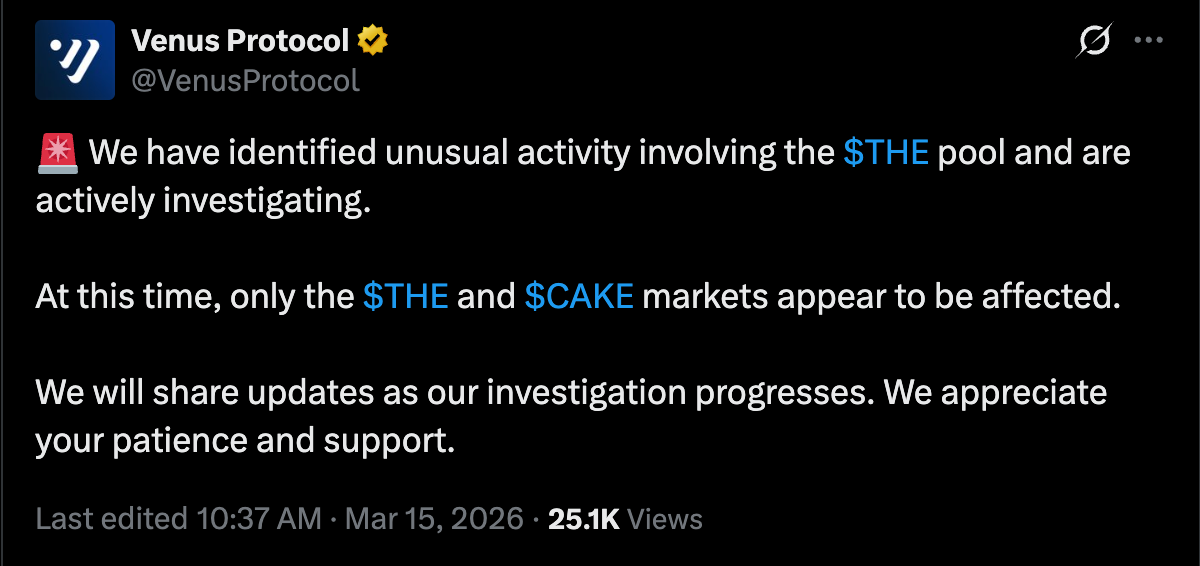
Venus Protocol, a decentralized lending and borrowing platform, said on Sunday it had detected suspicious trading activity in the liquidity pool for the Thena (THE) token, the native cryptocurrency of the Thena decentralized finance platform.
The unusual trading activity only affected pools for the Cake (CAKE) token, the native cryptocurrency of the PancakeSwap decentralized exchange, and the Thena token, according to an announcement from Venus Protocol. The Venus team said:
“As we continue to investigate the unusual activity in the THE pool, we are taking precautionary action by pausing all THE borrows and withdrawals effective immediately, to prevent any further misuse. This will remain in effect until the investigation is concluded.”

The suspicious trading activity is suspected to be a supply cap attack that was executed in two phases: a steady accumulation of about 84% of the total THE token market cap, coupled with a lending attack, according Allez Labs, which was identified by Venus Protocol as its risk manager.
The Venus exploiter used the Theta token as collateral to borrow 6.67 million CAKE tokens, 1.58 million USDC (USDC), 2,801 BNB (BNB) — the native token of the BNB chain — and 20 Bitcoin (BTC), Allez Labs said.
Out of caution, withdrawals and borrowing for other tokens, which have low liquidity on the platform, were also temporarily halted, Allez Labs said. The total amount lost in the attack is now over $3.7 million, according to Wu Blockchain.
At the time of publication, THE was trading at $0.2255 apiece, down more than 17% in the last 24 hours, according to pricing data on CoinMarketCap.com.

Cointelegraph reached out to Venus Protocol but did not obtain a response by the time of publication.
The incident highlights the cybersecurity and code exploit threats faced by crypto users and decentralized finance platforms, as the sector grows and security threats that cause financial loss become increasingly sophisticated.
Related: February crypto losses hit lowest level since March 2025, says PeckShield
Monthly crypto losses from hacks fall in February, as attackers pivot to social engineering scams
The value lost in crypto-related hacks fell to $49 million in February, the lowest level in nearly a year, according to blockchain security firm PeckShield.
Despite the reduction in total value lost to hacks and code exploits during February, there was an uptick in phishing and social engineering scams.

“The majority of individual attacks targeted private users through phishing attacks, malicious signatures, and address poisoning scams,” according to a report from blockchain intelligence platform Nominis.
Phishing scams often use fake websites, which feature addresses that are nearly identical to legitimate domain names. These fraudulent websites have malware designed to steal private keys for cryptocurrencies or other sensitive information.
Magazine: ‘SEAL 911’ team of white hats formed to fight crypto hacks in real time
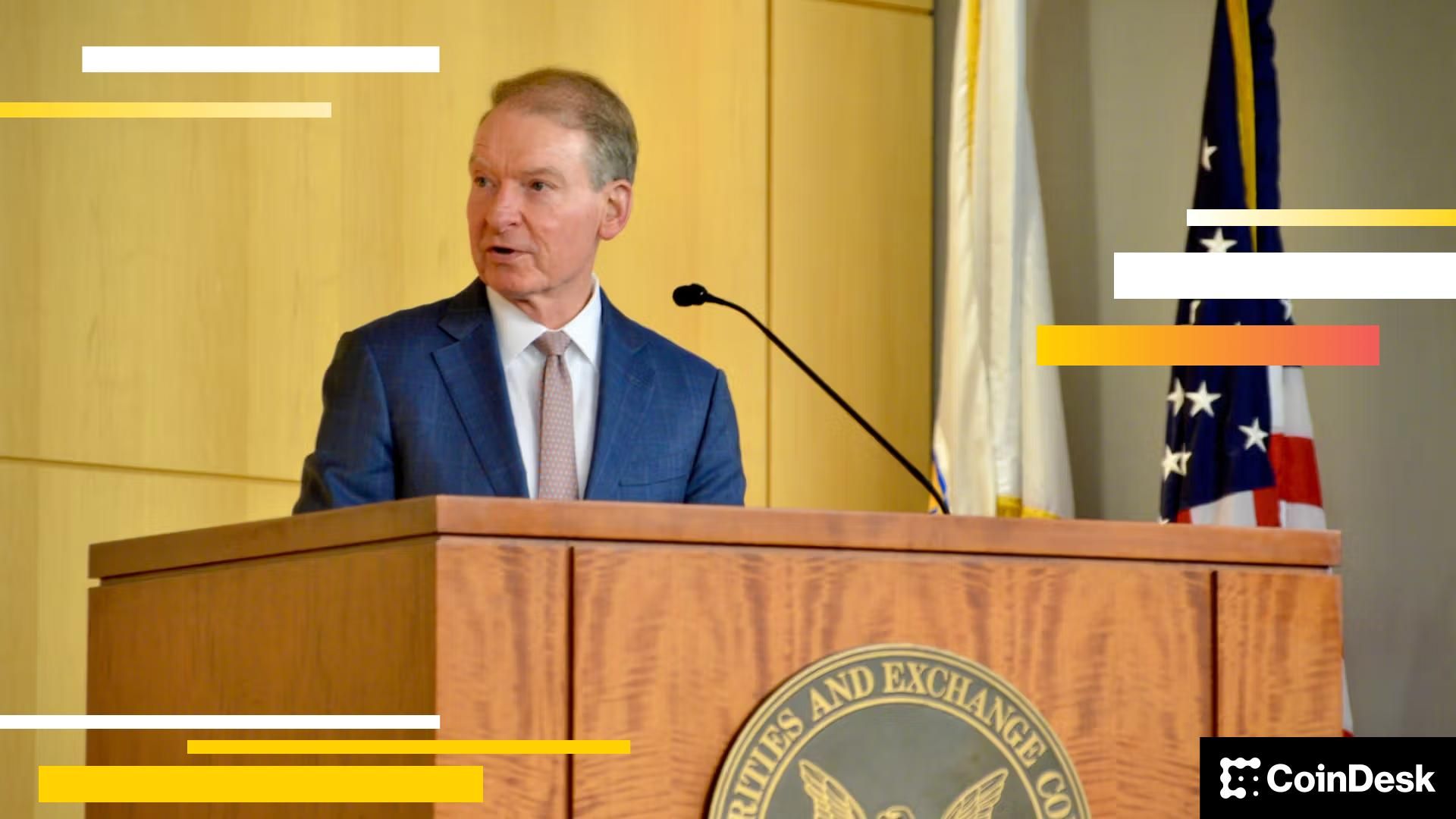
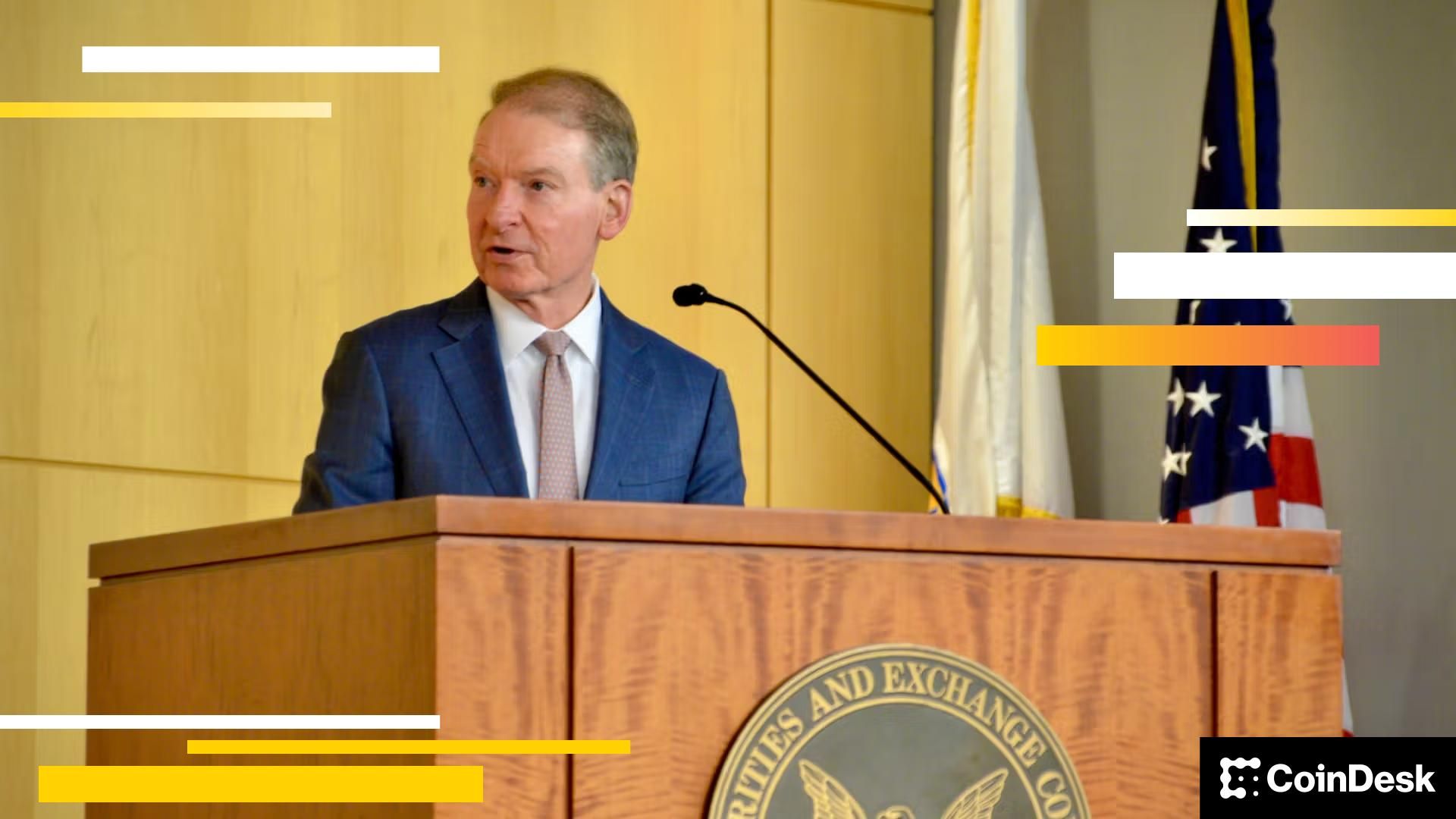
Though we’re still waiting on a lot of the formal rulemaking and proposed rulemaking from the federal securities and commodities regulators, last week’s memo is another sign that the SEC and CFTC are at least serious about signalling these efforts are coming.
You’re reading State of Crypto, a CoinDesk newsletter looking at the intersection of cryptocurrency and government. Click here to sign up for future editions.
The narrative
The U.S. Securities and Exchange Commission and the Commodity Futures Trading Commission formally agreed to work more closely together to explain how they’d oversee crypto and other issues.
Why it matters
The agencies continue to signal that their past regulatory turf war has ended, and laid out a an explanation of how they’ll jointly approach rulemaking — a welcome sign for the crypto industry.
Breaking it down
The SEC and CFTC signed a memorandum of understanding last week aimed at combining their regulatory approaches to the digital asset and other emerging technology sectors. According to the memo, the agencies will regularly hold joint meetings, share data and otherwise communicate their efforts to oversee the digital asset sector.
“More than aligning our rules, a harmonized framework also demands coordinating our responses to the firms that operate within it, including those that have questions of interpretation or request exemptive relief,” SEC Chair Paul Atkins said in prepared remarks earlier this week.
The chief suggestion here: That the SEC and CFTC will coordinate how they’re both defining a digital asset as a security or a not-security, in a way they didn’t two years ago.
One of the goals of the memo is for the agencies to “clarify product definitions through joint interpretations and rulemakings,” it said.
The memo also said the agencies would update their regulatory frameworks for regulated companies across a number of areas, including clearing and margin, trade data and intermediaries, among others.
This harmonization effort may extend beyond just crypto — the regulators are considering moving into one office building (the SEC’s), Bloomberg reported.
While the SEC and CFTC are making efforts to merge their approaches to the sector, the agencies and broader industry participants are still waiting to see what happens with the market structure bill currently working its way through the Senate. Senate Majority Leader John Thune told Punchbowl News that he did not expect the bill to work through the Senate before the “April time period” earlier this week.
Congress is just a week out from its two-week Easter break, meaning even if the Senate Banking Committee’s members come to an agreement to move the bill forward, sheer logistics mean the Senate is unlikely to have time to get to the bill in the immediate future. While I’m not sure how much this will affect the Senate’s work on market structure, it’s also worth noting that lawmakers are still negotiating a bill to fund the Department of Homeland Security, and President Donald Trump has said he wants Congress to pass the Safeguard American Voter Eligibility Act (SAVE Act) before he would sign any other bill. Neither of these efforts seem likely to pass immediately however, reporting suggests.
This week
- There are no hearings scheduled as of press time. My colleague Jesse Hamilton and I will be at the Digital Chamber’s conference in Washington. Come say hi!
If you’ve got thoughts or questions on what I should discuss next week or any other feedback you’d like to share, feel free to email me at [email protected] or find me on Bluesky @nikhileshde.bsky.social.
You can also join the group conversation on Telegram.
See ya’ll next week!
TLDR:
- U.S. oil companies are projected to earn $63 billion in additional cash flow in 2025 alone.
- Oil prices surged from $70 to over $100 per barrel following the U.S.-Iran conflict on Feb. 27.
- Exxon and Chevron are keeping capital spending flat, directing profits to wealthy shareholders instead.
- Economists now place the probability of a U.S. recession at 25% as energy-driven inflation rises fast.
Oil prices have surged past $100 per barrel after hostilities between the U.S. and Iran began on February 27. The spike has positioned U.S. oil companies to record some of their highest profits in years.
American consumers are absorbing sharply rising costs at the pump. The situation has drawn attention to where the financial windfall is going. Major producers like Exxon and Chevron are projected to benefit the most.
Oil Companies Hold Spending Flat While Profits Climb
Oil prices climbed from $70 to over $100 a barrel after the conflict disrupted global supply routes. The Strait of Hormuz carries around 20% of the world’s total oil. Disruptions there have created what analysts call the most severe supply shock in recent history.
Historically, higher oil prices have prompted energy companies to expand drilling and output. That process typically pushes prices lower by adding more supply to the market.
However, major producers are not following that pattern this time. Companies like Exxon and Chevron have kept capital spending flat despite record-high prices.
According to BullTheoryio, these companies are not hiring more workers or building more rigs. Every extra dollar paid at the pump is being retained as profit rather than reinvested.
This represents a break from historical industry behavior. The strategy reflects a clear preference for capital discipline over expansion.
U.S. oil companies are on track to generate $63 billion in additional cash flow this year alone. Of that, 45% is going directly back to shareholders.
Exxon alone is projected to earn between $25 billion and $30 billion in extra revenue. Chevron is expected to record an additional $12.5 billion in gains.
Consumers Face Recession Risk as Wealth Gap Widens
Gas prices rose approximately 40 cents in a single week after the conflict escalated. That jump has strained household budgets already under pressure from broader inflation.
High energy costs lift prices for groceries, rent, and electricity. Economists now place the probability of a recession at around 25%.
Since 2022, the five largest oil majors have collectively earned $467 billion in profit. That figure covers several years of elevated energy prices before this conflict began. The current surge adds to what is already the most profitable run in the industry’s recent history.
BullTheoryio noted President Trump’s remark that the U.S. “makes a lot of money” when oil prices rise. Critics argue, however, that those gains are concentrated among corporations and large investors.
The broader public sees little direct financial benefit from higher crude prices. Most returns flow to institutional shareholders.
The current situation reflects a structural shift in how energy profits are distributed. Oil companies are prioritizing shareholder returns over reinvestment, which limits any new supply from entering the market.
With less drilling activity, downward pressure on prices remains low. Consumers are therefore left with little short-term relief from rising costs.

Homeowners ‘finally warm’ after ditching old radiators for ‘stylish statement’ models

Celebrities Flocking To Lasers To Get Ready For Oscars

Novak Djokovic (shoulder) withdraws from upcoming Miami Open


-
 Tech5 days ago
A 1,300-Pound NASA Spacecraft To Re-Enter Earth’s Atmosphere
-
Crypto World2 days ago
HYPE Token Enters Net Deflation as HyperCore Buybacks Outpace Staking Rewards
-

 News Videos6 days ago
10th Algebra | Financial Planning | Question Bank Solution | Board Exam 2026
-

 Business5 days ago
ExxonMobil seeks to move corporate registration from New Jersey to Texas
-

 Crypto World6 days ago
Paradigm, a16z, Winklevoss Capital, Balaji Srinivasan among investors in ZODL
-

 Fashion2 days ago
Weekend Open Thread: Addict Lip Glow
-

 Tech5 days ago
ChatGPT will now generate interactive visuals to help you with math and science concepts
-
Sports1 day ago
Why Duke and Michigan Are Dead Even Entering Selection Sunday
-

 NewsBeat4 days ago
Residents reaction as Shildon murder probe enters second day
-

 Business5 days ago
Search Enters Sixth Week With New Leads in Tucson Abduction Case
-
 NewsBeat6 days ago
Pagazzi Lighting enters administration as 70 jobs lost and 11 stores close across Scotland
-

 Tech6 days ago
Despite challenges, Ireland sixth in EU for board gender diversity
-

 Business1 day ago
US Airports Launch Donation Drives for Unpaid TSA Workers as Partial Government Shutdown Enters Fifth Week
-

 NewsBeat4 days ago
I Entered The Manosphere. Nothing Could Prepare Me For What I Found.
-
Crypto World1 day ago
Coinbase and Bybit in Investment Talks: Could Bybit Finally Enter the US Crypto Market?
-

 Business6 days ago
Search Enters 39th Day with FBI Tip Line Developments and No Major Breakthroughs
-

 Business2 hours ago
Search for Savannah Guthrie’s Mother Enters Seventh Week with No Arrests
-

 Sports6 days ago
Skateboarding World Championships: Britain’s Sky Brown wins park gold
-

 Business1 day ago
Country star Brantley Gilbert enters growing non-alcoholic beer market
-
 Crypto World5 days ago
Will Chainlink price reclaim $10 amid volatility squeeze?

