

Crypto World
White House May Drop Support for Crypto Bill


Join Our Telegram channel to stay up to date on breaking news coverage
The White House is thinking about pulling its support for a major crypto regulation bill after Coinbase suddenly withdrew its backing.
A source close to the Trump administration said officials were caught off guard by Coinbase’s decision. The administration is reportedly angry, calling Coinbase’s move a “rug pull” that hurt not just the White House but the wider crypto industry.
Officials claim Coinbase did not warn them before going public with its opposition. Because of this, the White House may fully walk away from the Digital Asset Market Clarity Act. However, the administration could stay involved if Coinbase returns to talks and agrees to a compromise.
🚨SCOOP: The White House is considering pulling its support for the crypto market structure bill entirely if @coinbase does not come back to the table with a yield agreement that satisfies the banks and gets everyone to a deal, a source close to the Trump administration tells me.…
— Eleanor Terrett (@EleanorTerrett) January 17, 2026
The biggest sticking point is stablecoins, especially rules around yield-bearing stablecoins. Banks are worried that allowing stablecoins to offer around 5% returns could pull money out of traditional savings accounts. The source emphasized that this is “President Trump’s bill,” not one controlled by Coinbase or its CEO, Brian Armstrong.
Why Coinbase Opposes the Crypto Market Structure Bill
Coinbase says it pulled support because the bill, in its current form, could harm the crypto industry. Armstrong said it is better to have no bill than a bad one. He raised concerns that the proposal could effectively ban tokenized stocks, place heavy restrictions on decentralized finance (DeFi), and give the government broader access to users’ financial data, which could hurt privacy.
Armstrong also warned that the bill weakens the Commodity Futures Trading Commission while giving more power to the Securities and Exchange Commission. The SEC has faced strong criticism from the crypto industry for relying heavily on enforcement actions instead of clear rules.
Reactions within the crypto community are mixed. Some support Coinbase, saying lawmakers are protecting banks at the expense of innovation. Others argue that Coinbase is just one exchange and should not have the power to block legislation that affects the entire crypto industry.
Related Articles:
Best Wallet – Diversify Your Crypto Portfolio

- Easy to Use, Feature-Driven Crypto Wallet
- Get Early Access to Upcoming Token ICOs
- Multi-Chain, Multi-Wallet, Non-Custodial
- Now On App Store, Google Play
- Stake To Earn Native Token $BEST
- 250,000+ Monthly Active Users
Join Our Telegram channel to stay up to date on breaking news coverage



- XRP price forms higher lows, signalling growing buying interest.
- XRP ETF inflows show steady institutional accumulation.
- The key levels to watch are the support at $1.13 and the resistance at $1.46–$1.83.
XRP is showing signs of a potential recovery after recent price action indicated that buyers are stepping in at key support levels.
The cryptocurrency recently bounced off the $1.33–$1.35 zone, forming higher lows over the past week. This pattern suggests that sellers are losing strength, while buyers are gaining confidence.
Trading activity has also increased, with a notable surge in spot purchases on major exchanges. Retail investors are showing renewed interest, pushing buy orders above sell orders in several short-term periods.
Institutional flows are adding further support with XRP-linked ETFs attracting consistent inflows, indicating that larger players are accumulating the token.
This combination of retail buying and institutional accumulation creates a favourable environment for a potential upswing.
Technical signals suggest price stabilisation
From a technical standpoint, XRP has established a short-term support around $1.13. This level has held firm despite some volatility, preventing further downside.
If this support continues to hold, it could act as a springboard for higher prices.

On the upside, the $1.5121 level has emerged as a key resistance.
Breaking above this zone could pave the way for moves toward $1.66, with a further resistance level at $1.83.
Historical price behaviour shows that surpassing $1.51 often opens the door for more substantial gains.
Below the short-term support, another historical support exists around $0.8475. This deeper level could act as a safety net if XRP were to face selling pressure.
For now, however, the token remains above its critical floors, suggesting that the market is stabilising.
Volume trends reinforce the positive outlook.
Recent surges in buying activity have been accompanied by elevated trading volume, a strong indicator that the momentum is supported by actual market participation rather than isolated trades.
Higher lows, in particular, signal that buyers are willing to step in at progressively higher prices.
This is a classic indicator of strengthening market sentiment and often precedes more sustained upward movements.
XRP price outlook
Overall, the combination of higher lows, robust ETF inflows, and strong trading volume points to a market that is gradually recovering.
According to analysts, the immediate support sits at $1.13, with $0.8475 as a more distant buffer, while the key resistance levels to monitor include $1.46, $1.66, and $1.83.
A break above $1.46 could trigger further gains toward higher targets, while holding support at $1.13 may confirm that the market has stabilised.
Conversely, a drop below $1.13 could see XRP retest lower support zones, potentially putting short-term momentum at risk.
ETH is flashing mixed signals: is it on the verge of a rally or bracing for another breakdown?
The second-largest cryptocurrency hasn’t been at its best lately, plummeting by double digits over the last 30 days and trading far below its all-time high of almost $5,000 witnessed in the summer of 2025.
However, the past 24 hours brought some hope for the bulls, as ETH rocketed from $1,800 to over $2,000. Some market observers believe a more profound rebound could be on the way, while others think the valuation has yet to reach its bottom.
Rally Soon?
Ethereum (ETH) has soared by over 10% daily, currently trading above the $2,000 psychological zone. However, it remains 30% down on a monthly scale, while its market capitalization has shrunk to approximately $237 billion.
Despite the major correction, many analysts remain optimistic. X user KALEO observed the asset’s recent performance and argued that it might be on the verge of a bounce. They assumed that ETH has formed a “clean double bottom off HTF support” and may be ready to spike above $2K.
“More FUD than I’ve ever seen on the timeline. Send it with haste,” the analyst added.
Merlijn The Trader also chipped in lately. He claimed that ETH is sitting in a five-year demand zone, emphasizing that this area has historically acted as a place where investors accumulate rather than distribute.
“You don’t need the exact bottom. You need exposure before expansion. Big bases don’t drift. They reprice,” he stated.
X user StockTrader_Max shared a similar thesis, arguing that ETH has evolved into “a long-term investment with slower, steadier growth that rewards patience and conviction rather than hype and timing.” The analyst believes the asset should be held in many portfolios, with a time horizon of years rather than months.
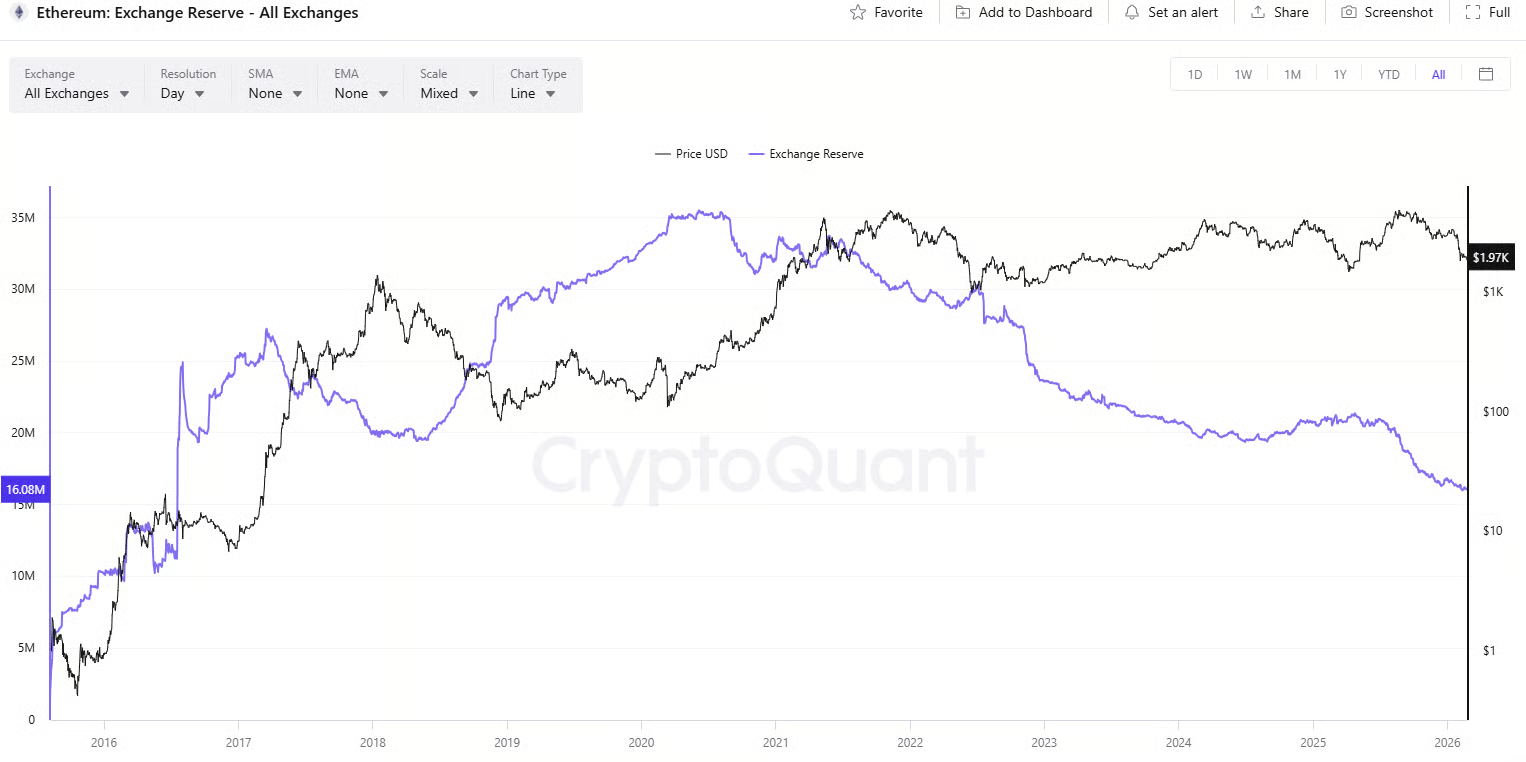
Meanwhile, some industry participants noted that whales have been quite active lately and increased their exposure to ETH. X user Crypto Rover shared a CryptoQuant chart, showing that large investors now own over 24 million tokens, or more than 20% of Ethereum’s circulating supply.
You may also like:
Whales’ activity is closely monitored by smaller players who might mimic their moves and enter the ecosystem with fresh capital. Additionally, it is commonly believed that large investors rarely make irrational purchases and may have inside information about upcoming events that could influence valuation.
Last but not least, ETH’s exchange reserves remain quite close to the nearly 10-year low recorded earlier this month. This trend shows that investors don’t rush to transfer their holdings to centralized platforms: a move often considered a pre-sale step, and which can cause an additional price slump.
Are the Bears Here to Stay?
Many other analysts presented rather pessimistic views on the matter. X user Crypto Tony warned of new lows if the price plunges below $1,820, describing that level as “the last line of defence.” They later argued that if the bulls decisively reclaim $1,940, then “we are back in business.”
Ali Martinez and Lucky also gave their two cents. The former claimed that the next major support levels for ETH, should it break below $1,800, are $1,584, $1,238, and $1.089.
The asset’s Relative Strength Index (RSI) is another bearish factor to watch. Due to the price rebound experienced over the past hours, the tool’s ratio has risen above 70, signaling that ETH is overbought and could be due for a correction. The RSI is an important metric often used by traders, and conversely, anything below 30 is considered a buying opportunity.

Binance Free $600 (CryptoPotato Exclusive): Use this link to register a new account and receive $600 exclusive welcome offer on Binance (full details).
LIMITED OFFER for CryptoPotato readers at Bybit: Use this link to register and open a $500 FREE position on any coin!
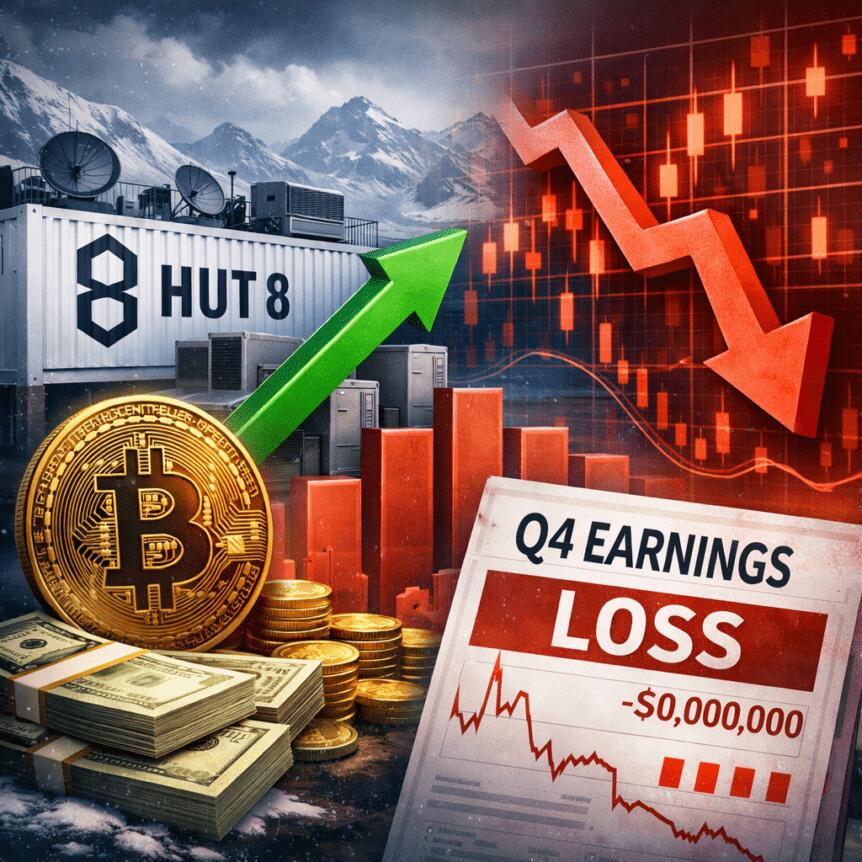
Hut 8 (EXCHANGE: HUT) posted a stark transformation in its fourth-quarter results, reflecting the struggle of a hash-rate focused miner navigating volatile digital-asset markets and a pivot toward AI-driven infrastructure. The company reported a quarterly net loss of $279.7 million, a sharp reversal from an income of $152.2 million in the prior-year period, underscoring the hit from asset valuations and impairment charges. Revenue for the quarter ended December 31 stood at $88.5 million, evidence of growth from the year-ago $31.7 million, while compute revenue climbed to $81.9 million from $19.2 million. Yet the quarter’s bottom line was weighed down by a $401.9 million impairment on digital assets, a larger drag than the $308.2 million impairment increase logged a year earlier. In the context of a crypto market that has cooled from earlier-year highs, Hut 8’s numbers crystallize a transition away from pure mining toward a broader data-center and AI infrastructure strategy.
The quarter’s figures come as Hut 8 also highlighted a robust liquidity position. The company ended the year with about $1.4 billion in cash and Bitcoin reserves, along with up to $400 million in revolving credit capacity. That liquidity cushion is notable given the negative earnings impact from asset impairment, and it provides the runway for the company’s expansion plans in high-performance computing and AI hosting. Against a backdrop where Bitcoin’s price has softened from its 2021-2022 peak, Hut 8 appears intent on diversifying revenue streams beyond block rewards into service-based income tied to AI workloads and data-center capacity.
Among the strategic moves shaping Hut 8’s trajectory, a 15-year lease for 245 megawatts of AI data-center capacity at its River Bend campus stands out. Valued at about $7 billion, the deal is financed in part by a substantial Google-backed funding package that covers around $1.8 billion of the lease obligations and includes warrants for roughly 41 million WULF shares, representing about 8% of the company’s equity under the arrangement. This arrangement underscores a broader industry push to pair crypto mining infrastructure with AI and HPC capabilities, leveraging established cloud and AI ecosystems to extract incremental value from spare data-center capacity. The lease is positioned as a cornerstone of Hut 8’s pivot toward AI-hosting services that can ride secular demand for AI training and inference workloads. The full details of the arrangement are covered in prior disclosures and linked references.
In parallel with the River Bend project, Hut 8 completed the sale of a 310 MW natural gas portfolio in February, freeing additional capital for expansion bets. The company also announced the launch of American Bitcoin Corp., a separately listed vehicle focused on Bitcoin accumulation, a move designed to create a dedicated vehicle for holding and potentially monetizing crypto assets as part of its capital-allocation strategy. These steps reflect a broader trend among miners to monetize non-core assets and redeploy capital into platforms that can scale with AI-driven demand.
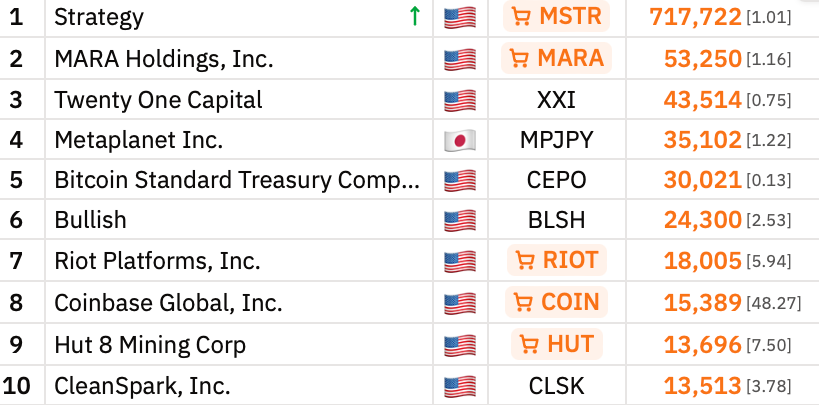
Hut 8’s Bitcoin holdings remain a point of attention for investors. Data from BitcoinTreasuries.NET shows Hut 8 holds 13,696 BTC, positioning the company among the larger publicly traded Bitcoin holders by ordinary metrics. The market response to the earnings release was tepid, with shares down about 4.5% in early trading on Wednesday, a reflection of the mixed signal from the quarterly results—heightened impairment on assets even as liquidity and strategic leverage appear to expand. Market participants watched how the company’s stock would translate liquidity into tangible AI/data-center revenue over the coming quarters, particularly as the AI lease with Google-backed financing adds a long-horizon revenue stream.
Beyond Hut 8’s numbers, the sector’s narrative has shifted toward AI and HPC infrastructure. Even as Bitcoin traded around $68,150—a retreat from its early-year highs near $87,500 (CoinGecko data)—several of the largest publicly traded Bitcoin miners have posted year-to-date gains. TeraWulf (EXCHANGE: WULF) has rallied more than 50% year-to-date, while Riot Platforms (EXCHANGE: RIOT) and Hut 8 have advanced roughly 30% and 29%, respectively, according to industry data. The performance differential suggests investors are valuing miners not only for their Bitcoin exposure but also for the quality of their energy infrastructure, data center real estate, and strategic diversification into AI and HPC capabilities. The ETF landscape also moves in step with this narrative; the Bitcoin Mining ETF WGMI has posted gains as investors rotate toward AI- and data-center-enabled plays.
The divergence in outcomes across miners highlights a broader market reality: investors are increasingly discounting crypto price alone and pricing in operational leverage tied to energy and compute capacity. In August, for example, TeraWulf signed a 10-year colocation lease with Fluidstack valued at $3.7 billion, with Google backing about $1.8 billion of the lease obligations and warrants issued for a substantial stake in WULF. Industry observers point to these kinds of long-duration commitments as proof that AI-focused infrastructure will serve as a more durable revenue anchor than mining alone, a trend echoed in Starboard Value’s push for Riot Platforms to accelerate its AI/HPC data-center ambitions.
In short, Hut 8’s quarterly report reads as a case study in a sector at a crossroads. The company’s balance sheet remains robust enough to sustain a multi-year capex plan, but the immediate earnings picture is clouded by asset impairments that reflect the price volatility of digital assets and the challenge of timing asset valuations. As Hut 8 leans into AI and HPC, investors and analysts are watching for how much of the River Bend project’s incremental revenue will filter into the bottom line, and how the company manages the horizon of interest payments, revolver usage, and equity-linked incentives tied to the Google-backed warrants. The press materials and related coverage in the period provide a roadmap for investors to evaluate Hut 8’s capacity to monetize AI-ready capacity while managing the traditional crypto mining business.
Why it matters
The Hut 8 story matters because it encapsulates a broader industry transition from pure cryptocurrency mining to diversified data-center and AI infrastructure. The ability to monetize large-scale compute capacity through AI workloads could redefine the economics of publicly traded miners, offering a more predictable revenue stream than mining rewards alone. The River Bend lease, backed by Google’s financing and a long-term obligation framework, demonstrates how strategic partnerships can de-risk capital-intensive expansions while aligning mining operators with the growing demand for AI training and inference power. This shift matters for investors who are weighing balance-sheet strength, capital allocation, and the quality of a miner’s ancillary assets beyond crypto price exposure.
Another implication is the emphasis on liquidity and asset management as a core strategic tool. Hut 8’s move to divest non-core assets, such as the 310 MW natural gas portfolio, and its spin into a dedicated Bitcoin accumulation vehicle signal a willingness to separate asset classes to fund AI infrastructure without diluting core mining operations. For users and builders in the crypto ecosystem, this signals a maturation of the sector where capital is allocated toward resilient, scalable infrastructure that can weather crypto cycle volatility while supporting the broader AI ecosystem.
Finally, the findings reinforce how public markets value the intersection of crypto assets, energy infrastructure, and data center capacity. The market’s appetite for AI-oriented data centers—evidenced by equities’ relative outperformance versus Bitcoin’s price trajectory—suggests investors are factoring both energy efficiency and compute density into growth assumptions. If Hut 8 can translate its River Bend investment into meaningful, recurring revenue, it could set a benchmark for other miners seeking to monetize AI and HPC opportunities without sacrificing their core mining businesses.
What to watch next
- Updates on River Bend AI data-center capacity utilization and revenue contribution (dates pending) and any further updates on Google-backed financing terms.
- Progress of American Bitcoin Corp. as a separate vehicle and its impact on Hut 8’s overall capital structure.
- Bitcoin price trends and miner-specific hedges or debt facilities that influence liquidity and burn rates.
- Additional asset divestitures or acquisitions by Hut 8 or peers that signal a broader industry shift toward AI-ready infrastructure.
Sources & verification
- Hut 8 reports fourth-quarter and full-year 2025 results and related press materials (PR Newswire).
- Details of the River Bend data-center lease, Google backstopping, and warrants linked to WULF.
- BitcoinTreasuries.NET data on Hut 8’s BTC holdings.
- Yahoo Finance price data for Hut 8 and peer miners to contextualize stock performance.
Hut 8’s Q4 results, AI expansion, and investor outlook
Hut 8’s latest earnings picture reflects a deliberate pivot toward AI-enabled infrastructure while balancing the realities of asset impairment that accompany a cyclic industry. The quarter’s numbers show revenue expansion driven by compute services even as the company records a large impairment charge on its digital assets. The liquidity position remains a critical asset for pursuing long-horizon data-center deployments, including the River Bend project, which positions Hut 8 among the few publicly traded miners with substantial exposure to AI and HPC workloads. As the sector navigates macro headwinds and fluctuating crypto prices, Hut 8’s strategy will be tested by the speed at which AI-driven demand scales and the company’s ability to monetize its existing capacity efficiently.
From a market perspective, the sector’s navigation of risk is increasingly about infrastructure resilience and partnerships rather than price exposure alone. The broader mining cohort has seen notable stock performance in 2024–2025, with WULF, RIOT, and WGMI among the names cited by analysts and traders as beneficiaries of a shift toward compute-centric revenue streams. Hut 8’s ongoing initiatives—asset sales, a major long-term data-center lease, and a dedicated Bitcoin accumulation vehicle—signal a structural change in how crypto miners approach growth, funding, and risk management. As always, investors will be watching for further disclosures on cash burn, debt maturities, and the pace at which AI and HPC services translate into earnings in future quarters.
Overall, Hut 8’s quarterly report is less a single-figure story about a loss and more a narrative about retooling a mining company for longer-term value creation in a data-driven AI economy. The path ahead will depend on the company’s ability to extract stable streams of revenue from its AI data-center contracts, to manage impairment risks effectively, and to sustain liquidity that underwrites future expansions. While the near-term bottom line remains under pressure, the strategic bets—particularly the River Bend lease and the American Bitcoin Corp. launch—could redefine Hut 8’s competitive edge if executed with disciplined cost control and a clear path to profitability in AI-enabled services.
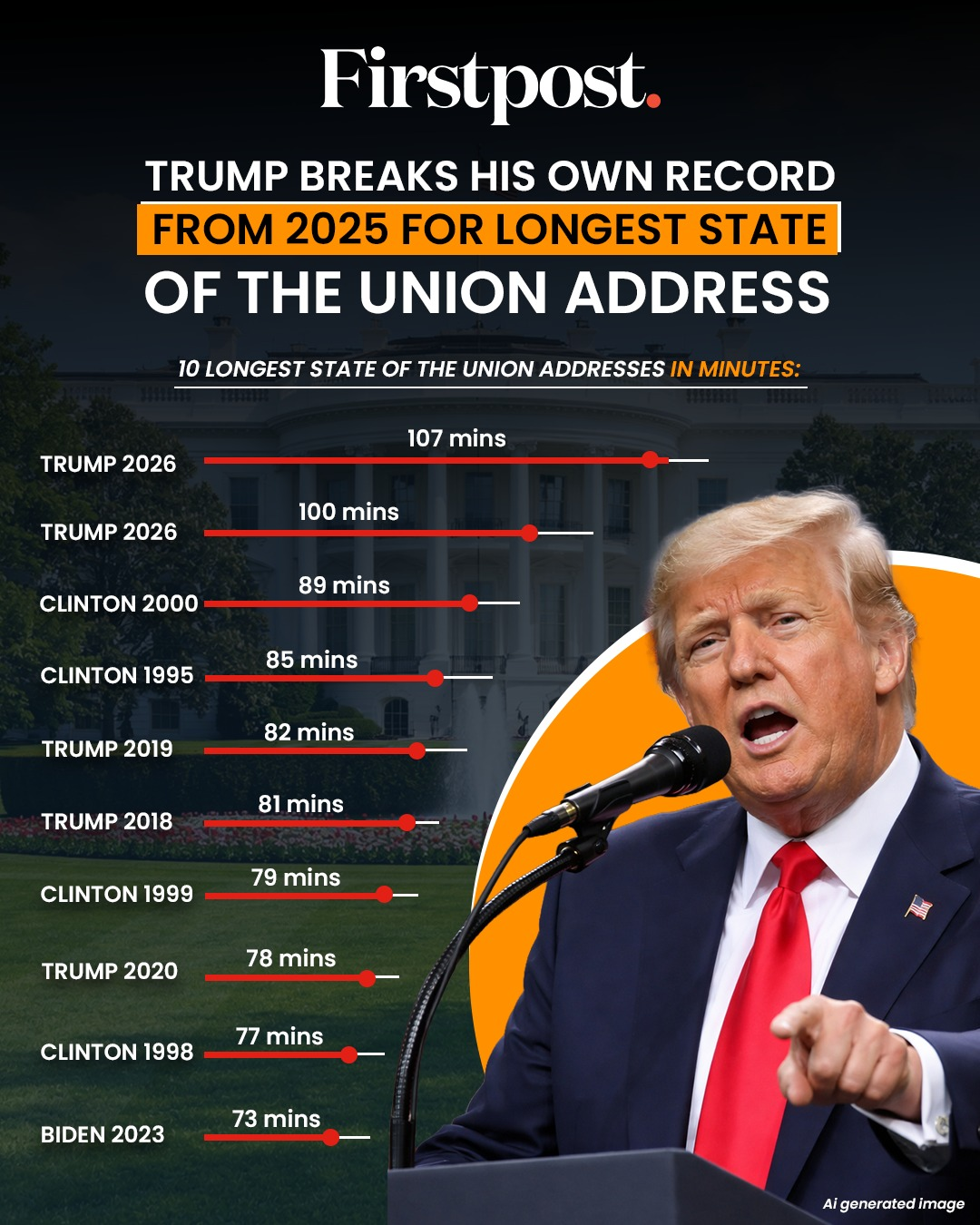
President Donald Trump used his latest address to Congress on Tuesday to mix policy claims, political attacks and campaign-style messaging. Tariffs, immigration, foreign policy around Iran and congressional ethics among the most notable themes.
He mixed policy claims with emotional guest stories. He also directly attacked Democrats and defended his tariff agenda after a recent Supreme Court setback.
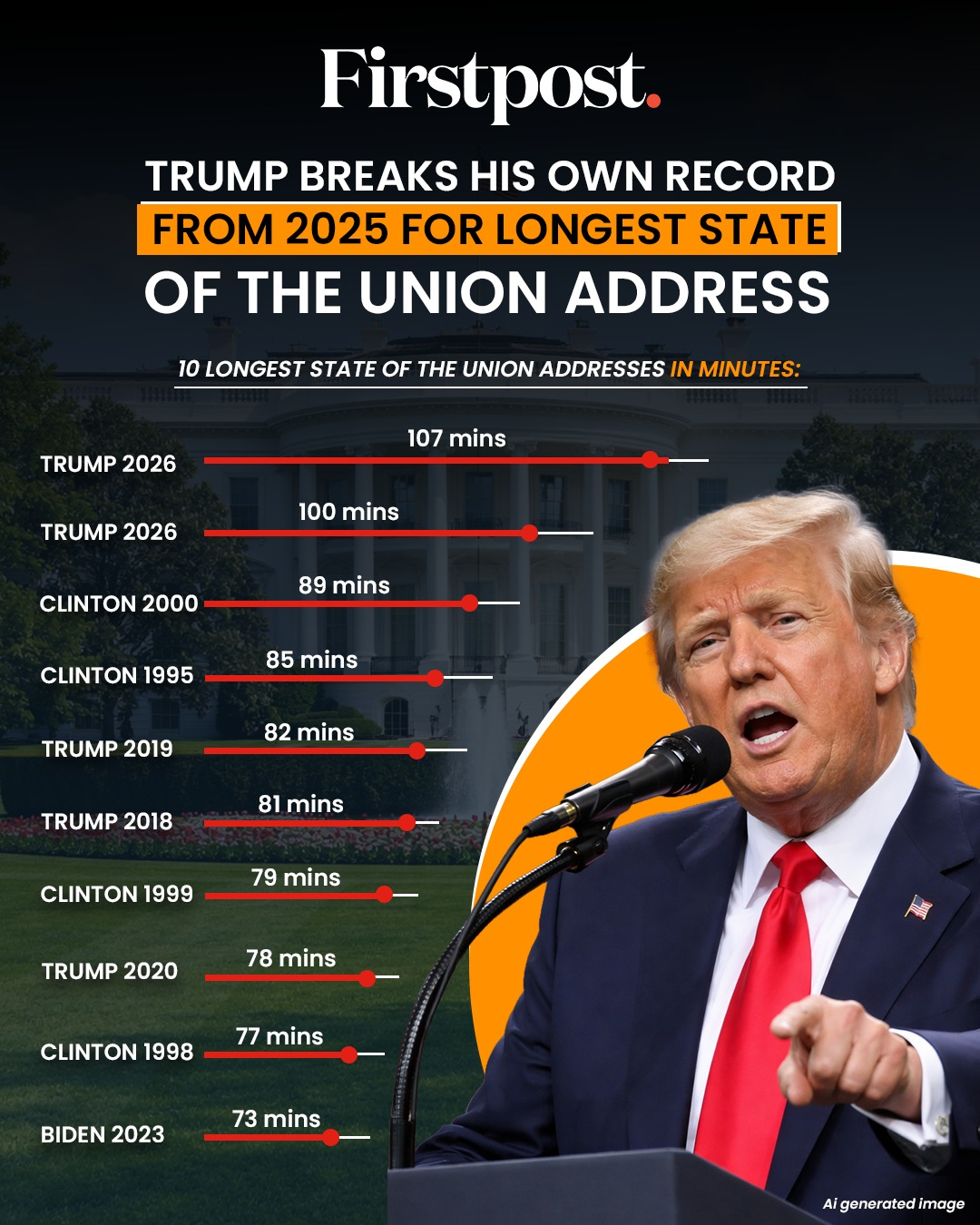
Trump Tariffs Will Continue Despite Supereme Court’s Setback
The speech’s most important theme was Trump’s effort to recast a legal defeat on tariffs as a temporary obstacle. He called the court ruling “unfortunate.”
The president also mentioned that existing trade deals would remain in place and promised to use “alternative legal statutes” to keep tariffs central to US policy.
That matters because tariffs have become a core tool in his economic and foreign-policy strategy, including as leverage in negotiations.
American Economy is Great Again? Maximum Triumphalism and Zero Hedge
Trump leaned heavily on a total economic turnaround narrative, citing lower inflation, cheaper gasoline, rising jobs and stock market gains.
He presented these claims as proof that his policies reversed what he described as a crisis inherited from the Biden administration.
Specifically the POTUS started with: “our nation is back: Bigger, better, richer and stronger than ever before” and keeps that tone almost the entire way through.
This follows his long-running political approach of tying consumer prices, markets and employment directly to presidential leadership.
Zero Tolerance on the Immigration Issue
Iimmigration and crime dominated the speech’s sharpest moments. Trump highlighted border enforcement, deportations and new proposals.
Most notably, he urged to enact the “Dalilah law” to block states from issuing commercial driver’s licenses to undocumented immigrants.
He also renewed calls to end sanctuary city policies and tighten voting rules, blending immigration enforcement with election-security rhetoric.
Stand and Sit Down: Live Political Drama
Meanwhile, Trump used the chamber as a live political stage, repeatedly asking lawmakers to stand for certain positions and then criticizing those who did not.
That tactic turned applause and silence into part of the message. It also gave him ready-made moments for television and social media clips, especially on immigration and voting rules.
Softer Stance on Iran?
Trump delivered an expansive foreign-policy and national-security section. He claimed progress on multiple conflicts, described continued efforts on Russia-Ukraine.
Meanwhile, the president returned to a hardline message on Iran, saying he prefers diplomacy but would not allow Tehran to obtain a nuclear weapon.
Trump’s Personal Branding on Full Display
Finally, Trump blended governing with personalized branding in unusual ways, promoting “Trump Accounts” and “TrumpRX” while discussing tax relief and drug pricing. He also tied many policy arguments to invited guests in the gallery, from workers and parents to military personnel.
That format let him package complex or controversial policy claims into simple, emotionally resonant stories.
Taken together, the speech looked less like a traditional legislative address and more like a campaign-era governing performance: part policy agenda, part partisan contrast, and part prime-time political theater.
Hut 8 (HUT) reported a fourth-quarter net loss Wednesday of $279.7 million, from income of $152.2 million a year earlier.
Revenue for the quarter ended Dec. 31 was $88.5 million, compared with $31.7 million in the same period a year earlier.
In its earnings report released Wednesday, Hut 8 said compute revenue for the three-month period totaled $81.9 million, up from $19.2 million a year earlier. The company did not disclose quarterly Bitcoin (BTC) production or sales figures.
Operating results were affected by a $401.9 million loss on digital assets in the quarter, compared with a $308.2 million increase a year earlier.
Hut 8 said it ended the year with about $1.4 billion in cash and Bitcoin reserves and up to $400 million in revolving credit capacity.
During the quarter, the company signed a 15-year lease for 245 megawatts of AI data center capacity at its River Bend campus valued at $7 billion. The agreement includes payments financially backstopped by Google and builds on Hut 8’s broader expansion into AI and high-performance computing infrastructure.
The company also completed the sale of a 310 MW natural gas portfolio in February and said it launched American Bitcoin Corp. as a separately listed vehicle focused on Bitcoin accumulation.
According to BitcoinTreasuries.NET data, Hut 8 holds 13,696 BTC, ranking it among the larger public Bitcoin holders. Shares were down about 4.5% at last look in Wednesday morning trading. Industry tracker CoinShares Bitcoin Mining ETF (WGMI) was up less than 1%.

Related: Solo Bitcoin miner bags over $200K block reward using rented hashrate
AI and infrastructure initiatives stoke mining stocks gains
Even as Bitcoin has fallen to about $68,150 from about $87,500 at the start of the year, per CoinGecko data, shares of most of the biggest publicly traded Bitcoin miners by market capitalization have posted year-to-date gains.
TeraWulf is up more than 50% this year, while Riot Platforms and Hut 8 have advanced about 30% and 29%, respectively, according to data from BitcoinMiningStock.io.

The divergence suggests investors may be valuing miners not solely on Bitcoin price exposure, but increasingly on their energy infrastructure and data center strategies.
In August, TeraWulf signed 10-year colocation leases with AI infrastructure provider Fluidstack valued at $3.7 billion. Google is backing about $1.8 billion of the lease obligations and providing debt financing, receiving warrants for about 41 million WULF shares, or about 8% of the company.
Last week, activist investor Starboard Value urged Riot Platforms to speed up its push into high-performance computing and AI data centers, saying Texas-based development could unlock $9 billion to $21 billion in equity value. Starboard holds about 12.7 million Riot shares.
Other miners are also repositioning toward AI-linked infrastructure. CleanSpark, Core Scientific, HIVE Digital and MARA Holdings have repurposed portions of their infrastructure or outlined similar AI and high-performance computing initiatives.
Cango said it sold $305 million worth of Bitcoin on Feb. 9, in part to finance its planned expansion into AI and HPC.
Magazine: Clarity Act risks repeat of Europe’s mistakes, crypto lawyer warns
From windmills to auto parts, small to medium-sized are leading the way with stablecoin adoption, per a new report from Stablecon and Artemis.
Business-to-business (B2B) stablecoin payments ballooned over 730% year-over-year in 2025, according to a new report by Artemis and Stablecon.

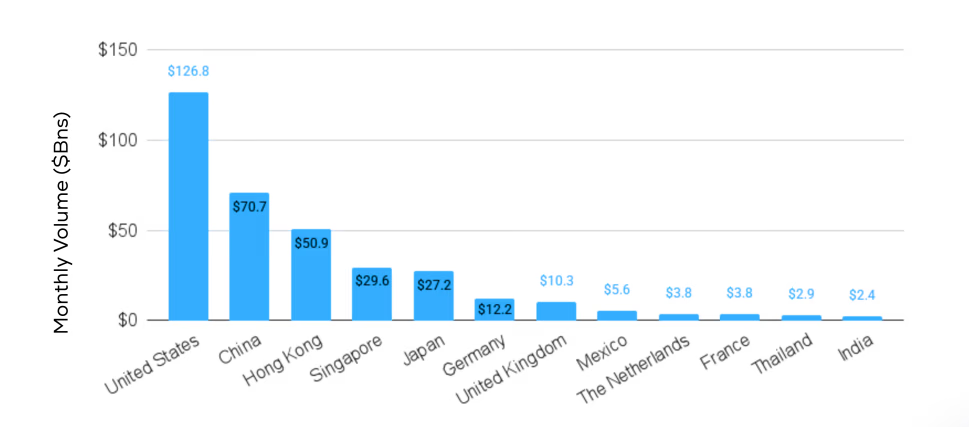
For cross-border payments, the United States received the largest stablecoin flows into the country, with nearly $127 billion monthly. China emerged as the second-largest country for receiving stablecoin payments from international senders, processing nearly $71 billion per month on average, followed by Hong Kong with almost $51 billion.

The report estimates that total annual stablecoin payments soared to $390 billion, more than double 2024 levels, with B2B transactions accounting for roughly 60% of the total.
Though they represent a relatively small slice of stablecoin payment types, card-linked stablecoin transactions saw massive growth last year as well, surging 840% year-over-year.
Speaking with The Defiant, Andrew Van Aken, data scientist at Artemis, clarified that, contrary to popular belief, the top countries for stablecoin usage tend to be those with the highest payment volumes, and developed economies are also increasingly adopting new payment methods.
“I think the most important angle is that the top stablecoin countries tend to be the countries with the highest payment volumes. While the narrative is often that stablecoins are used in emerging countries, developed countries are also looking for new and innovative payment methods,” Van Aken said.
Van Aken also specified that on the B2B side, adoption is concentrated among small and medium-sized businesses — from windmills to scarf makers to auto part companies — seeking to decrease payment times.
“We can’t explicitly shed light on specifics, but it tends to be a lot of small to medium-sized businesses, often tech forward businesses that are looking to decrease payment times,” he added.
As the report itself also notes, the rise in stablecoin use may be linked to their ability to speed up cross-border payments and reduce the extra steps of traditional banking.


- Uniswap price jumped to above $4 on Wednesday as Bitcoin retested $68,000.
- The UNI token could eye $5 amid an oversold bounce across crypto.
- If bulls fail to rally, key support lies around $3.48 and $3.00.
Uniswap (UNI) price has surged nearly 20% in recent trading, climbing to intraday highs above $4.00 as top altcoins retest critical resistance levels.
This rebound aligns with Bitcoin’s spike in the past 24 hours, which sees BTC trade above $68,000 and altcoins, including Ethereum, XRP, and BNB, target oversold bounces above $2,000, $1.50, and $620, respectively.
As with these top altcoins, on-chain data shows Uniswap price ticking up from oversold conditions. Morpho was among the coins to see sharp gains on the day.
Uniswap price pumps to above $4
The sharp decline on February 5, 2026, saw UNI price dump to $3.00, and a subsequent attempt to break higher failed as prices hovered in a range capped at around $3.60.
Overall, weakness in digital assets amid macro headwinds contributed to this outlook.
However, despite risk assets remaining largely bearish, UNI’s uptick to $4.00 amid a 62% spike in daily volume reflects fresh optimism.
Uniswap’s gains in the past 24 hours build on the positive movement that followed BlackRock’s recent strategic purchase of UNI.
The global asset management giant plans to use the tokens to facilitate trading of its BUIDL tokenized Treasury fund via Uniswap.
Data on the market platform Coinglass highlights the improvement in on-chain metrics for UNI.
Open interest is picking up, and funding rates are positive. This suggests recent weakness has provided entry opportunities for buyers.
Bitcoin’s push above $68,000 and Ethereum’s breach of $2,000 may catalyze further gains for small-cap tokens.
What next for UNI price?
Although Uniswap’s price is up by double digits on the day, it remains in the red over the past week, month, and year-to-date.

Technical indicators also suggest that UNI at $4.00 is below key moving averages, including the 50-day, 100-day, and 200-day SMAs.
Daily RSI at 56, however, signals an extended bounce from oversold territory, and significantly, has room for another leg up before bulls hit overbought extremes.
Meanwhile, the MACD histogram hints at fresh bullish momentum with $3.20 having formed a potential bottom.
Bollinger Bands position UNI above the upper band, which is currently at $3.81.
If prices break above the 50-day SMA, bulls will have eyes on the 100 SMA ($5.09).
This hurdle aligns with a horizontal resistance line that also acted as support in November and December 2025.
However, near-term bearish targets are alive. The lower Bollinger band at $3.48 offers the first major demand reload zone. Below this, bulls could rely on support at $3.00.


Since late August, Bitcoin has broken from equities in what appears to be its weakest stock correlation since the chaos of 2022.
Bitcoin’s recent performance differs from its long-standing pattern of moving with stocks. Over the past six months, it has lagged while equities stayed stable and gold rose.
The trend created an unusually weak correlation and recalled rare periods when crypto briefly moved independently from broader financial markets.
Rare Market Divergence
For many years, Bitcoin has frequently moved in the same direction as traditional equity markets, especially the S&P 500. During periods of low interest rates and strong economic growth, such as in 2021 and again in parts of 2024, BTC and many altcoins performed well alongside rising stocks.
On the other hand, during periods of increased fear and tightening monetary policy, including aggressive Federal Reserve rate hikes, crypto markets tended to decline in tandem with equities, as seen in 2018 and 2022.
A clear example occurred in November 2022, when rising interest rates combined with the collapse of FTX pushed Bitcoin down to approximately $15,700. This is one of the most extreme cases of crypto markets falling far more sharply than equities.
Over the past six months, however, Bitcoin has started to move very differently from stocks. Since late August, gold has risen by 51%, the S&P 500 has gained 7%, while Bitcoin has fallen 43%, creating the weakest correlation between BTC and stocks since the market chaos of late 2022.
Rather than moving in step with equities, Bitcoin has significantly underperformed as traditional markets have remained relatively stable and gold has seen strong gains. According to Santiment, such dramatic deviations from long-standing correlations do not typically continue indefinitely.
You may also like:
Previous instances clearly show that markets rotate as sentiment and macroeconomic conditions evolve, which results in changing capital flows over time. Within this context, Santiment added that if BTC eventually returns to its historical tendency of tracking equities during economic expansions, particularly in a scenario involving three interest rate cuts in the second half of 2025, there could be significant room for Bitcoin and altcoins to catch up.
Bearish Pressure
Bitcoin saw a modest rebound on Wednesday as it briefly climbed above the $66,000 level before giving back part of its gains and stabilizing above $65,000.
But data suggests bearish pressure in the BTC futures market, as funding rates remained largely negative across the $62,000-$68,000 range. Additionally, CryptoQuant stated that Bitcoin may not have formed a true bottom yet. Short-term holders have been consistently selling at a loss for nearly 30 days, and multiple large sell spikes have been absorbed without triggering a sustained rebound.
Despite brief price pumps, selling pressure has remained dominant. These rallies are acting as exit liquidity, and a meaningful trend reversal is unlikely until short-term holder profits turn positive and remain there, the report added.
Binance Free $600 (CryptoPotato Exclusive): Use this link to register a new account and receive $600 exclusive welcome offer on Binance (full details).
LIMITED OFFER for CryptoPotato readers at Bybit: Use this link to register and open a $500 FREE position on any coin!


David Schwartz says the XRP Ledger was deliberately designed to prevent Ripple or any single actor from controlling the chain.
Ripple CTO David Schwartz has said that the XRP Ledger (XRPL) was deliberately designed so that neither the company nor any single entity could control it.
His remarks came hours after Cyber Capital founder Justin Bons argued that XRPL is effectively permissioned and centralized, with the exchange cutting to a long-running debate in crypto over what decentralization actually means and whether validator lists amount to hidden control.
Clash Over Control and the Unique Node List
Bons wrote in a February 24 thread on X that networks such as Ripple, Stellar, Hedera, Canton, and Algorand rely on permissioned elements. He claimed XRPL’s Unique Node List, or UNL, gives Ripple and its foundation “absolute power and control over the chain,” arguing that divergence from the published list could cause a fork.
However, Schwartz rejected that characterization, calling it “objectively nonsensical.” He said XRPL nodes individually decide which validators to trust and will not agree to double-spends or censorship unless their operators explicitly choose to.
If a validator attempts to censor or double-spend, “an honest node would just count it as one validator that it did not agree with,” he wrote.
However, Schwartz acknowledged that validators could conspire to halt the chain from the perspective of honest nodes but said they could not force double-spends. In such a case, node operators could switch to a different UNL, which he compared to changing the mining algorithm in Bitcoin after a majority attack.
The XRPL co-architect also addressed regulatory pressure, noting that Ripple must comply with U.S. court orders and cannot refuse them. For that reason, he argued, XRPL was intentionally built so that Ripple itself could not censor transactions.
You may also like:
“The best way to be able to say ‘no’ is to have to say ‘no’ because you cannot do the thing asked,” Schwartz wrote.
Regulatory Pressures and Network Resilience
The exchange comes as XRPL activity metrics have shown significant declines, with analyst Arthur reporting on February 23 that active users fell to roughly 38,000 from more than 200,000, while payment volume dropped to about 80 million XRP from over 2.5 billion.
However, the on-chain observer attributed the drop to the February 18 activation of XLS-81, a permissioned decentralized exchange system that moves institutional transactions off public dashboards.
Questions about validator power also surfaced late last year, when Schwartz proposed a two-tier staking model intended to add rewards without concentrating influence in Ripple’s hands. The idea involved a separate governance token to manage validator lists, with the option to fork if governance failed.
For now, the February 25 exchange highlights a familiar divide. Critics argue that publishing validator lists creates soft control, even if anyone can technically run a node. However, Schwartz maintains that XRPL’s consensus model was built to limit the power of validators and companies alike, even if that means Ripple itself cannot intervene when pressured.
Binance Free $600 (CryptoPotato Exclusive): Use this link to register a new account and receive $600 exclusive welcome offer on Binance (full details).
LIMITED OFFER for CryptoPotato readers at Bybit: Use this link to register and open a $500 FREE position on any coin!


MIAMI BEACH — Bitcoin’s recent slide has frustrated investors who expected a smoother ride after a wave of institutional milestones, but Adam Back, one of the early cypherpunks cited in bitcoin’s 2008 white paper, said the volatility should not surprise long-time observers.
“Bitcoin is generally volatile,” Back said at the iConnections conference in Miami Beach on Tuesday. “There’s a lot of positive news […] and in the previous four year market cycles, this has been about a time in a cycle where price runs lower.”
He suggested that some market participants may be trading around that historical pattern rather than reacting to fundamentals. “There was some expectation or possibility that, because there are different types of investors, the market can be different. So I think some people are thinking the price may come back later in the year.”
Bitcoin entered the year with a tailwind. A more crypto-friendly administration in Washington and long-awaited regulatory clarity around spot exchange-traded funds (ETFs) were expected to unlock deeper institutional participation.
For many investors, this was also meant to be a proving ground. Bitcoin’s core pitch has long centered on scarcity and independence from government monetary policy and to be a digital store of value designed to hedge against currency debasement. At a time when U.S. fiscal deficits remain large and questions about the dollar’s long-term purchasing power persist, the backdrop appeared aligned with that thesis.
Yet the market has not followed the script. Bitcoin is down roughly 26% over the past year, even as the policy environment turned more supportive and institutional access improved. Instead of decoupling from macro uncertainty, the asset has at times traded in line with broader risk markets.
Meanwhile, traditional safe havens have rallied. Gold has climbed to fresh all-time highs, with silver also reaching multi-year peaks. Capital seeking shelter from inflation concerns and geopolitical risk appears to have flowed, at least in part, into metals rather than digital assets.
Back, who is now the CEO of Blockstream as well as the Bitcoin Standard Treasury Company (BSTR), also pointed to structural dynamics in who holds bitcoin.
“The ETF holders […] are more sticky investors than the retail bitcoin exchange traders,” he said. Retail participants often deploy most of their capital during rallies, leaving little dry powder during downturns. Institutions, by contrast, can rebalance across portfolios.
Still, Back cautioned that institutional adoption remains early. “I think there isn’t that much institutional capital yet.”
In his view, large pools of capital have not yet fully entered the market, even though major regulatory hurdles have been resolved and clearer rules could pave the way for more institutional inflows.
Over time, he expects broader adoption to reduce volatility. He compared bitcoin’s current phase to early high-growth equities. “You can look at analogies of, say, early Amazon (AMZN) stock, which had wild swings in price, basically because the market was uncertain.”
“The kind of rapid adoption curve inherently brings with it volatility,” he said. As adoption matures and more institutions, companies and sovereigns gain exposure, Back said bitcoin’s price swings should moderate. He does not expect volatility to disappear, but said he believes it could begin to resemble gold, which trades with less dramatic moves than a younger asset.
Back also said he measures bitcoin’s long-term potential against gold’s total market value. He argued that comparing the two market capitalizations offers a rough benchmark for adoption, and in his view bitcoin remains roughly 10 to 15 times smaller than gold today, suggesting room for further growth if it continues to capture share as a store of value.
Despite short-term price swings, Back argued bitcoin’s long-term investment case remains intact. “Bitcoin as an asset class has stood out from everything, every other asset class for the last decade generally, in having the highest annualized return,” he said.
For Back, volatility is not a contradiction of bitcoin’s thesis but a feature of its adoption phase. “Volatility […] is part of the picture,” he said.

Labour Faces By Election Accusations Over Fictitious Voting Group

What Michael Carrick’s permanent Man United contract could look like and what would change

SambaNova bags $350m, unveils deals with Intel, SoftBank


-

 Video6 days ago
XRP News: XRP Just Entered a New Phase (Almost Nobody Noticed)
-

 Politics4 days ago
Baftas 2026: Awards Nominations, Presenters And Performers
-

 Fashion5 days ago
Weekend Open Thread: Boden – Corporette.com
-

 Sports2 days ago
Women’s college basketball rankings: Iowa reenters top 10, Auriemma makes history
-

 Politics2 days ago
Nick Reiner Enters Plea In Deaths Of Parents Rob And Michele
-
 Sports7 days ago
Clearing the boundary, crossing into history: J&K end 67-year wait, enter maiden Ranji Trophy final | Cricket News
-

 Crypto World1 day ago
XRP price enters “dead zone” as Binance leverage hits lows
-

 Business3 days ago
Mattel’s American Girl brand turns 40, dolls enter a new era
-

 Business3 days ago
Law enforcement kills armed man seeking to enter Trump’s Mar-a-Lago resort, officials say
-

 Entertainment7 days ago
Dolores Catania Blasts Rob Rausch For Turning On ‘Housewives’ On ‘Traitors’
-
 NewsBeat2 days ago
‘Hourly’ method from gastroenterologist ‘helps reduce air travel bloating’
-

 Tech3 days ago
Anthropic-Backed Group Enters NY-12 AI PAC Fight
-

 NewsBeat3 days ago
Armed man killed after entering secure perimeter of Mar-a-Lago, Secret Service says
-

 Tech1 day ago
Unsurprisingly, Apple's board gets what it wants in 2026 shareholder meeting
-

 Politics3 days ago
Maine has a long track record of electing moderates. Enter Graham Platner.
-
 NewsBeat21 hours ago
Police latest as search for missing woman enters day nine
-

 Crypto World21 hours ago
Entering new markets without increasing payment costs
-
 Sports2 days ago
2026 NFL mock draft: WRs fly off the board in first round entering combine week
-

 Crypto World6 days ago
83% of Altcoins Enter Bear Trend as Liquidity Crunch Tightens Grip on Crypto Market
-

 Business1 day ago
WBD says Paramount makes higher bid, board will weigh offer against Netflix deal