Crypto World
White House Weighs Extending Historic Jones Act Waiver to Lower Gas Prices


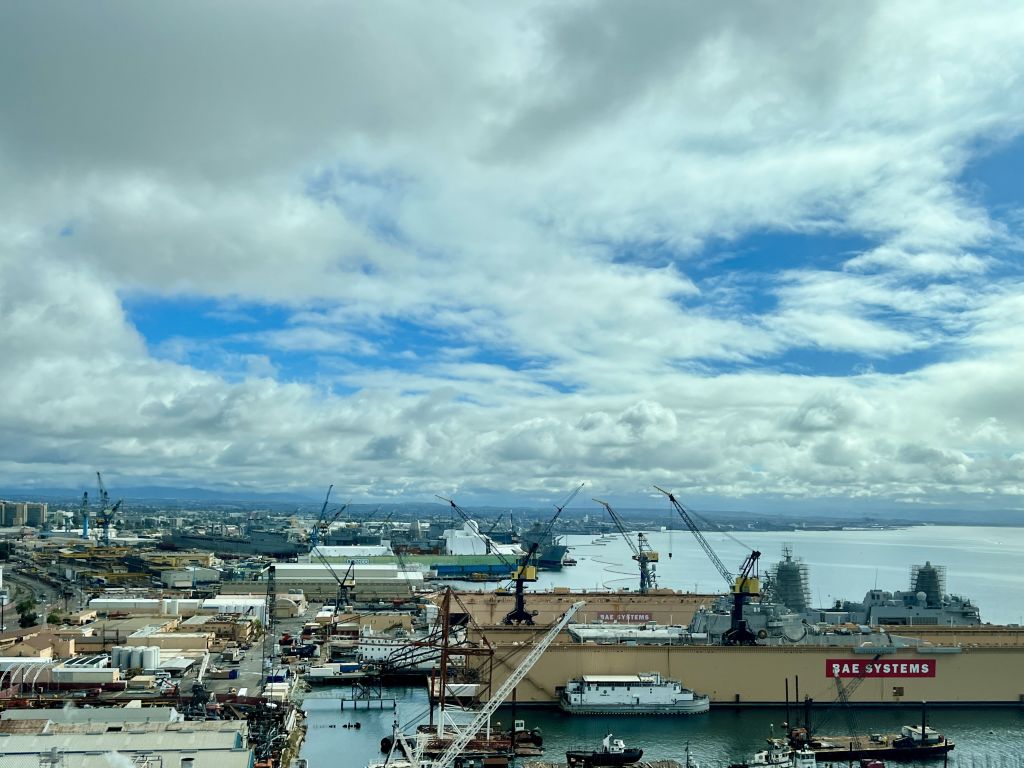
The Trump Administration is likely to extend a waiver of a century-old shipping law in an effort to keep energy prices down, officials said.
After Iran militarized the Strait of Hormuz in retaliation for the U.S. and Israel launching the war on Feb. 28, disrupting global energy supplies and sending oil prices skyrocketing, the Trump Administration temporarily suspended the Jones Act. The law requires that cargo moving between U.S. ports be carried on ships built in the U.S., owned by American companies, and predominantly crewed by Americans. By allowing foreign ships to transport cargo in the U.S., the waiver made domestic shipping more flexible, although estimates suggest the waiver would reduce oil prices by only a few cents per gallon.
The waiver has been extended once before and could be extended again as recent flare-ups between the U.S. and Iran dim hopes of a quick return to normal shipping through the Strait of Hormuz and lower energy prices.
“I think another extension, temporary extension, of the Jones Act waivers is quite likely to happen,” Energy Secretary Chris Wright said at a media briefing in Texas on Tuesday. “These temporary suspensions of the Jones Act have been quite helpful for moving energy around our country.”
The current suspension will expire on Aug. 16, and the oil industry had reportedly expected a decision on an extension by the end of July. But the waiver has faced criticism from American maritime companies that argue it weakens the domestic shipping industry and does little to meaningfully lower fuel prices. Trump officials are reportedly still deciding whether to extend the waiver.
Still, Trump is facing increasing pressure to bring down U.S. petrol prices—currently averaging more than $4 a gallon—while the war’s economic and human costs have become a political liability for Republicans ahead of the midterm elections in November.
By Aug. 16, the waiver will reach 150 days, making this the longest suspension of Jones Act shipping restrictions in the program’s history. The waiver was first issued for a 60-day period on March 17, then extended for a 90-day period beginning May 18.
President Donald Trump and his officials have also explored other avenues to lower fuel costs as the war against Iran has threatened to spillover into new shipping routes and prolong economic pain for Americans and the rest of the world. On Monday, Trump called on ExxonMobil and Chevron—the two biggest U.S. oil companies—to return their surging profits to customers at the pump.
“President Trump believes in markets and he believes in capitalism. But he’ll use every tool he has, including the bully pulpit, to try to encourage and put pressure to lower energy prices for Americans,” Wright said.
To waiver or not to waiver
The Jones Act, part of the Merchant Marine Act of 1920, was initially enacted to strengthen the U.S. shipping industry after World War I. The policy was rooted in an 1817 law that restricted domestic maritime trade to U.S.-owned vessels and a 1789 law that encouraged U.S.-built and -owned ships through preferential tax treatment.
Since the Jones Act rules were first waived till the end of July, there have been 196 voyages conducted under the waiver, according to government data. The waiver covers hundreds of commodities, including crude oil, refined petroleum products, natural gas, coal, ammonia, and fertilizers. It has increased the availability of tankers to move critical fuel supplies around the country, Wright said, noting that it has kept energy prices in California and on the East Coast “lower than they would otherwise be.” He said fuel prices should come down in the coming weeks.
The Administration appears likely to extend the waiver, although an extension is not confirmed and may have restrictions. Trump officials have reportedly met with industry representatives and lawmakers about potentially narrowing the scope of the waiver to be more targeted and friendlier to the domestic shipping industry.
The Maritime Trades Department, which represents U.S. and Canadian maritime workers, argued that the waiver threatens American vessel operators, mariners and shipyards by upending a law that is “the backbone to the American industrial workforce.” Without the law’s protections for American-owned and -operated vessels, the influx of foreign vessels could potentially lead to losses for U.S. shipyards, ultimately hurting the broader economy, the union said.
Maritime firms have also said that the waiver produces minimal savings for consumers and urged the U.S. government to pursue more effective cost-saving measures. In an article published by the Center for Maritime Strategy, non-resident senior fellow John McCown argued that the Jones Act’s benefits far outweigh its costs.
“The waiver was justified as an emergency measure to lower fuel prices. It should be judged on whether it achieved that objective. And despite more than 130 foreign voyages under the waiver, consumers have seen little measurable relief at the pump,” William Doyle, a former Federal Maritime Commission member, wrote in a letter to the Washington Post in July.
And both maritime firms and some lawmakers have raised concerns about the waiver’s potential impact on national security.
In a June 30 letter to Trump, Republican House Speaker Mike Johnson and House Majority leader Steve Scalise, as well as 50 other House Republicans, called the waiver “a loophole exploited by adversarial countries to erode America’s maritime dominance.” The group of lawmakers urged the Administration to let the waiver expire on Aug. 16.
Two Democratic lawmakers separately penned a letter opposing the waiver and calling for greater scrutiny of its use.
Maritime companies and unions argue the waiver has opened protected U.S. domestic trade up to vessels linked to China, a major maritime rival of the U.S., while diverting business away from U.S. carriers. In June, American maritime groups raised concern about one such vessel, Jin Zhou Wan, whose operator is a subsidiary of state-owned China COSCO Shipping Corporation, which appears on the Pentagon’s list of Chinese military-linked companies. Voyages by Jin Zhou Wan carried asphalt—which is covered by the waiver—rather than fuel, which critics cited as evidence that the waiver is overly broad.
Extended waivers could weaken demand for U.S.-built and -crewed vessels, groups say, potentially discouraging investment in domestic maritime capacity and undermining the Trump Administration’s goal of rebuilding the American shipbuilding industry.
Pressure to lower gas prices
The Trump Administration has already taken other measures aimed at lowering energy prices. In March, the Administration authorized the release of 172 million barrels of crude oil from the country’s national stockpile. Also in March, it temporarily eased sanctions on some oil supplies from Russia and Iran.
Trump has also called out the biggest U.S. oil companies for “making too much money” amid the energy crisis. ExxonMobil recorded a $14.5 billion profit in the second quarter of 2026—105% more than the same period last year—and Chevron recorded a $12.1 billion profit—385% higher year over year.
“When you look at one company where they made 12 times what they made the year before, they ought to give some of that back to the public,” Trump told reporters in the Oval Office on Monday. “And they better cut the retail price, the consumer price.”
Oil prices initially fell after the U.S. and Iran signed a memorandum of understanding in mid-June, but climbed again after the agreement broke down and fighting resumed. Prices have fallen again this week on hopes for a diplomatic breakthrough as mediators reported progress towards an agreement, but it could still take some time for global energy prices to stabilize. Wright previously said it could take “many months to get back to normal flows of energy” after the crisis in the Strait of Hormuz ends. Analysts previously told TIME it could take months for shipping through the Strait to return to prewar levels, and further fighting between the U.S. and Iran or a breakdown of negotiations could prolong that recovery.
You must be logged in to post a comment Login