
Crypto World
Why Bitcoin Analysts Say BTC Has Entered Full Capitulation

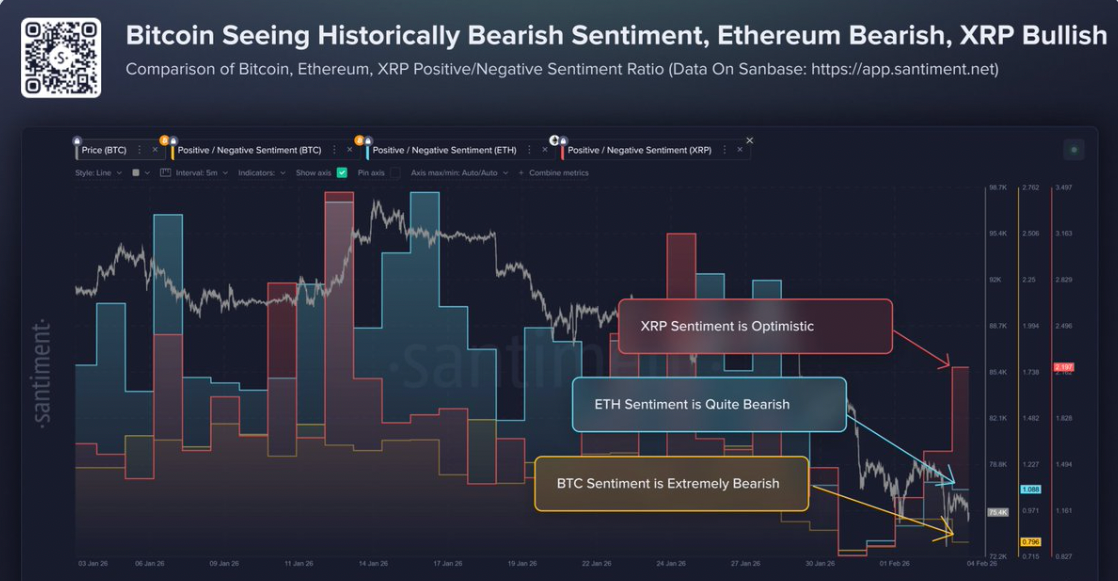
Bitcoin (CRYPTO: BTC) came under renewed selling pressure on Thursday as the price slipped below $69,000—the lowest level since November 6, 2024. The move underscored a backdrop of extreme market fear and frantic margin risk, with analysts contending that a potential bottom could be taking shape as short-term holders capitulate and on-chain activity points to exhausted selling. While the technical backdrop remains fragile, a cluster of indicators suggests that the recent wave of panic may be approaching a climax, though traders are wary of any renewed macro catalysts or liquidity shocks.
Key takeaways
- Short-term holders moved roughly 60,000 BTC to exchanges in the last 24 hours, signaling acute selling pressure and a large inflow that has contributed to the downside momentum.
- The Crypto Fear & Greed Index registered “extreme fear,” a level that has historically preceded a bottom and a subsequent bounce in prior cycles.
- Bitcoin’s RSI has reached multi-timeframe oversold levels, indicating seller exhaustion in several horizons and the potential for a near-term rebound if demand returns.
- Glassnode data show the seven-day moving average of realized losses climbing above $1.26 billion per day, a sign of rising fear in on-chain behavior and a potential capitulation event.
- Bitcoin’s capitulation metric posted its second-largest spike in two years, a pattern that historically aligns with rapid de-risking and heightened volatility as traders reset positions.
Tickers mentioned: $BTC
Sentiment: Bearish
Price impact: Negative. The renewed selling pressure and significant exchange inflows pushed BTC below key support, intensifying near-term downside risk as market participants reassess risk exposure.
Trading idea (Not Financial Advice): Hold. The combination of extreme fear, oversold RSI, and on-chain capitulation signals could precede a relief rally, but risk management remains essential while the market tests support levels.
Market context: The price action unfolds amid fragile liquidity conditions and a broader risk-off environment that has weighed on crypto assets. As traders parse on-chain signals against macro headlines, episodic capitulation events have tended to precede volatile but recoverable periods, with price action often drifting between fear-driven capitulation and later upside momentum once conviction returns.
Why it matters
The current wave of selling—centered on short-term holders—highlights a critical phase in the Bitcoin cycle. When a large bloc of supply shifts to exchanges at a loss in a short window, it can create a temporary liquidity squeeze that tests the resilience of bids at nearby levels. In the latest data, roughly 60,000 BTC moved from short-term holders to wallets on centralized venues in just one day, a move valued at about $4.2 billion at prevailing prices. This inflow exacerbates selling pressure, particularly in a market that has already faced a string of sharper-than-expected corrections. The dynamic underscores the risk that fresh headlines or macro surprises could reintroduce volatility before buyers re-emerge.”
Another powerful signal comes from the Fear & Greed Index, which sits in the realm of “extreme fear.” The gauge has historically punctured lower during capitulations, yet it also marks a potential turning point when fear peaks. The latest reading aligns with other cycles where a bottoming process has followed intense pessimism, before sentiment gradually shifts as risk appetites reappear among value-focused or long-term participants.
On-chain psychology also appears to be stabilizing, even as prices test psychological thresholds. Glassnode notes that the seven-day realized-loss metric has climbed past $1.26 billion per day, reflecting a surge in realized losses across the market. In their view, spikes in realized losses often coincide with moments of acute seller exhaustion, where marginal selling pressure begins to fade as market participants mark down losses and reassess risk. The capitulation metric, meanwhile, recorded its second-largest spike in two years, signaling a period of aggressive de-risking that typically precedes a more orderly reallocation of exposure once price discovery resumes.
The RSI, a widely watched momentum indicator, also reinforced the notion of an oversold regime across multiple timeframes. Coinglass’ heatmap shows BTC’s RSI flashing oversold conditions on five of six studied horizons. Specifically, the 12-hour RSI sits around 18, the daily around 20, and the four-hour near 23, with weekly and hourly readings also signaling distress. Some analysts have pointed to the weekly RSI near 29 as the most oversold level since the 2022 bear market, a milestone that has historically preceded relief rallies rather than fresh lows. In a market known for abrupt shifts, such readings are often interpreted as evidence of seller exhaustion rather than a guarantee of near-term direction.
Market observers have not avoided drawing parallels to prior capitulation episodes. A prominent sentiment analyst argued that this is “the most oversold” condition since the FTX crash, hinting that panic-driven selling could be approaching a climax even as price action remains fragile. Others urged patience, suggesting that risk/reward can improve when major players either accumulate at discounted levels or when the small-trader crowd exhibits a degree of disbelief that helps shore up a bottoming process. The broader narrative remains clear: extreme fear plus concentrated selling could lay the groundwork for a counter-move, but confirmation will come only with sustained price action and a shift in on-chain behavior.

Analysts cautioned that while the current conditions are telling, they do not guarantee a bottom that will immediately resume a longer-term uptrend. The price regime remains vulnerable to sudden shifts in macro liquidity, regulatory developments, or shifts in major exchange flows. Yet, the logic of capitulation—defined by a broad-based exit from risk and the erosion of conditionally profitable positions—has historically been followed by a re-pricing of risk as buyers step back in and price discovery restarts. In this context, several voices have framed this phase as a potentially fertile point for accumulation, provided that risk controls are in place and the market finds a credible catalyst to re-anchor value expectations.

What to watch next
- Price stabilization near current support levels and any intraday rebound following the extreme fear readings.
- Further on-chain data from CryptoQuant and Glassnode showing whether short-term holder outflows ease and whether realized losses begin to retreat.
- The evolution of RSI across multiple timeframes and any divergence that could hint at renewed buying interest.
- Liquidity conditions and macro developments that could reintroduce coordinated bid support for BTC and risk assets more broadly.
Sources & verification
- CryptoQuant data on 60,000 BTC moving to exchanges by short-term holders over 24 hours.
- Glassnode commentary on seven-day realized losses averaging above $1.26 billion per day and the capitulation metric spike.
- Crypto Fear & Greed Index reading at extreme fear (12) and historical context for similar levels.
- Coinglass RSI heatmap showing oversold conditions across multiple timeframes for BTC, including weekly RSI near 29.
- Santiment and other analyst commentary referencing sentiment shifts and potential near-term relief rallies.
Market reaction and key details
Bitcoin (CRYPTO: BTC) traded with renewed weakness on Thursday as the price slipped below $69,000, a level not seen since November 2024. The move came amid a confluence of on-chain signals and sentiment metrics that suggest investors are bracing for further volatility while some traders anticipate a bottom could be forming. The latest data show a substantial transfer of BTC from short-term holders—investors with a holding period under 155 days—to exchanges, with roughly 60,000 BTC moved in a single 24-hour period. At current prices this corresponds to about $4.2 billion in value, highlighting the scale of the near-term selling pressure and its potential to prolong downside risk if bids remain thin.

Observers on X noted that “the correction is so severe that no BTC in profit is being moved by LTHs,” underscoring a perceived capitulation among longer-term investors who might otherwise absorb losses and help stabilize prices. The sentiment is echoed in the weekly RSI readings, which place Bitcoin in a deeply oversold territory not seen in years. The heatmap from Coinglass confirms that the RSI is oversold on five of six timeframes, with readings such as 18 on the 12-hour and 20 on the daily frame, among others, signaling that selling pressure could be drying up even as prices test critical support. While some analysts describe the situation as an opportunity for buyers, others warn that risk remains high until a durable bid is reestablished and macro catalysts align with improved liquidity conditions.

The fear-driven mood is reinforced by the Crypto Fear & Greed Index, which sat deeply in the “extreme fear” zone. Historical patterns suggest that such levels often precede a turning point, though there is no guarantee of a swift recovery. Analysts have pointed to past episodes where heavy selling pressure and a retreat from risk assets gave way to a slower, more deliberate re-pricing of risk and a gradual incursion of buyers who see value at muted prices. Yet, the path forward remains contingent on a confluence of supportive signals, including on-chain activity that signals accumulation and renewed bid depth in the order book.
Several observers note that while the immediate narrative remains bearish, the prevailing combination of oversold momentum, high realized losses, and isolated capitulation spikes can set the stage for a temporary relief rally if buying interest returns and risk sentiment improves. The debate among market participants continues to hinge on whether the current episode is a definitive bottoming process or merely a dread-filled pause before fresh downside. As always, investors should watch liquidity, regulatory developments, and macro cues for decisive clues about the next leg of the cycle.


Key Highlights
- Bluesky closes $100M Series B round to accelerate decentralized platform development.
- User base expands dramatically from 13M to 43M worldwide in recent months.
- AT Protocol ecosystem now supports more than 1,000 weekly active applications.
- Executive restructuring: Jay Graber becomes Chief Innovation Officer, Toni Schneider takes interim CEO role.
- Platform infrastructure now manages billions of public social records across decentralized network.
The decentralized social media platform Bluesky has revealed a $100 million Series B funding round that was completed in April 2025. This substantial investment aims to fuel the company’s ambitious expansion plans and strengthen its open-source social networking infrastructure. The announcement comes as Bluesky experiences remarkable user adoption and prepares for its next growth chapter under revised leadership.
$100M Investment Round Powers Decentralized Platform Vision
Bluesky successfully completed its $100 million Series B financing in April 2025, with Bain Capital Crypto serving as the lead investor. The funding round attracted participation from multiple prominent investment firms including Alumni Ventures, Anthos Capital, Bloomberg Beta, Knight Foundation, and True Ventures.
Throughout the past year, the company has strategically allocated these funds to expand its team and enhance its technical infrastructure. This capital injection enabled Bluesky to reinforce its systems to handle accelerating worldwide user demand. Additionally, the investment fuels ongoing development of the platform’s decentralized network foundation.
Bluesky maintains its commitment to offering a viable decentralized alternative to conventional social media platforms. The ecosystem encompasses developers, third-party applications, and users all collaborating on common infrastructure. This architectural approach enables growth and innovation without depending on centralized governance structures.
Explosive User Adoption and Developer Ecosystem Momentum
Following its previous funding announcement in October 2024, Bluesky has witnessed extraordinary user acquisition. The platform’s worldwide user count surged from 13 million to surpass 43 million users in a matter of months. This rapid expansion demonstrates increasing market appetite for decentralized social networks and open identity frameworks.
Simultaneously, Bluesky’s comprehensive “Atmosphere” ecosystem has grown substantially across various operational layers. The network currently powers more than 1,000 applications built on its protocol that remain active on a weekly basis. Software development kit downloads have climbed beyond 400,000 per month, indicating robust developer community participation.
The platform’s network infrastructure now maintains approximately 20 billion public records distributed across its decentralized architecture. These records encompass user-generated posts, social interactions, and relationship connections. As a result, Bluesky has established a substantial and dynamic data foundation supporting its distributed network model.
Executive Transition Supports Innovation and Operational Focus
Bluesky has recently enacted significant leadership restructuring to align with its evolving strategic priorities. Company founder Jay Graber has moved into the position of Chief Innovation Officer to concentrate on protocol architecture and technical innovation. This organizational shift enables Bluesky to emphasize advancement of its fundamental infrastructure technology.
Toni Schneider has stepped into the interim Chief Executive Officer position and will manage daily operations while the organization conducts a search for a permanent CEO. This leadership realignment coordinates executive responsibilities with the company’s ambitious growth trajectory and product roadmap.
Bluesky began as an initiative launched by Jack Dorsey in 2019 while he led Twitter. The company achieved independence in 2021 and completed its full separation from Twitter in 2022. Since establishing autonomy, Bluesky has concentrated its efforts on developing an open, interoperable social networking framework.

Crypto World
Hyperliquid (HYPE) Surges as JPMorgan Highlights Oil Trading Shift and S&P 500 Perpetuals Launch
Key Highlights
- A March 18 JPMorgan analysis highlighted Hyperliquid as an emerging platform for crude oil futures activity among professional traders
- The HYPE token advanced approximately 3.5% to reach $42.50 after Trade[XYZ] introduced S&P 500 perpetual futures contracts
- Trade[XYZ] secured official licensing from S&P Dow Jones Indices to offer blockchain-based derivatives using the flagship index on Hyperliquid
- After establishing a low point at $22, HYPE has developed a pattern of ascending peaks and troughs since mid-January
- Critical resistance levels are positioned between $42–$44; a successful breach could propel prices toward $50 and subsequently $59.80
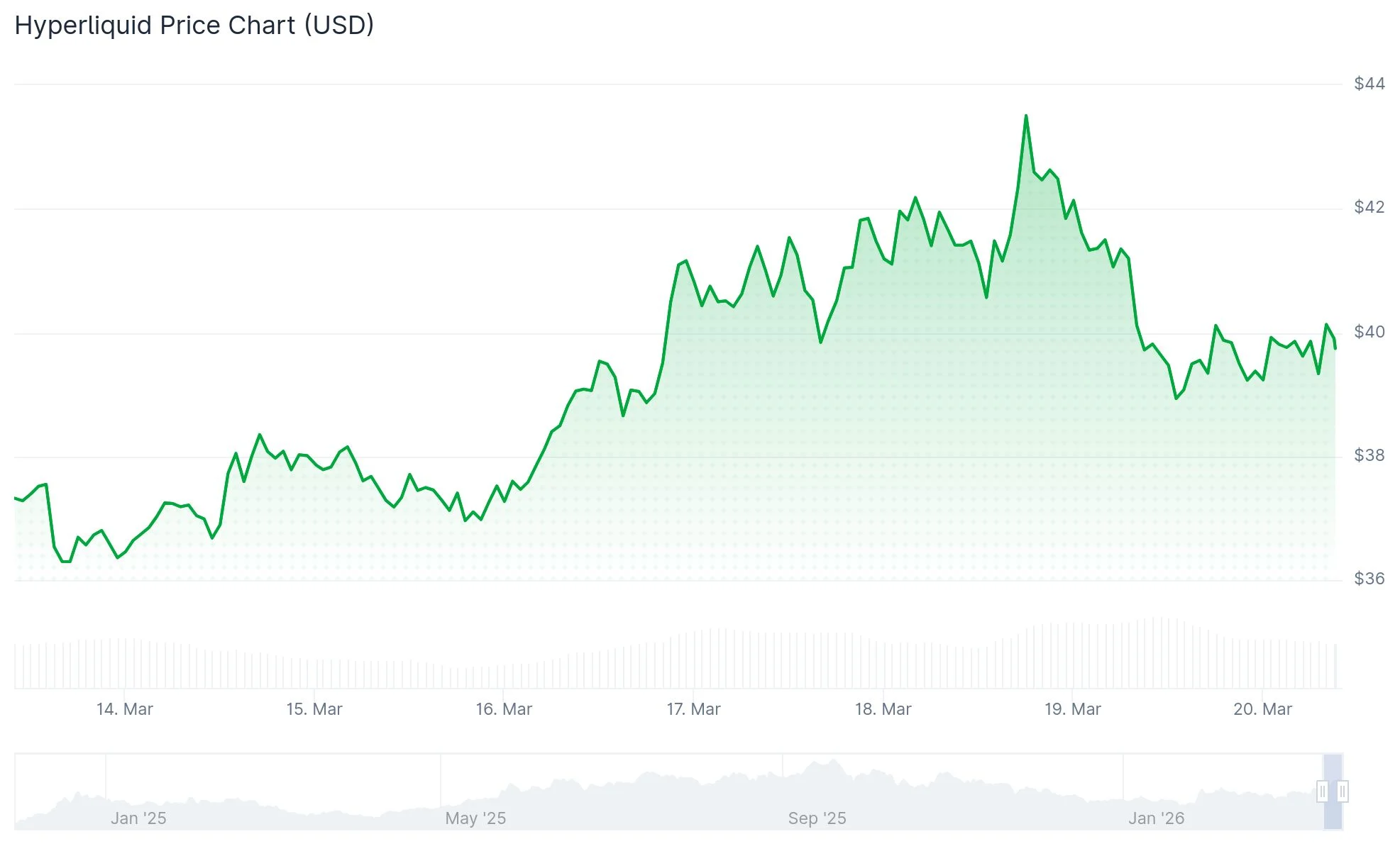
The HYPE token experienced an approximately 3.5% appreciation this week, reaching $42.50, fueled by dual developments — institutional recognition from JPMorgan regarding decentralized crude oil futures activity and the introduction of the first officially authorized S&P 500 perpetual contract on the network.
In their March 18 analysis, JPMorgan researchers identified Hyperliquid as an accelerating destination for professional crude oil futures participants. The assessment revealed that market participants from conventional trading environments are leveraging oil-pegged perpetual instruments on the decentralized exchange to execute trades beyond traditional market operating hours.
Traditional venues like the Chicago Mercantile Exchange maintain limited operating windows, closing overnight and throughout weekends. Global geopolitical developments, however, operate continuously. When recent weekend tensions escalated involving Iran, perpetual oil contracts on Hyperliquid experienced dramatic volume spikes while conventional exchanges remained offline.
The JPMorgan assessment further observed that decentralized platforms are progressively capturing market share from mid-tier centralized trading venues, propelled by enhanced user interfaces, strengthened liquidity pools, and increasing institutional acceptance of blockchain-based settlement mechanisms.
Official S&P 500 Perpetual Contracts Debut on Hyperliquid Infrastructure
S&P Dow Jones Indices entered a licensing arrangement with Trade[XYZ], a protocol specializing in tokenized real-world asset derivatives operating on Hyperliquid’s blockchain infrastructure. This collaboration produced what’s characterized as the first formally authorized perpetual futures instrument tracking the S&P 500 within decentralized finance.
Eligible participants located outside United States jurisdiction can establish leveraged long or short exposures to the benchmark index continuously, without contract expiration constraints. The instrument incorporates S&P DJI’s institutional-quality, live index data streams — distinguishing it from earlier unofficial S&P 500 proxies circulating in DeFi markets.
The S&P 500 benchmark supports more than $1 trillion in aggregate daily transaction volume across conventional financial products. Introducing an officially sanctioned blockchain version enables continuous market access aligned with cryptocurrency trading schedules rather than equity market operating hours.
Chart Analysis: Critical Price Zones in Focus
HYPE established a significant floor at $22 after completing a downward trend spanning November through mid-January. Subsequently, the asset has executed a V-shaped reversal characterized by progressively higher peaks and elevated support levels.
On March 16, price action penetrated upward from a rising wedge formation visible on daily timeframes. The 20-period exponential moving average is advancing above the 50-period EMA, while the Relative Strength Index approaches 70. The MACD indicator displays a bullish intersection accompanied by expanding positive histogram bars.
Market technician Mizer observed that failure to maintain support above the $42–$44 corridor could trigger retracement toward $40–$38, potentially extending to $36–$32. He additionally highlighted that HYPE’s price movements have exhibited strong correlation patterns with Bitcoin’s trajectory.
Immediate overhead resistance occupies the $42 to $44 range. A convincing breakout above this zone establishes preliminary upside objectives at $50, followed by $59.80, based on technical projections referenced in market analysis.

Key Takeaways
- Gemini (GEMI) shares climbed as high as 14% in after-hours trading following better-than-anticipated Q4 results
- Fourth-quarter revenue jumped 39% compared to the previous year, reaching $60.3 million—the strongest quarterly performance in three years
- The company’s net loss expanded to $140.8 million during Q4, compared to $27 million in the year-ago period; annual 2025 losses totalled $585 million
- Approximately 30% of Gemini’s staff has been eliminated since early 2026, with AI automation replacing numerous coding functions
- The exchange is withdrawing operations from the UK, EU, and Australia to concentrate resources on the American market
Gemini (GEMI) delivered fourth-quarter revenue totalling $60.3 million, representing a 39% increase from the comparable period last year and exceeding Wall Street’s consensus forecast of approximately $51.7 million. Shares initially jumped 14% in extended trading before moderating to roughly a 6% gain.
These quarterly figures marked the crypto exchange’s second earnings report since its September Nasdaq debut. Since reaching its post-IPO peak, the stock has plummeted approximately 82%.
While revenue exceeded expectations, the company’s loss situation deteriorated significantly. The Q4 net loss reached $140.8 million, translating to $1.22 per share, versus $27 million during the identical quarter one year prior. For the complete 2025 fiscal year, losses amounted to $585 million, a sharp increase from $156.6 million recorded in 2024.
Gemini Space Station, Inc. Class A Common Stock, GEMI
Founders Cameron and Tyler Winklevoss credited the revenue expansion to a restructured fee system implemented during the latter portion of 2025, combined with increased uptake of Gemini’s credit card offering. This growth materialized despite declining trading volumes—typically an unfavorable indicator for exchange platforms.
The Winklevoss twins characterized Q4 as delivering the company’s strongest revenue quarter across the past three years, representing a positive headline figure. However, the expanding losses highlight the substantial gap between the company’s expenditures and income generation.
Staff Reductions and Artificial Intelligence
Gemini disclosed that approximately 30% of its workforce has been eliminated since the beginning of 2026. The organization had previously announced in February that 25% of personnel would be laid off, with artificial intelligence adoption serving as a partial driver.
In their communication to shareholders, the twin founders revealed that AI now generates over 40% of Gemini’s production code modifications, with expectations for that percentage to approach 100%. “Failing to utilize AI at Gemini will soon be comparable to arriving at the office with a typewriter rather than a laptop,” they stated.
Three senior leadership positions—Chief Operating Officer, Chief Financial Officer, and Chief Legal Officer—have also seen departures within recent months.
This unfolds against a challenging cryptocurrency market environment. Bitcoin experienced a sharp decline from its record peak above $126,000 in October 2025, creating headwinds for cryptocurrency-related equities.
Gemini revealed in February its decision to cease operations in the UK, EU, and Australia, attributing the move to challenging market dynamics. The organization stated its intention to “concentrate and intensify efforts on America,” highlighting what it perceives as a more accommodating regulatory landscape in the US under present market oversight.
Forecasting Platform and Payment Card
Gemini introduced its proprietary prediction market platform, Gemini Predictions, throughout all 50 US states during December 2025, following approval from the Commodity Futures Trading Commission.
The Winklevoss founders indicated the company intends to enhance and broaden that offering throughout 2026. They additionally signaled intentions to leverage identical infrastructure for perpetual futures trading, subject to US regulatory clearance.
The payment card product and primary exchange operations remain central strategic focuses alongside the predictions platform for the upcoming year.
Citigroup analyst Peter Christiansen has previously noted that Gemini requires distinct competitive advantages to challenge larger competitors such as Coinbase. “In the absence of genuine differentiation and unique value propositions that competitors lack, we believe it will remain challenging for them to close the gap,” he commented.
GEMI concluded Thursday’s standard trading session essentially unchanged at approximately $6.00.

Introduction
Decentralized Finance (DeFi) has rapidly evolved into a complex ecosystem of protocols, assets, and users distributed across multiple blockchains. While much of the attention in DeFi is directed toward yield generation, token incentives, and emerging applications, a critical yet often overlooked component underpins the entire system: liquidity routing.
Liquidity routing plays a fundamental role in ensuring that trades are executed efficiently, with minimal cost and optimal pricing. Despite its importance, it remains underdiscussed compared to more visible aspects of DeFi. This article explores liquidity routing in depth, examining its mechanics, significance, risks, and future trajectory.
What Is Liquidity Routing?
Liquidity routing refers to the process of determining the most efficient path for executing a trade across one or more liquidity sources. In decentralized exchanges (DEXs), liquidity is not centralized in a single order book but distributed across various pools and platforms.
When a user initiates a token swap, the system must identify how to execute that trade in a way that minimizes slippage, reduces fees, and maximizes output. Rather than relying on a single liquidity pool, modern DeFi protocols utilize routing algorithms to:
-
Search across multiple liquidity pools
-
Evaluate price differences between platforms
-
Split trades into smaller portions when necessary
-
Execute transactions across different venues simultaneously
The result is a more efficient and cost-effective trading experience for users.
The Evolution from Simple Swaps to Smart Order Routing
In the early stages of DeFi, automated market makers (AMMs) such as Uniswap operated with relatively simple mechanisms. Trades were executed within a single liquidity pool, often leading to significant price impact for large transactions.
As the ecosystem expanded and liquidity became increasingly fragmented, more sophisticated systems emerged. This led to the development of Smart Order Routing (SOR).
Smart Order Routing enhances traditional routing by:
-
Dynamically splitting trades across multiple pools
-
Optimizing execution based on both price and transaction costs
-
Adapting to real-time market conditions
-
Utilizing aggregators to access a broader range of liquidity sources
SOR has become a standard feature in many DeFi aggregators, significantly improving execution quality compared to earlier models.
Why Liquidity Routing Is Essential
1. Improved Price Efficiency
Liquidity routing ensures that trades are executed at the best available price by leveraging multiple liquidity sources. Without routing, large trades would significantly impact the price within a single pool, leading to unfavorable outcomes for traders.
2. Reduced Slippage
Slippage occurs when the execution price of a trade differs from the expected price due to insufficient liquidity. By distributing trades across multiple pools, routing minimizes this effect and stabilizes transaction outcomes.
3. Enhanced Market Connectivity
The DeFi ecosystem is increasingly fragmented, with liquidity spread across various blockchains, Layer 2 solutions, and decentralized exchanges. Liquidity routing acts as a unifying mechanism, connecting these disparate sources into a more cohesive market structure.
4. Competitive Execution Advantage
For active traders and institutions, execution quality is a critical factor. Even marginal improvements in pricing—on the order of fractions of a percent—can significantly impact long-term profitability. Liquidity routing enables these incremental gains by optimizing trade paths.
Risks and Challenges
Despite its advantages, liquidity routing introduces several complexities and risks that must be considered.
1. Maximal Extractable Value (MEV)
Complex routing paths can expose transactions to MEV strategies such as front-running and sandwich attacks. These exploitative practices can reduce the effectiveness of routing and negatively impact user outcomes.
2. Dependency on Aggregators
Many routing solutions rely on aggregators to source liquidity. If these platforms experience outages, vulnerabilities, or exploits, users may face degraded execution quality or, in extreme cases, financial losses.
3. Gas Cost Trade-offs
While splitting trades across multiple pools can improve pricing, it may also increase transaction costs due to higher gas usage. In some cases, the additional cost can offset the benefits of improved execution.
4. Cross-Chain Complexity
As routing expands across multiple blockchains, additional risks arise, including bridge vulnerabilities, latency issues, and increased operational complexity.
The Future of Liquidity Routing
Liquidity routing is expected to play an increasingly central role in the evolution of DeFi. Several emerging trends highlight its growing importance:
Cross-Chain Routing
Future routing systems will enable seamless asset swaps across different blockchains, abstracting away the complexity of bridges and interoperability from the end user.
Intent-Based Trading
A shift toward intent-based systems is underway, where users specify desired outcomes (e.g., “obtain the best possible price for this asset”), and protocols compete to fulfill those intents through optimized routing strategies.
AI-Driven Optimization
Artificial intelligence and machine learning may further enhance routing efficiency by analyzing real-time market data, predicting liquidity conditions, and dynamically adjusting execution strategies.
Conclusion
Liquidity routing is a foundational yet underappreciated component of the DeFi ecosystem. Optimizing how trades are executed across fragmented liquidity sources, it ensures efficient pricing, reduces slippage, and enhances the overall user experience.
As DeFi continues to scale and diversify, the importance of robust and intelligent routing mechanisms will only increase. While it may not receive the same attention as more visible innovations, liquidity routing remains a critical driver of performance and efficiency in decentralized markets.
Understanding this infrastructure provides deeper insight into how DeFi truly operates—and where its next major advancements are likely to emerge.
REQUEST AN ARTICLE
Key Highlights
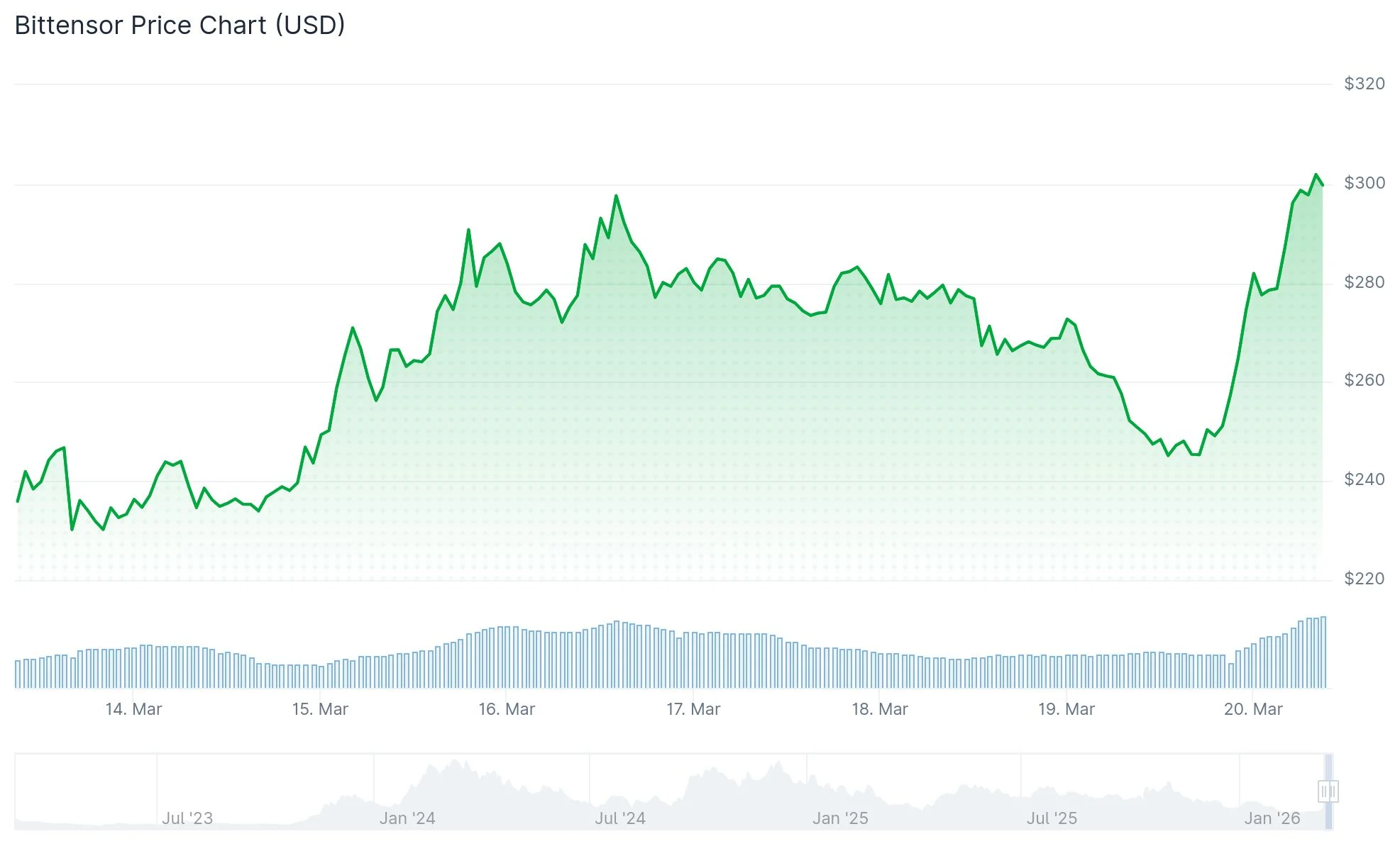
- TAO token has climbed more than 15% this week, with prices hovering between $289 and $298
- Jensen Huang, CEO of NVIDIA, and investor Chamath Palihapitiya endorsed Bittensor’s distributed AI training approach during the All-In Podcast
- Covenant-72B, a 72-billion-parameter language model, represents the largest decentralized pre-training initiative ever documented
- Daily trading volume surged to $677 million while open interest climbed to $361 million, marking multi-month peaks
- Grayscale’s move to transform the Bittensor Trust into a spot ETF signals rising institutional appetite
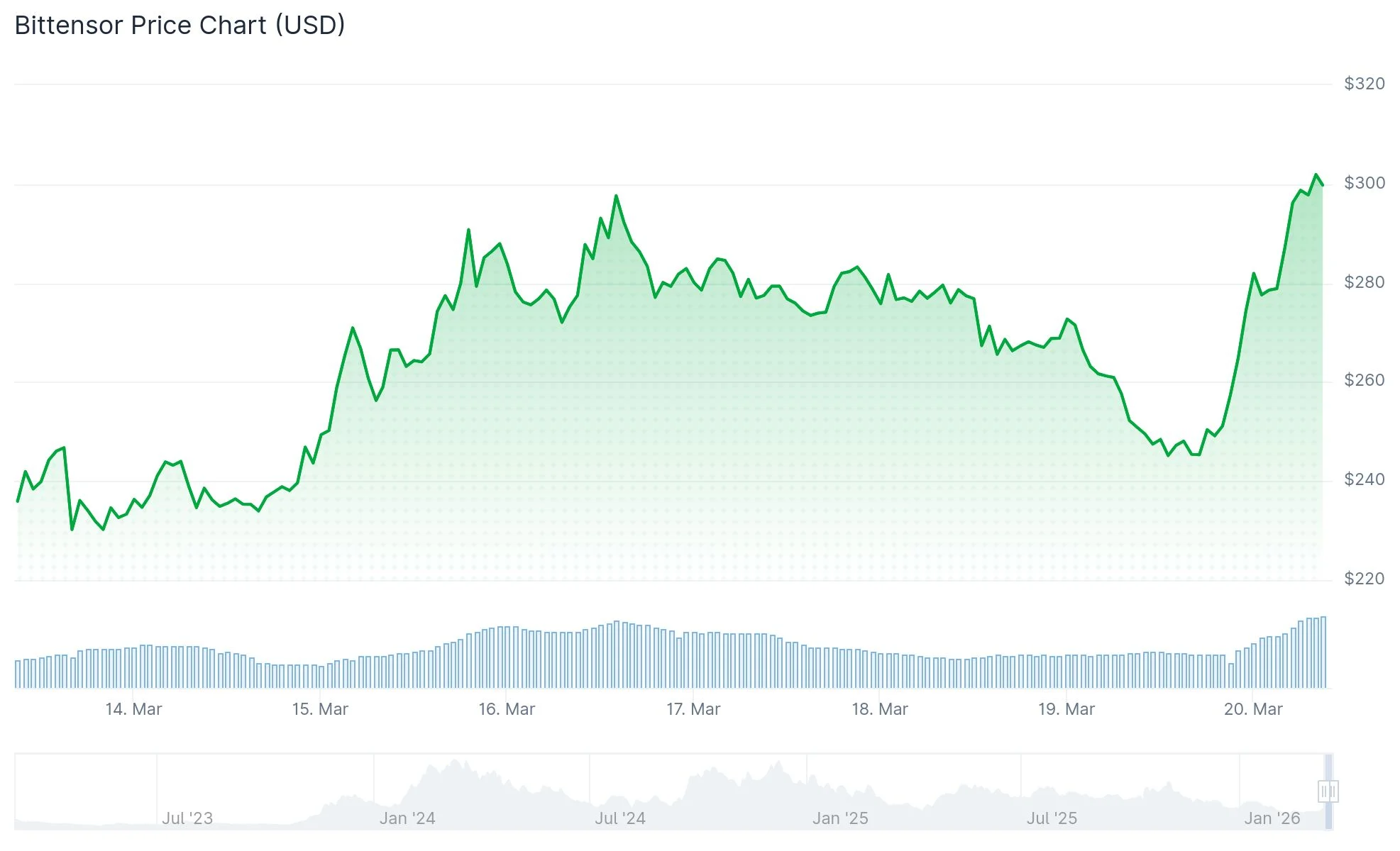
Bittensor (TAO) has seen its price climb to the $289–$298 range this week, registering gains exceeding 15% across a seven-day period. The upward momentum followed significant commentary on the All-In Podcast, where NVIDIA’s CEO Jensen Huang alongside venture investor Chamath Palihapitiya acknowledged a breakthrough achievement in distributed artificial intelligence.
During the podcast, Palihapitiya outlined how a substantial language model was successfully trained using dispersed hardware contributed by independent operators worldwide. “They successfully trained a 4 billion parameter LLaMA model in a completely distributed fashion, with numerous contributors offering spare computing power,” he explained, characterizing it as “an extraordinary technical achievement.”
The actual model referenced has been identified as Covenant-72B, rather than the 4 billion parameter version mentioned in the discussion. The Opentensor Foundation verified that Covenant-72B is a 72-billion-parameter language model pre-trained using contributions from over 70 global participants utilizing conventional internet-connected hardware. The model posted a 67.1 MMLU benchmark score and its methodology is detailed in a March 2026 arXiv publication. This represents the most extensive decentralized LLM pre-training effort ever recorded.
Jensen Huang offered support for the wider vision of distributed AI development. “These two approaches aren’t mutually exclusive; they’re complementary,” Huang stated. “That’s absolutely certain.” He positioned proprietary and open-source frameworks as partners rather than rivals.
TAO appreciated roughly 5% within hours of the podcast airing, accompanied by trading volume that nearly doubled overnight.
Market Activity and Derivatives Interest Spike
Blockchain analytics from Santiment indicate Bittensor’s daily trading volume peaked at $677.06 million on Sunday — the strongest showing since November 7. By Friday, volume maintained elevated levels at $521.92 million.
%20%5B08-1773982048268-1773982048269.57.15%2C%2020%20Mar%2C%202026%5D.png&w=1536&q=95)
Futures open interest monitored by CoinGlass advanced to $361.15 million on Monday, climbing from $131.94 million recorded on March 4. Friday’s reading stood at $331.95 million, also near recent highs.
Growing Institutional Participation
Grayscale has submitted regulatory filings to restructure the Bittensor Trust into a spot exchange-traded fund. The trust currently trades at a premium valuation, which market observers interpret as evidence of strengthening institutional demand.
Bittensor has simultaneously activated Covenant-72B to stimulate utilization of its distributed computing infrastructure, while ongoing modular subnet development continues attracting both individual and institutional participants.
From a technical perspective, TAO trades above its 50-day, 100-day, and 200-day exponential moving averages. The Relative Strength Index registers 77, indicating overbought conditions. Immediate resistance appears near $305.30, with subsequent targets at $341.10 upon clearing that threshold.
$TAO ready to attempt another breakout of the right-angled broadening descending wedge at ~$302.
Chart put in a local higher-low and rebounded to the top boundary on strong volume. Now needs to look for a close above resistance to start pushing to $360-370 overhead.
5-month… https://t.co/G38JCfMA7B pic.twitter.com/jMCiY4BgIa
— Ardi (@ArdiNSC) March 20, 2026
Technical analyst Ardi identified a right-angled broadening descending wedge formation developing since October, with breakout confirmation requiring a daily close exceeding $302. Under that scenario, projected targets extend to the $360–$370 zone.
TAO has advanced 37% during the past week and 55.66% over the previous month, though it remains 61.13% beneath its all-time peak of $767.68 established in April 2024.

The U.S. Justice Department has unsealed an indictment charging Yih-Shyan “Wally” Liaw, the co-founder of Super Micro Computer, Inc., along with sales executives Ruei-Tsang “Steven” Chang and Ting-Wei “Willy” Sun, in what prosecutors describe as a multi-billion-dollar scheme to route advanced artificial intelligence server hardware to China. Super Micro itself was not charged, and the company says it is cooperating with investigators and distancing itself from the alleged actions.
According to the Justice Department, the defendants conspired to sell billions of dollars’ worth of servers containing sensitive, controlled GPUs to buyers in China, in violation of U.S. export-control laws. The alleged scheme, spanning 2024 and 2025, involved concealing the true nature of the clientele and the shipments, with prosecutors asserting that roughly $2.5 billion in servers were moved to a Chinese company, including about $510 million in sales during April and May 2025 alone.
Federal investigators described a range of concealment techniques, including fabricating documents, staging counterfeit equipment to pass audits, and using a pass-through intermediary to mask the true end customer. The FBI’s New York Field Office linked the scheme to the defendants’ efforts to obscure the sale of high-performance server hardware used in data centers and other critical operations.
“These defendants allegedly fabricated documents, staged bogus equipment to pass audit inventories, and used a pass-through company to conceal their misconduct and true clientele list,” said James Barnacle, Jr., FBI assistant director in charge of the New York Field Office. The defendants will face proceedings in the Northern District of California, with Liaw and Sun already in custody and Chang listed as a fugitive outside the United States.
Key takeaways
- The Justice Department indicted Yih-Shyan Liaw, Ruei-Tsang Chang, and Ting-Wei Sun for alleged export-control violations tied to selling servers with advanced GPUs to China; Super Micro is not charged.
- The alleged scheme spanned 2024–2025, involving about $2.5 billion in server sales, including $510 million in April–May 2025.
- Liaw and Sun have been arrested and are to appear in U.S. court, while Chang remains a fugitive.
- Super Micro publicly distanced itself from the actions, stating they contravene the company’s policies and controls and stressing ongoing cooperation with investigators.
- Trading after the announcement showed immediate market reaction, with Super Micro’s stock falling in after-hours trading by about 13% to around $26.71.
Allegations, scope and the case timeline
At the center of the indictment is a concerted effort to export cutting-edge server technology to China in ways that circumvent U.S. export controls. Prosecutors describe a pattern of misrepresentation and mislabeling designed to obscure the true buyers and destinations of the servers, which included high-end GPUs subject to regulatory restrictions. The government says the defendants blended legitimate sales with false documentation and a network of intermediaries to mask the ultimate customer, enabling billions of dollars in transactions that should have faced heightened scrutiny.
The scope of the alleged activity, as laid out by the DOJ, covers deals executed over a period that extended into 2025, with particular emphasis on shipments and the corresponding audit trails used to validate those shipments. The department’s filing highlights the alleged use of fake inventories and other deceptive practices to facilitate the export of controlled hardware.
Corporate response and investor lens on Super Micro
In a statement shared with Cointelegraph, Super Micro said the defendants’ actions would be treated as a violation of its internal policies and compliance controls. The company asserted that it has not been named as a defendant in the indictment and emphasized its commitment to cooperating with authorities as the case proceeds.
From an investor perspective, the development raises questions about governance, supply-chain compliance, and the risk profile of suppliers involved in high-performance data-center hardware. Super Micro’s public response signals an attempt to isolate the enterprise from the criminal allegations while acknowledging the seriousness of the DOJ’s findings. The firm’s stock reaction underscores the market’s sensitivity to regulatory actions, particularly when a supplier in the high-stakes AI infrastructure space faces potential enforcement risk.
Regulatory backdrop and broader implications for the sector
The charges come amid heightened scrutiny of export controls related to advanced semiconductors, GPUs, and other high-performance components that enable AI workloads. Authorities have increasingly scrutinized how hardware can be channeled to jurisdictions where policy constraints are tight, prompting suppliers to strengthen due-diligence, due-process, and auditing across their distribution networks. The case may serve as a testbed for enforcement approaches and risk management practices among tech manufacturers with global supply chains.
For buyers and partners, the episode underscores the importance of transparent procurement, rigorous compliance testing, and robust record-keeping. It also highlights the reputational and financial exposure companies face when allegations of illicit export practices surface, even if the company itself is not charged.
What comes next for the case and the market
The DOJ’s indictment sets the stage for judicial proceedings in the Northern District of California. Liaw and Sun have been detained and are scheduled for court appearances, while Chang remains at large. As the legal process unfolds, observers will watch for additional charges, potential settlements, and further disclosures about the supply chain arrangements involved in the alleged scheme.
In the near term, investors and industry stakeholders will assess how the case could influence export-control enforcement, supplier risk assessments, and collaboration agreements with major tech players that rely on advanced AI-capable hardware. Market participants will also be watching whether the charges prompt broader due-diligence changes among data-center buyers and integrators who source cutting-edge GPUs and servers.
According to the Justice Department, the investigation reflects the government’s continued vigilance over sensitive technologies and the channels through which they reach restricted markets. As authorities press forward, the industry will need to navigate tighter compliance requirements and the potential for further enforcement actions tied to similar cross-border technology transfers.
Readers should stay tuned for court developments and any additional detail about Chang’s status, as well as updates on how Super Micro and its partners adjust governance practices in response to this high-profile case.
Crypto World
FDIC, Federal Reserve, and OCC Move to Modernize Regulatory Capital Rules for All US Banks
TLDR:
- Three federal agencies jointly propose modernizing capital rules for banks of all sizes across the U.S.
- Largest banks would use one calculation set instead of two to meet risk-based capital requirements.
- Smaller banks may see moderate capital requirement reductions tied to traditional lending activities.
- All public comments on the three capital framework proposals must be submitted by June 18, 2026.
Regulatory capital framework proposals have been issued by three federal banking agencies for public comment. The Federal Deposit Insurance Corporation, the Federal Reserve Board, and the Office of the Comptroller of the Currency jointly released three proposals.
These aim to modernize capital requirements across banks of all sizes. The goal is to better align regulatory capital with risk. Capital levels are expected to modestly decrease but remain well above pre-financial crisis standards.
Largest Banks Face Enhanced Risk-Sensitivity Rules
The first proposal primarily targets the largest, most internationally active banks in the country. It would require these institutions to use one set of calculations instead of two.
This streamlines how banks determine compliance with risk-based capital requirements. The framework would also improve calibration across credit, market, and operational risks.
Under the proposal, market risk rules would apply only to banks with significant trading activity. All other banks would retain the option to voluntarily adopt this approach.
This change aims to reduce burden while improving consistency across banking institutions. Risk sensitivity across the regulatory capital framework would be enhanced as a result.
In a joint release, the FDIC, Federal Reserve, and OCC confirmed that the proposals are designed to benefit institutions of every size.
As stated in their joint release, the agencies are seeking to “modernize the regulatory capital framework for banks of all sizes.”
The statement reflects a broad effort to bring the framework in line with current market conditions. Public comment is being actively encouraged ahead of the June 18, 2026 deadline.
The agencies noted that a decade of experience revealed room for improvement in the current framework. Certain elements could be updated without reducing the safety and soundness of the system.
After the 2008 global financial crisis, regulators substantially increased loss-absorbing capital requirements. Stress testing requirements for large banks were also introduced during that period.
Smaller Banks and Systemic Risk Measurements Under Review
The second proposal applies broadly to all but the largest banking institutions in the system. It would better align capital requirements for traditional lending activities with actual risk.
Modifications to mortgage servicing capital requirements are also part of this proposal. These changes would extend to banks operating under the community bank leverage ratio framework.
Additionally, certain large banks would be required to reflect unrealized gains and losses on securities. This would directly affect their reported regulatory capital levels, subject to a transition period.
The adjustment aims to provide a more accurate picture of a bank’s financial position. Disincentives connected to mortgage origination would also be reduced under this framework.
The agencies further clarified the expected outcome of the combined proposals in their joint statement. They noted that the measures “would modestly reduce capital for large banks and moderately reduce requirements for smaller banks.”
This reflects the more traditional lending activities that community and regional banks typically carry. The reduction is calibrated to align requirements more closely with actual lending risk profiles.
The third proposal, issued solely by the Federal Reserve Board, addresses how systemic risk is measured. It would refine the additional capital requirement for the largest and most complex institutions.
The method for calculating systemic risk buffers would be updated accordingly. Altogether, capital levels across the system would still remain substantially higher than pre-crisis levels.


Digital assets are no longer a fringe experiment in finance, they’re fast becoming a core part of how banks, asset managers, fintechs and corporates plan to move money, store value and manage risk.
That’s the key takeaway from fintech firm Ripple’s survey of more than 1,000 global finance leaders, which reveals how the industry sees digital assets as urgent, and no longer optional.
Seven in 10 respondents said finance leaders must offer some kind of digital asset solution to stay competitive, underscoring a broad sense that the “digital asset revolution” is already underway.
Stablecoins, those digital tokens with values pegged to fiat currencies, such as the U.S. dollar, emerged as the most compelling use case: 74% of leaders said stablecoins can improve cash‑flow efficiency and unlock working capital, highlighting their growing appeal as treasury tools and not just payment rails.
Fintechs are leading the charge in adopting digital assets, with more of them already using digital assets in treasury and payments than banks or corporates. About 31% use stablecoins to collect payments for customers, and 29% accept stablecoins directly. Many also rely on digital asset custodians and infrastructure providers for custody, while 47% of fintechs want to build their own solutions.
More banks and asset managers want to tokenize assets and they need partners to do it. Of those looking, 89% focus on safe storage and custody first. Meanwhile, banks care a lot about token management (82%), with asset managers focusing more on distribution (80%).
Nearly all respondents – 97% – flagged security and certifications like ISO and SOC 2 as critical, with operational support and industry‑specific experience also weighing heavily.
The bottom line: digital assets are becoming a strategic necessity, and the infrastructure decisions made today are expected to shape competitive edge tomorrow.
Crypto World
Nevada Takes Aim at Kalshi: What This Means for Crypto Prediction Platform Legal Battles
Key Takeaways
- Kalshi’s emergency motion to halt Nevada enforcement action was rejected by the Ninth Circuit Appeals Court
- The platform faces a likely temporary restraining order that would suspend Nevada operations for a minimum of 14 days
- Nevada regulators issued a cease-and-desist order in March, claiming Kalshi operates unlicensed sports wagering
- The platform maintains its products are federally regulated by the CFTC, not subject to state gambling laws
- Multiple states including Connecticut, New York, and New Jersey are pursuing parallel enforcement actions against Kalshi and competing platforms
The Ninth Circuit Appeals Court has rejected Kalshi’s urgent petition to prevent Nevada from pursuing enforcement action against the platform’s sports-event trading products. This decision opens the door for state authorities to move forward with regulatory measures.
https://twitter.com/coinbureau/status/2024026094609768527?s=20
Back in March, Nevada’s Gaming Control Board delivered a cease-and-desist notice to Kalshi. State regulators contend that the platform’s sports-event trading products constitute illegal sports wagering operations without proper licensing.
According to gaming attorney Daniel Wallach, a temporary restraining order appears virtually certain at this point. Because Nevada statute prohibits appealing a TRO, Kalshi would be forced to suspend state operations for no less than 14 days.
https://twitter.com/WALLACHLEGAL/status/2034674972522680587?s=20
“Since a TRO is not appealable under Nevada law, Kalshi would be required to exit the state in the interim,” Wallach explained.
In its court filings, Kalshi has contended that the Commodity Futures Trading Commission holds exclusive regulatory authority over its products. The company asserted that preventing these contracts from operating would inflict “imminent harm” on its business operations.
With the emergency appeal denied, the matter heads back to federal district court as Nevada prepares its enforcement measures.
Platform Highlights Risk of Contradictory Judicial Decisions
Through a March 13 legal filing, Kalshi emphasized that permitting Nevada’s action to proceed alongside ongoing federal proceedings could result in conflicting judicial outcomes.
The company warned that both forums might arrive at “exactly the opposite conclusion” regarding whether federal commodities regulations preempt state gaming statutes. Kalshi characterized this scenario as potentially generating “jurisdictional chaos.”
At the heart of the dispute lies a fundamental question: whether federal authorities or state gaming regulators hold ultimate jurisdiction.
Multi-State Campaign Targets Prediction Trading Platforms
Nevada’s regulatory offensive is part of a broader pattern. Connecticut, New York, New Jersey, and additional jurisdictions have launched similar challenges against sports-event trading contracts on prediction market platforms.
Kalshi isn’t the sole platform under scrutiny. Crypto.com, Polymarket, and Coinbase are similarly entangled in legal confrontations with various state authorities over comparable offerings.
The prediction markets sector has experienced explosive expansion. Weekly transaction volumes across platforms such as Kalshi and Polymarket routinely exceed $2 billion, per Dune Analytics data.
This rapid growth has attracted regulatory attention from officials concerned about potential insider trading violations and market manipulation schemes.
Throughout these legal confrontations, Kalshi has consistently argued that state regulators lack jurisdiction to restrict event contracts already supervised by federal authorities.
The critical next phase involves a preliminary injunction hearing, which will decide whether Kalshi can maintain Nevada operations during the extended litigation process.
Crypto World
UK shuts down crypto exchange Zedxion after sanctions probe ties platform to Iranian networks


Britain’s company register has moved to dissolve cryptocurrency exchange Zedxion, accused of processing funds for Iran’s Islamic Revolutionary Guard Corps.
Summary
- Britain’s Companies House has moved to dissolve Zedxion after findings linked the exchange to IRGC-connected transactions and misleading incorporation details.
- TRM Labs estimates show Zedxion and Zedcex processed around $1 billion in funds tied to the IRGC, with exposure rising to 87% of volume in 2024.
According to a notice published on its website, Britain’s company register, Companies House said Zedxion has been shut down due to “information or a statement in an application for incorporation that is misleading, false or deceptive.”
An earlier investigation conducted by the Organized Crime and Corruption Reporting Project found that Zedxion’s listed director, Elizabeth Newman, was likely a fictitious identity.
Further, the company reportedly used stock images to represent Newman in promotional material.
Analysis conducted by TRM Labs found that Zedxion and its sister platform Zedcex processed roughly $1 billion in funds with connections to the IRGC, accounting for about 56% of the platforms’ total transaction volume. Subsequently, that share rose to 87% in 2024, when IRGC-linked flows reached approximately $619.1 million.
Incorporated in May 2021, Zedxion Exchange Ltd listed an individual named “Babak Morteza” as both director and person with significant control. Meanwhile, records show that the identifying details associated with that name match those of Babak Zanjani, an Iranian businessman previously accused of sanctions evasion.
Data further shows that “Babak Morteza” ceased to be listed in August 2022, after which Newman was appointed as director.
The latest action follows sanctions imposed by the U.S. Treasury’s Office of Foreign Assets Control, which designated Zedxion and a related entity, Zedcex, for helping Iran evade sanctions and for links to sanctioned financier Babak Zanjani.
Zanjani has also been sanctioned by the U.S. and European Union in 2013 for laundering billions in oil revenue on behalf of Iranian state entities, including the IRGC. He was later convicted in 2016 for embezzlement and sentenced to death, though the sentence was commuted in 2024 after he repaid funds.
Separately, U.S. regulators are probing Binance over alleged sanctions violations tied to more than $1 billion in transactions that may have moved through the platform.
Binance has denied the allegations, stating that it does not directly transact with sanctioned entities and has taken action to shut down accounts linked to suspicious activity.

Red Roses: Seven uncapped players in England’s Women’s Six Nations squad

What the Fed’s Inflation Outlook Means for You and Your Portfolio
Bluesky Secures $100M Series B Funding to Advance Decentralized Social Platform


-
Crypto World6 days ago
HYPE Token Enters Net Deflation as HyperCore Buybacks Outpace Staking Rewards
-

 Tech5 days ago
Your Legally Registered ‘Motorcycle’ Might Not Count Under Proposed US Law
-

 Fashion7 days ago
Weekend Open Thread: Addict Lip Glow
-
 Tech3 days ago
Are Split Spacebars the Next Big Gaming Keyboard Trend?
-
Sports6 days ago
Why Duke and Michigan Are Dead Even Entering Selection Sunday
-

 Business5 days ago
Search for Savannah Guthrie’s Mother Enters Seventh Week with No Arrests
-

 Business6 days ago
US Airports Launch Donation Drives for Unpaid TSA Workers as Partial Government Shutdown Enters Fifth Week
-
Crypto World6 days ago
Coinbase and Bybit in Investment Talks: Could Bybit Finally Enter the US Crypto Market?
-

 Business4 days ago
Australian shares drop as Iran war enters third week
-

 Business6 days ago
Country star Brantley Gilbert enters growing non-alcoholic beer market
-

 Crypto World4 days ago
Crypto Lender BlockFills Enters Chapter 11 with Up to $500M in Liabilities
-

 Sports7 days ago
College Basketball Best Bets: Conference Tournament Semifinal Picks
-

 Politics2 days ago
The House | The new register to protect children from their abusers shows Parliament at its best
-

 News Videos2 days ago
RBA board divided on rate cut, unusually buoyant share market | Finance Report | ABC NEWS
-

 Fashion4 days ago
25 Celebrities with Curly Hair That Are Naturally Beautiful
-

 Tech4 hours ago
inKONBINI Lets You Spend Summer Days Behind the Register
-

 Crypto World2 days ago
Canada’s FINTRAC revokes registrations of 23 crypto MSBs in AML crackdown
-
 Politics3 days ago
Real-time pollution monitoring calls after boy nearly dies
-

 Crypto World6 days ago
Crypto Losses Drop 87% in February, But Hackers Are Now Targeting People, Not Code
-
 NewsBeat2 days ago
Residents in North Lanarkshire reminded to register to vote in Scottish Parliament Election


You must be logged in to post a comment Login