
Crypto World
Why CoinDesk PitchFest matters heading into Miami

Web3 has always been cyclical, yet it has never stopped building. Markets rally and retrace, narratives rotate and evolve, but founders continue to ship products and search for their moment to be seen.
In an ecosystem where launching a protocol or token can happen quickly, standing out is harder than ever. That is where CoinDesk PitchFest has found its role within Consensus.
CoinDesk PitchFest does not replace due diligence, nor does it guarantee funding. What it offers is structured exposure to investors, operators, and ecosystem leaders who are actively shaping the industry. Over the past few years, judges have included representatives from Dragonfly, Fabric Ventures, CoinFund, Borderless Capital, The Spartan Group and Outlier Ventures — firms that have backed some of Web3’s most significant companies.
For early-stage founders, that kind of room matters.
Progress Beyond the Stage
At Consensus Austin 2023, Rise presented a clear proposition: compliant global payroll and payment rails for distributed teams operating across fiat and crypto. The company addressed a practical challenge facing Web3-native businesses navigating cross-border employment.
Since then, Rise has expanded support across more than 90 local currencies and 100 cryptocurrencies, strengthened its compliance capabilities and secured seed funding. Consensus was not an endpoint; it was an early platform in a longer growth trajectory.
That same cohort featured Neuromesh, which later pivoted and re-emerged as AMMO AI, leaning further into the AI x Web3 intersection. Nodepay, a semifinalist, has continued developing its decentralized compute ambitions and expanding within its ecosystem. Early exposure often accelerates refinement.
At Consensus Hong Kong 2025, TransCrypts won PitchFest with its digital identity and fraud mitigation platform. As AI-driven impersonation risks gained attention, the company moved beyond that stage to a significant milestone, closing a $15 million seed round led by Pantera Capital.
Consensus Toronto 2025 introduced ChainPatrol, focused on AI-powered phishing detection and brand protection. While not defined by splashy announcements, the company continues operating across multiple ecosystems, addressing security challenges that grow more complex as platforms scale.
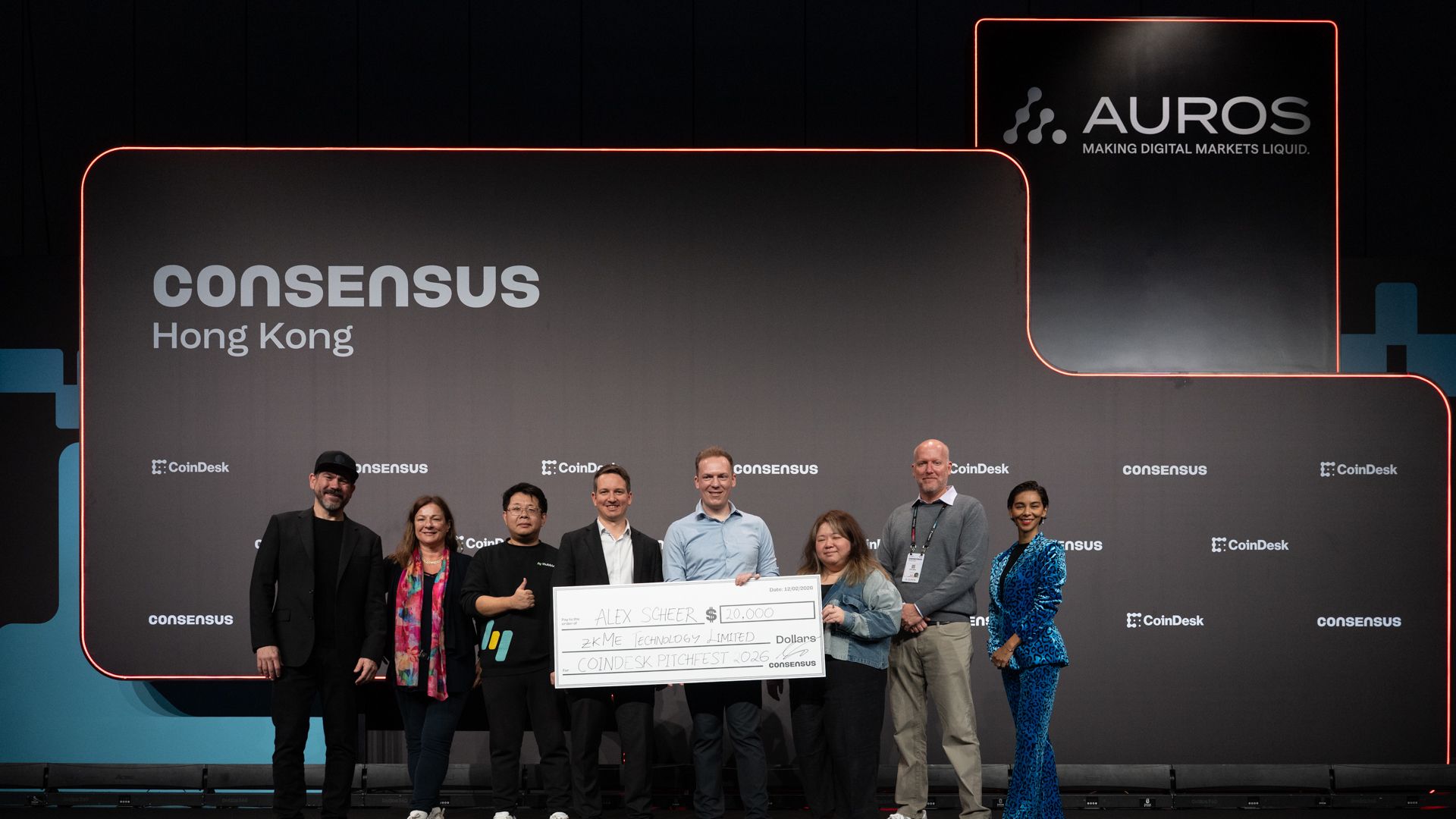
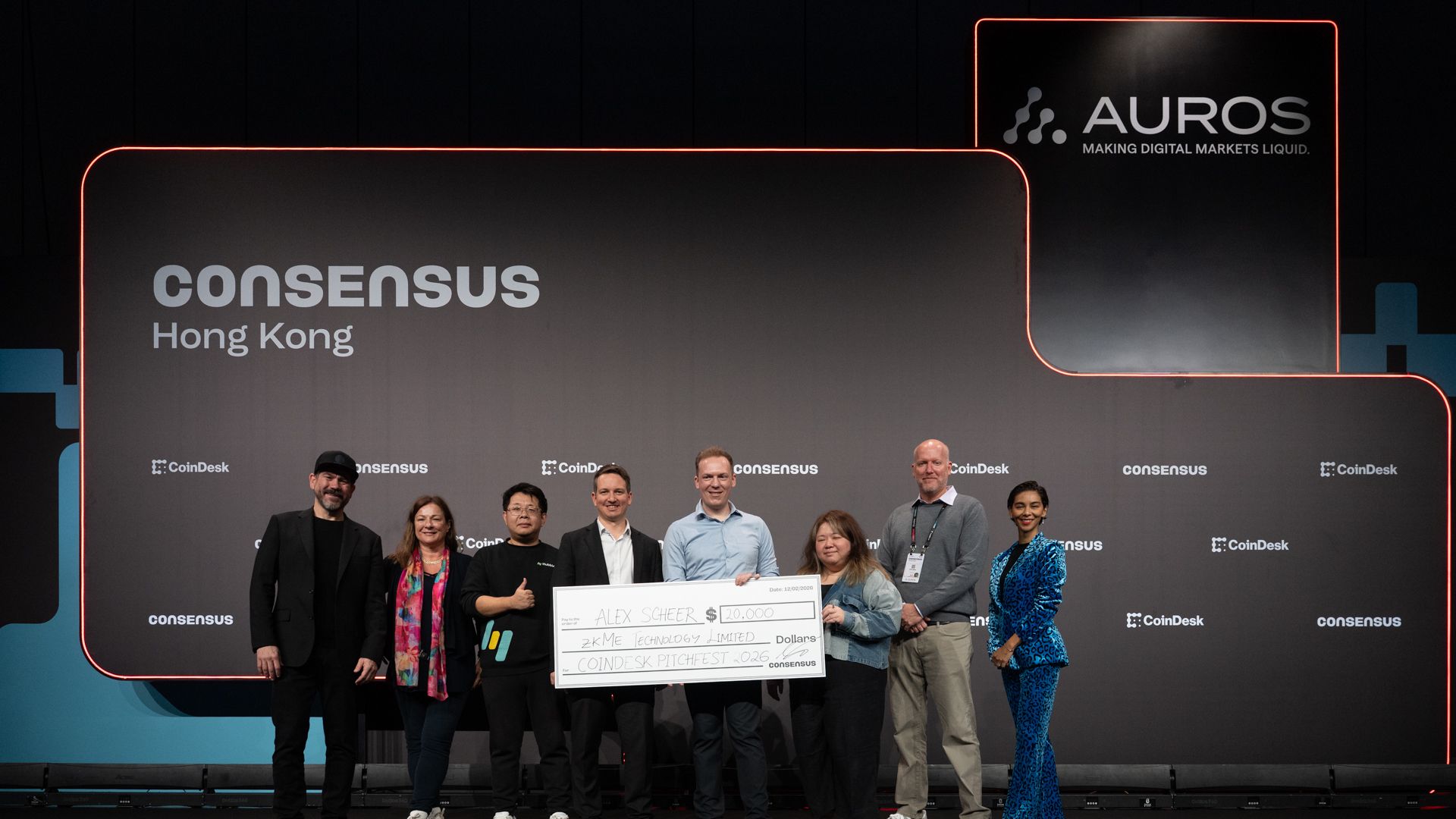
Most recently, zkMe Technology won PitchFest at Consensus Hong Kong 2026 with its zero-knowledge identity verification framework. zkMe had previously closed a $4 million funding round in 2024, reflecting early confidence in privacy-preserving compliance systems. Finalists, including Coinbax, Onchain Labs and Hubble AI, demonstrated the range of ideas competing for attention in Hong Kong.
Across these cohorts, the sectors differ — fintech rails, AI integration, identity systems, fraud mitigation, decentralized compute — but the opportunity remains consistent: a curated environment where investors are listening.
Where Exposure Becomes Momentum
Web3 remains crowded. Tools to launch are accessible; credibility is harder to earn. Breaking through often requires more than a whitepaper or a strong online community. It requires direct access to decision-makers who can evaluate substance.
Consensus brings together early-stage founders, venture investors, exchanges, infrastructure providers, institutional participants and media in one place. Within that ecosystem, CoinDesk PitchFest provides a defined arena for early-stage teams to present clearly and competitively.
The stage does not build the company; the founders do, but the right audience can accelerate progress.
A New Layer: Agentic Commerce and the One-Person Startup
Alongside the core competition, Consensus Miami will introduce a new CoinDesk PitchFest “side mission” exploring early signals at the edge of agentic commerce.
A different kind of founder is beginning to emerge: building with AI agents, emerging protocols such as OpenClaw, and experimental payment standards like x402. What once required teams and capital can now, at least in early stages, be launched, tested and in some cases monetized by a single operator.
These are not traditional startups. They are fast, narrow and increasingly capable, from agent-powered tools to pay-per-call APIs designed to transact as easily with machines as with users. In some cases, products are reaching revenue within weeks, compressing the path from idea to market to a degree previously unattainable.
It is still early. The tooling is evolving, standards are not yet set, and most of these experiments will not scale. But the trajectory is clear, and the pace is accelerating.
For CoinDesk PitchFest, this presents an opportunity to engage with the category as it forms, rather than after it matures. The “side mission” is designed to surface these builders before they resemble venture-backed companies, and to understand which of these early experiments remain niche, and which begin to take on the characteristics of infrastructure.
If the last cycle was defined by protocols, the next may be shaped by what is built on top of them, smaller, faster and increasingly autonomous.
Consensus Miami is where that shift starts to come into focus.
Looking Toward Consensus Miami
Consensus Miami 2026 will once again gather the industry’s full spectrum. For startups under five years old with funding below $5 million, PitchFest offers a practical entry point into that broader marketplace.
It provides exposure to active investors, feedback from experienced operators and visibility through CoinDesk’s global platform. For some teams, it will validate years of work. For others, it will open conversations that define their next chapter.
Web3 continues to move quickly. Founders who want to shape its future need rooms where serious business happens.
Consensus Miami is one of those rooms. CoinDesk PitchFest is where the next wave of builders steps forward.



The industry body co-authored a white paper with Boston Consulting Group outlining a “Gold as a Service” platform to standardize issuance and custody of digital gold.
The World Gold Council, the gold industry’s leading market-development body, announced Thursday it is building shared infrastructure designed to make digital gold products more interoperable, scalable, and easier to launch.
The initiative, detailed in a white paper co-authored with Boston Consulting Group, proposes a platform called “Gold as a Service” — an open middleware layer connecting physical gold custody with the digital systems used to issue and manage gold-backed products.
The platform would standardize backend processes, including custody coordination, reconciliation, compliance, and redemption, while leaving front-end product design and branding to individual issuers.
The tokenized gold market has ballooned in recent months but remains structurally fragile. Total market capitalization has surpassed $5 billion, but the sector is dominated by just two products, Tether Gold (XAUT) and Paxos Gold (PAXG), which control more than 95% of the market.
That concentration reflects the high barriers to entry that the WGC’s white paper aims to address. Launching a digital gold product today requires issuers to independently build custody relationships, compliance pipelines, audit frameworks, and redemption logistics, a fragmented setup that limits competition and hampers fungibility across products.
The WGC argues that a shared service layer could lower those barriers, enabling new issuers to enter the market while making digital gold products more interchangeable, a prerequisite for deeper liquidity and broader DeFi integration.
3 Layer Architecture
The proposed system is organized around three layers. A physical layer would manage sourcing, storage, transport, and redemption of actual gold. A digital layer would handle issuance, ownership records, and product-lifecycle management. Finally, an interface layer would allow issuers to build their own customer-facing experiences on top of the shared stack.
Under this model, issuers would compete on user experience, pricing, and distribution — not on custody infrastructure. The WGC envisions digital gold eventually serving as deployable capital, enabling use cases such as being pledged as collateral for borrowing.
Gold Drops
Gold is trading at around $4,500 per ounce after falling sharply from above $5,000 earlier in the week. Gold rose 64% in 2025, its strongest annual performance in decades, driven by central bank purchases and demand for safe-haven assets amid geopolitical uncertainty.
The rally has catalyzed a wave of tokenized gold activity. In January, the sector crossed $4 billion in market value.
Yet the sector’s growth has also highlighted its structural limitations — exactly the problems the WGC’s initiative is designed to solve. The WGC noted that above-ground gold supply is worth more than $30 trillion, dwarfing the current tokenized market and underscoring the growth potential that standardized infrastructure could unlock.
This article was written with the assistance of AI workflows. All our stories are curated, edited and fact-checked by a human.

- TRON (TRX) is among altcoins seeing a slight uptick.
- The token hovered above $0.30 amid broader volatility across the cryptocurrency market.
- Bulls could target highs of $0.37 if momentum holds.
On Friday, March 20, TRX traded to highs of $0.308 across major exchanges, climbing about 3% in intraday performance that included a 7% spike in daily volume.
By maintaining prices above the critical support level, bulls could tap into factors such as regulatory clarity, trading expansion, and institutional demand to target levels last seen in August 2025.
TRX price holds $0.30: what’s bullish
TRX’s price outlook in the past 24 hours mirrors most top altcoins, including Ethereum, XRP, and Solana.
However, while ETH and SOL eye retest of recent highs, TRX looks positioned for an upside run to a 7-month high. Multiple potential bullish catalysts could converge to accelerate this.
TRX on Base
A key development includes TRON’s announcement of the TRX/USDC trading pair launch on Aerodrome Finance, the leading decentralized exchange (DEX) on Base.
The move integrates TRX into Base’s rapidly expanding DeFi ecosystem and bridges TRON’s established high-throughput blockchain with one of DeFi’s fastest-growing environments. Liquidity and trading could spark a TRX pump.
SEC/CFTC guidance
Adding momentum, the crypto market welcomes joint SEC and CFTC interpretive guidance classifying assets into clear regulatory classes.
We have digital commodities (BTC, ETH, SOL, XRP, ADA, LINK, and others), digital collectibles (NFTs, memecoins), digital tools (utility/access tokens), payment stablecoins, and digital securities.
The industry says this move puts crypto on the path to greater adoption.
“Clear enough to guide markets, flexible enough to accommodate innovation, and firm enough to protect investors.” https://t.co/Goxt1okKF5
— TRON DAO (@trondao) March 19, 2026
TRON Inc. purchases
Meanwhile, TRON Inc. persists in accumulating TRX. Other than bolstering its treasury strategy, the company is signaling long-term confidence.
These and other bullish triggers could accelerate TRX’s breakout above $0.30.
In the past 24 hours, TRON recorded over $577 million in volume, thanks to sentiment around this.
TRON price outlook
TRX is eyeing a potential breakout above $0.32. If this happens, bulls could target $0.37. The level marked the altcoin’s peak in August 2025.
On the weekly chart, TRX trades just above a downtrend line from last August.
The move to pierce the resistance zone means a potential breakout amid a cup and handle formation.

RSI is in neutral territory around 55, but is upsloping to signal room for further gains before overbought conditions come into play.
A close above $0.32 could trigger a rally targeting $0.35-$0.37 resistance.
The November 2025 high of $0.45 stands as the next hurdle.
However, failure to hold $0.30 risks a dip to $0.28 support. Below that would be $0.25.

Key Highlights
- Platform will implement revenue sharing on brand sponsorships beginning May 4, 2026
- Updated advertising policies broaden the definition of promotional content to include any brand-compensated material or external product placement
- Age restrictions limit pharmaceutical and financial service advertisements to users 13 and older
- Dennis Durkin, previously CFO at Activision Blizzard, joins the company’s Board of Directors
- Current analyst consensus rates RBLX as a Buy with a price target of $110
After pursuing advertising opportunities for more than four years, Roblox is implementing its most significant policy transformation to date.
Beginning May 4, 2026, the platform will roll out comprehensive changes to its advertising framework — marking the first time the company will directly participate in revenue generated from brand partnerships within games hosted on its ecosystem.
The revised guidelines establish that promotional material includes any content funded by brands or featuring products available beyond the Roblox platform. This represents a more comprehensive and explicit framework than previous standards.
The updated policy also introduces age-specific restrictions. Players younger than 13 will not see advertisements for pharmaceutical products or financial services. Additionally, this demographic will be excluded from interactive ad experiences that provide in-game incentives for viewing or interacting with sponsored content.
According to the company, these changes aim to streamline brand integration. Through standardized guidelines, transparent pricing structures, and measurable outcomes, Roblox seeks to create a more attractive environment for advertising investment.
Years in Development
The pursuit of advertising revenue has been part of Roblox’s strategic plan since at least 2021. Leadership has consistently highlighted opportunities including video advertisements, virtual billboards, and branded virtual merchandise as potential revenue streams benefiting both the platform and its creator ecosystem.
Several independent creators have already generated substantial income — in some cases exceeding hundreds of thousands of dollars — through branded experiences and virtual items. The upcoming revenue-sharing framework formalizes these arrangements and ensures Roblox receives a portion of future deals.
Specific details regarding the revenue split structure remain under development. The company has indicated that comprehensive information will be released during the second quarter of 2026.
Roblox stock (RBLX) declined 1.23% at the time of reporting.
Industry Veteran Appointed to Leadership
On March 19, 2026, Roblox welcomed Dennis Durkin as an independent Class II director on its Board of Directors.
Durkin brings extensive gaming industry credentials, having served as CFO and President of Emerging Businesses at Activision Blizzard. His career also includes executive positions within Microsoft’s Xbox and gaming divisions — representing nearly 30 years of technology and gaming sector expertise.
He has been assigned to both the Audit and Compliance Committee and the Leadership Development and Compensation Committee.
Durkin’s compensation package includes standard cash retainers for board and committee participation, supplemented by time-based restricted stock unit grants aligned with the company’s established outside director compensation framework.
The board appointment was formally disclosed on March 20, 2026.
The latest Wall Street rating on RBLX maintains a Buy recommendation with a $110.00 price objective. TipRanks’ AI analyst assigns a Neutral rating, acknowledging robust cash flow generation and positive booking trends while highlighting ongoing profitability challenges, margin fluctuations, and balance sheet concerns.



The Stripe-owned wallet infrastructure provider has integrated Deframe’s DeFi aggregation API, the latest in a string of yield-focused moves.
Privy, the embedded wallet infrastructure provider acquired by Stripe last year, has integrated Deframe, a DeFi aggregation API built by the team behind Pods Finance, to enable developers to offer yield strategies directly within their applications.
The integration gives apps access to Deframe’s suite of yield strategies, spanning protocols such as Aave, Morpho, Lido, and Compound, across Ethereum, Base, Arbitrum, Optimism, Solana, and Polygon.
The partnership comes alongside a flurry of yield-focused moves from Privy. The company recently launched an Earn feature that lets developers connect app balances to curated DeFi vaults through API calls, powered by Morpho vault infrastructure with risk strategies from Steakhouse Financial and Gauntlet.
The moves signal Privy’s strategy to position embedded wallets not just as onboarding tools but as revenue-generating infrastructure for app developers. Earlier this month, Sky Frontier Foundation announced that developers building on Privy can now integrate access to sUSDS, Sky’s yield-bearing stablecoin.
This article was written with the assistance of AI workflows. All our stories are curated, edited and fact-checked by a human.
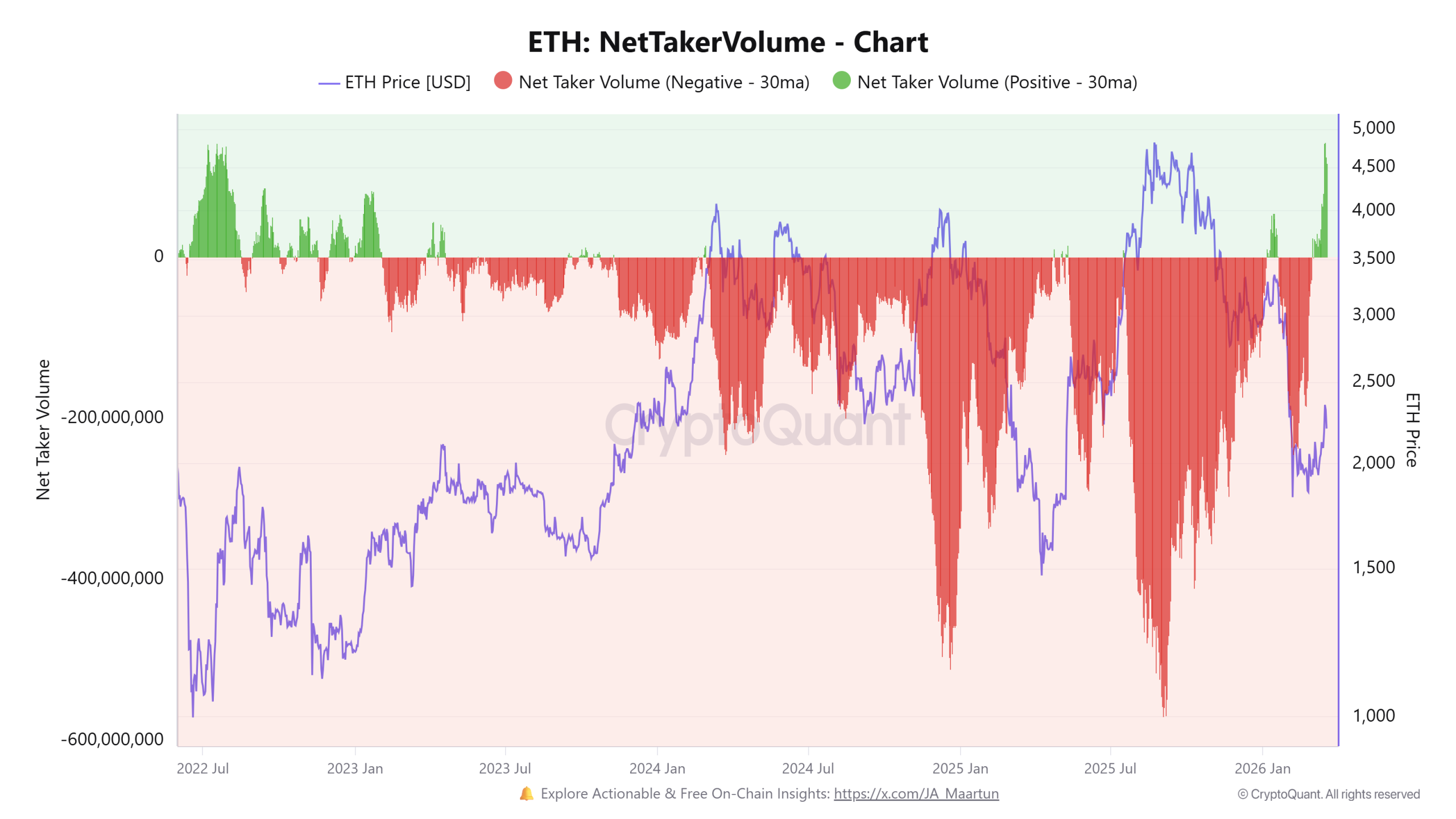
A key Ether (ETH) onchain indicator has climbed to its highest level in over three years, a level last seen when ETH bottomed during the 2022 bear market cycle.
The signal supports the case for an early bottoming phase, despite the weak spot demand and muted price action. Data suggests that ETH may stabilize near the local floor around $2,000, but a sweep of lower price levels remains possible in the coming weeks.
Ether taker flow spikes: Does this confirm the ETH bottom?
The 30-day average of positive Ether net taker volume climbed to $142 million on March 17, reaching levels last seen on July 18, 2022. The net taker volume measures the difference between aggressive buyers and sellers in derivatives markets.
A positive reading signals that market orders lean toward buyers. The recent surge aligns with prior spikes seen in mid-2022 during a correction phase.

These expansions have appeared during transitional periods where traders reposition and add exposure while the price stabilizes near a market bottom, as observed in July 2022 and August 2020.
The Ethereum Coinbase premium index has also been positive since Feb. 24, and the elevated premium levels indicate growing spot demand from US-based traders.

However, crypto analyst Pelin Ay noted that despite the drop in supply-side pressure, the price response has remained relatively muted, possibly due to a lack of dominant buy demand. The analyst said,
“The supply side is bullish, but there are no buyers. It appears that buyers still consider the current price expensive and are waiting for a new bottom.”
Related: Execution quality is the missing metric in Bitcoin and Ethereum markets
What happens if Ether falls below $2,150?
Ether’s short-term support aligns with the 100- and 200-period exponential moving averages (EMAs), but the price is compressing near an ascending trendline, with a potential breakdown placing focus on the lower liquidity zones.

The internal liquidity sits between $2,100 and $2,000 and a more pronounced cluster has formed near $1,905.
A larger liquidation cluster sits at $1,976, where over $3 billion in long positions are open. A move into this zone may trigger forced liquidations and create a short-term imbalance.

If buyers step in, this area may also act as a demand zone and support a price rebound above $2,000.
Crypto trader EliZ outlined a clear threshold at $2,000 on the daily timeframe. Holding above this level keeps the medium-term trend intact. A break below shifts the positioning toward aggressive short exposure, with the lower targets in focus.

Related: Crypto Fear and Greed rebounds off extreme lows as traders re-enter
This article does not contain investment advice or recommendations. Every investment and trading move involves risk, and readers should conduct their own research when making a decision. While we strive to provide accurate and timely information, Cointelegraph does not guarantee the accuracy, completeness, or reliability of any information in this article. This article may contain forward-looking statements that are subject to risks and uncertainties. Cointelegraph will not be liable for any loss or damage arising from your reliance on this information.
Crypto World
Pi Network’s PI token looks like a busted growth story, not a safe bet, where will price go?
Pi Network’s PI token trades around 0.17–0.19 dollars, 94% below its peak, with most serious models clustering around a 0.15–0.35 dollar, high‑risk, low‑conviction range for the next 12–18 months.
Summary
- PI changes hands near 0.17–0.19 dollars with a roughly 1.7–1.8 billion dollar market cap and about 9.8 billion coins in circulation, down around 94% from its 2.99‑dollar all‑time high.
- Gate and CoinCodex forecasts cluster around a 2026 band of roughly 0.15–0.30 dollars, while CoinStats’ more optimistic scenarios push into the 0.40–0.60‑dollar range only if adoption and sentiment improve sharply.
- A sober journalistic call puts the defensible 12–18‑month corridor at 0.15–0.35 dollars, skewed lower unless Pi delivers real usage, with 70–90% drawdowns and sharp “liquidity event” rallies always on the table.
Pi Network’s PI (PI) token is trading around 0.17–0.19 dollars today, with a market cap near 1.7–1.8 billion dollars and roughly 9.8 billion coins in circulation against a 100‑billion maximum supply. In plain terms, you are looking at a mid‑cap, highly dilutive altcoin that has already retraced sharply from its speculative peak yet still trades mostly on narrative, not cash‑flow or clear on‑chain usage.
Over the last week, Pi has been weak: spot is down more than 30% on some fiat pairs, even as today’s session shows a 7% bounce in rupee terms, a classic dead‑cat profile in crypto microstructure. Daily volume sits in the mid‑tens of millions of dollars, which is enough for short‑term traders to move price violently but nowhere near the liquidity profile of major Layer 1s. CoinStats notes Pi changing hands near 0.17 dollars in March 2026, roughly 94% below its 2.99‑dollar all‑time high from early 2025, underscoring how brutal the post‑launch repricing has been. In equity‑market language, this is what you’d call a busted growth story still trying to prove it deserves its prior multiple.
Forward‑looking models are all over the map, which tells you more about uncertainty than about destiny. Gate’s internal research sees Pi averaging about 0.18–0.21 dollars in 2026, with a band from roughly 0.16 to 0.27 dollars, effectively saying “sideways chop around current levels.” CoinCodex’s quantitative framework pushes a little higher, flagging the possibility of Pi closing 2026 closer to 0.42 dollars if sentiment and technicals co‑operate, which would be about a low‑triple‑digit percentage gain from here. CoinStats, running multi‑scenario AI modelling, sketches a conservative 2026 year‑end corridor of 0.25–0.35 dollars, a base case of 0.40–0.60 dollars, and an aggressive path that could theoretically justify 0.80–1.50 dollars if adoption and execution surprise to the upside.
Strip away the model branding and you can reduce the next 12–24 months to three simple regimes. In the bear regime, Pi stays supply‑heavy and demand‑light: unlocks continue, user activity underwhelms, the broader altcoin complex remains risk‑off, and Pi bleeds into the 0.10–0.15‑dollar zone as models like CoinCodex’s near‑term projections already hint at. In the base regime, Pi grinds sideways with a mild upward bias, respecting the 0.15–0.30‑dollar range implied by exchange research and the lower bands of CoinStats’ scenarios, tracking altcoin beta rather than generating its own idiosyncratic bid. In the bull regime, Pi converts its large user base into actual on‑chain throughput, improves liquidity and listings, and rides a risk‑on phase in crypto, which is where CoinStats’ 0.40–0.60‑dollar 2026 base case and 1‑dollar‑plus long‑term scenarios become plausible rather than laughable.
The most defensible 12–18‑month corridor is 0.15–0.35 dollars, skewed toward the lower half unless Pi starts printing real usage metrics and the wider market turns decisively bullish. Upside tails above 0.40 dollars exist, but they require both project execution and macro risk appetite; downside tails into 0.10 dollars or below remain very real if capital continues to leak out of speculative L1 narratives. Size exposure the way you would a thin, story‑stock in equities: assume 70–90% drawdowns are always on the table, treat sharp rallies as liquidity events rather than validation, and never confuse modelled price “targets” with guarantees.


Kalshi is now under a two-week restraining order barring bets in Nevada while a legal debate proceeds over the longer-term status of prediction markets there.
The First Judicial District Court of Nevada issued a 14-day order on Friday, directing the platform to cease offering event contracts in that state. A federal appeals court cleared the way on Thursday for state regulators to seek the order, which the Nevada Gaming Control Board first sought in 2025, when it told Kalshi to cease its sports contracts.
Kalshi had argued that the case should be moved to federal court, but the appeals court sent it back to Nevada, despite the company’s claim that it “faces imminent harm” from the state’s actions.
On Friday, the state court halted Kalshi’s sports, entertainment and election bets as the parties continue to argue over the relative authority of the state regulators to govern event-contract businesses.
The Nevada judge determined that the gaming board can’t properly function under these circumstances, and “an unlicensed participant beyond the Board’s control, such as Kalshi, obstructs the Board’s ability to fulfill its statutory functions.” The court is following up with an April 3 hearing.
A spokesman for Kalshi declined to comment on the Nevada development. Kalshi is being sued or prosecuted in several states on similar grounds. Earlier this week, Arizona’s attorney general charged Kalshi with running an unlicensed gambling business and offering illegal election wagering.
Meanwhile, Chairman Mike Selig of the U.S. Commodity Futures Trading Commission is insisting that his federal agency actually has proper authority over the markets, not the states. He filed a court brief stating that argument and has repeated it in a number of recent public appearances, promising he’ll fight the states on that point. He’s also begun moving on establishing CFTC policies in prediction markets.
Federal regulation generally supersedes state regulation, but the courts may need to weigh in on who is properly entitled to the jurisdiction. Major League Baseball, for one, has thrown in with the CFTC, signing a memorandum of understanding this week on oversight of prediction markets and also inking a partnership with Polymarket.
Read More: CFTC’s Selig opens legal dispute against states getting in way of prediction markets


An ongoing bear market combined with wider global economic struggles has hit crypto firms hard, causing delays, staff layoffs, and AI pivots.
This week, crypto protocol Algorand announced it was reluctantly reducing its workforce by 25%.
Algorand claimed the “tough” layoff was in response to “the uncertain global macro environment as well as the broader downturn in crypto markets.”
Indeed, as the year continues, bitcoin’s price is struggling to gain upward momentum after dropping to $63,000 in late February.
The escalating war between the US, Irael and Iran is also causing the price of oil to rocket, and threatens deeper economic turmoil across the globe.
Crypto layoffs, cuts, and delays
Firms including Gemini, Messari, Crypto.com, OP Labs, OpenSea, and Kraken, have announced various cuts to their operations, be it through trimming staff or delaying planned operations.
Meanwhile, Crypto.com announced a 12% staff layoff yesterday while citing an AI pivot. The firm’s CEO, Kris Marszalek, claimed the roles of the fired staff “do not adapt in our new world.”
Read more: Mass crypto layoffs are a short-term solution with long-term consequences
Gemini similarly let 25% of its staff go in February, claiming AI has allowed its workforce to operate more efficiently with fewer staff.
Gemini also let three of its execs go, including Chief Operating Officer Marshall Beard, Chief Financial Officer Dan Chen, and Chief Legal Officer Tyler Meade.
On Monday, crypto analytics firm Messari announced that it’s “doubling down” on becoming an “AI-first company,” and announced that it had let various team members go as new CEO, Diran Li, took the reins.
Protocol contributor OP Labs fired 20 of its staff last week in a memo that also alluded to the possibility of an AI pivot. CEO Jing Wang said, “This is about doing fewer things well, making decisions faster, and reducing coordination overhead.”
These all follow what was one of the more dramatic AI pivots from Jack Dorsey’s Block, which fired 50% of its staff (around 4,000 people) while citing the advancements AI offers to workplace efficiency.
Read more: How bombing Iran shifted oil and bitcoin prices
This week, the NFT platform OpenSea announced that it was delaying the launch of its $SEA token because of “challenging” market conditions across crypto that may affect its launch.
Another delay was announced yesterday to Kraken’s initial public offering (IPO). According to sources familiar with the matter, Kraken’s parent company, Payward, is pausing the IPO plans until “market conditions improve.”
Layoffs often come with reputational costs and further long-term consequences down the line, as staff are left burdened with the workloads of their departed teammates.
However, with more companies citing AI as a reason for workforce reduction, it’s hard to ignore its ability to mitigate the burden of cutting staff.
Got a tip? Send us an email securely via Protos Leaks. For more informed news and investigations, follow us on X, Bluesky, and Google News, or subscribe to our YouTube channel.


Bitcoin is holding just below $70k after a hawkish FOMC, ETF outflows, and a shift to Fear, with weak long conviction but easing miner selling and difficulty.
Summary
- BTC slipped roughly 5% post-FOMC, from near $74k to testing $70k, as the Fed signaled fewer 2026 cuts, ETFs flipped from $1.1b inflows to a $129m outflow, and the Fear & Greed Index fell to 28.
- Bitcoin’s 30-day correlation to the S&P 500 has climbed to 0.74, while CoinGlass data show shorts built into the $68,750 dip but open interest barely moved on the rebound, implying range-bound, low-conviction trade.
- Miner net outflows are down 82% from February peaks and a ~7.5% difficulty drop should ease cost pressure, leaving BTC parked between $66,827 long-liquidation risk and $73,757 short-squeeze resistance.
Bitcoin is trading above $69,900 on Friday evening, clinging to key support levels after a bruising week shaped by the Federal Reserve’s hawkish tone, a reversal in ETF flows, and broad risk-off sentiment across global markets. The crypto Fear & Greed Index sits at 28 — deep in Fear territory — as investors weigh the durability of BTC’s recovery against a deteriorating macro backdrop.
The week’s defining moment came on Wednesday, when the Fed held rates steady at its March FOMC meeting but signaled that fewer rate cuts are likely in 2026 than previously expected. Bitcoin fell roughly 5% in the immediate aftermath, sliding from near $74,000 to test the $70,000 level, as institutional players moved to de-risk. The reaction was compounded by a sharp reversal in ETF flows: after a highly bullish seven-day inflow streak that had brought in over $1.1 billion, US-listed spot Bitcoin ETFs recorded a $129 million net outflow on Wednesday alone — snapping the positive run and rattling sentiment.
The sell-off dragged the broader crypto market with it. Ethereum and Solana each fell 5–6% in tandem, confirming that Bitcoin’s near-term correlation with risk assets remains elevated. With BTC’s 30-day correlation to the S&P 500 sitting at 0.74 — the highest of 2026 — the asset is currently trading less like a macro hedge and more like a high-beta tech proxy, a dynamic that leaves it exposed to any further deterioration in equity markets.
Despite the fear reading, there are structural factors that have prevented a more severe breakdown. Open interest data tracked by CoinGlass shows that during yesterday’s dip to $68,750, shorts were actively adding positions — forming what the firm described as a “clean short position buildup.” The price has since rebounded, though OI has not increased meaningfully, suggesting range-bound rather than trending conditions. The lack of new long entry confirms that conviction on the buy side remains cautious, but the shorts have also not fully pressed their advantage.
On the supply side, the picture is more constructive. Miner selling pressure — a persistent headwind throughout the first quarter — is showing signs of fading, with net miner outflows down 82% from their February peak. A significant difficulty adjustment tonight, expected to drop ~7.5%, will further ease cost pressure on the mining industry and reduce near-term forced selling from that cohort.
For now, Bitcoin finds itself in a holding pattern: above the critical $66,827 level where over $1.87 billion in leveraged longs sit exposed, but well below the $73,757 resistance that would trigger a short squeeze. With macro uncertainty elevated, geopolitical tensions unresolved, and sentiment firmly in fear, the burden of proof lies with the bulls to demonstrate fresh conviction before the market can credibly call the bottom in.


Bhutan has sold over $110m in Bitcoin in 2026, cutting sovereign holdings by about 65% from their peak as Druk Holding shifts from mining-led accumulation to steady liquidation.
Summary
- Druk Holding & Investments has offloaded more than $110m in BTC this year, including a 973 BTC transfer worth about $72.3m on March 17–18 routed partly through QCP Capital and Binance.
- Bhutan’s stash has shrunk from roughly 13,000 BTC (over $1.4b and 40% of GDP at peak) to around 5,400 BTC worth about $374m, with no inflows over $100k in more than a year, implying mining has largely stopped.
- The kingdom’s methodical $5–10m clip sales, built on hydropower-funded mining since 2019, now act as a recurring sovereign overhang for Bitcoin just as macro conditions and sentiment remain fragile.
The Kingdom of Bhutan has quietly become one of the most closely watched sovereign Bitcoin sellers of 2026, with its state investment arm offloading more than $110 million worth of BTC since the start of the year — a systematic drawdown that has cut its holdings by 65% from their peak and raised questions about the future of one of crypto’s most unlikely national success stories.
The latest and largest transaction occurred on March 17 and 18, when Druk Holding & Investments — the sovereign wealth fund that manages Bhutan’s digital asset reserves — transferred 973 BTC worth approximately $72.3 million across multiple addresses. Among the recipients was QCP Capital, a Singapore-based institutional trading firm, indicating structured OTC selling designed to minimize market impact rather than distressed dumping onto open exchanges. A portion was also directed toward Binance hot wallets.
Bhutan’s Bitcoin journey began in 2019, when the country began quietly mining BTC using surplus hydroelectric power from its Himalayan rivers — a near-zero marginal cost energy source that made mining highly profitable even at modest price levels. At its peak, Bhutan held approximately 13,000 BTC, valued at over $1.4 billion — a sum representing more than 40% of the country’s entire gross domestic product at the time. Those holdings have since contracted to roughly 5,400 BTC, worth around $374 million at current prices.
A critical detail flagged by on-chain analytics firm Arkham Intelligence adds a new dimension to the story: Bhutan has not recorded a Bitcoin inflow of over $100,000 in more than a year. This strongly suggests the country has halted or severely curtailed its mining operations, shifting from an accumulation-and-hold strategy to a pure liquidation mode. The reasons remain officially unconfirmed, but analysts have pointed to declining mining profitability following the April 2024 halving, rising operational costs, and competing demands on the country’s hydropower infrastructure.
The selling pattern has been methodical rather than reactive. Bhutan typically transacts in $5–10 million clips, with occasional larger tranches when market conditions are favorable. The $72.3 million move this week is an outlier in size, suggesting either an acceleration of the drawdown timeline or an opportunistic decision to lock in prices near the $71,000 level before further deterioration.
For the broader market, the sustained presence of sovereign-scale selling at these volumes is a non-trivial headwind. Unlike retail or even institutional fund selling, sovereign liquidations tend to be price-insensitive and recurring — features that can create persistent ceiling pressure on any attempted recovery. As Bitcoin navigates a fragile macro environment with fear sentiment elevated and ETF flows recently reversing, Bhutan’s quiet but relentless selling is one more structural force the bulls must absorb on the path back to new highs.
Form 8K C1 Fund Inc For: 20 March

World Gold Council Proposes Shared Infrastructure for Tokenized Gold Products

Kentucky stuns Santa Clara in overtime after Otega Oweh’s buzzer beater


-
 Crypto World7 days ago
HYPE Token Enters Net Deflation as HyperCore Buybacks Outpace Staking Rewards
-

 Tech5 days ago
Your Legally Registered ‘Motorcycle’ Might Not Count Under Proposed US Law
-
 Tech3 days ago
Are Split Spacebars the Next Big Gaming Keyboard Trend?
-
Sports6 days ago
Why Duke and Michigan Are Dead Even Entering Selection Sunday
-

 Business5 days ago
Search for Savannah Guthrie’s Mother Enters Seventh Week with No Arrests
-

 Business6 days ago
US Airports Launch Donation Drives for Unpaid TSA Workers as Partial Government Shutdown Enters Fifth Week
-
Crypto World6 days ago
Coinbase and Bybit in Investment Talks: Could Bybit Finally Enter the US Crypto Market?
-

 Business4 days ago
Australian shares drop as Iran war enters third week
-

 Business6 days ago
Country star Brantley Gilbert enters growing non-alcoholic beer market
-

 Politics2 days ago
The House | The new register to protect children from their abusers shows Parliament at its best
-

 Crypto World4 days ago
Crypto Lender BlockFills Enters Chapter 11 with Up to $500M in Liabilities
-

 News Videos2 days ago
RBA board divided on rate cut, unusually buoyant share market | Finance Report | ABC NEWS
-

 Fashion4 days ago
25 Celebrities with Curly Hair That Are Naturally Beautiful
-

 Tech15 hours ago
inKONBINI Lets You Spend Summer Days Behind the Register
-

 Crypto World2 days ago
Canada’s FINTRAC revokes registrations of 23 crypto MSBs in AML crackdown
-
 Politics3 days ago
Real-time pollution monitoring calls after boy nearly dies
-

 Crypto World6 days ago
Crypto Losses Drop 87% in February, But Hackers Are Now Targeting People, Not Code
-
 NewsBeat2 days ago
Residents in North Lanarkshire reminded to register to vote in Scottish Parliament Election
-

 Business4 days ago
Meta planning major layoffs as AI spending and automation reshape workforce
-

 Politics5 days ago
9 Stylish Leather Jackets Perfect For Spring 2026


You must be logged in to post a comment Login