
Crypto World
XRP gains exposure after Kansas Jayhawks’ 51-6 win


XRP received new mainstream exposure on Sept. 7 when the Kansas Jayhawks football program shared a season-opening video featuring the cryptocurrency following its 51-6 victory over Long Island University.
Summary
- Kansas featured XRP branding after opening its 2026 season with a 51-6 victory over LIU.
- Kansas says XRP patches will appear across uniforms for all university athletic teams under agreement.
- The Jayhawks generated 613 offensive yards while limiting Long Island to 146 total yards overall.
- Ripple also signed Florida Athletics, where XRP branding appears at Ben Hill Griffin Stadium now.
- XRP traded near $1.38 after falling about 2% during the latest 24-hour period observed Tuesday.
The footage came from Kansas’ Sept. 4 game at David Booth Kansas Memorial Stadium. It marked one of the first prominent football appearances for XRP since Kansas Athletics signed a multi-year sponsorship agreement with Ripple in July.
The official Kansas Football post included an XRP mention alongside scenes from the victory. The appearance was part of an existing commercial partnership rather than a separate endorsement announced after the game.
Kansas improved to 1-0 with the win. Long Island fell to 0-2. The result itself had no demonstrated connection to XRP’s market price or activity on the XRP Ledger.
XRP branding follows Kansas’ dominant opening win
Kansas produced 613 total yards against Long Island, according to the university’s official boxscore. The Jayhawks recorded 277 rushing yards and 336 passing yards while controlling possession for more than 33 minutes.
Long Island finished with 146 total yards, including 35 rushing and 111 passing. Kansas converted eight of its 13 third-down attempts, while its opponent converted two of 13.
Quarterback Isaiah Marshall completed 14 of 19 passes for 246 yards and two touchdowns. He added 49 rushing yards as Kansas built a 30-0 halftime lead.
Running back Yasin Willis carried the ball 11 times for 72 yards and two scores. Micah Johnson, Jalen Dupree and Donald Collier also recorded rushing touchdowns.
Receiver Nik McMillan caught six passes for 130 yards and one touchdown. Tate Nagy added the first touchdown reception of his college career.
The Kansas Athletics recap described the game as a comprehensive opening victory. XRP branding gained visibility through Kansas’ uniforms and subsequent social media content surrounding the result.
Ripple’s Kansas agreement covers every athletics team
Kansas Athletics announced its partnership with Ripple on July 8. Jayhawk Sports Properties, the university’s local Learfield division, helped arrange the agreement.
An XRP patch will appear on uniforms across all Kansas Athletics teams. Kansas described the arrangement as the first integration of a cryptocurrency into the jerseys of a major college athletics program.
The university’s announcement did not disclose the sponsorship’s financial terms. It described the deal only as multi-year.
Crypto.news previously reported that Ripple secured a five-year Kansas sponsorship, expanding XRP’s visibility across a major NCAA Division I athletics program.
The partnership also includes financial and technology education for student-athletes and the wider campus community. Kansas said the programs would cover traditional finance, digital assets and blockchain technology.
Ripple and Kansas also plan to support career opportunities connecting graduates with the technology sector. The organizations have not published a schedule for individual classes, events or recruitment programs.
Ripple CEO Brad Garlinghouse is a University of Kansas alumnus. He grew up in Topeka, giving the company’s sponsorship a direct connection to the state and university.
The university has not said that student-athletes will receive XRP, use the XRP Ledger or promote cryptocurrency investments. The confirmed agreement focuses on branding, education and career development.
Kansas expands the XRP partnership beyond jerseys
Kansas Athletics launched the Rock Chalk Fan Club on Sept. 2 as another part of its digital engagement strategy. The university described the online community as being “championed by XRP.”
The fan club offers access to exclusive material, merchandise opportunities and other member benefits. Kansas has not announced that membership requires cryptocurrency or an XRP wallet.
That distinction matters because visible XRP branding does not automatically mean the university is adopting the asset as a payment method. Kansas has not confirmed ticket, merchandise, concession or donor payments in XRP.
The partnership nevertheless puts the token’s name before audiences beyond conventional cryptocurrency markets. College athletics reaches students, alumni, television viewers and supporters who may not interact regularly with blockchain products.
Ripple’s sports strategy also creates a separation between the company and the token being promoted. Ripple develops blockchain-based financial services and holds XRP, while XRP operates as the native asset of the open-source XRP Ledger.
The branding arrangement specifically features XRP rather than only Ripple’s corporate name. It therefore gives the digital asset direct exposure in a regulated and commercially established U.S. sports environment.
Florida becomes Ripple’s second college sports partner
Ripple expanded its college sports presence on Sept. 4 by announcing a separate multi-year agreement with Florida Athletics.
Under that deal, the XRP logo appears prominently on the field at Ben Hill Griffin Stadium. Branding will also feature across Florida Athletics’ digital properties, event signs and other promotional areas.
The official Florida Athletics release confirmed that Ripple will support financial and technology education for student-athletes and members of the campus community.
In related coverage, Florida placed XRP branding inside its football stadium as Ripple widened its U.S. college athletics campaign beyond Kansas.
The Kansas and Florida agreements use different branding placements. Kansas places XRP patches on team uniforms across its athletics department, while Florida features the logo on its football field, signs and digital channels.
Neither university disclosed the value of its agreement. Ripple also has not said whether it plans to add more college athletics partners during the 2026 season.
Kansas’ next football game is against Missouri on Sept. 11 at 7 p.m. Central Time. The Border Showdown will provide another public appearance for the XRP-branded uniforms.
XRP traded near $1.38 on Sept. 8, down approximately 2% over 24 hours. No verified market data links that movement to Kansas’ video, its victory or Ripple’s college sports sponsorships.



Benjamin Cowen, founder of Into The Cryptoverse, says there is a 65% chance Bitcoin’s (BTC) cycle low still lies ahead. That keeps his bear market thesis alive despite a sharp summer rally.
Cowen made the comment in a video interview. He pointed to Bitcoin’s realized price near $53,000 as the level bears still need to test before calling the bottom.
Why Cowen Still Leans Bearish
Bitcoin traded near $78,300 at publication time, down 1.7% over the past 24 hours, according to BeInCrypto data. Cowen made his comments after Bitcoin had already rallied roughly 40% off its summer low.
Cowen said that rally alone does not confirm a bottom. He noted Bitcoin posted similar or larger bounces in 2018 and 2022. It still fell again in the fourth quarter of each midterm year.
Cowen said assuming the pattern breaks this time would repeat a mistake traders made in prior cycles. He added that holds even if his current call ends up wrong.
“I would say it’s probably 65% chance the low occurs in the future and 35% chance it’s behind us.”
Benjamin Cowen
Cowen pointed to Bitcoin’s realized price, the network’s aggregate cost basis, as a historical marker for cycle lows. That figure sits near $53,000, a level BeInCrypto’s earlier Q4 bottom coverage also flagged as a key threshold.
Every prior midterm-year bear market bottomed below that line, Cowen said. The exact month it happened has varied widely across cycles.
The analyst has long argued Bitcoin follows a four-year cycle pattern. Lows typically form in a midterm year’s fourth quarter, he said. An October low would keep that pattern intact.
What Comes Next
Cowen added that clearing October without a lower low would start to shift the odds toward the bulls. He said the bigger risk is time-based capitulation rather than a specific price target.
He expects some headwinds for Bitcoin over roughly the next month and a half. As the fourth quarter progresses, he said he expects more bears to turn bullish.
If the pattern breaks and bears capitulate, Cowen said he would drop his bearish bias. He expects to turn bullish again heading into 2027, regardless of how the rest of this year plays out.
Cowen said a dollar-cost-averaging approach tends to work better than trying to pinpoint the exact low. He added that this is not financial advice.
Until then, he is treating $53,000 as the level to watch rather than assuming the bottom has already passed.
The post Ben Cowen Says Bitcoin Has 65% Chance of Extending Bear Market, Watching $53,000 appeared first on BeInCrypto.
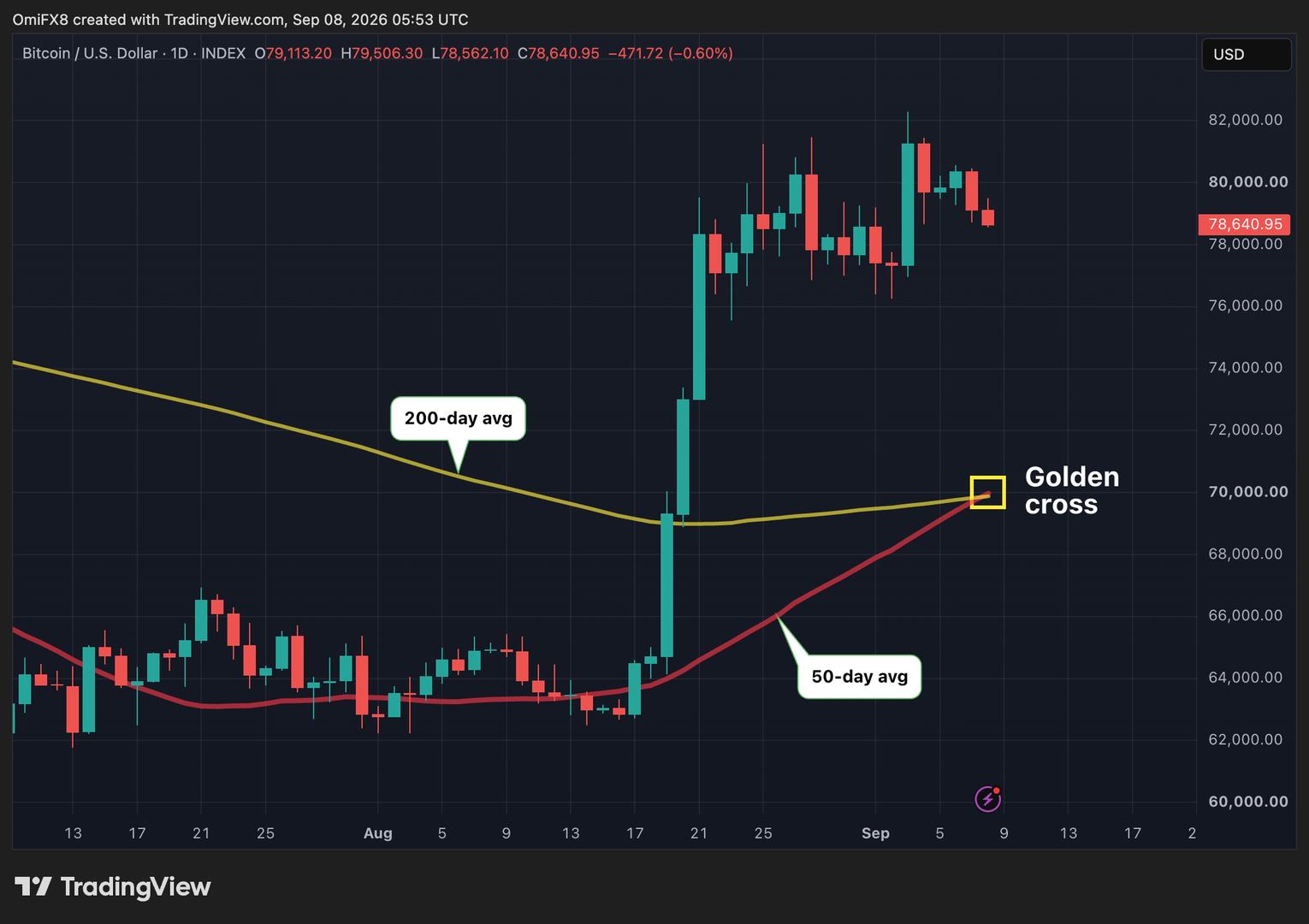
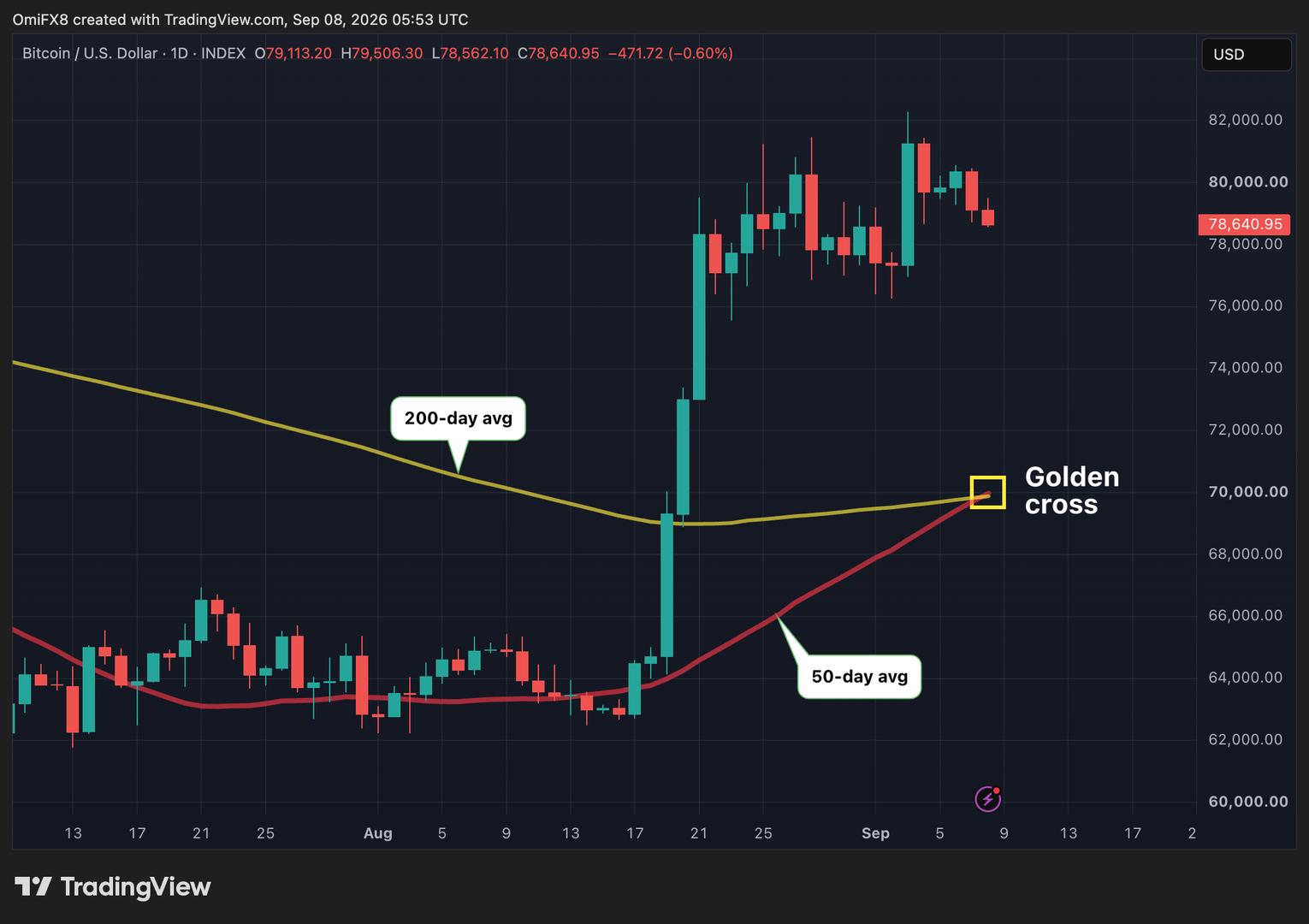
A golden cross has triggered on bitcoin’s daily price chart, indicating a potential long-term bullish trend ahead.
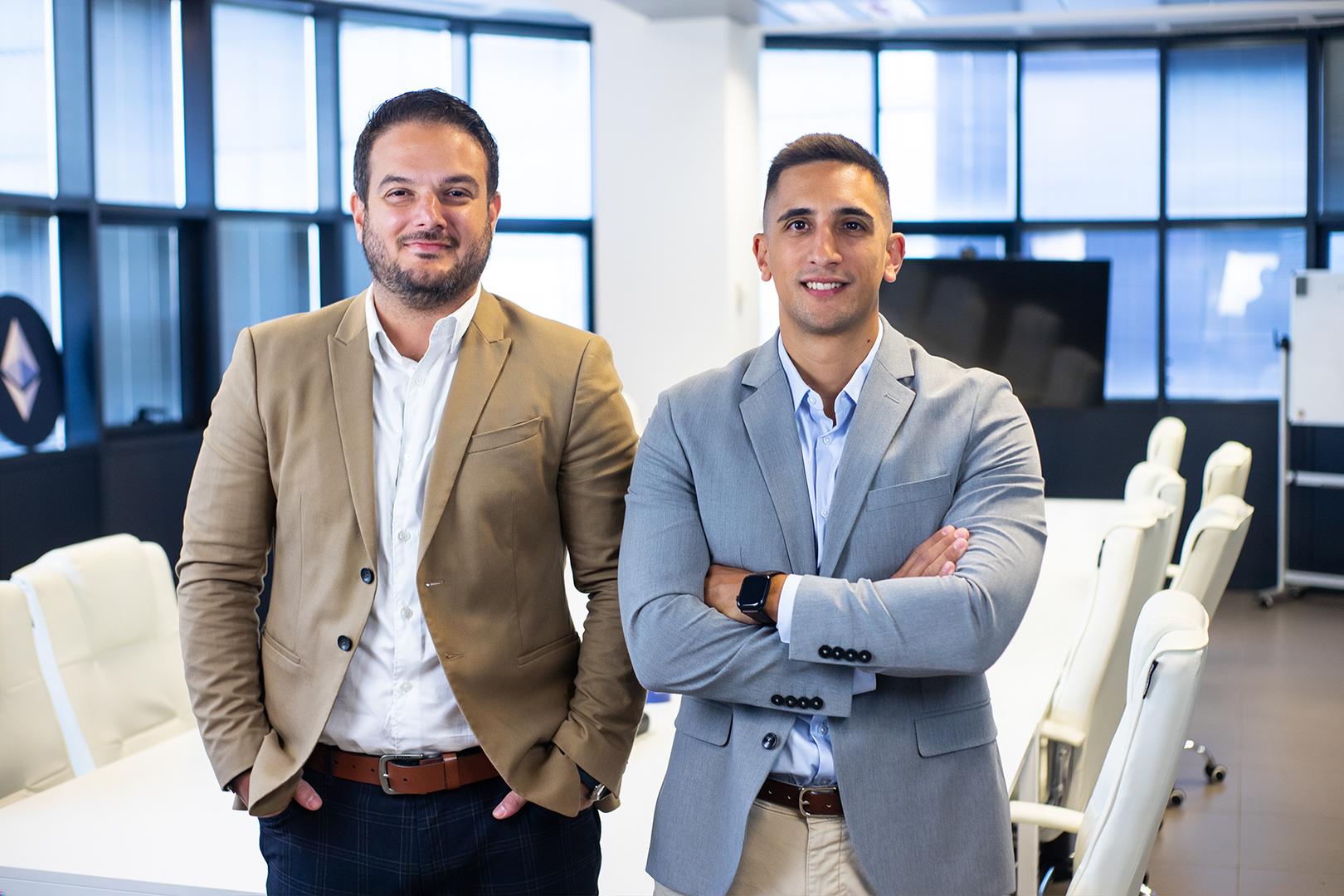
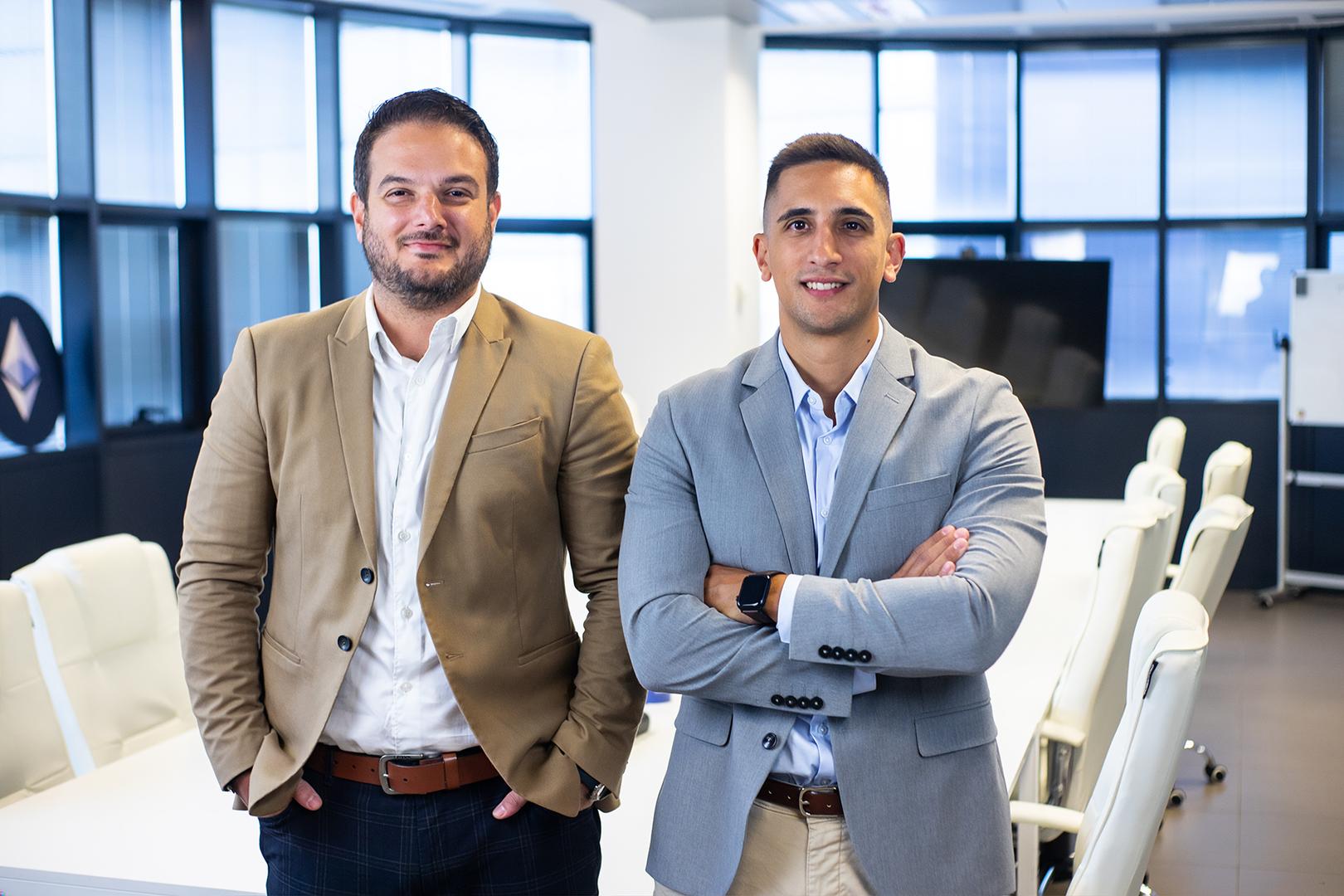
The unit formalizes past operations, building on 1.5 million euros in seized crypto the exchange processed in 2025 for agencies including Interpol and Europol.


Germany’s debate over Bitcoin taxation has gained a new political dimension after the Alternative for Germany won nearly 44% of the vote in Saxony-Anhalt, months after the party opposed plans to remove the country’s one-year crypto tax exemption.
Summary
- The AfD won nearly 44% of the vote in Saxony-Anhalt and secured 39 of the state parliament’s 83 seats.
- The party has opposed efforts to remove Germany’s one-year tax exemption for privately held Bitcoin and other crypto assets.
- Germany’s government plans new crypto tax legislation for 2027, although the final mechanism has not yet been disclosed.
- Chainalysis estimated Germany generated $24.1 billion in potentially taxable on-chain crypto activity in 2025.
Reuters reported that the AfD secured 39 of the 83 seats in the state parliament, leaving the party three seats short of an outright majority but well ahead of Chancellor Friedrich Merz’s Christian Democratic Union.
The AfD received 43.8% of party-list votes and 44.3% of first votes across 2,661 polling districts. The CDU fell to 17.2% of party-list votes, almost 20 percentage points below its result in the 2021 election, while voter turnout reached 77.8%, up 17.5 percentage points.
The state election does not give the AfD additional seats in the Bundestag or allow Saxony-Anhalt to change Germany’s federal crypto tax rules. It does, however, give the party another political platform while the federal government prepares legislation that could change how long-term cryptocurrency gains are taxed from 2027.
AfD win strengthens a vocal opponent of Germany’s Bitcoin tax plan
Merz ruled out cooperation with the AfD after the result, telling reporters that the election had shaken the CDU “to its very foundation,” Reuters reported.
AfD co-leader Tino Chrupalla called on CDU lawmakers to work with his party to create what he described as a “center-right conservative majority.” Such an arrangement would break the long-standing political firewall under which Germany’s mainstream parties have refused to cooperate with the AfD.
The AfD’s Saxony-Anhalt branch has been classified as right-wing extremist by the state’s domestic intelligence agency. Reuters described the party as anti-immigration and pro-Russia, while co-leader Alice Weidel called the election result a breakthrough and said the AfD was targeting at least 40% of the vote in Germany’s 2029 federal election.
Crypto taxation has formed part of the party’s economic agenda since before its Saxony-Anhalt victory.
In an October 2025 Bundestag motion, the AfD described Bitcoin as a “decentralized, non-manipulable, and limited-availability digital asset” that it argued should be treated differently from other cryptocurrencies.
The party called for Bitcoin to be excluded from the European Union’s Markets in Crypto-Assets framework and asked the federal government to preserve the 12-month holding period for privately held Bitcoin. It proposed that private Bitcoin mining and Lightning node operations should not automatically be classified as commercial activities.
Germany’s one-year crypto tax exemption remains in place
Germany currently treats privately held cryptocurrencies as other assets under its income tax rules. Gains are taxable when the period between acquisition and disposal is no more than one year, while disposals after the holding period are generally outside the private-sale tax regime.
Berlin has been preparing to change that treatment.
As crypto.news previously reported, Finance Minister Lars Klingbeil said in April that the government intended to tax cryptocurrencies differently as part of its 2027 budget plans.
The federal cabinet’s 2027 budget plan subsequently confirmed that legislation covering the taxation of crypto assets would be introduced. Klingbeil said in July that his ministry was working on the proposal and wanted cryptocurrency income to be taxed in the same way as other income, although the government had not yet released the final mechanism.
Germany’s Green Party had already tried to remove the holding-period benefit earlier in the year.
A proposal advanced by the Greens on May 6 sought to make gains from private crypto disposals subject to personal income tax regardless of how long the assets had been held. The party based its revenue case on a Frankfurt School study that estimated an additional €11.4 billion could be raised, while using only half of that figure in its own calculations to account for uncertainty.
The proposal failed in the Bundestag Finance Committee on May 20 after lawmakers from several parties opposed it. The committee rejected the plan, leaving the existing holding-period treatment intact.
The AfD opposed the Greens’ proposal and argued that the government should tax fewer activities while concentrating spending on core state functions. CDU/CSU and SPD lawmakers opposed the proposal for separate reasons.
Germany’s crypto tax debate covers billions in on-chain activity
The tax dispute is taking place in one of Europe’s largest cryptocurrency markets.
Chainalysis estimated that Germany generated $24.1 billion in potentially taxable on-chain crypto activity during 2025, second only to the United States among individual countries covered by its analysis.
The figure consisted of $15.6 billion in payments, $6.1 billion in realized gains and $2.4 billion in income. Chainalysis cautioned that its calculations represented activity that could potentially fall within commonly used tax rules, not the amount of tax owed or unpaid.
Globally, potentially taxable activity exceeded $457 billion in 2025, according to the analytics firm. Transactions falling within the practical reach of the OECD’s Crypto-Asset Reporting Framework accounted for only 14% of the total identified activity.
Germany has separately remained one of Europe’s largest markets by total crypto value received. Chainalysis recorded $219.4 billion flowing into the country between July 2024 and June 2025, representing a 54% increase from the previous comparable period.
A survey of roughly 6,000 investors across Germany, France, Italy and Spain found that 25% of German respondents had already invested in digital assets. Nearly half of respondents across the four countries said the EU’s MiCA framework had made digital assets feel safer and more accessible.
Regulated crypto infrastructure has continued to expand alongside that activity. Germany had 79 authorized crypto asset service providers under MiCA by August, after six cooperative banks joined the European Securities and Markets Authority register. France had 35 authorized providers at the time, while the Netherlands had 29.
Federal lawmakers will decide any Bitcoin tax change
Despite the scale of the AfD victory in Saxony-Anhalt, Germany’s federal tax treatment of cryptocurrency cannot be changed by the state government.
Any removal or modification of the one-year holding rule would have to move through the federal legislative process after the Finance Ministry releases its proposal.
The government has committed to introducing legislation on crypto taxation as part of its 2027 fiscal plans. Klingbeil said during a July press conference that the ministry was working on the measure and expected a concrete bill, but declined to disclose its provisions before the government’s internal coordination process had been completed.
The AfD, meanwhile, has already put its preferred treatment into a Bundestag proposal. Its October 2025 motion called for the 12-month Bitcoin holding period to be preserved reliably, sought a legal distinction between Bitcoin and other crypto assets, and proposed keeping private mining and Lightning node activity outside commercial classification.
With 39 seats in Saxony-Anhalt’s 83-seat parliament, the party now faces the separate question of whether it can assemble enough support to govern the state. Chrupalla has urged CDU lawmakers to cooperate, while Merz has maintained that his party will not form an alliance with the AfD.


Kraken deleted a promotional post after backlash, while a media group named in the token’s distribution publicly distanced itself from the project.
Cronos has confirmed that $9.19 million remains unrecovered after an attacker borrowed $120.4 million from Tectonic, while a validator-backed rollback reversed roughly $111.2 million in affected value.
Summary
- Cronos says $9.19 million remains unrecovered after an attacker borrowed $120.4 million from Tectonic using manipulated TONIC collateral.
- Validators rolled back 10,961 blocks covering nearly two hours of transactions, restoring roughly $111.2 million in affected value.
- The attacker moved 7.6% of the affected funds off Cronos before the network was halted, putting them beyond the rollback.
- Cronos resumed block production around 11 hours after the attack and continues reconciliation work with exchanges, bridges and other platforms.
According to a post-mortem published by Cronos on Monday, the attacker manipulated the price of TONIC, the governance token of lending protocol Tectonic, and used the inflated asset as collateral to borrow funds across nine markets on Aug. 30.
The attack led Cronos validators to halt the Layer 1 blockchain at block 90,907,150 before agreeing to restore the network to block 90,896,188, the final block produced before the exploit began.
The rollback returned affected balances to their pre-attack state and reversed approximately $111.2 million of the $120.4 million involved in the incident. However, funds that had already moved away from Cronos were outside the reach of the restoration.
“The $9.19 million that left Cronos before the halt has not been recovered and is beyond the restoration’s reach,” the team said.
Cronos rollback restored $111.2 million after Tectonic exploit
The rollback discarded 10,961 blocks, representing 1 hour and 54 minutes of Cronos transaction history, according to the post-mortem. Transactions completed during that window were reversed regardless of whether they had any connection to the Tectonic attack.
Cronos said validators had to weigh transaction finality against the amount of money still exposed when deciding how to restart the network.
“It was a hard decision, taken together with the validators, weighing the finality users expect from a chain against the funds at risk,” Cronos said. “The alternative, restarting without restoring state, would have left the borrowed assets in the attacker’s control.”
The final accounting substantially raises the value involved compared with early estimates published immediately after the incident. On Aug. 31, crypto.news reported the Cronos halt after onchain researcher Weilin Li initially estimated that approximately $75 million had been affected.
Li’s early analysis found that most of the identified funds remained on Cronos when validators stopped block production, while roughly $6 million was believed to have reached Ethereum. At the time, neither Tectonic nor Cronos had released a final accounting of the assets involved.
Blockchain data provider Bitquery subsequently calculated that $120.4 million had been removed from Tectonic’s lending markets, a figure that is consistent with the amount detailed in Cronos’ post-mortem.
TONIC price manipulation allowed $120.4 million in borrowing
Cronos said the attack began after contracts were deployed to manipulate the market price of TONIC, a thinly traded token that Tectonic accepted as collateral.
Once the token’s price had been driven higher, the attacker supplied the inflated collateral to the lending protocol. Roughly 10 minutes later, $120.4 million had been borrowed across nine Tectonic markets.
Early onchain analysis had found that TONIC’s reported price increased approximately 100-fold within around 20 minutes. The token carried a 20% collateral factor on Tectonic, allowing borrowers to take loans against part of the value assigned to their deposited TONIC.
RedStone co-founder Marcin Kazmierczak later told crypto.news that the incident was not an oracle failure. He said the oracle accurately reported the TONIC price in the market it monitored, while Tectonic accepted that price without adequately accounting for whether enough liquidity existed to sell the collateral at the reported valuation.
Kazmierczak identified borrow caps tied to executable liquidity as one safeguard that could have restricted the amount available to borrow even if TONIC’s reported market price increased sharply. Dynamic collateral factors, minimum market-depth requirements and price-impact limits could have provided other controls, he said.
Tectonic had roughly $121.7 million in total value locked and approximately $82.7 million in active loans before the exploit, according to figures cited during the initial investigation.
Validators halted Cronos within an hour of the attack
The post-mortem provided a more detailed timeline of the network’s response.
After the attacker began manipulating TONIC and borrowing against the inflated collateral, Cronos identified the malicious activity roughly 36 minutes later. Validators subsequently halted the blockchain, preventing further transactions while the incident was investigated.
The network was eventually restored to its pre-exploit state before block production resumed around 11 hours after the attack began.
When Cronos restarted block production on Aug. 30, the chain resumed from block 90,896,189 after validators coordinated the emergency restoration. Node operators were instructed to restart using Cronos v1.7.8 and updated mainnet snapshots.
Crypto.com CEO Kris Marszalek said during the incident that the company’s centralized app and exchange continued operating and were not compromised. Crypto.com and Cronos are closely associated, while Tectonic operates as a decentralized lending protocol on the blockchain.
The rollback meant infrastructure providers connected to Cronos had to reconcile their systems with the restored chain state. RPC providers, explorers, indexers, subgraphs and bridges needed to synchronize with the version of the blockchain that replaced the discarded blocks.
A subsequent crypto.news analysis examined how validators rolled back the chain and erased more than 10,000 blocks to restore its state. The action removed transactions belonging to regular users during the same period alongside those connected to the attacker.
$9.19 million remains outside Cronos restoration
Cronos’ post-mortem now puts the amount that escaped the restoration at approximately $9.19 million, equal to 7.6% of the $120.4 million affected.
Funds that remained within the network could effectively be returned to their earlier state through the rollback. Assets already transferred away from Cronos could not be reversed through changes to the chain’s own transaction history.
The Tectonic incident accounted for more than half of the estimated cryptocurrency losses recorded during August. Blockchain security firm PeckShield counted 50 major crypto hacks during August, with estimated losses totaling $136.3 million. Its earlier calculation placed the Tectonic incident at approximately $74 million because the final accounting had not yet been released.
Cronos said reconciliation work with exchanges, bridges and other affected platforms remains underway following the restoration. Users do not need to take any action at this stage, while the block explorer, public RPC endpoints, indexers and subgraphs have returned to operation.
The post-mortem did not identify the attacker or detail how the network and Tectonic plan to address the $9.19 million that remains unrecovered.
CRO, the native token of the Cronos ecosystem, was trading around $0.058, up 0.62% over the past 24 hours.
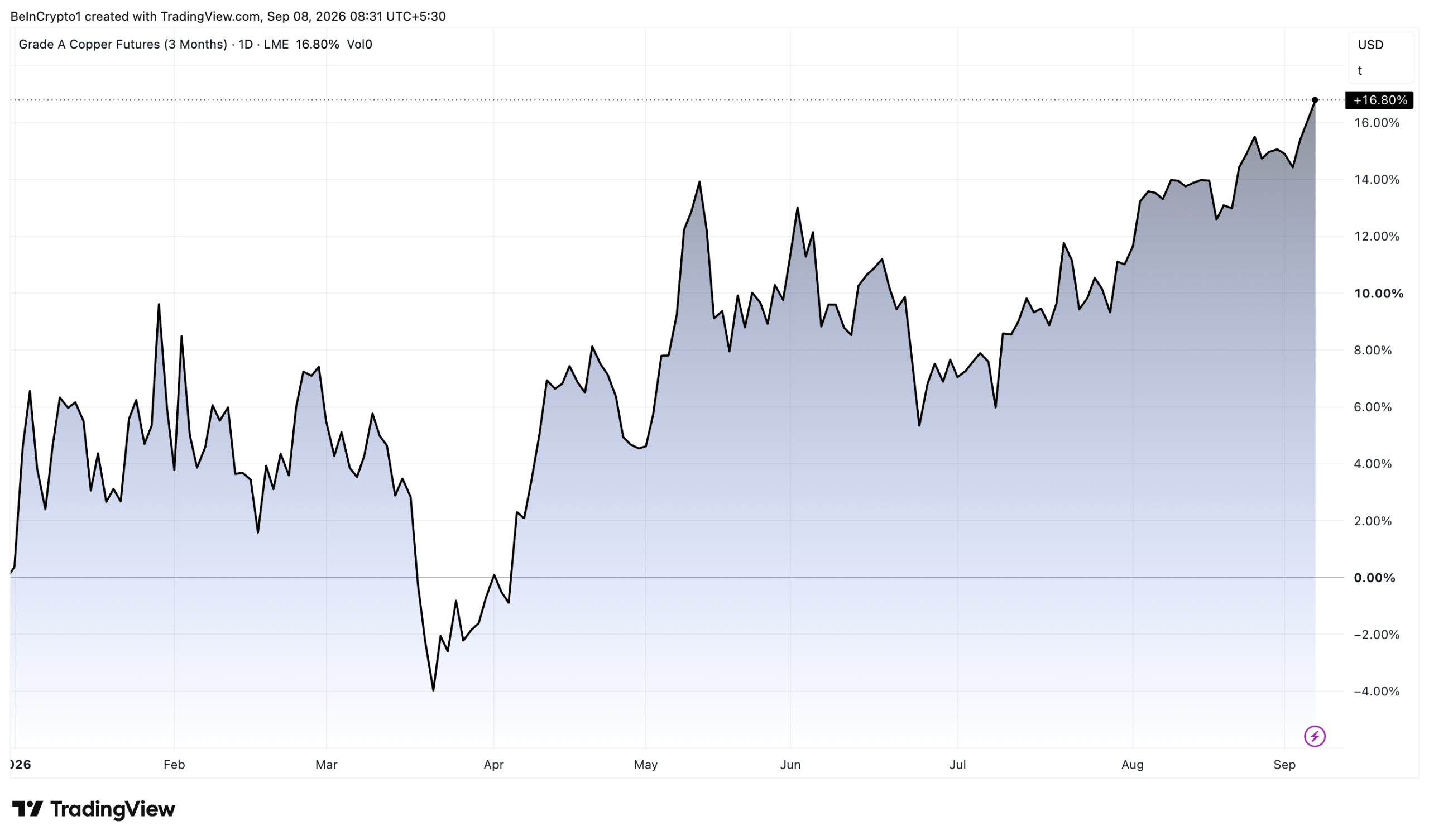
Copper reached an all-time high of $14,617 a ton on the London Metal Exchange today. The rally extended into a fourth session as traders positioned for US tariffs on refined metal.
The advance marked a second consecutive record. Copper has gained around 17% this year, supported by tight near-term supply and steady industrial demand.
Washington Silence Keeps a Premium on the Price
A proclamation signed last August placed a 50% tariff on semi-finished copper products. Refined metal escaped, and the Commerce Department was told to revisit the question.
Its report was due June 30. Roughly two months past that date, the White House still has nothing on paper. Traders keep pricing the levy anyway.
Merchants shipped hundreds of thousands of tons to the US this year to capture higher prices there. Near-term availability outside the US has tightened as a direct result.
Follow us on X to get the latest news as it happens
Supply explains the other half. The world’s biggest mines are ageing, and output is not keeping pace with data centers, renewable power, and grid upgrades.
Market analyst Jim Bianco noted that copper has advanced more than 68% since April 2025. That run predates the current speculation about tariffs.
The metal recently broke its previous record, set in January. It then cleared $14,600 a ton for the first time. Previously, August saw a record on Comex, with copper pushing past $6.71 a pound.

Gold Retreats as Copper Runs
Copper’s climb arrives while bullion sees a mixed performance. Gold trades near $4,405 an ounce, roughly 21.8% below the record $5,589.38 it set on January 28.
Some traders read the divergence as a rotation out of defensive positions and into industrial exposure. Analyst Qmo pointed to the copper-gold ratio, which he said broke its downtrend for the first time this year.
The signal is not clean, however. Gold rose about 10% in August, its strongest month since January, and remains up roughly 25% over 12 months.
That leaves the tariff decision as the near-term variable. Its arrival would test whether copper’s record rests on policy expectations or on the supply gap underneath them.
Subscribe to our YouTube channel to watch leaders and journalists provide expert insights
The post Is Copper's All-Time High Built on Tariffs or Geology? Washington Holds the Answer appeared first on BeInCrypto.
Boyaa Interactive has purchased approximately 205 Bitcoin for $14.3 million, raising its total holdings to roughly 4,316 BTC as the gaming company continues to deploy crypto assets across its Web3 projects.
Summary
- Boyaa Interactive purchased approximately 205 Bitcoin for $14.3 million between June 24 and Sept. 4.
- The latest purchases increased the company’s total holdings to roughly 4,316 BTC at an average cost of $68,280 per Bitcoin.
- Boyaa funded the purchases with cash generated from its business operations and executed the transactions through regulated and licensed trading platforms.
- More than 1,700 BTC from the company’s holdings are planned for deployment across Web3 gaming, blockchain staking, liquidity and investment projects.
Boyaa Interactive International Limited said in a Sept. 4 Hong Kong Stock Exchange announcement that the purchases were completed through a series of open-market transactions between June 24 and Sept. 4. The company spent HK$110 million, equivalent to approximately $14.3 million, using idle cash reserves generated from its business operations.
Following the transactions, Boyaa holds around 4,316 Bitcoin at an average purchase cost of $68,280 per BTC. The purchases were carried out through regulated and licensed trading platforms, with prices based on prevailing bids and asks in the open market.
The latest acquisition was not conducted under the shareholder approval granted at Boyaa’s annual general meeting on June 18 for a separate major Bitcoin transaction. Since applicable percentage ratios for the new purchases exceeded 5% but remained below 25%, the deal was classified as a discloseable transaction under Hong Kong listing rules.
Boyaa Bitcoin holdings rise to 4,316 BTC
The latest purchase extends an accumulation strategy that Boyaa has pursued while moving its business toward Web3 gaming and infrastructure.
In March, crypto.news previously reported that Boyaa was seeking shareholder approval for a crypto expansion worth $70 million, with Bitcoin and Ether among the assets it planned to acquire over the following 12 months.
Boyaa had already expanded its Bitcoin treasury substantially in 2025. The company purchased approximately 290 BTC for $32.9 million over a three-week period in August 2025, taking its holdings at the time to 3,670 BTC at an average acquisition cost of $62,878.
Like the latest transaction, the $33 million Bitcoin purchase was funded with internal cash and conducted through regulated trading platforms. Boyaa said at the time that its Bitcoin holdings per 10,000 shares had increased 12% during 2025 to approximately 0.0516 BTC.
The company’s Bitcoin position has changed considerably since November 2024, when it converted 14,200 ETH worth $49.48 million into approximately 515 BTC through open-market transactions. The Ether to Bitcoin conversion took Boyaa’s holdings to approximately 3,183 BTC and briefly made it Asia’s largest publicly listed corporate Bitcoin holder.
Metaplanet later overtook Boyaa in March 2025 after the Japanese company raised its holdings to 2,888 BTC while Boyaa held 2,410 BTC at that point.
Bitcoin is being deployed across Boyaa’s Web3 projects
Boyaa’s Bitcoin strategy extends beyond holding the asset in its corporate treasury. The company said cryptocurrencies, primarily Bitcoin, are being progressively deployed across its Web3 games and blockchain infrastructure.
During the second quarter of 2026, Boyaa used another 1,000 BTC for blockchain staking on Boyaa Network, a public blockchain designed for Web3 games. The company said the allocation was intended to support network security and operational stability.
Boyaa Network uses a Proof of Stake mechanism and launched in the second quarter. The company has described the network as groundwork for its general-purpose token business for Web3 games, with an emphasis on low latency and fast transaction confirmation.
Another 1,000 BTC had previously been allocated for staking on MTT Network, a blockchain built using the Cosmos SDK that supports the MTT Sports gaming platform. Boyaa has invested 100 BTC and approximately 4.18 million USDT in MTT Sports, giving it a 25% equity stake and rights to 19% of MTT tokens.
MTT Sports expanded its crypto payment infrastructure in August 2025 when Alchemy Pay added a fiat ramp to the platform. The integration allowed users to acquire MTT tokens through payment methods including Visa, Mastercard and mobile wallets.
Boyaa said it provides technical support for MTT Sports and serves as the primary contributor to its research and development work.
Boyaa plans to deploy more than 1,700 BTC
Bitcoin is being allocated to several other projects as Boyaa builds out its Web3 gaming operations.
YAAKO Wallet, a crypto wallet developed for gaming applications, has been allocated 500 BTC for a cross-chain bridge liquidity pool. Another 500 BTC is planned for the same purpose between 2026 and 2027.
The wallet launched in the fourth quarter of 2025 and is available on iOS and Android across approximately 26 countries and regions. Its bridge function lets users move assets between different blockchains, with Bitcoin reserves intended to provide liquidity for transfers.
Pet Land, a pet-themed social game incorporating Web3 technology and AI modules, is expected to launch within 2026. Boyaa plans to allocate 100 BTC for in-game rewards between 2026 and 2028, while another 1,000 BTC is intended for blockchain network staking during 2026.
The company has earmarked a further 100 BTC to 300 BTC for investments in Web3 projects through 2028. Boyaa said it may use cryptocurrencies to fund investments in gaming projects, blockchain infrastructure and other businesses selected through its Web3 industry fund.
Across its existing and planned projects, Boyaa’s filing lists 2,600 BTC as already used and another 1,700 BTC to 1,900 BTC planned for deployment. More than approximately 1,700 BTC from its holdings will gradually be put to use under the current plan.
Boyaa continues its Web3 gaming transition
Boyaa began a strategic transformation centered on Web3 in 2023, adding crypto assets while investing in the development of Web3 games and related infrastructure.
From 2024 through 2025, the company increased research and development spending on Web3 games while investing in projects and introducing Bitcoin into its gaming infrastructure. Boyaa describes its current business model as combining game applications, ecosystem development and value storage.
The company still operates its traditional online card and board game business, which provides cash flow for its Web3 development. Its projects now include MTT Sports, MTT Network, YAAKO Wallet, Boyaa Network and Pet Land.
Boyaa said virtually all of its BTC is held with institutional-grade custodians, with private keys generally stored in offline cold-storage environments. Its security controls include multisignature authorization for transfers, hardware security modules for key management and multiparty cryptographic approval for private-key decryption.
The company purchases Bitcoin through trading platforms licensed by Hong Kong’s Securities and Futures Commission, regulated platforms in other jurisdictions and qualified over-the-counter providers. Boyaa said it does not provide crypto trading, brokerage or asset management services to third parties through its treasury operations.


BDACS has selected LayerZero’s Omnichain Fungible Token standard for its KRW1 stablecoin, giving the won-backed asset a unified cross-chain system as the company seeks to expand its use outside South Korea.
Summary
- BDACS has selected LayerZero’s OFT standard to support cross-chain transfers of its Korean won-backed KRW1 stablecoin.
- KRW1 will maintain a unified supply across connected networks, with tokens debited on the source chain and credited on the destination chain.
- KRW1 remains backed 1:1 by Korean won held at Woori Bank as BDACS expands the stablecoin across blockchain networks.
- LayerZero said its OFT standard has processed $280 billion in lifetime transfers across more than 170 blockchains.
LayerZero said BDACS, South Korea’s largest digital asset custodian by assets under custody, chose its OFT standard after reviewing options for making KRW1 natively interoperable across multiple blockchains.
KRW1 already operates across several networks, including Ethereum, Avalanche and Circle’s Arc. BDACS said the separate deployments created friction when moving the stablecoin between networks, limiting its distribution and utility.
The new setup is designed to maintain one KRW1 supply across connected chains. When tokens move between networks, KRW1 will be debited on the source chain and credited on the destination chain, while LayerZero’s Stargate application will handle transfers for users.
LayerZero gives KRW1 a unified cross-chain supply
LayerZero’s OFT standard is already used for stablecoins including Tether’s USDT0, PayPal USD and Paxos-issued USDG.
The company said OFT currently facilitates 87% of cross-chain transfer volume and has processed $280 billion in lifetime transfers across more than 170 blockchains.
For BDACS, the structure replaces separate pools of KRW1 liquidity with a single supply distributed across connected networks. The issuer retains control over the token while gaining the ability to add new chains without creating isolated versions of the stablecoin.
A similar structure is used by USDT0. As crypto.news previously reported, the omnichain version of USDT uses LayerZero’s OFT standard to move dollar liquidity between supported blockchains without relying on separate bridge liquidity pools. USDT0 launched on Stellar on Sept. 2, extending the same infrastructure to the payments-focused network.
LayerZero has used its interoperability infrastructure for other regulated digital money products. In July, the company partnered with Keeta to make tokenized bank deposits transferable across Ethereum, Solana, Base and the Keeta Network, with nine fiat currencies included in the planned rollout.
PayPal has taken a similar route for its dollar stablecoin. LayerZero previously supported the expansion of PYUSD to additional blockchains through its interoperability infrastructure, using an omnichain structure intended to keep liquidity fungible across supported networks.
KRW1 expands from its original Avalanche launch
BDACS introduced KRW1 in September 2025 after completing a proof of concept with Woori Bank.
The stablecoin was initially launched on Avalanche, with each token backed 1:1 by Korean won held at Woori Bank. The setup included an API connection for verifying reserves.
BDACS later moved to extend KRW1 beyond its original network. In October 2025, the company disclosed plans to issue KRW1 on Arc, Circle’s Layer 1 blockchain designed for stablecoins, tokenized assets and programmable finance.
A Polygon deployment followed in December, when BDACS brought the won-backed token to the network with its Woori Bank-linked reserve verification system. The company positioned the Polygon version of KRW1 for payments, remittances and institutional transactions.
LayerZero said the OFT integration will give BDACS a common framework for managing KRW1 across networks instead of maintaining disconnected token supplies as more chains are added.
“The value of a Korean won stablecoin lies in its global scalability,” BDACS CEO Harry Ryoo said.
Ryoo said applying OFT gives KRW1 the technical foundation to move beyond South Korea and support more flexible use across several blockchains.
“Building on this technical foundation, we will continue to expand the scope of KRW1’s use going forward,” he added.
South Korea prepares rules for won stablecoins
The cross-chain expansion comes as South Korea continues developing its regulatory framework for won-denominated stablecoins.
The Bank of Korea reiterated in July that it favors a bank-led model during the initial stage of stablecoin issuance. The central bank said bank consortiums should take the lead while lawmakers continue negotiations over the country’s Digital Asset Basic Act and related stablecoin rules.
Private companies have continued testing their own infrastructure during the legislative process. South Korean financial super app Toss signed an agreement with Optimism and Sunnyside Labs in July for a three-month program examining won-linked stablecoin infrastructure, including payment settlement, compliance and privacy requirements.
KT has entered the same market through plans for a Token Factory and won stablecoin platform. The telecommunications group said in July that the system would support token issuance, billing and settlement while drawing on K Bank, BC Card and KT’s network infrastructure.
South Korea’s Won Internationalization Roadmap, published in July 2026, calls for amendments to the Foreign Exchange Transactions Act to establish a legal basis for won-denominated stablecoins. The plan includes offshore won accounts and a 24-hour offshore won settlement network scheduled for pilot work into 2027.
KRW1 will remain fully reserved 1:1 with Korean won held at Woori Bank as its network coverage expands, according to BDACS. The company said its reserves are independently attested.
BDACS surpassed 80 billion won in assets under custody during the first half of 2026. The company holds SOC 1 and ISO 27001 certifications and is pursuing SOC 2 certification, while its existing partners include Woori Bank, Galaxy Digital and Circle.
Australia’s financial intelligence regulator said on Sept. 7 that it canceled, suspended or refused to renew 45 crypto and remittance registrations during the past year.
Summary
- AUSTRAC removed 45 remittance and virtual asset registrations through three types of regulatory action recently.
- GetCoins lost its registration after complaints and alleged exploitation by organized cryptocurrency investment scams emerged.
- Cryptolink’s registration was suspended for three months covering its network of 96 cryptocurrency ATMs nationwide.
- The regulator did not publicly identify all 45 businesses or separate crypto providers from remitters.
- Businesses with canceled registrations cannot operate and some associated individuals were referred to enforcement partners.
The Australian Transaction Reports and Analysis Centre said the AUSTRAC registration actions removed affected businesses from its official registers. The agency did not identify all 45 companies or disclose how many were virtual asset service providers rather than remittance businesses.
According to its statement, AUSTRAC targeted businesses that were inactive, insolvent or unable to begin or continue operating. Other cases involved incorrect registrations, failures to report material changes or elevated money laundering and terrorism financing risks.
AUSTRAC CEO Brendan Thomas said companies with canceled registrations can no longer provide the relevant services. The regulator also referred people associated with some businesses to Australian and overseas law enforcement or regulatory partners.
“The rapid movement of money across borders can create some of the highest ML/TF risks,” Thomas said.
The action represents an administrative and supervisory response rather than a finding that all 45 businesses committed financial crimes. AUSTRAC’s stated reasons cover conditions ranging from inactivity and insolvency to alleged financial crime exposure.
AUSTRAC canceled GetCoins after customer complaints
AUSTRAC identified BA Digital Ventures, which traded as GetCoins, as one company affected by the yearlong sweep. Its virtual asset service provider registration was canceled on June 4, according to the agency’s public register.
The regulator worked with Australia’s National Anti-Scam Centre after receiving customer complaints. AUSTRAC then requested information about GetCoins’ operations to assess whether the company could manage its money laundering exposure.
“This VASP was allegedly exploited by organised cryptocurrency investment scams,” AUSTRAC said.
The regulator presented the connection to investment scams as an allegation. It did not accuse GetCoins, BA Digital Ventures or their directors of organizing the schemes.
AUSTRAC also did not disclose the number of affected customers, the amount allegedly lost or the identities of the groups suspected of using the platform. Its statement said the cancellation helped disrupt the alleged scam activity.
The official register lists several other virtual asset registration cancellations during 2026. They include Self Custody, Jam Xchange, Coinsec Australia, Reserve Currency of Australia and Coast to Coast Vending.
The regulator also canceled registrations belonging to Product.ST, AMSA Fintech and IT Solutions, A.K Smart Trader and Atpay Trading. AUSTRAC has not said that every company on this list was connected to suspected criminal conduct.
Crypto ATM enforcement remains a priority
AUSTRAC separately suspended Cryptolink’s registration for three months beginning Aug. 9. The order prevented the company from operating its network of 96 cryptocurrency ATMs across Australia.
The regulator cited failures involving threshold transaction reports and an unanswered request for information. AUSTRAC said it remained concerned about Cryptolink’s ability to manage high-risk transactions conducted through its machines.
Cryptolink had previously completed an enforceable undertaking imposed in October 2025. That measure followed alleged breaches involving late threshold reports and weaknesses in the company’s anti-money laundering risk assessments.
The operator also paid an A$56,340 infringement notice. AUSTRAC said Cryptolink subsequently failed to meet basic reporting duties despite completing the enforceable undertaking.
As crypto.news reported, Cryptolink’s 96 cryptocurrency ATMs were ordered offline while the regulator monitored its compliance with the suspension.
Australia had already imposed an A$5,000 cash limit for cryptocurrency ATM transactions. Operators were also directed to strengthen customer checks, transaction monitoring and scam warnings.
Those controls followed rapid growth in Australia’s crypto ATM sector and evidence that scammers were directing victims to cash-to-crypto kiosks. Such machines can allow funds to move quickly after a victim deposits cash and sends the purchased cryptocurrency to a scammer’s wallet.
The presence of a registered provider does not mean AUSTRAC guarantees its services or investments. Registration confirms that a business has entered the anti-money laundering framework, but the provider must continue meeting its obligations.
AUSTRAC made its virtual asset service provider register publicly searchable in June. Consumers can use it to check a company’s legal name, trading name and registration status before transferring money or digital assets.
Australia is expanding oversight of crypto providers
The 45 registration actions follow earlier compliance work across Australia’s digital asset sector. In related coverage, AUSTRAC reviewed more than 50 cryptocurrency providers and took action against 13 businesses during an earlier campaign.
In May 2026, the regulator opened two supervisory campaigns focused on local exchanges and over-the-counter crypto businesses. It began direct engagement with 36 businesses offering crypto-to-cash services and 27 local exchanges.
The reviews examine business models, transaction channels, governance and the ability to identify and manage money laundering risks. They also assess whether providers are prepared for Australia’s expanded anti-money laundering framework.
Crypto-to-crypto exchanges, virtual asset custody services and certain transfer providers now fall within the broader regime. Australia’s travel rule also began applying to covered virtual asset transfers on July 1.
As previously reported, Australian exchanges must collect additional transfer information, including details about senders, recipients and associated wallets. Self-custody remains permitted, although transfers involving regulated platforms can require additional checks.
These anti-money laundering requirements operate separately from Australia’s financial services licensing system. A company may need AUSTRAC registration, an Australian financial services licence or both, depending on the services and products it offers.
Western Union investigation remains unresolved
The registration sweep also comes after AUSTRAC opened an investigation into Western Union Financial Services Australia and its U.S. parent on Sept. 1.
The inquiry examines Western Union’s anti-money laundering program, transaction monitoring and corporate governance. AUSTRAC said it had concerns about the management of high-risk payment channels, customers and affiliates.
The regulator clarified that Western Union’s affiliates are not themselves under investigation. AUSTRAC will decide whether enforcement action is appropriate after completing its inquiry.
Its review follows an external audit ordered in 2025 and previous regulatory engagement with the money-transfer company. Western Union has committed to addressing issues raised by the audit, according to AUSTRAC.
Crypto companies face an additional deadline on Sept. 30. As crypto.news reported, qualifying digital asset businesses must apply for financial licences before temporary enforcement relief expires.
From October, businesses operating outside the relief conditions may face civil or criminal enforcement. The requirement applies only when their products or services fall within existing financial services laws.
AUSTRAC has not set a closing date for its broader review of virtual asset and remittance providers. Thomas said the regulator would continue removing businesses that fail to manage financial crime risks or satisfy reporting requirements.

Switzerland's Federal Government Tests Open-Source Alternatives to Microsoft on 3,000 Computers
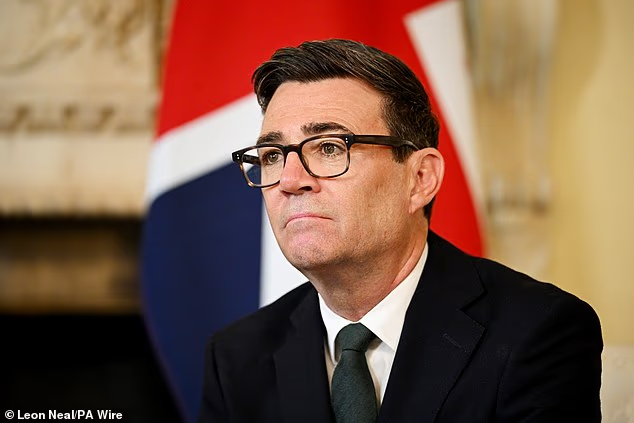
Britain faces US reprisals over Burnham’s ‘Jew-hating’ West Bank settlements boycott – as Israel threatens to back Argentina’s Falklands grab

Providers slam aged care price change





-

 Fashion4 days ago
Weekend Open Thread: Beyond Yoga
-
 Crypto World4 days ago
Bitcoin price stalls near $82K as key resistance holds
-
 Politics4 days ago
Best Gaming Laptops, CPUs, TVs, And Keyboards To Upgrade Your Set Up For GTA VI
-

 Tech4 days ago
The Birds Outside, Drawn For You Automatically
-

 Crypto World4 days ago
IMF Says El Salvador’s Post-Review Bitcoin Purchases Used No Public Funds
-
 Crypto World4 days ago
U.S. added stronger than expected 162,000 jobs in August as labor market bounced back
-

 Sports4 days ago
Alexandre Pato consortium’s Northampton Town investment approved
-

 Sports4 days ago
Commanders’ Chig Okonkwo is a top breakout fantasy football candidate
-
 Sports4 days ago
Golden Eaglets Drawn in Group B for 2026 WAFU B U17 Championship
-
 Crypto World4 days ago
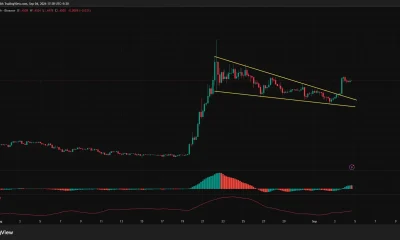
XRP price breaks falling channel as bulls target $1.53
-
 Politics4 days ago
A new European chapter for Gibraltar
-

 Politics4 days ago
How To Avoid Winter Colds: 4 Everyday Habits That Spread Germs, Says Pharmacist
-
 Politics4 days ago
The House | Bin the lectures, bring gossip and be ready to banter: how the new PM should prepare for his Trump encounter
-

 Crypto World4 days ago
From warning to listing: UK’s largest retail investment platform opens access to crypto ETNs
-
 Crypto World4 days ago
FinCEN flags $12.7B tied to Southeast Asia crypto investment scams
-

 Tech4 days ago
A Worthy Android Ereader, With Some Tradeoffs
-

 Crypto World4 days ago
Trezor Data Breach Impacts 67,000 More US Customers
-
 Tech4 days ago
How To Edit Claude’s Memory
-

 Politics4 days ago
33 Cosy Autumn Home Decor Ideas: Blankets, Pumpkin Decorations, And Candles
-

 Tech4 days ago
beyerdynamic AVENTHO Y Debuts at IFA 2026 and Makes Wireless Headphones Less Disposable
You must be logged in to post a comment Login