
Crypto World
Yen Intervention and US Inflation Set the Tone

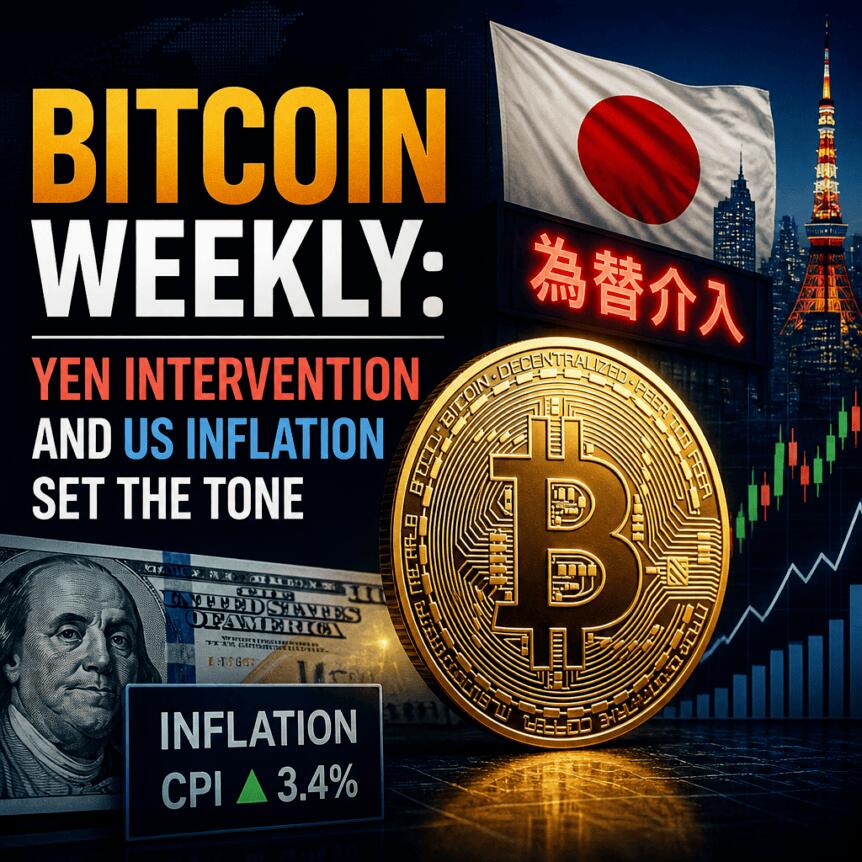
Bitcoin posted its first weekly close above $80,000 in roughly four months, landing just after markets refocused on a fresh batch of U.S. inflation releases ahead of the Federal Reserve’s Sept. 16 meeting. The move comes as investors balance softer inflation prints against renewed pressure from a stronger labor market and ongoing policy uncertainty.
At the same time, analysts say BTC’s bounce still lacks the spot-market participation needed to decisively break out of the $80,000 area. On-chain and derivatives data point to a rally that has leaned heavily on futures positioning—an imbalance that typically increases the odds of volatility if macro conditions turn.
Key takeaways
- Bitcoin achieved its first weekly close above $80,000 since early May, according to TradingView data.
- U.S. CPI and PPI prints are due this week ahead of the Sept. 16 Fed decision; CME’s FedWatch Tool shows 0.25% hike odds at 58.4%.
- Japan’s record yen interventions coincide with a reported $79.57 billion drop in foreign reserves, raising questions about ongoing U.S. Treasury sales.
- CryptoQuant argues recent upside volatility was driven more by derivatives open interest than by spot/on-chain accumulation.
- Bitcoin’s weekly supertrend indicator turned “buy” for the first time since late 2025, echoing a pattern seen during the early-2023 recovery.
Inflation week before the Fed: what markets are betting on
Inflation data returned to the center of crypto sentiment after earlier employment news pushed risk assets lower. This week, the August Producer Price Index (PPI) is scheduled for release on Thursday, followed by August CPI on Friday.
Prior CPI figures offered a mixed backdrop: the August CPI print “matched market expectations” at 0.1% month-on-month and 3.4% year-on-year, following softer-than-anticipated June results. Even so, Fed leadership has continued to stress that recent improvement may not yet justify changing course. Speaking at the Jackson Hole economic symposium in late August, Federal Reserve chair Kevin Warsh said lower headline measures did not, by themselves, establish that underlying inflation trends were meaningfully improving.
That distinction matters for traders because the Fed’s policy reaction function depends heavily on “trend” inflation rather than isolated prints. In response to Warsh’s remarks and the broader data flow, markets shifted toward a higher probability of rate hikes for the Sept. 16 meeting.
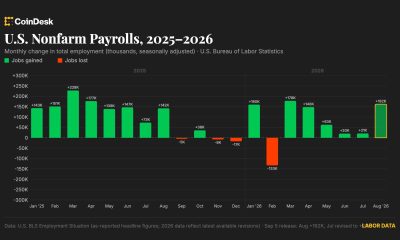
According to CME Group’s FedWatch Tool, the consensus currently favors a 0.25% rate hike, with odds at 58.4%. This hawkish tilt intensified after last week’s nonfarm payrolls report, which came in “far stronger than expected” and included upward revisions to earlier figures. The U.S. economy added 162,000 jobs in August versus a prior estimate of 56,000.
A stronger labor market generally reduces pressure on the Fed to loosen policy—especially when core inflation remains above the Fed’s 2% objective. While some officials have discussed support for pausing rate hikes, the market is still focused on how PPI and CPI could reshape expectations in the days before the meeting.
Mosaic Asset Company suggested that the jobs report could still carry an equity-friendly angle through corporate earnings, but also warned that seasonality may complicate matters. It noted that September is traditionally equities’ weakest month and that volatility may rise into the Q4 period, with U.S. midterm elections adding another potential catalyst for turbulence.
Japan’s intervention record keeps yen and liquidity in focus
Beyond U.S. inflation, traders are also tracking Japan’s yen dynamics. Japan’s Ministry of Finance reported that foreign reserves fell by $79.57 billion from the end of July amid record currency intervention. The yen strengthened to around 155 per dollar and held that level during Monday’s Asia session.
Bloomberg previously reported that Japan may have relied heavily on selling U.S. Treasuries to fund these operations. That approach could have second-order effects for U.S. bond markets and for how long Japan can sustain intervention without drawing Washington’s response.
The concern extends to the Bank of Japan’s (BOJ) position. If yen weakness returns and further intervention becomes necessary, critics argue it could become harder for both the ministry and the BOJ to act within their constraints.
Polymarket data currently prices in a BOJ September rate increase, reflecting the idea that policy makers may need to tighten to defend the currency. With benchmark rates already at the highest level since 1995 at 1.0%, Polymarket is showing 98% odds of a 0.25% hike.
For crypto, these FX and rates headlines can matter because BTC and broader risk markets are sensitive to changes in USD/JPY, particularly where yen-carry trades and global liquidity conditions are concerned.
Derivatives surge without clear spot confirmation
Even as BTC reclaimed a key weekly milestone, analysts argue the underlying demand signal is still incomplete. CryptoQuant pointed out that the recent upside volatility was paired with sharp increases in derivatives open interest, suggesting that derivatives traders drove a large share of the move rather than spot buyers.
In one example, CryptoQuant reported that aggregate open interest rose from $25.2 billion to $27.53 billion in a single session—an increase of about $2.3 billion (+9.24%). On an hourly basis around 09:00 UTC, price action and open interest began expanding almost simultaneously, which CryptoQuant interpreted as evidence of new position-building.
At the same time, CryptoQuant said realized cap did not keep pace with the open interest jump. In its view, the rally had some spot/on-chain participation, but the dominant driver was futures leverage—creating a market structure that can unwind quickly if funding conditions change.
This imbalance shows up in how spot demand is tracking. CryptoQuant cautioned that spot demand remains negative and that it has been diverging from futures demand on a 30-day rolling basis. The platform also highlighted that spot BTC outflows increased further even after the rebound—its interpretation being that the rally did not yet translate into persistent spot accumulation.
Previous Cointelegraph coverage also flagged similar concerns, describing how apparent demand had turned negative as BTC’s dormant supply growth outpaced new issuance. For traders, the practical implication is that a sustainable breakout typically requires stronger spot absorption—conditions that remain uncertain as long as derivatives lead.
Liquidity walls around $80,000 and a bullish-but-testable trend signal
BTC’s weekly close above $80,000 marks a notable technical shift, but the $80,000 zone is not yet acting as reliable support. Sell-side liquidity continues to cluster just above the level, keeping price pinned within a narrower trading range.
CoinGlass data shows liquidity concentrated around $80,560, forming what the analysis describes as a thick wall of resistance. This helps explain why BTC has been unable to hold above $80,000 consistently despite the bullish weekly close.
Looking higher, on-chain-focused commentary from Glassnode previously identified additional dense liquidity bands—especially a band between $83,000 and $86,000. In its newsletter, Glassnode wrote that an upward impulse consumed some short orders but stopped short of the densest cluster of short liquidation “fuel” in that upper zone. Below spot, it said the move left intact a separate long liquidation band between $60,000 and $63,000, framing the current consolidation as a market trapped between boundaries.
Chart-watchers are also watching for a potential resolution direction. Jesse Olson, developer of the Markets Sniper trading suite, suggested BTC/USD could be repeating a bullish chart fractal from August 2023, with $76,000 described as a potential local reversal point.
Supertrend flips green: why the weekly indicator stands out
One of the clearest trend signals cited in the market commentary is BTC’s weekly supertrend indicator. Sunday’s weekly close flipped the indicator to green for the first time since November 2025, producing a “buy” signal.
The supertrend method uses average true range (ATR) and a multiplier to calculate a trendline, then issues a buy or sell signal based on how price interacts with that level. Weekly signals are closely watched by Bitcoin traders because, as the analysis notes, a weekly close above the supertrend line has not occurred during a bear market. The last time supertrend switched from red to green was in mid-January 2023, when BTC’s bear-market bottom at $15,600 was already about two months behind it.
That historical context is part of why some traders view this as more than a short-term signal. It also aligns with other indicators analysts cited recently, including BTC’s earlier weekly reclaim of its 50-week exponential moving average—an event described as historically important for long-term trend reversals after a prolonged downtrend.
What to watch next is whether the market’s key catalysts—U.S. CPI/PPI ahead of Sept. 16, and ongoing yen-liquidity developments tied to Japan’s intervention path—translate into stronger spot participation. If derivatives remain the primary driver while spot demand stays weak, the $80,000 breakout signal may stay vulnerable despite bullish trend indicators.

Crypto World
The cryptocurrency bull market is back, UE Crypto performs strongly; BTC holders invest in UE Crypto cloud mining to earn $2,700 a day

Disclosure: This content is provided by a third party. Neither crypto.news nor the author of this article endorses any product mentioned on this page. Users should conduct their own research before taking any action related to the company.
As Bitcoin prices continue to fluctuate, investors are increasingly concerned about short-term market risks, and more and more BTC holders are beginning to explore cloud mining and other digital asset methods to generate daily income of up to $2,700.
Summary
- UE Crypto offers cloud mining contracts for BTC, LTC, and other major cryptocurrencies.
- The platform advertises daily returns of up to $2,700 without users operating mining hardware.
- UE Crypto claims to use renewable energy, encrypted infrastructure, insurance, and annual security audits.
- Bitcoin’s rebound above $80,000 provides the market backdrop for the company’s cloud mining services.
Unlike highly volatile futures trading and approaches that rely solely on asset price appreciation, the UE Crypto cloud mining platform provides a more convenient and intuitive way to participate in digital assets. Users do not need to purchase expensive mining hardware or handle complex equipment deployment, technical maintenance, or daily operations themselves. They only need to participate in digital asset mining according to their selected mining contract and receive corresponding potential returns in accordance with the terms of the contract.
As of Sep. 7, 2026, Bitcoin has recently staged a strong rebound, moving back above the $80,000 level and briefly breaking through $81,000. The rise was mainly driven by continued inflows into spot Bitcoin ETFs, recovering institutional demand, and improving market sentiment.
The funding picture has also remained strong. U.S. spot Bitcoin ETFs recorded approximately $987 million in net inflows for the week ending Sep. 4, maintaining net inflows for three consecutive weeks and indicating that institutional investors’ demand for Bitcoin allocation is continuing to recover.
Entering September, market attention will continue to focus on ETF fund flows, Federal Reserve policy expectations, macroeconomic data, and overall market liquidity. If continued ETF inflows push BTC through key resistance levels, Bitcoin’s upside potential could expand further, although short-term performance may still be affected by the macroeconomic environment and market volatility.
As the BTC bull market approaches, UE Crypto has entered an unprecedented opportunity
The recent recovery in the cryptocurrency market has attracted widespread attention, with many investors interpreting this phenomenon as a response to the current economic uncertainty. However, for professionals in the blockchain industry, this round of market volatility has created unique opportunities.
Mr. Ian Raymond HUGHES, Chairman and CEO of UE Crypto, stated: “After U.S. President Trump proposed the visionary concept of a strategic cryptocurrency reserve, our company decisively made the strategic decision to hold all cryptocurrencies. This reflects our firm belief in cryptocurrencies as core assets in the digital economy era.”
“We firmly believe that cryptocurrencies such as Bitcoin will become key assets in the strategic reserve systems of countries around the world. With the rapid development of the digital economy, cryptocurrencies not only represent the future direction of the financial system, but will also become an important engine driving global economic transformation.”
To learn more about our strategic positioning, please visit UE Crypto.

As a leading cloud mining service provider in the industry, UE Crypto has observed that periodic market corrections often create strategic positioning opportunities for long-term investors. The company recommends that investors consider adopting a “buy-the-dip” strategy, using professional mining services to continuously accumulate digital assets during relatively weak market conditions, thereby positioning themselves in advance for a potential rebound in value. This long-term value investment strategy has been proven in previous market cycles to effectively enhance the potential for investment returns.
Advantages of UE Crypto
✅ No investment in mining machines required | Simply sign a contract
✅ Supports deposits and withdrawals in multiple major cryptocurrencies, including XRP, BTC, ETH, USDT, BNB, ADA, USDC, DOGE, LTC, and SOL
✅ No hidden fees | 100% transparent income
✅ Advanced eco-friendly cloud mining technology
UE Crypto: built on security; in terms of security and compliance, the platform states that it has implemented the following protective measures:
- Annual financial and security audits conducted by PwC;
- Digital asset custody insurance provided by Lloyd’s;
- Enterprise-level security solutions from Cloudflare and McAfee®;
- Bank-grade data encryption and professional security infrastructure provide multiple layers of protection for users’ assets and accounts.
In the field of digital currency mining, security and trust are the issues users care about most. UE Crypto has always placed the security of user assets and data first. Through multi-layer encryption technology, a real-name risk control system, and compliant operations, the platform aims to build a transparent and reliable investment environment. We understand that only by providing every user with peace of mind can long-term mutual benefits and win-win outcomes be achieved.
At the same time, UE Crypto actively promotes the concept of green mining. All partner mining farms are powered by renewable energy sources such as wind and photovoltaic power, reducing carbon emissions at the source. We firmly believe that the growth of computing power should not come at the expense of the environment. Through a clean-energy infrastructure, we can not only ensure mining efficiency but also contribute to global carbon neutrality goals, making every unit of income generated for investors more sustainable in value.
Popular UE crypto contracts:
BTC (Supercomputing System Contract): Investment amount: $1,000; investment period: 10 days; daily income: $13.10; principal returned at maturity: $1,000 + $131 in income
LTC (Algorithm-Driven System Contract): Investment amount: $5,000; investment period: 25 days; daily income: $72; principal returned at maturity: $5,000 + $1,800 in income
BTC (Quantitative Intelligent System Contract): Investment amount: $10,000; investment period: 34 days; daily income: $158; principal returned at maturity: $10,000 + $5,372 in income
To view more stable-income contracts, please visit the official website: https://uecrypto.com/
About UE Crypto
UE Crypto is a professional cloud mining service provider committed to making cryptocurrency mining more convenient and efficient through innovative remote mining solutions. We have established a deep partnership with Bitmain, a leading Bitcoin mining hardware manufacturer, and combine advanced cloud computing technology with powerful mining infrastructure to provide users with stable and reliable mining services.
Whether you are interested in Bitcoin, Dogecoin, XRP, or other popular cryptocurrencies, our platform provides a variety of cloud mining solutions to meet the investment needs of different users. With UE Crypto, you can easily participate in cryptocurrency mining without worrying about hardware maintenance or high electricity costs.
For more information, please visit the official website and download the application.
Disclosure: This content is provided by a third party. Neither crypto.news nor the author of this article endorses any product mentioned on this page. Users should conduct their own research before taking any action related to the company.
Hunter Biden is turning his laptop into a crypto token called LAPTOP, set to launch Wednesday on Base, a blockchain built by Coinbase.
The Wall Street Journal reported the plan, which takes aim at President Donald Trump. Nearly a third of the coins go to the founders, Hunter Biden among them.
Follow us on X to get the latest news as it happens
Why the Coin Is Called LAPTOP
The laptop is real, and a court has said so. Hunter Biden left it at a repair shop in Wilmington, Delaware, in 2018. Its contents spread online before the 2020 election and fed years of attacks on his overseas business deals.
In 2024, federal prosecutors used the same machine against him. An FBI agent testified that the serial number matched Apple’s records. His lawyers argued the data was altered. The judge admitted it anyway.
The coin arrives late, seeing as Joe Biden left office in January 2025, and the Trump family got there first. BeInCrypto reported that Barron Trump’s crypto fortune reached about $150 million by late 2025.
Biden has been warming to crypto in public. In recent posts on X he called decentralized digital currencies the inevitable future. He also weighed into the fight between World Liberty Financial, the Trump family venture, and the entrepreneur Justin Sun.
The launch lands inside a weeks-long media run. Biden, 56, has been on podcasts, news shows and his own Substack, at times beside right-wing hosts.
Who Actually Gets the Coins
The 20% aimed at TRUMP losers is not only for them. It goes out in two batches, the Journal reported:
- Wallets of people who lost money on TRUMP get a share.
- Subscribers to Biden’s Substack and a mailing list curated by his friend Andrew Callaghan, a video journalist.
That makes the airdrop a payout to his own audience as much as a rescue for Trump’s buyers.
The final 20% is broader than charity too. It also covers liquidity for exchange partners and market makers. Some goes to the foundation behind the token, which pays its legal and accounting bills.
The 30% Burn Is a Long Shot
Supply is 1 billion tokens. Founders hold 30%, locked for six months and fully vested in two years. Two blocks of 20% cover the airdrops and the token’s own costs.
The burn is the pitch, as up to 30% of supply can be destroyed, but only if 30 set events land the right way. Three of the named ones are hard.
- One is a Democratic win in 2028.
- Another is a new record for Bitcoin (BTC), which trades near $78,780 against a peak of $126,080 set last October. That is a 60% climb from here.
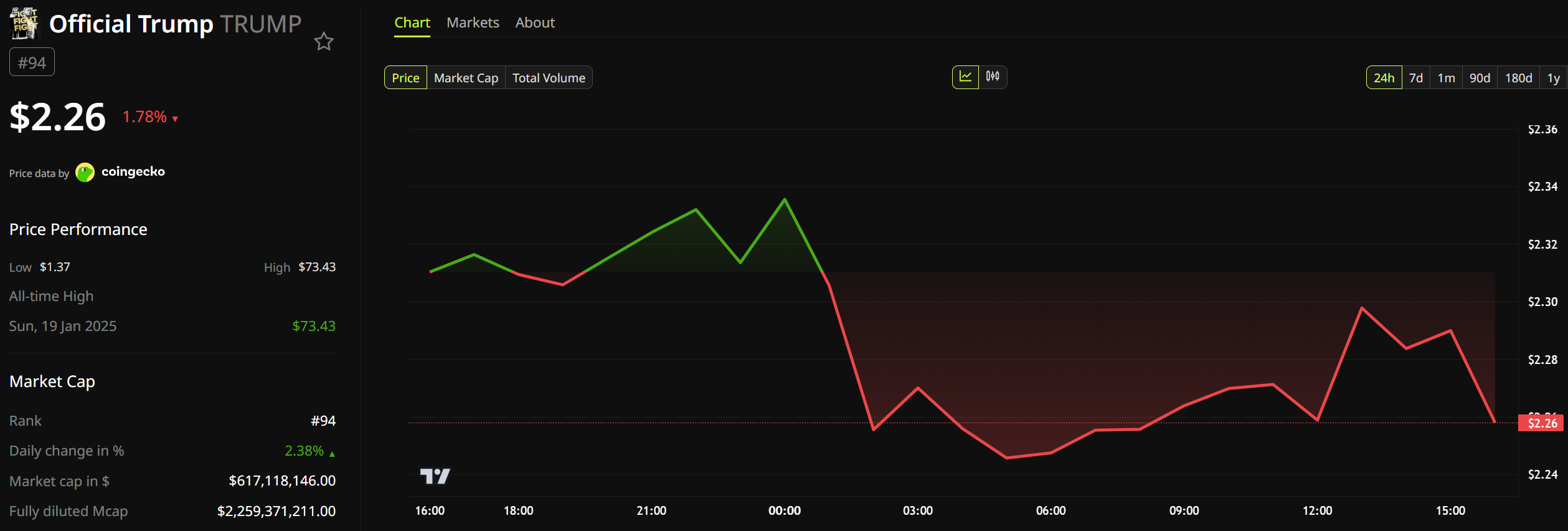
- The third is steeper than it sounds. LAPTOP has to beat TRUMP on fully diluted value, and TRUMP’s sits near $2.26 billion.

LAPTOP would need roughly 3.7 times TRUMP’s current market value, or about $2.26 a coin.
TRUMP is the warning, seeing as it trades near $2.26, about 97% below its January 2025 peak of $73.43. The Journal put its top market value at close to $15 billion, against roughly $617 million now.
BeInCrypto found every Trump-endorsed token now trades roughly 60% below its pre-endorsement price.
The Rule That Would Not Cover Him
Trump’s crypto income is on the record. His latest financial disclosures showed $1.4 billion from his meme coin and crypto deals last year, the Journal reported.
Congress has tried to draw a line. The Clarity Act would set one rulebook for digital assets. It has stalled partly over wording that would stop officials and their families from profiting from crypto.
That wording would not reach Hunter Biden. His father left office in January 2025.
No contract address is public yet, and scammers have run this play before. In February 2025, a hacked World Liberty Financial account pushed a fake BARRON meme coin.
It kept trading even after the scam was exposed. Until Hunter Biden or his team posts an address, treat every LAPTOP you see as fake.
The post Hunter Biden's Laptop Becomes a Meme Coin Wednesday. TRUMP Is Down 97% appeared first on BeInCrypto.
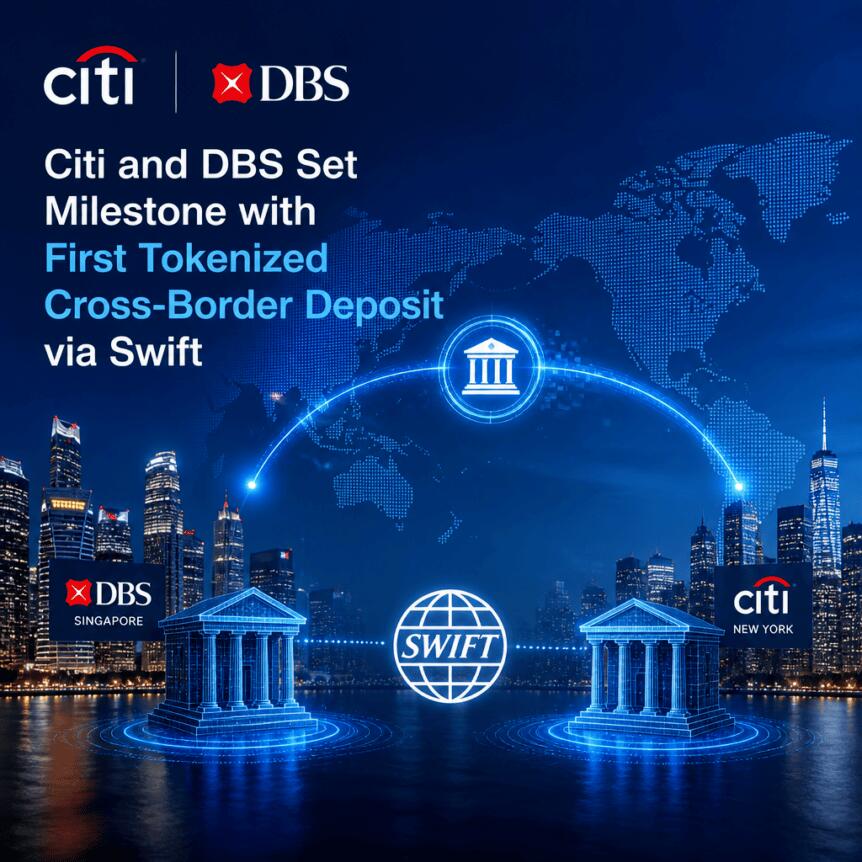
DBS and Citi have completed the first tokenized cross-border payment between Singapore and the United States over a blockchain-based settlement rail, marking a concrete step in banks’ shift from traditional transfer timelines toward near-instant processing.
The transaction was executed on Saturday using tokenized deposits via the Swift Digital Ledger, according to DBS, which said the deposit was finalized in minutes—an improvement over the “as long as two business days” timeline typical of conventional cross-border transfers. DBS made the announcement on Monday.
Key takeaways
- DBS and Citi completed a Singapore-to-US cross-border payment using tokenized deposits on the Swift Digital Ledger.
- DBS said the deposit was settled in minutes, contrasting with traditional cross-border transfers that can take up to two business days.
- The experiment highlights how major banks are testing blockchain rails while still operating within banking deposit structures.
- Swift’s blockchain ledger work is moving from pilots toward broader operational use, following earlier live demonstrations.
Tokenized deposits on Swift’s digital ledger go live
DBS described the weekend transfer as a landmark milestone for cross-border payments, not only because it used the Swift Digital Ledger, but also because it relied on tokenized deposits rather than switching to a fully crypto-native model.
Under this approach, banks can represent deposit value as tokens while keeping the transaction rooted in regulated banking balance sheets. DBS framed the speed of finalization as a key differentiator: settling within minutes rather than waiting through banking-day cutoffs and correspondent processes that often slow down international payments.
A shift from pilots to operational momentum
This development sits within a longer sequence of Swift blockchain efforts. In August, Standard Chartered and HSBC became the first banks to complete a live tokenized cross-border transaction using Swift’s blockchain ledger—showing that the concept could work outside a closed test environment.
Earlier, Swift said its blockchain-based ledger was ready for initial use and that it was preparing to pilot tokenized cross-border payments with 17 major banks. The pilot group included Citi, DBS, HSBC, BNP Paribas, UBS, ANZ, and Standard Chartered, as noted in reporting on Swift’s preparations.
With DBS and Citi now completing the Singapore-US leg using the ledger, the focus appears to be moving from feasibility and interbank coordination toward repeatable processing that can be integrated into existing banking workflows.
Why keeping deposits “inside” banking matters
While blockchain rails are often discussed in the context of digital assets, the direction implied by DBS’s framing is different: tokenization here is being used to streamline settlement while preserving familiar deposit mechanics.
That matters for multiple reasons. First, it can reduce friction for counterparties that are more comfortable with the compliance and operational controls already embedded in deposit-based systems. Second, it provides a path to faster settlement without necessarily requiring participants to hold or transfer tokens as their primary payment method for everyday banking.
In other words, these transactions suggest a hybrid model: blockchain for settlement efficiency, traditional deposits for value custody and regulated banking integration.
Plans for broader tokenized deposit networks
The weekend result also fits into plans for future deposit token infrastructure in the United States. In June, The Wall Street Journal reported that Citi and other large US banks plan to launch a separate tokenized deposit network in the first half of 2027, operated by The Clearing House. The WSJ report cites David Watson, CEO of the bank-owned payments operator, in connection with the initiative.
Separately, DBS and JPMorgan have also outlined longer-term work. In November 2025, Cointelegraph reported that the two banks revealed plans to develop a blockchain-based tokenization framework aimed at enabling onchain transfers between their respective deposit token ecosystems and potentially setting an industry standard for cross-bank payments.
Taken together, these efforts point toward an emerging competitive and collaborative landscape: banks testing tokenized rails in production while simultaneously planning next-generation network designs that could expand interoperability beyond individual bilateral relationships.
Looking ahead, market participants will likely watch whether speed improvements translate into consistent, scalable settlement performance across more corridors, and whether Swift-led ledger usage broadens beyond early pairs like DBS-Citi—especially as parallel tokenized deposit network plans move from announcements toward delivery.
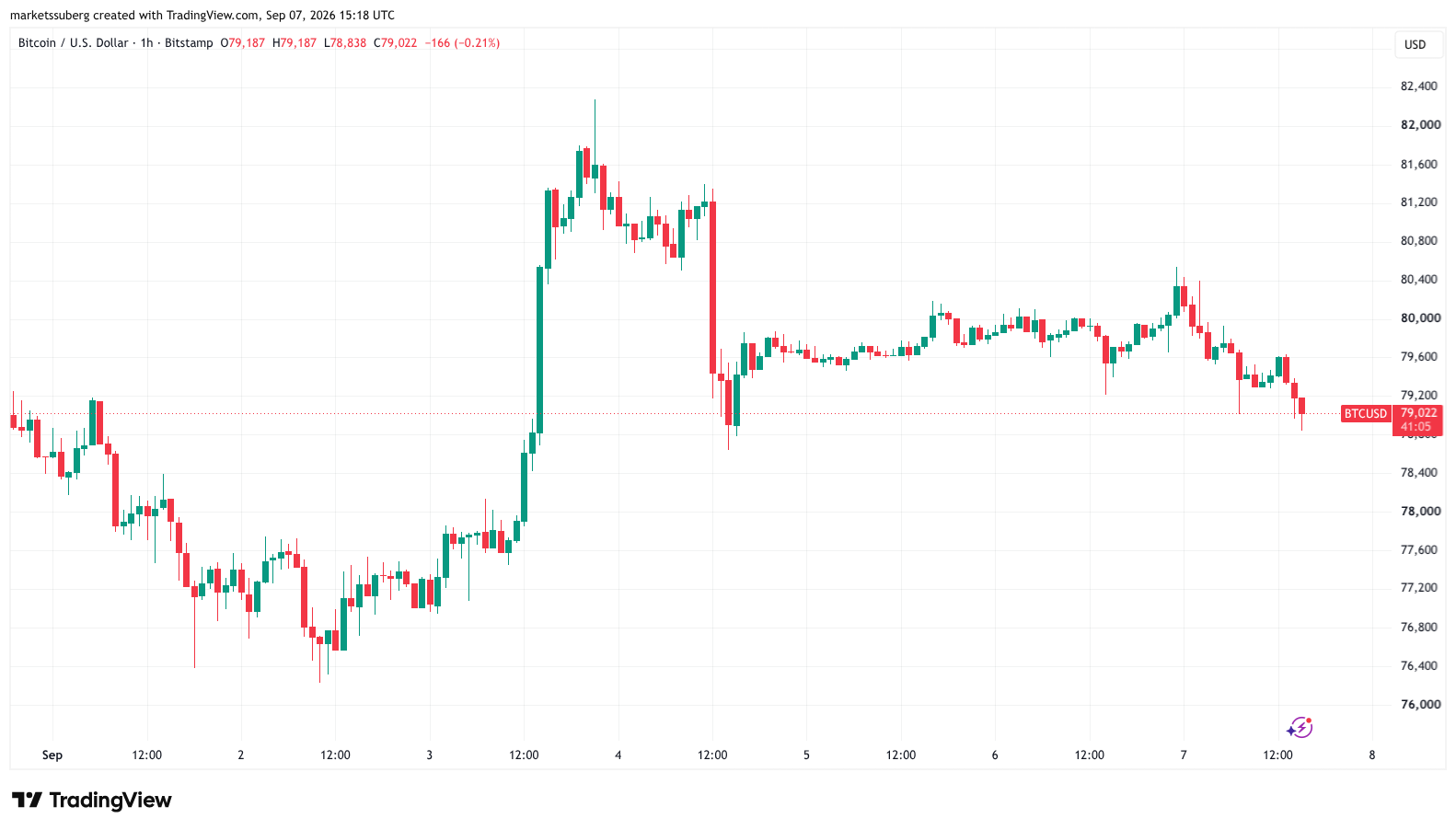
Bitcoin (BTC) drifted lower on Monday as a low-liquidity environment erased the weekend’s gains above $80,000.
Key points:
- Bitcoin dips 2% below $80,000 after its highest weekly close since the start of May.
- Traders are in wait-and-see mode ahead of the week’s key volatility catalyst in the form of US inflation data.
- Analysis praises Bitcoin’s “resilience” as a narrow range holds since mid-August.
Bitcoin needs US inflation catalyst: Analysis
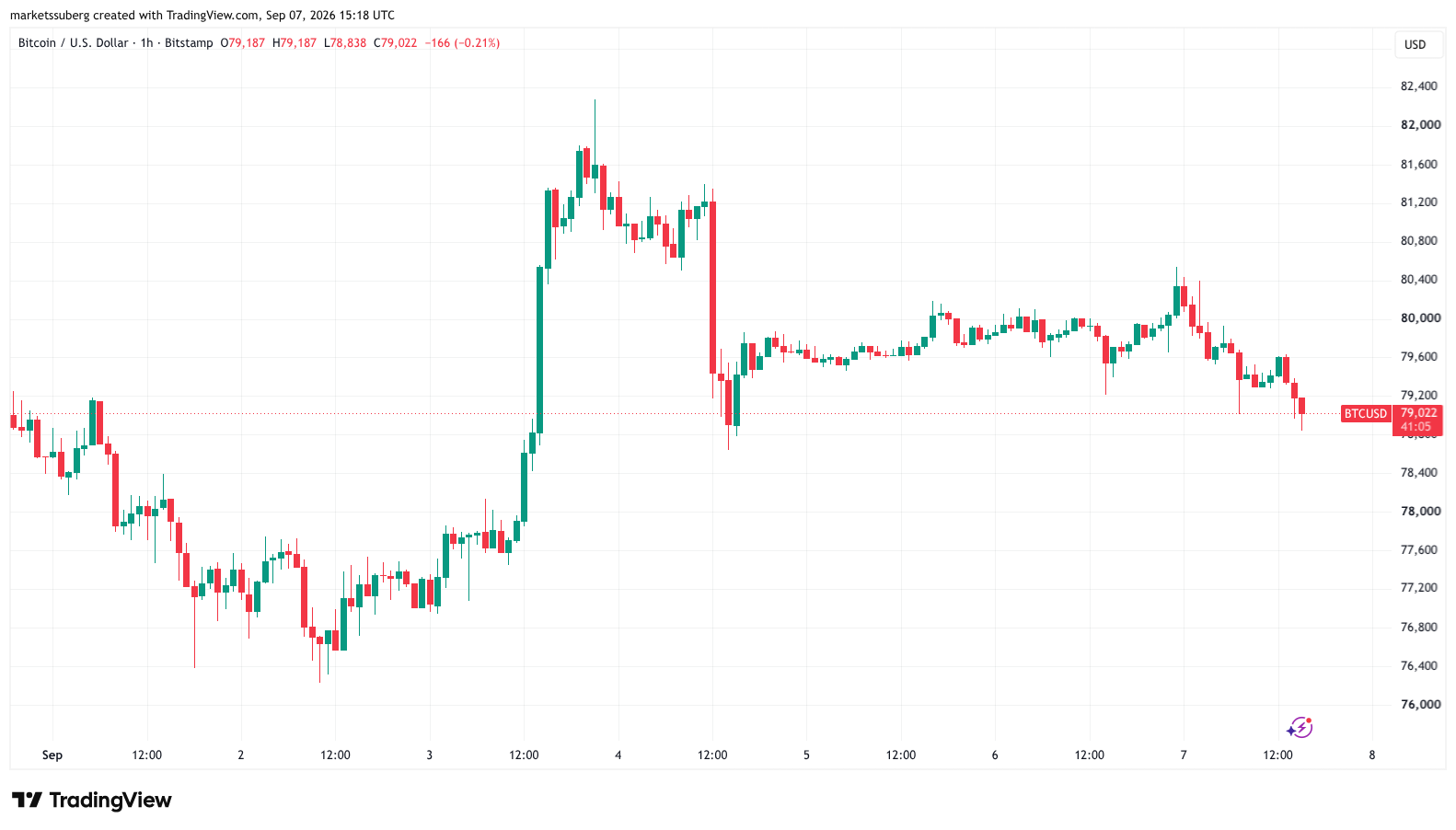
Data from TradingView showed BTC/USD down nearly 2% on the day at the time of writing. This price action comes after its first weekly close above $80,000 since early May.
BTC/USD one-hour chart. Source: Cointelegraph/TradingView
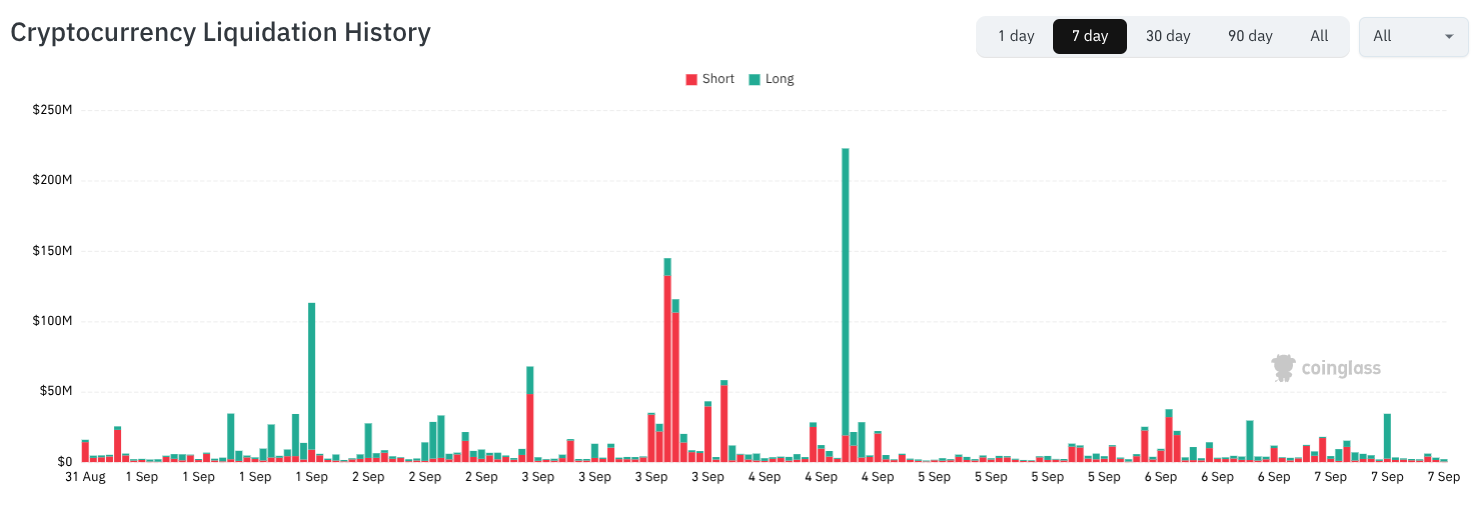
With US markets closed for the Labor Day holiday, thinner order books increased the chances of sudden moves to target liquidity both above and below the spot price. Data from CoinGlass showed liquidations evenly split between long and short positions over the past 24 hours, with the cross-crypto total at $178 million.
Crypto liquidation history (screenshot). Source: CoinGlass
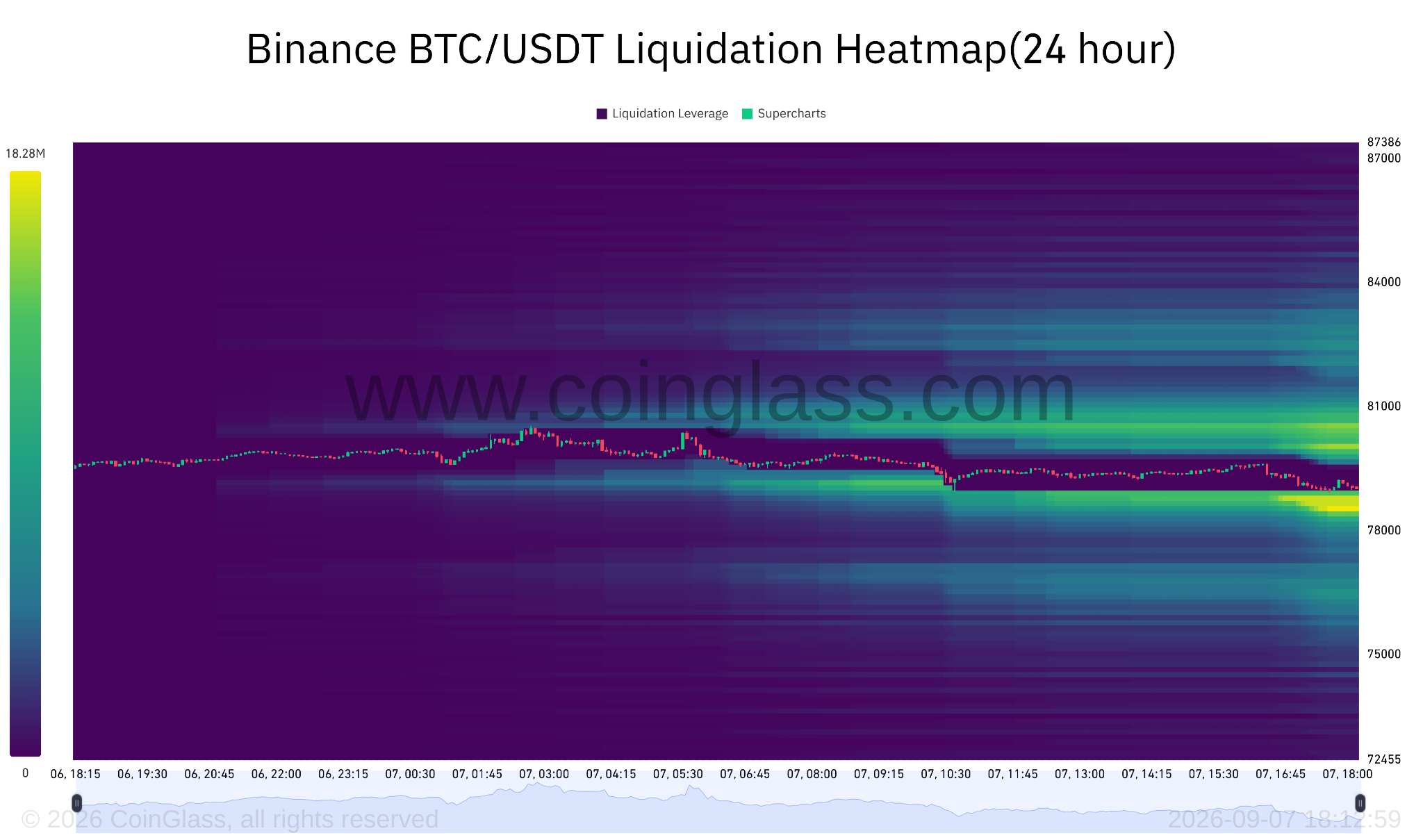
Liquidity thickened over the course of Monday, with concentrations at $80,500 and $78,800 providing nearby short-term targets.
Crypto liquidation heatmap. Source: CoinGlass
In comments, trading company QCP Capital flagged declining overall volatility, suggesting that traders required external catalysts. These are due in the form of US inflation data on Thursday and Friday, which is likely to impact market expectations for interest-rate hikes by the Federal Reserve.
“Near-term volatility compression, despite approaching catalysts, reflects a market waiting for clarity rather than pricing in strong directional views,” QCP wrote in its latest analysis. It added that the “market is positioned for a directional break once the inflation data arrives.”
BTC price “resilience” draws attention
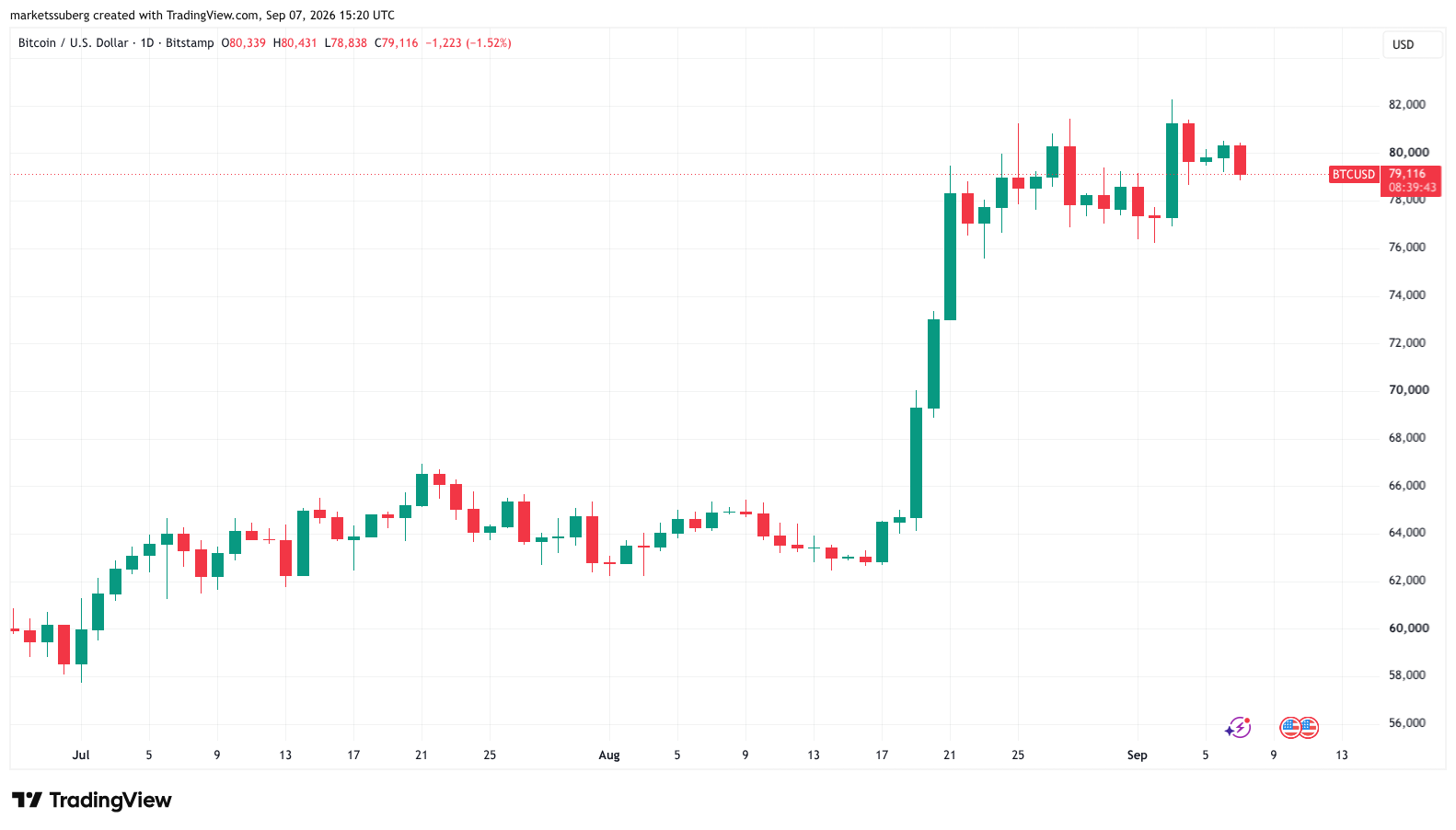
Despite moving in a confined range since Aug. 21, BTC/USD offered bullish signals and held the majority of its 25% gains from earlier last month.
Related: Here’s what happened in crypto today
BTC/USD one-day chart. Source: Cointelegraph/TradingView
In comments sent to Cointelegraph, Ryan Lee, chief analyst at Bitget, noted that Bitcoin had digested last week’s US macro volatility trigger, which was a surprise uptick in nonfarm payrolls numbers.
“Bitcoin’s resilience is notable because stronger employment would normally put upward pressure on yields and the dollar, creating a tougher environment for risk assets,” he said.
“The market’s ability to absorb that repricing suggests investors are not treating a potential Fed hike as the only factor driving Bitcoin at current levels.”
As Cointelegraph reported, the US spot Bitcoin exchange-traded funds (ETFs) also remain on the radar following Thursday’s $730 million net inflows. This was the cohort’s highest single-day tally since January.
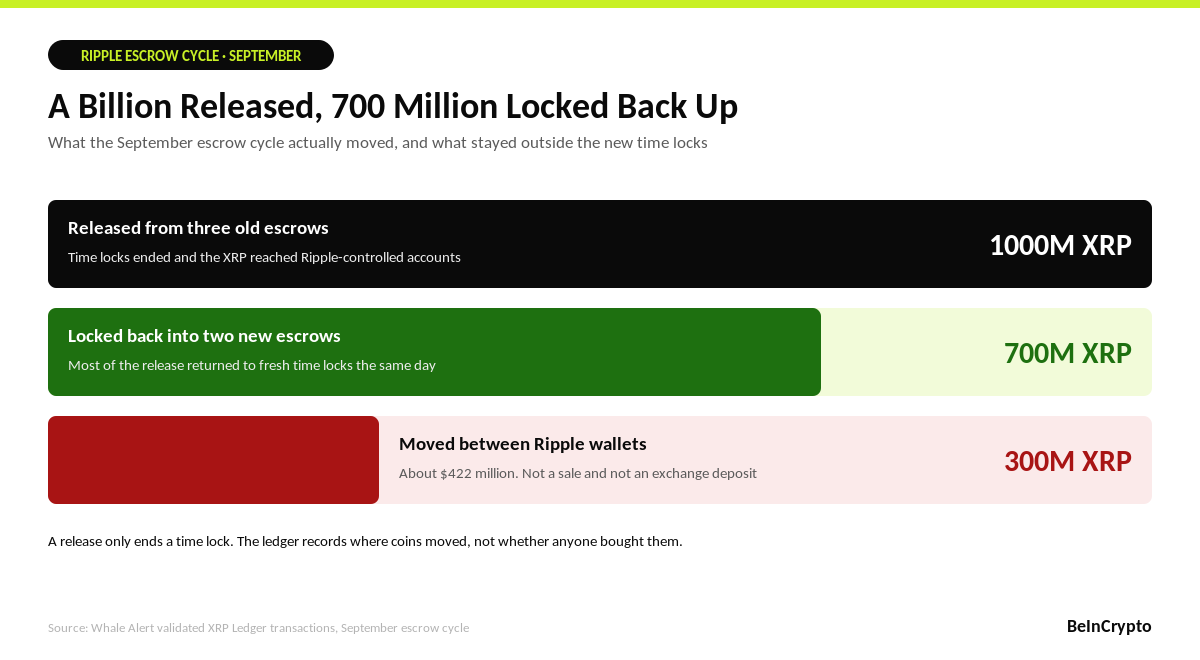
Ripple released 1 billion XRP from escrow at the start of September, and by the end of the day, only 300 million sat outside new time locks.
XRP price still holds near $1.40. The headline sounded bearish. The ledger says less happened than it looked.
Ripple Released a Billion, Then Re-Locked 700 Million
Three old escrows ended, releasing 500 million, 400 million, and 100 million XRP. Hours later, two new escrows took 500 million and 200 million back.

That leaves 300 million XRP, worth about $422 million, outside those locks. It moved between Ripple-labelled wallets, so the monthly release is not a sale or an exchange deposit. But it matters anyway.
It still matters because the market could not take it. Buy orders sitting close to the current price add up to $108.2 million, so those 300 million coins are worth almost four times what buyers are ready to absorb.

The market held only because nobody tested it.
Older Coins Stopped Moving. So Did the Volume.
So the coins are still there. The question is who is willing to move them, and the answer is almost nobody.
XRP’s 1-2 year holding band rose from 17.3% of supply in late August to about 18.2% now. Therefore, the oldest supply is refusing to move, and despite the pullback since August 22, those holders have not sold into it.

That stillness cuts both ways. Daily volume (all traders) has fallen every session since the August 22 burst, down to about 27.6 million XRP. So the interest seems very ‘long-term-holder-specific’.

Meanwhile, the chart is close to a golden cross, the point where the 20-day exponential moving average, an average of closing prices that leans on the most recent days, climbs above the slower 200-day line. The fast line sits at $1.3516 against $1.3540, close enough to cross on any decent day. Crossovers built on falling volume are the ones that fail.
XRP Led the Rally, Then Stopped Leading
Fading volume shows up as lost leadership. Over 21 sessions, XRP gained 42.4% against 27.0% for Bitcoin and 33.8% for Ethereum.

Over the last 14 days, it was the weakest of 20 large coins against that pair, trailing by 5.7%.

Futures repeat the pattern. Count the accounts and big traders look confident, 2.86 betting on a rise for every one betting on a fall, against 2.46 for ordinary traders.

Weigh those bets by money, and it flips. By size, the ratio drops to 2.09, below the crowd’s count. Most large accounts sit on the bullish side without putting much behind it, and their shorts are the bigger trades.

XRP is one of four majors where that gap runs negative.
XRP Price Levels That Decide It
All of it comes down to one line. XRP trades at $1.4079, above both averages, which keeps the recovery alive. Confirmation sits at $1.4785, about 5% up, the level that has capped every rebound since late August.
Clearing it opens $1.5832, then the $1.6678 to $1.7038 area around the August peak, a 21% move from here. A daily close below $1.3092 breaks the setup.

Analyst’s View: Nobody is selling XRP, and nobody is buying it either. A price only climbs when someone shows up willing to pay more, and right now that person is missing.
The post XRP Sits at $1.40: Nobody Wants to Sell, Nobody Wants to Buy appeared first on BeInCrypto.


LAPTOP debuts Wednesday on Base, with nearly a third of the supply set to be burned if a slate of political and market outcomes — including a Democratic win in 2028 — comes good.

Twenty traders gathered in Bali in August for the final of Alpha Arena S03, competing live in a simulated trading environment for a share of $100,000.
The competition, backed by MEXC Ventures and held during CoinFest Asia, was won by Japan’s Arumando, followed by Murasaki Trades from the Philippines and Coin6097 from South Korea.
For MEXC CEO Vugar Usi, the competition proved that a trader can enter the market with a small amount of money, catch the right trade, and become wealthy almost overnight – an idea that has long been fundamental to crypto’s appeal.

Exposing Trading for What It Is
During Alpha Arena, Usi pointed to the difference between watching traders during an entire session and following them on social media, where successful trades can receive far more attention than the losses, uncertainty, and emotional decisions surrounding them.
At the Bali competition, traders could be observed throughout the process. Organizers even measured participants’ heart rates, allowing viewers to see how they reacted as markets moved and whether they followed their original strategy or made decisions under pressure.
“You see what kind of decisions they make. Are they panicking? Are they panic buying or panic selling? Are they good at following their instinct, or are they more practical?” Usi said.
That is part of why he believes trading has an unusually low barrier to entry compared with many professional fields. Someone can study markets independently, develop a methodology, and potentially compete against traders with formal financial training and access to far more expensive technology.
For exchanges trying to attract the next generation of users, this also changes the job. Aside from access to markets, traders also want information, analytical tools, and products that help them interpret what is happening once they arrive.
On Zero Trading Fees
Competition has become particularly fierce as major exchanges fight over trading costs.
MEXC has made zero-fee trading a big part of its strategy. Its current offering includes zero maker and taker fees across spot markets, alongside selected futures products, although eligibility and fee arrangements vary between products and campaigns. The exchange said its zero-fee initiatives saved 3.44 million users approximately 1.1 billion USDT during 2025.
Usi argues that reducing price to zero forces exchanges to compete elsewhere.
“When price is zero, it means the user is not choosing you because of just price,” he said. “That is where the competition actually starts.”
Once an exchange cannot meaningfully undercut another platform on fees, he argues, product quality, speed, available markets, trading tools, and other user benefits become more important.
Of course, the company now offers exposure to equities through several formats, including more than 300 stock and index futures, over 200 tokenized stocks, and more than 7,000 global stocks and ETFs through RealStocks, according to figures released by MEXC.
It forms part of Usi’s longer-term plan to take MEXC beyond the conventional definition of a crypto exchange.
AI Could Give Retail Traders Institutional-Level Tools
Artificial intelligence was a big part of the conversation with Usi.
His background in traditional finance influences how he thinks about trading technology. Professional firms have historically paid large sums for products such as Bloomberg Terminal because access to data, communication tools, and analytics can materially improve how traders process information.
Naturally, retail traders are put at a disadvantage.
Usi believes AI offers an opportunity to reduce that divide by taking capabilities that once required specialist software and presenting them to individual traders at a much lower cost.
In his own trading, he said he uses an AI assistant to study order books and identify where capital is concentrated, something that would be difficult for a person to continuously calculate across large amounts of market data.
“The opportunity with AI is not just to automate things,” he said, describing its potential to bring institutional-grade trading tools to retail users.
Demand appears to be coming from users themselves. Usi said a recent campaign inviting customer feedback produced more than 2,500 pages of responses, with AI emerging as the most common subject.
The important question will be how far exchanges take that assistance. Tools that summarize data, monitor markets, and surface relevant information can support traders without removing the need for judgment. Alpha Arena itself demonstrated how differently people can interpret the same market even when they have access to similar information.

Competition for Trust
Better tools and cheaper trading have limited value if users are uncomfortable holding assets on an exchange, particularly after a succession of failures and security incidents across the crypto industry.
Usi said transparency has therefore become one of his priorities since taking over as CEO of MEXC in April 2026. The appointment was something of a homecoming for BeInCrypto, where he previously served as Chief Marketing Officer before later joining Bitget and eventually MEXC.
“I don’t want the user to assume trust. I want the user to be comfortable,” he said.
MEXC publishes monthly Proof of Reserves reports audited by blockchain security company Hacken. Its August disclosure reported reserve ratios of 115% for USDT, 114% for USDC, and above 100% for other reported major assets.
The exchange has also been building its Guardian Fund. MEXC announced in May that it plans to expand the fund from $100 million toward $500 million over two years and acquired 1,000 BTC as part of its reserve arrangements.
Separately, its futures insurance fund stood at approximately 751 million USDT in its August disclosure.
Traders Want Different Things, Depending on the Market
The Bali event also gave MEXC a close look at traders across Asia-Pacific, where Usi sees different economic motivations from those common in wealthier markets.
Where disposable income is lower, a conventional investment returning several percentage points per year may make relatively little difference to someone’s finances. Some traders therefore accept considerably greater risk in search of returns large enough to have an immediate impact.
In wealthier countries, people who have already accumulated substantial assets may care more about preserving that wealth and earning steadier returns.
“In developing markets, people are more prone to make much riskier, much more leveraged trades,” Usi said, contrasting wealth generation with the greater emphasis on wealth preservation he sees in developed economies.
Usi previously worked on institutional adoption, but said one reason he joined MEXC was the company’s heavier emphasis on individual users.
“Retail comes first,” he said, noting that institutional participation is becoming a major source of crypto trading activity and exchanges are expanding products aimed at professional capital.
The Exchange of 2031?
Earlier in his career, Usi expected exchanges to gradually resemble banks. Now, he argues that the opposite has happened as banking apps have added investing, crypto, commodities, payments, and other financial products.
“In the next five years … we will be seeing these financial super apps, super platforms, gateways where we can meet all our financial needs in a single place,” he said.
MEXC is already pursuing parts of that model through crypto trading, stock products, yield products, AI-assisted trading tools, and its planned card offering.
Whether users ultimately want all of those services from one company remains an open question. What is already becoming apparent, however, is that cryptocurrency exchanges are competing across far more than the number of tokens they list.
Alpha Arena saw how traders from different countries entered the same market with the same objective, yet used different strategies and reacted differently as circumstances changed.
The exchanges serving them face a similar contest. Once access becomes cheap and trading fees approach zero, differentiation has to come from somewhere else.
The post How Crypto Trading Is Changing With Zero Fees and AI appeared first on BeInCrypto.

The Bangko Sentral ng Pilipinas (BSP) has proposed a temporary pause on new registrations for payment-system operators while tightening how banks and other BSP-supervised institutions handle payment arrangements involving regulated virtual asset service providers (VASPs). The move, set out in a draft circular, is designed to give the regulator time to “holistically” review its approach to licensing and the taxonomy used for payment-system oversight.
Under the proposal, the BSP would suspend the acceptance and processing of applications from entities seeking to operate payment systems for 12 months. Applications already submitted before the suspension would still be assessed, but the BSP would not approve or deny them until the pause period ends—effectively freezing new licensing decisions in the segment while the framework is reviewed.
Key takeaways
- The BSP proposes a 12-month halt on accepting new payment-system operator (OPS) registration applications to complete a review of its licensing and taxonomy.
- Existing applications would continue to be evaluated, but BSP would delay approval or denial until the pause ends.
- Banks and BSP-supervised institutions that offer merchant acquisition services would have to route merchant relationships with regulated VASPs through direct arrangements with added risk controls.
- The stricter requirements would apply to VASPs licensed, registered, or authorized by the BSP, the Philippine Securities and Exchange Commission (SEC), or another relevant authority.
- The draft would take effect 15 days after publication if finalized, and BSP is currently collecting feedback.
OPS registration pause aims at revising the regulator’s framework
In the draft circular, the BSP says it would suspend acceptance and processing of OPS applications as part of a “holistic review” of its taxonomy and licensing framework for payment systems. The regulator’s intent is not to immediately deny new entrants, but to slow the flow of new licensing activity while it revises how payment operators are categorized and supervised.
Importantly, the suspension would not wipe out pending work. Applications submitted before the pause would be allowed to continue through evaluation, but BSP would withhold any approval or denial until the 12-month review period concludes. The proposal also states that entities would not be allowed to start activities that require OPS registration unless the BSP grants authorization outside the standard process.
Merchant acquisition rules tighten for regulated crypto-related payments
Alongside the OPS pause, the BSP’s draft includes specific constraints for merchant acquisition services—functions commonly tied to how merchants are onboarded and how card or payment processing is enabled.
According to the draft, BSP-supervised institutions offering merchant acquisition services would need to handle regulated VASPs through direct merchant arrangements. Those relationships would be subject to enhanced due diligence and monitoring, as well as transaction and settlement limits and other risk-based controls.
For market participants, the practical impact is straightforward: even if a VASP is properly regulated, payment rails managed by BSP-supervised intermediaries would still face stricter oversight. The draft does not describe the exact level of transaction or settlement limits, but it explicitly requires risk-based measures as part of the direct arrangement model.
Which businesses are in scope—and why VASPs are grouped with higher-risk categories
The BSP draft is explicit that the requirement would apply to VASPs that are licensed, registered, or authorized by the BSP, the SEC, or another relevant authority. It frames VASPs as a type of regulated entity that will fall under the same kind of heightened scrutiny typically used for other higher-risk sectors.
In the proposal, VASPs are listed alongside categories that include gambling businesses, gaming providers, adult-oriented businesses, and money service businesses. While the draft does not equate all these industries in terms of risk, the grouping suggests the BSP intends to treat crypto-related payment arrangements with a risk-control mindset rather than relying solely on “regulated” status.
That matters for businesses seeking to expand merchant processing services to crypto platforms: the BSP’s draft indicates that compliance architecture—including enhanced due diligence and active monitoring—will be central to approvals and ongoing operations, not an afterthought.
Timeline and next steps for the draft circular
The BSP states that if the draft circular is finalized, it would take effect 15 days after publication. The central bank is currently accepting feedback, meaning the eventual final rule could reflect adjustments based on industry comments.
Cointelegraph reported that it reached out to the BSP for additional information but did not receive a response before publication.
Related coverage from Cointelegraph notes that the Philippines SEC has flagged certain platforms as unauthorized—highlighting that Philippine regulators are actively working to enforce permissions and oversight for crypto-related activity. Against that backdrop, the BSP’s payment-system proposal appears focused on strengthening payment integrity and controls, particularly where payments interface with regulated virtual asset firms.
What to watch as BSP reviews its payment licensing approach
For investors, payments providers, and regulated VASPs planning expansion, the immediate question is whether the final rules will further define the scope of merchant acquisition limits and the specific due-diligence standards expected for direct arrangements. The next watchpoint is the 12-month OPS application suspension: once the pause ends, BSP’s revised taxonomy and licensing framework could determine how quickly new payment-system entrants can obtain approvals and under what conditions.


BitBay became Zondacrypto in 2021. The exchange stopped trading in April after customers faced frozen withdrawals and estimated losses of at least $94 million.
Crypto World
The U.S. Treasury’s plan to double the scale of its Treasury buyback operations is expected to take effect on Sep. 9; XRP is poised to break through the $1.70 mark, with holders potentially earning $10,000 daily
Disclosure: This content is provided by a third party. Neither crypto.news nor the author of this article endorses any product mentioned on this page. Users should conduct their own research before taking any action related to the company.
The U.S. Treasury Department fully launched its government debt buyback program on Sep. 7, boosting market expectations regarding the near-term liquidity of Bitcoin and XRP.
Summary
- The U.S. Treasury plans to raise its long-term bond buyback cap from $2 billion to $4 billion on Sept. 9.
- The Treasury reportedly aims to repurchase about $38.25 billion in bonds during September.
- The report identifies $1.70 as XRP’s key resistance, with $2 presented as the next potential target.
- EiCrypto promotes cloud-mining contracts for XRP holders, though its advertised returns are not guaranteed.
The program has a weekly cap of $14.5 billion. According to the blockchain media outlet U.Today, the maximum execution volume for a single trading day could reach $16.5 billion.
Market attention is focused on Sep. 9. On that day, the U.S. Treasury plans to raise the per-operation cap for long-term Treasury buybacks from $2 billion to $4 billion, targeting securities with maturities of 10 to 30 years. The total value of bonds the Treasury plans to repurchase from the market in September is approximately $38.25 billion. During the same period, the Federal Reserve plans to invest up to $2.122 billion in short-term Treasury securities under its principal reinvestment program.
The cryptocurrency market is closely watching whether the capital flowing in through major banks and dealers will spur demand for risk assets. Authorities have described the multi-billion-dollar injection as a “routine” measure. However, traders believe that the funds injected through the Treasury’s repurchase of older bonds could serve as a potential catalyst for cryptocurrency prices to break out of their long-standing trading ranges.
As of early September, net inflows into US spot XRP ETFs have exceeded $1.66 billion. The market is closely watching whether US dollar liquidity can help XRP break through the key resistance level of $1.70 and subsequently advance toward the psychological $2 mark.
However, policy uncertainties remain; on Sep. 15, the U.S. Senate is set to hold a crucial vote on the Clarity Act. For XRP, this date is considered one of the most significant catalysts of the autumn. With market volatility remaining high, prices repeatedly trading sideways and trending downward, investors face major challenges, creating an urgent need for a new asset management strategy that supports XRP.
Against this unique backdrop, an increasing number of XRP holders are opting for the EiCrypto cloud mining platform—which offers a more diversified investment strategy—to secure more stable asset growth and insulate themselves from market volatility caused by policy changes.
EiCrypto Cloud Mining offers XRP users a brand-new solution for asset growth and returns
EiCrypto is a digital asset mining platform specializing in cloud computing power. By simplifying operational complexities, it enables users to access powerful computing capabilities directly—without the need to purchase or maintain physical hardware—using only a mobile phone or computer; an increasing number of XRP users are being drawn to this convenient and reliable solution.
Earn returns with XRP on EiCrypto in just four steps:
1: Register an account: Sign up here to receive a new user bonus ranging from $15 to $50.
2: Deposit & withdrawal methods: Users can deposit and withdraw funds using major cryptocurrencies such as BTC, USDT, ETH, LTC, USDC, XRP, SOL, BNB, DOGE, ADA, BCH, and more.
3: Select a contract: EiCrypto offers a variety of tailored contract plans to meet the diverse needs of users worldwide; simply choose the product that suits you best and start mining with a single click.
4: Activate contract: Once the contract is activated, earnings will be automatically settled to your account after 24 hours. You are free to withdraw your earnings or reinvest them; compound investing is one of the most effective ways to rapidly grow your assets.
Popular mining solutions:
Novice Contract Plan: $100 — 2-day term — Total return approx. $108
Basic Contract Plan: $500 — 5-day term — Total return approx. $532
Basic Contract Plan: $1,800 — 10-day term — Total return approx. $2,039
Stable Contract Plan: $5,000 — 20-day term — Total return approx. $6,480
Stable Contract Plan: $24,000 — 30-day term — Total return approx. $38,040
Premium Contract Plan: $80,000 — 40-day term — Total return approx. $139,520
Click here to view more contract plans.
EiCrypto’s advantages include:
- A user-friendly operational mechanism enables users to independently complete the entire process via a mobile phone in just a few minutes.
- Operations strictly adhere to the compliance standards set by the UK Financial Conduct Authority (FCA).
- The platform automates operational workflows, significantly reducing the need for manual intervention and allowing users to allocate assets with ease.
- Round-the-clock system support and customer service are provided, enabling users to track their returns conveniently via mobile phone or computer.
- Robust security measures, including account protection, data safeguards, risk controls, and encryption technology, ensure a secure and stable service environment for users.
In short, the market is currently focused on the volume of funds actually released on Sep. 9 and how this impact will be reflected in the prices of Bitcoin and Ripple. The reactions of these two assets are emerging as key variables determining the direction of the cryptocurrency market in the autumn of 2026.
Instead of obsessing over market price fluctuations, opt for the innovative EiCrypto cloud mining strategy; this robust model enables your assets to achieve sustained, long-term growth.
Please visit the official website:www.eicrypto.com
Click here to download the application.
Disclosure: This content is provided by a third party. Neither crypto.news nor the author of this article endorses any product mentioned on this page. Users should conduct their own research before taking any action related to the company.

(VIDEO) Tesla Tells Cybercab Riders to Talk to Grok for Climate, YouTube, Music and Destination Changes

The cryptocurrency bull market is back, UE Crypto performs strongly; BTC holders invest in UE Crypto cloud mining to earn $2,700 a day
“The Little Rascals ”cast: See Alfalfa, Spanky, and Darla, then and now





-

 Fashion3 days ago
Weekend Open Thread: Beyond Yoga
-
 Crypto World3 days ago
Bitcoin price stalls near $82K as key resistance holds
-

 Politics3 days ago
Best Gaming Laptops, CPUs, TVs, And Keyboards To Upgrade Your Set Up For GTA VI
-

 Tech3 days ago
The Birds Outside, Drawn For You Automatically
-

 Crypto World3 days ago
IMF Says El Salvador’s Post-Review Bitcoin Purchases Used No Public Funds
-
 Crypto World3 days ago
U.S. added stronger than expected 162,000 jobs in August as labor market bounced back
-

 Sports3 days ago
Alexandre Pato consortium’s Northampton Town investment approved
-

 Sports3 days ago
Commanders’ Chig Okonkwo is a top breakout fantasy football candidate
-

 Sports3 days ago
Golden Eaglets Drawn in Group B for 2026 WAFU B U17 Championship
-
 Crypto World3 days ago
XRP price breaks falling channel as bulls target $1.53
-

 Politics3 days ago
A new European chapter for Gibraltar
-

 Politics3 days ago
How To Avoid Winter Colds: 4 Everyday Habits That Spread Germs, Says Pharmacist
-

 Politics3 days ago
The House | Bin the lectures, bring gossip and be ready to banter: how the new PM should prepare for his Trump encounter
-

 Crypto World3 days ago
From warning to listing: UK’s largest retail investment platform opens access to crypto ETNs
-

 Crypto World3 days ago
FinCEN flags $12.7B tied to Southeast Asia crypto investment scams
-

 Tech3 days ago
A Worthy Android Ereader, With Some Tradeoffs
-

 Tech3 days ago
How To Edit Claude’s Memory
-

 Crypto World3 days ago
Trezor Data Breach Impacts 67,000 More US Customers
-

 Politics3 days ago
33 Cosy Autumn Home Decor Ideas: Blankets, Pumpkin Decorations, And Candles
-

 Tech3 days ago
beyerdynamic AVENTHO Y Debuts at IFA 2026 and Makes Wireless Headphones Less Disposable
You must be logged in to post a comment Login