
Crypto World
Zcash Price Surges Over 30% in 24 Hours as Grayscale Accumulates $46 Million in Shielded ZEC



The Zcash price surged over 30% in 24 hours after the Grayscale Zcash Trust reportedly accumulated approximately $46 million in shielded ZEC, triggering the sharpest single-day rally the privacy coin has seen in weeks and pushing daily trading volume past…


TLDR
- Ripple has launched a Treasury Management System with native digital asset capabilities, allowing businesses to manage both fiat and digital assets.
- The new system integrates Digital Asset Accounts and Unified Treasury, making it the first TMS to directly support on-chain digital asset management.
- CFOs and treasury teams can now manage traditional cash balances alongside digital assets like XRP and RLUSD in a single system.
- Ripple’s Treasury platform addresses the growing demand for seamless digital asset solutions among fintech platforms and financial leaders.
- The new solution provides regulated Ripple-native accounts, simplifying asset management and ensuring compliance with industry standards.
Ripple, the San Francisco-based blockchain firm, has announced the launch of its Treasury Management System (TMS) with native digital asset capabilities. This new development is designed to support businesses in managing both fiat and digital assets efficiently. Ripple’s new offering aims to enhance enterprise blockchain solutions, simplifying the process of integrating digital assets into corporate treasuries.
Ripple’s Treasury Management System to Revolutionize Corporate Finance
Ripple’s new Treasury Management System is set to change how CFOs and treasury teams manage digital assets. The platform integrates on-chain digital asset capabilities, allowing businesses to handle both traditional fiat currencies and digital assets in a single system. Ripple’s solution eliminates the need for separate custody platforms and reconciliation processes, streamlining treasury operations.
The addition of Digital Asset Accounts and Unified Treasury within Ripple Treasury makes it the first TMS to directly integrate digital asset management. CFOs can now manage their assets more seamlessly, avoiding the complexities of using separate systems for digital currencies like XRP and RLUSD. This innovative move allows companies to focus on financial strategy rather than on the technicalities of asset management.
According to Ripple, this system addresses the growing demand from fintech platforms and financial leaders who are seeking smoother gateways for digital asset integration. Reece Merrick, Ripple’s top executive, highlighted that 72% of finance leaders believe offering a digital asset solution is critical to staying competitive in the market. As companies face uncertainty about implementing these solutions, Ripple aims to fill this gap with its new product.
Digital Asset Accounts Offer New Opportunities for Businesses
Ripple’s new Treasury platform provides businesses with the ability to create Ripple-native Digital Asset Accounts. These accounts allow companies to hold and manage digital assets like XRP and RLUSD in a regulated environment. By integrating digital assets into the corporate treasury, Ripple simplifies how businesses manage their cash and crypto balances in one unified system.
The introduction of these accounts comes at a time when companies are seeking to diversify their asset portfolios. The platform’s seamless integration of digital assets alongside traditional fiat currencies offers a more straightforward way for businesses to engage with the growing digital economy. Ripple’s new system ensures that businesses are equipped to stay ahead in a rapidly changing financial landscape.


Bitcoin extended its recovery after a 7% surge above $72,000 this week, reclaiming key technical levels and setting up a potential move toward the $90,000 zone as macro sentiment improves. Traders pointed to a constructive setup, with the cryptocurrency nudging past a symmetrical triangle pattern and stabilizing above critical supports, including the $68,000 area where major moving averages converge. Analysts highlighted that maintaining momentum above $70,000 would be essential to unlock the next leg higher, targeting roughly 25% gains to the $90,000 mark if the breakout holds.
Meanwhile, on-chain and derivatives activity signaled shifting market dynamics as traders expressed renewed buying conviction. A notable spike in taker buy volume on Binance, the largest crypto exchange by volume, followed a favorable macro development, further reinforcing a bullish tilt among market participants.
Key takeaways
-
Bitcoin forms a bullish setup after reclaiming the $72,000 region, with a symmetrical-triangle breakout implying a target near $90,000.
-
Binance taker buy volume surged by about $2.7 billion within two hours after the US-Iran ceasefire announcement, illustrating aggressive buying by futures traders.
-
Binance net taker volume rose to about $1.02 billion—the highest since March 17—suggesting a broad return of aggressive buying activity on the platform.
-
The Coinbase premium index turned positive, signaling renewed demand from U.S. participants after a prolonged period of negative readings.
-
RSI has climbed to roughly 56, moving away from oversold conditions and adding to the case for continued upside pressure, provided Bitcoin can hold above key supports.
Technical setup reinforces bullish outlook
Bitcoin’s latest move sits atop a chart pattern that traders watch for directional cues. After breaking above the upper boundary of a symmetric triangle last week, the price began to stabilize above the $70,000 level, a threshold that previously served as a ceiling during the recent pullback. A daily close above this pivot would formally confirm the breakout, analysts say, with the next major resistance around the $76,000 area before buyers contend with the $80,000 zone. From there, a measured move could place Bitcoin on a path toward the $90,000 target, representing roughly a 25% advance from current levels.
A broader look at momentum shows the daily RSI firming to the mid-50s, up from oversold conditions in February. That shift in momentum, combined with the price trading above significant averages, lends a degree of confidence to bulls that the recovery could extend beyond the short term, provided demand remains steady and macro risk appetite improves.
“Bitcoin breaks through the crucial $71K level and builds a bullish structure,” noted Michael van de Poppe, founder of MN Capital, in a recent post. He emphasized that sustaining a hold above the breakout level would be critical for extending the rally toward higher highs and higher lows, a pattern that could reinforce upward momentum.
Analysts caution that the road to $90,000 includes intermediate hurdles, with the 76,000 and 80,000 ranges acting as tests before buyers are able to press toward the higher target. Still, the immediate setup—reclaiming key support, improving RSI, and a confirmed breakout—adds a pragmatic layer of confidence for buyers who have been cautious since the last correction.
Liquidity signals point to renewed buying appetite
Beyond the technicals, a surge in derivatives activity on Binance captured attention as a gauge of sentiment shifts. CryptoQuant researchers reported that taker buy volume—representing aggressive market-buy orders on Binance futures—jumped by about $2.7 billion within two hours following the US-Iran ceasefire announcement. The breakdown showed roughly $1.2 billion and $1.5 billion appearing in sequence, underscoring how macro headlines can quickly reallocate risk appetite toward Bitcoin.
“This sudden improvement in visibility allows investors to reposition in the short term, and sends a constructive signal for Bitcoin,” CryptoQuant analyst DarkFost commented on the rapid liquidity inflows.
The same data set indicated that Binance’s cumulative net taker volume climbed to about $1.02 billion—the strongest reading since March 17—highlighting a broader return of aggressive buying pressure from traders on the platform. Amr Taha of CryptoQuant noted that the flow suggested traders were buying with a view to improving macro sentiment, not merely reacting to a crypto-specific headline.
On-chain demand returns to the fore
In addition to derivatives activity, on-chain indicators echoed a renewed interest from U.S. participants. The Coinbase premium index, a barometer of demand relative to spot prices on Coinbase, flipped back into positive territory after a stretch of negative readings. The shift implies stronger willingness among U.S.-based buyers to acquire BTC at prevailing prices, aligning with the broader bid tone seen on exchanges and in market commentary.
Observers frame this combination of technical breakout, liquidity influx, and positive premium signals as a sign that Bitcoin may be reestablishing a foothold above key levels after weeks of consolidation. If macro catalysts continue to tilt favorably and risk appetite remains buoyant, the path toward higher targets could become more plausible for the remainder of the quarter.
What to watch next
Looking ahead, traders will be watching whether Bitcoin can defend the $70,000 to $72,000 zone on any pullbacks, paving the way for the next test of $76,000 and the critical hurdle at $80,000. A sustained close above $80,000 would add conviction to a longer-term upside narrative toward $90,000 and beyond, while a failure to hold could invite a retracement to lower support levels.
Beyond price action, the story remains sensitive to macro developments, including geopolitical headlines and broader risk sentiment. As traders recalibrate positions in response to evolving news, the question remains whether the recent surge in taker buying on Binance is a durable indicator of institutional-style participation or a temporary reaction to headlines.
Readers should monitor how the market responds to incoming data and policy signals in the days ahead, particularly any developments that influence U.S. risk appetite and the pace of global liquidity movement. The next few sessions could reveal whether Bitcoin sustains its momentum or enters a new phase of consolidation as traders reassess risk exposure.


The stablecoin news out of Washington this week goes beyond reserves and redemptions — FinCEN, the Treasury’s financial crimes unit, has proposed rules that would fundamentally reform how stablecoin issuers and all US financial institutions handle anti-money laundering compliance, shifting from box-checking paperwork toward risk-based self-policing of illicit transactions.
Summary
- FinCEN published a proposed rule on April 7 that would “fundamentally reform” BSA compliance programs for all financial institutions — including stablecoin issuers, who are classified as financial institutions under the GENIUS Act — requiring them to build risk-based AML frameworks focused on actual illicit finance threats rather than prescriptive documentation
- Treasury Secretary Scott Bessent framed the proposal explicitly as a reduction in compliance burden: the goal is to redirect resources away from lower-risk activities toward higher-risk ones, with enforcement actions reserved only for “significant or systemic failures”
- Under the new framework, stablecoin issuers must build programs around four core pillars: internal policies and controls including risk assessments, a designated BSA compliance officer located in the US, employee training tailored to the firm’s risk profile, and independent testing of the program’s effectiveness
The stablecoin news most relevant to compliance teams this week is not from the FDIC or OCC. It comes from FinCEN. The Financial Crimes Enforcement Network proposed rules on April 7 that would reshape how all US financial institutions — including stablecoin issuers — manage their anti-money laundering programs. The core shift: from measuring compliance by the volume of filings and paperwork to measuring it by demonstrated effectiveness at identifying and stopping illicit finance.
Treasury Secretary Scott Bessent described the intent directly: “Our proposal restores common sense with a focus on keeping bad actors out of the financial system, not burying America’s banks in more red tape.” FDIC Chair Travis Hill, whose agency is a co-proposing regulator, called it “perhaps the most important of the reforms Congress envisioned in the AML Act.”
The GENIUS Act, signed into law in July 2025, classified all permitted payment stablecoin issuers as “financial institutions” under the Bank Secrecy Act. That classification means the FinCEN proposal applies to them with the same force it applies to banks. Stablecoin firms that previously operated under lighter compliance regimes — relying on state money transmitter licenses and minimal internal monitoring — must now build programs that meet bank-level AML standards.
This is not a future requirement. The GENIUS Act’s implementing regulations must be finalized by July 18, 2026. Any stablecoin issuer operating after that date without a compliant program faces potential enforcement actions covering civil penalties, criminal prosecution, and license revocation.
The Four Pillars FinCEN Now Requires
Under the proposed framework, every covered financial institution — including stablecoin issuers — must build their AML program around four core components. First: internal policies, procedures, and controls, including a documented risk assessment process that identifies the specific illicit finance threats the issuer faces based on its customers, products, and geography. Second: a BSA compliance officer physically located in the United States with supervisory authority over the program. Third: ongoing employee training tailored to the institution’s actual risk profile. Fourth: independent testing by an outside party that evaluates whether the program has been effectively implemented — with explicit language prohibiting auditors from substituting their own judgment for the institution’s risk-based determinations.
The proposal also limits when enforcement is appropriate. FinCEN stated it would generally not initiate significant supervisory action unless an institution had “a significant or systemic failure” to maintain its program — a standard intended to protect well-run programs from technical violations that pose no real illicit finance risk.
As crypto.news reported, the FDIC simultaneously proposed its own 191-page stablecoin rule covering reserves and redemption standards. As crypto.news noted, the GENIUS Act’s enforcement framework spans the Treasury, Federal Reserve, OCC, and FDIC — with FinCEN and OFAC playing central roles in sanctions and AML oversight. The FinCEN proposal fills the compliance design gap the statute left open.
Comments on the proposed rule are due 60 days after Federal Register publication, before the July 18 regulatory deadline.

The U.S. Securities and Exchange Commission (SEC) named Gibson Dunn partner David Woodcock as its new enforcement director on Wednesday, filling a vacancy left by Margaret Ryan’s abrupt resignation last month.
Woodcock will begin leading the agency’s 1,000-person enforcement division on May 4. Acting Director Sam Waldon will continue in the role until then.
Why Ryan’s Exit Still Shadows the Appointment
Ryan resigned on March 16 after just six months. She reportedly pushed to pursue fraud charges against figures in President Donald Trump’s orbit, including crypto entrepreneur Justin Sun.
SEC Chair Paul Atkins and other Republican appointees resisted those efforts, according to multiple reports.
The SEC settled its case against Sun and three affiliated companies for $10 million in March. Sun neither admitted nor denied the allegations.
He has been a major investor in the Trump family’s World Liberty Financial project.
Senator Richard Blumenthal has since demanded agency records, calling the enforcement posture under Atkins a “pay-to-play” regime.
Woodcock’s Profile and the Enforcement Slowdown
Woodcock led the SEC’s Fort Worth regional office from 2011 to 2015. He lacks clear ties to digital asset policy.
His most recent roles include partner at Gibson, Dunn & Crutcher and assistant general counsel at ExxonMobil.
His appointment comes the same week the SEC released its fiscal 2025 enforcement report. The agency filed 456 actions, down 22% from the prior year’s 583.
The division also lost 18% of its staff during that period.
I am incredibly pleased to have David rejoin the SEC at this critical time, as we continue to focus on the types of misconduct that inflict the greatest harm to investors,” read an excerpt in the announcement, citing Atkins.
Could Woodcock continue the agency’s retreat from crypto enforcement or will he chart a different course?
Subscribe to our YouTube channel to watch leaders and journalists provide expert insights
The post SEC’s New Enforcement Chief David Woodcock Has No Crypto Background appeared first on BeInCrypto.
TLDR
- Ripple recently minted 9.9 million RLUSD tokens on the Ethereum blockchain.
- The minting follows a series of large RLUSD token burns conducted by Ripple.
- The newly minted RLUSD tokens are backed 1:1 by USD cash and equivalents.
- Ripple’s strategy of minting and burning tokens helps balance RLUSD supply and demand.
- The recent minting expands RLUSD’s availability for trading and use on the Ethereum network.
Ripple has recently minted 9.9 million RLUSD tokens on the Ethereum blockchain. This follows weeks of RLUSD burns and comes as part of Ripple’s ongoing supply management. The minting process is initiated when there is demand for more RLUSD from exchanges, institutions, or retail users.
New RLUSD Minting Follows Burn Process
The official Ripple USD (RLUSD) Treasury account added 9.9 million RLUSD tokens to the Ethereum blockchain. This action comes after a series of significant burns in March and April, where Ripple removed over $230 million in RLUSD tokens from circulation. These token burns were part of Ripple’s strategy to balance the supply of RLUSD between the XRP Ledger and Ethereum.
“Minting occurs when there is demand for RLUSD, and the issuer, the Ripple Treasury smart contract, creates new tokens,” Ripple explained. These new tokens are backed 1:1 by USD cash and equivalents, held in regulated custody accounts. As such, the minted tokens are fully supported by traditional assets, ensuring their value.
With this minting, the total RLUSD supply increases, and the tokens are now available for use and trading. Ripple’s approach of minting and burning tokens is designed to keep the supply of RLUSD in line with market demand. The goal is to maintain the stablecoin’s value and ensure liquidity within Ripple’s ecosystem.
Ripple Strengthens RLUSD Presence in the Crypto Market
Ripple’s RLUSD continues to strengthen its position in the crypto market with increased demand. The recent minting adds to the ongoing expansion of RLUSD, a stablecoin designed to facilitate cross-border payments. According to a recent report, Bitrue exchange now supports trading RLUSD against tokenized gold options like PAXG and XAUT.
The stablecoin’s reserves are valued at $1.56 billion, surpassing the market supply of $1.49 billion tokens. This highlights Ripple’s ongoing growth in the stablecoin sector. Binance has also integrated RLUSD on the XRP Ledger, allowing users to transact RLUSD directly on the network.
Ripple launched RLUSD on December 17, 2024, with the aim of providing liquidity and improving cross-border payments. With multiple exchange integrations and strong backing, RLUSD is becoming more embedded in the broader crypto ecosystem.
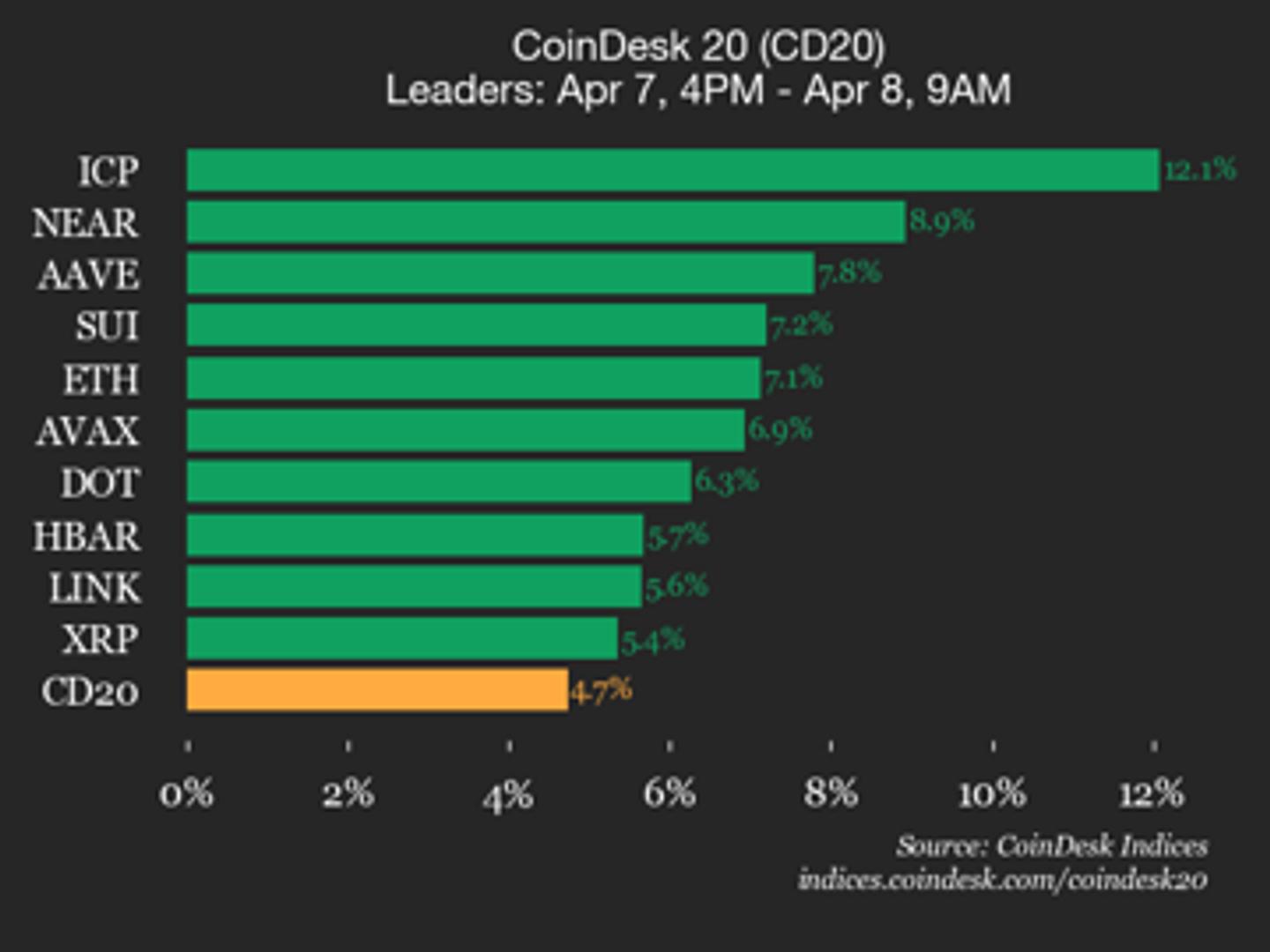
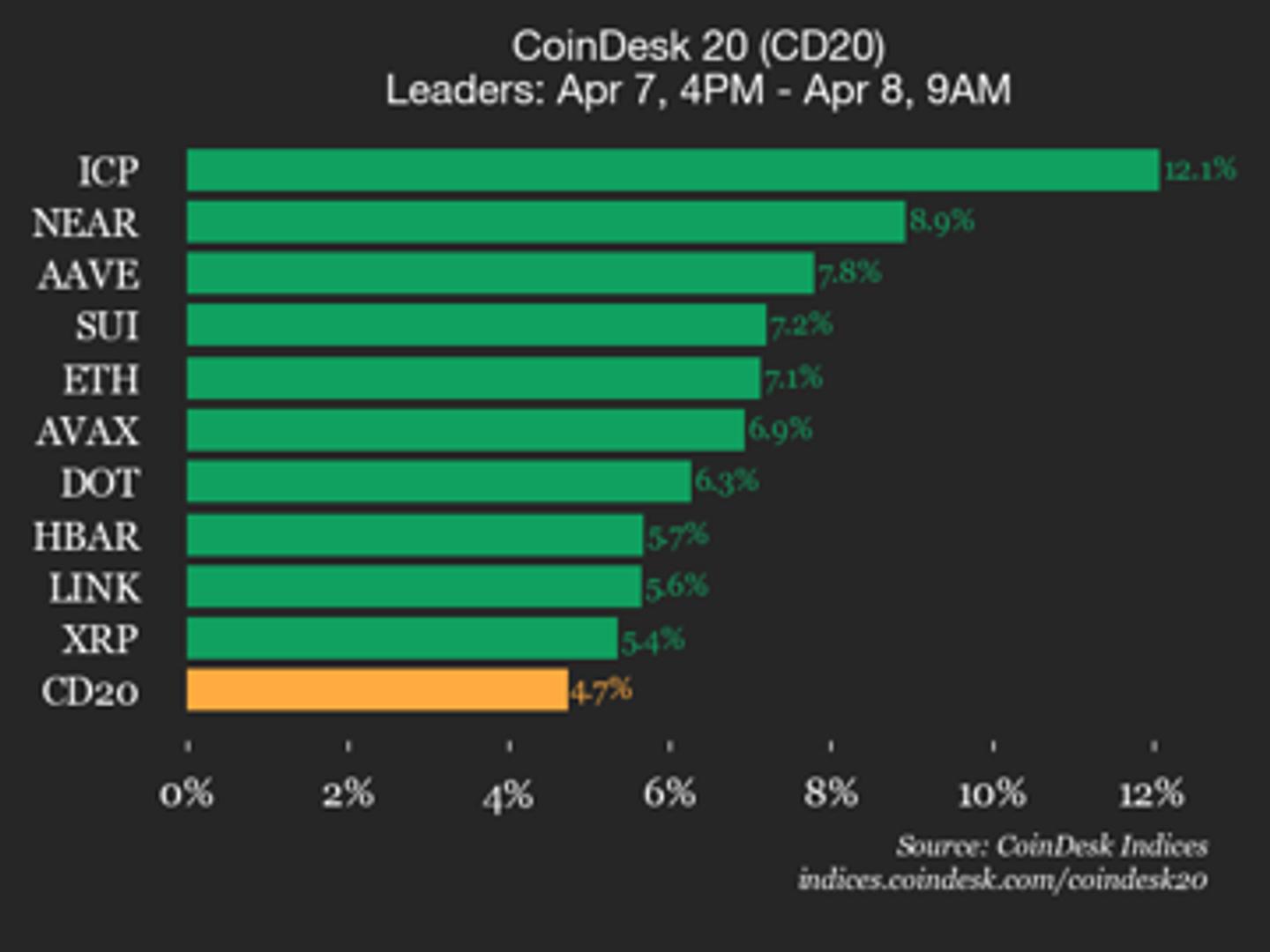
NEAR Protocol (NEAR) joined Internet Computer (ICP) as a top performer, climbing 8.9% from Tuesday.
Strategy Executive Chairman Michael Saylor rejected the New York Times investigation identifying Adam Back as Bitcoin’s (BTC) pseudonymous creator, Satoshi Nakamoto.
Saylor said stylometry is “interesting, but not proof.”
Why Saylor Demands Cryptographic Evidence
Saylor pointed to contemporaneous 2008 emails between Satoshi and Back as evidence that the two were separate people.
Back first received a message from Satoshi in August 2008 confirming the Hashcash citation in the upcoming white paper.
“Stylometry is interesting, but not proof. The contemporaneous emails between Satoshi and Adam Back suggest they were distinct individuals. Until someone signs with Satoshi’s keys, every theory is just narrative,” said Saylor.
That position aligns with his broader philosophy. Saylor has repeatedly described Satoshi’s disappearance as a deliberate act that strengthened BTC by removing any central authority figure.
He once wrote that Satoshi “created a way, gave it away, and walked away.”
What MicroStrategy Has at Stake
Strategy holds 766,970 BTC acquired for roughly $54.57 billion, making it the largest corporate holder globally.
That position depends on BTC functioning as a decentralized, leaderless monetary network, not on who designed it.
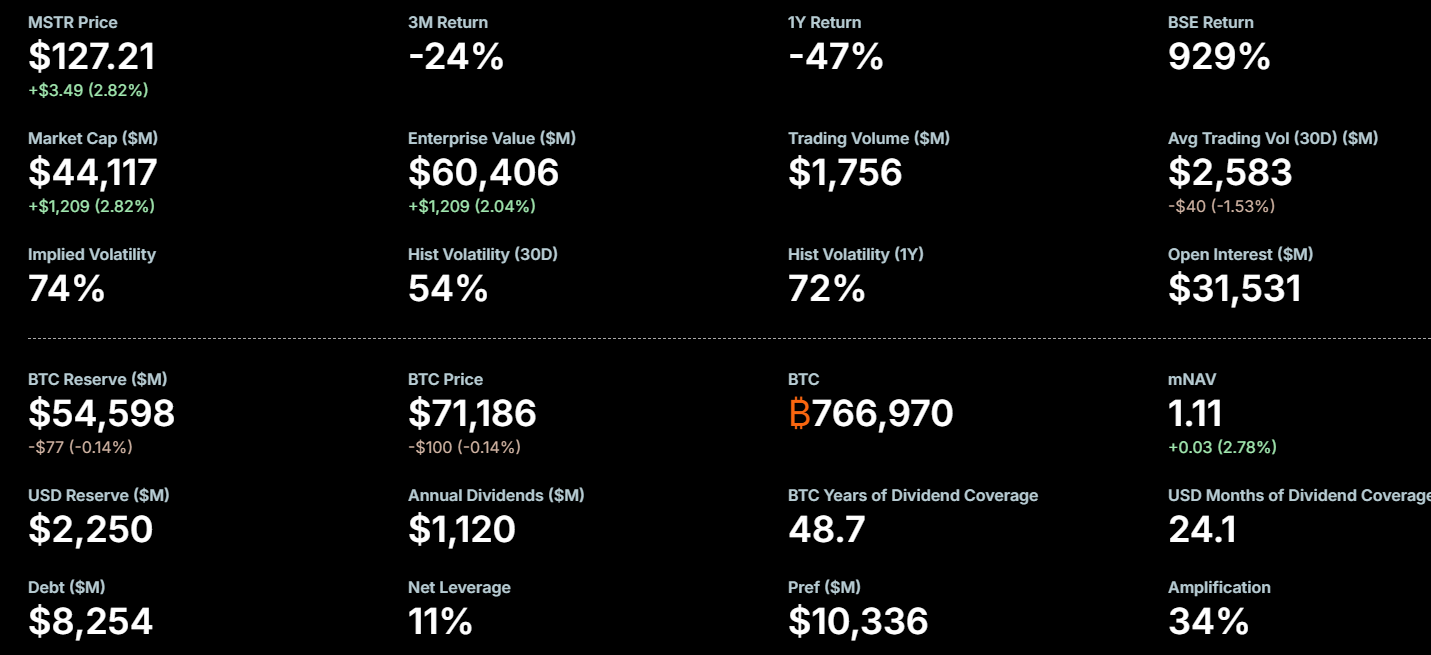
BTC dipped roughly 2.4% after the NYT article dropped, falling from $68,269 to $66,634. Saylor has previously dismissed such moves as temporary noise, calling volatility “Satoshi’s gift to the faithful.”
Back himself firmly denied being Satoshi, attributing writing overlaps to shared cypherpunk interests and confirmation bias.
The stylometric analysis, led by computational linguist Florian Cafiero, found Back as the closest match among 12 suspects but described the results as inconclusive.
For Saylor, the answer remains simple. Without a signature from Satoshi’s private keys, no investigation settles the question.
The post MicroStrategy’s Michael Saylor Doesn’t Buy The Adam Back Is Satoshi Story appeared first on BeInCrypto.

Standard Chartered is planning to reabsorb the client-facing custody operations of Zodia Custody into the digital assets division of its Corporate and Investment Bank (CIB).
The restructuring, which could be announced as early as this month, would leave Zodia operating only as a standalone Software-as-a-Service (SaaS) platform for custody technology, according to Bloomberg sources familiar with the matter.
From Incubation to Independence to Reabsorption
Standard Chartered established Zodia Custody in late 2020 through its innovation arm SC Ventures, alongside Northern Trust.
The custodian later attracted minority investors, including SBI Holdings, National Australia Bank, and Emirates NBD. It now employs around 150 people across seven offices globally.
Zodia had been gaining traction. In January 2026, it became the first custodian to support AUDM, an Australian dollar stablecoin.
The following month, it launched Zodia Switch, enabling clients to swap assets directly within the custody platform without external pre-funding.
However, Standard Chartered launched its own Luxembourg-based digital asset custody last year and rolled out institutional crypto trading separately.
The overlap between parent and subsidiary made a restructuring likely.
It remains unclear whether Standard Chartered has consulted Zodia’s minority shareholders.
Banks Are Pulling Custody In-House
The digital asset custody market currently exceeds $1 trillion and is projected to reach $7 trillion by 2035 at a compound annual growth rate of roughly 23.7%.
According to the 2026 EY-Parthenon survey, 73% of institutional investors plan to increase digital asset allocations this year.
That growing demand is pulling banks deeper into direct custody. State Street and BNY Mellon have scaled internal digital custody divisions.
Morgan Stanley filed for a dedicated national trust bank charter in February to custody and stake crypto assets under federal supervision.
Analysts see the restructuring as a turning point, with some arguing that when a Tier-1 global bank moves crypto custody into its investment bank, it stops being a contest between crypto and TradFi and becomes crypto embedded inside TradFi.
Zodia was originally built as a standalone vehicle to test the waters safely, and its reabsorption only happens when the parent sees digital assets as real, fee-generating capital markets business.
Meanwhile, others suggest a wider pattern of traditional banks pulling digital asset functions from experimental ventures into core regulated operations, noting that running parallel services was simply inefficient.
“…The suits finally realized running the same thing twice is inefficient. Revolutionary,” one user stated.
What This Says About Crypto Custody Independence
The answer appears increasingly clear. Independence for bank-backed custodians served a specific purpose during the experimental phase of 2020-2023, when regulatory uncertainty made arm’s-length structures necessary.
Now that frameworks like MiCA in Europe and the GENIUS Act in the US have reduced that friction, banks no longer need buffer entities to engage with digital assets.
“This mirrors a wider trend of traditional banks pulling digital asset functions from experimental ventures into core regulated ops – driven by frameworks like MiCA and VARA,” the user added.
Zodia’s hybrid outcome is telling. The technology retains standalone value as SaaS, but the actual safekeeping of client assets, the highest-trust and highest-margin piece of the value chain, moves back onto the parent bank’s books.
That distinction reveals what banks truly want to own versus what they are willing to license out.
Crypto-native custodians like Coinbase Custody, BitGo, and Fireblocks still hold nearly half the global market.
Can they defend that share against a banking sector now determined to bring custody in-house?
The post Standard Chartered is Taking Over Full Crypto Custody Platform Zodia appeared first on BeInCrypto.
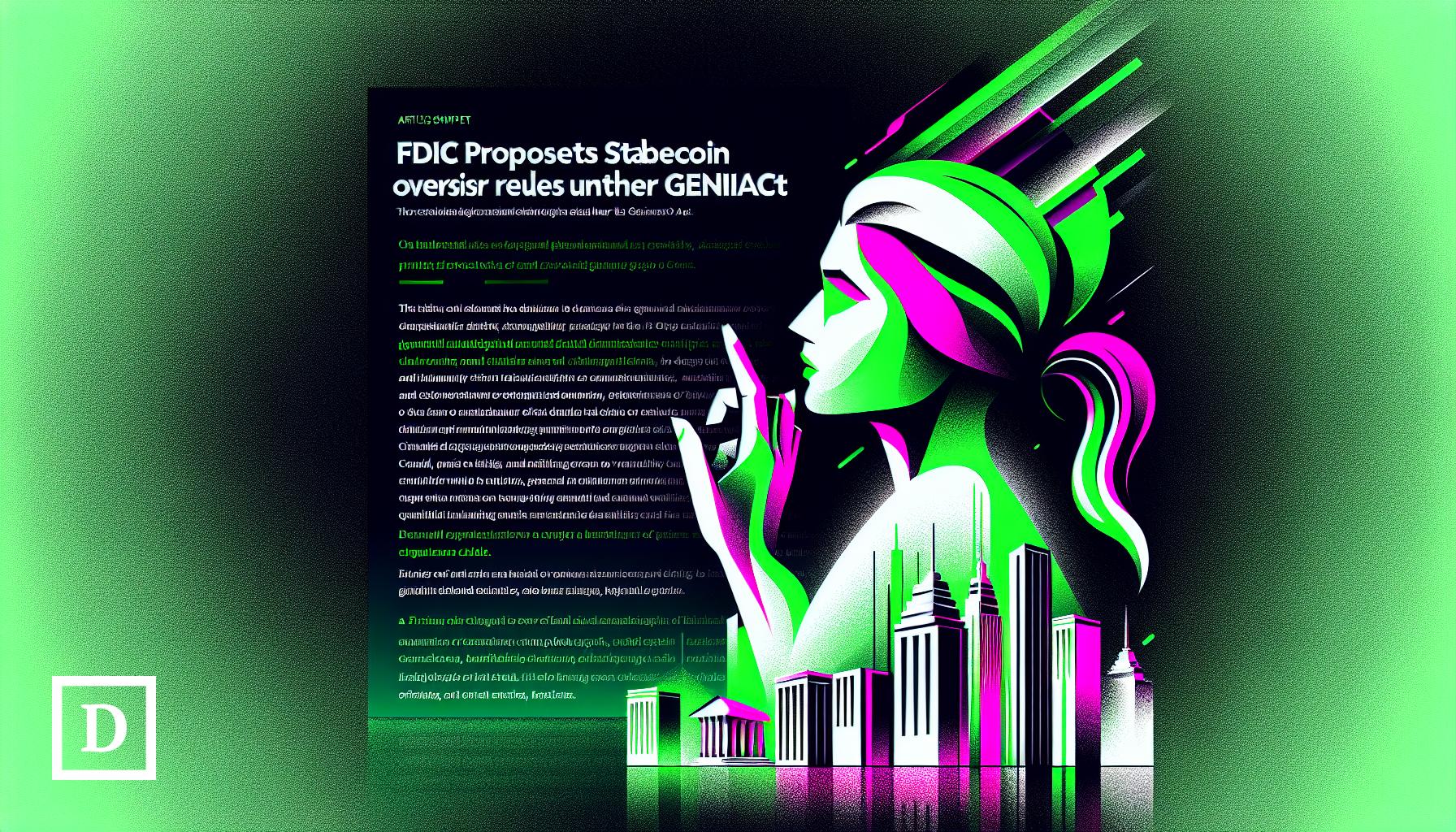
The Federal Deposit Insurance Corporation a proposed rule that would establish a framework for stablecoin issuers supervised by the FDIC.
The Federal Deposit Insurance Corporation proposed new rules on Tuesday to oversee stablecoins issued through the banking system under the GENIUS Act. The FDIC board of directors voted to advance the proposal, which sets parameters for how stablecoins may be issued and managed by regulated depository institutions.
The proposal represents the FDIC’s formal regulatory framework for stablecoin operations within the traditional banking sector. Details on specific requirements and implementation timelines were included in the Tuesday statement.
Sources: FDIC
This article was generated automatically by The Defiant’s AI news system from publicly available sources.


Polymarket has acquired Brahma to enhance its DeFi infrastructure and trading performance capabilities.
Polymarket has acquired Brahma, a DeFi infrastructure provider, to strengthen its platform’s trading performance and underlying infrastructure. The acquisition was announced on April 8, 2026, and aims to bolster Polymarket’s capabilities in the decentralized finance ecosystem.
Brahma’s integration into Polymarket is expected to enhance the prediction market platform’s technical infrastructure and user experience. The deal represents continued consolidation in the DeFi sector as platforms seek to improve their competitive positioning.
Source: Polymarket
This article was generated automatically by The Defiant’s AI news system from publicly available sources.

Car flips onto roof in multi-vehicle crash as three people rushed to hospital

Craig Melvin Accidentally Reveals Jenna Bush Hager’s ‘Devil Wears Prada 2’ Cameo on Live ‘Today’ Show
Ripple Unveils First Treasury Management System for Digital Assets


-

 NewsBeat6 days ago
Steven Gerrard disagrees with Gary Neville over ‘shock’ Chelsea and Arsenal claim | Football
-

 Business6 days ago
No Jackpot Winner and $194 Million Prize Rolls Over
-

 Fashion5 days ago
Weekend Open Thread: Spanx – Corporette.com
-

 Business5 days ago
Expert Picks for Every Need
-

 Business3 days ago
Three Gulf funds agree to back Paramount’s $81 billion takeover of Warner, WSJ reports
-

 Sports4 days ago
India men’s 4x400m and mixed 4x100m relay teams register big progress | Other Sports News
-

 Business7 days ago
Login and Checkout Issues Spark Merchant Frustration
-

 Tech23 hours ago
How Long Can You Drive With Expired Registration? What Florida Law Says
-
Business3 days ago
No Jackpot Winner, Prize to Climb to $231 Million
-

 Tech6 days ago
Commonwealth Fusion Systems leans on magnets for near-term revenue
-

 Fashion2 days ago
Massimo Dutti Offers Inspiration for Your Summer Mood Board
-

 Crypto World7 days ago
Ripple rolls out enterprise crypto treasury platform for corporates
-

 Fashion1 day ago
Let’s Discuss: DEI in 2026
-
Politics5 days ago
Wings Over Scotland | The quality of mercy
-
 Sports7 days ago
Steal Gary Woodland’s subtle power move for longer drives
-

 Business4 days ago
Akebia Therapeutics, Inc. (AKBA) Discusses Pipeline Progress and Strategic Focus on Kidney Disease Treatments at R&D Day – Slideshow
-
 Tech7 days ago
Battery Tester Outperforms Cheaper Options
-

 Tech7 days ago
Following Artemis II’s Journey Around The Moon
-

 Fashion6 days ago
Statement Sunglasses: The Accessory Shaping Modern Fashion
-

 Business7 days ago
Investor reactions to Trump’s speech on Iran war
You must be logged in to post a comment Login