Entertainment
10 ’80s Movies That Aged Like Fine Wine

The 1980s are often remembered for spectacular movies like Raiders of the Lost Ark, Platoon, and The Empire Strikes Back. But beyond the usual suspects, the ’80s also produced films that have matured beautifully over time. Like a well-cellared Bordeaux, some of the decade’s movies get even better years after it was produced. The entries on this list may have been misunderstood or overshadowed, but now time has revealed richer notes and complexity.
These are a collection of films that have aged so well since their release, becoming a reflection of the world today, even when they did not initially intend to. These movies need to be watched and experienced like you’re drinking the finest vintage wine on the menu, appreciating more as the years go by and your cinematic taste matures.
‘Near Dark’ (1987)

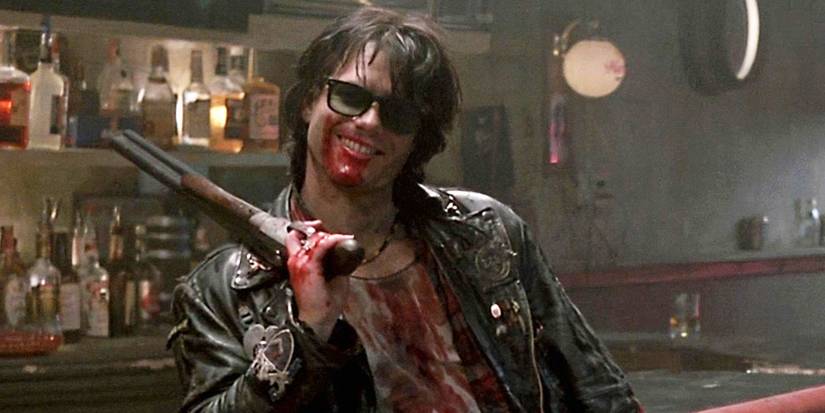
A blend of vampire mythology and classic road movie, Near Dark sees small-town teenager Caleb (Adrian Pasdar) being bitten by drifter Mae (Jenny Wright). He’s then pulled into a nomadic clan of violent vampires led by Jesse (Lance Henriksen), who roam highways and small towns. With a psychotic member, Severen (Bill Paxton), actively trying to kill him, Caleb tries to reconcile his new reality that sees his humanity withering away as he accepts his new, brutal family.
Near Dark was one of the many vampire movies released in the 1980s. While it flew under the radar because of the popularity of the other movies like The Lost Boys and Fright Night, it has really aged well thanks to Kathryn Bigelow‘s confident direction in her solo film debut. The performances are fantastic, especially from Lance Henriksen, who’s always charismatic, and Bill Paxton, whose manic work made this film unforgettable. Near Dark is filled with stunning visuals and a great genre blending of Western, horror and romance. It deserves to be included among the best vampire movies in cinema.
‘How to Get Ahead in Advertising’ (1989)

How to Get Ahead in Advertising follows Denis Dimbleby Bagley (Richard E. Grant), a high-powered advertising executive who suddenly finds himself unable to write a campaign because of a moral crisis about his job’s manipulative nature. As Denis becomes increasingly paranoid, a boil with a face appears on his shoulder and starts to talk about his capitalist instincts, mocking his conscience and pushing him deeper into his thoughts.
The film has aged remarkably well because of its central theme about advertising that manipulates desire and distorts truth. It is even more relevant in today’s hyper-commercial, algorithm-driven world, where every content company is inundated with ads. Richard E. Grant, in one of his early leading roles, delivers a fearless performance, changing between a smug corporate man and a hysteric paranoid. The body horror aspect exaggerates the consumer culture to deliver a biting satire. It may be over-the-top when it was released, but this hyperbole is needed for today’s world.
‘My Neighbor Totoro’ (1988)
My Neighbor Totoro follows sisters Satsuki and Mei as they move to the countryside with their father while their mother recovers from a long-term illness. As they explore their new home, they encounter gentle woodland spirits, including the enormous, kind Totoro, and they ride on a magical Catbus, watching seeds sprout into trees together. Satsuki and Mei’s adventures with Totoro provide them with comfort during a difficult time for them.
The classic Ghibli film was already a favorite upon its release. With emotional purity at its core, Hayao Miyazaki treats childhood with respect rather than sentimentality. There’s no traditional villain or high-stakes conflict; instead, the emotional tension centers on childhood anxiety and sibling bonds. The animation remains lush and expressive, making it a cozy experience anytime you decide to watch it. Totoro itself has become an international cultural icon, not to mention Ghibli’s official mascot.
‘Thief’ (1981)

Thief follows Frank (James Caan), a strict and professional safecracker who hopes to complete one last score before living a legitimate life. When he’s drawn into a partnership with a powerful crime boss who promises financial backing, Frank is trapped in a job that doesn’t respect his independence, and his dream of a normal life begins to crumble.
Michael Mann is known today for crafting stylish, incredibly cool crime films like Heat and Miami Vice. However, he has already managed to do that in his film debut, one of cinema’s best heist thrillers. Mann’s neon-lit Chicago, paired with Tangerine Dream’s pulsing synth score, feels strikingly modern, making it a visual and sonic blueprint for decades of crime cinema. James Caan delivers an intense and vulnerable performance as Frank. Beyond the crime genre thrills, Thief also explores capitalism and the illusion of the American Dream with surprising depth, elements that are still incredibly relevant today.
‘The King of Comedy’ (1982)
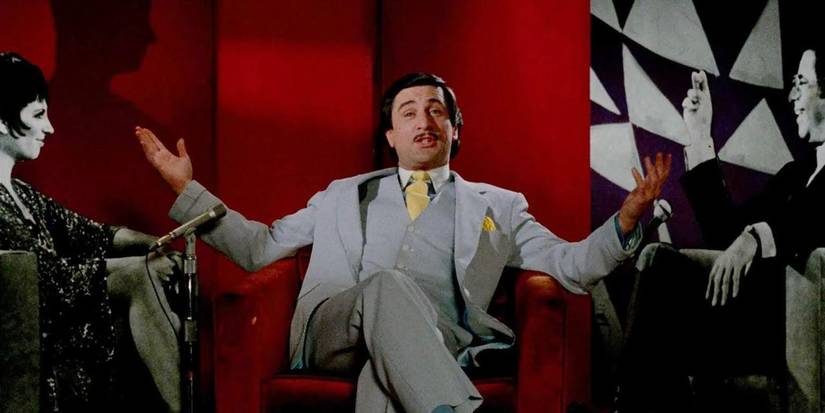
In The King of Comedy, Rupert Pupkin (Robert De Niro) is an aspiring stand-up comedian who believes he’s destined for stardom, despite having no real career or platform. Obsessed with late-night talk show host Jerry Langford (Jerry Lewis), Rupert fantasizes about being his friend. When he’s repeatedly brushed aside, he escalates to kidnapping Langford to get a shot at national television exposure.
This Martin Scorsese movie has aged spectacularly because it predicted our culture’s obsession with visibility and validation, especially with social media today. Pupkin feels like a prototype for influencer-era celebrity hunger who craves fame solely for recognition. Robert De Niro gives a committed performance, portraying Rupert not as a villain, but as a socially inept dreamer incapable of self-awareness. The film gained a second life in the 2010s after Joker practically ripped off this film’s storyline, which, in a way, also mirrored how Pupkin kidnapped Langford for fame. Alas, The King of Comedy is way superior to the DC villain origin story.
‘Paris, Texas’ (1984)

Paris, Texas begins with Travis Henderson (Harry Dean Stanton) emerging silently from the desert, disoriented after disappearing for four years. Slowly, he reconnects with his brother and young son, Hunter (Hunter Carson), attempting to rebuild a relationship that time and abandonment nearly erased. Travis and Hunter then travel together in search of Hunter’s estranged mother, Jane (Nastassja Kinski).
Revisited today, Paris, Texas never feels outdated, and its emotional aspects are earned through the characters’ journeys and the deliberate pacing. Wim Wenders clearly trusted the audience to be in Travis’ headspace and join his story. With beautiful visuals, a great guitar score, and iconic performances from Stanton and Kinski, the film has become a foundational American classic. The film has inspired numerous actors and filmmakers, with Michael Bay even including a reference to the film in one of the Transformers movies.
‘Mishima: A Life in Four Chapters’ (1985)

Mishima: A Life in Four Chapters reconstructs the final day of Japanese author Yukio Mishima (Ken Ogata). It also included stylized adaptations of three of his novels and flashbacks to his formative years. The film moves between black-and-white sequences, rich color sequences representing his fiction, and glimpses of his childhood and artistic evolution.
Paul Schrader considers it to be one of his best works alongside Taxi Driver, and it is with good reason. The film is an ambitious take on a controversial figure, but rather than flattening its subject into hero or villain, it embraces his contradictions as an artist and an ultranationalist. Its structure is unlike any other film that came before, and it has not been replicated since. Mishima is further elevated by Philip Glass‘ thunderous score and striking production design by Eiko Ishioka. Due to its controversial nature, the film was not screened in Japan until 2025.
‘The Thing’ (1982)
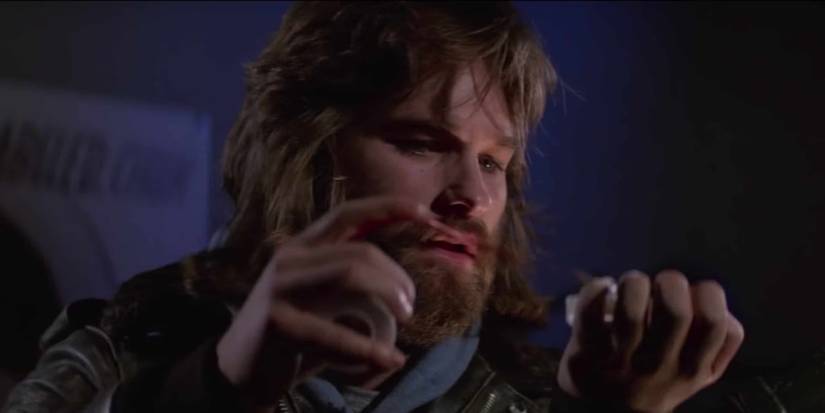
Set in a remote Antarctic research station, The Thing follows a group of American scientists who encounter a shape-shifting alien capable of perfectly imitating any living organism. After a Norwegian outpost is found destroyed, the team realizes the organism can replicate and replace them from within. As they don’t know who to trust, the men begin turning on one another, unsure who is still human.
Surprisingly, The Thing was not a critical favorite when it was released. Over time, the John Carpenter film reveals itself to be a towering work. Today, it stands as one of the best horror thrillers ever made. The creature design is grotesque and is scarier than any CGI creation, and the performances, led by Kurt Russell, are strong across the board. Carpenter is an expert at maintaining tone, and here it shows as the movie is constantly covered in bleakness and paranoia. The ambiguous ending is the cherry on top of why the film endures.
‘Videodrome’ (1983)


Videodrome follows Max Renn (James Woods), the sleazy president of a small cable TV station, constantly searching for edgier, more provocative content to boost ratings. When he discovers a mysterious broadcast signal featuring extreme torture and violence, he becomes obsessed with tracking its origin. As Max investigates, the signal begins to distort his perception of reality, and he loses sight of what is real and media.
Videodrome was actively disliked by audiences when it was released, as evidenced by the D+ CinemaScore, although many critics agreed that the film was ahead of its time. Its once-bizarre premise about media addiction and desensitization now feels eerily prophetic. The depiction of Renn merging with television is extreme, showing how humans are now inseparable from technology in the digital age. The practical effects are excellent and add to the realism that makes it even scarier. Videodrome is now widely regarded as one of David Cronenberg‘s best films and a sharp cultural commentary on today’s world.
‘Blow Out’ (1981)

Blow Out follows Jack Terry (John Travolta), a sound technician for low-budget horror films who accidentally records what may be evidence of a political assassination. While gathering ambient audio one night, he captures the sound of a car tire blowout just before a fatal crash involving a presidential candidate. As Jack syncs his audio with a photographer’s images, he uncovers a conspiracy far bigger than he anticipated.
Blow Out aged like fine wine because of how disturbingly modern it feels. Its obsession with truth versus perception and political cover-ups resonates even more today, when misinformation runs wild. John Travolta delivers one of his most layered performances as an idealistic and obsessive man pulled into a conspiracy. Brian De Palma’s direction, with his iconic split diopter shots and elaborate set pieces, puts the spotlight on the main character, making it an intense experience. It’s both a thriller and a tragic commentary on how truth can be drowned out by power, making it even sharper today than it was in 1981.
You must be logged in to post a comment Login