Entertainment
10 Animated Movies That Are Perfectly Written

I absolutely despise people who call animated movies childish. I think the biggest reason they are better than most live-action films is that they talk about the hard-hitting emotions without hiding them behind realism. A father is terrified of losing his son, so he crosses the entire ocean looking for him. A little girl misses her parents and suddenly has to survive inside a spirit world alone. A toy becomes jealous because its owner loves somebody else more. Who doesn’t like a tear-jerker every once in a while?
The films on this list are standouts because every scene keeps pushing the characters somewhere emotionally. Ratatouille is really about somebody being told he does not belong in the place he loves most. Princess Mononoke turns a fantasy war into something painfully human. These ten movies, therefore, are just technically impressive and are written with an unusual amount of care from beginning to end.
10
‘Kubo and the Two Strings’ (2016)


Kubo and the Two Strings starts with Kubo (Art Parkinson) living quietly with his sick mother in a small village while earning money by telling magical stories through origami figures that move on their own. Every evening, his mother warns him to return home before dark because dangerous spirits are searching for him. Kubo does not fully understand that warning until one night when he stays out too long during a festival and suddenly becomes the target of his aunts, who are trying to take his remaining eye for the Moon King.
From there, the story turns into a journey across mountains, caves, and frozen lakes as Kubo searches for pieces of armor once worn by his father. Monkey (Charlize Theron) and Beetle (Matthew McConaughey) travel with him, though much of the film slowly becomes about memory and grief rather than the quest itself. Kubo’s mother forgetting parts of her own life, the stories his father left behind, and Kubo trying to understand his family all become deeply connected by the ending.
9
‘The Incredibles’ (2004)
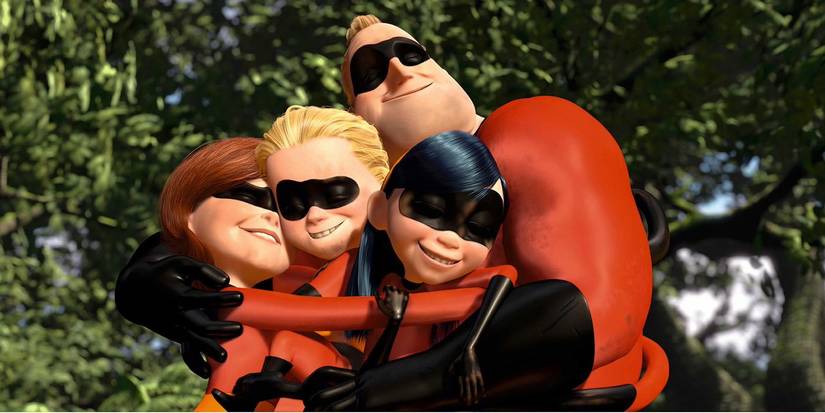
At the beginning of The Incredibles, superheroes are still publicly saving people, though lawsuits and political pressure eventually force the government to shut all of them down. Years later, Bob Parr (Craig T. Nelson) is living an ordinary suburban life with Helen (Holly Hunter) and their children while secretly missing the excitement he once had as Mr. Incredible. He works at an insurance company, struggles to fit into routine office life, and keeps getting himself into trouble because he still wants to help people whenever possible.
Things change when Bob is secretly recruited for a mission on a remote island, where he discovers that Syndrome (Jason Lee) has been building weapons by studying former superheroes for years. At the same time, Helen begins to realize Bob has been hiding things from her, and eventually the entire family becomes pulled into the conflict together. What makes the film work so well is how naturally the superhero side connects with ordinary family problems. Dash wants to stop hiding his abilities, Violet feels invisible around people her age, and Bob keeps learning that he cannot keep treating heroism like a one-man job.
8
‘The Iron Giant’ (1999)
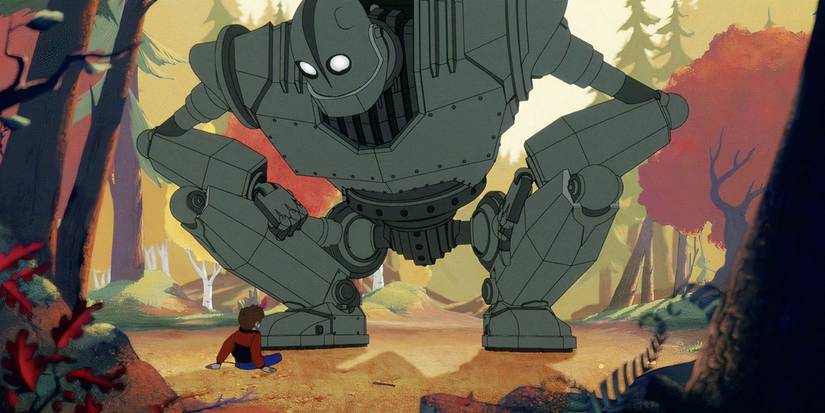
Set during the Cold War, The Iron Giant follows Hogarth Hughes (Eli Marienthal), a young boy living in a small town in Maine who discovers a massive robot that has fallen from space. Instead of reacting with fear immediately, Hogarth slowly becomes friends with the Giant after realizing it behaves more like a confused child than a weapon. He teaches the robot simple things about the world around him, including language, comic books, and even the idea that people can choose who they want to become.
The situation becomes dangerous once government agent Kent Mansley (Christopher McDonald) arrives in town, convinced the robot is a threat. Hogarth tries desperately to keep the Giant hidden while the military closes in around them. One detail the film handles beautifully is the Giant’s fear of its own destructive abilities. Every time it accidentally hurts something, it reacts with genuine confusion and panic. By the final act, the story becomes less about hiding the robot and more about whether something built as a weapon can decide not to act like one anymore.
7
‘Princess Mononoke’ (1997)
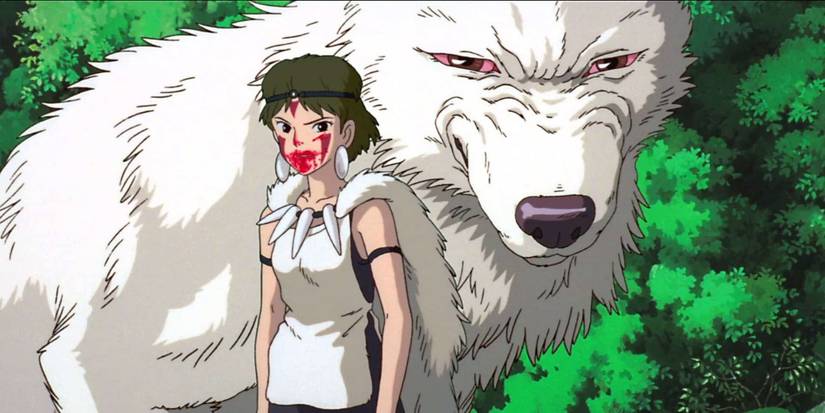
Ashitaka (Yōji Matsuda) becomes cursed after killing a demon boar attacking his village, and the only way to understand what happened is to travel west and search for the source of the corruption spreading through the land. That journey eventually brings him into the middle of a violent conflict between Iron Town and the forest spirits protecting the surrounding wilderness. Lady Eboshi (Yūko Tanaka) is cutting down the forest to expand her settlement and protect the people working under her, while San, also known as Princess Mononoke (Yuriko Ishida), fights alongside the wolves trying to stop that destruction.
One reason the film still feels so powerful is that nobody is treated as completely right or completely wrong. Eboshi genuinely cares for former prostitutes and lepers living in Iron Town even while her actions destroy the forest around her. San sees humans as the enemy, though Ashitaka keeps trying to make both sides understand each other before the violence becomes impossible to stop. The conflict grows larger once the Forest Spirit itself becomes part of the struggle, especially after outside forces begin hunting it for their own gain.
6
‘Ratatouille’ (2007)
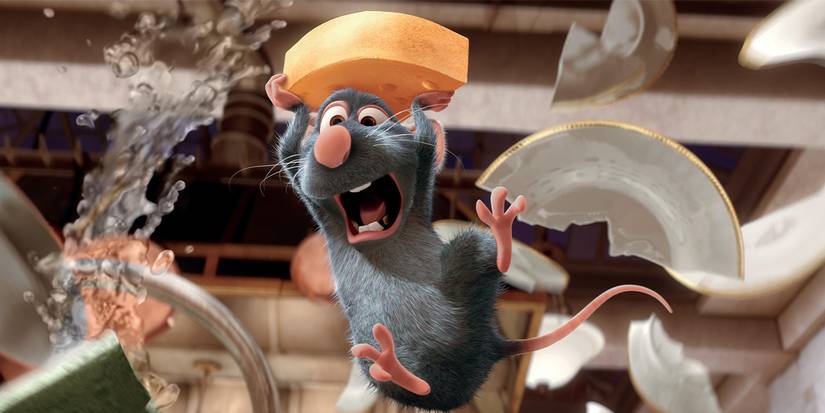
Remy (Patton Oswalt) is a rat living in the countryside who becomes obsessed with cooking after constantly watching Chef Gusteau on television. Unlike the rest of his family, Remy cares deeply about flavor, combinations, and technique, which already separates him from the other rats before he even reaches Paris. After getting separated from his family, he accidentally ends up inside Gusteau’s restaurant, where he notices that the kitchen’s new garbage boy, Alfredo Linguini (Lou Romano), has absolutely no idea what he is doing.
Remy secretly begins controlling Linguini by pulling his hair beneath a chef’s hat, and together they start impressing the restaurant staff with dishes Linguini could never prepare on his own. The situation becomes increasingly complicated as Linguini gains fame while hiding the fact that the real talent is a rat nobody can know exists. At the same time, food critic Anton Ego (Peter O’Toole) prepares to review the restaurant after years of helping destroy Gusteau’s reputation. The final meal Remy serves him turns out to be something surprisingly simple rather than extravagant.
5
‘Beauty and the Beast’ (1991)
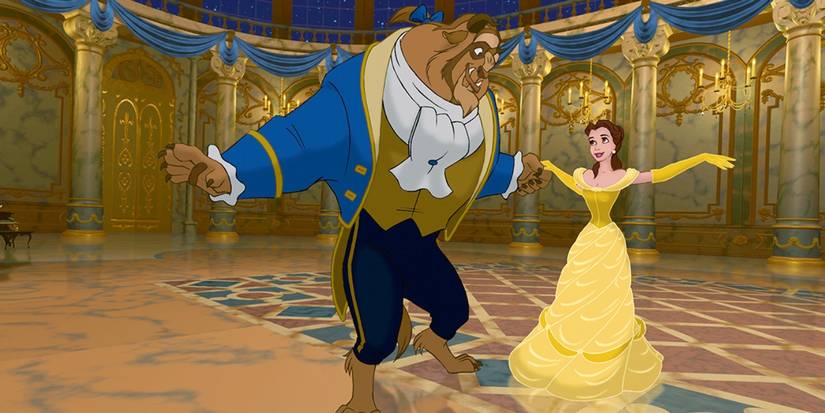
Belle (Paige O’Hara) spends most of her time reading and trying to avoid the expectations people in her village already have for her. Gaston (Richard White) wants to marry her mostly because he sees her as a prize everybody else admires, while Belle is clearly searching for something bigger than the small routine around her. Everything changes once her father Maurice (Rex Everhart) gets lost and ends up imprisoned inside the Beast’s castle. Belle takes his place without fully understanding what kind of life she has just entered.
The Beast (Robby Benson) is angry, isolated, and barely knows how to speak to another person without losing his temper. A large part of the film is simply watching these two people slowly learn how to exist around each other. Dinner conversations become less hostile, Belle begins exploring the castle, and the servants quietly try helping the relationship grow because they know their own curse depends on it. By the time Gaston gathers the villagers to attack the castle, the story has already become much more about fear and loneliness than appearances.
4
‘Finding Nemo’ (2003)
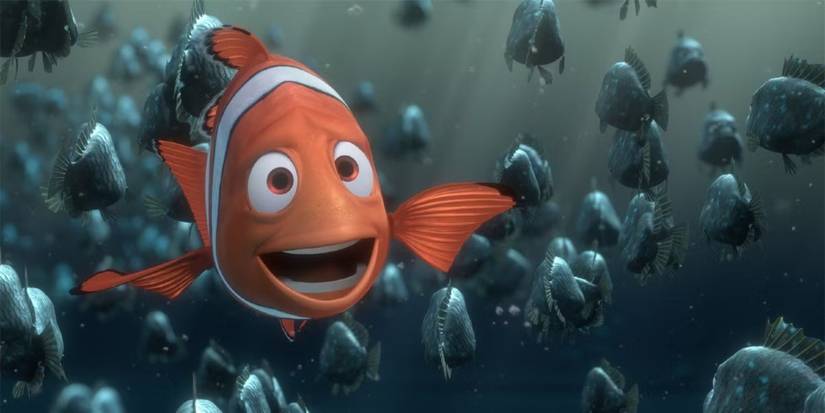
Marlin (Albert Brooks) becomes terrified of losing Nemo (Alexander Gould) long before the actual story begins. After surviving the attack that killed most of his family, he raises Nemo carefully and constantly worries that something bad will happen to him too. Nemo, meanwhile, is desperate to prove he can handle the ocean on his own instead of being treated like he is fragile all the time. That tension between them finally explodes on Nemo’s first day of school when he swims too close to a boat and gets captured by a diver.
The rest of the film follows Marlin crossing the ocean with Dory (Ellen DeGeneres) trying to find him. Their journey keeps changing direction in ridiculous ways. They drift through jellyfish fields, ride currents with sea turtles, escape sharks, and nearly get swallowed by a whale. At the same time, Nemo is trapped inside a dentist’s aquarium with fish already planning their escape. One thing the movie handles beautifully is how both father and son slowly change apart from each other instead of only learning lessons once they reunite at the end.
3
‘Spider-Man: Into the Spider-Verse’ (2018)

Miles Morales (Shameik Moore) is already struggling to fit into his new school before he gets bitten by a radioactive spider beneath the city. Soon after that, he witnesses Spider-Man dying while trying to stop Kingpin’s collider from opening portals into other universes. Suddenly Miles has powers he cannot control and a responsibility he never asked for. Even simple things like sticking to walls or using invisibility keep going wrong at the worst possible moments.
Things become even stranger once different Spider-People start appearing in his universe because of the collider. Peter B. Parker (Jake Johnson) is exhausted and emotionally broken, Gwen Stacy (Hailee Steinfeld) is far more experienced than Miles, and the others already know how dangerous the situation is becoming. For most of the story, Miles is treated like the weak link because nobody believes he is ready. That changes once he finally stops trying to become another version of Peter Parker and starts understanding what kind of Spider-Man he wants to be himself.
2
‘Toy Story’ (1995)
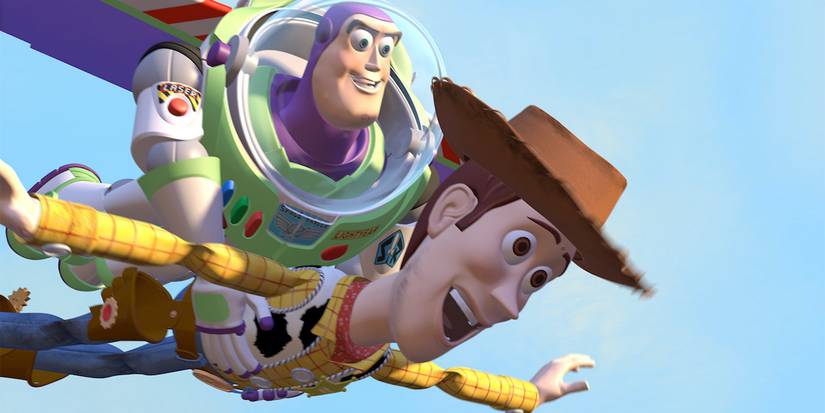
Woody (Tom Hanks) is completely comfortable being Andy’s favorite toy at the beginning of Toy Story. He leads the other toys, organizes Andy’s room whenever humans are nearby, and assumes that role will never really change. Then Buzz Lightyear (Tim Allen) arrives on Andy’s birthday, and everything immediately shifts. Buzz has flashing lights, wings, catchphrases, and genuinely believes he is an actual space ranger instead of a toy. Andy becomes obsessed with him almost overnight, which slowly turns Woody’s jealousy into something uglier.
Their relationship gets worse after Woody accidentally knocks Buzz out the window during an argument. The other toys believe Woody did it on purpose, and before long both Woody and Buzz end up stranded away from home together. A huge part of the movie works because Buzz slowly realizes he is not who he thought he was, while Woody is forced to confront how selfish he has become. By the end, getting back to Andy matters more to both of them than being the favorite anymore.
1
‘Spirited Away’ (2001)
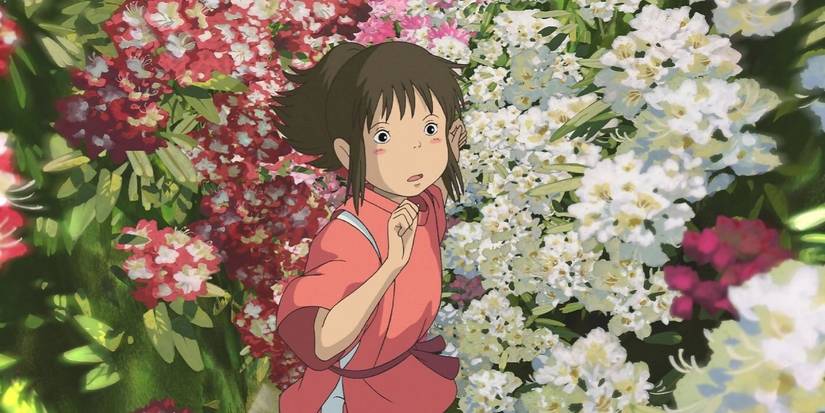
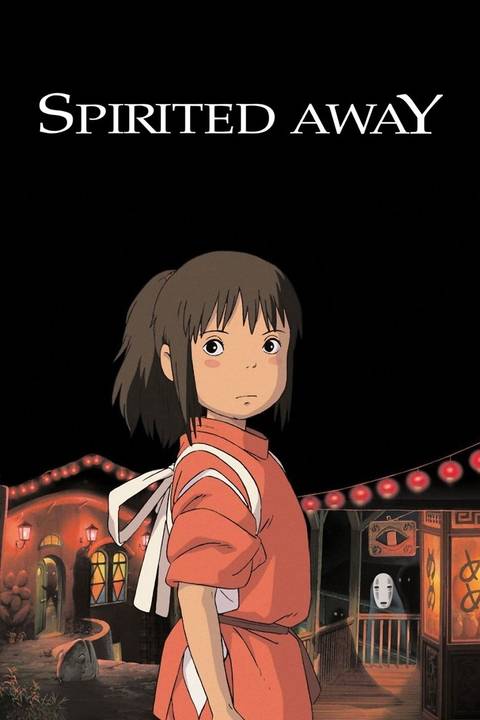
Chihiro (Rumi Hiiragi) is already unhappy about moving to a new town when her parents accidentally wander into an abandoned amusement park on the way there. Once night falls, the place transforms completely. Spirits begin appearing everywhere, her parents turn into pigs after eating food meant for the gods, and Chihiro suddenly finds herself trapped inside a strange bathhouse controlled by Yubaba (Mari Natsuki), a powerful witch who steals people’s names to control them.
Most of the film follows Chihiro trying to survive inside that bathhouse while slowly growing more confident than she was at the beginning. She works alongside spirits, deals with impossible tasks, and gradually forms relationships with characters like Haku (Miyu Irino) and Lin (Yoomi Tamai). One of the most memorable parts of the story is how casually bizarre many scenes are. A polluted river spirit arrives covered in filth, No-Face slowly becomes dangerous after being left alone inside the bathhouse, and a train glides quietly across flooded tracks toward the final act. Even with all those strange moments, Chihiro’s fear and loneliness always feel completely real.



You must be logged in to post a comment Login