Entertainment
10 Best ’90s Anime That Are Worth Revisiting

The 1990s was a major decade for Japanese animation. Thanks to media released in the 1980s, such as Akira, anime became more accessible and sought after on the global market, leading to a plethora of shows and films getting overseas dubs. Thanks to blocks like Cartoon Network’s Toonami, younger audiences were exposed to a wide variety of high-quality anime, which lay the bedrock for how globally dominant Japanese animation has become, sometimes even outperforming Western cartoons.
There are so many fantastic programs that premiered between 1990 and 1999—some of which are still ongoing—meaning that, if you’re interested in exploring this era and how it differs from today’s anime, you have your pick of the litter. For the purposes of this list, we will not be including anime that premiered in the late 1980s but ran into the 1990s, such as Ranma 1/2 and Dragon Ball Z, so consider those as very strong honorable mentions.
‘Pokémon the Series’ (1997–Present)

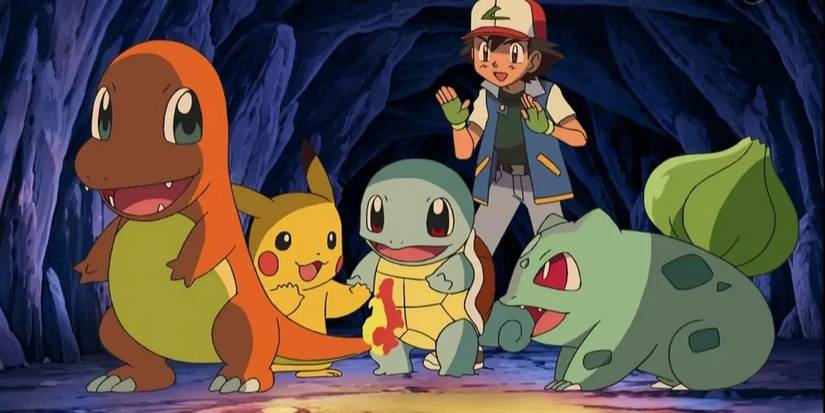
Ten-year-old Ash Ketchum (Hana Takeda, Rica Matsumoto, Veronica Taylor, and Sarah Natochenny) is an energetic boy living in a world full of Pokémon, mysterious creatures that use elemental attacks and who can evolve into larger, more powerful forms. He is given an electric mouse Pokémon named Pikachu (Ikue Ōtani) as his first partner, and after some initially rocky beginnings, they set off to travel the world and battle other strong trainers, so Ash can become a Pokémon Master. He is joined by numerous companions with their own hopes and dreams, and is hounded constantly by members of the criminal organization Team Rocket, who are obsessed with capturing Ash’s Pikachu.
Pokémon the Series is one of the biggest pop-culture icons to come from the 1990s, and played a key role in Pokémon‘s stranglehold on pop-culture during the late 1990s and early 2000s. While later seasons would try to match the rules of the games a bit closer, the original season was more concerned with doing its own thing, which ranged from including real-world animals to Electric-type attacks hurting Ground-type Pokémon. That said, there were also plenty of episodes that evoke strong emotions, like “Bye Bye Butterfree” and “Charmander – The Stray Pokémon,” and there is a lovely sense of nostalgia hearing the original 4Kids actors.
‘Digimon Adventure’ (1999–2000)


Seven young kids attending a summer camp together find themselves pulled into the Digital World, a parallel dimension inhabited by creatures made out of data called Digimon. The kids each receive Digimon partners, and, thanks to mysterious devices, they can temporarily allow their Digimon to transform into more powerful forms. This marks them as DigiDestined: heroes of prophecy who will save both worlds from wicked forces who seek to destroy and dominate all.
While at first Digimon Adventure might seem like a Pokémon knockoff, the two properties have nothing in common aside from transforming creatures. It tells a very solid quest story while managing to give each of its protagonists’ character arcs and believable personalities, including a wide array of home lives, from adoption to overbearing parents and divorced homes. The Digital World is also incredibly creative and detailed, with plenty of seemingly random items and locations, ensuring that each episode offered new surprises.
‘Slayers’ (1995–2009)

Lina Inverse (Megumi Hayashibara and Lisa Ortiz) is a teenage sorceress driven by wanderlust and greed. During her travels, she somehow acquires a group of more good-hearted and altruistic traveling companions, which means Lina often ends up getting roped into saving the world. Over time, she comes to like her friends, and figures that she can still get some gold out of battling the forces of evil.
Slayers offers a refreshing take on the typical high-fantasy quest thanks to its tone. Its high-stakes action is frequently broken up by moments of levity and comedy, from Lina’s petty attitude to hilarious slapstick comedy. The whole thing plays out like a Dungeons & Dragons campaign, complete with half of the troubles that befall the protagonists being of their own making.
‘Yu Yu Hakusho’ (1992–1995)

Yusuke Urameshi (Nozomu Sasaki, Justin Cook, and Darren Pleavin) is a teenage delinquent and street fighter who dies saving a young boy from being hit by a car. However, it turns out his altruism caught the eye of the Underworld’s elite, and he is allowed to come back to life as an Underworld Detective. Aided by his human best friend and two spirits, Yusuke must now investigate supernatural activity on Earth and thwart the plans of evil demons and other malevolent forces.
Yu Yu Hakusho is a stellar example of 1990s shōnen anime thanks to its aesthetic, character dynamic, and gorgeous animation. Its action sequences set a very high bar in terms of brutality and composition, while its characters had a strong camaraderie fueled by their flawed but complimentary personalities. It’s also got a fascinating mythology that pulls from the likes of Buddhism and Japanese folklore and Shintoism.
‘Sailor Moon’ (1992–1997)

Usagi Tsukino (Kotono Mitsuishi, Terri Hawks, Tracy Moore, and Stephanie Sheh) is your average teenage girl who is visited one day by a talking cat named Luna (Keiko Han, Jill Frappier, and Michelle Ruff). She gives Usagi the ability to transform into a magical form called Sailor Moon, and warns her that an evil organization called the Dark Kingdom has infiltrated the Earth and is draining humans of energy while they search for the powerful Silver Crystal, with which they can resurrect their Queen, Metalia (Noriko Uemura, Maria Vacratsis, and Mary Elizabeth McGlynn). As Usagi learns how to use her new powers to thwart the Dark Kingdom’s plans, she and Luna find other girls who can transform, and receive aid from the mysterious Tuxedo Mask (Toru Furuya, Toby Proctor, Rino Romano, and Robbie Daymon).
Sailor Moon revolutionized the magic girl genre by having female characters who could both stand up to evil themselves and had diverse and multifaceted personalities. Usagi is a good example of this, being a very flawed character who starts off as an underachiever who is terrified of her new responsibilities, but over time develops confidence through interacting with her fellow Sailor Guardians. Aside from its historical significance, the show is still pretty fun to re-visit, blending comedy with intriguing worldbuilding, fun characters, and plenty of visually interesting monsters of the week.
‘Case Closed’ (1996–Present)

Shinichi Kudo (Kappei Yamaguchi, Minami Takayama, Jerry Jewell, Griffin Burns, Mauricio Ortiz-Segura, Alison Viktorin, Wendee Lee, and Molly Zhang) is a teenage genius who uses his analytical mind to aid the police in solving crimes. One day, he is captured by two men in black and fed an experimental drug that was supposed to kill him, but instead reverted his body to six-years-old. Shinichi adopts the alias Conan Edogawa and continues to solve cases alongside private detective Kogorō Mōri (Akira Kamiya, Rikiya Koyama, R. Bruce Elliot, Xander Mobus, and Robert McCollum) and his daughter, Ran (Wakana Yamazaki, Akemi Okamura, Colleen Clinkenbeard, Cristina Vee, and Megan Shipman).
Case Closed, also known as Detective Conan, is one of the longest-running anime, and keeps bringing audiences back thanks to its simple yet brilliant formula. While each episode is a self-contained case, the show maintains plenty of long-running narratives, such as the mystery behind Conan’s attackers, and the romantic tension between him and Ran. It’s also just a ton of fun, with plenty of great mysteries, comedic interactions between the characters, and a wide array of gadgets that Conan uses to make up for his transformation.
‘Neon Genesis Evangelion’ (1995–1996)

In the year 2000, a cataclysmic event called the Second Impact sees the Earth devastated and humanity nearly annihilated. 15 years later, humanity is now under threat by monsters called Angels, which are protected by powerful forcefields. Amidst all of this, 14-year-old Shinji Ikari (Megumi Ogata, Ryūnosuke Kamiki, Spike Spencer, and Casey Mongillo) is summoned by his estranged father to pilot a massive biomechanical mech called an Evangelion, which could be humanity’s only hope against the Angels.
Neon Genesis Evangelion is one of the most revolutionary animes to come from the 1990s. Unlike other giant robot anime at the time, it chose to prioritize the characters over the action, dedicating lots of time to deconstructing its own genre and unpacking the emotional trauma behind each of its protagonists. Plus, it’s gorgeous to look at, with a very sleek and detailed design for the Evangelions that lends itself well to action, and a wide variety of unique and alien designs for the Angels to make them feel properly mythical and horrific.
‘Berserk’ (1997–1998)
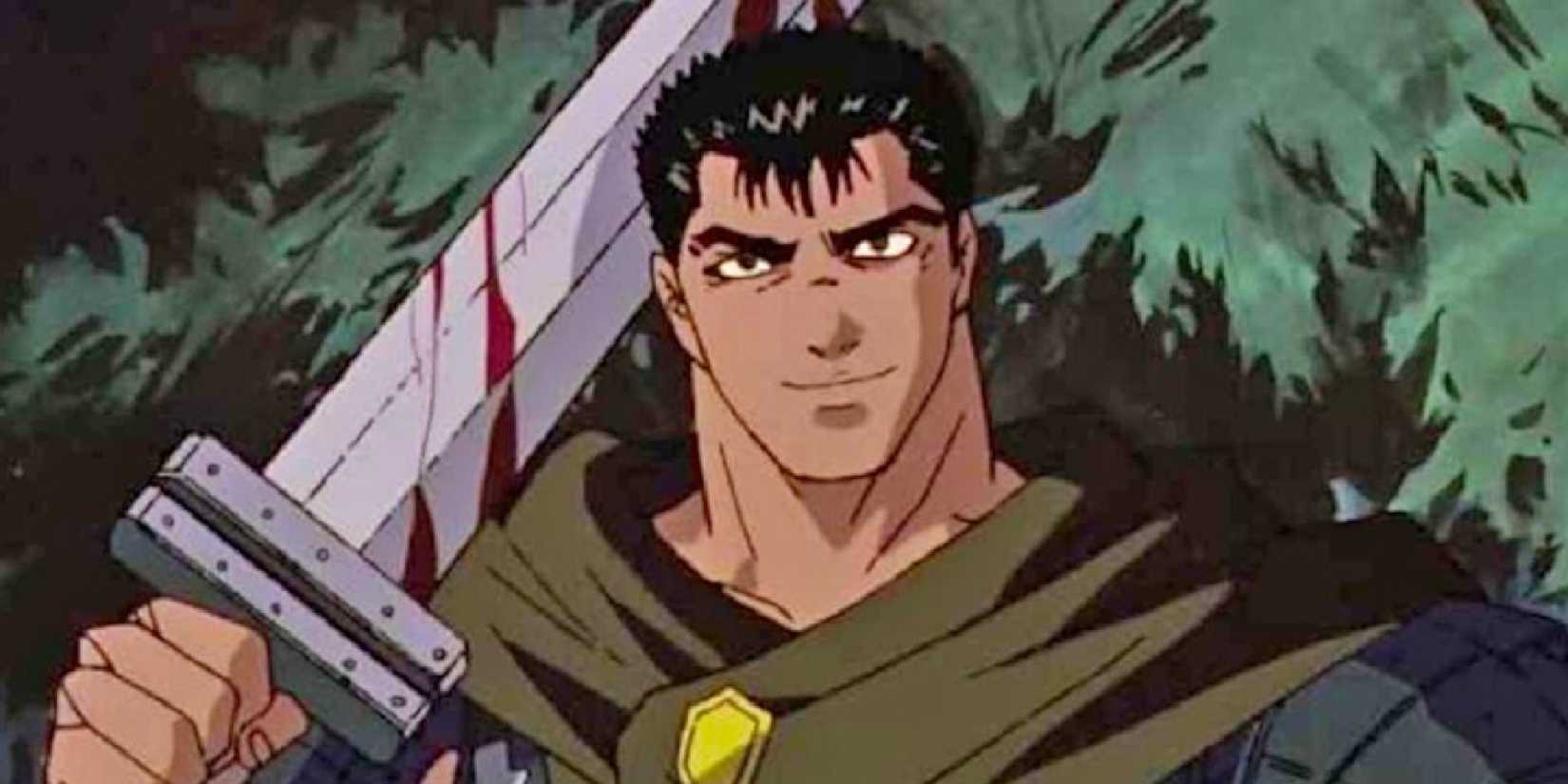
Guts (Nobutoshi Canna and Marc Diraison) is an enigmatic mercenary who wanders the land wielding a massive sword and a brand that attracts the forces of darkness to him. A flashback reveals that his troubles began when he met Griffith (Toshiyuki Morikawa and Kevin T. Collins), the leader of the Band of the Hawk, who recruited Guts after defeating him in a duel. Over time, the two become friends as Guts helps Griffith achieve his goal of ruling his own kingdom, but a series of betrayals and poor choices sees their fates altered in the most unforeseeable of ways.
Berserk focuses on the manga’s Golden Age Arc, which explains the backstory of the principal characters. Thus, the story is a tragedy of epic proportions, with each character getting enough time to establish them as fully-realized characters with camaraderie and unique dialogue about the meaning of life and the dangers of reckless ambition. It’s also got plenty of epic battles, a gritty dark fantasy world, and a haunting soundtrack that compliments the mature tone.
‘Cowboy Bebop’ (1998–1999)

With the aid of hyperspace gateways, humanity leaves a devastated Earth and spreads itself across the Solar System. This, unfortunately, leads to an increase in crime among the colonies, so the struggling Inter Solar System Police instate a bounty system that will pay registered mercenaries if they bring the criminals in alive. Among these mercenaries, nicknamed “Cowboys,” is the crew of the Bebop, who struggle to get enough bounties to keep themselves fed day by day, while also dealing with ghosts from their pasts.
Cowboy Bebop is often ranked as one of the best animes, and thanks to being only 26 episodes long, it’s also an easy binge. The writing combining elements of space opera, film noir, and westerns into a one-of-a-kind science fiction world that is guaranteed to leave you eager to learn more about it and the complex people who dwell within. It’s also got phenomenal music, courtesy of Yoko Kanno, which at times is used to carry the story in lieu of dialogue.
‘One Piece’ (1999–Present)

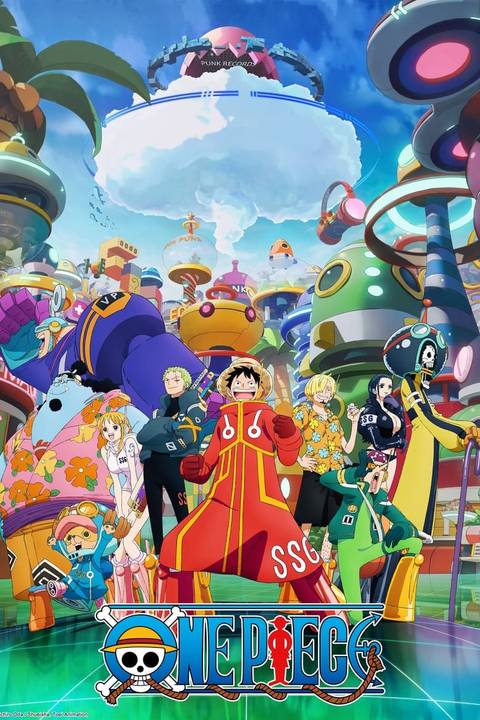
Before he was executed by the World Government, Pirate King Gol D. Rogers (Chikao Ohtsuka and Sean Hennigan) announced that his massive fortune, called One Piece, would be available to anyone who can find it first. This sparks a new era of piracy as hundreds of ships sail the seas, headed for the Grand Line, a dangerous sea route that is supposed to lead to One Piece’s hiding spot. Among these treasure hunters are the Straw Hat Pirates, captained by Monkey D. Luffy (Mayumi Tanaka and Colleen Clinkenbeard), a young man who ate a magic fruit that turned his skin to rubber.
One Piece is one of the most recognized pieces of Japanese media, and between its near 30-year run and a live-action adaptation on Netflix, it shows no signs of stopping anytime soon. Audiences remain enthralled thanks to the fantastic worldbuilding and storytelling, as the Straw Hats visit new locations with their own unique cultures and factions, a robust set of powers that ensure characters feel unique, and long-form storytelling that is constantly paying off events setup years ago. Speaking of the characters, the Straw Hats in particular are a fantastic group of protagonists thanks to their diverse skills, flaws, and dreams, resulting in a wide array of fantastic character interactions and developments.

One Piece
- Release Date
-
October 20, 1999
- Network
-
Fuji TV
- Directors
-
Hiroaki Miyamoto, Konosuke Uda, Junji Shimizu, Satoshi Itō, Munehisa Sakai, Katsumi Tokoro, Yutaka Nakajima, Yoshihiro Ueda, Kenichi Takeshita, Yoko Ikeda, Ryota Nakamura, Hiroyuki Kakudou, Takahiro Imamura, Toshihiro Maeya, Yûji Endô, Nozomu Shishido, Hidehiko Kadota, Sumio Watanabe, Harume Kosaka, Yasuhiro Tanabe, Yukihiko Nakao, Keisuke Onishi, Junichi Fujise, Hiroyuki Satou
- Writers
-
Jin Tanaka, Akiko Inoue, Junki Takegami, Shinzo Fujita, Shouji Yonemura, Yoshiyuki Suga, Atsuhiro Tomioka, Hirohiko Uesaka, Michiru Shimada, Isao Murayama, Takuya Masumoto, Yoichi Takahashi, Momoka Toyoda
-

Mayumi Tanaka
Monkey D. Luffy (voice)
-
Kazuya Nakai
Roronoa Zoro (voice)

You must be logged in to post a comment Login