Entertainment
10 Best Depictions of Childhood in Movies

The nature, experiences, and allure of childhood have, for many decades, been one of the most pointed and powerful ideas cinema has explored. It is no surprise that many of the films that have explored youth the best exude an arresting sense of nostalgic yearning, hearkening to the ideal of childhood’s unburdened freedom to capture an air of wonder, possibility, and fun. However, many of the best movies to examine the theme also come with meditations on the loss of innocence, the pressures of family, and the numbing nature in which a child’s naivety clashes with the harshness of reality.
Ranging from underrated classics of the 21st century to iconic blockbusters of the 1980s, these tales of youth are the best depictions of childhood cinema has ever seen. Furthermore, with films from France, Japan, Ireland, Iran, and Sweden as well as America featuring prominently, this collection of movies also showcases the universality of the appeal of childhood as a time of excitement, wonder, and discovery.

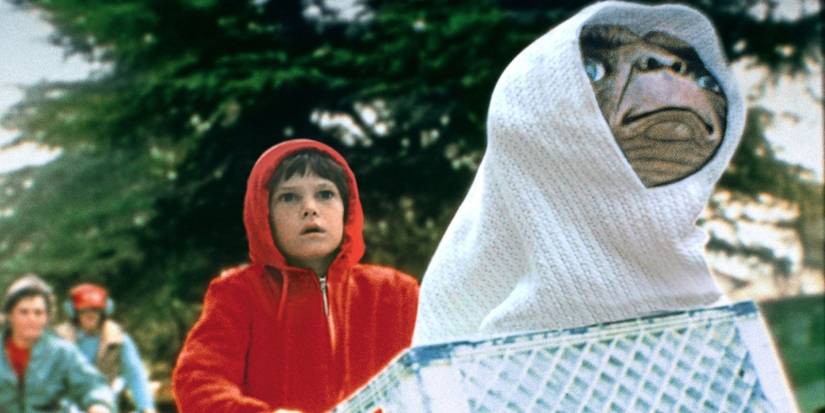
Marking one of the most iconic titles in Hollywood history, E.T. the Extra-Terrestrial shines not only as a stunning sci-fi blockbuster, but as one of the most mesmerizing and immersive portrayals of childhood to have ever graced mainstream cinema. Entwined in the magical tale of alien companionship and the efforts to elude government agents, it epitomizes the sheer wonder and adventure of youth with a magnetism that makes everyone who views it feel like a child again.
Steven Spielberg is obviously a master of conjuring such a sense of imaginative awe, but one thing he does brilliantly in E.T. is grounding the movie in moments of heartbreaking drama and, at times, even confronting terror. It captures the full array of experiences and emotions children go through, rather than just romanticizing feelings of glee and excitement. Further supported by the exquisite, characterful puppetry of E.T. and Spielberg’s use of perspective that plants the audience in young Elliott’s (Henry Thomas) view of the world, E.T. the Extra-Terrestrial is the finest display of childhood awe that blockbuster cinema has ever seen.
‘The Quiet Girl’ (2022)


While it received widespread critical acclaim and even netted an Academy Award nomination, The Quiet Girl has gone largely unnoticed despite delivering a beautifully poignant exploration of childhood fragility. As one of many siblings living in an impoverished and bitterly dysfunctional household in rural Ireland, Cáit (Catherine Clinch) has grown withdrawn and reclusive. To unburden the stress her family is enduring as her mother manages another pregnancy, she is sent to live with aging distant relatives Eibhlín (Carrie Crowley) and Seán Kinsella (Andrew Bennett) on their farm, where she begins to blossom in their care.
Understated, restrained, and deftly delicate, The Quiet Girl uses its subdued realism to weave an emotionally enrapturing story of neglect, love, and discovery. It marks a masterful directorial debut from Colm Bairéad, who lingers on moments of nuance, connection, and secluded beauty with complete control, conjuring moving sequences where muted gestures and unspoken words become profoundly powerful. It is thematically confronting in how it explores turmoil and mistreatment through the eyes of a child, but it soars with its touching found-family dynamic that finds the warmth and love of childhood even within difficult circumstances.
‘Au revoir les enfants’ (1987)

With its title translating to “Goodbye Children,” Au revoir les enfants is a somber and sobering descent into the fragility of childhood in the midst of sweeping turmoil and political tension. Set in a French boarding school during WWII, it follows the strained bond that develops between Julien (Gaspard Manesse) and Jean (Raphaël Fejtő), a socially awkward student new to the school who Julien discovers to be a Jew in hiding.
Rather than drifting on sentiment, Au revoir les enfants depicts boyhood in its reality, portraying the students as bawdy, mischievous, and cheekily troublesome youths striving to prove their masculinity to one another. The way director Louis Malle captures this gallivanting while still illustrating the innocence of the characters is astonishing, as is the devastating climax, which shows how innocence doesn’t fade gradually, but often shatters against accountability and brutality.
‘Boyhood’ (2014)

A masterful encapsulation of childhood and coming-of-age that was ambitiously filmed over 12 years, following the same actors from grade school to young adulthood, Boyhood offers a fluid and grounded depiction of the life of a child. Told through a series of vignettes that capture family gatherings, road trips, birthday parties, and schooling milestones, it follows Mason’s (Ellar Coltrane) formative experiences as he and his sister grow up from being little kids to teenagers on the brink of college.
The stunning scope of the film, presented over the course of a 165-minute runtime, unfolds like a memory of childhood, a blurry yet beautiful procession of important moments that emphasize the quaint details of life. True to director Richard Linklater’s style, Boyhood is a feat of naturalism in cinema, an exploration of the highs and lows of an upbringing under divorced parents that wrestles with the flawed humanity of all its characters through a lens of arresting authenticity.
‘Fanny and Alexander’ (1982)

Initially released as a five-hour miniseries by Swedish maestro Ingmar Bergman, Fanny and Alexander was trimmed down to a stunning three-hour realization of childhood that contrasts the wondrous freedom of youth against the intimidating vulnerability of helplessness in a world ruled by adults. Set in the early 20th century, it follows siblings Alexander (Bertil Guve) and Fanny Ekdahl (Pernilla Allwin) as they navigate the tumultuous shifts in their peaceful family life in the aftermath of their father’s death and their mother’s marriage to a strict bishop.
Bergman’s ability to explore dichotomy is on full display. The movie dissects both an adult’s vision of the world against a child’s and explores the stark difference between the warmth and tenderness of motherhood and the cold, masculine sterility of fatherhood. Further strengthened by its ability to weave together fantasy and reality, Fanny and Alexander is a masterclass in childhood wonder and a masterpiece of international cinema.
‘I Was Born, But…’ (1932)

Through its reliance on visual storytelling, particularly in performance, silent comedy cinema often holds a striking sense of sincerity that is emotionally captivating. That is certainly the case with I Was Born, But…, an underrated masterpiece from Japanese filmmaking genius Yasujirō Ozu that unfolds as two young brothers move to Tokyo with their father when he is transferred. As they navigate issues of bullying and social cliques, they must also reckon with a soul-shattering reality when they discover their father, whom they idolize, is routinely ridiculed in his workplace.
Amongst their peers, the boys strive for masculinity. Acts of truancy and aspirations of strength display their desire for power in their naïve vision of the world. But their innocence is inescapable when they are exposed to the true callousness of the world through their father’s mistreatment and their complex feelings of shame, anger, and reluctant acceptance. The fact that the story transpires with such elegance and resonance despite not having dialogue is incredible, making I Was Born, But… a monumental achievement of cinema and a powerful exploration of childhood.
‘Children of Heaven’ (1997)

While it has perhaps gone unnoticed by the masses, Iranian cinema has been a beacon of excellence in the form on the international stage for many years now. One of the country’s defining masterpieces is Children of Heaven, a poignant and ensnaring family picture of profound humanism. When Ali (Amir Farrokh Hashemian) loses his sister’s shoes while running errands, the two siblings concoct a scheme to keep the accident hidden from their parents. When it becomes increasingly difficult to keep the ruse going, Ali enters a running race to win new shoes.
Anchored by the captivating performances of the two young stars, Children of Heaven enthralls viewers in the adorable yet visceral stakes of the lost shoes, using the issue to explore childhood morality, sibling bonds, and the fine balance between innocence and accountability. Exuding an air of wonder, charm, and joyous adventure with sublime tenderness, the Iranian film is an emotionally gripping immersion into the ideals and troubles of childhood.
‘Stand By Me’ (1986)

Directed by Rob Reiner and based on the Stephen King novella The Body, Stand by Me explores a fascinating stage of a child’s development, the fleeting moment on the cusp of adolescence as youthful curiosity clashes with teenage recklessness. Following four friends as they venture into the woods to see a dead body, its premise is laced with an interest in violence that so many young boys think makes them manly, but its execution is defined by the boys’ underlying innocence and their beautiful friendship.
Reiner’s direction makes the film a masterful immersion in the emotions of youth that is nostalgic and piercing without relying on sentiment. Its tragic finale, punctuated by the beautifully worded observation, “I never had any friends later on like the ones I had when I was twelve. Jesus, does anyone?” which embodies the perfection of Stand by Me and the precision with which it captures the essence of boyhood in all its bittersweet glory.
‘Cinema Paradiso’ (1988)

An ode to cinema and the influences in childhood that shape our lives, Cinema Paradiso is a gorgeous and soulful drama of human connection, community, and the uniting force of art. After hearing about the death of the projectionist from his hometown, an Italian director reflects on his childhood and his formative relationship with Alfredo (Philippe Noiret), who cultivated his passion for cinema and helped him in his adolescence as he struggled with the agony of first love.
Complemented by Ennio Morricone’s beautiful score, Cinema Paradiso relishes the journey of life and the way the memories of youth, infused with an idealized air of mischief, magic, and wonder, last a lifetime. Its final act, following the director as he returns to his hometown to attend Guido’s funeral, becomes a bittersweet meditation on the fragility of childhood recollections against the brutality of the passage of time. Made truly unforgettable by its astonishing final moments that encapsulate the glory of cinema and memory, Cinema Paradiso is a heartwarming depiction of childhood at its most wondrous and pure.
‘The 400 Blows’ (1959)

Authentic and compassionate in its examination of childhood innocence in the harshness of the real world, The 400 Blows is viewed by many as being the ultimate exploration of youth in cinema. Directed by French filmmaking legend François Truffaut, it follows young Antoine (Jean-Pierre Léaud), a neglected boy misunderstood by his parents and tormented by his teacher due to his rebellious behavior, as he abandons his schooling and embarks on a life of petty crime that leads him to a juvenile detention center.
Under Truffaut’s sympathetic lens, Antoine’s story isn’t presented as a nihilistic tragedy, but as a complex and sincere examination of troubled youth where reckless decisions and inevitable consequences are offset by beats of friendship, camaraderie, and innocent joy. The 400 Blows holds strong criticisms of the world, but it places them at the feet of adults rather than at the whims of a child’s struggles. In doing this, it balances misbehavior with vulnerability, and emerges as the most piercing, powerful, and essential depiction of childhood.
You must be logged in to post a comment Login