Entertainment
10 Best Epic Movie Masterpieces With Great Acting, Ranked

“Epic” isn’t just an adjective one can ascribe to a film: It’s a whole genre unto itself, one whose definition tends to be somewhat vague. But, in broad strokes, one can define a cinematic epic as a large-scale film of sweeping scope and grandeur; they’re usually quite long, usually quite expensive, and usually all about spectacle. But spectacle doesn’t need to come exclusively from large set pieces, it can also come from some of the greatest acting performances cinema has ever seen.
Those who love the epic genre are well aware of the fact that it has offered some exceptional performances over the years. From modern Hollywood blockbusters like The Dark Knight to international classics like Seven Samurai, these are films whose actors understood that a large-scale story is the perfect place to offer a large-scale performance.
10
‘Titanic’ (1997)
Tied with Ben-Hur and The Lord of the Rings: The Return of the King for the most Academy Award wins in history (with a whopping 11), James Cameron‘s Titanic proves why this is seen as one of the most visionary filmmakers working in Hollywood today. It’s far more than just a sweeping romance: It’s one of the biggest, most emotionally riveting period epics ever made.
Titanic is the cinematic epic par excellence, checking off pretty much every box that the genre requires—including absolutely unforgettable larger-than-life performances. There are the turns that made Leonardo DiCaprio and Kate Winslet international superstars and household names; Billy Zane‘s exquisitely evil performance as the film’s main antagonist; and Kathy Bates‘ scene-stealing supporting role. It’s a large cast, but Cameron gives everyone their time to shine.
9
‘Amadeus’ (1984)


Plenty of drama masterpieces with great acting came out during the ’80s, but only one of them is a rousing epic about jealousy and rivalry focused on Wolfgang Amadeus Mozart and Antonio Salieri. That’s Miloš Forman‘s Amadeus, a masterpiece that draws a surprisingly long runtime and unexpectedly juicy bits of drama from one of the most mythologized rivalries in modern history.
But the movie wouldn’t have worked half as well if Tom Hulce weren’t so electrifying as Mozart or if F. Murray Abraham’s Oscar-winning turn as Salieri weren’t so emotionally powerful. The film is certainly dominated acting-wise by its central duet, but supporting stars like Elizabeth Berridge and Jeffrey Jones, round out the cast tremendously well, making for an ensemble that one simply can’t take one’s eyes off of.
8
‘Schindler’s List’ (1993)


Steven Spielberg is the king of blockbusters, and the man behind several of the greatest and most entertaining pop corn flicks in history, but the best movie he’s ever made is far different from anything else in his filmography. The title has to go to his Best Picture Oscar-winning Schindler’s List, both a harrowing period piece set during the Holocaust and one of the best biopics of all time.
Oskar Schindler was always going to be a very complicated figure to bring to life in a way that felt nuanced enough, but Liam Neeson does a phenomenal job at making the character feel like a complete, complicated individual. Then there’s Ralph Fiennes, whose portrayal of SS functionary Amon Göth was so chillingly realistic that a Holocaust survivor who has brought on the set was visibly terrified of him. Add to that an amazing Sir Ben Kingsley and an equally strong supporting cast, an you get one of the strongest ensembles of any ’90s film.
7
‘The Dark Knight’ (2008)

Plenty of action blockbusters with great acting have come out over the years, but few with performances superior to those in Christopher Nolan‘s The Dark Knight. The elephant in the room every time anyone talks about the most beloved superhero film of all time is Heath Ledger, whose Oscar-winning embodiment of the Joker may just be the greatest villain performance of the 21st century by far.
But while Ledger’s transcendental performance is admittedly one of the main reasons why The Dark Knight is held in such high regard, it’s not the only one. This is the movie where Christian Bale fully came into his own as both Batman and Bruce Wayne, and he shares exceptional chemistry with Maggie Gyllenhaal (who replaced Katie Holmes from Batman Begins as Rachel Dawes). Aaron Eckhart‘s turn as Two-Face is also criminally underappreciated, nicely rounding out a cast for the history books.
6
‘There Will Be Blood’ (2007)

Paul Thomas Anderson has been one of the greatest filmmakers in Hollywood since the ’90s, and he’s managed to never deliver a single film that could be considered outright bad. But, like all the greats, he also has an undisputed magnum opus: There Will Be Blood, where the legendary Daniel Day-Lewis delivers one of the most undeniable Best Actor Oscar wins in history.
Day-Lewis is far and away one of the most gifted thespians of his generation, and There Will Be Blood is proof enough of that. But the film is also proof that, despite what Quentin Tarantino might foolishly say, Paul Dano deserves to be counted among the best of his generation every bit as much as Day-Lewis does. These two titans would have been enough to qualify this as one of the best-acted films of the 2000s, but then there’s also Dillon Freasier delivering one of the best child performances of all time.
5
‘The Lord of the Rings’ Trilogy
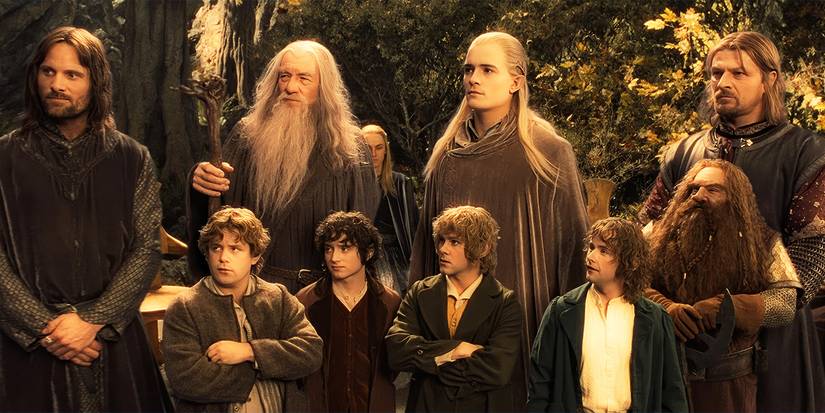
For a while, no one would have blamed any fans of J. R. R. Tolkien‘s The Lord of the Rings books for thinking that their favorite series of fantasy masterpieces was impossible to adapt into a film that paid proper respect to the books’ legacy. Along came Peter Jackson and dispersed any doubts that anyone might have had, delivering not just one, not just two, but three of the best fantasy adventure movies of all time.
Every actor in the Fellowship of the Ring, from Viggo Mortensen to Ian McKellen to Sean Astin, carries the whole trilogy on their shoulders effortlessly.
When talking about these films in general—and about their cast in particular—, it’s impossible not to naturally group them together. Every actor in the Fellowship of the Ring, from Viggo Mortensen to Ian McKellen to Sean Astin, carries the whole trilogy on their shoulders effortlessly; and when you add iconic supporting turns like Bernard Hill‘s, Christopher Lee‘s, and Brad Dourif‘s, it’s impossible not to think of this as the greatest cast ever assembled for a fantasy epic franchise.
4
‘Seven Samurai’ (1954)

Akira Kurosawa is not only the undisputed greatest filmmaker in Japanese history; some even refer to him as the single greatest movie director of all time, and deservedly so. After all, who, if not the most gifted auteur in cinematic history, could have made a masterpiece of Seven Samurai‘s stature? Often imitated but never matched, this action epic shows why Kurosawa would deserve to be at the forefront of a hypothetical Mount Rushmore of action movie directors.
There are several reasons why this is one of the greatest masterpieces in the history of cinema, such as the thrilling set pieces and Kurosawa’s unforgettable visuals, but there’s also the tremendous cast. Toshirô Mifune, Takashi Shimura, Seiji Miyaguchi, and the rest of the incredible cast are all among the greatest Japanese thespians who have ever lived, and their career-best performances here are the stuff of international movie legend.
3
‘Lawrence of Arabia’ (1962)
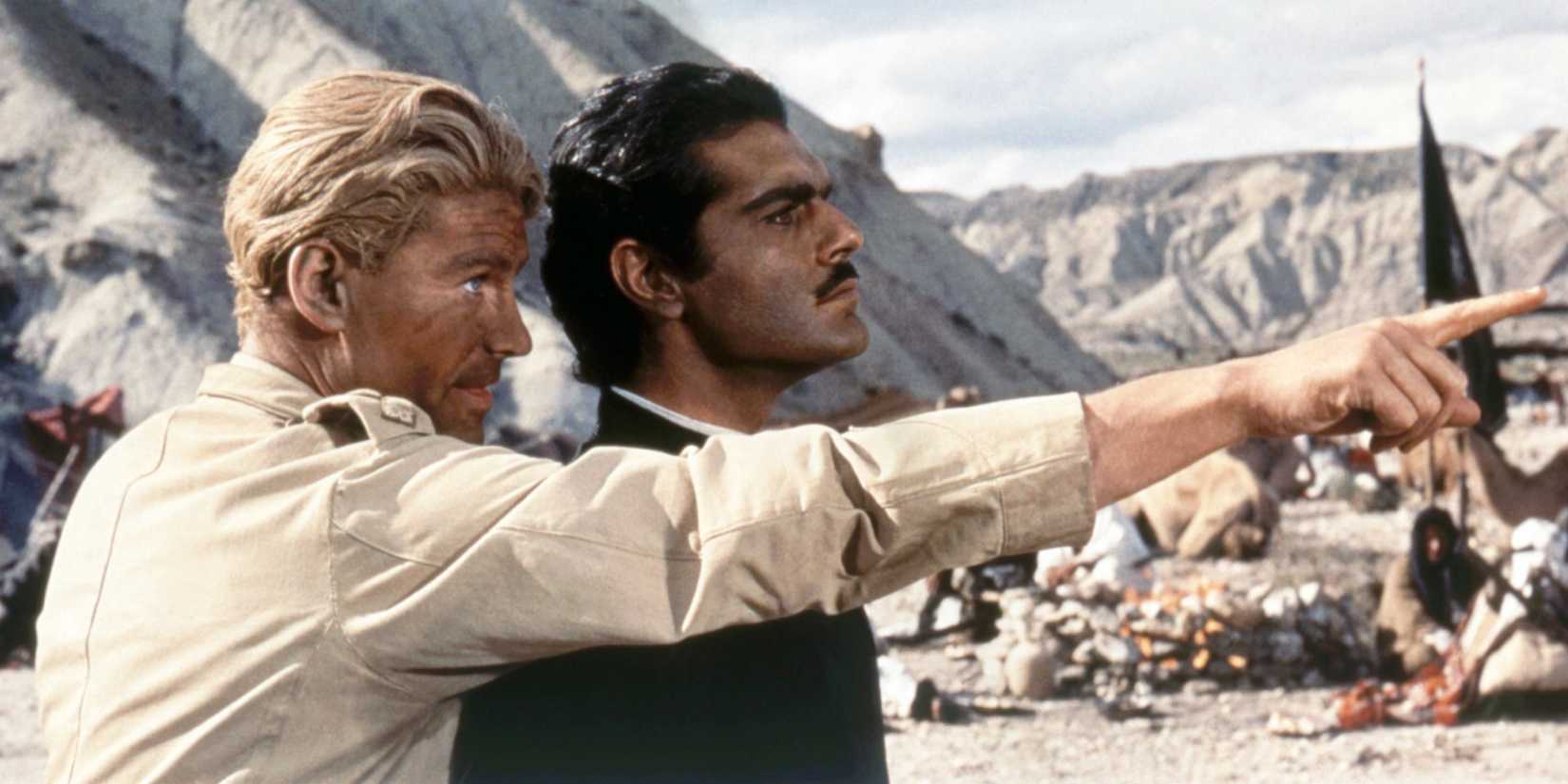
One of the most ambitious Best Picture Oscar winners of all time, made by a director that most cinephiles would agree was the master of the cinematic epic genre, Lawrence of Arabia is a WWII biopic unlike any other. What David Lean achieved here has never been done quite on this scale since: A war epic of massive scale and sweeping scope, but one balanced with the feeling of a deeply intimate character study, which results in one of the most complete and complex biopics ever made.
It’s astonishing that this was Peter O’Toole‘s first-ever leading role, since his portrayal of T. E. Lawrence is one of the greatest acting performances in the history of film. Add to that Alec Guinness, Anthony Quinn, and Omar Sharif, and you get one of the most incredible cast ensembles in the history of cinema. Every performance in Lawrence of Arabia is larger than life, and it makes for a movie that keeps you on the edge of your seat for nearly four hours through its performances alone.
2
‘Magnolia’ (1999)

After talking about There Will Be Blood, no more proof should be needed that Paul Thomas Anderson knows his stuff when it comes to bringing together a legendary cast; but for those still doubtful, there’s also Magnolia. This is an epic not so much in scale, but rather in the intricacy of its enthralling tapestry of characters, all played by some of the biggest and greatest stars that were working in Hollywood in 1999.
The list is borderline jaw-dropping. Julianne Moore, Philip Seymour Hoffman, William H. Macy, and John C. Reilly all deliver turns that deserve to be counted among the best of any ’90s film, and Tom Cruise gives what’s still the best performance of his career. Magnolia works as well as it does not only because PTA directs and writes it in such a taut, emotionally stirring way, but mainly because the cast is so legendarily amazing all across the board.
1
‘The Godfather’ (1972) and ‘The Godfather Part II’ (1974)

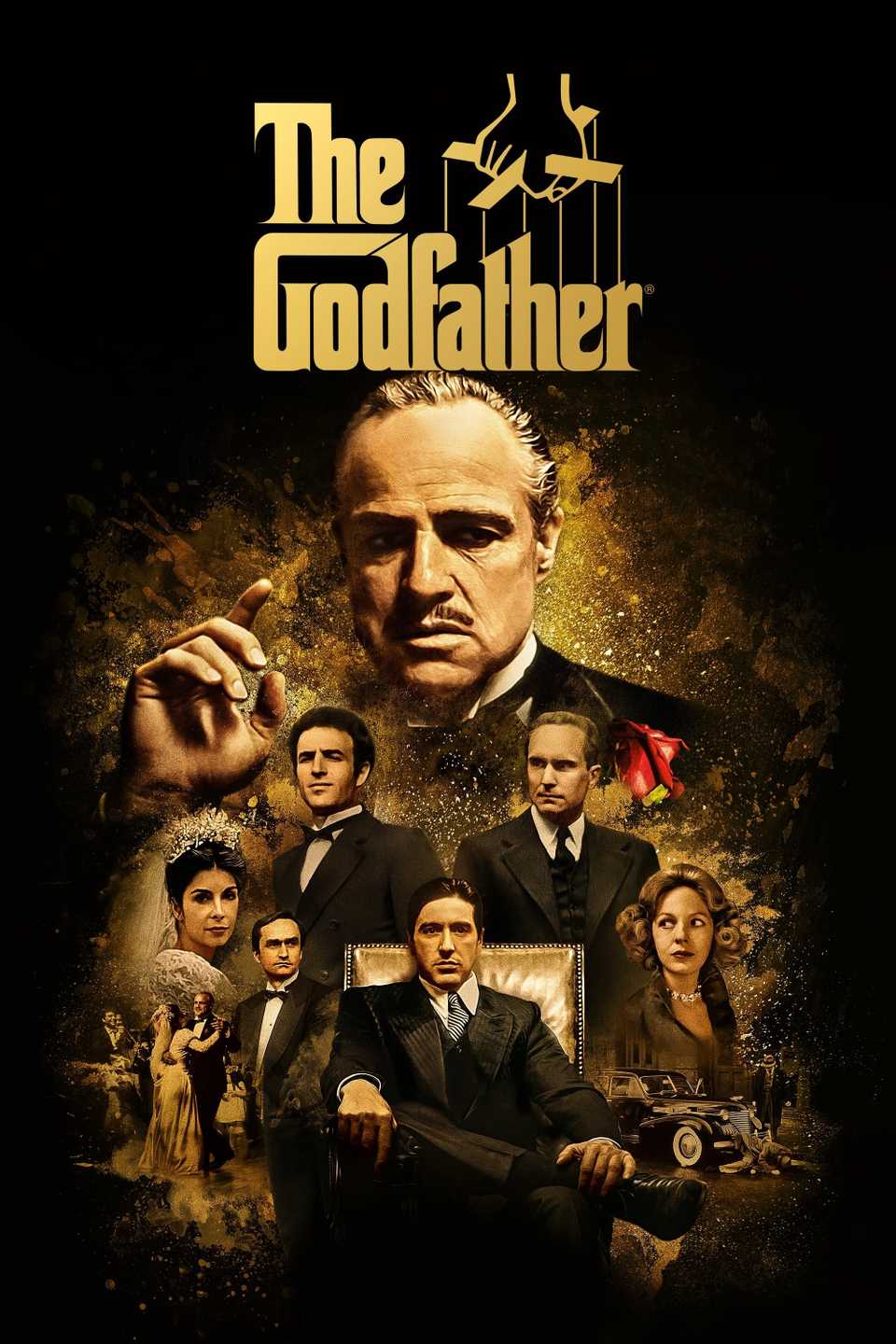
An admirable number of movie fans would very likely say that never in history have there ever been two films quite like Francis Ford Coppola‘s The Godfather and The Godfather Part II. One is arguably the greatest of all gangster films, while the other works as the best sequel and best prequel in the history of cinema. Both films are masterclasses in virtually ever department that comes into making a movie, and that most definitely includes acting.
Marlon Brando and Robert De Niro as Vito, Al Pacino as Michael, Diane Keaton as Kay, James Caan as Sonny, John Cazale as Fredo. These are all names that you’ll very easily find in people’s rankings of the best acting performances in Hollywood history, and very rightfully so. The Godfather and The Godfather Part II are flawless crime epics, but they’re also so much more than that—including, for instance, the best-acted epics in the history of cinema.

The Godfather
- Release Date
-
March 24, 1972
- Runtime
-
175 minutes
- Director
-
Francis Ford Coppola
- Writers
-
Mario Puzo, Francis Ford Coppola


The Godfather Part II
- Release Date
-
December 20, 1974
- Runtime
-
202 minutes
- Director
-
Francis Ford Coppola
- Writers
-
Francis Ford Coppola, Mario Puzo
You must be logged in to post a comment Login