Entertainment
10 Best Gritty Crime Movies of All Time, Ranked

Crime fiction is an enduring part of cinematic history, and it’s responsible for some of the greatest films of all-time. As the world’s relationship within criminality evolved over the course of the 20th century, films began to take different perspectives on what type of stories they would tell. Initially, a pulpy crime thriller was just another form of escapist cinema, but the “New Hollywood” era utilized it to tell more complex stories about lived experiences.
Grittiness is a challenging term to define, as it doesn’t just mean that something is dark and violent. Rather, a “gritty” film should speak to some sort of societal truth that grounds the story in humanity because it offers something familiar. A reminder that these types of films aren’t escapist fantasies but thrillers that say something about the human condition is why they have been able to stand the test of time.
10
‘M’ (1931)


M is one of the most foundational works of the German expressionist movement and outlined the paranoid, neo-noir genre in a way that would be highly influential within the next few decades of crime fiction. Although the term “serial killer” wouldn’t be coined for almost four decades, M featured a terrifying performance by Peter Lorre as a child murderer who is so dangerous that the mob and the cops work together to track him down.
M set precedents within the genre because it introduced the idea of comparative morality when it comes to forging bonds. Rarely in crime films are characters given the opportunity to ally themselves with those who share their same ethical standards; although the cops would have no other reason to work with the mob, they are forced to ally for the collective good of the community’s safety.
9
‘The Untouchables’ (1987)

The Untouchables was an electrifying adaptation of the classic television show of the same name that saw Brian De Palma making one of his most entertaining films ever. Although De Palma had made a number of thrillers and psychological horror films early on in his career, he was able to draw from history to show how the Chicago cop Elliot Ness (Kevin Costner) and his ragtag group of law enforcement officers led the hunt to take down Al Capone (Robert De Niro).
Costner has rarely been better than he is as a desperate, morally upstanding defender of justice, but the film’s real scene-stealer was Sean Connery as a veteran Irish cop who decides to join his team. Although Connery was considered to be past his prime at this point in his career, his performance was so acclaimed that he ended up winning the Academy Award for Best Supporting Actor.
8
‘Once Upon a Time in America’ (1984)


Once Upon a Time in America was an ambitious drama about the futility of the American dream directed by the great Italian filmmaker Sergio Leone, who was best known for making “The Man With No Name” trilogy. Despite the fact that he was best known for making Westerns, Leone was able to make an elegiac epic about the journey of immigrants involved in mob conflicts throughout the 20th century, painting a damning portrayal of generational violence.
Once Upon a Time in America was what got Leone out of retirement after he had prematurely ended his career in the early ’70s, and sadly, the theatrically released film was marred by endless studio cuts. Thankfully, the director’s cut of Once Upon a Time in America, which ran for over four hours long, was eventually unveiled at festivals and given the praise that it deserved.
7
‘Point Blank’ (1967)

Point Blank was a feat of formal innovation within the action genre that saw director John Boorman turning what could have been a trashy B-movie into an existentialist drama. The film stars the great action star Lee Marvin as a hitman who is abandoned and left for dead by his former allies, leading him on a quest for revenge as he tries to piece together his life.
Boorman uses eerie, slightly surrealist repetition techniques to tap into the madness of Marvin’s character, with some theories suggesting it is all part of an elaborate fantasy he had in the moments before his death. Point Blank had a significant influence on the career of Steven Soderbergh, who made his own homage to the film with his 1999 crime thriller The Limey, starring Terence Stamp in a role based on Marvin’s performance.
6
‘Dog Day Afternoon’ (1975)

Dog Day Afternoon is the ultimate heist film because it explores the pressure and anxiety faced by a criminal as their plan falls apart and the grim reality of the situation becomes even clearer. Although Sidney Lumet has made many crime films that would be considered to be among the best of all-time, Dog Day Afternoon is significant because he was able to contain all of the tension within the single location of a bank.
Dog Day Afternoon featured one of the greatest performances ever from Al Pacino, who was able to show a surprising degree of levity and vulnerability, as the film functions as a sincere commentary on marginalization and class warfare. Although Dog Day Afternoon was an Oscar-nominated masterpiece that would seemingly be impossible to ever remake, this year saw a new Broadway version of the story with Jon Bernthal in the role that Pacino had played.
5
‘The Maltese Falcon’ (1941)

The Maltese Falcon is the foremost entry in the hardboiled detective genre because it saw the introduction of Sam Spade, the definitive private eye character in fiction. The moody, intense atmosphere of the classic film noir movement of the 1940s required a protagonist who was world-weary and a bit cynical, and The Maltese Falcon perfectly cast Spade by getting Humphrey Bogart in what would become one of his most iconic roles.
The Maltese Falcon is the directorial debut of John Huston, a former actor who would go on to become one of the most respected filmmakers of the 20th century. Although Huston would go on to direct many epics and historical dramas, The Maltese Falcon succeeded by telling a confined story that felt like it existed in a real city, and that realism would become a cornerstone of the genre moving forward.
4
‘The French Connection’ (1971)

The French Connection is one of the greatest films to ever win Best Picture at the Academy Awards and felt perfectly suited for an unusual point in American history in which the “war on drugs” had gone into full effect. Gene Hackman gave the most iconic performance of his career as Popeye Doyle, a committed detective who is determined to stop a French criminal (Fernando Ray) from bringing drugs into the United States.
Friedkin was a former documentary filmmaker who showed an unprecedented level of detail in exploring the investigative process of the cops, as The French Connection explored the mundanity of law enforcement in a way that cinema hadn’t seen before. The film is best known for its showstopping car chase, which put some of the cast and crew in real danger because of Friedkin’s insistence on making it as realistic as possible.
3
‘Se7en’ (1995)

Se7en was the film that solidified David Fincher as the greatest director for serial killer films because he created one of the most disturbing and multifaceted examinations of a psychopathic mind. The film follows the detectives William Somerset (Morgan Freeman) and David Mills (Brad Pitt) as they track down an enigmatic killer known only as “John Doe” (Kevin Spacey), who has been staging elaborate murders that are staged around the “Seven Deadly Sins” in the Bible.
Se7en explores the darkness that mankind must confront and ends with one of the most depressing conclusions in the history of the genre. Although Fincher would return to tell more serial killer stories in subsequent films and in his Netflix series Mindhunter, Se7en was such a transgressive work of experimentation within an established mystery genre that its influence on crime fiction cannot be overstated.
2
‘Goodfellas’ (1990)

Goodfellas is hardly the first crime film that Martin Scorsese made, but it became his most famous and is remembered as one of the most defining classics of the ’90s. Goodfellas understood, better than any other gangster film, how alluring the life of a mobster could seem, and showed how the criminal Henry Hill (Ray Liotta) is lured into the dangerous lifestyle before it all falls apart, forcing him to betray his former allies.
Goodfellas is among Scorsese’s most entertaining films because he understood the ways in which gangsters talked and took efforts to explore the communities that emerged among their families. Scorsese’s use of music has rarely been better thanks to the numerous great needle drops. It’s a film stacked with great performances, including Joe Pesci in the scene-stealing role as Tommy DeVito, which won him the Academy Award for Best Supporting Actor.
1
‘The Godfather’ (1972)

The Godfather marked the beginning of the greatest story in cinematic history and changed the way that crime films were perceived forever. Although gangster films had previously been seen as works of trashy exploitation, Francis Ford Coppola elevated the acclaimed novel by Mario Puzo to tell a complex story about family, loyalty, and the American dream that had the richness of a Shakespeare play.
The Godfather has the single best ensemble of any film ever made, as there is an exorbitant amount of detail that each character has, making them each memorable and tragic in their own ways. Although the film’s story is not complete without The Godfather: Part II, the 1974 follow-up from Coppola that acted as both a prequel and a sequel, the original classic remains the perfect installment in the series and perhaps the best film ever made.

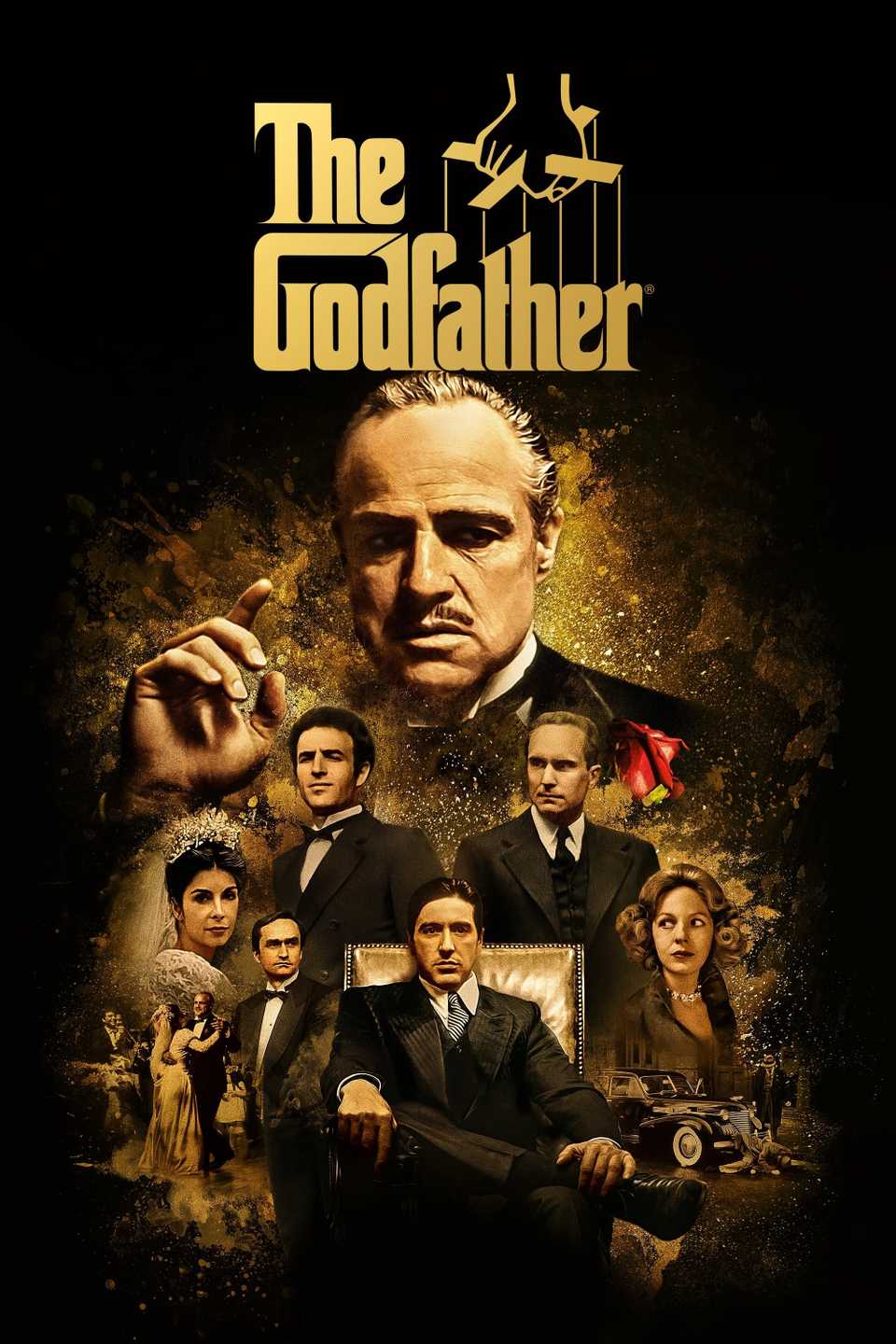
The Godfather
- Release Date
-
March 24, 1972
- Runtime
-
175 minutes
- Director
-
Francis Ford Coppola
- Writers
-
Mario Puzo, Francis Ford Coppola
You must be logged in to post a comment Login