Entertainment
10 Best Picture Winners That Have Aged Like Milk Under the Sun

The Oscars are the most prestigious awards in cinema and a celebration of the craft at its absolute best, designed to recognize and commend the most illustrious achievements across every discipline of the medium. However, the passage of time isn’t always so kind, and for all the acclaimed and timeless masterpieces that won Best Picture, there have also been plenty of Oscars dished out for titles that are pretty difficult to endure today.
It’s not to say these films are innately bad. Rather, we must observe how greatly society has changed over the past 100 years, and how movies that were once regarded as being the peak of cinematic artistry have dwindled even as some of their contemporaries have endured. From hits of early Hollywood that haven’t held up from a technical standpoint to mid-century melodramas and musicals that flaunt a frightfully outdated set of social values, and even to some more modern misfires that have quickly become questionable selections, these Best Picture winners have not stood the test of time well at all.
10
‘The Broadway Melody’ (1929)


A product of its era, The Broadway Melody is undeniably an important film in the history of the Oscars. It marks the first sound movie to ever win Best Picture and one of the first pictures to ever use Technicolor. Its pioneering ambition is commendable and impressive even when revisited today. Other elements haven’t aged quite so gracefully, with everything from its technical execution to its narrative, characters, and performances, and even its musical numbers being difficult to connect with now.
Its inconsistent sound mixing is its most distracting pitfall. It is an understandable complication of being one of the first “talkies,” but it still distances the viewer from the story at important beats. Furthermore, the weak and clichéd melodrama clashes unnaturally with its cheesy acting, a fact that only amplifies the shallow nature of its narrative and the outdated social values the film depicts. In essence, The Broadway Melody is an impressive product of its time, but it is still a product of its time, and its storytelling style, thematic interests, and clunky execution hold little to enrapture audiences almost a century on from its release.
9
‘American Beauty’ (1999)

The most obvious reason for American Beauty aging poorly may be Kevin Spacey’s well-publicized fall from grace, which makes any effort to watch him portray a lecherous character particularly unpleasant. Still, that certainly isn’t the only reason why the 1999 Best Picture winner has dwindled over the years. It follows a middle-aged man leading a seemingly idyllic suburban lifestyle as he backslides into depression, a misery that isn’t helped by his newfound yearning for his teenage daughter’s friend.
While the story’s premise can be seen as problematic, American Beauty does a reasonable job at executing it with a sense of melancholic earnestness that doesn’t treat Lester’s (Spacey) obsession as healthy or acceptable. However, its focus on the pitfalls of upper-middle-class life is narrow-minded, with the edges of Lester’s story littered with shallow caricatures. The story itself exudes a sense of self-indulgent pretentiousness that now, more so than ever, simply doesn’t resonate with the masses. Its satirical tone still has some bite, but it comments on a dated idea of societal angst. Given that 1999 also saw the release of such films as Magnolia, Eyes Wide Shut, Fight Club, and The Matrix, American Beauty’s Best Picture win is particularly difficult to stomach today.
8
‘The Great Ziegfeld’ (1936)
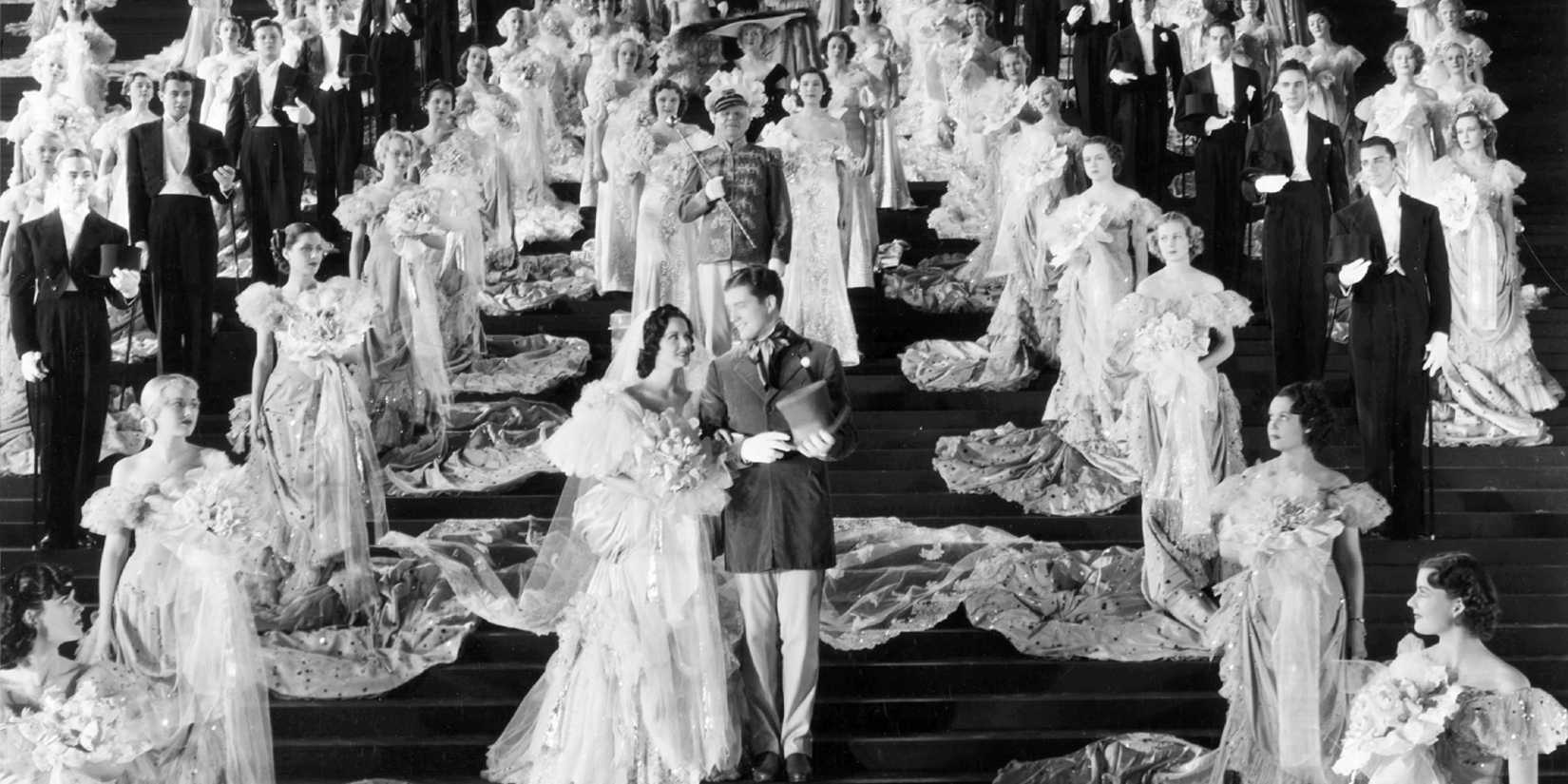
Like many of the other earlier Best Picture winners that have aged less gracefully, The Great Ziegfeld is an astonishing feat of production, especially for its time. Alas, its longevity is burdened by its shallow thematic impact and archaic storytelling. In the case of the three-time Oscar winner, it also serves as an overly glamorous and inauthentic biopic about Florenz Ziegfeld Jr., an American Broadway impresario who was a key figure in the field throughout the early part of the 20th century.
Produced with heavy input from Ziegfeld’s widow, Billie Burke, The Great Ziegfeld strays away from the more ruthless and immoral aspects of Ziegfeld’s (William Powell) life to instead present a rollicking musical drama highlighting his rampant rise through the 1920s, along with a love-triangle intrigue. It isn’t enough to sustain the film’s gargantuan three-hour runtime, ensuring The Great Ziegfeld has dwindled over time as a historically inaccurate and blunted biographical musical executed in a manner that simply doesn’t resonate with today’s viewers.
7
‘Cavalcade’ (1933)

Adapting a stage play to the screen is always a difficult task. Even modern movies that undertake such a venture often struggle to find the right balance between honoring the style and story of the original form and using the tools uniquely available to cinema to produce a spectacle befitting of the big screen. 1933’s Cavalcade suffers as a picture that is simply a static and stagnant recreation of Noel Coward’s 1931 play, bereft of cinematic ambition.
Told with paper-thin characters and an archaic vigor for old-world values, Cavalcade follows two London-based couples—the aristocratic Marryots and the working-class Bridges family—as they react to the changing times. It features historical events, including the Boer War, Queen Victoria’s death, the sinking of the Titanic, and the outbreak of WWI, that rattle the lifestyle they know. Like many old movies, it feels forced and overly exaggerated when viewed today, substituting quiet drama for heavy-handed dialogue and over-the-top performances that take what is an interesting story of societal change and strip it of all narrative cohesion and thematic impact. It won Best Picture as well as Best Direction and Best Art Direction at the 6th Academy Awards ceremony.
6
‘The Greatest Show on Earth’ (1952)


It is quite interesting how, while the Best Picture winners from the 1940s have aged immaculately, a lot of the major titles of the ’50s have grown grating over the decades. The Greatest Show on Earth is a perfect example of why. Following the ensemble of a traveling circus as they reckon with the postwar economy, the Cecil B. DeMille picture is bloated and rife with overexaggerated melodrama, weak plotting, and characters that aren’t interesting or nuanced enough to account for the 155-minute runtime.
It was even considered a controversial Best Picture selection by the Academy, given it was competing against such classics as High Noon, The Quiet Man, and even Singin’ in the Rain, which didn’t even garner a nomination. Frequently rated among the weakest Best Picture winners in Oscar history, The Greatest Show on Earth has only diminished over time, becoming an infamous blight on the Academy Awards and an arduous watch today.
5
‘Green Book’ (2016)

Marking what is the most infamous Best Picture winner in the past 20 years, Green Book has become much maligned as a movie that never should have won the award in the first place. The biographical drama aims to dissect racism as it follows acclaimed jazz pianist Dr. Donald Shirley (Mahershala Ali) on his tour in the South in the 1960s, accompanied by his driver and bodyguard, Tony Lip (Viggo Mortensen), a hard-edged bouncer from the Bronx.
For what it’s worth, Green Book does present a beautiful real-life friendship, a wonderfully acted feel-good tale of cultural differences overcome by the simple sincerity of human connection. However, its observations on racism and its ramifications are vague, short-sighted, and sometimes plain wrong, with many criticizing it as a movie that offers comfort when it should be critical and confronting. The fact that it was heralded as being a triumphant dismantling of bigotry and hate despite its relatively tame handling of such issues has seen it become a divisive film as well as a Best Picture winner that highlights the safe stagnancy that sometimes undermines the Academy Awards.
4
‘Around the World in 80 Days’ (1956)

Based on Jules Verne’s 1872 novel of the same name, Around the World in 80 Days was the big winner at the 29th Academy Awards, winning five Oscars in total, including Best Picture, a feat that saw it triumph over fellow nominees like The King and I and Giant, while classics like The Searchers didn’t even get a nod. With its globe-trotting story and its monumental 175-minute runtime, it is easy to see why the Verne adaptation was celebrated as a significant achievement in cinema, but its sensibilities and pacing are far more at home in the 1950s than they are in today’s world.
Its depiction of foreign cultures is uninspired to say the least, resorting to stereotypical and misleading simplicities, and even featuring Shirley MacLaine as an Indian princess. However, perhaps even more grating than its politically incorrect display is its dated pacing, with its agonizingly slow narrative progression relying heavily on celebrity cameos to keep the audience invested. It may have worked a charm in 1956, but the audacious fantasy Best Picture winner simply doesn’t have the same allure in 2026.
3
‘Gigi’ (1958)

Released as a lavish and light-hearted musical comedy in 1958, Gigi is widely regarded as a naïve and unnerving byproduct of a bygone era. It’s an incredibly awkward watch in today’s world, given its archaic perspective on gender dynamics and the sexualization of young women. Following the tentative and blooming romance between a Parisian playboy and a still-maturing teenager, the film was celebrated as a vivacious visual spectacle epitomizing the splendor of musical cinema.
While its production value remains an impressive feat, the nine-time Oscar winner has otherwise aged abysmally. Its central relationship between the “in-training” Gigi (Leslie Caron) and the far older and promiscuous Gaston (Louis Jourdan) isn’t only squeamish and predatory in its premise, but it is executed with a cheerfulness and charm that is, today, ill-suited to the subject matter. The inclusion of songs like “Thank Heaven for Little Girls,” the treatment of women as commodities to be chased, and even the nature of the storytelling certainly haven’t helped it stand the test of time either. Gigi is an uncomfortable relic of an era of chauvinism.
2
‘Crash’ (2004)
A movie that capitalized on the sorrow, confusion, grief, and trauma felt across America in the wake of 9/11, Crash exudes a certain self-importance with its mighty themes of prejudice, human nature, and social stratification. Alas, its scope is far too shallow and comforting to do anything of substance with such ideas. Transpiring in a time when Americans are still reeling from the events of September 11, it follows several interconnected stories of racial tension and social misunderstanding involving deeply flawed characters striving to do their best, even as they make horrific snap judgments.
Heavy-handed, simplistic, and propelling a white savior narrative that is frankly uninspired in its plot beats and progress, Crash is one of the more egregious examples of Oscar-bait cinema audiences have been bombarded with this century. It preys on the lingering cultural heartache of 9/11 while delivering moralizing and condescending tales that reduce America’s issues of systemic racism and societal belligerence to a series of individual flaws. Controversially, it upset the highly fancied Brokeback Mountain for Best Picture, an error in judgment that will stand as one of the Academy’s most confounding misfires for many years to come.
1
‘Cimarron’ (1931)

A sweeping epic that unfolds over 40 years, no one can fault Cimarron’s ambition and visual majesty, but its lethargic story and rampant insensitivities ensure that it is a movie that simply no longer has any narrative appeal. When she is dragged to Osage, Oklahoma, in the late 1880s at the behest of her husband, ambitious newspaperman Yancey Cravat (Richard Dix), Sabra (Irene Dunne) finds herself struggling to manage her inherited editorial duties while acclimatizing to a community where civilization is far from established. The couple is repeatedly separated and reunited over the ensuing decades as Oklahoma rapidly evolves.
Featuring belittling stereotypes of Native Americans, African Americans, and Jews while focusing on a supposedly triumphant tale of a white man’s burden to bring civility to the hostile and simple-minded natives, Cimarron oscillates between being boring banality and piercing controversy. It was ultimately awarded Best Picture because of the magnitude of its production and the epic ambition of its execution, but it has come to be widely viewed as the worst Best Picture winner of all time.