
Related: Naomi Watts Uses the Concealer Shoppers Say ‘Covers All My Dark Spots’
Advertisement



Pikachu has appeared on hundreds of Pokémon cards since the Trading Card Game began, but even the franchise’s mascot has never received a collection quite like this. The newly released Pokémon TCG: 30th Celebration expansion contains 30 Pikachu rare cards, each featuring a completely different artist’s interpretation of the Electric-type icon. Every booster pack guarantees one of the designs, making Pikachu the centerpiece of the entire anniversary set.
Thirty cards featuring the same Pokémon could get repetitive. Instead, this collection proves that artists still have plenty to say about Pikachu after three decades. They find the small animal underneath the mascot, the beloved companion fans wish they could bring home, and the weird little menace who cannot be trusted around household furniture. Each card understands something different about why Pikachu has lasted, but these 10 understand the character best.

Pikachu rarely gets the opportunity to stop. Most cards have it battling, running, eating, or producing enough electricity to create an insurance claim. Naoyo Kimura slows everything down and gives Pikachu a rare moment of genuine reflection. The change immediately separates this card from the collection’s more energetic entries. The artwork asks nothing from the mascot except its presence, then trusts viewers to care about what might be happening behind those enormous eyes. Of course they do. It is Pikachu.
Kimura understands that the character’s appeal has never depended entirely on action or comedy. Pikachu has been a companion for generations of fans, which means its more thoughtful moments carry their own emotional weight. This card gives that softer side of the character the attention it deserves.

Pikachu has battled gods, saved the world, and spent 30 years carrying an international franchise on its tiny shoulders. OOYAMA finally lets it sleep. Frankly, nobody has ever earned a nap more. The card’s ability makes the joke even better by putting Pikachu to sleep in exchange for letting its player draw cards. Pikachu remains useful without opening its eyes, which is the kind of work-life balance everyone deserves. More importantly, the artwork recognizes that rest can reveal character as effectively as action. Pikachu does not have to perform every second to remain lovable.
There is also something incredibly satisfying about seeing Pokémon’s mascot refuse to participate for once. Pikachu has completed enough battles, photo shoots, promotional appearances, and world-saving missions. OOYAMA gives the character permission to clock out, and the result is one of the most affectionate cards in the collection.

Pikachu is one of the most recognizable characters ever created, which makes it difficult for any artist to place it inside an elaborate composition without everything else becoming background decoration. Kiyotaka Oshiyama refuses to let that happen, and as a result Pikachu belongs to the larger image instead of dominating it. That decision returns Pikachu to its roots as one creature within a strange, colorful ecosystem of berries. The card remembers that Pikachu existed inside the Pokémon world before it became the face printed on nearly everything.
Oshiyama does not reduce Pikachu’s importance to accomplish that connection. He proves the character can remain the center of an image without consuming it. That balance gives the entire card room to breathe and rewards anyone willing to look beyond Pikachu long enough to appreciate how carefully everything works together.

Asako Ito’s crocheted Pikachu is immediately recognizable as her work. The visible stitches and handmade construction are the entire point. This Pikachu exists because somebody sat down and made it one piece at a time, and that approach is perfect for a 30th-anniversary collection. Fans have spent three decades drawing Pikachu, sewing plush toys, sculpting figures, making costumes, and using every craft available to bring Pokémon into their lives. Ito turns that kind of fan devotion into official card artwork. The result honors Pikachu’s place in the franchise and the countless handmade versions created by people who simply wanted the character close to them.
The card also refuses to hide the work behind its creation. Every stitch reminds collectors that art does not need to be polished into perfection to inspire affection. Pikachu has always encouraged people to make things, and Ito gives that creativity a place inside the official history of the Pokémon TCG.

Pikachu may be Pokémon’s biggest celebrity, but Susumu Maeya remembers that it is also a small woodland animal. That side of the character often disappears beneath the battles, merchandise, and enormous expectations attached to it. Maeya brings it back without sacrificing any of Pikachu’s personality. This card presents a creature that has found a comfortable hiding place and has no interest in surrendering it. This Pikachu could exist in the woods behind someone’s house, which only makes the fact that it does not hurt more.
That animal quality has always been essential to Pikachu’s design. Fans recognize human emotions in the character without forgetting that it belongs to another species with its own behaviors and instincts. Maeya leans into that balance, giving collectors a Pikachu they can understand without fully domesticating it.

Some artists use Pikachu’s anniversary as permission to create the loudest card possible. svlt goes in the opposite direction and lets Pikachu enjoy its surroundings. The confidence required to do so deserves credit because the card never relies on spectacle to justify itself. Pikachu has enough personality to hold an image without performing an attack or getting into trouble. Its presence is the subject. That choice also gives the character dignity that mascot artwork can sometimes overlook. Pikachu is allowed to exist for itself instead of smiling for the people watching, and the card becomes stronger because svlt refuses to demand more.
The simplicity also makes this card easy to return to. There is no punchline to exhaust or complicated action to decipher. It offers a small moment with Pikachu and lets that companionship become the reward, which is exactly what many fans have wanted from the character all along.

Takeshi Nakamura puts the collector in the deeply enviable position of being personally investigated by Pikachu. The unusual perspective turns the act of holding the card into part of the image. Pikachu has noticed you, and apparently, it needs answers. The card’s only attack, Peer At, continues the idea by forcing an opponent to reveal their hand. Pikachu is not fighting anyone. It is being unbearably nosy and gathering information that may or may not concern it. Nakamura builds the entire card around one recognizable part of Pikachu’s personality: its curiosity.
That curiosity has driven Pikachu into trouble across almost every version of Pokémon, but it is also what makes the character such an effective companion. Pikachu wants to know what is happening and refuses to remain on the sidelines. The result is playful, interactive, and deeply unfair to anyone who has spent 30 years wishing Pikachu could look directly at them.

Shinji Kanda has already given the Pokémon TCG unforgettable artwork featuring Giratina and Magikarp, so handing him Pikachu for the anniversary collection was an obvious act of violence against collectors’ wallets. His style pushes Pikachu into one of the collection’s most ambitious images, and the mascot handles it beautifully. That success says as much about Pikachu as it does about Kanda. The character’s silhouette remains readable even when the artwork surrounding it demands equal attention. Thirty years of familiarity have made those ears and that lightning-bolt tail practically impossible to lose. Kanda uses that visual certainty as an anchor, then unleashes everything else around it.
Pikachu survives the chaos because its design was always that strong. The card does not depend on nostalgia, even though everyone looking at it brings decades of memories with them. Kanda takes one of the safest characters Pokémon could possibly use and makes it artistically dangerous again.

OKACHEKE understands exactly what Pikachu would be like if one lived inside someone’s house. It would be curious, ridiculous, and repeatedly found doing something no reasonable person could have predicted. It would also know that being adorable removes almost every consequence. This card gives Pikachu a full personality without using a battle or Trainer. The domestic setting turns the mascot into a pet, but Pikachu clearly would not be an obedient one. It has made a decision, committed completely, and now expects everyone else to accept it. After 30 years of fans wishing Pokémon were real, OKACHEKE provides the strongest evidence that owning a Pikachu would be both wonderful and exhausting.
That ordinary setting also makes Pikachu more believable than any attempt at realism could. Fans do not love the character because it can produce electricity, they love Pikachu because they can imagine it following them home, taking over the couch, stealing food, and discovering increasingly creative ways to become stuck.

Atsuko Nishida designed Pikachu during Pokémon’s original generation. That history gives her anniversary card an importance no other entry can match, but the artist’s name alone does not earn it the top position. The artwork also understands exactly why Pikachu has lasted this long. Nishida does not bury her creation beneath references to the past or force 30 years of history into every corner. She returns to Pikachu’s joyful energy and lets the original design carry the celebration. The round cheeks, readable silhouette, and sense of forward movement still accomplish everything they did in 1996. Pikachu has changed alongside Pokémon, but its appeal has never needed to become complicated.
That makes this card the perfect conclusion to the Pikachu rare collection. Plenty of artists found new ways to interpret the character, but Nishida reminds everyone what made those interpretations possible. She created a Pokémon people immediately wanted to follow, protect, and call their friend. Thirty years later, Pikachu is still racing ahead, and generations of fans are still happily running after it.

1997 – 2023-00-00
TV Tokyo, TV Osaka, TV Aichi, TVh, TVQ, TSC
Shigeru Omachi, Koji Ogawa, Fumihiro Ueno, Hideki Hiroshima, Maki Kodaira, Makoto Ooga, Ayumi Moriyama, Keitaro Motonaga, Shigeru Ueda, Fumihiro Yoshimura, Minoru Ohara, Yoshitaka Makino, Kiyoshi Egami, Makoto Sokuza, Bjarne Heuser, Naoki Murata, Kenichi Nishida, Tomoe Makino, Masahiko Watanabe, Hiroaki Takagi, Tazumi Mukaiyama, Ryohei Horiuchi, Yoshihiro Oda, Hiromichi Matano
Junki Takegami, Atsuhiro Tomioka, Hideki Sonoda, Yukiyoshi Ôhashi, Yuka Miyata, Takeshi Shudo, Shouji Yonemura, Shinzo Fujita, Michihiro Tsuchiya, Deko Akao, Reiko Yoshida, Aya Matsui, Junichi Fujisaku
Pokemon

Rica Matsumoto
Satoshi (voice)
Ikue Otani
Pikachu (voice)
Us has affiliate partnerships. We receive compensation when you click on a link and make a purchase. Learn more!
If there’s one beauty pain point among those with mature skin, it’s concealer settling into those teeny tiny fine lines underneath the eyes. Thankfully, Lisa Kudrow has proven you don’t have to give in to under-eye creases in the name of coverage. The Friends star took to the red carpet at the Emmys to show off her flawless under-eyes, courtesy of the Laura Geller Ideal Fix Eye Concealer.
Celebrity makeup artist Brett Freedman used the concealer on Kudrow, as it’s formulated specifically for those with mature skin and makes it possible to achieve a seamless look without worry of creasing. But the concealer is designed to do more than just cover up dark circles.
Get the Laura Geller Ideal Fix Eye Concealer for $28 at Amazon! Please note, prices are accurate as of the publishing date but are subject to change.
It has a super lightweight liquid formula that offers buildable medium-to-full coverage, so you can use a small amount to brighten the under-eyes or layer it over age spots, redness and blemishes that need a little more TLC. Despite the coverage, it has a natural-looking finish that helps keep skin from looking heavy or overly made up, which is an especially important detail when you’re working with skin that has fine lines and texture.
When Naomi Watts shares the beauty products behind her radiant complexion, it’s worth taking note. One staple in her makeup routine is the Dior Forever Skin Correct Concealer, a creamy formula that delivers full coverage while maintaining a natural, skin-like finish. The actress’ Met Gala makeup look relied on the concealer, as it brightened and […]
And it has the ingredients to back it up. In it, you’ll find paracress, an ingredient the brand says helps smooth the appearance of lines, along with vitamin E to condition the skin. That combination of coverage and skincare benefits is particularly useful around the eyes, where a dry or overly matte concealer can make fine lines look more noticeable.
The best part is that because it’s buildable, you don’t have to reserve it for your under-eyes. Dab it around the nose to neutralize redness, tap it over discoloration or use it to spot conceal blemishes before applying the rest of your makeup. For the under-eye area, try applying just a few small dots and gently tapping them into the skin rather than swiping on a thick layer for more control over the coverage
A 40+ Amazon shopper raved about it: “It’s rich and creamy and covers like a dream for my 40+ year old circles and doesn’t crease!”
If you’ve been searching for a concealer that offers substantial coverage without automatically translating to a thick, cakey finish, this one is worth adding to your makeup routine. Shop the Kudrow-approved pick on Amazon now!
Get the Laura Geller Ideal Fix Eye Concealer for $28 at Amazon! Please note, prices are accurate as of the publishing date but are subject to change.
UsNow Fall Sale Alert: These chic fashion finds are up to 60% off – plus free shipping
Welcome to fall with our biggest sale of the season. Our favorite dresses, tops, handbags, and shoes are all on sale + free shipping. Inventory is limited so hurry before they’re gone.

When Emily Blunt stepped onto the NYC premiere carpet for The Devil Wears Prada 2, her undereye looked impossibly smooth, bright and wide-awake — and there’s a reason for it. Celebrity makeup artist Jenn Streicher prepped the look using the Charlotte Tilbury Airbrush Flawless Blur Concealer, a complexion staple designed to perfect without looking heavy. […]
What a year it’s been for Rebecca Ferguson, and to top it all off, one of the most underrated projects of her career is finding a second wind on streaming. To kick off 2026, Ferguson starred opposite Chris Pratt in the Amazon MGM sci-fi thriller, Mercy, which bombed at the box office before going on to become one of the biggest movies of the year on Prime Video. Ferguson also headlined one of the biggest sci-fi shows of the summer in Silo on Apple TV, and she’s returning to her role as Juliette in the fourth and final season of the show next summer. Ferguson will also reprise her role as Lady Jessica later this year in Dune: Part Three, but she has confirmed that she will only have one scene in the franchise-capping sci-fi threequel.
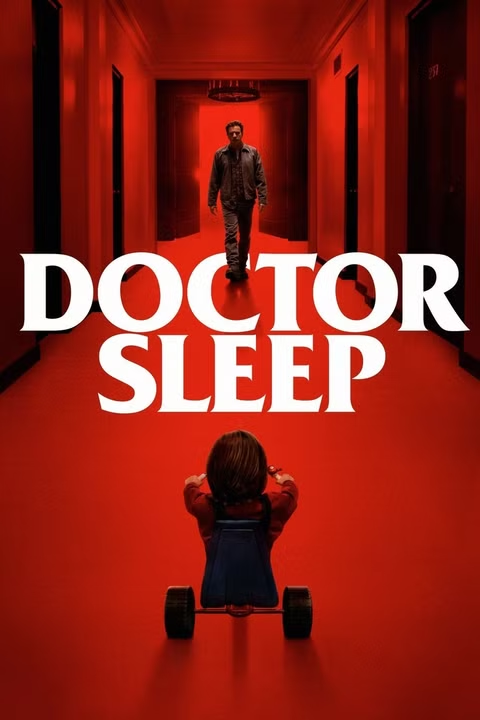
Rebecca Ferguson has starred in enough movies to this point in her career that it’s only natural for some to have been largely forgotten to the scope of time. One of said projects that fans don’t often remember is Doctor Sleep, the legacy sequel to The Shining starring Ferguson as the featured villain, Rose the Hat. Ewan McGregor, best known for playing Obi-Wan Kenobi in Star Wars, also has a key role in Doctor Sleep, along with Cliff Curtis and Zahn McClarnon. Based on the novel by Stephen King, Doctor Sleep was written and directed by Mike Flanagan, who is a frequent adapter of King’s work. Seven years after Doctor Sleep hit theaters, the film is still not available to watch on streaming, but fans are checking it out in droves on VOD platforms like Prime Video and Apple TV.
The official synopsis for Doctor Sleep, which holds scores of 79% from critics and 89% from audiences on Rotten Tomatoes, reads as follows: “Struggling with alcoholism, Dan Torrance remains traumatized by the sinister events that occurred at the Overlook Hotel when he was a child. His hope for a peaceful existence soon becomes shattered when he meets Abra, a teen who shares his extrasensory gift of the ‘shine.’ Together, they form an unlikely alliance to battle the True Knot, a cult whose members try to feed off the shine of innocents to become immortal.” Doctor Sleep may be a sequel to The Shining, but it certainly isn’t remembered in the same light as the 1980 horror classic directed by Stanley Kubrick.
Check out Doctor Sleep on VOD platforms like Prime Video and Apple TV and stay tuned to Collider for more updates and coverage of Rebecca Ferguson’s future projects.

November 8, 2019
152 minutes
Trevor Macy
Gwyneth Paltrow is shedding light on how the “conscious uncoupling” phrase — which she and ex-husband Chris Martin used to announce their split — initially came to be.
Appearing on a recent episode of the “Friends Keep Secrets” podcast, Paltrow, 53, recalled how it was consideration for their children’s wellbeing as she and the Coldplay singer called it quits that led them to the concept. (Paltrow and Martin, who were married from 2003 to 2016, share two kids, daughter Apple, 22, and son Moses, 20).
“We really sat down and thought, ‘Is there a way that we could do this?’ Paltrow said on the podcast. “Because — this is very me — but when I was getting divorced, I was like, ‘How do I do this?’”
Paltrow recalled asking her friends who grew up with divorced parents for advice, specifically investigating what the worst aspects of that situation were so she and Martin, 49, could attempt to avoid the same pitfalls in their own family.

No regrets. Gwyneth Paltrow revealed that while she and ex-husband Chris Martin were criticized for using the phrase “conscious uncoupling” when they split in 2014, she still thinks it was the best term. “I definitely did not coin the phrase, but I feel despite us taking quite a lot of s–t for it when we […]
“I said, ‘Tell me what was the worst thing. What do you feel you have scars from to this day?’” she said. “And they said, ‘You know, it wasn’t really so much the divorce, ‘cause you’re a kid, and yes, of course, the idea of it is terrible, but you sort of get used to that quickly.’”
The Sliding Doors star explained that many people shared that it wasn’t the divorce itself that was the most difficult, it was the tense dynamic between the parents in the aftermath.
“‘My dad used to drop me off at the end of the driveway. It was so tense at my birthday parties. They never ate dinner in the same room until my college graduation and it caused me so much pain,’” Paltrow said of her friends’ experiences. “So I was like, ‘How could we not do that?’ Is there a way where you can sort of circumvent all of that awful stuff when no one is in the same room and get to the graduation where you’re all having dinner at the same table.”
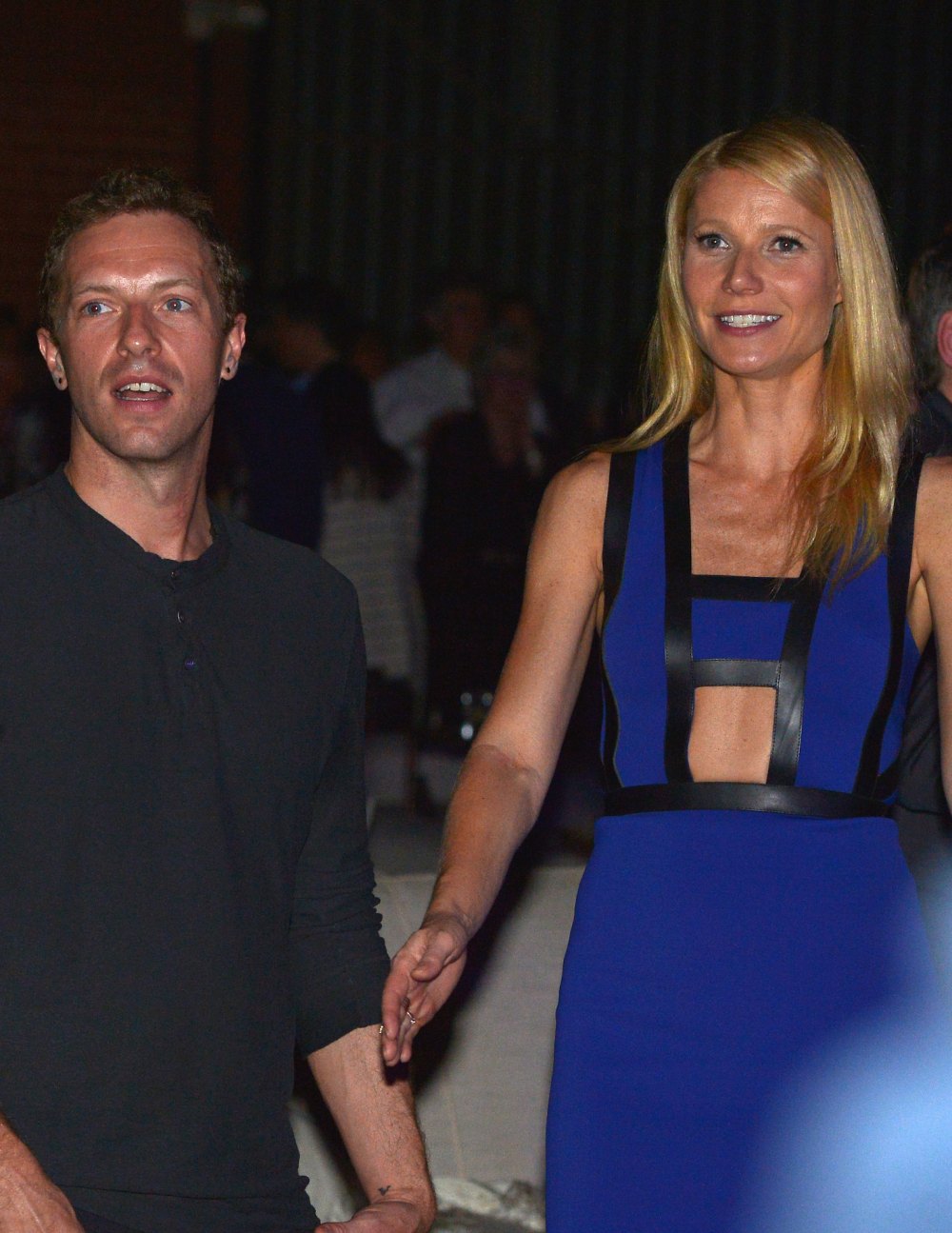
Gwyneth Paltrow and Chris Martin. (Photo by Charley Gallay/Getty Images for Entertainment Industry Foundation)
Paltrow explained that her and Martin’s attempts to avoid such a tense dynamic led them to seek help from a therapist, which is where the concept of “conscious uncoupling” was first proposed.
“So Chris and I had this therapist that was really brilliant, and he sort of introduced us to the concept and we just made a commitment to really put the kids first and so what that meant was to stay a family even though we weren’t a couple,” she said.
After Paltrow and Martin publicly announced their divorce, using the term “conscious uncoupling,” it created worldwide headlines and the phrase has since been adopted by many.

Gwyneth Paltrow and Chris Martin continued to live under the same roof after separating — ahem, consciously uncoupling. “I think, now, people are thinking about different ways of separating and doing it,” Paltrow, 52, shared during an episode of Erin and Sara Foster‘s “The World’s First Podcast,” released on Thursday, April 24. “Chris and I […]
Appearing on Erin and Sara Foster‘s “The World’s First Podcast” in April 2025, Paltrow reacted to becoming synonymous with the term.


“I don’t mind being the poster child for it,” The Goop founder said. “What I think was interesting was how upset it made people when it happened.”
Paltrow explained that she believed the term was “triggering” to some people who didn’t have an amicable relationship with their exes.
“I think it’s hard to hear that if there was a very painful situation in your life that you could have done something potentially to make it less difficult,” she continued. “It’s a hard thing to look back. I have a lot of understanding for people who were triggered by it. I get it. But at the same time, I don’t regret it at all.”
There is no denying that Gilmore Girls is an iconic teen drama of the 2000s and was immensely influential for its generation. Packed with quirky characters, witty banter, fun romance, and the endearing dynamic between Lorelai (Lauren Graham) and Rory Gilmore (Alexis Bledel), the bold, progressive series has been a comfort show for an entire generation. Amy Sherman-Palladino’s cozy mother-daughter drama was a cult hit during its broadcast and became massively popular in the streaming era, which also exposed fans to some of the more dated aspects of the storytelling.
The comedy-drama does feature several key arcs and gags that may feel outdated when seen through today’s lens, particularly by a younger audience. Several episodes of Gilmore Girls take questionable stances on gender roles, body image, social sensitivity, representation, personal identity, and relationship dynamics, and these have become problematic in the modern context and brought the show some retrospective criticism, though that hasn’t in any way diminished the popularity of the series. With that in mind, here’s a look at some of the Gilmore Girls episodes that simply don’t hold up today, including episodes from both the original run and the 2016 revival.

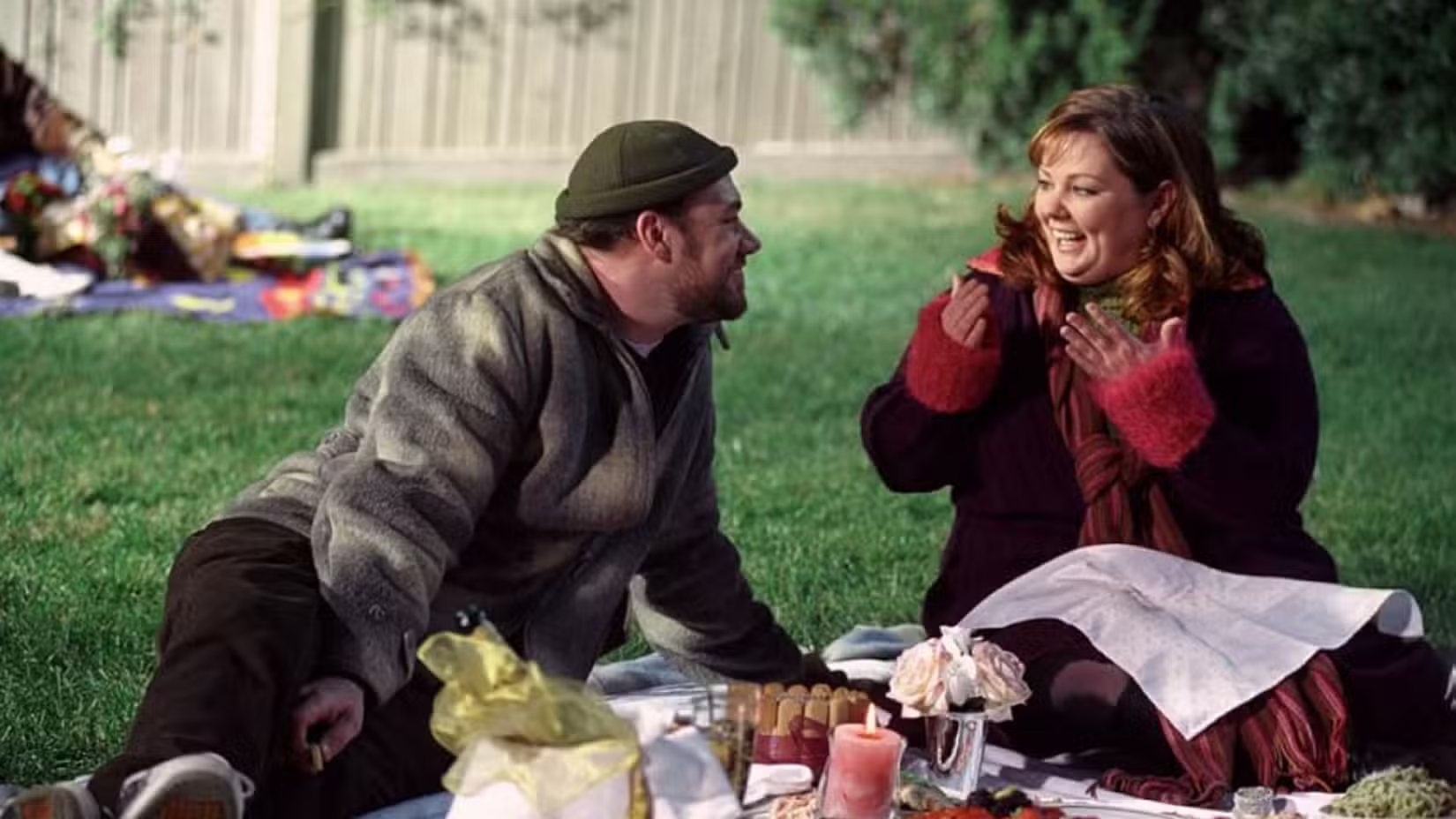
As has been the tradition of this show, Gilmore Girls features various quirky events to fuel its cozy, small-town energy, and the annual Stars Hollow charity picnic basket auction is an iconic one. In the second season, during the annual Bid-on-a-Basket, Lorelai and Rory find themselves in a stiff competition for their baskets, while Jackson (Jackson Douglas) and Sookie (Melissa McCarthy) work through a conflict. The episode also explores tensions between Rory and her boyfriend, Dean (Jared Padalecki), after Jess (Milo Ventimiglia) wins Rory’s basket.
“A-Tisket, A-Tasket” is considered problematic today because it is seen as normalizing toxic male behavior and unhealthy relationship dynamics. While it is not unnatural to explore jealousy or passiveness in teen romances, this particular episode of Gilmore Girls also serves as a dark foreshadowing of Dean’s troubling behavior in the future.

In this penultimate episode of the third season of Gilmore Girls, Rory is worried about her final exams and gets ready for graduation from her prep school. Meanwhile, Lorelai faces difficulty paying Rory’s tuition at Yale and ends up in a feud with her mother, Emily (Kelly Bishop). Outside the Gilmores, the episode also follows Jess traveling across the country to Venice, California, to meet his estranged father, which ends up causing further complications.
“Here Comes the Son” is not problematic in the way some other episodes of Gilmore Girls are, in terms of bad jokes or inappropriate arcs or character behavior. Rather, it’s a storytelling problem. The conflict between Jess, his father Jimmy, and Jimmy’s girlfriend brings an unnecessary shift in the narrative tone of the show, which is otherwise mostly a nuanced, heartwarming drama. The episode was meant to be a potential backdoor pilot for a planned spin-off show, which never materialized and feels out of place, distracting from the main character’s major life event.

In this Season 4 episode, Rory and her friend Paris (Liza Weil) head to Florida for their first spring break, which is the key plotline of the episode. Meanwhile, back home, chaos unfolds for Lorelai and Luke (Scott Patterson), as Lorelai struggles with her new romance and Luke gets in trouble with the law. This episode also sees Rory getting drunk and calling Dean.
“Girls In Bikinis, Boys Doin’ The Twist” is quite a divisive chapter of Gilmore Girls and one of the most poorly aged episodes of the comedy drama. On the one hand, this episode has some hilarious fish-out-of-water gags as Rory and Paris experience spring break and Florida for the first time. But on the other hand, the episode is rife with 2000s college tropes and spring break clichés, and takes an unnecessary “cool-girl” stance toward the intellectual Rory and Paris, who constantly judge other girls enjoying their vacation.

In the second episode of Gilmore Girls Season 7, Lorelai deals with the aftermath of sleeping with Christopher (David Sutcliffe), Rory’s biological father, which angers her daughter. Rory is also upset about her long-planned Asia trip with Logan getting canceled, and Lorelai tries to cheer her up by creating an Asia-themed “wonderland” at home. Meanwhile, Rory’s best friend, Lane (Keiko Agena), returns from a disastrous honeymoon with shocking news.
The seventh and final season of Gilmore Girls is widely considered one of the most controversial seasons, with its character arcs, plotlines, and tropes dividing fans in their opinions. And the very second episode, “That’s What You Get, Folks, For Makin’ Whoopee,” proves that. One of the worst elements of this episode is Lorelai’s feeble attempt to bring an Asian experience to Rory, with a cartoonish, inappropriate aesthetic, which depicts cultural stereotyping and insensitivity to outdated tropes. The episode is also criticized for writing off Lane’s arc with a sudden pregnancy instead of giving her character positive closure.

In the third episode of the Gilmore Girls revival series, A Year in the Life, Rory takes up an unpaid editor job at the town’s local newspaper, the Star Hollow Gazette, in an attempt to keep it from shutting down. She is also offered an opportunity to write a book about her and Lorelai, which Lorelai instantly shuts down, leading to a huge mother-daughter fight. With the added chaos of the town’s bizarre musical, Lorelai decides to go on a journey of self-discovery.
When A Year in the Life was released, it certainly brought back the nostalgia that the show had come to be known for, but the four-episode revival also features the most uncomfortable element of the entire show. In the opening scene of the third episode, “Summer,” Lorelai and Rory sit fully clothed by a public pool and make fun of other people wearing swimsuits, body-shaming everyday people and making harsh jokes. To some viewers at least, this kind of commentary appears to be in poor taste and mean-spirited, and fails to hold up in the context of modern perceptions of TV tropes.

In this Season 5 episode of Gilmore Girls, an old resident of the town dies and leaves his house to the town to be run as a museum for the first two months, and Luke volunteers to help. Meanwhile, Rory, Paris, and Lane deal with relationship troubles while getting drunk on the punch at the Founder’s Day celebration. On the other side of the episode, Lorelai makes some unfiltered comments in a magazine interview.
Another episode of Gilmore Girls that has not aged well, “To Live and Let Diorama,” is not problematic today because of any offensive commentary or interpretations. Rather, the relationship dynamics and character tropes explored in the episode feel completely out of touch with today’s reality and have not aged well. Additionally, the museum gags don’t quite communicate small-town charm the way they used to and have been criticized for being fairly cringey now.

This episode from the very first season of the show explores Rory and Dean’s budding romance as they begin their relationship and have their first fight. When Lorelai invites him to participate in the mother-daughter ritual of making fun of the titular hit television show from the ’50s, Dean reveals that he supports traditional gender roles. Rory fights with Dean about his patriarchal views, but ends the evening by dressing up like Donna Reed and cooking him dinner.
“That Damn Donna Reed” has been criticized for its mixed signals on feminism and foreshadowing Dean’s toxic control. It mocks conventions of ‘50s lifestyles, while also romanticizing the same for its characters and ultimately reinforces the gender norms it initially set out to criticize. The episode also lays the early groundwork for Dean’s controlling behavior, which is explored later in the show, and to modern audiences, it all comes across as somewhat toxic.

2000 – 2007-00-00
The WB, The CW
Jamie Babbit, Amy Sherman-Palladino, Lee Shallat Chemel, Kenny Ortega, Michael Katleman, Matthew Diamond, Michael Zinberg, Gail Mancuso, Lesli Linka Glatter, Steve Clancy, Bethany Rooney, Jackson Douglas, Robert Berlinger, Steven Robman, Alan Myerson, Lev L. Spiro, Rodman Flender, Adam Nimoy, Arlene Sanford, Bruce Seth Green, Danny Leiner, David Paymer, David Petrarca, Eric Laneuville
Rebecca Rand Kirshner, David S. Rosenthal, Sheila R. Lawrence, Jennie Snyder Urman, Joan Binder Weiss, David Babcock, Bill Prady, Gayle Abrams, Gina Fattore, Jane Espenson, Jenji Kohan, Keith Eisner, James Berg, Stan Zimmerman, Allan Heinberg, Jed Seidel, Jessica Queller, Lisa Randolph, David Grae, Rina Mimoun, Jordon Nardino, Scott Kaufer, Joanne Waters
Sweet Magnolias is coming to an end with a shocking cancellation — but Netflix has already ordered a new series with JoAnna Garcia Swisher.
News broke on Friday, September 18, that Netflix chose not to renew Sweet Magnolias for a sixth season. Instead, the streaming service ordered a new drama series from Sweet Magnolias’ showrunner Sheryl J. Anderson — with Swisher, 47, set to executive produce and potentially star in.
“All grand adventures must eventually end,” read a post from the show’s official Instagram account. “And here, dear friends, is where ours goes. Sweet Magnolias is now complete with five seasons streaming on Netflix.”
Anderson, for her part, teased their next chapter with Ladies of the House.

2026 has been brutal when it comes to our favorite shows getting canceled. Netflix cut ties with Boots two months after the show premiered. Based on Greg Cope White‘s memoir, the scripted series followed Cameron (Miles Heizer) as he joined the U.S. Marine Corps alongside his best friend Ray (Liam Oh) during the 1990s, the […]
“I’m thrilled to be embarking on this new adventure with JoAnna and Netflix,” Anderson said in a statement. “When Jo shared the novel with me, I immediately saw the foundation for a series centered on three women grappling with the complexities of family, friendship, and romance — the kind of stories Jo and I most enjoy telling. I cannot wait to share the Richardson women and their world with Netflix’s global audience.”
Swisher also weighed in on the decision to adapt Ladies of the House, which is a modern retelling of Sense and Sensibility.
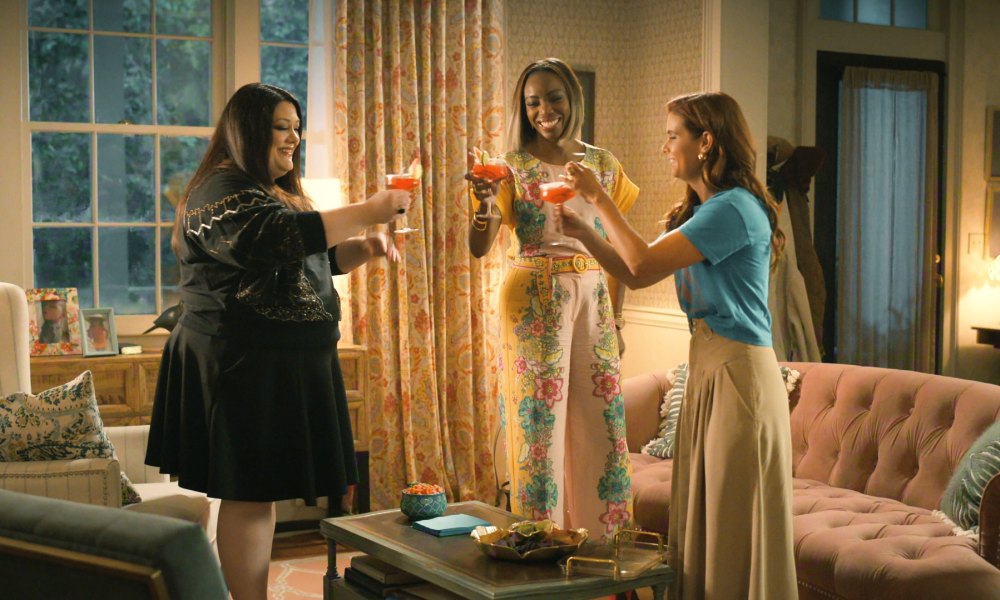
Brook Elliott, Heather Headley, JoAnna Garcia Swisher in Sweet Magnolias season 5 Netflix
“From the moment I read Lauren Edmondson’s Ladies of the House, I fell completely in love with Daisy, Cricket and Wallis: their relationships, their messiness, their strength, and most of all, their heart,” she said. “I am beyond excited to continue to tell meaningful, female-driven stories alongside the incredible Sheryl J. Anderson, and to bring this to life through our production company Rolling Clover and with our wonderful partners at Black Label. Netflix has been my creative home for the past seven years, and I couldn’t imagine a better place, or a better team, to tell this story.”
Based on Lauren Edmonson’s novel of the same name, Ladies of the House follows three women. When the charismatic owner of a winery dies unexpectedly, his wife and two adult daughters “must battle through their issues with each other in order to confront challenges with the business, their extended family, and the men in their lives,” according to the official synopsis.
The description continued: “Good friends and good wine will aid in the journey to hang on to the winery, but what matters most is that they find a way to hang on to each other.”
Sweet Magnolias, which premiered in 2020, is based on Sherryl Woods’ novels about three women who have been best friends since childhood as they navigate their romantic lives, careers and family.
According to Deadline, Netflix had a choice between renewing Sweet Magnolias for a sixth — and final — season or picking up Ladies of the House, with Anderson and Swisher focusing on the next show. After options were up for the Sweet Magnolias cast on Thursday, September 17, Netflix opted to cancel Sweet Magnolias and order Ladies of the House.
Sweet Magnolias is currently streaming on Netflix.

Us has affiliate partnerships. We receive compensation when you click on a link and make a purchase. Learn more!
Hilary Duff has long been one of our favorite sources of beauty inspiration, especially when it comes to her signature glowy skin. And while good makeup certainly helps, her makeup artist Taylor Healey knows that a radiant look starts well before foundation. Healey recently shared that she used the Drmtlgy FacialRX Brightening Moisturizer to prep Duff’s skin for the final night of the Lucky Me UK Tour.
“Mature skin often benefits from products that hydrate, boost radiance, and create a smoother-looking surface,” Healey told InStyle, adding that “this moisturizer does all of that without feeling heavy, making it a beautiful prep step before makeup.” The moisturizer is essentially a skin-prep multitasker, which means you can reach for it whether you’re planning on wearing a full face of makeup or going completely bare-faced.
Get the Drmtlgy FacialRX Brightening Moisturizer for $49 at Amazon! Please note, prices are accurate as of the publishing date but are subject to change.
It has vitamin C, an antioxidant known for its brightening benefits, along with glycerin, a humectant that helps draw moisture into the skin. It’s also made with glutathione, another antioxidant ingredient. Together, the cream is designed to tackle the dry, dull appearance that can keep skin from looking as luminous as you want it to!

Hilary Duff‘s glowing complexion doesn’t happen by chance. Achieving her flawless, stage-ready skin starts long before makeup. It begins with the Dermalogica Daily Microfoliant, a gentle exfoliant that celebrity makeup artist Taylor Healey used to create the smooth, radiant canvas that looks good under bright stage lights. By sweeping away dull, dry surface buildup, the […]
Healey uses it as part of Duff’s pre-performance skin prep to create a smooth, luminous canvas before makeup, a particularly useful step when skin is going to be under unforgiving stage lighting. Instead of adding another complicated step to your routine, you can just smooth the moisturizer over clean skin and give it a few minutes to absorb before following with sunscreen and makeup. The added hydration can also help create that plump, fresh-looking base that makes complexion products look better on top.
One Amazon reviewer said it “really made a difference in the appearance of fine lines/wrinkles.” Another shopper who said it’s “great for mature skin” raved: “I have dry, mature skin and this product really does moisturize. It works well under makeup.”
If Duff’s luminous skin has you rethinking your own pre-makeup routine, this cream is a great place to start. Add it to your Amazon cart and get one step closer to a gorgeous glow!
Get the Drmtlgy FacialRX Brightening Moisturizer for $49 at Amazon! Please note, prices are accurate as of the publishing date but are subject to change.
UsNow Fall Sale Alert: These chic fashion finds are up to 60% off – plus free shipping
Welcome to fall with our biggest sale of the season. Our favorite dresses, tops, handbags, and shoes are all on sale + free shipping. Inventory is limited so hurry before they’re gone.

Even when she’s busy touring the world, Hilary Duff always appears cheerful and well-rested — and her secret is a beauty hack that’s easy to copy. For her Madison Square Garden performances, the star turned to one must-have skincare staple to keep her looking bright and energized: Rodan + Fields Redefine Eye Cream. Celebrity makeup artist […]
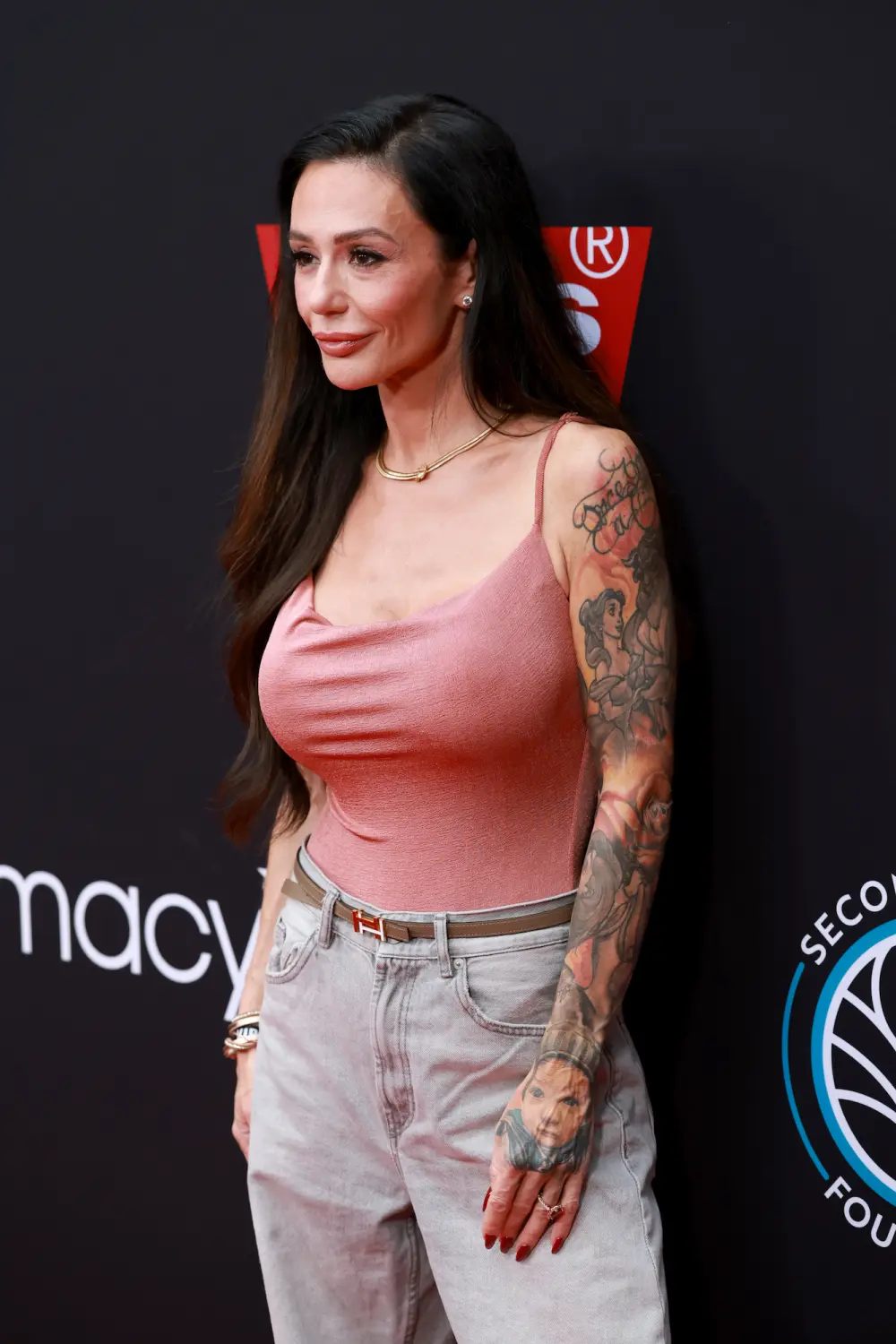
Jersey Shore: Family Vacation star, Jenni “JWoww” Farley, is clapping back against the haters.
After a video featuring Farley with a noticeably slimmed physique was posted via social media on Friday, September 18, people flocked to the comments section to criticize her weight.
Farley, 41, addressed the criticism – including accusations that she had taken Ozempic or other GLP-1 medication to achieve the look – via a comment of her own.
“Apologies to everyone offended by my weight lol.” she wrote. “I have never been this thin since middle school, but unfortunately, I was told I couldn’t eat for six days in the hospital as they debated taking out my appendix while I was also suffering from a kidney abscess the size of a golf ball… appendicitis, and a kidney infection sucks (and because I had this ongoing I was losing weight over the summer).
She added, “But what sucks more is the fact that I can’t control how thin I am right now and I did not do any ‘shots’ for this to happen… but I will ask when I gain all the [weight] back for you to then comment about how fat I got 😂😂 because women can’t win either way.”
In response, several followers defended Farley against the more aggressive commenters.
“As someone who has been through major health battles myself, this breaks my heart. People have NO idea what illness does to the body,” wrote one social media user. “There’s a total lack of sympathy and understanding from those who expect everyone to be 100% all the time. They think if they can’t feel it, it isn’t real. It’s not true. You are a warrior, and you just keep shining bright ✨️💜”
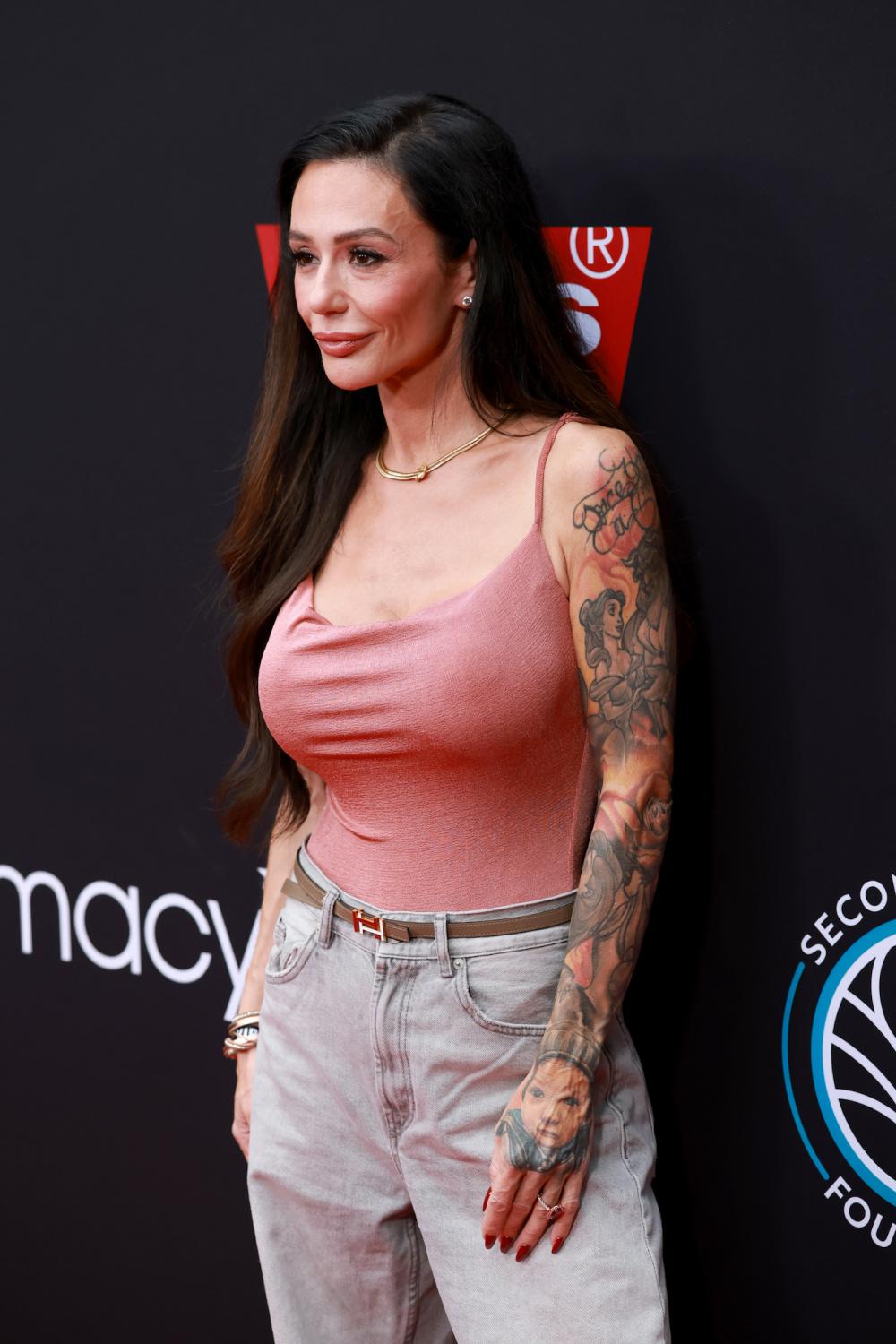
Jenni “JWoww” Farley. (Photo by Arturo Holmes/Getty Images)
Another told Farley, “Do what you have to do to make yourself healthy. People will always have opinions. The only ones that matter know your struggle and support you.”
Earlier this month, Farley opened about her health ordeal, which led to her being hospitalized.
“Not the ‘first day of school’ picture I wanted to post… but then again, I guess we wouldn’t have one,” Farley wrote via Instagram on September 3, alongside a photo of herself wearing a hospital gown.

Jersey Shore’s Jenni ‘JWoww’ Farley is taking aim at people who criticized her for not inviting them to her wedding to Zack Carpinello. Taking to her Instagram on Thursday, June 25, Farley, 41, doubled-down on her decision to leave some people off the guest list, telling them via a video: “You proved my point.” “I’m […]
Her daughter Meilani, 12, and son Greyson, 10, whom she shares with ex-husband Roger Mathews, were also featured in the image.
She continued, “This past week has probably been one of the hardest weeks of my life. I’ve spent every day fighting to get healthy enough to get home to my family while dealing with a horrible kidney infection and appendicitis.”
Farley explained that something felt was off in her body for “months” before her hospitalization.
“I want to say it came out of nowhere, but the truth is, I haven’t felt like myself for months,” she continued. “Weight loss, exhaustion, constantly feeling off … and then last Friday, my body finally said, ‘We aren’t making it like this anymore.’”

Throughout the ’80s and the first half of the ’90s, Gary Larson‘s The Far Side ruled the comics section of the newspaper. While others strips, such as Peanuts and Calvin and Hobbes, used several panels to tell quick stories with the same characters, The Far Side took satirical jabs at everything with just one panel to tell it all.
Although the characters changed in each comic, Larson often returned to familiar themes, whether it be dinosaurs, talking animals, or bizarre kids and their families. Then there’s what he did with sci-fi, from goofy scientists to aliens from outer space. These five comic strips showed how much Larson could do with so little.

Dogs are man’s best friend. For centuries, they’ve been by our sides as loyal companions who are always excited to see us, even if we’ve only been gone for five minutes. They sit at our feet, welcome our attention, and sleep in our beds. Humans and canines have a close connection. Two species so far apart need each other, and if you’ve ever had a dog, you’ve often wondered what they were thinking. Could they say “I love you” and tell us how much they care? Maybe they have the same fears we do.
In The Far Side, Gary Larson answered the question with Professor Schwartzman, who came up with a brilliant invention which could decode what dogs are saying when they bark and translate it to English. The results are disappointing. Whether they’re barking at each other, at us, or chasing cars, all dogs have to say is “Hey!” Perhaps it’s better that they can’t speak after all.

Gary Larson often turned to dogs as a source of material in The Far Side. In this comic, they don’t need to be decoded by a professor. Instead, they can speak full English to their owners. At night, one dog is tied up outside of its dog house when a spaceship arrives filled with other canines. If you’ve often wondered if dogs were some sort of loyal gift from the heavens, sorry, but they’re from outer space.
Sick of how they’re being treated by humans, it looks like a lot of them have decided to go back to their home planet. Before this dog goes, all he wants his owner to do is roll over. Let her see how it feels to be commanded to do things for the entertainment of others. As the flying saucers float overhead, will something violent occur if she doesn’t listen?

In 2026, despite so many photos of Earth having been out there for decades, there are still “flat Earthers,” the conspiracy theorists who reject science and, for some reason, insist Earth is not round but flat. Even in 1980, the wild theory existed, along with those who think the government faked the moon landing. In this Far Side comic, Gary Larson takes a jab at both.
As astronauts on a ship return to Earth, they see something shocking. The Earth isn’t round. It’s not flat either. Nope, we’re all hanging on a balloon floating in the nothingness, a long string tailing into space. An astronaut deciding to keep it quiet is just what the government would do in real life, eh! Here, Larson uses over-the-top absurdity to make his point. But what if it’s true, and we really are on a giant balloon? Be careful where you step out there!

Many junior high and high schoolers have taken some sort of technology class, whether it be something like wood shop or, in the case of this Far Side strip, metal shop. In those classes, we built contraptions which often don’t come together right. This writer struggled mightily with making a miniature house out of popsicle sticks and glue. Meanwhile, some teacher who was thought not to be smart enough to teach other classes watched over us and judged our every move.
In this panel, one kid has had enough. The boy hasn’t struggled at all in metal shop. He’s built a giant, sophisticated robot with tank-like feet, mandible claws, and sharp rows of teeth. Presumably, the kid has been harassed by his uncaring teacher one too many times. Revenge has created a mad scientist origin story and Mr. Big Nose will be the first victim.

In 1979, Ridley Scott created a sci-fi horror masterpiece with Alien. Gone were hokey sci-fi movies with bad acting and silly-looking men in suits. With Alien, an all-time badass heroine was born in Sigourney Weaver‘s Ellen Ripley. And the monster she fought, a lone Xenomorph designed by H.R. Giger, was absolutely terrifying. Alien has one of the most iconic jump scares in film history, when the baby Xenomorph is born by shooting out of the chest of poor Kane (John Hurt). The scene was so effective that Hurt parodied it in a cameo for Spaceballs years later.
In 1983, four years after the release of Alien, Gary Larson gave the comic world this hilarious tribute to the classic. In it, we see a Xenomorph birthday party. With a cake in the center of the table, it’s not a beautiful woman who pops out but a baby alien. As it bursts forth, the older aliens throw up their scraggly arms and open their jaws wide with excitement. It’s a great tip of the hat to a legendary movie and its monster.


Ridley Scott hasn’t exactly had a banner year so far, though there was plenty of anticipation surrounding his return to sci-fi with The Dog Stars. Scott enlisted a trio of massive stars in Josh Brolin, Jacob Elordi, and Margaret Qualley for his new sci-fi movie, but as it winds down its run at the box office, it’s set to finish as one of Scott’s lowest grossing movies ever. Scott clearly has bigger plans in the sci-fi genre, though — he announced just a few weeks ago that he’s developing a new Alien movie centered around Michael Fassbender’s character, David, from Prometheus and Alien: Covenant. Scott may have taken a step back from directing as many movies in this advanced stage of his career, but he’s still heavily involved in many films as a producer through his Scott Free banner.
Ridley Scott is next in line to produce Blade Runner 2099, the first ever Blade Runner TV show set 50 years after the events of Blade Runner 2049. The new series stars Michelle Yeoh (Everything Everywhere All at Once) and Hunter Schafer (Euphoria), and it’s coming to Prime Video on November 25. Before the new series arrives on streaming, there’s no better time to rewatch one of the best sci-fi sequels ever made, Blade Runner 2049, which is finally streaming on Paramount Plus. The film has even had several runs into the top 10 this month after its long-awaited return to streaming. Scott did not direct Blade Runner 2049 after helming the original Blade Runner, but he settled on the perfect director in Denis Villeneuve to step behind the camera on the film.
The official synopsis for Blade Runner 2049, which earned equally impressive scores of 88% from critics and audiences on Rotten Tomatoes, reads as follows: “Officer K (Ryan Gosling), a new Blade Runner for the Los Angeles Police Department, unearths a long-buried secret that has the potential to plunge what’s left of society into chaos. His discovery leads him on a quest to find Rick Deckard (Harrison Ford), a former Blade Runner who’s been missing for 30 years.” Neither Ryan Gosling‘s K nor Harrison Ford‘s Rick Deckard are expected to appear in Blade Runner 2099 later this year — the show is also confirmed to only be one season.
Check out Blade Runner 2049 on Paramount Plus and stay tuned to Collider for more updates and coverage of Ridley Scott’s future projects.

October 6, 2017
164 minutes
Denis Villeneuve
Michael Green, Hampton Fancher
Andrew A. Kosove, Broderick Johnson, Bud Yorkin, Cynthia Sikes, Carl Rogers, Dana Belcastro, Steven P. Wegner
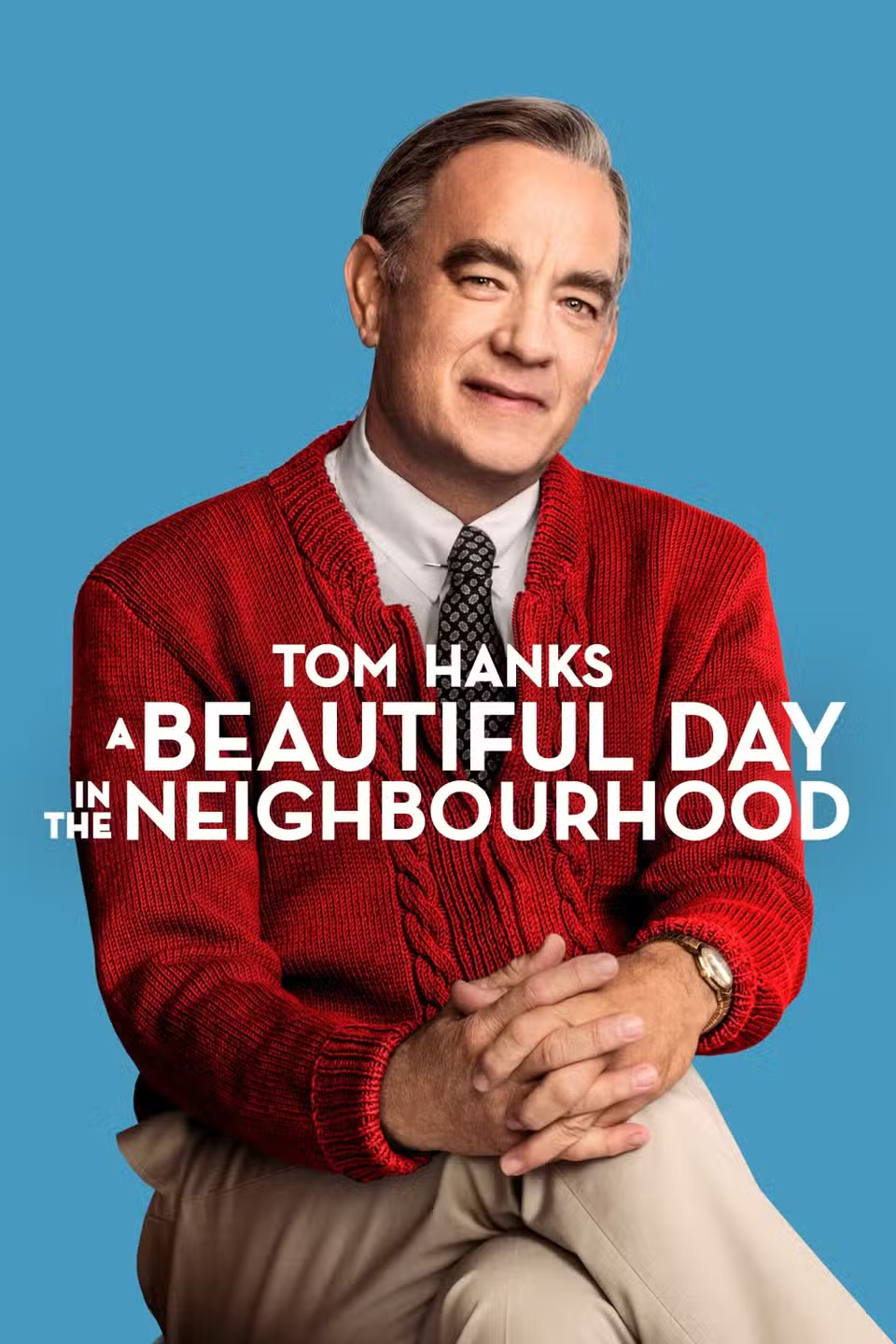
Tom Hanks is never far from a box office hit. This year, the Hollywood veteran has already delivered one of the highest-grossing blockbusters in the form of Toy Story 5. Woody, Buzz (Tim Allen), and Jessie (Joan Cusack) returned with the rest of the toys to great success, returning Pixar’s biggest franchise to their best after a disappointing Toy Story 4. Called “a necessary response to how much the world has changed in the past three decades” by Collider’s Taylor Gates in her review, the film stole hearts and earned heaps in ticket sales, becoming one of 2026’s first billion-dollar hits.
Hanks’ recent filmography has been somewhat hit-and-miss, with reactions to his performances far from his unstoppable run of masterclasses in the 1990s. But among his recent performances, one stands out as a true gem in the latter career of the two-time Academy Award winner. Hanks’ performance as the beloved children’s entertainer Fred Rogers in A Beautiful Day in the Neighborhood earned widespread acclaim after it debuted in 2019. The film also starred Matthew Rhys, who recently made Emmys history as the first actor ever to win two lead acting prizes in a single night (for Widow’s Bay and The Beast in Me).
Inspired by the 1998 Esquire article “Can You Say … Hero?” by Tom Junod, A Beautiful Day in the Neighborhood was an undeniable hit with critics, even earning Hanks a Best Supporting Actor nomination at the Academy Awards, which was his first Oscar nomination since 2000’s Cast Away and his last to date. Hanks also earned recognition from the Golden Globes, Screen Actors Guild Awards, BAFTAs, and more for this heartwarming, pitch-perfect performance, which anchors a film sure to bring a smile to anyone’s face. But if you want that smile on your own face, you’ll have to hurry, as A Beautiful Day in the Neighborhood is being removed from the Netflix catalog on October 1, 2026.
Despite receiving plenty of positive critical praise and featuring the best of Hanks in recent years, A Beautiful Day in the Neighborhood failed to make a positive impact at the box office. Against a reported production budget of $45 million, the film earned a global haul of just $68 million worldwide, split between $61 million in domestic revenue and a further $7 million from overseas markets.
A Beautiful Day in the Neighborhood is being removed from the Netflix catalog on October 1, 2026. Stay tuned to Collider for more streaming stories.

November 22, 2019
107 Minutes





The Latest Weird Thing to Play Doom Is the Mapped-Out Brain of a Fruit Fly


Weekend Open Thread: Talbots – Corporette.com


Kraken Lets xStocks Holders Earn Yield Through DeFi


US Charges Robinhood Engineers Over Crypto Listing Trades

Can AI Build a Startup in 72 Hours? Elon Musk's Team Will Livestream the Test


What Is the Status of the U.S.-Iran Peace Talks? Here's What Both Sides Are Saying


Elon Musk Drops a Bombshell: Grok 5 Could Be the AGI Breakthrough


Rivals Sam Altman and Elon Musk Rally Behind Dario Amodei’s Call for a Slowdown in AI Development


Revolut Attackers Warn of Ongoing Daily Customer Data Leaks


New Tesla Roadster Uses SpaceX Tech. Will It Impact the Stock Price?

‘Sick conspiracy’: Trump says only guardrails AI needs is ‘a strong and smart (High IQ!) president’ in all-caps rant


NVIDIA Analysis: Attempted Rising Wedge Breakout Amid Pressure on the AI Sector
SK Hynix ADRs Fall More Than 6% as Memory Rally Breaks on Fears of Slower AI Spending


DOJ Seeks to Seize $61M in Iran Oil Funds From Binance Accounts It Vouched For

Last Night of the Proms pays moving tribute to Dolly Parton as Sheridan Smith wears a gold sequin jumpsuit in memory of the Queen of Country
Can Circle’s Arc Repeat Robinhood Chain’s Meme Coin Boom?


3 Token Unlocks to Watch in the Third Week of September 2026


AI Safety Burden Falls on Chief Executives as Trump Prioritizes China Race


Goldman Sachs backs 25bp Fed hike after CPI


Webb’s IC 348 Mosaic Includes Two-Jupiter Dwarfs, Twin Jets, and a Nursery Still Making Worlds




You must be logged in to post a comment Login