Entertainment
10 Best Psychological Thriller Books of the 20th Century

Psychological thrillers derive their tension from obsession, uncertainty, and unstable minds. The best of these books make the reader question what’s real, whether the narrator can be trusted, and how far ordinary people can be pushed before they become capable of terrible things.
With all that darkness in mind, this list looks at some of the defining psychological thriller novels of the 20th century. Some are propulsive bestsellers; others are a little more reflective and literary. All explore the genre’s core ideas in powerful, intriguing ways.
10
‘American Psycho’ (1991)


“This confession has meant nothing.” Before it was a fantastically unsettling movie, American Psycho was a disturbing novel. Protagonist Patrick Bateman appears to be the perfect Wall Street success story: wealthy, handsome, impeccably dressed, and obsessed with status. But beneath that polished exterior lies a mind consumed by narcissism, violence, and an almost unbearable emptiness. The book places us inside Patrick’s head, a tricky (and controversial) move that author Bret Easton Ellis ultimately has the skills to pull off.
Patrick represents all the darkest impulses of ’80s capitalism. He has a rapacious desire for power and material possessions, unmoored from any moral concerns. As a result, the book’s endless descriptions of designer suits, restaurant reservations, and pop music reviews gradually become just as unsettling as the bursts of sudden violence. They reveal someone who takes the culture’s worst aspects to their extreme conclusion.
9
‘The Collector’ (1963)

“I collect butterflies.” The main character of The Collector is Frederick Clegg, a lonely butterfly collector whose sudden financial windfall allows him to kidnap Miranda Grey, an art student with whom he has become obsessively infatuated. Believing that love can somehow be manufactured through captivity, Frederick imprisons Miranda in the cellar of his isolated home. From here, the book alternates between Frederick and Miranda’s perspectives, and their motivations and feelings wind up being more complex than you might expect.
In other words, this is an unusually sophisticated psychological thriller, one that avoids the genre’s clichéd motives and plot twists. The most effective part of the book is the character of Frederick himself. He’s no cartoonish monster. Instead, he’s a seemingly mundane, overly rational man totally devoid of empathy. Nevertheless, he’s a truly loathsome figure, a man who probably wanted to do evil all his life but just didn’t have the power to act on it… until now.
8
‘Libra’ (1988)

“History is the sum total of the things they aren’t telling us.” Libra was Don DeLillo‘s follow-up to White Noise, the novel that put him on the map. In it, he presents a fictionalized account of the Kennedy assassination, delving deep into the psychology of Lee Harvey Oswald. The book portrays him as a lonely, directionless man desperate to attach himself to something meaningful. His search for purpose collides with intelligence agencies, anti-Castro activists, and shadowy operatives whose overlapping agendas spiral beyond anyone’s control.
The result is less a historical novel than an exploration of paranoia and the stories people invent to make sense of chaos. Once again, this is a case where the author took on ambitious, challenging subject matter and turned it into something compelling. Libra received rave reviews on release, with many declaring the book to be a masterpiece.
7
‘Rebecca’ (1938)
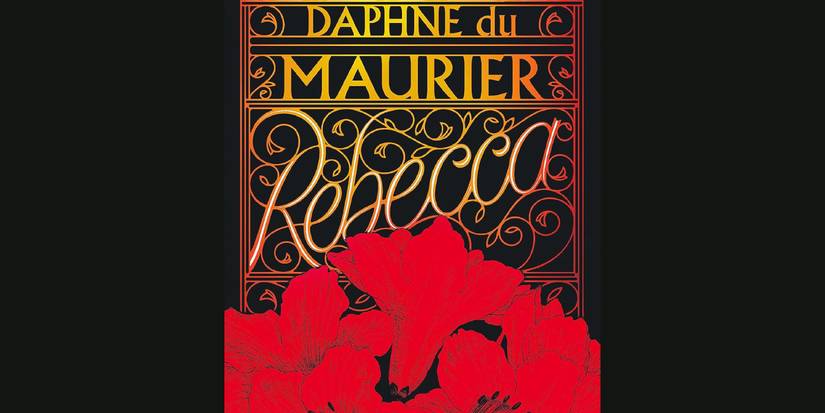
“Last night I dreamt I went to Manderley again.” The basis for Hitchcock‘s classic film. After marrying the wealthy widower Maxim de Winter, an unnamed young woman moves into the grand estate of Manderley, only to discover that the memory of Maxim’s late wife, Rebecca, continues to dominate every room, every servant, and every conversation. The new Mrs. de Winter constantly compares herself to this ghost, whose beauty, confidence, and apparent perfection have been immortalized by those around her.
Needless to say, a few conniving figures seek to weaponize that insecurity. Chief among them is the housekeeper Mrs. Danvers, whose devotion to Rebecca borders on religious obsession. She tries to manipulate the protagonist, using cruelly timed words like drops of poison. Every interaction becomes psychologically exhausting. All this adds up to a fantastic Gothic romance/thriller.
6
‘The Trial’ (1925)

“Someone must have been telling lies about Josef K.” This is one of Kafka‘s masterworks. Our protagonist Josef K. is arrested one morning, yet no one will explain what he has done wrong. He soon becomes trapped inside an incomprehensible legal system whose rules seem to shift with every encounter. It’s the ultimate vision of nightmarish bureaucracy. Unlike traditional thrillers, the danger in The Trial is almost entirely psychological.
Here, Kafka creates an atmosphere where logic gradually loses all meaning, and every attempt to understand the system only deepens Josef K.’s confusion. Josef’s growing frustration and helplessness are at times tough to witness. In the end, although more literary and existential than most thrillers, The Trial touches on many ideas that modern psychological thrillers are built on: alienation, uncertainty, institutional power, and the fear of being judged by shadowy forces.
5
‘A Clockwork Orange’ (1962)

“What’s it going to be then, eh?” Although Kubrick‘s movie adaptation has lodged itself deeper in the public consciousness, Anthony Burgess‘ A Clockwork Orange is still a potent, incendiary piece of work. It centers on the teenage delinquent Alex, whose love of classical music exists alongside an appetite for ultraviolence. After his criminal lifestyle catches up with him, Alex becomes the subject of an experimental rehabilitation program designed to eliminate his capacity for violence altogether.
The book hits us with plenty of brutal scenes, but it also gets very philosophical. In particular, it has a lot to say about free will. Alex is undeniably monstrous, yet the state’s attempt to strip away his ability to choose raises troubling questions about personal autonomy. Is compelled goodness really goodness at all? Is crime the price we pay for freedom? It’s these themes that make the novel a classic.
4
‘And Then There Were None’ (1939)

“Ten strangers are invited. One by one they die.” And Then There Were None is widely regarded as Agatha Christie‘s magnum opus, and perhaps the greatest mystery novel ever written. In the book, ten strangers arrive on a secluded island after accepting mysterious invitations, only to discover that their unseen host believes each of them has escaped justice for a past crime. When the guests begin dying one by one, suspicion turns everyone into both detective and potential murderer.
Christie brilliantly transforms the isolated setting into a psychological pressure cooker. In the process, she created a blueprint that countless writers have riffed on since. With no way to escape and no one left to trust, every conversation becomes loaded with mistrust and, just below the surface, simmering violence. Then, to top it all off, the novel hits us with a juicy, legendary twist.
3
‘Misery’ (1986)
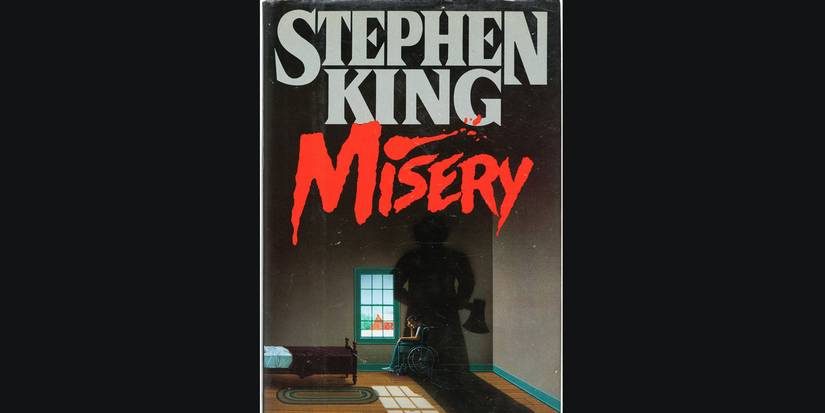
“I’m your number-one fan.” After celebrated novelist Paul Sheldon is rescued from a car accident by his self-proclaimed “number-one fan,” Annie Wilkes, he initially believes his luck has changed. Instead, he discovers that Annie is dangerously unstable and has no intention of letting him leave until he rewrites the latest installment of her favorite series exactly the way she wants. Bedridden, Paul is at the mercy of Annie’s moods, which swing unpredictably between kindness, childlike enthusiasm, and explosive violence.
While the setup is relatively simple, Stephen King builds it into an edge-of-your-seat thriller. A big part of its success comes down to the character of Annie herself, who is truly one of the author’s most evil creations (and that’s saying something). Because Annie is such a monster, we root desperately for Paul to escape, making each of his failed attempts utterly heartbreaking.
2
‘The Silence of the Lambs’ (1988)
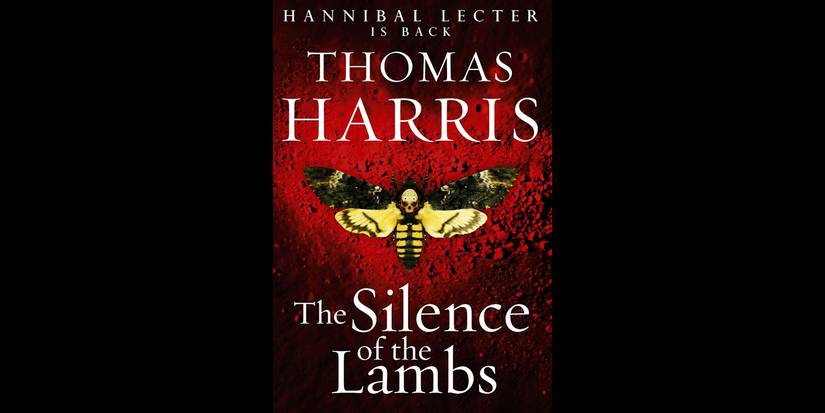
“A census taker once tried to test me.” This is another thriller that was deeply influential, and which gave us some of the genre’s all-time finest villains. The Silence of the Lambs follows FBI trainee Clarice Starling as she seeks the help of imprisoned psychiatrist and serial killer Hannibal Lecter in order to catch another murderer known as Buffalo Bill. What follows is less a traditional investigation than an increasingly tense contest between two brilliant minds.
Every exchange between him and Clarice becomes a duel in which information is exchanged only at tremendous emotional cost. Clarice is a compelling character, yet Lecter is a work of art. He’s an intelligent, urbane, and endlessly manipulative antagonist, always ready with a well-turned phrase. He plays people against each other using little more than words alone; indeed, author Thomas Harris understands that intelligence can be more frightening than brutality.
1
‘Strangers on a Train’ (1950)

“The idea came quite suddenly.” Although The Talented Mr. Ripley is more famous, Strangers on a Train might be Patricia Highsmith‘s greatest book, reeling us in from the very beginning. During a chance meeting aboard a train, two men strike up a conversation that leads to an unsettling proposal. Bruno suggests that each of them should murder someone the other wants gone, creating the perfect crime. Guy dismisses the conversation as idle fantasy… until Bruno decides to carry out his side of the bargain.
A lesser writer might have turned that premise into a pulpy noir, but Highsmith’s genius lies in shifting the focus away from the murders themselves and toward the psychological burden that follows. Likewise, she gives us a villain for the ages in Bruno. He’s charismatic, brilliant, and emotionally unpredictable, steadily dismantling Guy’s sense of security through psychological pressure rather than brute force. Their toxic relationship becomes the novel’s true battleground.
You must be logged in to post a comment Login