Entertainment
10 Best Sci-Fi Books of the 1980s

The 1980s were an exciting time for sci-fi, as the political climate and shifting technological landscape gave writers a lot to work with. Personal computers were becoming increasingly important, biotechnology was advancing, and the Cold War still held the world in its grip; the genre responded by becoming stranger and darker.
Many of the classics of that time are bleak and paranoid, suggesting that technology might create just as many problems for humanity as it solves. For this reason, some 1980s sci-fi novels have aged very well. Here are a few of the finest of them.
10
‘Firestarter’ (1980)


“Some abilities are too dangerous for anyone to control.” With Firestarter, Stephen King took some ideas he’d touched on with Carrie but gave them a more action-packed, overtly sci-fi treatment. The book tells the story of Andy McGee and his daughter Charlie, who has extraordinary abilities because of a government experiment in which Andy and his future wife participated years earlier. Charlie can generate fire with her mind. This makes her an enormously valuable weapon to the clandestine agency known as the Shop.
The plot unfolds as a relentless pursuit. At its core, Firestarter is a paranoid thriller that rhymes thematically with 1970s bangers such as The Parallax View, which were very suspicious about the government and its secrets. Many books and movies have borrowed from it. Decades later, King’s son Joe Hill, too, would pay significant homage to Firestarter in his own novel The Fireman.
9
‘The Uplift War’ (1987)

“Humanity isn’t alone—and certainly isn’t in charge.” This space opera takes place largely on the planet Garth, where avian aliens known as the Gubru seize control while humanity is embroiled in a much larger interstellar conflict. Humans and their uplifted chimpanzee allies must navigate occupation, resistance, alien politics, and the complicated rules governing Galactic civilization. It’s a colorful, sweeping tale of space-age culture clash.
Here, author David Brin imagines an ancient interstellar society in which humanity is a strange newcomer surrounded by alien species whose civilizations stretch back millions of years. In addition to the Gubru, there are the Tymbrimi, who have tentacles on their threads that can shift and form symbols; as well as the Thennanin, 7-foot-tall telepathic reptilians, and even genetically engineered neo-dolphins and neo-gorillas. At the core of all this is “uplift”, where pre-sapient animals are modified to achieve higher intelligence.
8
‘Ender’s Game’ (1985)


“The enemy’s gate is down.” The movie adaptation was disappointing, but the Ender’s Game novel remains a classic. With it, Orson Scott Card took the familiar premise of humanity preparing for war against an alien civilization and focused it through the perspective of a brilliant child. Andrew “Ender” Wiggin is recruited into Battle School because military leaders believe his unusual combination of intelligence, empathy, and ruthlessness could make him humanity’s greatest commander.
Through increasingly difficult simulations and games, Ender learns to think about conflict in entirely new ways while remaining largely unaware of how completely the adults around him are controlling his development. Card makes the Battle Room sequences especially memorable by turning zero-gravity combat into a series of tactical puzzles. Yet the novel’s enduring power comes from the moral consequences of that training, and the themes continue to hit hard.
7
‘Speaker for the Dead’ (1986)

“Understanding can be more difficult than victory.” Speaker for the Dead is the sequel to Ender’s Game. Rather than treading the ground of the first book, the novel changes direction considerably, in a good way, transforming Ender’s story into an exploration of guilt. Thousands of years have passed through the effects of relativistic space travel, and Ender now travels between human colonies working as a Speaker for the Dead, a person who tells the complete truth about someone who has died.
In this case, he writes about the dormant Formic Queen whom he secretly carries. At the same time, Ender travels to the planet Lusitania, where he encounters a community divided by secrets and a mysterious indigenous species known as the pequeninos, whose behavior humans repeatedly misinterpret. The central conflict therefore becomes one of understanding rather than conquest.
6
‘Life, the Universe and Everything’ (1982)

“The universe is ridiculous enough without anyone trying to destroy it.” Life, the Universe and Everything is the wonderful third installment in The Hitchhiker’s Guide to the Galaxy. Having perfected his recipe of sci-fi crossed with absurdist comedy, Douglas Adams expands the series into a genuine universe-threatening adventure. In it, Arthur Dent once again finds himself dragged across space and time, eventually becoming involved in an attempt to prevent the inhabitants of the planet Krikkit from destroying the rest of the universe.
Naturally, the resulting story involves bizarre technology, impossible coincidences, robots, aliens, and hilarious digressions that are often more memorable than the central plot itself. Adams’ genius lies in treating big-brain sci-fi concepts as opportunities for philosophical jokes. Artificial intelligence, time travel, interstellar warfare, and the nature of existence are simultaneously taken seriously and rendered completely silly, often within the same paragraph.

“The universe is a pretty big place.” Although best known for his nonfiction science communication, particularly the landmark book and TV series Cosmos, Carl Sagan also penned one of the best sci-fi novels ever. Contact (later made into a film by Robert Zemeckis) centers on Ellie Arroway, whose lifelong search for extraterrestrial intelligence finally produces an astonishing result when an unmistakably artificial signal arrives from the star Vega. Hidden within the transmission are instructions for constructing an enormously complicated machine.
Governments and scientists all around the world are left scrambling to determine what the device does and whether humanity should risk building it. Sagan gets incredibly thoughtful with this premise. Scientists debate the signal’s meaning, governments compete for influence, religious movements respond to its implications, and all of humanity is forced to confront how little it truly understands about the universe.
4
‘The Shadow of the Torturer’ (1980)

“The future can become so old that it resembles the past.” This is the opening entry in the masterful Book of the New Sun series, a seminal sci-fi/fantasy hybrid. Our protagonist is Severian, an apprentice in the Guild of Torturers who is exiled after showing mercy to a prisoner. His journey through the immense city of Nessus and beyond exposes readers to forgotten technologies, ancient institutions, bizarre creatures, and fragments of history whose true meanings are rarely explained directly.
Author Gene Wolfe trusts readers to interpret his world for themselves. Severian is an unreliable narrator, as well, meaning that every detail potentially contains information that only becomes meaningful much later. For that reason, The Shadow of the Torturer rewards rereading. The world-building here is simply rich, too, full of visions, seemingly magical gems, and a badass sword named Terminus Est.
3
‘Foundation’s Edge’ (1982)

“The closer to the truth, the better the lie, and the truth itself, when it can be used, is the best lie.” Foundation’s Edge is the fourth book in Isaac Asimov‘s landmark Foundation series, arriving a full thirty years after the first three stories. It picks up centuries into the Foundation’s grand project of shortening humanity’s coming dark age, as councilman Golan Trevize begins to suspect that the supposedly destroyed Second Foundation is still secretly manipulating events.
His investigation sends him and historian Janov Pelorat across the galaxy, gradually transforming a political mystery into a search for something far stranger. Although not as good as its predecessors, Foundation’s Edge is still a respectable achievement. In particular, it revisits ideas the author first developed in the 1940s and ’50s without simply repeating them. The result is a cerebral space opera with a lot of philosophical heft.
2
‘Hyperion’ (1989)

“Every pilgrim has a story.” Few science fiction novels combine as many different traditions as confidently as Hyperion. With it, writer Dan Simmons draws on space opera, horror, literary fiction, cyberpunk, romance, religion, and the structure of Chaucer‘s Canterbury Tales to create a truly unique experience. In the novel, seven pilgrims travel toward the mysterious Time Tombs on the planet Hyperion, where they expect to encounter the terrifying creature known as the Shrike (one of the genre’s most fascinating creations).
During their journey, each traveler recounts the events that brought them there, with every story adopting a different tone and subgenre. One account becomes military science fiction, another resembles detective noir, while others explore tragedy, horror, artificial intelligence, religion, and time itself. Even more importantly, the character development is just as thorough and convincing as the world-building.
1
‘Neuromancer’ (1984)
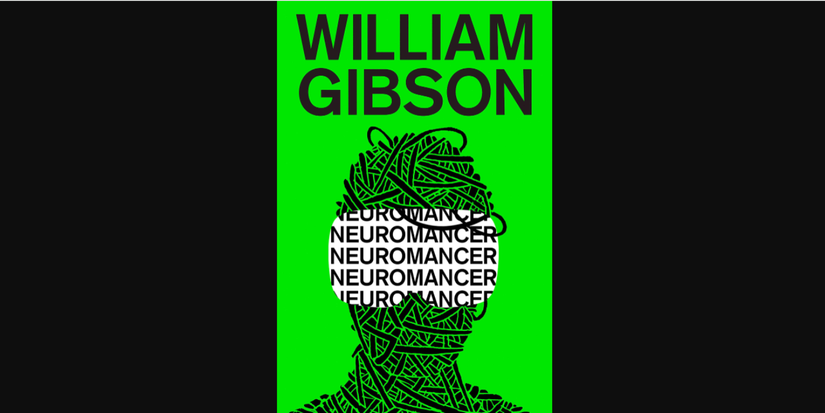
“The future arrived wearing mirrored shades.” This is the ur-text of cyberpunk. Neuromancer centers on Case, a former hacker whose ability to enter cyberspace has been chemically destroyed after he betrayed his employers. Offered the chance to regain that power, he joins a mysterious operation involving mercenary Molly Millions, powerful corporations, artificial intelligence, and secrets hidden within the digital world.
Along the way, author William Gibson immerses us in a vision of the future that’s grimy, globalized, commercially saturated, and technologically astonishing. In the process, he pioneered several concepts and terms (including “cyberspace” itself) and predicted things like widespread internet access and megacorporations that wield almost as much power as governments. At the same time, he doesn’t scrimp on the atmosphere, conjuring up a striking mood of danger, seduction, and rebel cool. Not for nothing, this banger took home both the Hugo and the Nebula.
You must be logged in to post a comment Login