Entertainment
10 Best Screenplays in Film History

A film can only ever be as great as its screenplay; because while it’s perfectly possible to transform an unremarkable screenplay into a serviceable-enough movie, the only way for a film to go down in history as a truly legendary classic is if it’s based on an equally legendary screenplay. Throughout film history, there have been innumerable great scripts written for innumerable great movies, but there are a precious handful worthy of being considered the greatest of all time.
From Hollywood classics like Citizen Kane to modern masterpieces like Eternal Sunshine of the Spotless Mind, the best screenplays in film history are all masterclasses in how to craft a film that’s perfect from the moment it hits the printed page. Regardless of what genre they belong to, where they’re from, or how serious or funny they are, these ten scripts are undoubtedly the peak of what screenwriters have had to offer throughout film history.
10
‘Eternal Sunshine of the Spotless Mind’ (2004)


There’s a very strong argument to be made that Charlie Kaufman is the greatest screenwriter currently working in the film industry, and no more proof should be needed of that fact than the movie that earned him the only Best Screenplay Academy Award he has won thus far: Michel Gondry‘s Eternal Sunshine of the Spotless Mind, one of the most perfect soft sci-fi movies ever made.
Gondry’s direction is remarkably strong, but this feels like a Charlie Kaufman movie to the core. It’s an amalgam of all of the writer’s greatest qualities: a quirky and neurotic tone that’s mind-bending without being overly confusing, thought-provoking meditations on the human condition, complex character development, and some of the strongest dialogue of any movie from the 21st century.
9
‘Butch Cassidy and the Sundance Kid’ (1969)
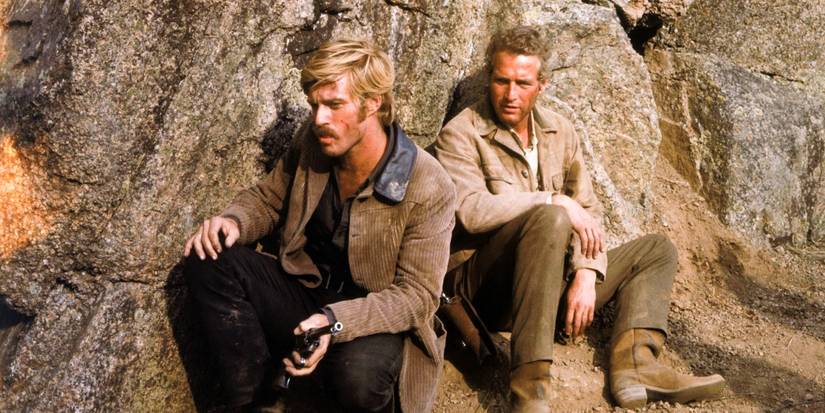
Novelist and screenwriter William Goldman was one of the most successful and influential writers in Hollywood throughout the entirety of his career, and Butch Cassidy and the Sundance Kid may very well be his masterpiece. Directed by George Roy Hill and starring Paul Newman and Robert Redford—easily one of the most iconic actor duos in film history—, this is far and away one of the best blockbuster Western movies of all time.
As strong as Hill’s direction is and as unforgettable as the Newman-Redford pairing is, the vast majority of Butch Cassidy and the Sundance Kid‘s strength as a movie comes from Goldman’s pitch-perfect script. Creating one of the most brilliantly subversive revisionist Westerns in film history, Goldman crafted a screenplay that shines through its delightfully entertaining character dynamics, quotable dialogue, and sharp wit.
8
‘The Apartment’ (1960)

The question of who the greatest screenwriter in Hollywood history is can elicit many answers, but there’s one bound to come up far more often than most: Billy Wilder, who collaborated with another one of Golden-Age Hollywood’s best writers, I. A. L. Diamond, to pen The Apartment. Directed by Wilder, it has aged flawlessly as one of the greatest romantic comedies in film history.
It’s one of those dramedy masterpieces with great acting, but the film wouldn’t work nearly as well as it does without Wilder and Diamond’s screenplay. The dialogue is unforgettable, the satire has razor-sharp teeth, and the perfectly economic structure provides a masterclass in pacing. But what really makes The Apartment‘s script so special is the way it subverts rom-com tropes of the time to deliver one of the rawest, most realistic depictions of love that the era ever saw.
7
‘All About Eve’ (1950)

Joseph L. Mankiewicz‘s All About Eve is one of the best classic movie masterpieces with great acting, mostly remembered for Bette Davis and Anne Baxter delivering two of the greatest acting performances of the era. Also written by Mankiewicz, the film earned him his second Best Screenplay Oscar ever; and to this day, this is still one of the most universally-praised screenplays ever written.
Based on Mary Orr‘s short story The Wisdom of Eve, the film’s script downright revolutionized Hollywood screenwriting. Most of that groundbreaking effect came from Mankiewicz’ treating dialogue like an art form in and of itself, but its unforgettable lines are far from the only thing that this screenplay has going for it. There’s also the perfectly-structured use of flashbacks, the nuanced character writing, and the psychologically complex treatment of themes like aging and the toxic allure of fame.
6
‘Pulp Fiction’ (1994)


Nowadays, it’s an ice-cold take to say that Quentin Tarantino is one of the most widely celebrated filmmakers of the modern era, and his quality as both a director and a writer became perfectly evident from very early on. Pulp Fiction, only Tarantino’s second-ever feature, went all the way to win him a Palme d’Or at Cannes; and since then, most cinephiles still remember this as his nearly-faultless magnum opus.
The 1990s fundamentally revolutionized screenwriting, with nonlinear and postmodern narrative structures becoming increasingly popular—and the perfection of Pulp Fiction‘s screenplay was a huge contributor to that boom. Full of clever dialogue, vibrant characters, and shocking plot twists, all leading to one of the most perfect movie endings of the ’90s, it’s a testament to how far Hollywood screenwriting has come through the decades.
5
’12 Angry Men’ (1957)
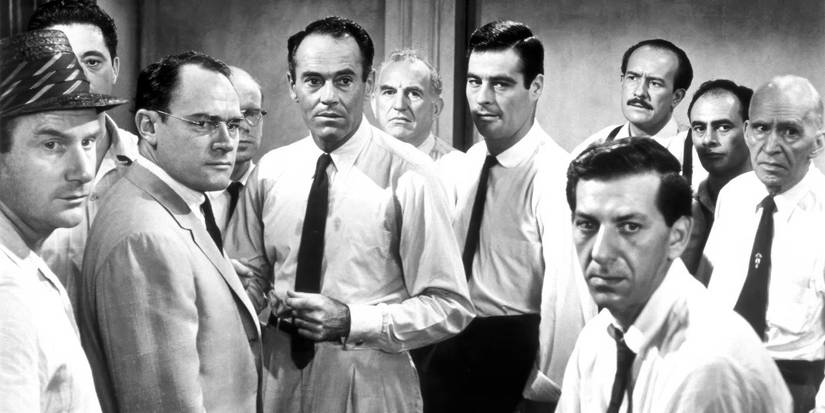
It’s absolutely stunning that a film as downright perfect as 12 Angry Men, many people’s favorite Golden-Age Hollywood drama, was a directing debut. Indeed, Sidney Lumet burst onto the scene with 12 Angry Men, and it’s every bit as impressive that its screenplay was only the second ever penned by Reginald Rose, adapted from his own 1954 teleplay.
Rose finds all sorts of interesting ways to preserve the theatrical feel of the story […] while also adding an undeniably cinematic quality to it.
Rose finds all sorts of interesting ways to preserve the theatrical feel of the story, from the confined location to its being one of the most perfect movies that occur in real time, while also adding an undeniably cinematic quality to it. This script is a masterpiece in minimalist writing, turning a 90-minute debate between the titular 12 men (some angrier than others) into a riveting thriller with tight plotting, complex motivations, and delightfully distinct character voices.
4
‘Citizen Kane’ (1941)

Generally regarded as the greatest motion picture from Hollywood’s Golden Age, and even praised by some as the single greatest film in history, Citizen Kane is one of those movie masterpieces that were far ahead of their time. That’s for a variety of reasons, from Orson Welles‘ groundbreaking direction to Gregg Toland‘s revolutionary camerawork, as well as thanks to Welles and Herman J. Mankiewicz‘s flawless screenplay.
Non-linear screenplays seem pretty common today, but the concept was practically unheard of back in 1941—at least not nearly to the pioneering scale of Citizen Kane‘s script. And though its bold, puzzle-like structure and psychologically deep character study may no longer seem revolutionary by modern standards, they’re still undeniably impressive and worthy of the utmost praise.
3
‘Chinatown’ (1974)

The New Hollywood film movement is probably the main thing that makes the 1970s the best decade in cinema history, seeing as it produced a jaw-dropping number of masterpieces that are still remembered among the best in all of cinema. One such masterpiece is Chinatown, a neo-noir gem that marked the end of an era, one that wouldn’t work nearly as well as it does without Robert Towne.
Though the film’s infamously bleak ending was an uncredited writing contribution by director Roman Polanski (Towne’s original script originally having a significantly more upbeat conclusion), everything that comes before is nevertheless some of the most brilliant screenwriting the big screen has ever seen. Whereas most noir stories are about a detective approaching a larger-than-life case and gradually narrowing the mystery down to a single answer, Chinatown is all about a man tackling a seemingly simple case that turns into something far too overwhelming for anyone to handle. That structure is but one of the reasons why Chinatown‘s script is downright perfect.
2
‘The Godfather’ (1972)
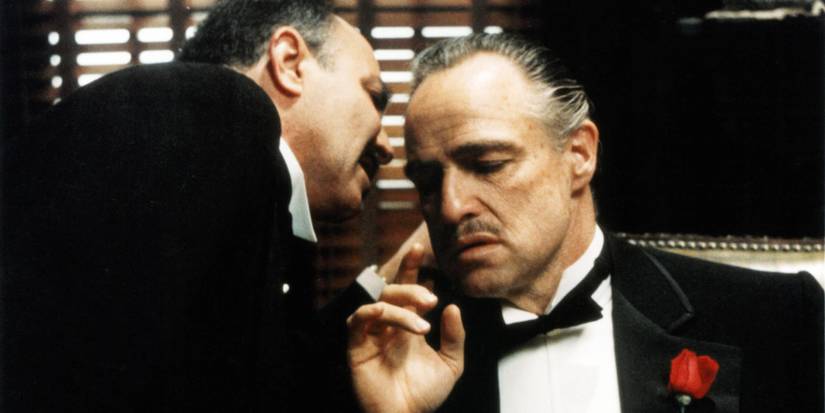
Regarded by many as the greatest film in history, Francis Ford Coppola‘s The Godfather is genius for a wide variety of reasons. It’s such a universally praised masterpiece that there are multiple behind-the-scenes stories about as iconic as the film itself. One such story centers on Mario Puzo, who authored the book the movie’s based on and co-wrote the screenplay with Coppola. After winning an Oscar for his work, Puzo picked up a screenwriting book to better learn the craft, and chapter one instructed the reader to “study The Godfather.”
That story perfectly illustrates the sheer brilliance of The Godfather‘s script, a script that’s largely responsible for its being one of the bleakest movies of the ’70s. But as dark as this crime drama can get, that tone never overpowers the thought-provoking cleverness of the narrative. From the character writing to the dialogue to the thematic exploration of the dark sides of the American Dream, there is virtually nothing to complain about when experiencing The Godfather‘s screenplay.
1
‘Casablanca’ (1942)
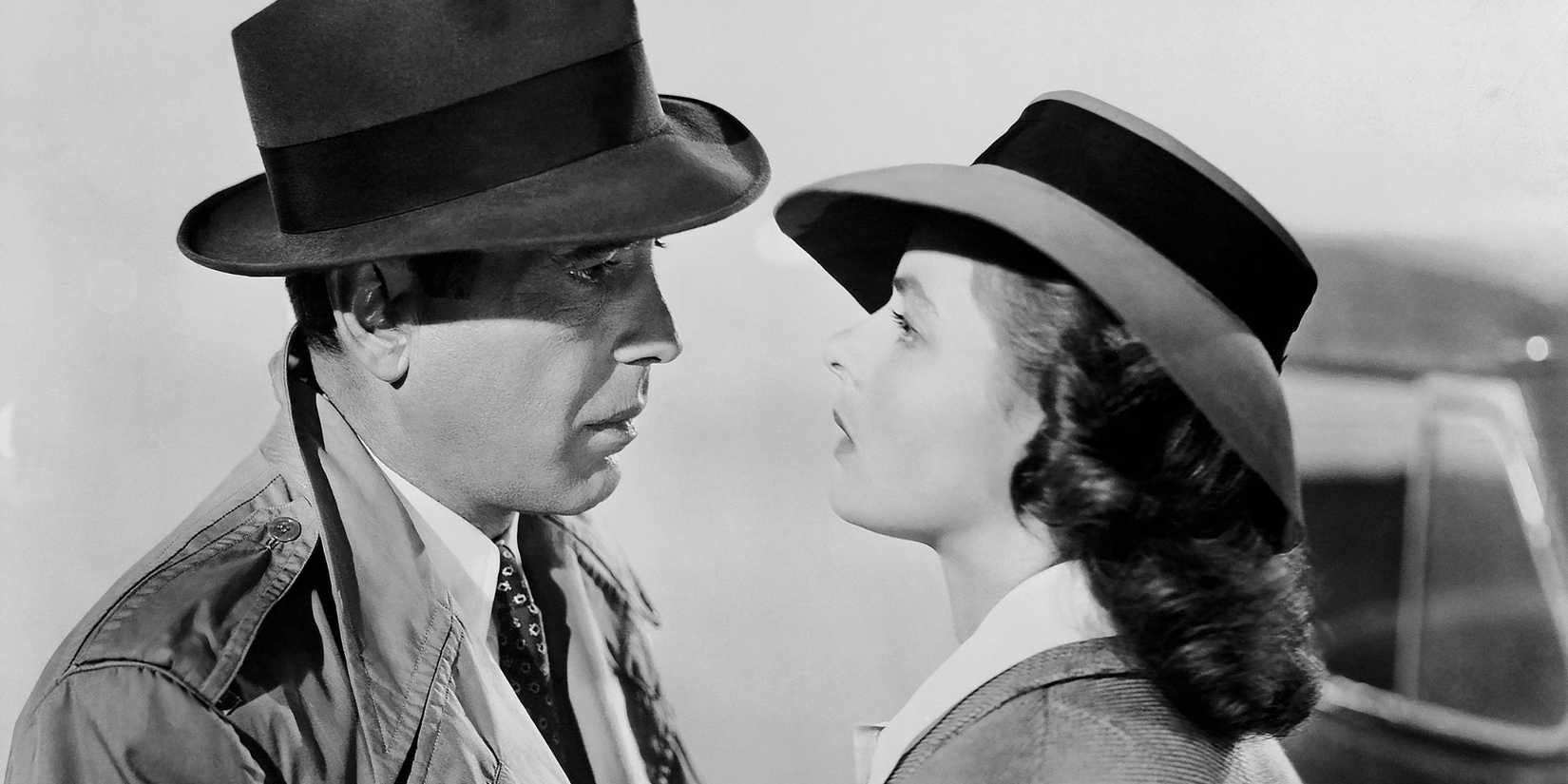
Michael Curtiz‘s Casablanca is easily the most romantic movie that Hollywood’s Classical period ever produced, and it has aged gorgeously as one of the most iconic cinematic masterpieces in history. Practically everyone involved in the making of this cult-classic-turned-mainstream thought that they were participating in a movie that would end up being entirely unremarkable. Little did they know, it would go on to win three Academy Awards (including Best Picture and Screenplay) and remain one of the most acclaimed Hollywood pictures in film history.
From a perfect opening scene to one of those movie endings that are true masterpieces, Casablanca‘s screenplay—written by Julius J. Epstein, Philip G. Epstein, and Howard Koch—remains absolutely flawless in every sense imaginable, making it a must-study piece for anyone even slightly interested in the craft. The dialogue is full of personality and hugely quotable, the characters are distinct and a delight to follow, the story is perfectly plotted and paced, and the themes of heroism and romance are as timeless as they are profound. Never has film history seen a screenplay more perfect than Casablanca‘s.


Casablanca
- Release Date
-
January 15, 1943
- Runtime
-
102 minutes
- Director
-
Michael Curtiz
- Writers
-
Howard Koch, Julius J. Epstein, Philip G. Epstein
-

Humphrey Bogart
Rick Blaine
-

You must be logged in to post a comment Login