Entertainment
10 Best Thriller Books of the 2000s

The 2000s were a great decade for thriller fiction. Established masters continued producing some of their strongest work, while a new generation of writers pushed the genre in fresh directions. It saw the release of several world-conquering bestsellers and cult classics.
The best 2000s thriller books thus offer a variety of stories for readers to dive into: a murder investigation on an isolated island, a detective operating inside Stalinist Russia, an expedition trapped in the Arctic, a journalist uncovering secrets buried by one of Sweden’s wealthiest families.
10
‘The Brass Verdict’ (2008)


“There is nothing you can do about the past except keep it there.” This is the second book about defense attorney Mickey Haller, introduced in the mega-bestselling The Lincoln Lawyer, and in some ways it’s superior to its predecessor. That’s because it unites Haller with another one of author Michael Connelly’s most beloved protagonists: LAPD detective Harry Bosch, who first showed up in 1992’s The Black Echo. This crossover could’ve felt like a gimmick, but Connelly uses the characters’ contrasting personalities to great effect.
Plot-wise, the book kicks into gear when fellow attorney Jerry Vincent is murdered, leaving Haller to inherit his caseload. Among those cases is the defense of Hollywood producer Walter Elliott, who stands accused of murdering his wife and her lover. Bosch, meanwhile, is investigating the crimes. Connelly builds this into a satisfying fusion of courtroom procedural and detective story.
9
‘The Terror’ (2007)

“The beauty of being dead, he knows now, is that there is no pain and no sense of self.” This one was penned by Dan Simmons, most famous for writing the hugely influential sci-fi series Hyperion back in the late ’80s and early ’90s. Set in the 1840s, The Terror follows the crews of HMS Erebus and HMS Terror after their ships become trapped in ice while searching for the Northwest Passage. Supplies diminish, temperatures plummet, disease spreads, and relationships among the increasingly desperate men begin to fracture.
Worse still, something apparently impossible appears to be hunting them across the frozen landscape. That said, the supernatural threat almost feels unnecessary when starvation, illness, and the Arctic winter are already so frightening, in large part thanks to Simmons’ meticulous research. In 2018, the novel was adapted into a TV series, with Ridley Scott involved as one of the producers.
8
‘Child 44’ (2008)

“There’s nothing more stubborn than a fact. That is why you hate them so much.” Child 44 is a historical thriller by author and screenwriter Tom Rob Smith, who also executive produced season 2 of American Crime Story. Taking place in 1953, the novel follows state security officer Leo Demidov, a loyal servant of the Soviet system who initially accepts its brutal assumptions. When evidence emerges that children are being murdered across the country, however, Leo confronts an ideological impossibility.
Officially, murder is considered a product of corrupt capitalist societies, meaning acknowledging the existence of a serial killer would challenge the state’s own claims of perfection. Smith uses that premise to generate extraordinary tension. Leo must pursue the truth while navigating surveillance, political paranoia, institutional denial, and the constant threat of betrayal. In short, the Soviet setting makes the classic procedural tropes feel fresh.
7
‘Gone Tomorrow’ (2009)

“I’m a rich man. To have everything you need is the definition of affluence.” Gone Tomorrow is the third book in the colossal Jack Reacher series. It begins with a simple scenario, a late-night subway journey through New York, but things escalate after former military policeman Reacher notices a fellow passenger displaying behavioral indicators associated with suicide bombers and decides to intervene. Every answer only seems to expose a new layer to the conspiracy.
From here, the novel serves up the kind of breakneck plot fans expect, conveyed through relentless narrative momentum and economical prose. However, Gone Tomorrow stands out a little from most of the series because it’s written in the first person, narrated by Reacher himself (this is also the case with bangers like The Killing Floor and Persuader). This gives us a nice front-row seat to the protagonist’s thought processes.
6
‘The Redbreast’ (2000)

“Many people believe that right and wrong are fixed absolutes. That is incorrect, they change over time.” Nordic crime fiction became an international phenomenon during the 2000s, and The Redbreast was a big part of that. The first of Norwegian writer Jo Nesbø‘s novels to be published in English, it follows Oslo detective Harry Hole as an investigation involving an illegal rifle leads him toward Norwegian extremists and events stretching back to the Second World War.
The book alternates between contemporary Norway and the experiences of Norwegian soldiers who fought alongside Germany on the Eastern Front. That structure gives the novel unusual depth for a police thriller. The mystery isn’t simply about identifying a criminal but understanding how ideology, betrayal, guilt, and memory can survive across generations, and how the violence of the past can intrude on the present.
5
‘Shutter Island’ (2003)
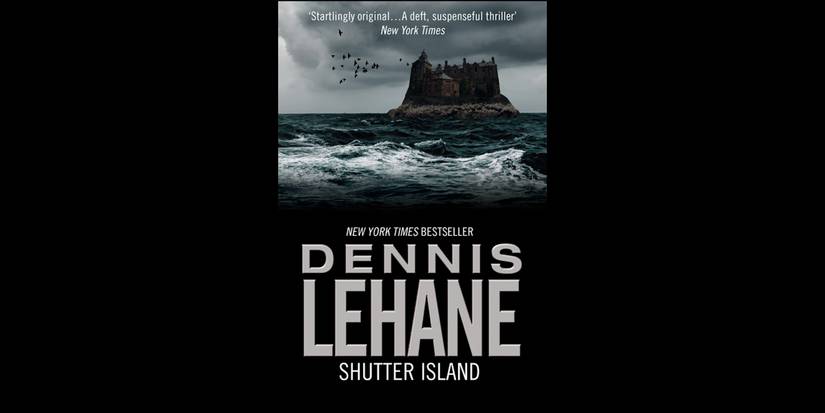
“Your sound protests constitute denial. Your valid fears are deemed paranoia.” Before it was a phenomenal film by Scorsese, Shutter Island was a solid novel. Written by Mystic River‘s Dennis Lehane, the story unfolds in 1954, centering on U.S. Marshal Teddy Daniels as he travels to Ashecliffe Hospital to investigate the seemingly impossible disappearance of a patient. Soon, a hurricane isolates the island from the mainland, staff members behave suspiciously, and Teddy becomes increasingly convinced that the institution is concealing sinister experiments.
Here, Lehane takes the structure of a classic locked-room mystery, relocates it to an isolated Gothic setting, and gradually transforms it into something far stranger and more psychologically disturbing. He masterfully restricts readers to Teddy’s perspective, meaning every strange occurrence potentially confirms his suspicions… or just raises questions about whether those suspicions can be trusted at all. All this culminates in a brilliantly grim final act.
4
‘Sharp Objects’ (2006)

“A child weaned on poison considers harm a comfort.” Before Gone Girl turned her into an international phenomenon, Gillian Flynn announced herself with the impressively assured Sharp Objects (later turned into an HBO show starring Amy Adams). In it, journalist Camille Preaker reluctantly returns to her Missouri hometown to investigate the murders of two young girls. The assignment forces her back into the orbit of her controlling mother Adora and her much younger half-sister Amma, reopening painful memories that Camille has spent years attempting to escape.
Flynn understands that the most effective suspense comes from character as much as plot. Camille’s investigation grows increasingly unsettling because every discovery becomes intertwined with her own family history. The book’s setting is vivid, too. The town of Wind Gap is a suffocating place where gossip, social hierarchy, resentment, and violence bubble behind carefully maintained appearances.
3
‘Lisey’s Story’ (2006)

“I was lost in the dark and you found me.” Lisey’s Story is an underrated novel by Stephen King with a lot of thematic parallels to his 1998 gem Bag of Bones. Two years after the death of celebrated novelist Scott Landon, his widow Lisey begins sorting through the enormous collection of papers he left behind. The process forces her to revisit memories of their marriage, including secrets surrounding Scott’s childhood and his connection to an extraordinary place known as Boo’ya Moon.
Meanwhile, an obsessive man begins threatening Lisey in an attempt to obtain Scott’s unpublished work. While there are some supernatural elements at play here, King keeps the focus on the characters’ marriage itself, constructing a three-dimensional portrait of their relationship. Not for nothing, King has declared Lisey’s Story to be his favorite of his own novels.
2
‘The Girl with the Dragon Tattoo’ (2005)


“My motive is the simplest imaginable: revenge.” Stieg Larsson‘s Millennium series was perhaps the biggest sensation in 2000s thriller writing. Published posthumously, the first book sees disgraced journalist Mikael Blomkvist hired by aging industrialist Henrik Vanger to investigate the disappearance of his teenage niece Harriet decades earlier. It’s a case mired in corporate corruption and family secrets. The assignment eventually brings him together with brilliant hacker Lisbeth Salander, a colorful character who practically leaps off the page.
Indeed, it’s Lisbeth that truly elevates The Girl with the Dragon Tattoo, taking it from ‘solid thriller’ to ‘modern crime classic’. She’s fiercely intelligent, endlessly unpredictable, and impossible to reduce to a conventional archetype, adding a live-wire tension to every scene. Readers responded, catapulting the book to the top of the bestseller lists; the English translation was the second-best-selling novel of 2008.
1
‘The Road’ (2006)

“The cold relentless circling of the intestate earth. Darkness implacable.” This post-apocalyptic tale from Cormac McCarthy combines many genres: drama, character study, coming-of-age, road story, thriller, horror. Following an unspecified catastrophe, a father and his young son travel across a devastated America toward the coast. Civilization has largely disappeared, food is scarce, winter is approaching, and encounters with other survivors can easily turn deadly.
The protagonists’ immediate objectives are painfully simple: find something to eat, avoid danger, and survive another day. This gives all their struggles a kind of mythic quality. Because the characters possess almost nothing, every abandoned house or distant figure becomes significant. A locked door might conceal desperately needed supplies or terrible danger. That said, though the plot is suffused with darkness, the father’s determination to protect his son shines through at the center.
You must be logged in to post a comment Login