Entertainment
10 Best Western Movies in Film History

Since the very birth of cinema as a storytelling medium, the Western genre has been one of the most popular and prolific. After all, these are stories that pretty much anyone and everyone can find compelling if done right: exciting stories of crime, freedom, action, and righteous heroes making sure that outlaws are forced to face justice.
Whether it’s a genre-defining Hollywood classic like The Searchers, a modern neo-Western like the Oscar-winning No Country for Old Men, or even a non-American masterpiece like The Good, the Bad and the Ugly, the best Western movies in film history are all essential viewing for those interested in understanding the history of one of cinema’s most important and prominent genres.
10
‘Django Unchained’ (2012)
Though the 20th century was the one that produced the vast majority of history’s greatest Western films, having seen the peak of the genre’s popularity, there have been plenty of fantastic Westerns throughout the 21st century. And of course, who could be responsible for one of the best if not Quentin Tarantino, a filmmaker who has always been heavily inspired by the genre? It is, of course, Django Unchained.
The Western DNA has always been deeply baked into Tarantino’s style, but nowhere does he play with those influences more gleefully than in Django Unchained. One of the most perfect Westerns since 2000, it’s an impeccably-performed and perfectly-directed gem executed with fiery style. It’s inventive, it’s pulpy, it’s action-packed, and it’s incredibly entertaining from beginning to end.
9
‘Rio Bravo’ (1959)


Howard Hawks was one of the greatest filmmakers of Hollywood’s Golden Age, a director with such a consistent vision that he was essential to the birth of auteur theory. Rio Bravo was one of his last films, and it still remains one of his very best. It’s one of John Wayne‘s best Westerns, a film so great that Hawks later recycled the idea twice, with El Dorado and Rio Lobo.
A masterclass in how to craft an intensely character-driven Western, Rio Bravo is a classic that contains pretty much every single quintessential Western trope, and that’s precisely why it’s such a must-see. That may make it sound unoriginal, but the wonders that Hawks does with those traditional tropes over the course of an enthralling two-and-a-half hours makes it clear why Rio Bravo has aged as well as it has.
8
‘The Searchers’ (1956)


Many people’s favorite John Wayne classic is John Ford‘s The Searchers, a sort of proto-revisionist Western so self-analytical and meta that it’s shocking that it was produced during Hollywood’s Golden Age. Never did that period of film history see a Western so willing to not just analyze, but outright critique some of the negative elements of what the genre had come to represent up to that point.
Indeed, The Searchers is all about the moral grayness of frontier justice, the destructive nature of racism, and the tragedy of the traditional Western hero that is capable of saving civilization but not of living within it. Culminating in one of the most perfect final movie shots of the 20th century, it’s a masterpiece that even those who think they don’t like Westerns should check out at least once in their lives.
7
‘No Country for Old Men’ (2007)

Joel and Ethan Coen are another pair of modern filmmakers who have always worn their Western influences on their sleeves, and resulting in some of the best Western and Western-coded films of their time. One such film is No Country for Old Men, a movie so phenomenal that it made its way to an admirable four Academy Award victories, including Best Picture.
What makes No Country such a special neo-Western is the way it cleverly and subtly blends and juxtaposes neo-Western and neo-noir aesthetics, all in the favor of a story about aging and the dark side of progress. There wasn’t a much more perfect possible combination of genres to tell that sort of story, resulting in one of the most perfect thrillers released since 2000.
6
‘Unforgiven’ (1992)

Since his debut in the Western genre all the way back in the mid-’60s, Clint Eastwood rapidly established himself as one of the genre’s poster boys. And in the early ’70s, Eastwood also established himself as one of Westerns’ most prominent directors. That journey culminated in the Best Picture Oscar-winning Unforgiven, far and away one of the most important revisionist Westerns ever made.
Featuring what’s arguably Eastwood’s best performance and best direction in any Western, Unforgiven exposes the moral nuances of the archetypal Western hero and explores the ugliness of the violence that has always been inherent to the genre. It’s one of the most perfect Western movies of all time, a dissection of the Wild West that’s still unlike anything else the genre has ever produced.
5
‘The Man Who Shot Liberty Valance’ (1962)

Another John Ford masterpiece, The Man Who Shot Liberty Valance was released right after the end of Hollywood’s Golden Age. But even though it looks, sounds, and often feels like a product of Classical Hollywood, it’s thematically and conceptually a euology for that very era. Bolstered by John Wayne and Jimmy Stewart at their very best, it’s one of those Western movies that are a masterclass in filmmaking.
Quite intentionally, Ford gives his movie the texture and aesthetics of a Western produced within the Hollywood studio system of the ’50s. However, underneath that visually stunning surface lies a brilliant deconstruction of the mythology of the American West. It’s at once a loving farewell to the Golden Age of Westerns and a subtle critique of the lies and myths that it constructed.
4
‘Butch Cassidy and the Sundance Kid’ (1969)
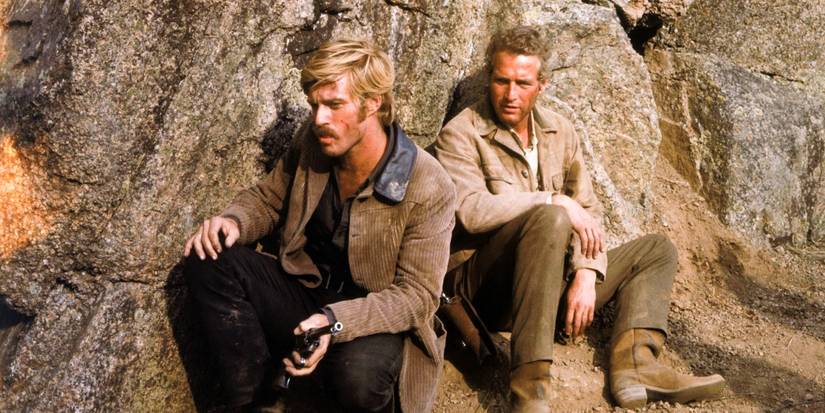
Yet another one of the most perfect and groundbreaking revisionist Westerns ever made, George Roy Hill‘s Butch Cassidy and the Sundance Kid is one of the best blockbuster Western movies ever. Aside from being anchored by Paul Newman and Robert Redford, one of the most iconic duos in the history of Hollywood cinema, the movie also benefits from having a masterful screenplay penned by William Goldman, one of the best screenwriters to have ever done it.
As irresistibly entertaining and lighthearted as it is a poignant swan song to the Wild West, Butch Cassidy and the Sundance Kid is one of the defining American masterpieces of the 1960s. From the hugely memorable and quotable dialogue, to the complex character work, to the riveting action scenes, to Newman and Redford’s unforgettable performances, it’s undoubtedly one of the best Westerns in film history.
3
‘The Treasure of the Sierra Madre’ (1948)

A pioneering Western noir masterpiece, John Huston‘s The Treasure of the Sierra Madre is one of the best and most acclaimed dramas from Hollywood’s Golden Age. It’s one of the best classic movie masterpieces with great acting, starring a top-tier Humphrey Bogart in one of the most daring against-type performances that this period of Hollywood cinema ever saw.
One of the very first Hollywood productions ever to be shot on location outside of the United States, Treasure of the Sierra Madre has aged beautifully as one of the most visually striking, sharply humorous, and exquisitely creative Western dramas the big screen has ever seen. It’s a raw, unflinching character study far darker and more subversive than anything else the studio system produced at the time.
2
‘Once Upon a Time in the West’ (1968)

Italian filmmaker Sergio Leone was the father of the spaghetti Western, and many cinephiles would confidently call him the greatest Western filmmaker who ever lived. For proof of why, one needn’t look a lot further than Once Upon a Time in the West, one of the last movies that Leone ever made. It’s a massive swan song to the traditional Western genre as a whole, and what a swan song it is.
With a gripping three-hour-long narrative culminating in one of the best Western movie endings of all time, Once Upon a Time in the West is not only the perfect farewell to the classical form of the genre, but also a fantastic spaghetti Western in itself. Stylistically, structurally, and narratively revolutionary in every way imaginable, it’s a subversive, perfectly acted and directed, and downright operatic masterpiece that anyone and everyone interested in Westerns should check out.
1
‘The Good, the Bad and the Ugly’ (1966)
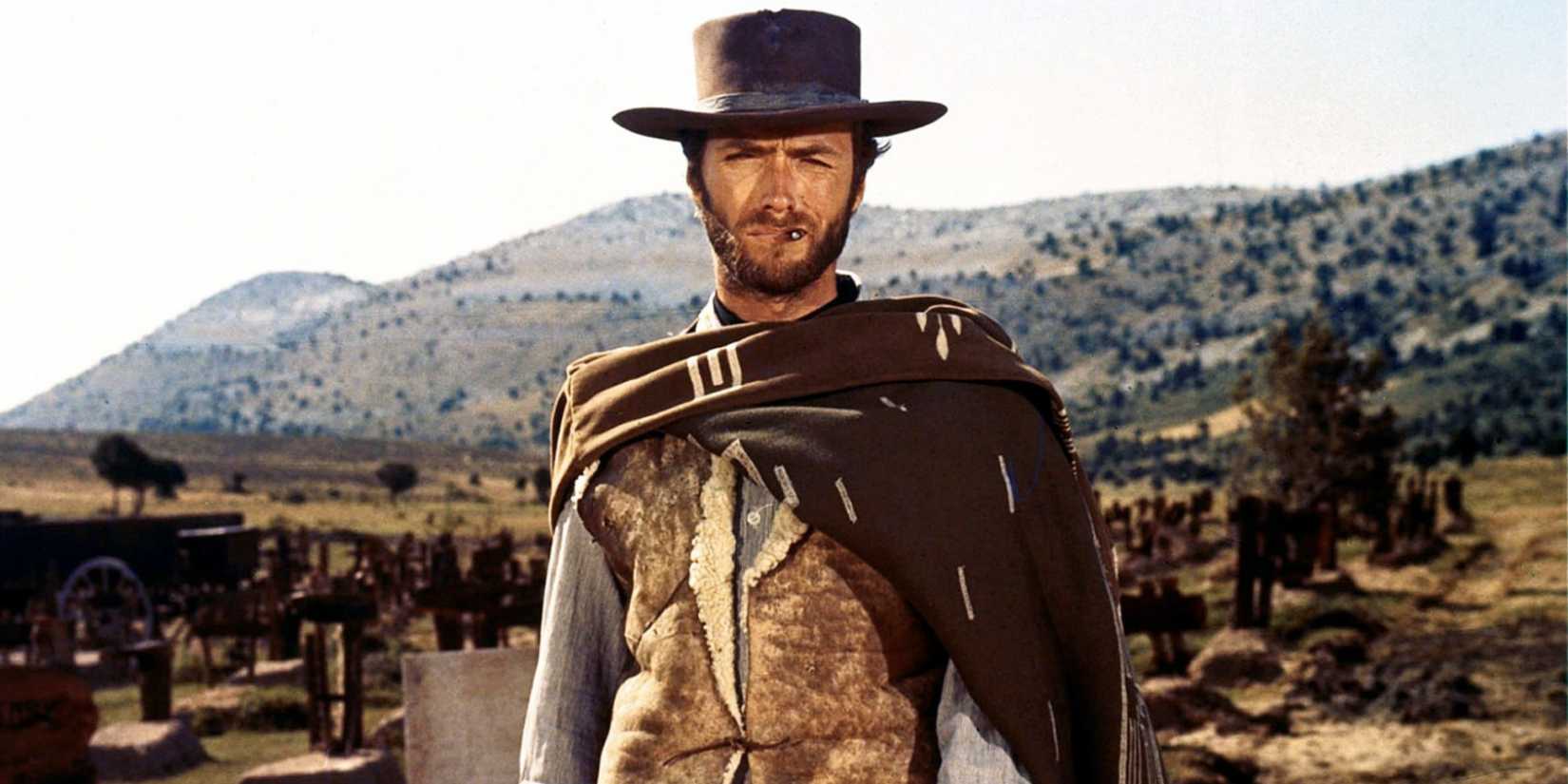
As phenomenal as Once Upon a Time in the West is, there’s no film quite like The Good, the Bad and the Ugly. Far from just being the greatest Western movie in film history, many would go so far as to say it’s one of the greatest films of all time in general, regardless of genre. It’s Sergio Leone’s undisputed magnum opus, Clint Eastwood’s most iconic flim, and the most universally-beloved Western the big screen has ever seen.
Where can one even begin singing The Good, the Bad and the Ugly‘s praises? Incredible performances all across the board, some of the most engrossing action scenes in the genre’s history, a transcendental score by the legendary Ennio Morricone, and one of those movie endings that are true masterpieces—what more could anyone possibly want?
You must be logged in to post a comment Login