Entertainment
10 Binge-Worthy Netflix Shows That Get Better After Season 1

Netflix truly changed the rules for TV. The streamer started dropping entire seasons at once, and all of a sudden, it was over for traditional programming schedules where the fans only got one episode a week. Binge-watching became the norm, and showrunners had the creative freedom to take bigger swings with storytelling without worrying about traditional network constraints.
Here’s the catch, though: When viewers can watch several episodes in a single sitting, they have very little patience for slow burns that don’t instantly click. A Netflix original, no matter how great, is expected to hook its audience within seconds. Sometimes, though, even the most promising shows need time to find their footing, and some Netflix series deserve a little more patience because they only get better after Season 1.
10
‘Sex Education’ (2019–2023)


Sex Education felt like a breath of fresh air when it first premiered. The series, created by Laurie Nunn, follows a socially awkward teenager, Otis Milburn (Asa Butterfield), whose mom, Jean (Gillian Anderson), is a blunt sex therapist. The story kicks off when Otis partners up with the wildly intelligent Maeve Wiley (Emma Mackey) and launches an underground sex therapy clinic at their school to offer advice to their classmates. Sex Education Season 1 handles tough and awkward conversations about physical intimacy and delivers a story that feels exciting, inclusive, and emotionally grounded.
However, as confident as the show is in its first installment, the stakes are still relatively contained. Season 2 is when the narrative starts to expand, and one-off storylines evolve into longer arcs that directly impact the characters’ development. Sex Education also begins to explore institutional repression when the school’s new leadership attempts to control education about sex within the student body. The show suddenly goes from light-hearted teenage dilemmas to larger conversations about power and shame without ever feeling preachy. The writing remains character-first, and that ensures that things always feel relatable.
9
‘Never Have I Ever’ (2020–2023)

In many ways, Never Have I Ever is the quintessential teen rom-com series about the messiness of growing up, falling in love, and finding oneself. However, beneath all that, the show is layered with so much more meaning. The series, created by Mindy Kaling, follows 15-year-old Devi Vishwakumar (Maitreyi Ramakrishnan), who is dealing with the death of her father while being determined to reinvent herself after a humiliating freshman year. Season 1 opens with Devi temporarily losing the ability to walk following the trauma of losing her dad so suddenly, and while she has recovered once the story actually starts, her emotions are still all over the place. That’s the key to understanding why Never Have I Ever gets better after Season 1.
Initially, Devi is shown to be a selfish, impulsive teenager who doesn’t care about how her actions affect others. However, that is the entire point. The audience has to stick with Devi in all her flawed, insecure, and sometimes even jealous glory. The great thing about the show is that it doesn’t ever try to fix Devi. Instead, the narrative slowly exposes why she is the way she is. The audience sees her attending therapy where she confronts all the emotions she has been trying to bury, and that becomes one of the most important elements of the show. Eventually, Devi’s storylines and her personality mature, but the audience has to trust the process and really embrace the chaos of Never Have I Ever Season 1 to fully understand that growth.
8
‘Grace and Frankie’ (2015–2022)

Grace and Frankie is one of the most unique shows on Netflix. The series reunites legends Jane Fonda and Lily Tomlin as Grace and Frankie, respectively, two women in their seventies whose lives take a turn when their husbands, played by Martin Sheen and Sam Waterston, reveal that they have been in love for decades and plan to marry each other. The premise is intriguing right off the bat, especially given that Grace and Frankie are forced to live together in a Malibu beach house as they rebuild their lives from scratch. Sadly, though, all of this feels more like a post-divorce drama than a fast-paced sitcom in Season 1. The pacing of the show is a bit too slow, and the jokes just don’t land the way they should. In fact, it often feels like Grace and Frankie are one-dimensional stereotypes, and it’s hard to get fully invested in their journey.
Thankfully, though, things shift in Season 2 when the show finally stops relying on the shock of the husbands’ announcement and starts exploring what Grace and Frankie’s life actually looks like afterward. That’s when Grace and Frankie start leaning into the ladies’ reinvention and the genuine friendship they find in each other. The show normalizes conversations about aging without being too on-the-nose, and watching these two women find themselves all over again, starting a business, makes Grace and Frankie the perfect comfort show for everyone.
7
‘A Series of Unfortunate Events’ (2017–2019)

A Series of Unfortunate Events, based on the beloved novels by Lemony Snicket, is a genuinely hilarious show with lots of heart. The series follows the orphaned Baudelaire siblings as they are passed from one incompetent guardian after another, all while being hunted by the petty Count Olaf (Neil Patrick Harris). On the surface, the show paints the picture of a villain trying to steal a fortune. However, beneath the absurd humor and gothic production design, this is a story about what happens when young children are forced to grow up too fast. There’s no denying that A Series of Unfortunate Events Season 1 is visually rich and extremely faithful to the books. Harris deserves a special shoutout for the way he transforms into Olaf and embodies his absolute madness.
Yet, the show truly finds its footing in Season 2 when the narrative expands beyond Olaf’s schemes. The second installment expands the larger mythology of the story as the children uncover the secret organization V.F.F (Volunteer Fire Department), and the moral grey areas their parents operated in. That’s when the show stops being about one bad man and becomes about a broken system. The tone darkens, the humor becomes more absurd, and the production leans harder into the surrealism of the source material. By the time A Series of Unfortunate Events reaches its end, the audience can practically see how self-aware the series becomes as it progresses.
6
‘The Crown’ (2016–2023)

The Crown is one of Netflix’s greatest breakout hits, but the show definitely took its sweet time to get there. The series, created by Peter Morgan, chronicles the reign of Queen Elizabeth II across six seasons and reimagines decades of royal history. From the beginning, the ambition of the show is obvious. The Crown Season 1 stars Claire Foy as a young Elizabeth and her reluctant ascent after the death of King George VI. The stakes here feel extremely personal, with Elizabeth struggling to navigate marriage and duty. The first installment of the show is deliberately controlled and slow-paced as Elizabeth learns the rules of the institution that she will eventually go on to embody.
The drama is quiet, and the monarchy feels fragile. However, The Crown Season 2 takes all of that and puts it into a pressure cooker. The season covers events including the Suez Crisis and goes beyond the palace walls. It’s almost as if The Crown completely reinvents itself with each season to show the political instability the monarchy has always had to navigate. It’s easy to see why and how the series grows in scope and confidence as the story progresses. By the time Olivia Colman takes over the role of the Queen, The Crown feels like a more seasoned drama that explores the generational consequences of power. However, the careful groundwork of Season 1 is essential to the weight that the later seasons carry.
5
‘The Umbrella Academy’ (2019–2024)

The Umbrella Academy isn’t a typical superhero show, and that’s exactly why it found its audience. The series, based on the comics by Gerard Way, follows seven adopted siblings raised by the cold, manipulative billionaire Sir Reginald Hargreeves (Colm Feore) to be child superheroes. Instead, they grow up completely damaged, estranged, and resentful of the man who treated them like experiments rather than humans. The premise is intriguing right from the start, with 43 women giving birth simultaneously, and Reginald adopting seven of these babies and training them as the Umbrella Academy. Season 1 introduces this strange, fractured family as they reunite for their father figure’s funeral, only to learn that the world is about to end. The show doesn’t pull any punches and throws its characters in the deep end while fully embracing the weirdness of it all.
However, the biggest issue with The Umbrella Academy Season 1 is its uneven tone. The story goes from the apocalypse plot to intense character drama, and that shift doesn’t always land smoothly. The show starts to find its footing in Season 2 after the first apocalypse resets everything, and the siblings land in 1960s Dallas. By this time, the emotional arcs feel sharper and more purposeful, and the narrative strikes the perfect balance between absurdity and heart. That’s when the story becomes about trauma and these siblings finding their way back to each other despite the damage their father inflicted on them. The Umbrella Academy ends as a messy, heartfelt family saga where every little storyline feels deliberate and earned.
4
‘Orange Is the New Black’ (2013–2019)

Orange Is the New Black remains one of Netflix’s most unique original shows. The series, created by Jenji Kohan and based on Piper Kerman’s memoir, follows Taylor Schilling as Piper Chapman, a privileged New Yorker sentenced to 15 months in a minimum-security women’s prison for transporting drug money a decade earlier. The simple fish-out-of-water premise then transforms into something much greater as the audience is introduced to the diverse women in Litchfield Penitentiary, who live by the place’s own social code and order. Orange Is the New Black balances dark humor with an impactful storyline that humanizes these inmates and explores how they ended up behind bars. Now, Orange Is the New Black Season 1 was technically a smash hit and turned the show into Netflix’s most-watched original series at the time.
However, everyone can agree that it truly took off in terms of storytelling in Season 2 when the ensemble deepened, and other characters, including Suzanne “Crazy Eyes” Warren (Uzo Aduba), stepped into the spotlight. All of a sudden, the show doesn’t just follow Piper and her experience. Instead, it becomes an exploration of systemic poverty, addiction, abuse, and America’s broken prison system. The great thing about Orange Is the New Black is that it was willing to outgrow its premise, and in doing so, it refused to turn these inmates, including Piper, into stereotypes. The prison dramedy still stands as one of the most important ensemble shows of the streaming era, one that just cannot be missed.
3
‘BoJack Horseman’ (2014–2020)
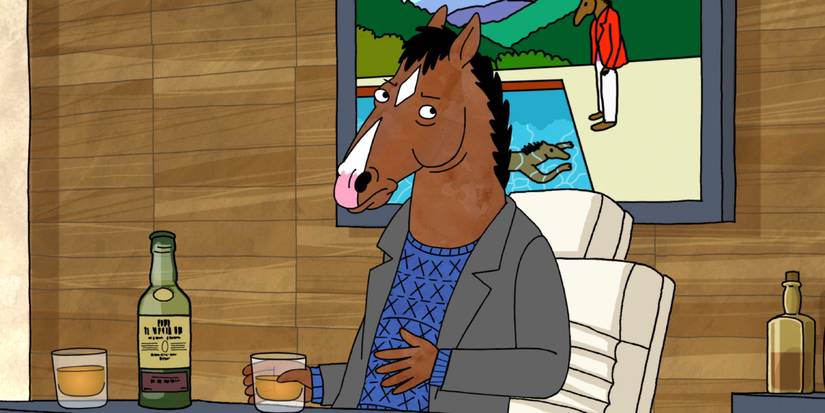
BoJack Horseman is an animated series like no other, set in a version of Hollywood where humans and anthropomorphic animals live together. The story follows BoJack (Will Arnett), a washed-up sitcom star from the ’90s who is clinging to relevance through a tell-all memoir written by Diane Nguyen (Alison Brie). The show sounds like yet another edgy adult cartoon with crude jokes and satire. Now, BoJack Horseman Season 1 featured all of this, and wasn’t exactly what critics received as groundbreaking TV. In fact, many viewers tend to drop off after the first couple of episodes because the show feels like it’s just being raunchy for attention. However, things change dramatically midway through Season 1.
The tone of the show shifts, and it starts asking uncomfortable questions about the human condition. BoJack, who comes across as selfish and cruel initially, transforms into a complex character whom the viewers slowly begin to understand. By Season 2, BoJack Horseman completely shifts gears and starts focusing a lot more on the emotional depth of the narrative. It tackles themes like depression, addiction, generational abuse, sexuality, and self-sabotage in ways animated series rarely ever do. The series evolves into a full-blown psychological drama, and its impact is felt long after the credits roll for the final time.
2
‘Ginny and Georgia’ (2021–Present)

Ginny and Georgia is a generational dramedy that follows a complex yet realistic mother-daughter relationship. The series follows 31-year-old Georgia Miller (Brianne Howey) and her teenage daughter Ginny (Antonia Gentry) as they relocate to Wellsbury, Massachusetts, after years of running. Season 1 follows Georgia’s journey as a survivor of abuse who is willing to do anything to protect her kids, even if that means lying or stealing. Ginny, on the other hand, struggles to fit in at school as she navigates race in a predominantly white town. The show combines teen comedy, murder mystery, and melodrama to deliver a story that feels ambitious yet personal.
However, in the beginning, this ambition is the very problem the series has to overcome. It often feels like Ginny and Georgia Season 1 is taking the story in every possible direction, just to see what sticks. The story feels chaotic, and the characters are half-baked at best. Season 2 begins to treat storylines with more nuance instead of dramatizing things for shock value. The mother-daughter relationship also matures, and the show moves beyond its initial teen soap territory.
1
‘Locke & Key’ (2020–2022)

Locke & Key is hands down one of Netflix’s most intriguing fantasy series. The show follows the Locke family after their patriarch, Rendell (Bill Heck), is murdered. His wife, Nina (Darby Stanchfield), then moves their three children, Tyler (Connor Jessup), Kinsey (Emilia Jones), and Bode (Jackson Robert Scott), to his ancestral home in Matheson, Massachusetts, which holds plenty of mysteries. Turns out that the house contains keys that unlock all kinds of magical abilities, but the children aren’t the only ones searching for them. A demonic entity known as Dodge (Laysla De Oliveira) wants the keys for herself, and so begins a battle over these artifacts. Locke & Key Season 1 builds a strong foundation, and the concept is pretty imaginative from the start.
The premise isn’t the issue here at all. Instead, it’s the execution. In the show’s early episodes, the Lockes repeatedly make confusing decisions that keep the audience from rooting for them. The show feels like a teen drama, which is engaging, but isn’t anything to write home about. Locke & Key reaches its true potential in Season 2, where the characters become more proactive, and the stakes escalate with real consequences. Instead of dragging the story out under the guise of setting up the lore, the series carries its worldbuilding and character arcs side by side. Once Locke & Key leans into its full mythology, it turns into a completely different show that ends on an extremely powerful note.

