
Entertainment
10 Bingeworthy Thriller Shows That Are Perfect Follow-Ups to Prime Video’s ‘Scarpetta’

After much anticipation, Patricia Cornwell‘s iconic character, Dr. Kay Scarpetta, has finally been brought to life on the screen in Scarpetta. In the Prime Video series, Nicole Kidman plays the brilliant forensic pathologist. Across two timelines, with Rosy McEwen taking on her younger self, Kay uses advanced forensic technology to unravel mysteries and solve crimes in the present, ensuring her answers about the past are correct.
If you’ve breezed through the eight-episode first season, there are a handful of medical and crime thrillers that are destined to keep you equally addicted to mystery. From beloved detective procedurals to modern medical dramas, the titles on this list are perfect follow-ups to the twisty Prime Video series.
‘Broadchurch’ (2013–2017)

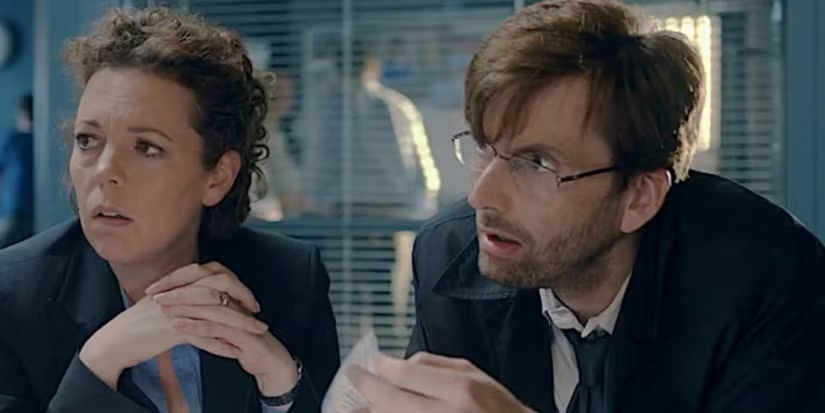
Broadchurch is, perhaps, one of the greatest crime thrillers of all-time. Starring powerhouse British icons Olivia Colman and David Tennant, the three-season series follows the investigation into the murder of 11-year-old Danny Latimer, found dead on the beach of a small coastal town. Detectives Alec Hardy (Tennant) and Ellie Miller (Colman) uncover a community’s deep secrets through a mystery with unbelievable twists and turns as the close-knit town begins to turn on one another under the circumstances. Created by Chris Chibnall, Broadchurch is an emotional slow-burn whodunit with a profound, emotional examination of grief and the human impact of crime.
A properly plotted thriller, Broadchurch keeps the action engaging while keeping you shocked until the final reveal, a testament to the writing and the performances. A solid ensemble, which also includes Jodie Whittaker, Jonathan Bailey, Arthur Darvill, with Phoebe Waller-Bridge, Marianne Jean-Baptiste, and Julie Hesmondhalgh in subsequent seasons, lifts the material beyond plot into something profoundly human. A series that remains sensational every time you watch, there has yet to be another show that has ever come close to the brilliance of Broadchurch. And that includes the American remake, Gracepoint, which also starred Tennant as a different version of his British counterpart.
‘Criminal Minds’ (2005–Present)

One of the most successful and longest-running police procedural crime dramas is Criminal Minds. Beginning its original run in 2005, the CBS thriller follows a group of criminal profilers who work for the FBI as members of the Behavioral Analysis Unit. The team travels the country analyzing the nation’s most dangerous serial killers, known as unsubs, to anticipate their next moves. Focusing on psychological motivations rather than just physical evidence, Criminal Minds pushes the boundaries with intense, sadistic storylines that tend to be gritty in subject matter. All on network television!
Perhaps the defining reason for the show’s longevity is not the crimes themselves but the found family dynamic among the BAU team. Allowing for a character-driven series that lets circumstances shape the characters, Criminal Minds‘ ability to focus on the psyches of the individuals in the field simultaneously with the plot garnered a cult following. Across its run, Criminal Minds featured an iconic cast that included Thomas Gibson, Matthew Gray Gubler, Kristen Vangsness, Paget Brewster, Joe Mantegna, Zach Gilford, and many more. Even with cast turnover and shocking deaths, Criminal Minds never lost steam. Though it may fall into the “is that still on?” category of television, its ability to stay fresh while reinventing itself has made it an addictive watch.
‘Critical’ (2015)

If there is one medical drama that will keep you stressed out from start to finish, look no further than Critical. The one series run followed the trauma specialists at the Major Trauma Centre at City General Hospital as they treated critically ill patients. With each episode focused on one patient and the efforts to save their life within one hour, Critical is a high-stakes thriller that putsmedical professionals in the driver’s seat as they make life-changing decisions. Praised for its real-time feel and technical accuracy, Critical was an hour shift of The Pitt before The Pitt arrived.
Led by Lennie James as Glen Boyle, the trauma consultant and team leader, his prowess as a character actor in high-stress situations was on full display here. With such a strong actor to center the series on, it resulted in a fast-paced, adrenaline-fueled show that focused on the critical “Golden Hour.” Critical is not for the faint of heart. You feel for the patients and providers. The emotional toll of work in trauma is on full display, so when bad news has to be delivered to loved ones, it’s a gut punch. Even with all the goods there, the series didn’t draw high enough viewership, causing Critical to be axed after a single 13-episode run.
‘Dept. Q’ (2025–Present)

In Scarpetta, an old crime resurfaces. In Dept Q., it’s all about unearthing cold cases and unsolved mysteries. The sensational Netflix thriller follows Detective Carl Morck (Matthew Goode), who, after a traumatic shooting, returns to work only to be relegated to the dredges of the unsolved cases department. As Carl and his motley crew delve into the disappearance of missing prosecutor Merritt Lingard (Chloe Pirrie), secrets come to the surface in this twisted story. An enthralling and gritty drama, the dark backdrop of Edinburgh provides an extraordinary atmosphere for the unthinkable crimes that abound. With a central cold case driving the action as Carl faces the trauma of his own attack, the compelling stories intertwine, allowing one to inform the other. As the pieces fall into place, the bigger picture is soon illuminated, revealing just how twisted the first season’s story truly is.
With multiple plotlines that ultimately intertwine across congruent timelines and flashbacks, Dept. Q‘s sharp storytelling becomes its greatest asset. Dept. Q thrives thanks to its exceptional cast. Goode, in a career-best performance, shines thanks to his dynamic with his cohorts: his paraplegic partner, DI James Hardy (Jamie Sives); civilian employee Akram Salim (Alexej Manvelov); and the chipper but broken DC Rose Dickson (Leah Byrne). Other exceptional players include Chief Superintendent Moira Jacobson (Kate Dickie) and Carl’s appointed therapist, Dr. Rachel Irving (Kelly Macdonald). Underrated in its first season’s story, with so much to explore in Season 2, Dept. Q is destined to become even better.
‘Dexter’ (2006–2013)

Though that mountain man, lumberjack-chic finale is still a sticking point for die-hard fans, everything that occurred prior was quite sensational. For eight seasons, Dexter was a smash for Showtime. Starring Michael C. Hall, the series centered on Dexter Morgan, a Miami Metro Police blood-spatter analyst who secretly works as a vigilante serial killer. Guided by a strict moral “code” from his adoptive father, he targets and kills murderers who have escaped the legal system. Showcasing Dexter’s struggle to balance his hidden, destructive urges with maintaining a normal, human life, Dexter is a juicy, off-kilter thriller that explores morality, family, loyalty, and the psychological concept of psychopathy.
Expertly blending dark humor with intense psychological suspense, Hall’s brilliant anti-hero forces viewers to sympathize with a serial killer. Hall crafts one of the strongest characters of the 21st century, bringing depth and nuance to the duplicitous Dexter. He had sensational writing that helped keep the series compelling, especially through the voice-over narrative, giving viewers a glimpse into the dark passenger inside his mind. Dexter is a bloody good time, offering a unique perspective to a typically formulaic genre. With a prequel and a sequel to add to the lore, there’s enough to keep you watching for many weekends.
‘His & Hers’ (2026)

One of the first entries into the world of crime thrillers in 2026 was Netflix’s twisty His & Hers. Based on Alice Feeney‘s book, His & Hers follows news reporter Anna Andrews (Tessa Thompson) and her estranged husband, Detective Jack Harper (Jon Bernthal), drawn together by a murder in their Georgia town that reopens old wounds and reveals secrets. As shocking twists unravel as their inner circle is drawn into the fray, His & Hers reminds us that there are always two sides to every story. Focusing on broken relationshipsand how grief can bring out dark traits in a person, His & Hers is a family affair, just like Scarpetta.
A truly unpredictable story, His & Hers thrives through its atmospheric tension. As the body count rises and the suspect list shifts, the series becomes one you won’t be able to stop watching. From a unique storytelling perspective, shifting from unreliable narrator to unreliable narrator leaves viewers uncertain about what is true and what is contrived for someone’s particular gain. Thompson and Bernthal are at the top of their game, showing how a single event, namely the loss of a child, can actually split two once-connected individuals. Joining them with strong performances are Marin Ireland as Zoe Harper, Jack’s younger sister, and Pablo Schreiber as Richard Jones, Anna’s cameraman and her rival Lexy Jones’ (Rebecca Rittenhouse) husband. If you enjoy the familiar drama surrounding the crimes at hand, His & Hers fits the bill.
‘Luther’ (2010–2019)

One of the finest actors of the generation is Idris Elba. A truly transformative performer, Elba dazzles in the psychological crime thriller Luther. Created by Neil Cross, the series follows DCI John Luther (Elba), a brilliant but self-destructive detective who often breaks rules to catch sadistic killers. Focusing on an intense predator-and-prey duel with criminals and on his complex relationship with the genius psychopath Alice Morgan (Ruth Wilson), Luther goes beyond the detective series through morally ambiguous characters and high-stakes storytelling.
Unafraid to be a darker crime thriller than most, Luther presents a moody, gritty portrayal of London that serves as an important character in the hunts. With shorter seasons, the series is contained to smart, fast-paced storytelling without filler content. Elba earned his BAFTA through this iconic character. Brilliant, damaged, and out-of-the-box operative, Elba’s portrayal of an individual grappling with his inner demons becomes an instant draw. Though Luther could easily be too over-the-top, the series’ villains and antagonists are unsettlingly and deeply human, making them even more sinister. Ambitious and hefty, Luther is the show you may have missed that you’ll surely regret that you did.
‘The Outsider’ (2020)

Now, for something that leans into the science fiction realm: The Outsider. Based on Stephen King‘s novel of the same name, the series follows Detective Ralph Anderson (Ben Mendelsohn) as he investigates the brutal murder of 11-year-old Frankie Peterson in Georgia. While DNA and witness evidence point to little league coach Terry Maitland (Jason Bateman), an airtight alibi forces investigators to confront a sinister, shapeshifting supernatural entity. Joined by unorthodox private investigator Holly Gibney (Cynthia Erivo), the duo uncover the truth, discovering similarities to other unsolved, horrific child murders. From crime thriller to supernatural horror, The Outsider uses the surreal as a tool to explore grief.
The Outsider masterfully merges the mundane terrors of a police drama with King’s brand of supernatural horror. The series does a fabulous job of easing into the genre shift in a plausible way. Thanks to the unique dynamic between Mendelsohn and Erivo, they carry the series to victory across its ten episodes. Like a good King adaptation, the atmosphere is created through tense cinematography. There’s nothing more creepy than a still shot to send a chill down your spine. Though a second season was written, it never came to fruition. Thankfully, the single season served as a faithful adaptation of an underrated King piece.
‘True Detective’ (2014–Present)
The 2010s ushered in the rise of the anthology series. One of the exceptional entries was HBO’s True Detective. Created by Nic Pizzolatto, each season follows a dark, often occult-themed murder investigation across different locations and time periods. Focusing heavily on the psychological scars, personal flaws, and deep philosophical conflicts of the detectives involved rather than just the crime itself, True Detective is a dip in and dip out style series, but if you watch them all, you’ll be highly addicted. With each season self-contained, featuring a new ensemble of characters and stories, True Detective soars thanks to its gritty narratives and its ability to keep commonality through individuality.
Thus far, True Detective has presented four distinct stories. Season 1, the Southern Gothic, tells the story of detectives Rust Cohle (Matthew McConaughey) and Marty Hart (Woody Harrelson) investigating ritualistic murders in Louisiana over 17 years, spanning 1995 to 2012. Season 2’s crime noir tells the story of three detectives. When California Highway Patrol officer and war veteran Paul Woodrugh (Taylor Kitsch) discovers the body of corrupt city manager Ben Caspere on the side of a highway, Vinci Police Department detective Raymond “Ray” Velcoro (Colin Farrell) and Ventura County Sheriff’s Office Criminal Investigation Division Sergeant Antigone “Ani” Bezzerides (Rachel McAdams) are called to assist in the following investigation. Meanwhile, Career criminal Francis “Frank” Semyon (Vince Vaughn) attempts to legitimize his business with his wife Jordan (Kelly Reilly) by investing in a rail project overseen by Caspere. In Season 3, the story takes place in the Ozarks over three decades as partner detectives, Wayne Hays (Mahershala Ali) and Roland West (Stephen Dorff), investigate a macabre crime involving two missing children. And finally, the fourth season, subtitled Night Country, follows detectives Chief Liz Danvers (Jodie Foster) and Trooper Evangeline Navarro (Kali Reis) as they investigate the disappearance of researchers from a remote station in Alaska.
Each of the four seasons is remarkable on its own. Watch in chronological order or start with your favorite star. However you begin, True Detective is an excellent series. With top-notch performances and cinematic-quality filmmaking, True Detective satisfies the crime bug. With such a focus on character-driven stories, True Detective is quite a heavy, intellectual show that dives deep into the individual psyches during the investigations. With a range of themes, including morality, religion, and the nature of time, True Detective changed the vision of thrillers forever.
‘Watson’ (2025–Present)

Finding that intersection of crime and medical drama comes Watson. The relatively new CBS series is a modern riff on the Sherlock Holmes mythology. Set one year following Sherlock’s (Robert Carlyle) death, Dr. John Watson (Morris Chestnut) runs a Pittsburgh clinic treating rare, complex diseases. Leading a team dedicated to treating these diseases, Watson is a modern adaptation of a classic concept that blends detective-style drama with a medical thriller. Giving the beloved sidekick the spotlight, Watson elevates the House tropes, lending a more optimistic tone in which medical mysteries must be solved.
A unique take on the medical detective story, Watson engages Sherlock Holmes fans while still finding its own identity in modern television. Through a familiar case-of-the-week format, the series seamlessly marries crime and medicine, with Watson playing a detective as a patient’s life serves as clues to help save their lives. Chestnut is a formidable lead, proving you don’t need Sherlock after all.

Watson
- Release Date
-
January 26, 2025
- Showrunner
-
Craig Sweeny
- Directors
-
Larry Teng, Bille Woodruff, Jeffrey W. Byrd, Jennifer Lynch, Kristin Lehman, Mario Van Peebles, Ron Underwood, Tara Nicole Weyr, Christine Moore, Clara Aranovich
-

Morris Chestnut
Dr. John Watson
-

Eve Harlow
Dr. Ingrid Derian

Continue Reading
In the age of streaming, Netflix was the pioneer in introducing original content to viewers beyond network and cable television. With greater freedom and fewer restrictions, Netflix produced some iconic series. From Stranger Things to The Crown, Ozark to Squid Game, when it comes to thrillers and dramas, the streamer has it on lock. But what about the original comedies? Why don’t they receive the same adoration?
Throughout Netflix’s history, there have been extraordinary original comedies that broke the mold. Some welcomed Hollywood legends to play and explore characters of a certain age, while others played into the absurdity that wouldn’t have resonated on network television. Yet, these 10 out of 10 shows have become victims of time, forgotten as new viral shows arrive. It’s time to celebrate the comedies that helped shape Netflix and the genre.
‘Bonding’ (2019–2021)

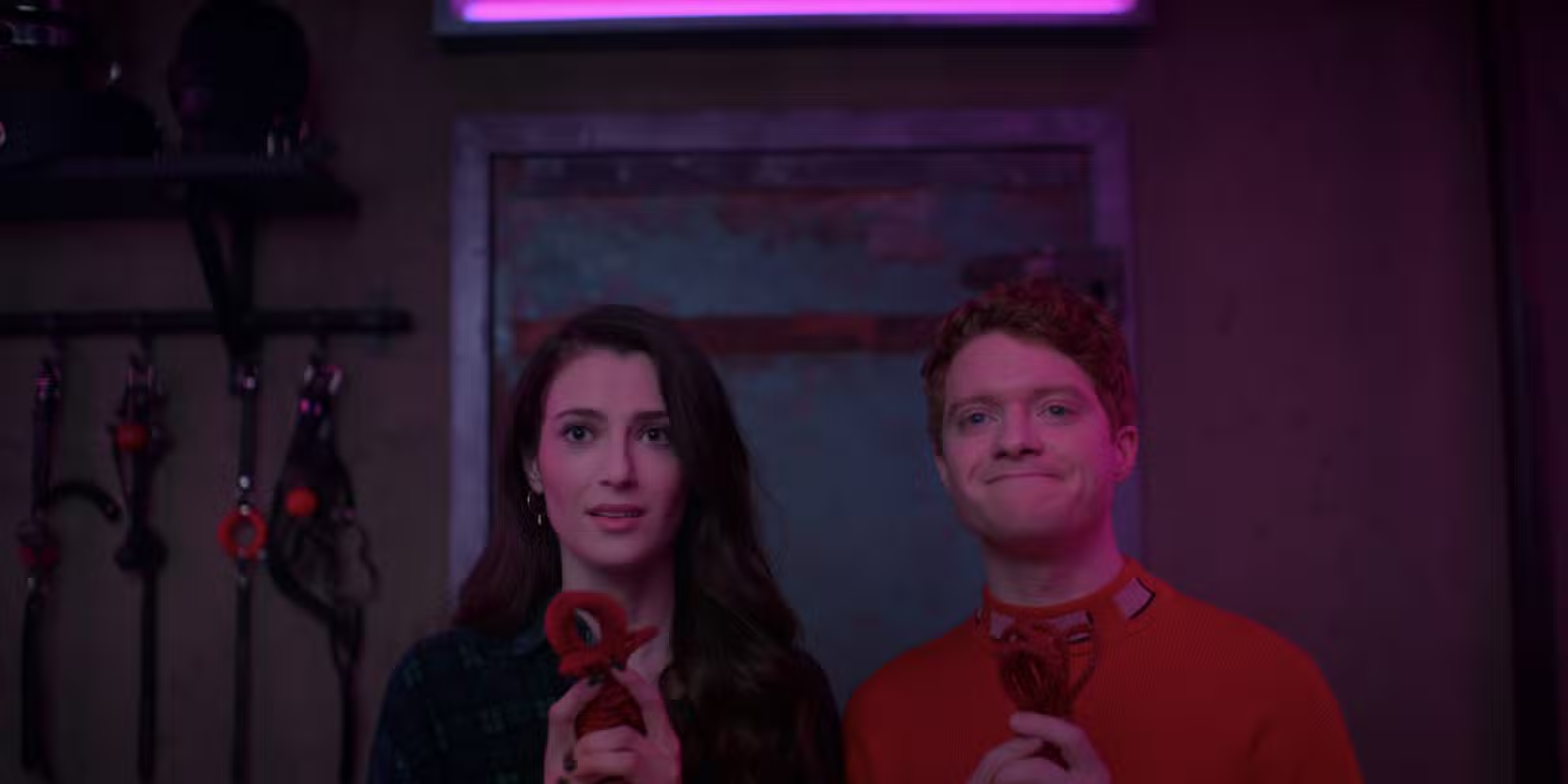
Sex has always been a part of television. Often used as a steamy moment to further the plot, sex sells. So, what happens when you use that premise, but explore a world of taboo? You get the brilliant dark comedy, Bonding. Created by Rightor Doyle, Bonding explores the friendship of Tiff Chester (Zoe Levin), a psychology grad student who works as a dominatrix, and Pete Devin (Brendan Scannell), her newly out gay bestie, who becomes her assistant. As Tiff and Pete navigate their personal lives by day, at night, they work in the BDSM underworld, where they go by the monikers Mistress May and Master Carter. Allowing audiences to explore the taboo world of kink as they use their exploration to find themselves, Bonding is a dark comedy with heart.
Raunchy but light-hearted, Bonding went where very few shows had gone before. Bonding lightened up the dark world of BDSM without compromising the community. Instead, it served as a place where the characters could express vulnerability, learn to communicate, and establish boundaries in all their relationships. With each episode running half the time as a typical sitcom, Bonding was a fast-paced comedy that kept audiences engaged. A short-and-sweet binge that is highly satisfactory, the series was niche without being nonjudgmental. Doyle takes care to ground the story in authenticity while also keeping it fresh and feisty. Levin and Scannell had sensational chemistry that made you see your own bestie in them. Sadly, only running for two seasons, Bonding was a blink-and-you-missed-it comedy.
‘Dead to Me’ (2019–2022)

It might be unfair to claim that Dead to Me is a forgotten series, but the truth is, the more time away, the less it remains in the conversation. Over the course of three seasons, Dead to Me centered on the intense friendship between Jen Harding (Christina Applegate), a hotheaded widow, and Judy Hale (Linda Cardellini), an eccentric optimist she meets in grief counseling. Their friendship takes a turn when the truth is revealed that Judy hid the fact that she killed Jen’s husband in a hit-and-run. With secrets galore, tying them closely together, their friendship endures a rocky road as they face more twists and turns. A tragicomedy about grief and whether certain actions can ever be forgiven, Dead to Me masterfully balanced laugh-out-loud humor with immense emotion, anchored by a thrilling plot.
Created by Liz Feldman, the series came at the right time for both audiences and the two women in the central roles. Applegate and Cardellini had sensational chemistry in their odd-couple dynamic, bringing out the best in one another as characters and actresses. With a unique spin on female friendship, Dead to Me finds that what should be a complex circumstance is actually a way to bond over trauma. The deeper the series went, the more Jen and Judy faced the ups and downs of their relationship. They both made mistakes while also being present to lift the other up. Trauma and grief are easy themes; Dead to Me tackled them with sharp wit. Dead to Me wanted audiences to decide what makes a person good or bad, but in the end, we all have both inside, thus we have to forgive others for being the same.
‘Dear White People’ (2017–2021)

After the success of the film of the same name, writer-director Justin Simien returned to the source material to create a four-season run of Dear White People. Following the lives of several Black college students at Winchester University, a fictional Ivy League institution, Dear White People explored issues of racial tensions, identity, and politics. With themes tackling microaggressions, systemic racism, and cultural appropriation head-on, Dear White People‘s sharp, satirical tone forced viewers to think and became the ultimate conversation-starter series.
An ensemble piece, the ability to generate a diverse group of individuals uniting over a similar perspective was its strongest suit. Though very thematically focused, the characters were richly crafted. From Logan Browning as Sam White, a radio host trying to get people to wake up to society, to DeRon Horton as Lionel Higgins, a highly intelligent aspiring journalist trying to find his voice, the characters you knew from the film were further fleshed out through new stories. Confidently utilizing modern pop culture and social themes to hold up a mirror to society, Dear White People was topical and timeless.
‘Grace and Frankie’ (2015–2022)

Right from the jump, having Jane Fonda and Lily Tomlin reunite was an immediate draw. Hoping that Dolly Parton would pop in to complete the 9 to 5 trio was always top of mind. But once the novelty wore off and the story became the central focus, Grace and Frankie proved itself to be an underdog contender as one of the greatest comedies of the 2010s. Created by Marta Kauffman and Howard J. Morris, the seven-season series told the story of two women in their 70s—the stiff, refined Grace Hanson (Fonda) and the eccentric artist Frankie Bergstein (Tomlin)—whose lives are upended when their husbands, Sol Bergstein (Sam Waterston) and Robert Hanson (Martin Sheen), announce they are in love and plan to marry. Forcing a friendship they never thought imaginable, Grace and Frankie was a rare comedy that showcased the realities of life after 70 while exploring how, at any age, new beginnings can arrive when you least expect them.
Wonderfully tender and strongly acted, Grace and Frankie became the ultimate comfort watch. This was not The Golden Girls with four Hollywood stars getting a chance to act in a hit again. Grace and Frankie was a fervent exploration of the reality of aging through pathos and humor. As a single-camera comedy, Grace and Frankie was able to weave in dramatic moments to capture the story’s authenticity. You could easily have turned this into a multi-cam show based solely on over-the-top scenarios, but grounding it in the resilience of the human spirit made it relatable. Of course, as long as you could get past President Jed Barlet and DA Jack McCoy as a gay couple, Grace and Frankie is perfect. As the series went on, Grace and Frankie lost its novelty, being overshadowed by new original content. What never left was Fonda and Tomlin being at the top of their game within this new demographic. Grace and Frankie was an important, groundbreaking series that invited big-name stars to tackle themes they relate to.
‘Lady Dynamite’ (2016–2017)

Sometimes, all it takes is your own show where you poke fun at yourself to find a new devoted audience. Such was the case for Maria Bamford and her sleeper hit, Lady Dynamite. Loosely based on her life, the series is a surreal, meta comedy that follows Maria as she attempts to rebuild her life and career in Los Angeles after a six-month break in recovery for bipolar II disorder. Wonderfully chaotic and uniquely Bamford, Lady Dynamite addressed Bamford’s bipolar disorder and obsessive-compulsive disorder, and rather than make it a show about self-pity, it became an honest portrayal of mental health told through humor.
Created by Pam Brady and Mitch Hurwitz for Netflix, Lady Dynamite was a meta masterpiece. The fourth-wall breaking was never a distraction; rather, it was an element that elevated the comedy and allowed Bamford to speak her truth. A journey straight into Bamford’s mind, the style in which the stories are presented offers a glimpse of how Bamford experiences life. The non-linear approach was highly experimental, which resulted in the ultimate payoff. Furthermore, she gets to speak her mind about sitcom conventions and the struggles within the industry. Whether you experienced it yourself or know someone who has, Lady Dynamite was a daring show that tackled mental health while network comedies steered clear of it. Lady Dynamite was ahead of its time; the doors the series opened for modern comedy seemed to leave the show on the other side of it.
‘Master of None’ (2015–2021)

Fresh off a successful run on Parks and Recreation, comedian Aziz Ansari rode the momentum and created a star vehicle for himself with Master of None. The dramedy follows Dev Shah (Ansari), a 30-year-old actor in New York navigating his career, romance, and cultural identity. By Season 3, the series switched perspective, giving the lead to Lena Waithe, playing Denise, one of Dev’s friends, a 37-year-old lesbian novelist, mostly following their romantic, professional, and personal experiences. The complete millennium experience, anxiety included, Master of None took relatively specific themes, like the gap between first-generation Indian-American children and their immigrant parents, and mixed them with more universal themes, including racism, sexism, and modern romance, to give a platform to minority voices.
With high-quality filmmaking and whip-smart writing, Master of None began as a deeply personal project for Ansari, resulting in humanistic storytelling. Mostly adopting a self-contained episode narrative, each episode allowed a specific theme to take center stage. Master of None was a modern comedy that avoided classic sitcom tropes. Diverse storytelling and visibility have become more prominent since Master of None, making it seem like a show of the past. If you haven’t watched the series, no time like the present to “treat yo self’” with a forgotten great.
‘One Day at a Time’ (2017–2020)

Perhaps the most criminally underrated and underappreciated comedy to ever play on Netflix was the wholesome reboot of the classic sitcom One Day at a Time. Reimagined for a Cuban-American family at the center of the story, the sitcom followed Penelope Alvarez (Justina Machado), a newly separated Army veteran and nurse, raising her radical teen daughter, Elena (Isabella Gomez), and socially adept tween son, Alex (Marcel Ruiz), with the help of her old-school, Cuban-born mother, Lydia (Rita Moreno). Bringing the multigenerational stories of a Latino family to the forefront, the show perfectly marries old-school sitcom with contemporary storytelling.
Even if the Alvarez family didn’t look like your family, their experiences together as a unit may still have resonated. One Day at a Time was exceptionally heartfelt, tackling important topics respectfully. Equally as progressive as the original Norman Lear series was at its time, the show brought classic tropes that made multi-camera series so beloved while ensuring such themes of PTSD, racism, and sexuality were handled with care. One of the most rewarding elements of the series was the comedic masterclass coming from Machado and Moreno. Despite receiving critical acclaim, One Day at a Time sadly didn’t earn the respect it deserved when it was forced to end its run on Pop rather than Netflix. Beyond poignant, One Day at a Time is an exceptional series for the entire family.
‘Unbreakable Kimmy Schmidt’ (2015–2019)

The 2010s became a time when single-camera comedies took daring risks. In the mockumentary style, you had shows like The Good Place that played with the surreal and the absurd for a delightfully hilarious premise. Enter Tina Fey and Robert Carlock with a hilariously absurd comedy, Unbreakable Kimmy Schmidt. After 15 years of captivity in an underground bunker in Indiana, where the Reverend Richard Wayne Gary Wayne (Jon Hamm) held her, and three other women, 29-year-old Kimmy Schmidt (Ellie Kemper) decides to leave her past behind and start over in New York City. Adjusting to life in the concrete jungle after life in a doomsday cult, she rooms with Titus Andromedon (Tituss Burgess), a flamboyant, self-absorbed, struggling actor; deals with eccentric, crime-prone landlady Lillian Kaushtupper (Carol Kane); and works as a nanny for wealthy, insecure socialite Jacqueline White (Jane Krakowski). Like a cartoon strip come to life, Unbreakable Kimmy Schmidt balances the dark with the light for an outrageously comical satire with gags galore.
Like 30 Rock, Unbreakable Kimmy Schmidt uses every waking moment to offer social commentary where no one is safe. With a character as the eyes and ears of a brand-new world, unafraid to speak her mind on anything and everything, the show pokes fun at the mundane. New York City plays a character, but in this version, it’s as colorful as the characters. The ensemble lifts the show to great heights. Even at their worst, each character is a delight. They have such wonderful idiosyncrasies that pop through the screen. With bits in every episode, from Pinot Noir to the origin of Jacqueline’s identity, Unbreakable Kimmy Schmidt was a laugh riot. There’s no doubt the show could have run longer than four seasons, but alas, the series went out on a tremendous high.
‘Wet Hot American Summer: First Day of Camp’ (2015)
The hype was real, and it was warranted. Upon the announcement of a serialized version of Wet Hot American Summer with many original characters reprising their roles, those who hadn’t signed up for Netflix purchased a subscription. Serving as a satirical prequel to the cult classic film, Wet Hot American Summer: First Day of Camp follows the counselors and campers of Camp Firewood on their chaotic first day of summer in 1981. With the original ensemble playing younger versions of themselves, Wet Hot American Summer: First Day of Camp was as absurd as it sounds. As it should have been. For fans of the characters, the series provided extra tidbits into the origins of the characters’ relationships and behaviors seen in the original movie. By having adult-only time, the over-the-top hilarity flows naturally.
As a serialized show, the plot centers on saving the camp from toxic waste dumped by a company. But it’s the individual subplots that shine brightest. The brilliance of this series lies in the reunion of actors whose careers blew up after the film. With the likes of Elizabeth Banks, Bradley Cooper, Janeane Garofalo, Amy Poehler, and Paul Rudd joined by new cast members including Jason Schwartzman, Chris Pine, Jon Hamm, and Kristen Wiig, Wet Hot American Summer: First Day of Camp was nonstop laughs. No matter where they are in their careers, every star is committed to the bit, in on the absurdist meta jokes. It mocked teen comedies while then poking fun at investigative journalism, political thrillers, legal dramas, and spy films within the context of an ’80s camp life. Though only a season, the follow-up show Wet Hot American Summer: Ten Years Later brought back much of the series’ cast, along with new stars Adam Scott, Melanie Lynskey, and Dax Shepard. The legacy of the franchise remains in our hearts.
‘W/ Bob & David’ (2015)

Outside of legacies like Saturday Night Live and MAD TV, finding success as a fledgling sketch comedy show can be difficult. Then Netflix took a beloved ’90s HBO sketch series and rebooted it. In 2015, Bob Odenkirk and David Cross paid homage to Mr. Show with Bob and David with four episodes of W/ Bob & David. In the spiritual successor, Odenkirk and Cross bring on the laughs in four 30-minute episodes. Combining live-on-stage studio segments with pre-recorded digital shorts, W/ Bob and David saw the stars head back to their humble beginnings while proving that, even with higher-profile fame, they still have the comic goods.
17 years after the original ended, W/ Bob and David retained the anarchic spirit while introducing more nuanced, refined scripts. The series thrives on both actors’ natural chemistry and comedic tension. Perhaps a major reason the show has been forgotten over time is that Netflix removed the third episode for a sketch featuring blackface. Though the stars objected to the decision, arguing it was satire, the growing racial tension in the country in 2020 left the streamer with no choice. Though there was a desire for more, the single season came and went with little fanfare.

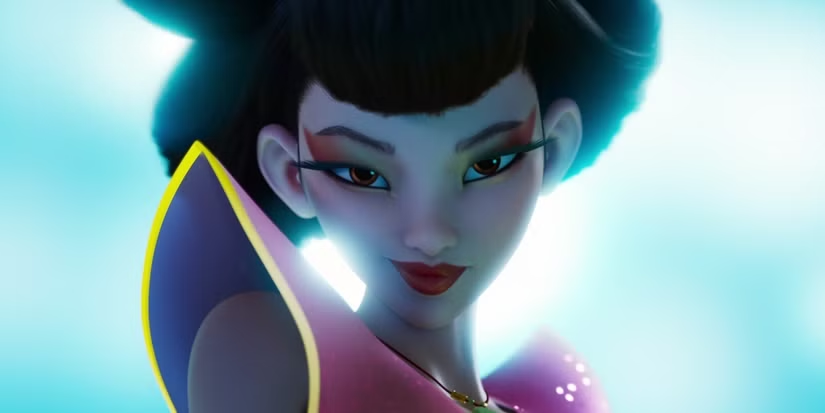
Since its release in 2025, Maggie Kang and Chris Appelhans’s KPop Demon Hunters has become a true cultural phenomenon around the globe. With a story inspired by Korean mythology, K-pop, and anime, and a stellar soundtrack to go with it, the fantasy musical is easily one of the biggest hits of recent years, winning several accolades for its striking animation and brilliant music. But while the film is certainly one of the best musicals ever made, it’s hardly the only great movie in the genre.
Hollywood has been making musicals since the early 20th century, and over the decades, we’ve been graced with the release of several toe-tapping, mind-blowing audiovisual journeys. And the greatest of them, the true masterpieces, deliver exhilarating experiences that are just as amazing (if not more, in some cases) as the blockbuster Netflix movie. So, here’s our handpicked selection of some spectacular musicals that are as good as KPop Demon Hunters.
1
‘Over the Moon’ (2020)

Directed by Glen Keane from a screenplay by Audrey Wells, Over the Moon is an animated musical fantasy that takes inspiration from Chinese mythology. The film follows Fei Fei, a spirited young girl who misses her late mother and tries to hold on to the stories she told her about the moon goddess, Chang’e. When her father gets engaged to a woman who questions the existence of Chang’e, Fei Fei builds a rocket ship to prove her wrong, but things get complicated by an unexpected stowaway. Cathy Ang leads the voice cast as Fei Fei, with Phillipa Soo, Ken Jeong, John Cho, Ruthie Ann Miles, Margaret Cho, and Sandra Oh voicing supporting roles.
An Academy Award-nominated work of animation that has gone sorely underrated, Over the Moon is a vibrant and wonderful film with excellent art and great emotional depth. The Netflix Original movie presents a beautiful story about moving on from grief, told using the motifs and legends of Chinese mythology, and further elevated by its energetic, pop-infused soundtrack. The film received positive reviews after its premiere at the 2020 Montclair Film Festival and earned several accolades, including six Annie Award nominations.
2
‘Kubo and the Two Strings’ (2016)

Produced by Laika and directed by Travis Knight, Kubo and the Two Strings is a stop-motion animated fantasy film set in feudal Japan. The movie follows a young boy, the titular Kubo, as he sets out on a mystical quest, wielding a magical two-stringed musical instrument and aided by strange companions. Art Parkinson voices Kubo, leading a cast that includes Charlize Theron, Ralph Fiennes, Rooney Mara, George Takei, and Matthew McConaughey.
Often hailed as one of the greatest animated films of all time, Kubo and the Two Strings may not be as well-known as KPop Demon Hunters, but its musical fantasy narrative is practically perfect. It’s a highly emotional movie with breathtaking animation and an absorbing, all-ages narrative, and the film has been widely praised for its story, production, and music. Though it’s often overlooked these days, the movie has earned numerous accolades, including two Oscar nominations and a BAFTA win for Best Animated Film.
3
‘A Hard Day’s Night’ (1964)

Directed by Richard Lester and written by Alun Owen, A Hard Day’s Night is a classic musical comedy starring the Beatles as fictional versions of themselves. The movie follows John Lennon, Paul McCartney, George Harrison, and Ringo Starr in the hours leading up to a televised variety show concert, evading obsessed fans, teasing reporters, and generally trying to have some fun — against the wishes of their strict manager. Wilfrid Brambell, Norman Rossington, John Junkin, and more star in supporting roles.
Released in 1964, during the peak years of Beatlemania, A Hard Day’s Night was an instant hit, earning rave reviews from critics for its lurid, surreal story and setting new records with its box office performance. Powered by the easy charisma of its iconic stars and elevated by a fantastically funny screenplay, the film is easily one of the most popular musicals of all time. A Hard Day’s Night received two Academy Award nominations, and the soundtrack album was a multi-platinum certified hit as well.
4
‘Encanto’ (2021)

Directed by Jared Bush and Byron Howard, Encanto is a Disney musical fantasy that revolves around a multigenerational Colombian family, the Madrigals, who live in a magical house. All the Madrigals — except for Mirabel Madrigal (Stephanie Beatriz) — have miraculous gifts that they use to help their community, but when the family begins to lose their magic, it falls to Mirabel to save them all. The film’s ensemble voice cast also includes María Cecilia Botero, John Leguizamo, Diane Guerrero, Wilmer Valderrama, and more, and it features original songs written by Lin-Manuel Miranda.
Though KPop Demon Hunters may have reached unprecedented heights with its success, Encanto was an equally important cultural phenomenon when it first came out in 2021, receiving highly favorable reviews from critics and audiences around the world. A beautiful movie that explores generational trauma through a magical narrative, the film has been widely praised for its music, performances, animation, and emotional depth. Encanto went on to receive several awards, including the Oscar, Golden Globe, and BAFTA Awards for Best Animated Feature/Film.
5
‘Blue Giant’ (2023)

Adapted from the manga series by Shinichi Ishizuka, Blue Giant is a musical anime film directed by Yuzuru Tachikawa and produced by NUT. The film follows a former high school basketball player who discovers a love for jazz, teaching himself to play the saxophone and moving to Tokyo, where he teams up with his drummer friend and a gifted pianist to form a jazz trio. The voice cast stars Yuki Yamada, Shotaro Mamiya, Amane Okayama, and more.
Combining mindblowing animation with an excellent jazz soundtrack, Blue Giant is a passionate love letter to music that earned universal acclaim. Charting one young man’s earnest quest for musical greatness, the film is an electrifying and immersive experience, and though it may not be as widely known as KPop Demon Hunters, it is easily one of the best animated movies of recent years. Blue Giant went on to win several accolades as well, including a Japan Academy Film Prize for Best Music Score.
6
‘Hamilton’ (2020)

Directed by Thomas Kail, the 2020 film Hamilton is a live stage recording of Lin-Manuel Miranda’s Broadway musical. The movie follows the life story of American Founding Father Alexander Hamilton, from his childhood as an orphan in the Caribbean to his tragic death. Miranda stars as Hamilton, alongside most of the original cast, including Leslie Odom Jr., Phillipa Soo, Christopher Jackson, Renée Elise Goldsberry, Daveed Diggs, and more.
The next best thing to actually watching the acclaimed musical live, Hamilton premiered on Disney+ in July 2020 and quickly became one of the most-streamed films of the year. Successfully transporting the experience from stage to screen, the movie was widely praised by critics for its direction, performances, and visuals, and it was named one of the best films of the year by the American Film Institute. The film also earned several accolades, including two Golden Globe nominations and 12 Emmy nominations, of which it won two.
7
‘The Wizard of Oz’ (1939)

Probably the most famous musical of all time, The Wizard of Oz is a film adaptation of the novel by L. Frank Baum, starring Judy Garland as Dorothy Gale. Like the book, the film follows Dorothy, a young girl from Kansas, as she finds herself magically transported to the wonderful land of Oz, where she must embark on a quest to meet the titular wizard and defeat the Wicked Witch of the West to get home. Directed primarily by Victor Fleming and produced by Metro-Goldwyn-Mayer, the movie also features Frank Morgan, Ray Bolger, Jack Haley, Bert Lahr, Billie Burke, and Margaret Hamilton in key roles.
An evergreen audience favorite that has been an inspiration to generations of filmmakers, The Wizard of Oz is a landmark of cinema history that has earned great acclaim over the years for its timeless story, beautiful soundtrack, and groundbreaking visual effects, especially its combination of black-and-white and Technicolor. The film’s performances, music, and stagecraft still hold up today, decades later, and it remains a widely loved masterpiece.
8
‘Inu-Oh’ (2021)

Directed by Masaaki Yuasa and produced by Science SARU, Inu-Oh is an anime musical film inspired by Hideo Furukawa’s novel Tales of the Heike: Inu-Oh. Set in 14th-century Japan, the film explores the friendship between Inu-Oh, a young Noh dancer born with a disfigured appearance, and Tomona, a blind musician. Avu-chan and Mirai Moriyama lead the original voice cast as Inu-Oh and Tomona, respectively, with Tasuku Emoto, Kenjiro Tsuda, and Yutaka Matsushige voicing supporting characters.
Inu-Oh had its world premiere at the 2021 Venice International Film Festival, where it became an instant critical favorite. A thrilling audiovisual journey with powerful social commentary and a mindblowing soundtrack, the film is a triumph of animated storytelling that centers on the importance of music as a way to challenge the status quo. The movie went on to receive several accolades, including a Golden Globe nomination, two Annie Award nominations, and the Fantasia International Film Festival’s Satoshi Kon Award for Best Animated Feature.

Inu-Oh
- Release Date
-
October 30, 2021
- Writers
-
Hideo Furukawa, Akiko Nogi
-
-
-
Tasuku Emoto
Shogun Ashikaga
-
Kenjiro Tsuda
Inu-oh’s Father
By Chris Snellgrove
| Published

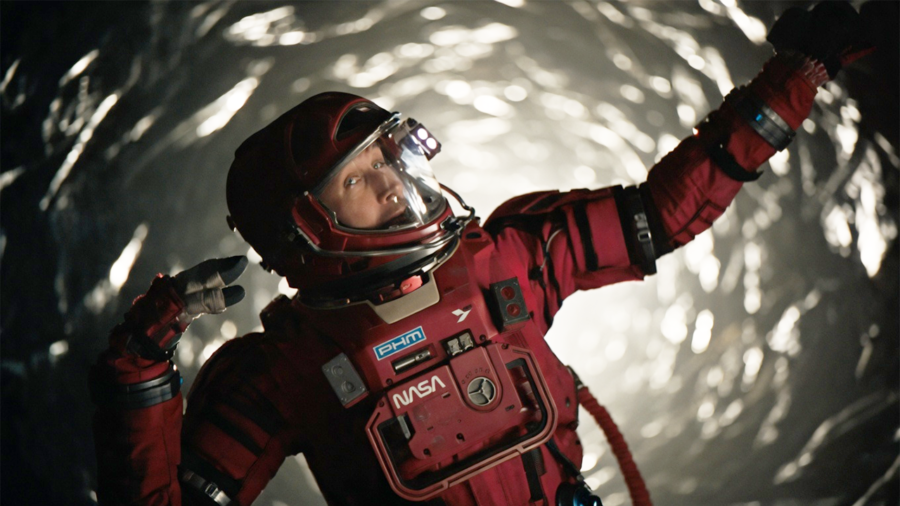
Right now, Project Hail Mary is the hottest sci-fi movie of the year: it not only had an (interstellar) opening weekend, but it earned $54.5 million in its second weekend, showing that this blockbuster has some serious space legs. It’s also currently sitting at a 95% rating on Rotten Tomatoes, proving the film is loved by critics and audiences alike. In the wake of its success, producers across Hollywood are frantically taking notes to learn what everyone wants to see in modern sci-fi.
“All modern science fiction TV shows and movies have been heavily influenced by the original Star Trek — except for the current batch of Star Trek shows.”
Instead of writing notes, though, they could have asked one man: Andy Weir, the writer of the novel that Project Hail Mary is based on. He’s also the writer of The Martian, meaning that he is two for two on crafting beloved sci-fi tales that are transformed into blockbuster films. Recently, the bestselling author appeared on the Critical Drinker’s podcast and offered a blunt assessment of the modern state of Star Trek: “those shows are sh*t.”
Andy Weir On Modern Star Trek

Unsurprisingly, Andy Weir primarily appeared on the Critical Drinker’s podcast to help plug Project Hail Mary. Host Will Jordan mentioned how the film has been particularly resonant with old-school Star Trek fans who can’t find the movie’s style of entertainment (fun, adventurous, and optimistic) anywhere else. This led Weir to quote an unnamed analyst’s assessment of Alex Kurtzman’s NuTrek era: “All modern science fiction TV shows and movies have been heavily influenced by the original Star Trek — except for the current batch of Star Trek shows.”
Eventually, Andy Weir unpacked his thoughts and admitted that he didn’t hate the entirety of NuTrek. “I like Strange New Worlds. I think it’s pretty good….Lower Decks, I thought, was entertaining and fun. All the others, they can go.”
Star Trek Rejected A Pitch From Andy Weir
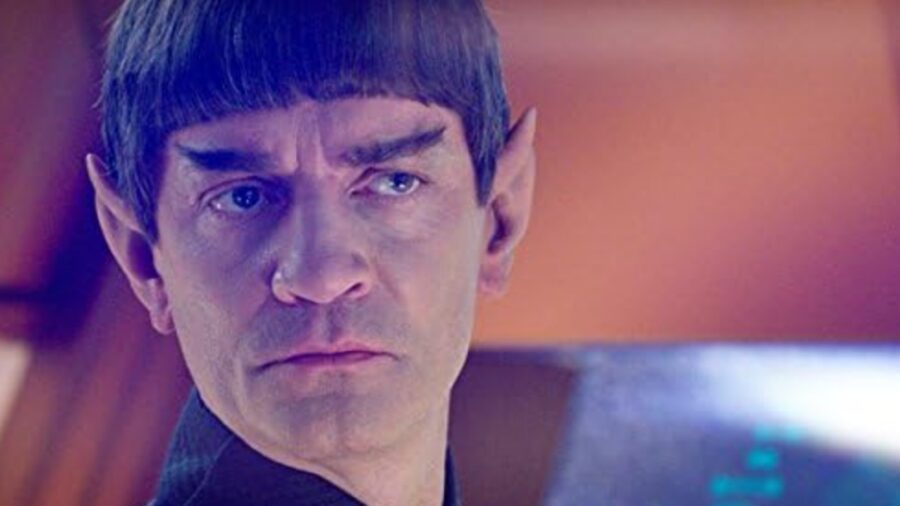
After this, Weir revealed that he has something of a personal stake in the modern state of Star Trek: “I pitched a Star Trek show to Paramount, and I was in Zoom with the showrunners with all the shows and spent a lot of time talking to [executive producer Alex Kurtzman].” According to Weir, Kurtzman, “as a person, is a really nice guy. But at the same time, those shows are sh*t.”
Hindsight is 20/20, of course, but it certainly seems like Paramount made a mistake not accepting Weir’s pitch. Every NuTrek show, save for Picard (which was locked in for only three seasons) has been canceled early, and Project Hail Mary is currently taking the box office by storm. In retrospect, it seems like a Star Trek series from a guy with multiple best-selling novels and multiple commercially and critically acclaimed film adaptations would have been a good idea.
Is The Time Right To Expel Alex Kurtzman?

If nothing else, the cancellation of Starfleet Academy and the slow implosion of the NuTrek era might serve as a wake-up call to Paramount. Alex Kurtzman’s contract is up this year, and the studio is about to acquire Warner Bros., so there has never been a better time to hire new creators to usher in a new era for Star Trek.
The Anne Rice universe on AMC has been growing, but one series isn’t going to get a second life. Talamasca: The Secret Order will not be coming back for Season 2. The Nicholas Denton-led series follows the organization that monitors supernatural beings in the world. Guy Anatole (Denton) learns about the order and becomes one of the people who look over the witches, vampires, and more. A spin-off from Interview With the Vampire, the show also featured Justin Kirk‘s Raglan James as well as music from Sam Reid‘s Lestat de Lioncourt.
Much like the Alexandra Daddario–led Mayfair Witches, the show did stand on its own, but it was part of Rice’s larger universe of supernatural books that are connected by the Talamasca watching over the creatures that lurk in the dark. In Rice’s novels, she touches on werewolves, taltos, mummies, spirits, and plenty of other creatures that haven’t been mentioned in the flagship series. But with the cancellation of Talamasca, fans might have to wait a while before we get more adventures in the Rice universe.
“While we are not proceeding with another season of Talamasca: The Secret Order, we are proud of the series and grateful for the efforts of everyone involved. The Talamasca has a storied place within the Anne Rice Immortal Universe, and we expect to see at least some of these characters, and the organization itself, in future expressions of the franchise,” AMC said in a statement. The Rice universe is set to release Season 3 of Interview With the Vampire, renamed The Vampire Lestat, later this summer, focusing on Reid’s Lestat de Lioncourt.

Remembering the Icons of Television — Collider TV Quiz
These television artists were posthumously recognized for their work, and the awards they received were testaments to their lasting legacies.
The Way To Tell These Anne Rice Stories

Prior to the release of Interview With the Vampire on AMC, we had the 1994 film. While Tom Cruise and Brad Pitt were great as Lestat and Louis, Reid and Jacob Anderson‘s chemistry on the AMC series has taken over the conversation. That, and the advantage of being able to explore the books more in-depth, has led to a renewed passion for Rice’s series. The cancellation of Talamasca is sad for the fans though. Getting to see the growth of this world meant fans hoped we could see some of Rice’s lesser known works getting adapted, but as AMC said, the organization of the Talamasca isn’t gone just yet. Raglan and Guy aren’t going anywhere.
You can watch Talamasca: The Secret Order on AMC.

- Release Date
-
October 19, 2025
- Network
-
AMC
- Directors
-
Eva Sørhaug
- Writers
-
Donald Joh
-

Nicholas Denton
Guy Anatole
-
To win an Oscar is perhaps the greatest honor that any film can possibly aspire to. To win multiple Oscars is an achievement so great that most filmmakers throughout the Academy’s existence have only ever dreamed of it. To win multiple Oscars and then go on to win Best Picture, the single biggest and most prestigious award that the film industry has to offer, is nothing short of transcendental.
However, there can only be one Best Picture winner; and, as such, the vast majority of films nominated during any given year will go home without the big prize—even if they’ve won many other Oscars. There have been only a few noteworthy Best Picture nominees throughout history that have managed to win five or more Academy Awards—already a huge feat in itself—, yet still failed to get the biggest award of the night.
12
‘Hugo’ (2011)
Won: Cinematography, Art Direction, Sound Editing, Sound Mixing, and Visual Effects
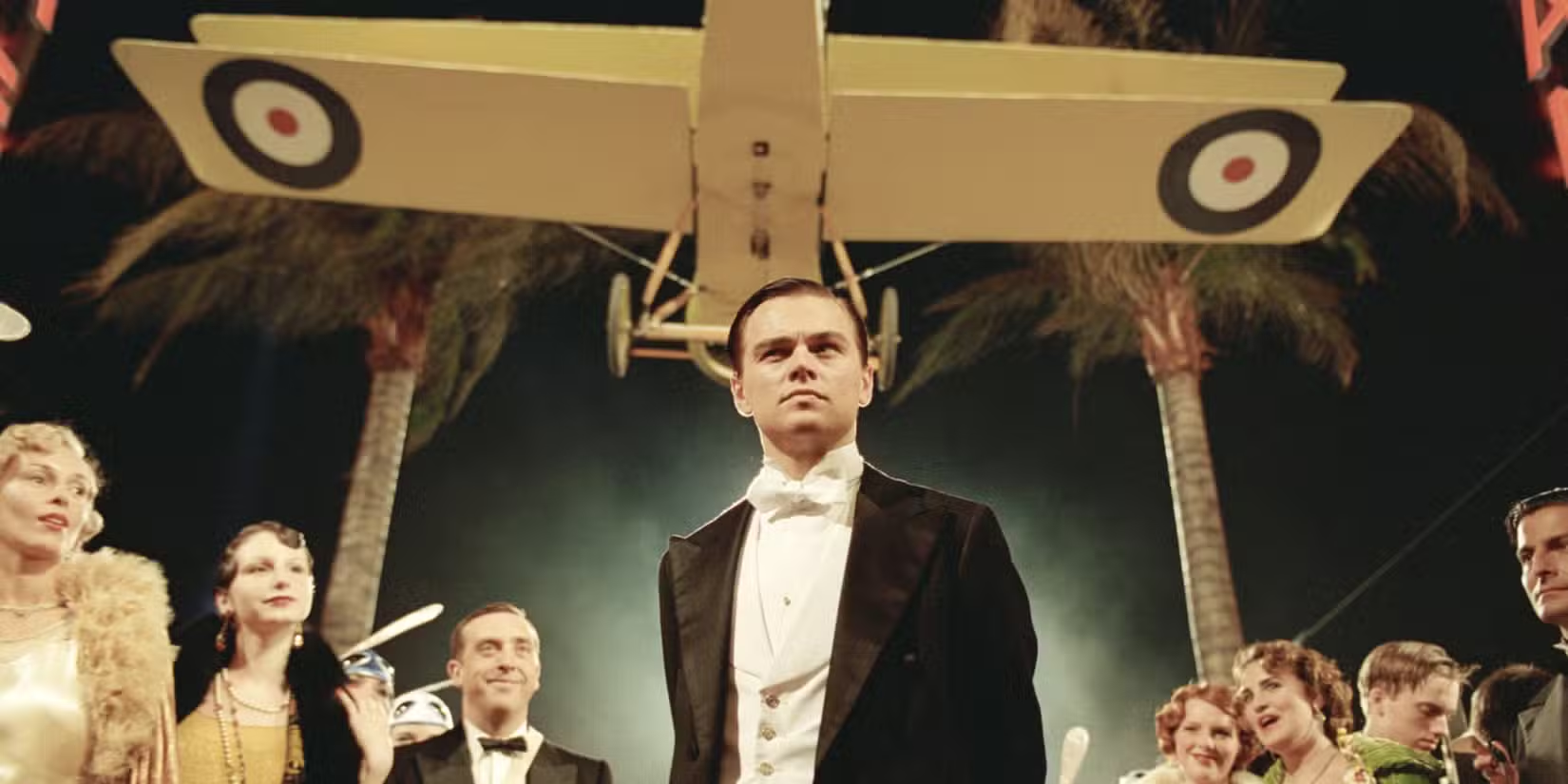
Martin Scorsese is one of the most legendary filmmakers in history, and many would go so far as to call him the greatest currently-working director. However, there’s a long track record of proof that the Academy loves to nominate his movies, but not actually give them all that many Oscars. That’s not always the case, however, and Hugo—one of the best family movies of the 2010s—is proof of that.
This family adventure drama is tied with The Aviator as the Martin Scorsese film with the most Oscar victories, with five. They were all well-deserved, too. In the end, however, the film lost Best Picture to one of the most controversial recipients in the award’s history: Michel Hazanavicius‘ French-Belgian silent dramedy The Artist, which was the clear Best Picture frontrunner throughout most of the 2011-12 season. Did Hugo ever really stand a chance at the top prize? Not really, but its tie with The Artist as the biggest winner of the 84th Academy Awards has to count for something.
11
‘The Aviator’ (2004)
Won: Supporting Actress (Cate Blanchett), Cinematography, Art Direction, Film Editing, and Costume Design

The other biggest Oscar winner in Scorsese’s catalog, The Aviator is a spectacular biopic about Howard Hughes that has aged like fine wine. It’s one of the best Oscar-winning biopics of all time, and its status as the winner of the most Oscars at the 77th Academy Awards (an impressive five) is nothing to scoff it. For a good portion of the season, in fact, it was a strong frontrunner for Best Picture.
However, The Aviator‘s biggest competition was Clint Eastwood‘s Million Dollar Baby; and by the time the movie won both the DGA and PGA, it seemed like the deal was sealed. Indeed, Eastwood’s film went on to win Best Picture and three other Oscars. Even still, time has been kind to The Aviator. In particular, Cate Blanchett‘s Supporting Actress win for playing Katharine Hepburn is one of the best-liked of the 2000s, and it marks the only time that an actor has won an Oscar for playing a fellow Oscar winner.
10
‘Who’s Afraid of Virginia Woolf?’ (1966)
Won: Actress (Elizabeth Taylor), Supporting Actress (Sandy Dennis), Black-and-White Art Direction, Black-and-White Cinematography, and Black-and-White Costume Design

Based on the legendary 1962 stage play by Edward Albee, Mike Nichols‘ Who’s Afraid of Virginia Woolf? is far and away one of the most impressive film directing debuts in Hollywood history. It’s also the vehicle for one of the most undeniable Best Actress Oscar wins of all time, as Elizabeth Taylor‘s performance here is an absolute tour-de-force.
But that towering performance isn’t the only thing this masterpiece has going for it, nor was it its only Oscar victory. However, while Virginia Woolf was the biggest nominee of the night with 13 nods (it’s one of the few films ever to be nominated in every single category it was eligible for), it wasn’t the biggest winner of the night. That title went to what the Academy deemed to be the Best Picture of 1966, the historical drama A Man for All Seasons, which won 6 Oscars in total. It’s a fantatsic film, indeed, but whether it’s superior to Nichols’ debut is up for debate.
9
‘Doctor Zhivago’ (1965)
Won: Adapted Screenplay, Color Art Direction, Color Cinematography, Color Costume Design, and Original Score

David Lean was the undisputed king of the epic film genre, a master of his craft who used his artistic skills to make some of the biggest, most sweeping motion pictures of his time. That includes Doctor Zhivago, a historical romance based on Boris Pasternak‘s 1957 novel. To date, it remains the 9th highest-grossing film of all time internationally after adjusting for inflation. No wonder.
It may not be Lean’s best, but it’s still a marvelous cinematic achievement, as well as one of the most perfect romantic war movies ever made. It very well could have won Best Picture, but it happened to be nominated in 1966 alongside a movie that had just as many nominations and wins as it did (ten and five, respectively): the beyond-iconic musical The Sound of Music, no doubt a deserving winner.
8
‘The King and I’ (1956)
Won: Actor (Yul Brynner), Color Art Direction, Color Costume Design, Sound Recording, and Musical Picture Scoring

Based on the iconic 1951 Rodgers and Hammerstein stage musical, Walter Lang‘s The King and I is one of the best Hollywood musicals of the ’50s. It was a critical and commercial success that was praised for its story, its tunes, and its impressive production values. It had quite a bit of buzz going into the 1957 Academy Awards, but it wasn’t really a frontrunner.
That race, precursors had set up a race between the James–Dean-starring Giant (the biggest nominee of the ceremony, with 10 total nods) and what would end up becoming another one of the most controversial Best Picture recipients ever, Around the World in 80 Days. That movie tied with The King and I as the biggest winner of the night, with five total wins. Though Giant would definitely have been the Best Picture winner that would have aged the best from this lineup, The King and I would undoubtedly have been more deserving than the actual winner.
7
‘A Place in the Sun’ (1951)
Won: Director (George Stevens), Screenplay, Black-and-White Cinematography, Black-and-White Costume Design, Film Editing, and Dramatic or Comedy Picture Scoring

George Stevens‘ tragedy film A Place in the Sun is one of those somewhat forgotten ’50s movies that have aged like fine wine and deserve a re-discovery. Based on Theodore Dreiser‘s 1925 novel An American Tragedy and the 1926 stage play of the same title, the film was also inspired by Chester Gillette‘s murder of Grace Brown in 1906.
At the 24th Academy Awards, the most nominated film was A Streetcar Named Desire, with 12 nods. The biggest winners, however, were A Place in the Sun and the ceremony’s Best Picture winner: Gene Kelly‘s endearing musical An American in Paris, both of which won 6. Fittingly, both were the precursor frontrunners that season, American in Paris having won the first-ever Best Comedy or Musical Golden Globe and Place in the Sun having won the first-ever Best Drama Golden Globe, on the first year that Best Picture was split into two at the Globes.
6
‘Dune’ (2021)
Won: Original Score, Sound, Film Editing, Cinematography, Production Design, and Visual Effects

Frank Herbert‘s Dune is one of the greatest sci-fi book masterpieces of all time. As such, and especially after David Lynch‘s panned 1984 adaptation and Alejandro Jodorowsky‘s failure to get his adaptation made at all, it was believed that it was impossible to make a film worthy of Herbert’s legacy. Enter Denis Villeneuve, easily one of the most talented filmmakers working in Hollywood today.
Villeneuve knocked it out of the park with 2021’s Dune, and proved that the material was in more-than-capable hands. What better demonstration than a whopping six Oscar wins, the most of any film from the 2022 Academy Awards? The ceremony’s biggest nominee was Jane Campion‘s The Power of the Dog, but the Best Picture recipient actually ended up being neither of these two films. That honor went to CODA, which won all three Oscars it was nominated for, making it one of less than 10 films that have ever gotten Best Picture without losing in any category. Dune was never really a frontrunner this season, but its being the biggest winner of the night speaks volumes.
5
‘La La Land’ (2016)
Won: Director (Damien Chazelle), Actress (Emma Stone), Cinematography, Original Score, Original Song (“City of Stars”), and Production Design

Alas, the 2017 Academy Awards will forever be infamous for the Best Picture announcement mix-up; but that should never detract from the praise that the year’s two best films, Barry Jenkins‘ Moonlight and Damien Chazelle‘s La La Land, most definitely deserve. As one of the movies with the most Oscar nominations in history, La La Land is simultaneously a wonderful homage to classic musicals and a marvelous, dazzlingly original musical in its own right.
It had both the most nominations and the most wins of the night, with 14 and six, respectively.
The movie is a technical wonder; so, rather unsurprisingly, it had both the most nominations and the most wins of the night, with 14 and six, respectively. It was neck-and-neck with Moonlight as the Best Picture frontrunner for pretty much the whole 2016-17 awards race; and, in the end, the best thing that could have happened did happen. Moonlight walked away with Best Picture, while La La Land walked away as one of the biggest Oscar winners in history.
4
‘Mad Max: Fury Road’ (2015)
Won: Costume Design, Film Editing, Makeup and Hairstyling, Production Design, Sound Editing, and Sound Mixing

After two Happy Feet movies and three decades away from Max Rockatansky’s wasteland, George Miller returned to the action genre in spectacular fashion. At first, Mad Max: Fury Road seemed like a legacy sequel like any other. As soon as it came out, however, fans of the genre immediately came to recognize it as one of the greatest action flicks of the 21st century. That reputation hasn’t died down.
It’s one of the blockbuster action movies with the best acting, even if none of its 10 nominations (the second most of the year, after The Revenant‘s 12) were for acting. It was far and away the biggest winner of the night, and deservedly so. Though this was one of the most unpredictable Best Picture races of the 2010s, Fury Road was rarely ever predicted to win. Instead, the Academy went for something far more subtle and socially sharp: Spotlight, one of the few Best Picture winners in history with only two Oscar wins in total. But endurance as a modern classic always ends up being the biggest award of all, and that’s something that Fury Road has in droves.
3
‘Star Wars: Episode IV — A New Hope’ (1977)
Won: Art Direction, Costume Design, Film Editing, Original Score, Sound, and Visual Effects

George Lucas‘ Star Wars needs no introduction. It’s nothing short of the biggest and most popular transmedia franchise in history, but it all had to begin somewhere—and in this case, that somewhere was 1977’s Star Wars, now retroactively called Episode IV — A New Hope. The movie had one of the longest theatrical runs of all time, and it isn’t hard to see why: It’s pure, enthralling, absolute movie magic.
Not counting its Special Achievement Award and its Scientific and Engineering Award, Star Wars won six Oscars, the most of any film from the 50th Academy Awards. It was also nominated for another four, though the most nominated movies of the year were Julia and The Turning Point. The Best Picture winner of 1978, however, was one of the greatest rom-coms ever made: Annie Hall, which also won another three Oscars. The court of public opinion matters most, though, and there’s no doubt about it: Star Wars is, and perhaps forever will be, the most iconic film of 1977.
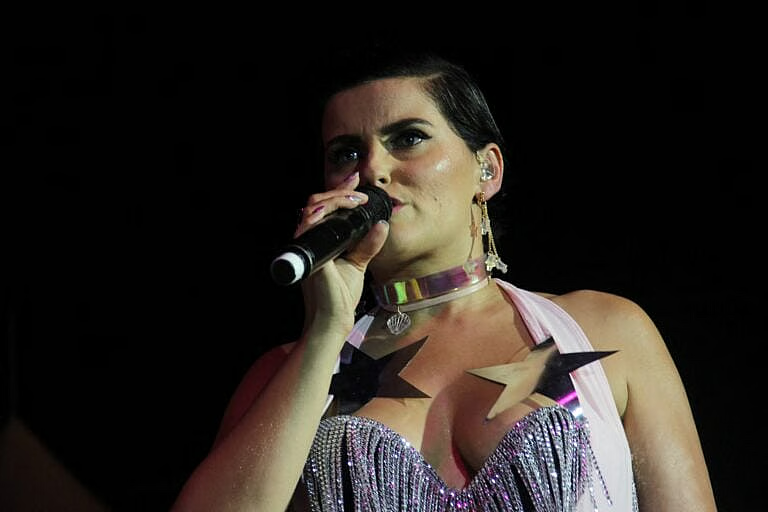
Performance hiatus Nelly Furtado is back in the studio with a new gem!
The singer, who announced an indefinite time off the stage in October 2025 after body-shaming episodes, shared content from the recording booth with her fans, teasing new music dropping soon.
Nelly Furtado became famous over two decades ago with her album “Whoa, Nelly” in the year 2000, continuing her run by releasing her seventh studio album in September 2024.
Nelly Furtado Is Ready To Drop New Music On April 10

The musician uploaded a short clip of herself getting busy in the studio with music producer Boi-1da, captioning it: “New muuuusic! Excited to share this and grateful to be part of this exciting collabo @boi1da x @perfectpitchcanada x @canadasoccer.”
Furtado updated her fans that the new single “Electric Circus” would be released on April 10. The singer looked really good in the video, sporting a brown, skin-tight, mock next maxi dress paired with a matching motor-inspired bomber jacket.
The musician styled her hair in a sleek side part with the front safely tucked behind her ears. Furtado’s undeniable face card popped with a fresh coat of dewy makeup tied together with gold hoop earrings. The singer also posed with some studio staff and crew, waving to the camera and wearing the biggest smile.
The Singer’s Fans Expressed Enthusiasm About Her New Project

Furtado’s comment section received a surge of reaction from fans who have been waiting for the creative to drop a new project, like this user who declared, “Can’t wait for this track to drop so that I can listen to it properly on repeat.”
Other Instagram users claimed that the new track, which was added to the clip, sounded so much like a “GLOW sample-remix.” The producer for her new project, Boi-1da, was equally excited in the comments with a GIF of him dancing, as Furtado responded with a laughing emoji.
Of course, Furtado’s stunning look also earned her a few compliments from fans who could not get over her flawless face. Another commenter emphasized that the Canadian singer needs to start working with Timbaland again.
Nelly Furtado Stepped Back Performances Five Months Ago

The media personality reflected on her journey in the music industry and achievements so far over the quarter century while thanking fans for making everything worth it last October.
As noted by The Blast, Furtado’s nostalgic post was soon followed by the underwhelming news of her seeking change, which meant putting a pause on performance for the foreseeable future. According to her, the break would allow her to focus on some other “creative and personal endeavors” that would fit perfectly into the next phase of her life.
Furtado was incredibly glad to have been able to make a living from what started as a hobby. The singer’s break came nearly a decade after she announced a musical hiatus in 2017 because she could not handle the level of fame she had come into.
The 47-Year-Old Ushered In 2025 Embracing Body Positivity

Furtado took her social media followers on a ride on January 5, 2025, by sharing two unedited pictures of herself, alongside a caption promoting self-love and acceptance for one’s flaws and imperfections. As stated by The Blast, the singer admitted how much she had become aware of the aesthetic pressure embedded in the music industry while also unlocking new heights of embracing herself.
Furtado explained that aside from getting veneers on her top teeth, she had never altered a part of her body and would very much love to remain that way. The “Say It Right” singer credited expert skincare for keeping her looking youthful and a proper diet, including adequate water and sleep, to help her maintain the refreshed red carpet looks.
She concluded the post by urging her followers to embrace their individuality and feel comfortable in their own skin, while revealing just how much magic her makeup artist performs with face and body tape.
Nelly Furtado Activated Legal Action Against Image Lifters

The Canadian songwriter stood on business last year as she announced her decision to drag people who are in the habit of using her image and likeness to promote their health and beauty services online.
In November 2024, she got honest with Alex Cooper on “Call Her Daddy,” breaking down what being in her 40s, as a famous face in Hollywood, meant to her. Furtado noted that it has been fun climbing up the 40s ladder in style with a renewed confidence that she has never felt before.
The singer declared that she has been visited by the gods of the “40s glow-up.” She added that getting older also gave her ample time to work on herself, which contributed greatly to her confidence boost.
Congratulations to Nelly Furtado!
By Jonathan Klotz
| Published

Comics haven’t been only for kids for a very long time, if ever, but the general public has had a perception that they are primarily superhero stories about good vs. evil and everything is resolved with a fight. There’s a whole world of comics out there that are different, but straddling the line between noir mysteries and cape-filled superheroes is Powers by Brian Michael Bendis.
The award-winning series follows two Chicago homicide detectives investigating the deaths of “powers” (superheroes). It’s a police procedural mixed with superheroes, and Netflix is making an animated series out of it, finally giving fans the adaptation they’ve wanted for 25 years.
One Of The Best Crime Comics Ever Printed

Powers starts off with a bang with the “Who Killed Retro Girl?” story arc, which introduces us to the detectives, rookie Deena Pilgrim and the veteran Christian Walker, both of whom have connections to the powers community that slowly come to light over the series. The blonde bombshell Retro Girl was one of the most popular superheroes, which means the list of suspects is long, from villains to those jealous of her success. It’s a classic noir storyline filled with red herrings, and it slowly peels back the layers of Bendis’ superhero universe, with each new revelation bringing with it even more questions.
The second arc, “Roleplay,” involves a college LARP (live-action roleplaying) club in which, of course, the members are being murdered one by one. It’s not as good as the first arc, but that’s more a testament to the quality of the first murder mystery than it is the second. No matter the story, it looks incredible thanks to the artwork of Michael Avon Oeming, with big, bold characters, colors, and matching the noir story by evoking the classic comics of the 1930s.
Second Time’s The Charm For Powers

Netflix’s choice to bring Powers to the service as an animated series makes sense not only because of the success Amazon has found with Invincible, another adult superhero series, but Sony’s 2015 live-action Powers series was a complete disaster. Starring Sharlto Copley as Walker, the show was the first original series for the PlayStation Network. If you forgot PSN ever had original shows, don’t worry, everyone forgot this happened despite the show airing for two full seasons.
This time, Powers is being handled correctly, and the move to animation means, hopefully, it will be closer to the source material. Invincible proved there’s an audience out there for animated adult superhero shows. It remains to be seen if there’s an equally massive audience for Netflix’s new show, which is more police procedural than action epic.

In September 2025, Powers came back for a new 12-issue run, proving that there’s at least an audience of comic readers out there anxious for more adventures in Bendis’ original universe. Advertising “from the creator of Miles Morales and Jessica Jones” will go much further in 2026 than it did in 2015. There’s still a wait to see if Netflix can pull it off, with no announced release date, but that’s alright, it gives you more time to hunt down the collected editions and enjoy one of the best superhero crime comics of all time.
From Die Hard to Mad Max: Fury Road, several of the greatest action films of all time are injections of adrenaline in full color. However, color is by no means required for an action movie to be great, exciting, or even visually appealing. Indeed, throughout history, several of the best action films in history have achieved greatness through a purely black-and-white color palette.
From gangster pictures like Scarface to samurai classics like Yojimbo, these black-and-white films either defy expectations or deliver everything anyone could want from the genre, and then some. They’re exciting, suspenseful, full of movement, and action-packed from start to finish. Nowadays, action is almost always shot in color, which only makes it even more fun to look back at these classics and appreciate everything they were able to do with only black and white.
10
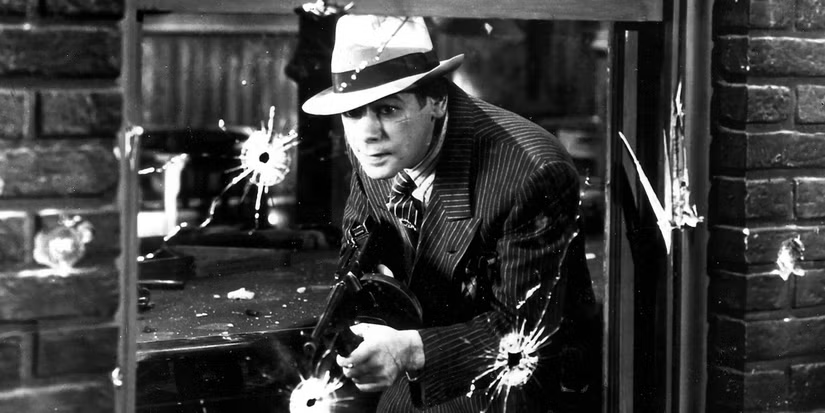
‘Scarface’ (1932)

Before Brian De Palma and Al Pacino took on the story, Howard Hawks directed Paul Muni in 1932’s Scarface, a pre-Code gangster action film loosely inspired by Al Capone. Like many great Hollywood crime films from before the Hays Code started being strictly enforced, Scarface was heavily censored upon release, making it a box office disappointment. With the passage of time, however, it has come to be recognized as one of the greatest films of the ’30s, making it a success story of triumph against censorship.
Hawks set up the entire archetype for the gangster movie genre, which became particularly popular during the ’30s and ’40s (particularly gangster pictures produced by Warner Bros.). But aside from its historical significance, Scarface is impeccably made, with Muni at the very top of his game and stylish black-and-white visuals that make the violence feel even grittier.
9
‘The Longest Day’ (1962)

Based on Cornelius Ryan‘s non-fiction book of the same name, The Longest Day follows the D-Day landings in Normandy with a stunning scope and tremendous technical qualities. In the modern day, the movie’s cast can be critiqued for its lack of diversity, but the fact of the matter is that an ensemble this star-studded, featuring actors of the stature of John Wayne, Robert Mitchum, Sean Connery, and Henry Fonda, is objectively one of the most impressive of any war film ever.
But aside from being a three-hour-long war epic, The Longest Day is also an action film through and through. It’s a dramatic, testosterone-filled gem that many still think of as the definitive D-Day movie, and the way it takes full advantage of every second of its runtime to paint war as hell without the need for bright-red blood is admirable.
8
‘The Train’ (1964)

Directed by John Frankenheimer, The Train is another one of the greatest action war movies ever made. Loosely based on a non-fiction book by Rose Valland, the film is about the mission to recover the works of art that had been looted by Germany from museums and private art collections during World War II. The result is a fascinating meditation on the debate between cultural preservation and the protection of human lives.
But on top of being thematically gripping, The Train is also one of the best war thrillers of all time, full of adrenaline-pumping action sequences that never let up. It’s a potent, surprisingly complex film that results purely from expanding the moral question at its core to a feature-length story. Powerfully philosophical and absolutely visceral, it’s a black-and-white movie whose lack of color feels designed to amplify the depth of its moral nuances and themes.
7
‘Sanjuro’ (1962)

Many would perhaps refer to Akira Kurosawa as the single greatest filmmaker in history, and he achieved that status mainly by making action movies—several of them belonging to the beloved samurai subgenre. Kurosawa, in fact, can very reasonably be called the leading voice in samurai cinema, and for proof, one needn’t look much further than the sequel to 1961’s Yojimbo, Sanjuro.
It’s one of those Kurosawa movies that are bangers from start to finish. Action-packed, well-paced, and often unexpectedly funny, it’s a hugely influential masterpiece whose score of 100% on Rotten Tomatoes is perfectly deserved. With a fantastic Toshirô Mifune in the lead role and some of the most jaw-dropping swordplay of any action movie in history, Sanjuro is evidence enough that black-and-white action films can be as fun as those in color.
6
‘The Sword of Doom’ (1966)

Another one of the greatest samurai films in history, this one directed by Kihachi Okamoto and starring Tatsuya Nakadai, The Sword of Doom is as brutal as it is fast-paced. It’s one of the darkest samurai movies ever made, with a largely amoral main character (frankly, a rarity for the genre) that Nakadai plays to absolute perfection.
From the gorgeously lit and staged black-and-white imagery to the breathtaking action sequences, Sword of Doom is the work of a master at the top of his game. It’s one of the bleakest, angriest, most existentially violent action movies of the 20th century, and a complete must-see for anyone and everyone who even remotely enjoys well-made samurai films.
5
‘Yojimbo’ (1961)

Sanjuro may be great, but there’s no beating the original. Yojimbo is such an immensely iconic and influential samurai flick that Sergio Leone pretty much copied it when he invented Spaghetti Westerns with A Fistful of Dollars, to the point that Kurosawa successfully sued him for copyright infringement. But who could blame Leone? Yojimbo is such a faultless film that anyone looking to make a great action flick should be at least tempted to imitate the perfection of Kurosawa’s efforts.
Yojimbo is full of flawlessly shot and edited action sequences.
It’s also one of the best classic Japanese movies for beginners, perfectly friendly and welcoming to all those who might not be used to watching international (or even black-and-white) action movies. Full of flawlessly shot and edited action sequences, and supported by Mifune and Nakadai at their best, Yojimbo is one of Kurosawa’s most narratively enthralling and visually exquisite works.
4
‘White Heat’ (1949)

White Heat succeeds at earning many superlatives at once. On the one hand, it’s one of the best noir films of all time, displaying the psychological twistiness and black-and-white gorgeousness of the genre perfectly. On the other hand, it’s one of the best crime films of Hollywood’s Golden Age, serving as one of the earliest masterpieces of the gangster genre as we know it today. And on the other hand, it’s a ravishing action movie full of showstopping sequences of thrill and suspense.
For one, James Cagney is a powerhouse here, and his performance alone makes White Heat obligatory viewing for crime action film fans. As if that weren’t enough, however, the film also has a level of psychological depth that was rare among crime films made during the Hays Code era. Lastly, it has one of the darkest and most explosive finales of any action film from Hollywood’s Golden Age.
3
‘The General’ (1926)

Before Tom Cruise made it cool and mainstream for actors to do their own stunts, there was Buster Keaton. Charlie Chaplin and Keaton are to silent cinema what salt and pepper are to food, and while Chaplin tended to focus more on elements of melodrama and romance, Keaton was considerably more interested in elaborate slapstick action sequences. Enter The General, easily one of the best comedy movies of all time.
Aside from having some of Keaton’s most revolutionary death-defying stunts, The General also has some of the most effective gags and action set pieces of his whole filmography. The movie was a box office and critical failure when it originally came out, but as the years have passed, cinephiles have warmed up to it tremendously. Today, it’s remembered as one of the greatest films from before Hollywood’s Golden Age, and one of the most perfect early examples of what the action genre could do at its best.
2
‘Sherlock Jr.’ (1924)
While The General is amazing, Sherlock Jr. is simply out of this world. Clocking in at only 45 minutes of runtime (barely qualifying it as a feature film), it’s also a delightfully breezy watch for those looking for a quick classic masterpiece to watch. Sherlock Jr. is one of the coziest mystery movies ever, but people looking to watch it shouldn’t be fooled by that coziness, because it also has some of the craziest stunts in Keaton’s filmography.
Funny, uplifting, romantic, creative, and an absolute blast of fun from start to finish, Sherlock Jr. shows just how amusing and ambitious action films could be back in the day. At no point is color something that people miss when watching this masterpiece, especially because so much happens. Indeed, there’s an essential old-school charm to this film that you simply can’t get anywhere else.
1
‘Seven Samurai’ (1954)

Throughout history, Seven Samurai has widely been recognized as Akira Kurosawa’s magnum opus, and it’s easy to see why. It is, after all, one of the most perfect action films ever made, delivering absolutely everything that any fan of the genre could want in a movie. Though it moves somewhat slowly through its three-and-a-half hours of runtime, Seven Samurai is an exciting blast from start to finish.
The riveting action sequences are marvelously performed, choreographed, shot, blocked, and edited, but like any filmmaker of his quality, Kurosawa understood that well-made action wasn’t all you needed in order to make a samurai movie work. That’s why Seven Samurai is primarily a character-driven film, and its many story arcs are so fascinating that you can’t help but watch the whole thing on the edge of your seat. Often imitated, never matched, this masterpiece is the pinnacle of not just black-and-white action filmmaking, but action filmmaking as a whole.
Valerie Bertinelli is getting candid about her body.
“I mean, if you read the book, you’ll know that my boobs are deformed,” Bertinelli, 65, said during a recent 92Y panel discussion, promoting her Getting Naked: The Quiet Work of Becoming Perfectly Imperfect memoir. “I talk very extensively and graphically about how deformed they are.”
She continued, “My boobs suck, but I’m not dating, so it doesn’t matter.”
Bertinelli explained that she had “four surgeries” in 2024 to remove the breast implants she initially got in the early 1980s.

Valerie Bertinelli got candid about the work she had done to enhance her appearance.. Bertinelli, 65, opened up about getting a breast augmentation and experimenting with Botox in her new book, Getting Naked: The Quiet Work of Becoming Perfectly Imperfect, which was released on Tuesday, March 10. In 2019, she “tried Botox” for the first […]
“Mine were mocked relentlessly. They were called ‘little quarters,’ ‘itty-bitty titties,’ and ‘tiny boobies,” the actress wrote in her book about her decision to go under the knife. “I took it all to heart. Instead of appreciating the changes my body was going through, I dreaded them. I had no idea what I was supposed to look like; I only knew it was wrong.”
Bertinelli’s implants eventually ruptured, which she subsequently needed to have removed.
“I couldn’t believe they had been in my body. I went home bandaged and sore, with drains under my arms, uncomfortable but hopeful,” she recalled in a book passage. “For the first two weeks, everything was great. About a week later, my right breast took on shades of green, yellow, and blue. The next day it started to swell and turned a dark purple. I felt myself getting dizzy. By nighttime, I was running a fever.”
After developing an infection, Bertinelli had another surgery to install a “small implant under the muscle” to help restore “what was left of [her] nipple.” She said it took nearly a year for her breasts to take “shape.”
“They are now two completely different sizes; the implant on the left is over the muscle, and my right side is sad and misshapen,” she further wrote. “Eventually, I will have a fourth operation that will, I am assured, even things out once and for all.”

It’s no secret that many of Hollywood’s A-listers have breast implants. But what you may not know is that as popular as the cosmetic enhancement is, celebs also aren’t afraid to say goodbye to them for good. Dr. John Paul Tutela, a trusted NY and NJ board-certified plastic surgeon tells Us Weekly that the two […]
Elsewhere in Getting Naked, Bertinelli detailed her experience with other cosmetic procedures like Botox.
“I didn’t like it and had a mini freak-out when I saw it changed the shape of my eyebrows, which changed the shape of my face, which was a shock because my face is the way I recognize myself,” she wrote, revealing she got injections for the first time in 2019. “I didn’t like what I saw. I didn’t want to see a puffy, distorted version of me in the mirror. I didn’t want to wake up and say, ‘Knock knock, is Val there?’”
Bertinelli continued, “Don’t get me wrong. I am not against plastic surgery or Botox and fillers. Some people look amazing when it works. They feel much better about themselves after a procedure. I get it — and I’ve been there.”

By TeeJay Small
| Updated

I recently penned a scathing review of Alien 3, wherein I posed the question: What kind of god would allow such a horrendously bad film to ever see the light of day? Despite my better judgment, I decided to continue my binge of the Alien film franchise, only to be pleasantly surprised by the fourth installment, Alien: Resurrection.
This film has all the signs of a terrible sequel, and a 56 percent critic score on Rotten Tomatoes, which made me think I was sitting down for another miserable viewing experience. Maybe I’m still recovering from the rage-induced concussion I developed while watching Alien 3, but I’d go so far as to label Alien: Resurrection the most underrated entry in the entire franchise.
The Problem With The Previous Alien Movie

We all know and love 1979’s Alien and the 1986 Aliens sequel. But even the most faithful Xenomorph super-fan should be able to admit that they’re tired of watching Ripley wake up in a cryopod, face off against a terrifying obsidian monster from beyond the stars, get back in a cryopod, and repeat the cycle for three films in a row.
When Ripley died in the final moments of Alien 3, I was just happy to see the character finally get a moment of rest, and for the franchise to move on to other protagonists. So imagine my surprise when Sigourney Weaver’s Ripley wakes up once again during the opening credits of Alien: Resurrection, this time as a lab-grown clone.
Ripley Returns In Alien: Resurrection

Right then and there, I was prepared to turn off the movie and spend the rest of my afternoon shaking my fist in the angry dome a la Professor Farnsworth. But as the film progressed and introduced Winona Ryder, Ron Perlman, and Breaking Bad’s Raymond Cruz, I started falling in love with the ensemble and their mission to escape the military scientists’ vessel alive.
The look of the film grabbed me, too. The Xenomorphs in Alien: Resurrection look far superior to their counterparts in Alien 3. That complements their wicked cunning and shocking intelligence as they utilize their own acidic blood to break containment and traverse the ship.

Having been bred to incubate a Xenomorph queen embryo, clone Ripley, AKA Ripley 8, realizes that she’s got more genetically in common with the alien creatures than ever before. Her DNA is intrinsically tied to theirs, allowing her to develop some otherworldly powers that completely redefine her character. Unlike Alien 3, where Ripley becomes beholden to the protection of men, Alien: Resurrection allows her to regain her autonomy and become the biggest badass on the screen, even when Ron Perlman is present.
When she comes across a lab full of horribly deformed experiments that came before her, Ripley 8 puts them out of their misery by torching them the same way the OG Ripley did with the Xenomorph nest in the final act of Aliens. The whole scene felt like a cathartic way to express how I’d felt watching bad writers butcher her character in the previous outing. It was as though director Jean-Pierre Jeunet was burning the very concept of Alien 3 right in front of my eyes.
In Defense Of The Xenomoph Hybrid

Nearly thirty years after its release, there are now sequences where dated special effects don’t hold up. That doesn’t matter, because the writing from a young Joss Whedon does. Alien: Resurrection’s fresh ideas make it a cut above several other entrants in the franchise.
One of the largest criticisms levied at Alien: Resurrection centers on the hybrid newborn creature, which is aggressively disturbing. This creature is a cross between an alien queen and Ripley herself, taking on traits of a baby, a Xenomorph, and a Cronenbergian nightmare that cost the studio roughly $7 million to build.

The animatronic for the newborn required nine puppeteers to operate and was considered the most complex practical effect in cinema history at the time. The whole thing is weird, gross, and insane, but it works better than most audiences give it credit for.
Alien: Resurrection Is As Influential As The First Two Alien Movies
A modern rewatch reveals how many popular films of the early 2000s straight-up stole action scenes from this movie. With a fresh set of eyes, you could comfortably say that Alien: Resurrection is as influential as the first two films in the series, even if it doesn’t usually receive the same fanfare.

Whether you initially caught Alien: Resurrection back in 1997, or you’ve just never been compelled to check it out before, now seems like the right time to revisit the classic sci-fi sequel. Unfortunately, Alien: Resurrection isn’t currently available for free on any of the major streaming services, and can only be purchased through transactional video on demand. Still, it’s well worth the price of admission if you decide to rent or purchase it through Amazon Prime or YouTube.

NewsBeat3 minutes ago
Molly-Mae Hague breaks silence on Bakeoff appearance as she declares ‘insane’
Business4 minutes ago
Alkane Resources secures A$150m in new credit facilities
Sports8 minutes ago
Canelo called out by Terence Crawford’s trainer to fight ‘next world champion’


-
 NewsBeat5 days ago
Manchester United reach agreement with Casemiro over contract clause amid transfer speculation
-

 News Videos4 days ago
Parliament publishes latest register of MPs’ financial interests
-

 Sports6 days ago
Gary Kirsten Accuses Pakistan Cricket Board Of ‘Interference’, Mohsin Naqvi Responds
-

 Sports6 days ago
Remo Stars and Kano Pillars Strengthen Survival Hopes in NPFL
-

 News Videos6 days ago
Ch 9 Financial Management Part 1 | Detailed One Shot | Class 12 Business Studies Boards 2026
-

 Business3 days ago
Instagram, YouTube Found Responsible for Teen’s Mental Health Struggle in Historic Ruling
-

 NewsBeat2 days ago
The Story hosts event on Durham’s historic registers
-
 NewsBeat4 days ago
Tesco is selling new Cadbury Dairy Milk bar and people can’t wait to try it
-

 Tech6 days ago
Samsung will soon let you control smart home devices from your car’s dashboard
-
 Entertainment6 days ago
Cynthia Bailey Dishes on ‘RHOA’ Season 17, Discusses Kandi
-

 Sports7 days ago
2026 Kentucky Derby horses, odds, futures, preview, date: Expert who hit 12 Derby-Oaks Doubles enters picks
-
 Entertainment1 day ago
Lana Del Rey Celebrates Her Husband’s 51st Birthday In New Post
-
 NewsBeat6 days ago
Colombian military plane with 110 soldiers onboard crashes following takeoff
-

 Business5 days ago
More women enter wealth management, but few in advisory roles: study
-

 Fashion5 days ago
Does It Matter What You Wear When You’re Laid Off and Looking?
-

 Fashion6 days ago
Fringe Bags for the Season
-

 Business6 days ago
Late-paying firms face multimillion-pound fines under new crackdown
-

 NewsBeat5 days ago
Entrepreneurs Forum survey reveals optimism in North East
-
 Sports5 days ago
Fantasy Baseball Week 1 Preview: Top sleeper hitters for both five- and 12-day period led by Munetaka Murakami
-

 Politics6 days ago
How Media Platforms Balance Performance and Accessibility in Image Delivery
You must be logged in to post a comment Login