Entertainment
10 Book Series Everyone Should Read at Least Once

Trying to get someone interested in something that’ll take up countless hours of their lives isn’t easy. It happens with TV shows that ran for multiple seasons (good luck getting anyone interested in Lost, nowadays, even if most of it’s great and the ending is kind of over-hated), and it also happens for books in general, but especially books that make up longer series.
The following are all counted as series because they’re longer than three books. You could argue a trilogy is a series as well, but if there’s a trilogy that’s not here, counted among the very best book series ever published, it’s because that was treated as a cutoff. So, with these examples, you get four or more books, and all of those books stand as worthy of one’s time. That’s what you get here, and there’s a mix of genres represented, as well as an attempt to cover different series published at different points in time.
10
The ‘L.A. Quartet’ (1987–1992)


Two books in the L.A. Quartet have been made into movies, and one of them (L.A. Confidential) was pretty great, if a little different – and not as intense – as its source material. When it comes to The Black Dahlia, you’re better off sticking to the book, and then with The Big Nowhere and White Jazz, you can only experience them as books, at least at the time of writing.
The Big Nowhere would make for a particularly despairing movie or miniseries, if ever made, and then White Jazz… it would be a miracle, actually, for that to be adapted somehow. White Jazz is experimental and maybe the only miss of the bunch, yet it’s still got its fans, and it is interesting, for what that’s worth. The other three books are all excellent, well and truly ranking among the best James Ellroy has written to date.
9
The ‘Cosmere’ (2005–present)


The Cosmere universe is huge, being counted as a series of sorts here, encompassing not quite everything Brandon Sanderson has written, but a lot of it. And Sanderson has written a lot, and doesn’t show any signs of slowing down any time soon, so it’s anyone’s guess how big the Cosmere will really end up being. It’s also got series within it, like the Mistborn trilogy, or the Mistborn series, since that run of books includes more than just the “original” trilogy.
And then you’ve got The Stormlight Archive, which is made up of five main (and massive) books at the time of writing, and is intended to itself be a 10-part series by the time it’s concluded. So, call it cheating a bit, if the whole Cosmere universe is being treated as one big thing right now, but the other option was to pick either Mistborn or The Stormlight Archive, and there’d probably be people annoyed that one wasn’t picked, so… what can you do?
8
The ‘Leatherstocking Tales’ (1823–1841)

The Leatherstocking Tales is a confusingly published series, because the five books span about 66 years (1740 to 1806), but the last one published (The Deerslayer, in 1841), covers the earliest period of time, from 1740 to about 1755. Reading them in publication order will mean jumping around, but however you tackle them, they are centered on Natty Bumppo, a man who has different aliases in each of the five novels.
It’s like the Dollars trilogy, in that regard, with the Man with No Name having a few different nicknames, and also, with that trilogy, the final one seems to take place chronologically before the other two. Anyway, the Leatherstocking Tales are very historically significant works of American literature, and also significant for being such an early series just generally speaking, laying out how an author could feasibly tell one large story across multiple books and have it work.
7
‘A Song of Ice and Fire’ (1996–present… hopefully)

The other series that’s going here, despite not being finished (like the Cosmere), is A Song of Ice and Fire. Now, there are other books George R.R. Martin has written within his whole fictional world (known as The Known World), but A Song of Ice and Fire is the main one. If you’re not much of a book person, for whatever reason, it’s the series that Game of Thrones was based on.
The pressure on Martin is unprecedented at this point, so whether The Winds of Winter and A Dream of Spring do come out and conclude the (again, great so far) series… time will tell.
It’s also the series Game of Thrones eventually overtook, with A Song of Ice and Fire remaining, at the time of writing, unfinished. What has been published so far (five out of a planned seven books) has been great, and it would be an obvious shame if things weren’t resolved eventually. But the pressure on Martin is unprecedented at this point, so whether The Winds of Winter and A Dream of Spring do come out and conclude the (again, great so far) series… time will tell and all that.
6
The ‘Hyperion Cantos’ (1989–1997)

Four books make up the Hyperion Cantos, with the first two books being closely linked, and then the final two books also being linked. You get an idea of that with the titles, since the first two are Hyperion and The Fall of Hyperion, while the last two are called Endymion and The Rise of Endymion, so go figure and all that (there’s also a big time-jump between The Fall of Hyperion and Endymion).
The first book, which is just called Hyperion, is probably the best and most interesting, but it’s the sort of thing where if you like what that one’s putting down, it’s worth reading on. Also, not everything is resolved in Hyperion (1989), with The Fall of Hyperion functioning as a conclusion, in many ways, and then books #3 and #4 end up feeling more like a continuation.
5
‘Monster’ (1994–2001)

You sometimes get people saying that animated movies shouldn’t be ranked and considered among live-action ones, and maybe those same people would also argue that books and graphic novels should be separated. To those people, sorry, but the Monster series is going here, and honestly, it’s great and approachable enough that you don’t have to be particularly into graphic novels or manga to appreciate it as a great mystery/thriller series.
Monster is about the uncovering of a conspiracy that involves a pair of twins (and some other children), with one of them being a fearsome serial killer, and the protagonist is a doctor wracked with guilt for having saved the life of this eventual serial killer when the killer was still a child. It does a lot more – and introduces various other characters – across its 18 volumes, with the thousands of pages here proving very compelling and maybe even kind of addictive, once it really gets going.
4
‘The Ripliad’ (1955–1991)
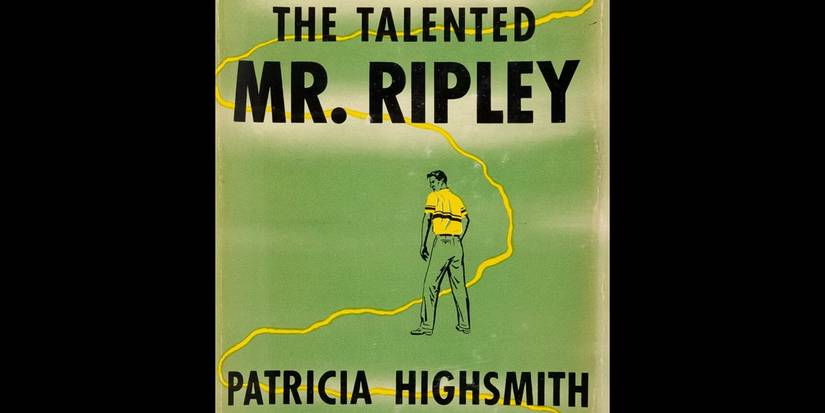
The Talented Mr. Ripley does tend to get the most attention out of all the books about Tom Ripley, but it’s one of five parts, ultimately, that make up The Ripliad, which might be the best name any of the series mentioned here has. They were all written by Patricia Highsmith over a surprisingly long period of time, with the final Tom Ripley book being published 36 years after the first.
Tom Ripley makes for a more than worthy central figure for a whole series, though, with each book involving him engaging in some kind of different scheme or crime (or, when things don’t go well, maybe even a series of crimes). The Talented Mr. Ripley is especially intense, and deserving of its classic status, but the follow-ups are all good, too, with book #3, Ripley’s Game, definitely being worthy of an honorable mention.
3
Frank Herbert’s ‘Dune’ (1965–1985)

To specify, the six Dune books that Frank Herbert wrote during his lifetime are being counted here as the Dune series. There is more to Dune, as a whole franchise, with Brian Herbert and Kevin J. Anderson having written far more in the series than Frank Herbert ever did, but for a movie example, it’s a bit like considering the Star Wars series under George Lucas (so, the six movies released between 1977 and 2005) as separate from the whole Disney era of Star Wars.
With Dune, you have the original book, which lives up to its reputation and then some, with Dune Messiah being a sequel, and then things do get a bit weird after that. But if Frank Herbert’s the author, and the word “Dune” is on the cover, then it’s probably worth it. At worst, you’ll be in for something interesting, you know?
2
‘The Dark Tower’ (1982–2004)
Stephen King has a big old multiverse of interconnecting books, with some only vaguely referencing others, and certain stories existing as stories within other stories (usually, in a more grounded Stephen King book, someone will refer to having seen a movie based on a more outlandish/supernatural King book). As far as his series go, though, The Dark Tower is the easiest to single out.
There are seven main books in this series, and they’re all about a mysterious gunslinger trying to reach the titular Dark Tower, because he feels he’s destined to. He has some companions, there are “side quests,” so to speak, and then there are also a fair few flashbacks. But The Dark Tower does eventually end, and it ends very boldly, all in a way that makes the journey worth it. Well, some people feel it made the journey worth it. The only way to find out if you’re one of them is to read the whole thing (2012’s The Wind Through the Keyhole is more optional, though, as it takes place between books #4 and #5 and doesn’t really add anything narratively).
1
J.R.R. Tolkien’s ‘Legendarium’ (1937–2021)

Yes, The Lord of the Rings is the big one, and the most essential read of anything J.R.R. Tolkien wrote for hopefully obvious reasons. It might well be the best book ever written, and if you want to count it as a trilogy, since it was divided into three for publication initially, then it’s probably the best book trilogy of all time. But there is a lot more to dig into, obviously, including The Hobbit and The Silmarillion, if you’re looking for other Tolkien-penned heavy-hitters.
It’s also a bit complicated to try to define this series, because unlike with Frank Herbert and the Dune novels written during his lifetime, there are posthumous works within Tolkien’s legendarium that are very important, including the previously-mentioned The Silmarillion. Dig in as deep as you want, basically (and there’s been previously unpublished material that’s seen the light of day only very recently, as 2021’s The Nature of Middle-earth shows).
You must be logged in to post a comment Login