Entertainment
10 Books That Are a Masterclass in Prose

We all love a good plot, but some novels reel us in purely with their words. The greatest prose stylists understand rhythm, imagery, metaphor, dialogue, and perspective so completely that practically every paragraph seems to hum with energy.
Of course, there’s no single definition of beautiful prose. Some masterpieces use simple writing, while others get dense, lyrical, or even experimental. Taken together, the books on this list remind us that language itself can be an art form.
10
‘The Secret History’ (1992)


“Beauty is terror.” Donna Tartt‘s phenomenal debut novel centers on Richard Papen after he joins an exclusive circle of classics students at a prestigious Vermont college. However, what begins as intellectual fascination and the pursuit of knowledge eventually curdles into obsession, selfishness, betrayal, and even murder. Although the plot bears some dark thriller/mystery hallmarks, Tartt takes a decidedly literary approach in telling it. For instance, she packs the pages with countless allusions to Greek mythology and classic literature.
The sentence construction is elegant and frequently beautiful. This amount of stylistic confidence is striking for a first novel. Tartt also excels at atmosphere, immersing us in descriptions of icy New England winters and crackling fireplaces in isolated old university buildings. Finally, there’s real psychological insight in the prose, with all the major characters drawn in shades of gray.
9
‘The Sound and the Fury’ (1929)

“I give you the mausoleum of all hope and desire.” This is one of William Faulkner‘s defining novels. The Sound and the Fury charts the decline of the once-prominent Compson family through four distinct narrative voices, each possessing its own unique rhythms, vocabulary, and perception of reality. Faulkner’s prose changes dramatically between sections, reflecting the mind of each narrator. Indeed, the book is highly experimental and pushed serious boundaries back in the late 1920s.
For example, much of it is stream-of-consciousness, the narrators are often unreliable, and the chronology is fractured, while the mood and aesthetic are Southern Gothic to the core. Sentences often flow according to memory and emotion rather than storytelling conventions or, indeed, logic. All this is in service to the sweeping themes, touching on everything from nihilism and faith to morality and the weight of the past.
8
‘The Brothers Karamazov’ (1880)

“The mystery of human existence lies not in staying alive, but in finding something to live for.” Plenty of Dostoyevsky novels could have made this list, though The Brothers Karamazov is one of the best-written of them. It follows the deeply dysfunctional Karamazov family after the murder of the cruel and manipulative Fyodor Pavlovich. His three sons, Dmitri, Ivan, and Alyosha, embody profoundly different worldviews. Through them, Dostoyevsky explores a ton of big, challenging ideas: faith, goodness, free will, justice, suffering, and the nature of evil.
Psychological intensity and moral depth are at a premium here. Part of what makes Dostoyevsky’s prose here great is that it captures the complexity of human thought without simplifying it. Characters frequently wrestle with contradictory emotions and philosophical uncertainty, creating conversations that feel startlingly alive more than a century after they were written.
7
‘The Corrections’ (2001)

“Families carry entire histories inside ordinary conversations.” This was the book that put Jonathan Franzen on the map, with many hailing it as a new Great American Novel. The Corrections is a portrait of the Lambert family in the late 20th century, shifting back and forth in time but focusing on aging parents Alfred and Enid’s struggle to reunite their three adult children for one final Christmas together. Along the way, each family member confronts personal disappointments, professional failures, romantic complications, and long-buried resentments.
The Corrections is a brilliant ensemble character study, one packed with subtle humor and sharp observations. In particular, it shows off Franzen’s extraordinary ability to reveal character through seemingly ordinary details. In his hands, everyday conversations and seemingly throwaway internal reflections can say a lot. Finally, on the style front, his sentences are engaging and accessible without ever sacrificing nuance.
6
‘The Haunting of Hill House’ (1959)

“Whatever walked there, walked alone.” The Haunting of Hill House is one of the greatest horror novels of all time, hugely influencing so much writing that followed. In it, the unstable young Eleanor Vance joins a small group investigating the supposedly haunted Hill House. As increasingly disturbing events unfold, author Shirley Jackson gradually blurs the line between supernatural haunting and psychological deterioration.
The writing is dark and creepy but also beautiful and economical, holding the reader’s attention the whole way through. The paragraphs carry a subtle but palpable unease, so that the book feels scary even when nothing overtly spooky is actually happening. This restraint proves more effective than explicit horror could ever be. Not to mention, the descriptions make Hill House itself feel like a character, a conscious malevolent entity analyzing its prey and probing at their weaknesses.
5
‘In Search of Lost Time’ (1913–1927)

“The real voyage of discovery consists not in seeking new landscapes, but in having new eyes.” This is really a seven-volume series, frequently ranked among the greatest in all literature. The plot (such as it is) is concerned with the narrator’s memories as a child in late 19th-century France, and then his adulthood in the 1900s. That said, it’s more about emotion and perception than narrative, far more interested in the inner workings of the protagonist’s mind than the literal events of his life.
We get a front-row seat to the character’s feelings about everything from art and adolescence to jealousy, love, high society, and, of course, the passage of time. Through it all, Proust’s prose is almost musical, consisting of long, flowing, ornate sentences that often build toward some kind of emotional or intellectual revelation. It adds up to a powerful statement on the power of memory and creativity.
4
‘Moby-Dick’ (1851)

“Call me Ishmael.” Moby-Dick is striking right from the get-go, hitting us with its legendary opening line and expanding from there. Plot-wise, it’s told from the perspective of the character Ishmael aboard the whaling ship Pequod under the command of the obsessive Captain Ahab, who relentlessly pursues the white whale that took his leg. His quest becomes a vehicle through which Herman Melville comments on ambition, fate, revenge, and humanity’s relationship with nature.
Themes aside, the writing itself is incredibly ambitious, melding various tones and styles. For instance, the book oscillates between Shakespearean grandeur, biblical cadences, philosophical meditation, scientific observation, and thrilling adventure. Even passages devoted to whaling techniques and whale anatomy become unexpectedly beautiful because of the richness of Melville’s language and the force of his imagination. Talk about a classic.
3
‘One Hundred Years of Solitude’ (1967)
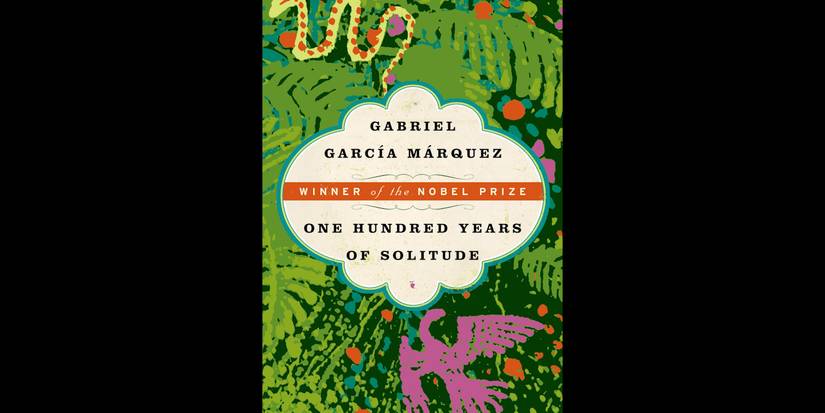
“Many years later, as he faced the firing squad…” A cornerstone of magical realism, One Hundred Years of Solitude chronicles multiple generations of the Buendía family in the isolated town of Macondo, where love, war, memory, mysticism, and history intertwine across decades. Miraculous events unfold alongside ordinary domestic life with complete naturalness. Here, the fantastical and the mundane exist side by side.
Here, Gabriel García Márquez’s writing style is lyrical yet clear, defined by rich imagery, memorable metaphors, flowing rhythms, and luminous descriptions. His language gives Macondo the feeling of a place suspended somewhere between fact and myth. Some paragraphs are amazingly intricate. Take the opening one, for instance, which pivots between three different time periods in a single sentence. Overall, the book’s style was hugely influential, with countless writers around the world channeling it in their own stories.
2
‘Blood Meridian’ (1985)
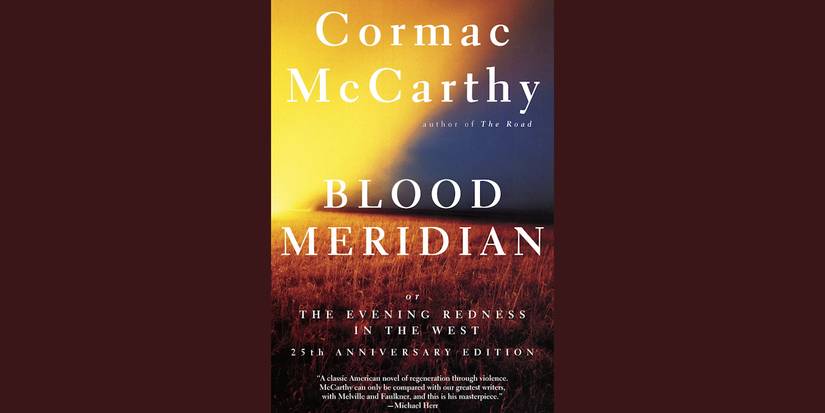
“Whatever exists without my knowledge exists without my consent.” Frequently cited as Cormac McCarthy‘s masterwork, Blood Meridian is a brutal, bloody, biblical Western/horror/drama hybrid set on the American frontier. There, our protagonist (known only as the Kid) joins the notorious Glanton gang, a group of scalp hunters wandering across the American Southwest and northern Mexico during the mid-nineteenth century. Their journey becomes an uncompromising meditation on violence, destiny, morality, and human nature’s darker impulses.
McCarthy’s prose is remarkable for its capacity to find beauty within desolate landscapes and horrifying events. Vast deserts, towering mountains, violent storms, and moments of unimaginable cruelty are all described with the same poetic intensity. The sentences are grand and stark, hypnotic and breathtaking, making the Wild West feel timeless and terrifying.
1
‘Ulysses’ (1922)

“History is a nightmare from which I am trying to awake.” Written by the iconic James Joyce, Ulysses is one of the landmark modernist novels, representing so much of what made that movement interesting. Set over the course of a single day in Dublin, the novel follows Leopold Bloom, Stephen Dedalus, and numerous other characters as their lives intersect in ways both ordinary and profound. In the process, Joyce transforms everyday routines into epic experiences through constant stylistic experimentation.
At the time, Ulysses innovated in all sorts of ways, breaking open new possibilities of what the novel could accomplish as a medium. It uses stream-of-consciousness and interior monologues, incorporates foreign languages, frequently deploys onomatopoeia, and even invents new words, its style shifting constantly across its 18 episodes. All this is intended to mirror the chaos and depth of the human mind.
You must be logged in to post a comment Login