Entertainment
10 Books That Were Way More Intense Than Their Movie Adaptations

There are always changes to be made, when making a book (or a few books) into a movie (or maybe a few movies). Things might need to be stretched, cut down, or cut out entirely, for any number of reasons. There are things one might be able to picture while reading that prove difficult to properly visualize on screen (Denis Villeneuve’s first two Dune movies, for instance, capture more of the plot and characters than the absolute spirit of the book, since they’re a bit less psychedelic and alien in their feel).
You’ve also got books that have to be edited, when making the jump to cinema, just because there aren’t really limits to what you can describe on the page, yet there are boundaries that can be crossed when it comes to showing such things visually. The content found in books sometimes has to be sanitized a little to keep things more or less R-rated when it comes to making them movies, while books, you know, don’t really have official ratings, and also (mostly) lack visuals, so it’s a bit more of an “anything goes” type of medium. Anyway, the following books all stand out as more extreme and intense with their content than their movie adaptations ended up being.
10
‘The Body’ (1982)
Made Into ‘Stand by Me’ (1986)


Either way, you’ve got a sad story here, but it’s more that The Body is sad in a genuinely crushing (and almost eerie) way, while Stand by Me, the movie based on The Body, is more bittersweet. It’s also worth noting that The Body is a novella, rather than a novel, but it’s been published as a standalone, so it still feels worthy of being called a book. And, by novella standards, it’s decently long.
The premise involves four boys setting off on a journey to try and find a dead body, and then they learn harsh truths about life along the way, in typical coming-of-age fashion. Stand by Me does show most of the hardships and acknowledge at least one tragedy that happened in the years following the main events of the story, but The Body goes a bit further with how many tragedies happened, and what it all might mean for the protagonist/narrator, who’s left in a slightly more peaceful place at the end of Stand by Me, versus at the end of The Body.
9
‘L.A. Confidential’ (1990)
Made Into ‘L.A. Confidential’ (1997)

There aren’t all that many adaptations of James Ellroy’s books, even if he’s a rather popular crime/thriller author, and lots of his stuff is quite cinematic, not to mention sometimes about the world of film. L.A. Confidential takes place in Los Angeles, unsurprisingly, and things about the entertainment industry are relevant, so it ended up making for a fairly good – and fitting – movie. Also, The Black Dahlia was adapted into a film, but not quite as successful.
The characters do even worse things, the descriptions of violence – and the aftermaths of violent acts – get more graphic, and there are also more moving parts.
The books L.A. Confidential and The Black Dahlia both belong to the L.A. Quartet, and these four novels by Ellroy all feature a lot more by way of violence, darkness, and despair than you’ll find in the already decently violent, dark, and despairing movie versions of L.A. Confidential and The Black Dahlia. The characters do even worse things, the descriptions of violence – and the aftermaths of violent acts – get more graphic, and there are also more moving parts, adding to the sense that whatever truths or conspiracies are unearthed during the narrative feel even more troubling on page than on screen.
8
‘And Then There Were None’ (1939)
Made Into ‘And Then There Were None’ (1945)

This is a milder example, because there have been subsequent adaptations of And Then There Were None that stick to how dark the original novel is. But if you’re just talking about that original novel and the first major adaptation, which was a movie that came out in 1945, you do have things made noticeably gentler when everything made the jump from the page to the screen.
Without ruining things for either 1939’s And Then There Were None or 1945’s And Then There Were None, there is a particularly intense feel to the former that was too much to translate entirely for the latter, at least by the standards of 1945. There’s a resolution in both takes on this murder mystery, though it’s all a bit less horrifying and shocking in the movie, compared to the book (though that movie is still very good for its time, and packs a punch, even if the punch is softer because of some fairly obvious reasons).
7
‘Blonde’ (2000)
Made Into ‘Blonde’ (2022)


It’s intense stuff all-around, should you choose to read Blonde (2000) or watch Blonde (2022). The former feels almost more of a horror book than a biographical one, because it is indeed about Marilyn Monroe, sure, and there are allusions to other people who were relevant to her tragically short life, but the book frames her whole tragic life as one that stands in for abuse that’s happened – and continues to happen – on an industry-wide scale.
The 2022 movie captured enough of the book’s horror and graphic content to be given an NC-17 rating, and it stirred up plenty of controversy on its own, for sure. Yet it speaks to the intensity of Joyce Carol Oates’ original novel that the movie feels a little easier to digest in comparison (700+ pages of very detailed horror and abuse is harder to take in than 160+ minutes of very intense – but not as intense – depictions of the same).
6
‘IT’ (1986)
Made Into ‘IT’ (2017) and ‘IT Chapter Two’ (2019)
The Body was mentioned before, but not specifically as a Stephen King story, so yeah, it was Stephen King, and it was one of a fair few coming-of-age stories he’s written over the years (and he does continue to write – in both that genre and more generally speaking – into the 21st century). His ultimate coming-of-age story, though, is probably IT, which follows a group of characters at two different ages in their lives, and at both ages, they’re taking on the same horrific enemy.
There was a movie adaptation done in the late 2010s, but it split the story into two halves by focusing on the kids in the 2017 film, and then showcasing their battle against the titular IT as adults in the 2019 film. That removed the interesting structure of the novel, and also removed was some of the more alarming content found in the source material. There is stuff in IT (1986) that you couldn’t film without being charged with some kind of obscenity-related laws, so it was for the best, to put it mildly, that the two-part film adaptation wasn’t 100% faithful to the book.
5
‘Trainspotting’ (1993)
Made Into ‘Trainspotting’ (1996)

The biggest difference between the book and movie versions of Trainspotting is style-related, since the movie is digestible in a way the book isn’t really. You get heavy slang used in dialogue and narration in both instances, but all of it’s easier to understand in the movie, compared to the book, even if by just a little.
As for the difference in content? Yes, Trainspotting (1996) is uncompromising as a look at addiction and a certain way of life, but it’s not as harrowing as the original book, written by Irvine Welsh. This is saying quite a lot, since 1996’s Trainspotting feels very intense and honest, and it is, sure, yet the book goes several steps further in some regards, and is a piece of literature where, for better or worse, genuinely nothing feels off-limits.
4
‘The Wanderers’ (1974)
Made Into ‘The Wanderers’ (1979)

The Wanderers is an underrated coming-of-age book, and was written a decade or so on from when it was set. Like with lots of coming-of-age books, you can line up the time covered with the author’s life, and yes, Richard Price would’ve been a teenager in the first half of the 1960s, and The Wanderers is mostly about teenagers rambling their way through life during 1962, and a bit of 1963, too.
There was a movie that came out in 1979 that had a feeling of “telling it like it is,” or “like it was,” but it had kid gloves on compared to the book. The Wanderers (1979) is hard-hitting enough, as a film, but so many of the grittier and more intense moments from the book are either left out or altered slightly. The book is honestly pretty horrific at times, but again, that brutal honesty and sense of things being hard-hitting do make it an admirable literary work.
3
‘Misery’ (1987)
Made Into ‘Misery’ (1990)
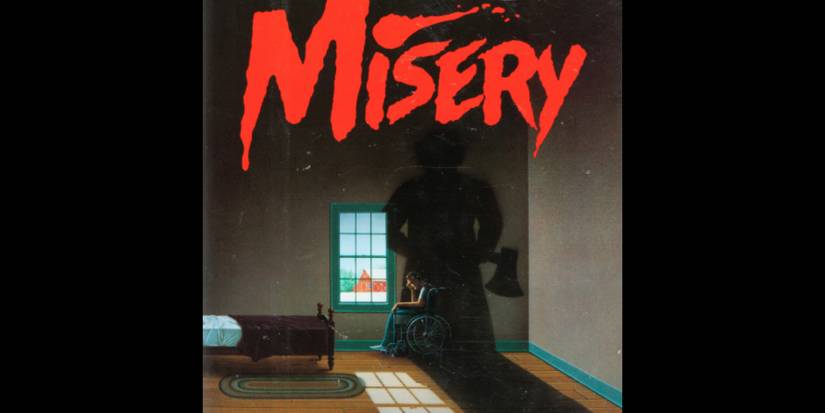
The last Stephen King book worth mentioning, for present purposes, is Misery. This book’s about an author who gets into an accident, and then he’s seemingly rescued by a woman who ends up being a massive fan of his writing. She’s more than a little intense in general, though, and then she gets genuinely frightening as the story goes along, and she learns that he’d recently concluded a series she had a lot of love for.
This happens in the movie, too, the whole “kidnapping an author and making them continue writing a series they wanted to move on from” thing. It’s just what the fan does to the author in Misery, the book, that proves a good deal more gruesome and stomach-churning than what she does in the movie. There’s also an infamous scene in the book involving a lawnmower that’s entirely absent from the 1990 movie (if you know, you know).
2
‘Lolita’ (1955)
Made Into ‘Lolita’ (1962)
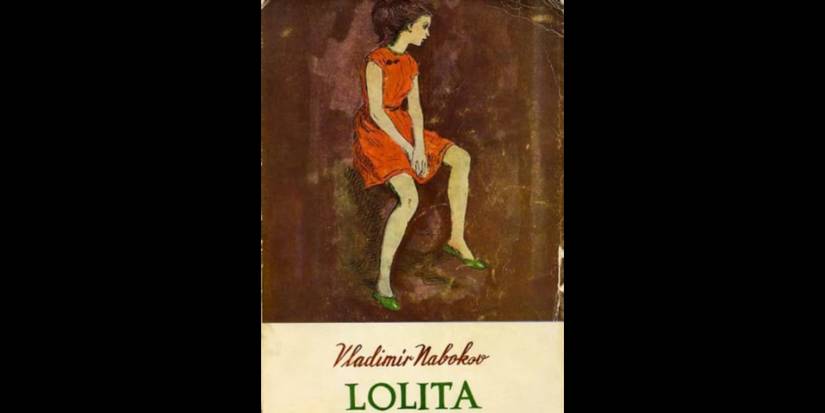
Like with IT, there are things that happen with underage characters in Lolita that you just couldn’t show on screen, for reasons that are hopefully obvious to anyone who’s read either (or both) of these novels. The premise of Lolita is arguably more nightmarish than that of IT’s, though, since Lolita is about a man who is infatuated with a 12-year-old girl, carrying out his fantasies with her after becoming her stepfather.
The idea of making a movie version of Lolita in the first place was extreme enough that the tagline for the original 1962 film adaptation, directed by Stanley Kubrick, was “How did they ever make a movie of Lolita?” It’s a good question, but that film does work, and it does a lot by way of implying some of the most uncomfortable scenes. For what it’s worth, the 1997 movie adaptation did a similar thing, even if it’s technically a bit more intense and graphic than the 1962 version.
1
‘American Psycho’ (1991)
Made Into ‘American Psycho’ (2000)

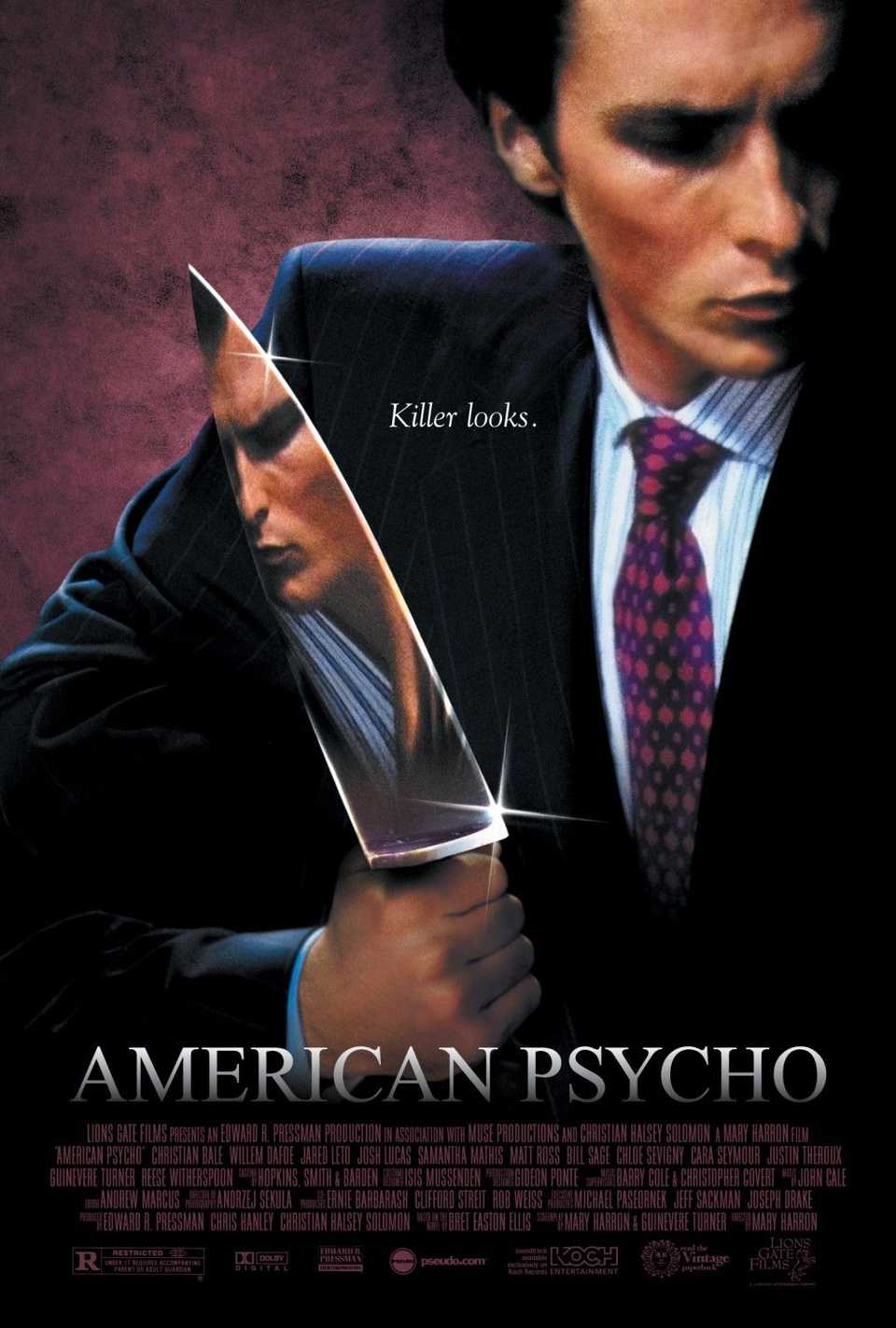
You know, the movie version of American Psycho is honestly kind of fun. There is a satirical slant to the source material as well, but everything there is nastier and generally more graphic, so you can appreciate it as satire about wealth and entitlement and class and all that, but finding it actually funny, when it gets as full-on as it does, is a bit more difficult, to say the least.
American Psycho, the movie, is still about a wealthy investment banker who either is – or imagines he is – a serial killer, and so there’s a good deal of carnage and debauchery seen on screen, still. It’s more just that it’s not nearly as detailed as it is in the book, and also, the book version of Patrick Bateman does (or imagines he does) a few things far more horrific than the movie version of Patrick does (or believes he does).

American Psycho
- Release Date
-
April 14, 2000
- Runtime
-
101 minutes
- Director
-
Mary Harron
- Writers
-
Bret Easton Ellis, Mary Harron, Guinevere Turner
You must be logged in to post a comment Login