Entertainment
10 Classic Action Movies Nobody Wants to See a Remake Of

Movie lovers love to toss around the word “classic.” But what actually makes a movie a classic? A classic film must demonstrate enduring cultural impact, exceptional artistic achievement, and the unique ability to resonate with audiences for generations. These films stand the test of time. They possess a rewatchability that draws audiences back again and again. A great classic should be so brilliant that it can never be remade again.
The trouble is, studios love to remake the classics because, well, they know the rewards it could reap should they take the risk. They have a nostalgic appeal that draws audiences in, but they rarely surpass the original. When it comes to action flicks, these 10 classic action films should never be remade. Their original impact deserves to stay intact instead of being potentially tarnished. While some titles have launched beloved franchises, rebooting them with a new face is simply not what audiences want to see.
1
‘Die Hard’ (1988)

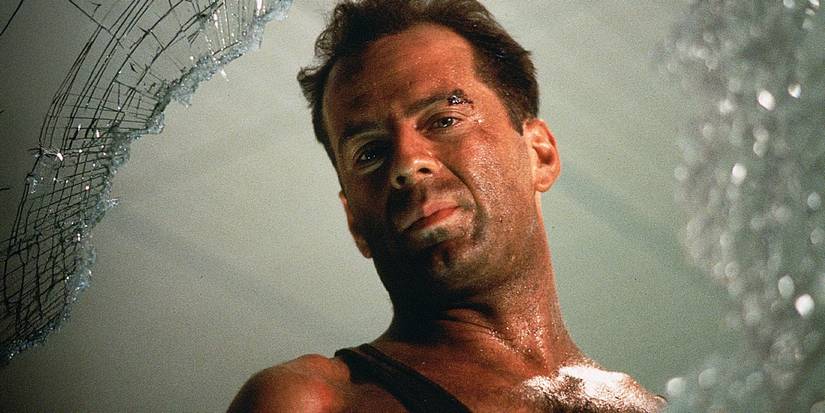
When you rewrite the script for how action films can be made, you automatically become an instant classic. That’s what happened with Die Hard. Directed by John McTiernan and based on the novel Nothing Lasts Forever by Roderick Thorp, the unofficial Christmas movie follows New York City cop John McClane (Bruce Willis) as he travels to Los Angeles on Christmas Eve in hopes of reconciling with his estranged wife, Holly Gennaro-McClane (Bonnie Bedelia). His plans are interrupted when a gang of heavily armed criminals, led by the ruthless Hans Gruber (Alan Rickman), takes over the Nakatomi skyscraper, forcing McClane to take them on alone. Drawing up the blueprint of a singular set action thriller, Die Hard proved that the vulnerable everyman hero is just as alluring as the invincible, muscle-bound ones of the era.
One of the most entertaining films of the ’80s, Die Hard infused itself into pop culture thanks to its iconic quotes and the most brilliant villain in action history. Die Hard had a simple premise, but it was executed to perfection. It brought out the concept of the hero-villain meet-cute that many films have tried to replicate since. So, why would anyone try to replicate perfection? Die Hard launched Willis into elite action-hero status, giving him the opportunity to continue McClane’s story. The truth is, no one will ever be John McClane other than Willis. The film was a lightning-in-a-bottle project that captured the aura of the decade. There was a specificity to the imagery and chemistry. The film launched the “Die Hard on a Blank” subgenre, so trying to redo it and recapture that magic would be nearly impossible. While there are certainly capable actors like Glen Powell who would serve as a logical modern choice, finding a new Rickman to play a perfect Hans Gruber is harder than that infamous fall.
2
‘Dirty Harry’ (1971)
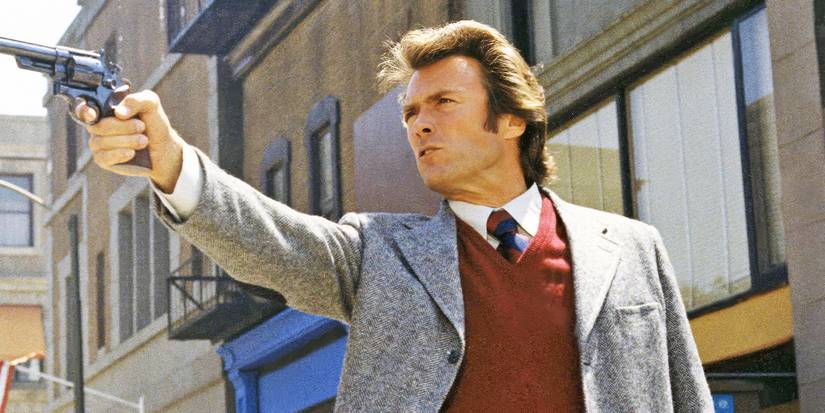
Clint Eastwood has had a storied career, both as an actor and director. One of the most iconic roles is none other than Inspector Harry Callahan in Dirty Harry. In the first film of the franchise, Callahan is a no-nonsense San Francisco police inspector who takes on dirty jobs that no one else wants to do. Callahan hunts down a psychopathic sniper known as the “Scorpio Killer” (Andy Robinson), who is terrorizing the city by murdering innocent people and demanding ransoms. Dirty Harry examines the harsh clash between the strict legal system and street-level justice. A gritty action thriller that defined the ’70s, Dirty Harry defined the loose cannon cop genre by introducing one of cinema’s greatest anti-heroes.
Dirty Harry launched the lone wolf protagonist thanks to Eastwood’s masterful performance. While the character continued throughout the franchise, the first film was released during a time of high social tension and rising crime rates. The film captured the frustrations of society as they felt alienated by rapid societal shifts and the challenging questions about whether the legal system is too lenient on violent criminals. Dirty Harry is a period piece, and thus, trying to rework it as a modern remake would lose steam quite quickly. Callahan is a tough-on-crime character. That approach would simply not resonate with audiences today, given the societal disdain for modern policing. In fact, it might cause Callahan to be the lesser of two evil villains. The truth is, Harry Callahan belongs to Eastwood. No one can match his swagger and delivery.
3
‘Enter the Dragon’ (1973)


Certain films have a legacy as cinematic touchstones for their impact on their genre and history. For martial arts movies, that film is Enter the Dragon. Perhaps the greatest martial arts film ever made, Enter the Dragon served as Bruce Lee‘s final film appearance before his death. For that reason alone, even thinking about remaking the classic would be disrespectful. The classic martial arts film follows a Shaolin monk named Lee, who is recruited by British intelligence to infiltrate a private martial arts tournament. Lee is tasked with gathering evidence to expose the host, a renegade former monk named Han (Shih Kien), who operates an illegal drug and human trafficking ring. Enter the Dragon‘s massive impact on cinema was felt instantly, single-handedly igniting a worldwide martial arts craze.
Lee was a Hong Kong legend, and thanks to Enter the Dragon, he became the first Asian actor to serve as an undisputed leading man in a major Hollywood-Hong Kong co-production. Lee turned into an immortal global icon thanks to this film. Enter the Dragon found the perfect cross-section of traditional martial arts and James Bond-style espionage thriller. But now, more than 50 years later, Enter the Dragon is untouchable. Enter the Dragon captured a moment in time by breaking barriers and establishing martial arts in Western mainstream culture. Enter the Dragon was Bruce Lee. No one can deliver what he did with such impact.
4
‘First Blood’ (1982)

Sylvester Stallone is a character maker. In the ’70s, it was Rocky Balboa. In the ’80s, John Rambo. First Blood served as the vehicle that launched the character and an iconic franchise, one that can never be matched today. The action thriller followed John Rambo, a traumatized Vietnam War veteran whose PTSD is triggered when a small-town sheriff, Will Teasle (Brian Dennehy), wrongfully arrests and abuses him. Rambo escapes to the mountains and uses his elite combat and survival skills to wage a one-man war against the police. Unlike the more bombastic films that followed in the series, First Blood was grounded as a psychological drama rooted in the era. First Blood tapped into themes of systemic neglect, PTSD, and the harsh discrimination Vietnam veterans faced from the divided American public upon returning home.
First Blood was a direct response to the Vietnam War. While there have been countless Vietnam War-period films, First Blood was a modern Vietnam War film; thus, it would not have the deep impact it originally had. First Blood subverted the high-octane action films of the time with genuine emotional resonance and worked as a wonderful exploration of a vet’s heartbreaking journey with PTSD and his attempt to return to society. There have been films since First Blood that have explored modern wars and their effects on their veterans in a similar vein. That said, should it be remade, it would only be done to capitalize on the film’s original success. The only way to remake First Blood is to stray away from the Ted Kotcheff-directed film and stick strictly to what is prescribed in David Morrell‘s novel, which is significantly bleaker. Oh, and the book ends with Rambo being killed, so that would be quite different than the 1982 film!
5
‘Raiders of the Lost Ark’ (1981)
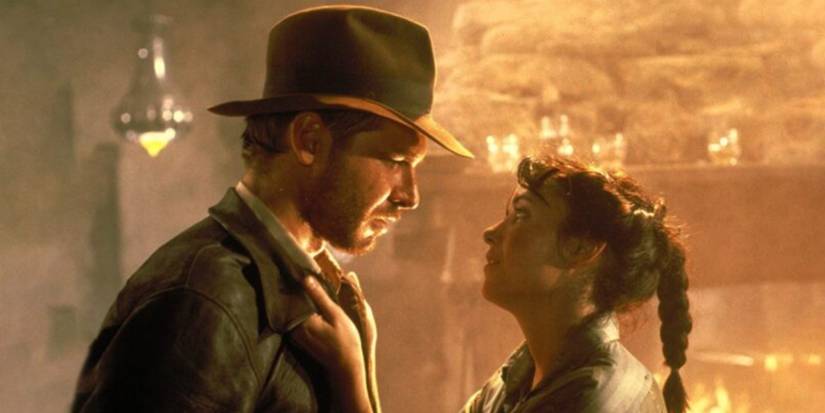
If you’re sensing a trend, a major reason why audiences may not want to see a remake of a classic action film is that there is simply no way to replace the original. No one will ever come close to having the allure that Harrison Ford brought to Indiana Jones. He may be best remembered for Han Solo, but Indy is his greatest character achievement. Launching a beloved franchise, Raiders of the Lost Ark tells the tale of the titular globe-trotting archeologist as he races against Nazi forces to recover the biblical Ark of the Covenant, believed to possess supernatural powers that would make the army invincible. Alongside his old flame Marion Ravenwood (Karen Allen), Indy battles through booby traps and enemies to secure the treasure. And snakes. Why did there have to be snakes? Relaunching the adoration for genuine action-adventure flicks, Raiders of the Lost Ark combined George Lucas‘ concept, Steven Spielberg‘s masterful direction, Ford’s charismatic performance, and John Williams‘ iconic score to craft a nostalgia-filled benchmark for cinematic storytelling.
While the character is so iconic that many actors today could conceivably wear the brown fedora and crack the whip, if you go back to the aforementioned roster — Ford, Lucas, Spielberg, and Williams — never again could that be replicated. Raiders of the Lost Ark brought escapism to the big screen as they journeyed with the ultimate action hero. He was flawed. He got bruised. He made mistakes. But Indy was the face of resilience. He got knocked down and proudly got up again. The film was perfectly made using the practical magic of ’80s filmmaking. As seen in the subsequent 21st-century sequels, once you introduce CGI into the mix, Raiders of the Lost Ark loses its charm. Raiders of the Lost Ark is an action-adventure at its finest. As much as Hollywood tried to pass the baton to Shia LaBeouf in Indiana Jones and the Kingdom of the Crystal Skull, it’s always going to be Ford. Anyone else would be blasphemy.
6
‘Speed’ (1994)

We often say we “have the need for speed,” but I can assure you we do not have a need for a Speed remake. While action fans love an adrenaline rush in film form, Speed is a masterpiece as is. Directed by Jan de Bont, the high-octane thrill ride centers on a vengeful extortionist, former bomb squad officer Howard Payne (Dennis Hopper), who rigs a Los Angeles city bus with a bomb that is armed once the vehicle hits 50 miles per hour, exploding if it drops below that limit. It’s up to LAPD SWAT Officer Jack Traven (Keanu Reeves) and quick-thinking passenger Annie Porter (Sandra Bullock) to take the wheel and save the day. Navigating heavy LA traffic and an unfinished freeway gap, Speed is a brilliant high-concept thriller that made the unthinkable imaginable.
Often, action movies have moments of levity or time to breathe. Not here. Speed was a relentless film whose momentum was unmatched. The stakes were high. The fear was consistent. And, perhaps, most importantly, it established Reeves as an action star and Bullock as an eventual legend. Though the plot overshadowed them, perhaps making them replaceable, Speed can’t be remade because it would simply be seen as a gimmick today. The film became a masterpiece because of the bus. By the time a sequel arrived, sans Reeves and aboard a cruise liner, it proved that Speed was an enigma. A third film might be more conceivable, but other films and series have stolen the other logical vehicles that might have been used. Speed is a quintessential ’90s movie, and it should stay that way.
7
‘The Terminator’ (1984)

Director James Cameron has given Hollywood a lot of historic cinematic moments — a romantic epic set on an infamous, ill-fated cruise and a universe of blue-tinted beings who serve as a PSA for conservation awareness, to name a few. But before those projects were a twinkle in his eye, Cameron introduced the world to the cross-section of science fiction and action with the groundbreaking The Terminator. Now, before we begin, a remake of the film would be a substantial step up from the original because the budget that Cameron was working with was quite measly. And it showed. And yet, it launched a beloved franchise that got better. That said, The Terminator needed to be a bit of a B-film to capture attention. A remake would lose that charm.
In the iconic film, a time-traveling cyborg (Arnold Schwarzenegger) is sent back in time to 1984 from a post-apocalyptic future where a hostile AI defense network known as Skynet wipes out most of human civilization. Facing defeat by a human resistance led by John Connor, the T-800 is on a mission to kill Sarah Connor (Linda Hamilton) to prevent her from ever giving birth to her eventual child. To counter the attack, the human resistance sends a lone soldier, Kyle Reese (Michael Biehn), to protect Sarah and ensure John’s birth. The high-octane thriller explores themes of humanity’s dangerous reliance on technology, the ethical dilemmas of artificial intelligence, and questions whether our fate is predetermined. Every one of those themes is pertinent today, but to explore them in a remake of The Terminator would be futile.
The original film became a classic because of how it was precisely presented. There would be no way to replicate that lighting in a bottle again. The film has influenced the genre by giving sci-fi action thrillers more slasher-like stories with an iconic final girl. But once again, The Terminator‘s massive success was thanks in part to Schwarzenegger’s performance. He was chilling, terrifying, and perfectly cast. The plot of this film would never be able to be replicated with anyone but the iconic actor. Ask yourself, do you really want to hear anyone else attempt to utter the line, “I’ll be back.” The answer is no. Technology has caught up to the prescribed sci-fi in the original film, making it nearly impossible to capture the same story as anything but a hokey period piece.
8
‘The Matrix’ (1999)
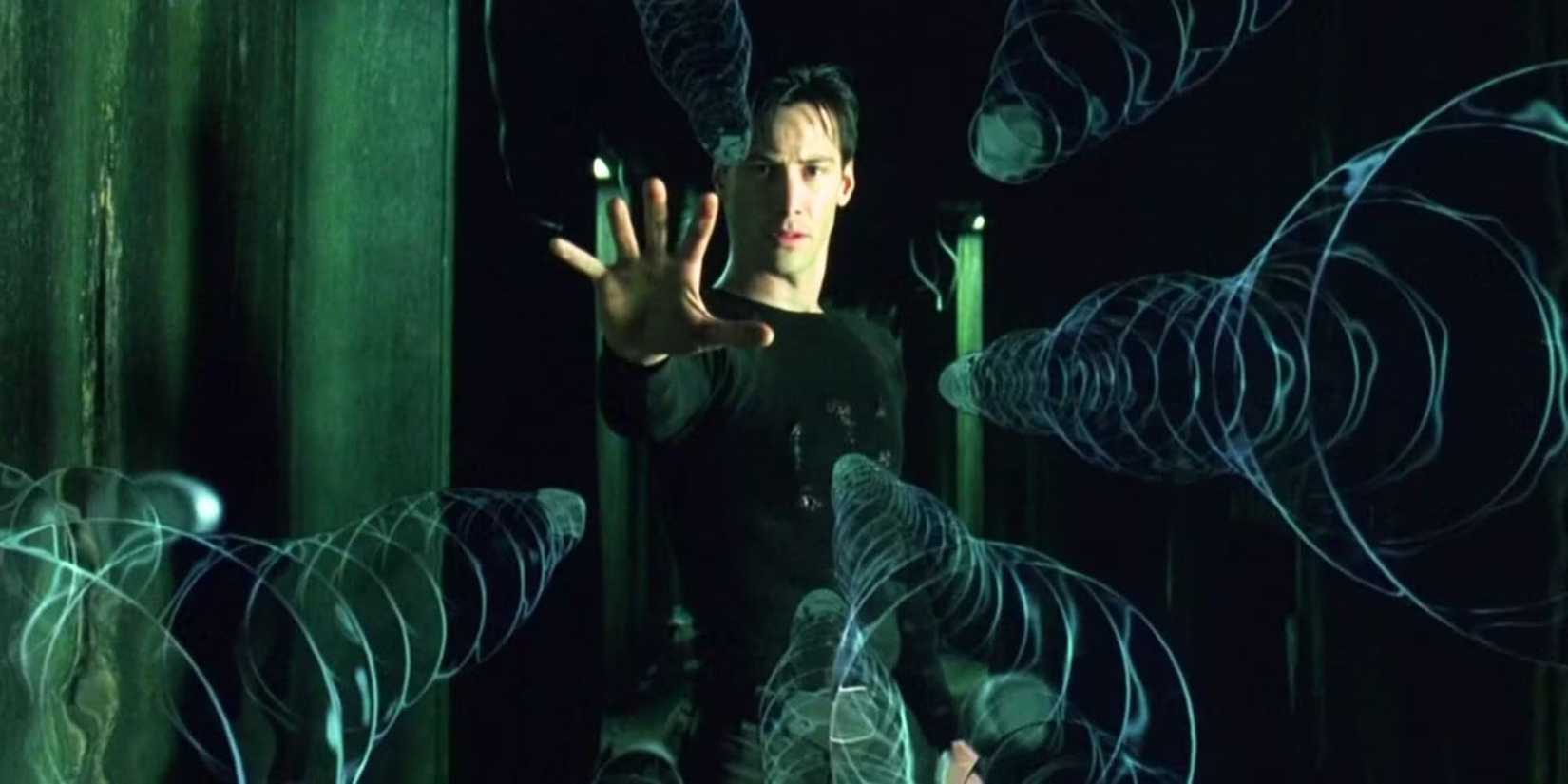
To be considered an influential film is a great honor. To be able to earn that distinction across multiple genres is a mark of sheer greatness. For The Matrix, the iconic film by the Wachowskis changed science fiction, action, and martial arts films the moment it dropped in theaters in 1999. The high-concept thriller follows a computer hacker named Neo (Keanu Reeves), who discovers that the everyday world is actually a complex simulated reality. Created by intelligent machines, this illusion keeps humanity docile while their bodies are harvested for energy. Contacted by a mysterious rebel leader named Morpheus (Laurence Fishburne) and his ally Trinity (Carrie-Anne Moss), Neo joins the rebellion to break free and rage against the machines. The Matrix expertly merged mind-bending philosophical concepts with groundbreaking visual effects into a mainstream cyberpunk blockbuster.
The Matrix revolutionized cinema. Perhaps most importantly, the film introduced and popularized bullet time, a visual effect that allowed the camera to pan around a scene at normal speed while the action unfolded in extreme slow-motion. Don’t deny it, after watching Reeves do that infamous backbend, you too tried to replicate it. That moment was just one of many things that became inherent in the pop culture lexicon. From the concept that our reality could be a simulation to the choice between the red pill and the blue pill, The Matrix was a crucial part of the time capsule during the turn of the century. It could never be replicated. Attempting to remake it would feel like an unnecessary copy and paste. The film did launch a franchise, allowing for the story to continue. A clean slate would mean wiping out the entire IP to start over. Fans would rather have the chance to relive the original film once again rather than watch a new take on it.
9
‘The Rock’ (1996)

The ’90s were the decade of the blockbuster. Thanks to those big-budget, massively epic films, audiences swarmed to the theater for their chance to see things blow up. Two titans of that concept were director Michael Bay and producer Jerry Bruckheimer. One of their great collaborations was 1996’s action thriller The Rock. The film follows rogue U.S. Marine general Frank X. Hummel (Ed Harris), who hijacks Alcatraz Island, holding tourists hostage and threatening to launch deadly nerve gas rockets at San Francisco to secure financial reparations for families of fallen, unacknowledged soldiers. To stop the attack, the government pairs a nervous FBI chemical weapons expert, Dr. Stanley Goodspeed (Nicolas Cage), with a notorious, imprisoned ex-spy, Captain John Patrick Mason (Sean Connery) — the only man who has ever successfully broken out of the infamous island prison. Perfecting the blockbuster formula with an escapism story and a top-tier all-star cast, The Rock was the peak of high-concept, stylized action flicks.
The Rock has been why we sought out “Bayhem” ever since. Bay’s signature visual style and direction became the blueprint for future directors of the genre. The stunts, the car chases, the pyrotechnics — it was all real, tactile stunt work. That was a major allure of the film. Certainly, that can be replicated, but it wouldn’t have that Bay touch. The Rock had unmatched star power with its unlikely duo dynamic. It caught both leads at just the right time in their career. Connery channeled a mature, rogue version of James Bond while Cage, fresh off his Academy Award for Leaving Las Vegas, proved that action was in his blood. Without The Rock, he may not have had Con Air or Face/Off, two other films that studios should keep their hands off of. The Rock emerged as a cult classic film because the ingredients of this recipe resulted in a perfect feast. Attempting to find those perfect ingredients would be a difficult task. The Rock is a flawless standalone film and deserves that distinct honor.
10
‘To Live and Die in L.A.’ (1985)

Perhaps the greatest action film in William Friedkin‘s vast list of classics is To Live and Die in L.A. Based on the 1984 novel by former U.S. Secret Service agent Gerald Petievich, the film uses a neo-noir crime thriller style to tell the story of a reckless, vengeance-driven Secret Service agent Richard Chance (William L. Petersen), who resorts to unethical and illegal methods to catch a brilliant, murderous counterfeiter, Eric “Rick” Masters (Willem Dafoe), who killed his partner, Jimmy Hart (Michael Greene). Consumed by grief and a desire for revenge, Chance abandons the law as he’s paired with a nervous, by-the-book partner, John Vukovich (John Pankow). As Chance crosses the line from lawman to criminal, the line between him and the man he is hunting becomes dangerously blurred. To Live and Die in L.A. recalibrates the typical Hollywood hero cop story as it tackles corruption, moral ambiguity, and the dark paths obsession leads to.
The film was celebrated for its moral gray areas. As the film progressed and the pursuit intensified, the line between hero cop and villain criminal dissipated as the environment of the chase was consumed by their own obsession. By forcing the audience to question the moral ambiguity, the cop genre’s subversion led to a new realm of storytelling. To Live and Die in L.A. is distinctly ’80s. With the sun-soaked Los Angeles giving way to the gritty underbelly of the city, set to the hypnotic Wang Chang atmospheric score, reclaiming that sound and imagery in a remake would be quite difficult. To Live and Die in L.A. wasn’t crafted as a period piece, but a product of its time. A remake would become a period piece, and the story told through a modern lens would resonate entirely differently. At the time, the story ended with a twist ending and virtually no heroes. That was bold then. The truth is, the film’s success came from the Friedkin touch. Is there anyone else who could do what he did? All signs point to no.


To Live and Die in L.A.
- Release Date
-
November 1, 1985
- Runtime
-
116 minutes
- Writers
-
Gerald Petievich
-

-

William Petersen
Richard Chance
-
John Pankow
John Vukovich
-
Debra Feuer
Bianca Torres

You must be logged in to post a comment Login