Entertainment
10 Crime Movies Without a Single Flaw

Is there such a thing as a perfect crime? That’s debatable, but there is such a thing as a perfect crime movie. The crime drama has been a fan favorite among cinephiles for decades. From noir mystery thrillers to high-concept sci-fi action dramas, the evolution of the genre has produced some flawless films, ten of which we’re about to discuss.
The crime films on this list are considered some of the greatest of all time; in fact, they’re so good, they’re presented without flaws. These films represent the history of the genre, from early classics that set the tone for our obsession with crime movies to recent mysteries that have reinvigorated it today. While there are certainly more flawless crime flicks out there, these ten are some of the best of the best.
‘Dial M for Murder’ (1954)

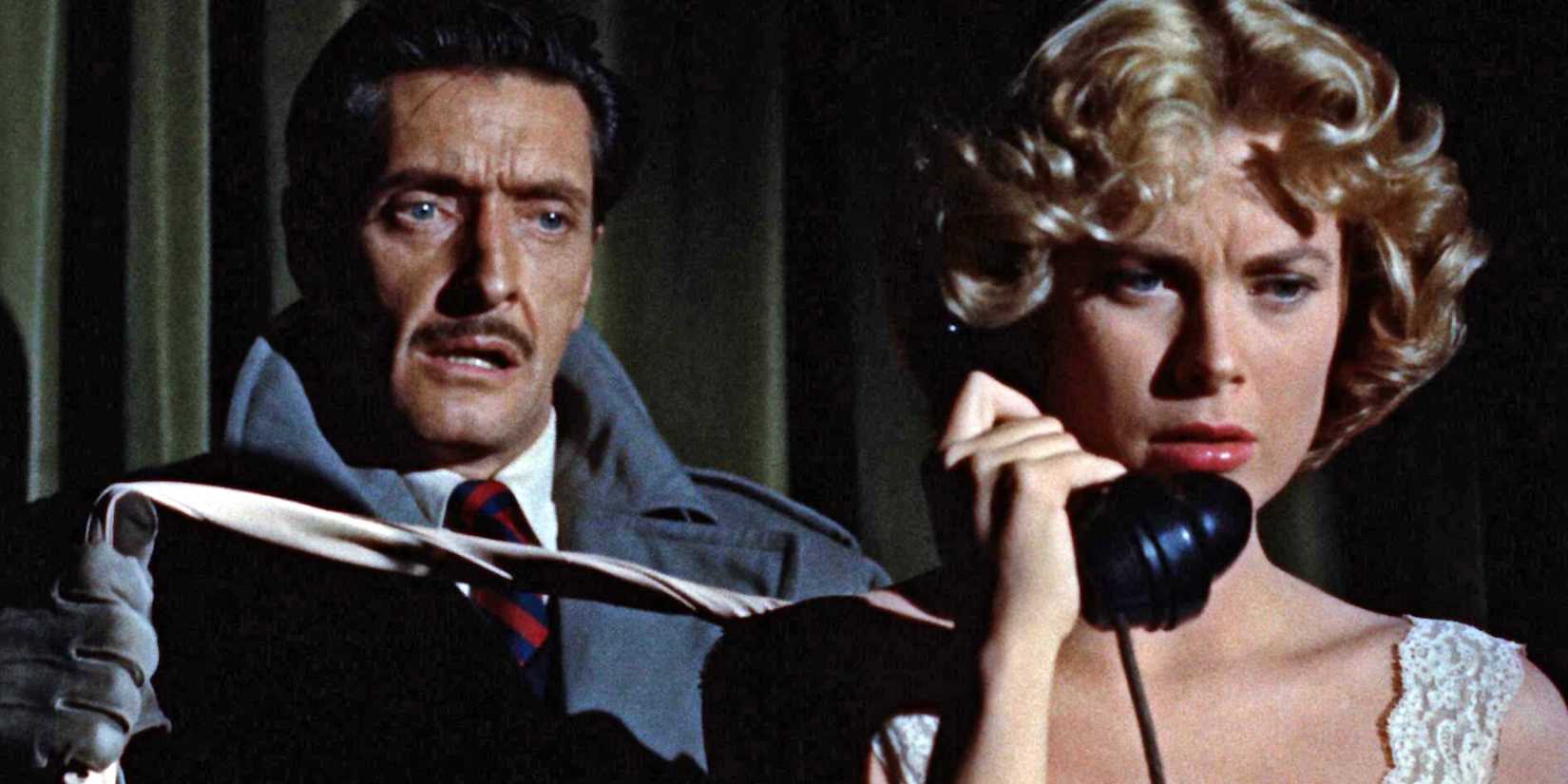
No director has mastered suspense quite like Alfred Hitchcock. His resume is filled with iconic crime thrillers, so this list could be limited to his work. But in order to spread the wealth, we’re selecting one of the finest: Dial M for Murder. Based on the play by Frederick Knott, Dial M for Murder follows Tony Wendice (Ray Milland), a retired tennis player who plots the murder of his wealthy wife, Margot (Grace Kelly), to inherit her fortune upon discovering her affair with crime-fiction writer Mark Halliday (Robert Cummings). When his hired assassin, Charles Swann (Anthony Dawson), is killed by Margot in self-defense, Tony must improvise, framing her for the meticulously staged, premeditated murder.
A masterclass in suspense, Dial M for Murder subverts the traditional murder mystery to depict the perfect crime. Rather than present a standard whodunit, Hitchcock gives the audience the ultimate crime setup: they watch the sinister, calculated plot unfold, making it an inverted detective story. Through dynamic shots, including specific angles, tight framing, and a focus on tense actions, the visual storytelling is just as important as the action itself. Tony is presented as a smooth individual who evolves into the perfect anti-hero. You find his moral compass despicable, but you continue celebrating his brilliance, hoping he can get away with murder, in a manner of speaking.
‘Heat’ (1995)


Michael Mann gathered one of the finest ensembles of stars to play cops and robbers in the classic ’90s thriller, Heat. The film explores the psychological game of cat-and-mouse between an obsessive LAPD detective, Vincent Hanna (Al Pacino), and a ruthless, methodical career thief, Neil McCauley (Robert De Niro), while examining how their professional pursuits destroy their personal lives. Despite being on opposite sides of the law, Heat showcases that, while they are masters at their crafts, their obsession runs deeper than they could possibly imagine, making them two sides of the same coin.
Known for the infamous diner scene, Heat is a brilliant character-driven crime drama that balances philosophical depth with revolutionary action. Mann’s piece is a mesmerizing dissertation on the perception of morality between two definitive roles: detectives are meant to be good, and thieves are meant to be bad. Heat proves that the line might be more blurred than previously believed. McCaulley and Hanna have mutual respect for one another, realizing that they are simply mirror images, doomed by their respective destinies. Heat works because Pacino and De Niro are titans of the screen, having a wealth of history in the crime genre already.
‘Inception’ (2010)
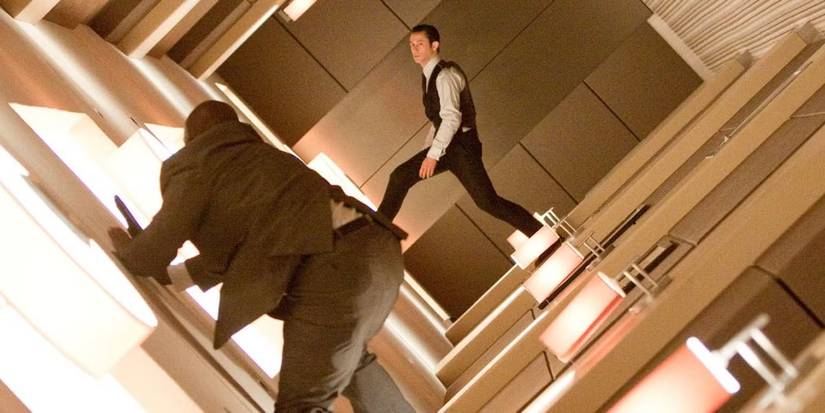
Not every crime film has to be completely realistic; just ask Christopher Nolan. Inception is not only a brilliant heist thriller, but it’s also science fiction perfection. It follows Dom Cobb (Leonardo DiCaprio), a professional thief who extracts corporate secrets by infiltrating his target’s dreams. Desperate to clear his name and reunite with his children, he is tasked with the impossible: planting an idea into CEO Robert Fischer’s (Cillian Murphy) subconscious.
Inception blurs the line between reality and imagination in a high-stakes thriller. Nolan prioritizes in-camera, practical effects over CGI to give the dream sequences tangibility, immersing the viewers in the heist itself. Between the rotating hallway fight scene and the explosive Parisian street scene, Nolan makes everything feel extraordinarily real. Cinephiles have believed that the film operates as a metaphor for the filmmaking process—Cobb is the director, Ariadne (Elliot Page) is the writer, Arthur (Joseph Gordon-Levitt) is the producer, Eames (Tom Hardy) is the actor, and Saito (Ken Watanabe) is the studio financier. If you follow that logic, it just makes Nolan a brighter visionary.
‘Knives Out’ (2010)
Rian Johnson not only reinvigorated Agatha Christie‘s style of crime stories, but crafted a lead character who could rival her greatest detective, Hercule Poirot: the character is Benoit Blanc, and the film is Knives Out. When wealthy crime novelist Harlan Thrombey (Christopher Plummer) dies under mysterious circumstances, eccentric detective Benoit Blanc (Daniel Craig) is anonymously hired to investigate. Blanc quickly discovers that the author’s wildly dysfunctional, greedy family has countless motives to kill him for his inheritance. But who was it?
Knives Out balances tense drama with colorful camp to craft a story of blackmail, an elaborate scheme, and a web of lies reminiscent of a classic murder mystery. Johnson brilliantly subverts the genre’s tropes by taking a structural gamble and revealing the apparent killer early into the film. Only it’s a red herring, giving the audience a chance to play along and discover who the real murderer is in a thrilling, hilarious game of cat-and-mouse. The first Knives Out film is a strong vehicle to tackle themes of privilege, social class, and greed through sharp satire and extraordinary characters.
L.A. Confidential (1997)

Based on James Ellroy‘s 1990 novel, L.A. Confidential follows three very different Los Angeles detectives forced to set aside their rivalries to unravel a massive web of police corruption, organized crime, and Hollywood scandal following a brutal diner massacre. There’s Ed Exley (Guy Pearce), an ambitious, by-the-book politician and ladder-climber who initially informs on other officers to advance his career, but is driven by a deep, underlying need for justice. There’s Bud White (Russell Crowe), an intimidating, brutal enforcer who relies on his fists, with a soft spot for protecting women who are victims of abuse. And then there’s Jack Vincennes (Kevin Spacey), a slick, celebrity-chasing detective who feeds classified tips to a sleazy scandal magazine.
Directed by Curtis Hanson, L.A. Confidential condenses Ellroy’s sweeping novel into a tightly woven neo-noir thriller, perfectly blending gritty realism with captivating storytelling through a flawless ensemble who lift Ellroy’s tale with ease. L.A. Confidential is an unpredictable joyride with a visual vocabulary evocative of classic hardboiled films. Working as an homage yet with a contemporary feel, cinematographer Dante Spinotti juxtaposes the glamorous Hollywood of the ’50s with the stark, shadowy underbelly of the city’s crime and corruption. Its unsettling authenticity presents the drama as an uncomfortable reality, leaving you eager to reach its stunning conclusion.
‘Pulp Fiction’ (1994)
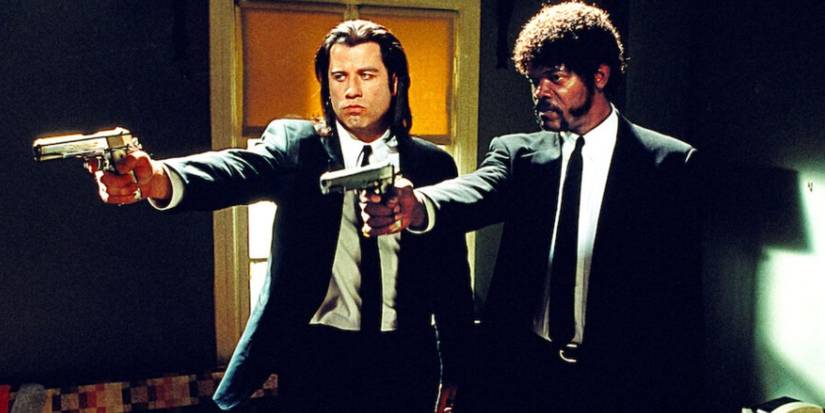
Perhaps sans Scarface, no other crime movie has ingrained itself in pop culture quite like Pulp Fiction. Written and directed by Quentin Tarantino, the crime film weaves together intersecting storylines: there are Los Angeles mob hitmen, Vincent Vega (John Travolta) and Jules Winnfield (Samuel L. Jackson), who are tasked with retrieving a mysterious briefcase for their boss, Marsellus Wallace (Ving Rhames). Boxer Butch Coolidge (Bruce Willis) is paid by Marsellus to lose a match, only to double-cross him. The mob boss’s wife, Mia (Uma Thurman), is escorted out for dinner by Vincent, only for an accidental overdose to lead to a chaotic turn. And the diner bandits, Pumpkin (Tim Roth) and Honey Bunny (Amanda Plummer), who decide to stage an armed robbery.
Moviegoers often like easy stories; Pulp Fiction is not. The radical non-linear storytelling allows Tarantino to allow the various stories to ruminate as they ultimately converge, forcing the audience to pay attention as the plot’s randomness and bizarre coincidences transform into a brilliantly constructed narrative puzzle. Tarantino leaves certain elements, such as the glowing MacGuffin briefcase, entirely open to viewer interpretation, cementing their lasting mystique. The characters are not cookie-cutter, but deeply flawed yet undeniably human, with moral compasses that often don’t align. Pulp Fiction also boasts one of the greatest film soundtracks of the decade, which plays a massive part in the storytelling.
‘The Departed’ (2006)
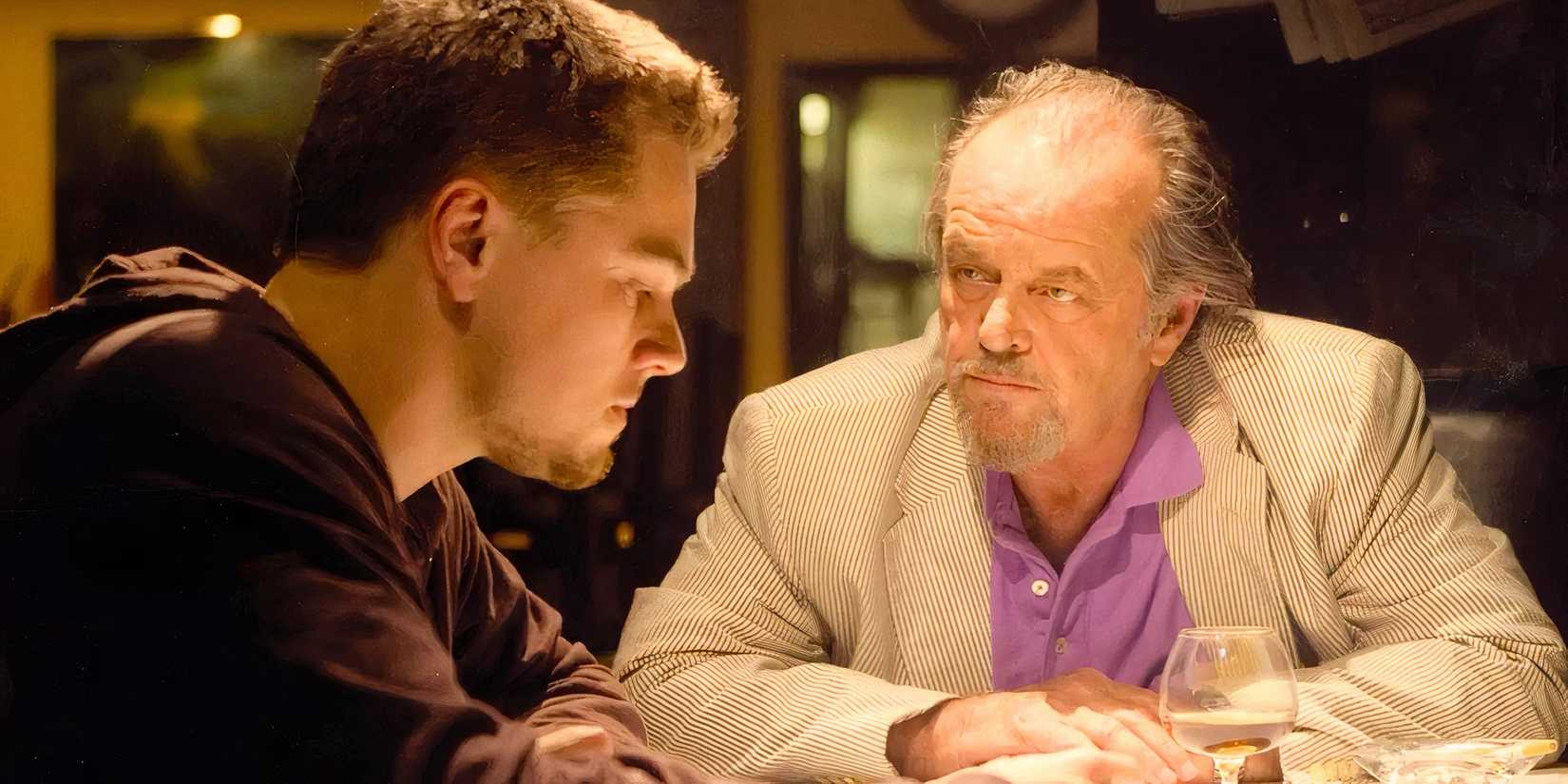
Thanks to The Departed, we can’t help but think of Martin Scorsese’s hit film when you hear “I’m Shipping Up to Boston.” And then all you can think of is the barrage of Boston accents. The Departed follows a tense cat-and-mouse game between two moles: Billy Costigan (Leonardo DiCaprio), an undercover cop embedded in a ruthless Irish mob, and Colin Sullivan (Matt Damon), a mobster embedded deep within the Boston police force. Both the police and the mob realize they have a rat in their midst. As Billy works to figure out who is leaking police secrets, the mob tasks Colin with identifying the undercover informant.
A brilliant example of tension from top to bottom, The Departed explores themes of corruption, identity, and loyalty, showing the devastating human cost of maintaining a double life using a cast of Hollywood heavyweights. Scorsese uses the dual narratives to make the action feel like a ticking time bomb where only one side can prevail. Writer William Monahan ensures that the Boston roots are inherently infused into the script. Though a remake of the 2002 Hong Kong film Infernal Affairs, the film stands proudly on its own, earning its identity.
‘The Godfather Part II’ (1974)

The Godfather was a groundbreaking film, but everyone knows that The Godfather Part II is even stronger. Directed by Francis Ford Coppola, loosely based on the 1969 novel by Mario Puzo, the film follows two parallel dramas to contrast the ruthless moral decline of Michael Corleone (Al Pacino) in the late 1950s with the early life and rise of his father, Vito Corleone (Robert De Niro), in the early 1900s. The primary timeline follows Michael as he attempts to expand his crime syndicate into Las Vegas, Hollywood, and pre-revolution Cuba as he battles betrayals, congressional hearings, and assassination attempts. The prequel sequences trace the life of a young Vito from his escape from Sicily to his rise to power, culminating in revenge in Sicily.
The Godfather Part II is an example of structural brilliance. The storytelling is never contrived, as each scene interacts with the next, weaving the perfect tapestry of two tragic figures. De Niro’s Oscar-winning performance proved just how much depth the character still had left following Marlon Brando’s take in the original. Pacino built upon his sensational performance, shifting from a reluctant heir to a ruthless, isolated, and chilling patriarch. Rather than revisiting the same themes as its predecessor, The Godfather Part II focuses on internal deception, betrayal within the family, and the aftermath of the pursuit of the American Dream.
‘The Sting’ (1973)
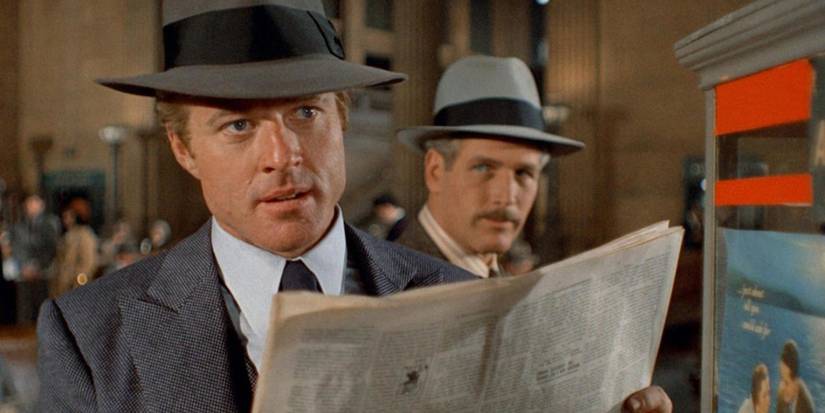
One of the greatest crime capers is none other than The Sting. From a screenplay by David S. Ward, the film is inspired by real-life cons perpetrated by brothers Fred and Charley Gondorff. Directed by George Roy Hill, the 1936-set film follows two grifters—small-time con man Johnny Hooker (Robert Redford) and seasoned pro Henry Gondorff (Paul Newman)—who team up to exact revenge on a ruthless mob boss, Doyle Lonnegan (Robert Shaw), after he murders their partner, Luther Coleman (Robert Earl Jones).
Renowned for its numerous twists and turns and its Academy Award-winning legacy, The Sting features quite a strong, airtight script. The story ultimately becomes a con on the audience itself as Ward carefully withholds information to deliver one of cinema’s greatest and most satisfying plot twists. But that payoff could not have been achieved had it not been for the pure magical chemistry seeping out of Redford and Newman. Their charisma is simply unmatched, making them one of the strongest duos in Hollywood. There may have been a sequel, but nothing compares to the original.
‘The Usual Suspects’ (1995)
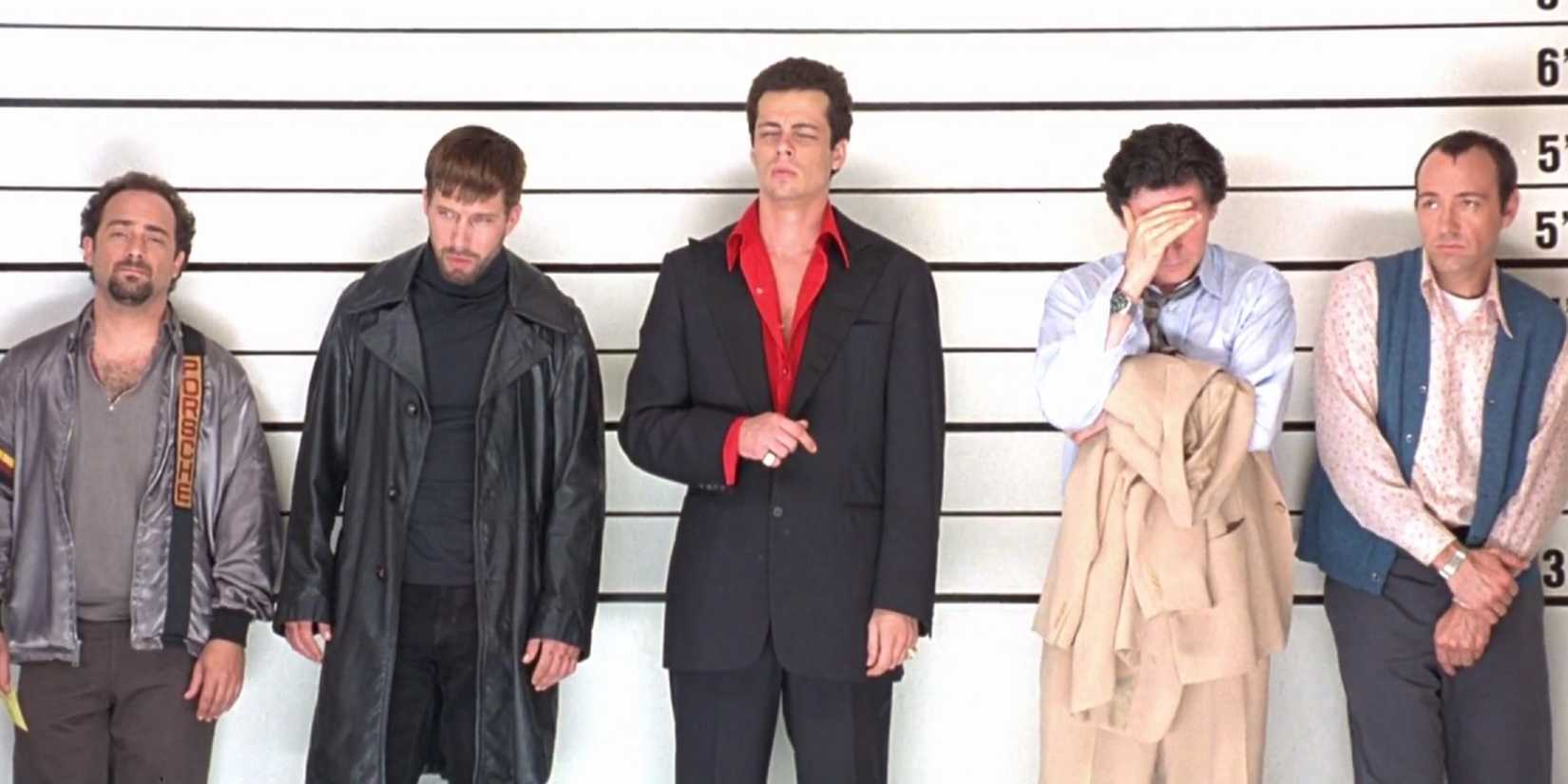
Many try to hyperbolize the weight of a shocking twist, but in a time before spoilers could go viral, no twist shocked the world quite like that of The Usual Suspects. Directed by Bryan Singer and written by Christopher McQuarrie, it has cemented itself at the peak of crime thrillers. Following the aftermath of a deadly, explosive shootout on a docked ship in San Pedro harbor, the police are left with only one physically disabled survivor: a small-time con man, Roger “Verbal” Kint (Kevin Spacey). He’s interrogated by U.S. Customs Agent Dave Kujan (Chazz Palminteri) and recounts a convoluted story detailing how he and four other high-profile criminals came together under a legendary, ruthless, and nearly mythical crime lord named Keyser Söze.
The Usual Suspects is an example of the unreliable narrator device executed perfectly by exploring the story through Verbal’s perspective until he walks out of the interrogation room, and your jaw is left on the floor. Through meticulous foreshadowing and plotting, the intricate mystery actually rewards multiple viewings. The film is less about the crime itself and more about the psychological battle of wits between Verbal and Kujan. Spacey may have won an Oscar for his part, but the entire ensemble made the film as iconic as it has become.
You must be logged in to post a comment Login