Entertainment
10 Dystopian Movies That Are Perfect From the First Scene to the Last

Dystopian movies are a particularly potent and popular subset of science fiction cinema. That may be because they’re becoming increasingly reflective of our current reality or simply due to our own morbid fascination with our inevitable decline and demise. Either way, there are lots of incredible, and incredibly depressing, dystopias that have been depicted in movies, and some of those are pretty much perfect from beginning to end.
Perfection in film is as unlikely as the notion that humanity will ever create a true utopia, but that doesn’t mean there aren’t films that we’re willing to ignore the individual faults of in favor of what they provide for us. Like deluded citizens in a technoir police state, we buy into the reality of these dystopian films hard. Whether you choose the red pill for these movies or not, we’d still like to argue that these dystopian movies are perfect from their first scene to their last.
‘Metropolis’ (1927)

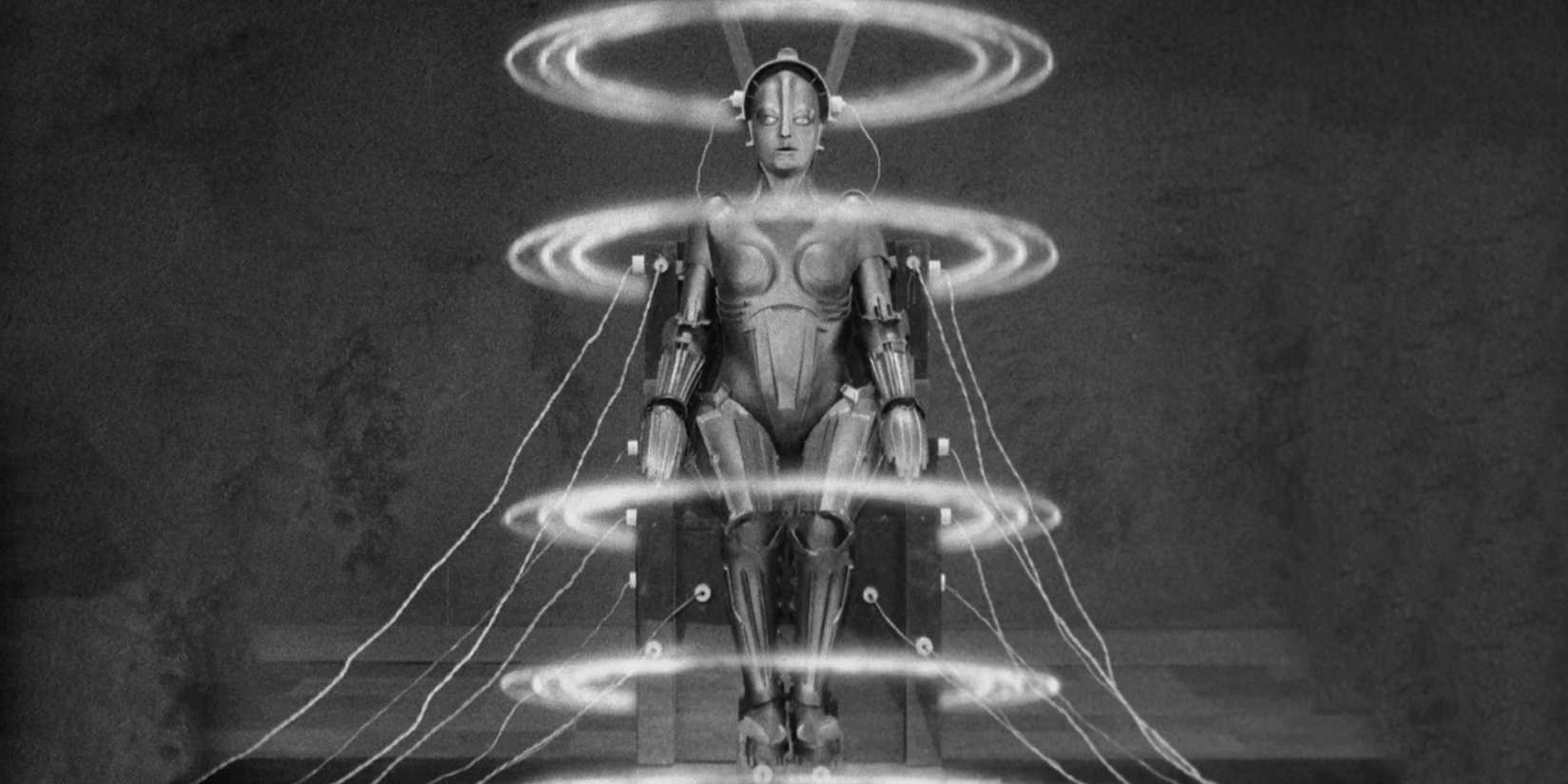
Fritz Lang‘s staggering silent sci-fi classic Metropolis basically set the blueprint for all future dystopian films to follow. Its expressionistic vision of a mechanized society has influenced the designs of so many subsequent sci-fi films, including several on this list, as have the mechanics of its plot surrounding economic disparity and class divide. Lang was influenced by the skyscrapers of New York and the industrialization of World War I in creating his depiction of a dystopian future.
In the titular future city, the wealthy elite reside in their steel towers while the workers toil away in the bowels of the city. The conflict between the classes is personified by the personal battle between city master Fredersen (Alfred Abel) and his son Freder (Gustav Frohlich), who rebels against his father in an attempt to bring unity to the city. There’s also a deranged inventor who creates a humanoid robot as a means to bring about the destruction of the city. The depiction of the machine-human Maria (Brigitte Helm) was one of the earliest ever robots on film, and its legacy has extended far beyond into the future.
‘A Clockwork Orange’ (1971)

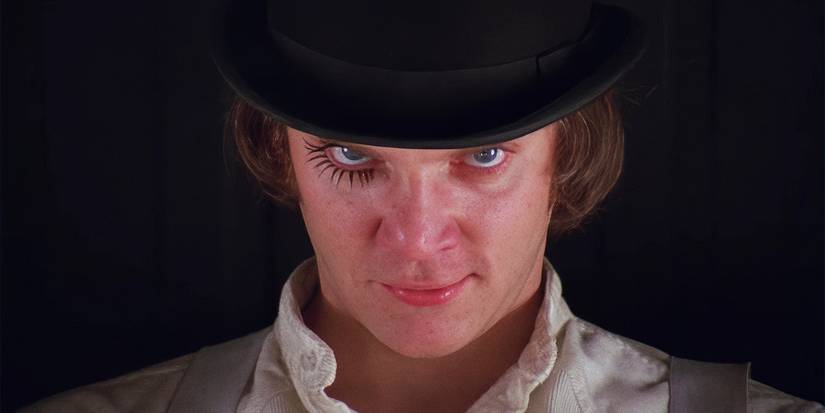
Stanley Kubrick‘s ultraviolent vision of a future Britain in A Clockwork Orange will never be mistaken for anything resembling reality. The stylized aesthetic, complete with iconic costume design and fictional slang taken directly from the novel by Anthony Burgess, is a world unto itself, but still one that has a lot to say about our own. It’s a visceral depiction of a violent youth in rebellion within a totalitarian state that only knows how to respond with its own brand of violent therapy to recondition him.
Alex DeLarge (Malcolm McDowell) leads a gang of violent youths known as Droogs. After a series of violent physical and sexual assaults, Alex is eventually caught and imprisoned. In prison, he’s subjected to a form of drastic conversion therapy designed to make his violent impulses repulsive. A Clockwork Orange was controversial upon its release, and it still has a fair amount of potency even decades later. Even for fans of dystopian cinema, it can be a bit hard to stomach, but it’s still a vital piece of cinema made by one of the greatest directors of all time.
‘Blade Runner’ (1982)

If there’s any depiction of a dystopian future that could be considered the most quintessential, Ridley Scott‘s Blade Runner would probably be it. The film went from a box office bomb to a bona fide cult classic and has since been canonized as a sci-fi masterpiece thanks to its iconic visuals. The rain-soaked tech noir vision of the future meshes perfectly with the hard-boiled detective story that has been partially transplanted from Philip K. Dick‘s Do Androids Dream of Electric Sheep? Blade Runner is a totemic cyberpunk movie, and its influence on the sci-fi genre at large cannot be overstated.
Rick Deckard (Harrison Ford) is a former Los Angeles police officer tracking down rogue replicants, androids built for labor and combat. He’s called back into duty when four replicants, led by the violent Roy Batty (Rutger Hauer), run amok in the city. His investigation also brings him into contact with the advanced replicant Rachael (Sean Young), with whom he develops a connection that forces him to question his humanity. Questions of what constitutes identity and consciousness lie under the slick surface of Blade Runner, which operates efficiently on its own vibes but has deeper themes for those who want to look a little closer.
‘Brazil’ (1985)

Terry Gilliam‘s satirical sci-fi film Brazil is probably the funniest depiction of an Orwellian dystopia ever put on film. It’s a dystopia where a man can be tortured to death thanks to clerical error, which is frankly a far more realistic depiction of a totalitarian government than those that are depicted as operating with lethal efficiency. Brazil is filled with all the fanciful flourishes that make Gilliam such an idiosyncratic filmmaker and serves as a comedic counterpart to George Orwell’s 1984, which had just had a major adaptation the year prior.
Sam Lowry (Jonathan Pryce) lives in a bureaucratic nightmare while dreaming of being a knight in shining armor who saves a beautiful woman. When Sam sees the woman of his dreams, his infatuation puts him in collaboration with the resistance and at odds with the powerful Ministry. Brazil is a dark slice of political satire made decadent with a retrofuturistic production design that’s equal parts brutalist and absurdist. Alongside Blade Runner, the visuals of Brazil inspired many further depictions of the future, especially those with a bend towards black comedy.
‘RoboCop’ (1987)

RoboCop is the best film version of the comic book series Judge Dredd that has ever been made. Despite not being an official adaptation in any capacity, and the fact that there are two wildly different movies actually based on the comics, Paul Verhoeven‘s ultraviolent satire shares a lot of DNA with the 2000 AD character. Both focus on a law enforcement officer who deals out bloody justice in a crime-ridden future, taking potshots at American consumerism, corporate culture, and police privatization.
In the future, Old Detroit is a hellscape that megacorporation Omni Consumer Products has plans to pave over to make way for the new Delta City. They already control the police, and their next step is to upgrade their officers into something more destructive and programmable. Enter recently murdered police officer Alex Murphy (Peter Weller), who’s turned into the chrome-plated cop of the future. RoboCop is just as absurdist as Brazil, but Verhoeven is far more explicit than Gilliam, filling the frame with a lot of flesh and blood, but never without purpose. RoboCop is an indictment of Reaganomics that takes it to a sci-fi extreme.
‘They Live’ (1987)

The same year that Verhoeven was applying an outsider’s perspective to American politics with his sci-fi dystopia, John Carpenter was doing the same with his homegrown anger and disillusionment. They Live is yet another film that takes very specific aim at Reagan-era policies, but still hits the bullseye today with its satire. In They Live, the extra-terrestrials have already landed and taken control, and most of humanity doesn’t even know or has already bent the knee. It’s a blunt and brutally funny satire that only Carpenter could make.
Nada (Roddy Piper) drifts into town looking for work, finding a home at a camp where he also becomes aware of a secretive underground that’s also manufacturing sunglasses. Those glasses give Nada an unfiltered view of the world that surrounds him, discovering a race of bug-eyed aliens that live among humans, as well as the propaganda that hides under everyday advertisements. Carpenter isn’t dealing with subtlety here, but his bluntness is part of what makes They Live so effective, and why it feels even more vital today.
‘Akira’ (1988)

Akira is an iconic action anime that had a huge impact on the medium’s proliferation internationally and especially in the United States. It was the first major anime to find success in the Western world, and has been a continual influence on it since. It’s also a totemic cyberpunk film with one of the most indelible depictions of a dystopia in any medium. Directed by Katsuhiro Otomo and based on his manga, Akira ranks among the greatest in just about every genre, format and style it touches.
In 2019, Neo-Tokyo is a military-controlled future city built on top of the remains of its namesake city, which was destroyed by the titular character, a powerful psychic. Kaneda, the leader of a motorcycle gang, joins a government resistance group after his childhood friend Tetsuo becomes a test subject in a secret government lab for those with psychic abilities. There’s a lot of rather dense worldbuilding that’s efficiently executed in the film, which speeds along thanks to some kinetic action scenes. Akira has a well-earned legacy in all its sci-fi subgenres.
‘The Matrix’ (1999)

Akira is one of several anime that were foundational influences on The Matrix. The pop-cultural behemoth of a sci-fi action movie aestheticized the cyberpunk attitude and dystopian themes of movies like Ghost in the Shell through film noir and a heavy dose of Philosophy 101. Even though its effects and style were mimicked in Hollywood movies for almost a decade, nothing ever came quite as close to recapturing the first film’s innovation or impact, not even the sequels, which became far more bombastic and overloaded with philosophy student debates as dialogue.
The arc of Neo (Keanu Reeves), the hacker messiah, is definitely enthralling, with a lot of Christian allegory and Buddhist philosophy overlaying a kind of superhero origin story. But the most interesting aspect of the film and its dystopia is presented in the supporting character Cypher (Joe Pantoliano), who betrays his human compatriots in exchange for getting plugged back into the simulated world. The Matrix raises a thousand interesting questions but hardly scratches the surface on most of them, but that’s part of what makes it such a fun sci-fi film to overanalyze and dissect.
‘Children of Men’ (2006)

Blah blah prescient film. Yadda yadda still reflects today. What has been written ad nauseam about all these dystopian movies online and in the preceding paragraphs also applies to Children of Men. This writer is guilty of typing out a bunch of pretentious nonsense about the values of Alfonso Cuarón‘s dystopian masterpiece on multiple occasions. There’s no need to add more superlatives to a film that has already received a lot of acclaim, except to add that it also rips as an action movie.
Similar to The Battle of Algiers or the more recent One Battle After Another, the film cleverly disguises its action setpieces through the lens of civil unrest and violent conflict. That’s pretentious film fanatic for “its action you’ll feel kind of weird for enjoying.” It’s especially unnerving when you can apply its images to any number of current events, as could they also be mistaken for images of events from decades past. Children of Men is also a sad observation of the human capacity for violence and hate, but it’s also got action scenes that’ll knock you on your ass.
‘WALL-E’ (2008)

At first glance, WALL-E doesn’t seem as prescient as some other dystopian films. It seems like it was making some very obvious observations about over-consumption, environmental preservation, and human reliance on technology. Except those obvious observations were being made about very different things in 2008. The Buy-N-Large corporation was once a satire of big box stores like Walmart, which has since been superseded by Amazon. Humans’ reliance on technology is an old theme in sci-fi, but the screen addiction shown in WALL-E is shockingly accurate for a film released only one year after the first iPhone.
WALL-E offers a very unsettling possible future for humanity, but it’s all wrapped around a love story between two robots that’s so charming and adorable it’ll leave you smiling through the mountains of trash. WALL-E is the only robot left on Earth, dutifully cleaning up humanity’s mess while pining for someone to hold metal hands with. That’s when the advanced robot EVE lands, and an intergalactic romance and adventure begins. WALL-E is Stanton’s best film, Pixar’s best film, and the best film to feature an anal-retentive cleaning robot named MO.
You must be logged in to post a comment Login