Entertainment
10 Fantasy Books With the Greatest Magic Systems

Magic is a key part of any fantasy story, and a hallmark of the genre. Many fantasy stories, whether they be movies, video games, or books, feature magic, which is handled in a variety of different ways. In literature, these are divided into two categories: soft magic systems are systems that are looser, that have few rules, and that don’t have a clear explanation. On the other hand, hard magic systems have extensive rules and technicalities, as well as a serious cost for using them.
Both have their places in both high and low fantasy stories, and both can be equally enjoyable, with distinct pros and cons. In recent years, magic has been something that many fantasy authors have added to their work, not just to liven up the world, but also to give something complex to add to the lore. Whichever category they belong to, these are the best magic systems in fantasy novels.
‘The Broken Eye’ (2014)


The Broken Eye is the third book in the Lightbringer novels. Like many of the other books on this list, it may not be the first book in the series, but it is the one where the clearest explanation of the magic system can be found. In the world of Lightbringer, magic works with the use of light. It actually intersects with real-world physics a bit, too. To cast spells, mages known as drafters pull specific wavelengths of light from the air, shaping it into a physical substance called luxin.
However, the drafter must be able to see, or must be near the specific wavelength they want. For example, they’d need to be near blue wavelengths of light in order to make blue luxin. The colour of the luxin determines its specific effect: red is flammable, orange is corrosive, blue shatters like glass, and so on. For every spell cast, a physical substance begins to fill the eyes and mind of a drafter; once their eyes are full, they are blinded, losing their sanity and becoming a wight. This magic system is truly singular — there’s just nothing else like it out there in the world of fantasy. It’s also great because the cost of overuse is a fate worse than death, which makes the consequences have so much more weight.
‘Jonathan Strange & Mr. Norrell’ (2004)

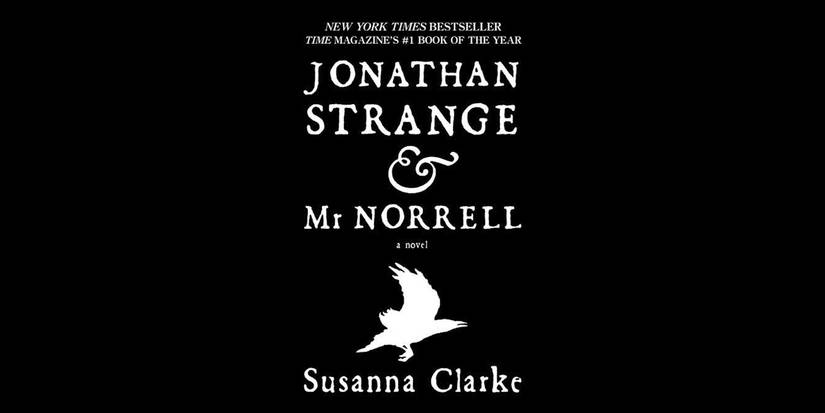
Jonathan Strange & Mr. Norrell is set in an alternate version of the Napoleonic Era. In this alternate world, magic is well-known to exist, but its use is heavily frowned upon, and the subject is taboo in most social circles. The few that do use it are seen as social pariahs, and are often shunned from most gatherings. Nonetheless, magic is a respectable practice. It acts as more of an extension of science and physics rather than a supernatural force, meaning there are set laws and dedicated scholars for it.
If one wants to be able to harness magical abilities, one must read about it in books penned by other magicians. Even then, they must be performed exactly as documented, or there is a serious risk of causing unintentional death or destruction. As a result, it is always being experimented on, in the same way that humans conduct tests when a new chemical compound is discovered. Much of the process is trial and error, and could possibly have explosive results if something goes wrong. The magical energy is tied directly to England itself, meaning casting spells requires rituals, solving complicated equations, and sometimes, manipulating or influencing the environment somehow. This magic system actually feels realistic, because if it were real, it would probably be this academic.
‘Shadow and Bone’ (2012)

Shadow and Bone is the first book in the trilogy of the same name. The debut novel of Leigh Bardugo, this trilogy takes place in her shared universe known as the Grishaverse. Magic in this series isn’t actually referred to as such; instead, it’s called the Small Science, which is only accessible to a few gifted individuals. What’s important to note about the Small Science is that nothing can be conjured out of thin air; every spell must be cast by manipulating existing elements.
Gifted magic users are divided into three groups: Etherealki, Materialki, and Corporalki, which deal with the elements, inanimate objects, and living beings, respectively. Each of these groups is then divided into certain subgroups. For example, the Etherealki also include Squallers, who manipulate the air, and Summoners, who manipulate light and shadow. However, a magic user, known as a Grisha, must have a natural affinity towards whatever they can manipulate in order to use it. This magic system isn’t super unique, but it’s singular enough to warrant particular attention, especially with how it’s treated as a science rather than a supernatural ability.
‘Blood of Elves’ (1994)
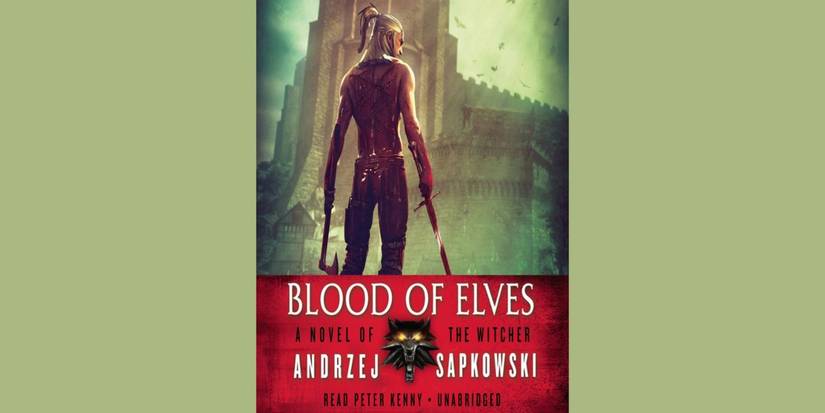
Blood of Elves is the first full-length novel in Andrzej Sapkowski‘s dark fantasy Witcher saga. Previously, the books consisted of short story collections all involving the same central character, Geralt of Rivia. While the magic system is briefly explained in these stories, this first novel does a better job of showing people the technical aspects of it. There are actually two systems of magic in this world, which are only accessible to specific people.
The first magic system is Witcher magic, which is something that Geralt of Rivia uses fairly often. Primarily, witchers use these spells, but they can technically be used by anyone, since they’re fairly simple. There are only a handful of them, but they are invoked by drawing a specific rune in the air. Usually, it causes some basic effect, like starting a fire. However, magic is also accessible to sorcerers and witches, who have an entirely different form of magic at their disposal. These people cannot generate magic internally; rather, they act as a conduit of the world’s primal elements: earth, fire, air, and water. However, magic is very difficult to control, so those who know it use it cautiously. While the magic systems in this series aren’t complex or even that original, they’re simple and easy to remember, and fit in with the world perfectly.
‘Forge of Darkness’ (2012)

The Malazan series is constantly growing, currently consisting of well over 20 novels, each belonging to certain subseries. Magic is a prevalent aspect of all of them, but it’s in the prequel trilogy where Steven Erikson really delves into the meat and potatoes of it. In particular, Forge of Darkness does a good job of explaining how exactly it works. In order to cast a spell, a mage must first open a spiritual conduit to The Warrens, a group of alternate dimensions, and a reservoir of pure magical energy located at the edge of the universe.
Once this conduit is established, the mage can then pull through the raw energy and shape it to their will, turning it into fireballs, healing spells, lightning bolts, or pretty much anything they want. However, nothing is free, and magic takes an enormous toll on the user. It can short out one’s nervous system if used too frequently, cause long-lasting, permanent physical or psychological damage, and, in some extreme cases, can even cause mages to explode. As such, it is not used lightly. It’s such a great magic system because it has all the hallmarks of one. It has clear boundaries, rigid rules, and a cost to everything.
‘The Wise Man’s Fear’ (2011)

The Wise Man’s Fear is the second full-length novel in Patrick Rothfuss‘ unfinished trilogy, The Kingkiller Chronicle. The story follows Kvothe, an exceptionally gifted individual, as he recounts his past to a Chronicler. Kvothe begins his studies at the university in the first book, where he learns to study magic. However, things get much more in-depth in this sequel. In this universe, magic is actually an exceptionally difficult thing to master.
The most common form of magic is sympathy. What this means is that the mage must establish a link between two different objects; the closer they are in material, size, or shape, the easier it is. Whatever one does to one object, the other will follow. Think of it like a voodoo doll, but for random objects. There’s also naming, which is an archaic and rare form of magic that involves invoking the unknown true name of things, such as the wind (hence why the first book is titled The Name of the Wind), which allows users to bend it to their will. What’s most interesting about this magic system is that it feels like readers are learning about it along with Kvothe, and it continues to fascinate.
‘The Colour of Magic’ (1983)

The Colour of Magic is the first entry in the Discworld saga, and the first in the Wizards sub-series, meaning it takes an extensive look at how magic works in this weird and wonderful world. At heart, Discworld is a parody series, which satirizes classic fantasy tropes to an absurd degree, which is why it’s so funny and well-loved. Appropriately, the magic system is cumbersome and ridiculous. Although wizards exist in this world, most of them discourage the use of magic and rarely practice it because it’s highly volatile and unpredictable.
Magic is compared to loading a musket: it’s a long, arduous process to get everything ready, and when it is ready, the payoff is loud, messy, and highly inaccurate. Wizards prepare spells by either performing rituals or solving a complex series of mathematical and scientific equations in their head. Once that multi-step process is done, all they need to do is “pull the trigger,” but it’s a one-time use kind of thing. After the spell is cast, they have to begin the process all over again. It’s silly but entertaining and unique, which perfectly fits into its established universe.
‘Children of Blood and Bone’ (2018)

Children of Blood and Bone is set in a world resembling pre-colonial West Africa, where magic has disappeared under an oppressive regime. The only people who can perform magic are the race known as divîners, who are recognizable due to their signature white hair. Upon reaching the age of 13, the divîners experience a magical awakening and discover which of the ten clans they belong to.
The ten clans deal in exclusive types of magic. For example, there are the Amukè (Valers), who tame and control the local wildlife. But there are also more elemental clans like the Omi (Tidecallers), who create and manipulate water. In order to actually cast a spell, the incantation must be spoken in the Yoruba language, which is based on the real-life language of the same name. While it’s not as complex as other magic systems, with it being a YA book and all, it’s still delightfully fun and interesting in its own regard. Not only are there basic elemental powers, but there are also things like healing, mind control, and necromancy based solely on one’s clan.
‘The Shadow Rising’ (1992)

The Shadow Rising is the fourth book in The Wheel of Time saga by the late Robert Jordan. It’s one of the best books in the series, and a personal favourite for a lot of fans, but it also happens to be one where the technical aspects of the magic system are elaborated upon. In this series, magic is derived from something called the One Power, which has two halves: saidar, the female half, and saidin, the male half. Those who can access it are known as Channellers. While this ability is more common in women, men are capable of becoming more powerful. However, saidin has also been tainted by the Dark One, meaning any male Channeller is doomed to lose his mind before long.
Once a Channeller has accessed the One Power, they are able to weave threads of fire, air, earth, water, or spirit to cast spells. Combining the threads produces different effects like lightning bolts or healing. Magic isn’t free, though — it comes at a cost. It is directly tied to one’s energy level, meaning it isn’t unheard of for Channellers to die of exhaustion after using their magic for a prolonged period of time. As such, it must be used with caution, especially since it can be so destructive. While it isn’t the most original magical system, Jordan spent a lot of time working through the technical aspects of it. As a result, the rules of it are pretty rigid. However, new things are constantly being learned about it throughout the series, so the books manage to keep it interesting.
‘Rhythm of War’ (2020)

Rhythm of War is the fourth installment of Brandon Sanderson‘s The Stormlight Archive series, which is, in itself, part of his shared literary universe known as the Cosmere. Each series or stand-alone in the Cosmere is set on its own planet with its own magic system. Rhythm of War is set on the world of Roshar, which is a barren planet plagued by storms of apocalyptic strength called highstorms. Other Stormlight books are better and do feature the same magic, but Rhythm of War is the one that dives deepest into it. There are actually a couple of different magic systems in this series, but the one that’s elaborated on the most is called Surgebinding.
Surgebinding starts with spiritual creatures called spren, who represent various aspects of nature and emotion, such as fear, flame, and anger. Certain types of spren, such as ashspren or mistspren, are attracted to individuals who carry a lot of trauma, eventually forming what’s called a Nahel bond with them. Once the bond is formed, the person gains access to two out of ten surges, with the two depending on what kind of spren bonded them. For example, if one bonds a liespren, they would be able to create illusions and transform inanimate objects into other objects. Whereas if one bonds an inkspren, they would also be able to transform objects, but instead of creating illusions, they’re able to teleport between dimensions. There are ten possible types of Nahel bonds, meaning there are ten orders of Surgebinders, who become known as the Knights Radiant. Magic itself is fuelled by Stormlight, an ethereal essence which is pulled into gemstones in highstorms and stored for later use. It’s a really elaborate magic system with a lot of moving parts to it, but it’s so infinitely interesting.
You must be logged in to post a comment Login