Entertainment
10 Fantasy Movies That Will Keep You Hooked From Start to Finish

A movie can have kingdoms, prophecies, monsters, curses, gods, ghosts, impossible landscapes, swords, spells, and lore stacked to the ceiling, and none of it matters if the story ever starts pausing to show off instead of pulling you forward. The best fantasy movies never make that mistake. They understand that wonder is strongest when it is attached to movement.
That is why the Lord of the Rings franchise or Harry Potter franchise became what they did. And those are the kind of movies this list is about. Not just the best fantasy movies in some broad museum sense. I mean the ones that grab hold early and keep tightening.
10
‘Stardust’ (2007)

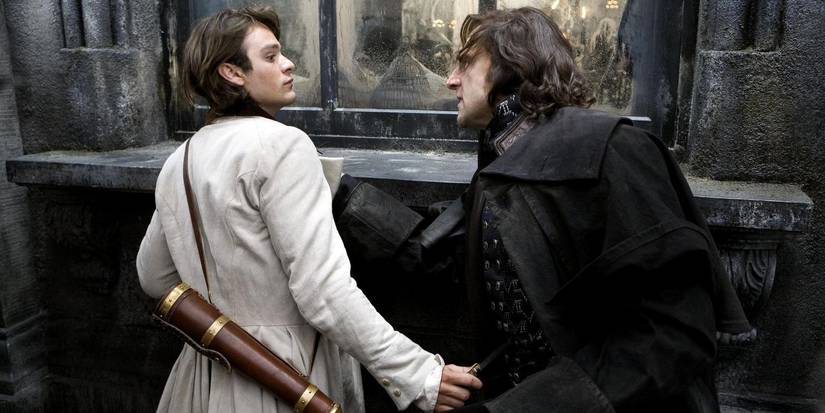
I will always go to bat for Stardust because it understands something a lot of fantasy forgets: charm is not softness. Charm can be propulsion. This movie moves because it keeps turning every fairy-tale idea into a story problem with actual momentum behind it. Tristan (Charlie Cox) goes searching for a fallen star for the dumbest, most human reason possible: romantic humiliation and the need to prove himself. That is a great start. Then the movie makes the star a woman, gives her opinions, puts witches after her, puts dead royal sons in the sidelines mocking everything, and suddenly the whole thing has comic velocity.
That is why it stays so watchable. Yvaine (Claire Danes) keeps changing the emotional center of the story because once Tristan starts actually knowing her, the original goal becomes embarrassing. Lamia (Michelle Pfeiffer), meanwhile, comes in with exactly the right amount of wicked glamour. Every time the witches get involved, the movie sharpens. And then Captain Shakespeare (Robert De Niro) shows up and the film somehow gets even more lovable without losing pace. Stardust works because every fantasy element is there to complicate love, survival, identity, or succession. Nothing just sits there looking whimsical.
9
‘The Northman’ (2022)

This movie hooks because it does not flirt with myth. It commits to it at full intensity. From the opening, The Northman tells you that this is not going to be one of those fantasy-adjacent epics where revenge sits politely in the background while the movie arranges prestige imagery around it. And then, what makes it work from start to finish is that revenge never becomes abstract. The movie keeps dragging it through new emotional terrain.
First there is the boy seeing his father die and his mother taken. Then there is the years-later transformation into a man who has built his entire identity around returning to that moment and answering it with blood. Then the film starts complicating him. Amleth (Alexander Skarsgård) is shaped by murder, exile, prophecy, and a vow so absolute. Olga (Anya Taylor-Joy) changes the energy. The farm changes the energy. The truth about his mother changes everything because revenge stops being a clear inheritance story and becomes something much nastier. Suddenly Amleth is not just avenging purity and gets caught in a lineage of corruption, appetite, and violence that predates him.
8
‘Pan’s Labyrinth’ (2006)

Pan’s Labyrinth follows Ofelia (Ivana Baquero) moving through tasks, creatures, and riddles while fascist violence is sitting in the next room, at the dinner table, in the forest, in the face of Captain Vidal (Sergi López). Every fantasy beat matters more because it is positioned against cruelty that is painfully human. What makes the movie impossible to shake is that the real-world thread stays just as gripping. Vidal, just like most monsters of fantasy, does not belong to fantasy at all. He belongs to power, patriarchy, and fascism in their ugliest plain form. The film keeps cutting between worlds and both worlds keep tightening. That is why it never lets go.
And it never loses that grip. The toad sequence is strange and gross and immediately tells you this underworld runs on rules, not soft dream logic. Then the Pale Man scene arrives and basically brands itself into your brain forever. Ofelia is such a strong center too because she behaves like a child with imagination, fear, and will. You believe that she wants to be brave and also that she is terrified.
7
‘The Green Knight’ (2021)

I love this movie because it hooks by refusing to explain away its strangeness. It starts with a challenge that sounds simple enough. Gawain (Dev Patel) takes the Green Knight’s blow and must seek him out a year later to receive one in return and then lets that promise haunt everything afterward. The genius of the movie is that it keeps turning the journey into a test not just of bravery, but of self-concept.
Who does Gawain think he is? Who is he pretending to be? What part of knighthood is courage and what part is theater?
That question gives every episode on the road weight. The scavengers matter. The ghost matters. The lord’s castle matters. The sash matters. The giants matter. None of it feels like random fantasy decoration because every encounter presses on Gawain’s insecurity from a different angle.
6
‘The Princess Bride’ (1987)

Almost 40 years later, The Princess Bride still keeps people hooked. The movie circles the fact that sincerity and wit can be romantic, funny, dangerous, ridiculous, and surprisingly moving without ever feeling unstable. The setup is perfect. Buttercup (Robin Wright) and Westley (Cary Elwes) fall in love in the most storybook way possible, Westley disappears, Buttercup is pushed toward a political marriage, and then suddenly the film becomes a kidnapping tale, a sword-fight comedy, a revenge story, a miracle story, and a fairy tale that keeps one-upping itself without losing shape.
Every character helps. Inigo’s (Mandy Patinkin) cleanest emotional motor with his six fingers makes every scene with him gain force. Fezzik (André the Giant) adds warmth. Vizzini (Wallace Shawn) adds manic comic pressure. Humperdinck (Chris Sarandon) keeps the stakes mean. Miracle Max (Billy Crystal) shows up late and somehow the movie gets bigger without getting baggier. That is hard to do. And the reason this works on almost everyone is that the movie never acts above its own pleasure. It wants you delighted. It wants you invested. It wants you laughing and then suddenly surprisingly touched. That confidence is what makes the whole thing fly.
5
‘Crouching Tiger, Hidden Dragon’ (2000)

Crouching Tiger, Hidden Dragon hooks with longing. Not vague beauty. Longing. The first theft of the Green Destiny opens a whole chain of desire, discipline, resentment, and fate that keeps tightening until the movie becomes emotionally unstoppable. You have Li Mu Bai (Chow Yun-fat) carrying years of restraint. You have Shu Lien (Michelle Yeoh) carrying those same years from the other side. You have Jen (Zhang Ziyi) exploding into the story with talent, arrogance, hunger, and the refusal to accept the cage her life is supposed to become.
That triangle of emotional energy is why every action scene matters. The fights are gorgeous, yes, but they are never empty grace notes. Jen’s rooftop flight is thrilling as she is showing off power she has not emotionally earned control over yet. Her duel with Shu Lien is thrilling because it is basically discipline and fury arguing with weapons. The desert flashback with Lo (Chang Chen) changes the whole movie because suddenly Jen is no longer just reckless disruption. You understand the appetite underneath her rebellion. And then the ending comes and the movie leaves you with that ache only great fantasy can deliver: the feeling that beauty, freedom, and tragedy were all braided together from the beginning.
4
‘Spirited Away’ (2001)
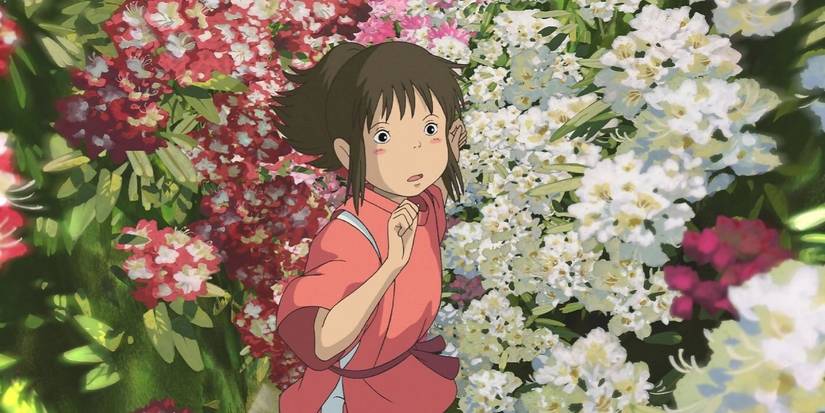
Spirited Away grabs hold the second Chihiro (Rumi Hiiragi) enters a world that is operating on rules she does not understand and adults around her are already being punished for greed and stupidity. That is a perfect fantasy hook. Even viewers don’t understand or can expect what would happen next. And what makes it great is that the film keeps deepening rather than simply escalating. Every new element pulls you further in. Haku (Miyu Irino). Yubaba (Mari Natsuki). The bathhouse. No-Face. The stink spirit. The train ride. Kamaji. Zeniba. The reason the movie never loosens its hold is that each of those things changes Chihiro. She is constantly working, adapting, observing, and becoming a person with more steadiness than the frightened child we met at the start. That growth gives the fantasy world emotional structure.
And what I love most is that the movie never behaves as though mystery needs to be solved into flatness. The world stays strange. Spirits arrive with their own textures and moods. The train sequence is one of the most hypnotic passages in fantasy because it slows down without losing grip at all. You are still locked in. Maybe even more than before.
3
‘The Fellowship of the Ring’ (2001)

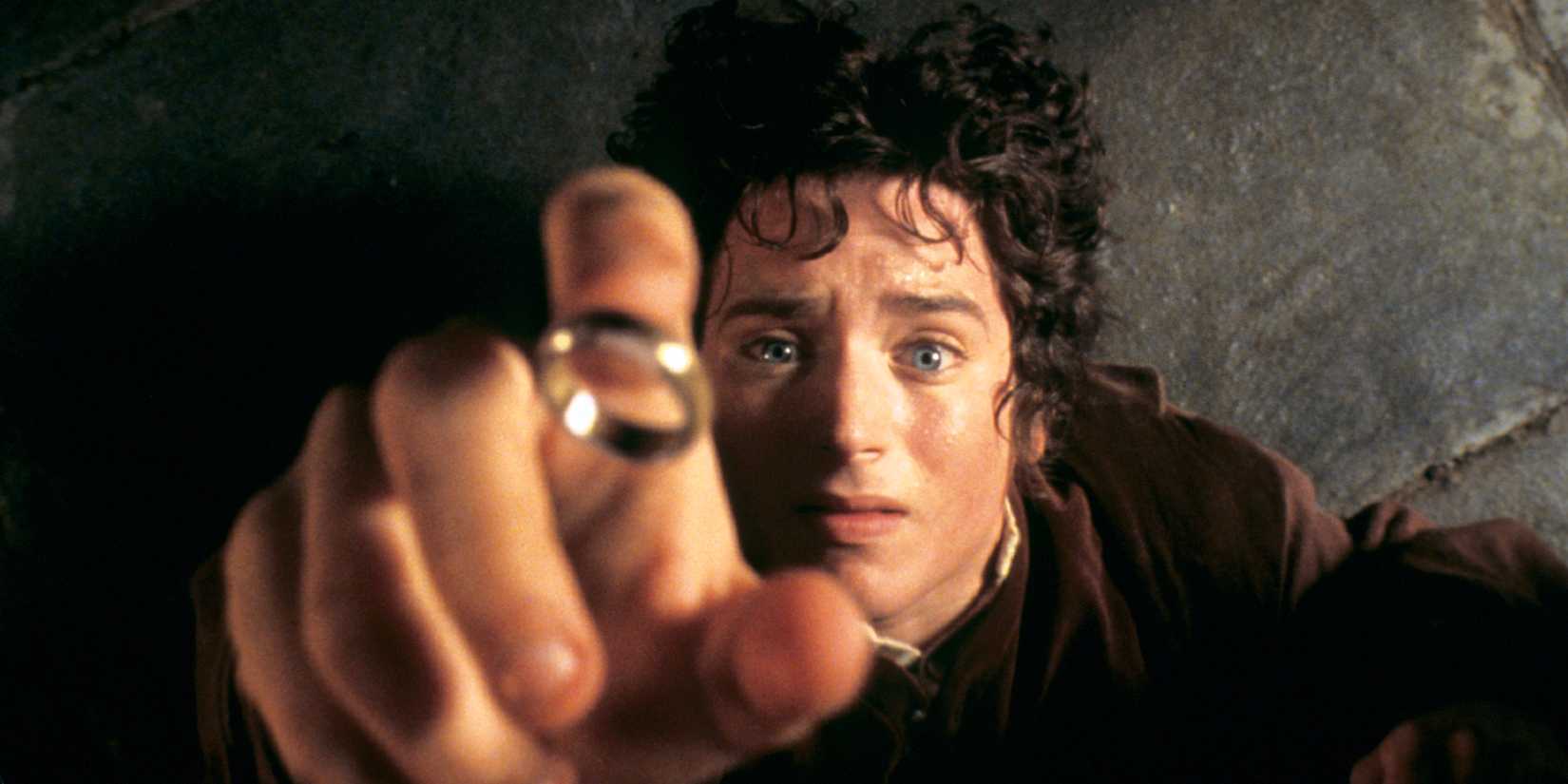
The Fellowship of the Ring hooks because it gets the order of things exactly right. First it makes the Shire feel worth loving. Then it threatens it. That is why everything after works. Frodo (Elijah Wood) is asked to carry a ring that immediately begins bending the atmosphere around him. And then once the journey starts, the film just keeps feeding you reasons to stay in. Bree, Weathertop, Rivendell, Moria, Lothlórien, Amon Hen — every stop changes the emotional shape of the story.
The Fellowship itself is the key. Aragorn (Viggo Mortensen), Legolas (Orlando Bloom), Gimli (John Rhys-Davies), Boromir (Sean Bean), Gandalf (Ian McKellen), Merry (Dominic Monaghan), Pippin (Billy Boyd), Sam (Sean Astin), the film keeps making the group dynamic richer, so when danger comes you are not just responding to spectacle. You are responding to people whose strengths, weaknesses, loyalties, and temptations matter. Boromir is a huge part of why the movie has so much pull late. His weakness is not random. The ring has been pressing on exactly the wound he carries, and when he breaks and then tries to answer that failure with courage, the film suddenly becomes devastating. That is why The Fellowship of the Ring is not just great setup but a full-blown emotional journey with its own heartbreak. And it’s only the beginning of a trilogy and then prequels.
2
‘Mad Max: Fury Road’ (2015)
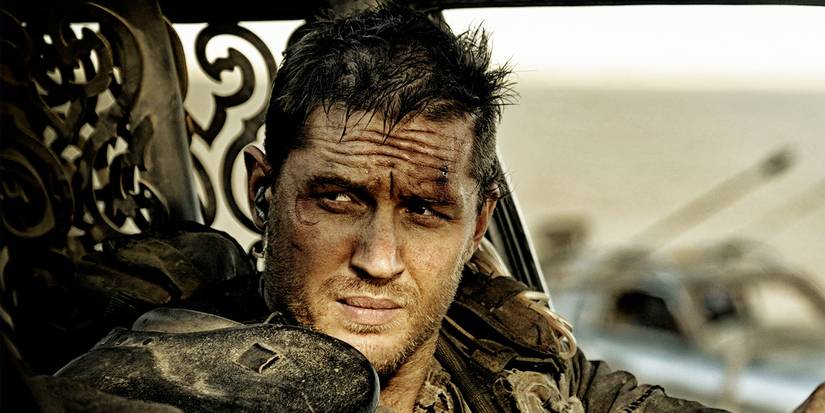
Yes, it belongs here. Mad Max: Fury Road is a fantasy by force of world, myth, and pure invented reality, and it hooks harder than almost anything. This movie is basically one long chase. Every stretch of movement introduces a new problem, a new emotional pressure, or a new visual idea. It is perhaps the best revival of a franchise in the past two decades. One of the reasons it stays addictive is its characters and on top of which are Furiosa (Charlize Theron) and Max (Tom Hardy).
Once you understand what Furiosa is trying to do, not just flee, but take these women out of a life of ownership and rape and turn escape into possibility, the movie gains a heart hot enough to power all the spectacle. Max, on the other hand, gets dragged into purpose rather than striding nobly toward it. That reluctance helps. It lets Furiosa become the film’s blazing center. You have to watch it to know what it does.
1
‘Pirates of the Caribbean: The Curse of the Black Pearl’ (2003)

This is number one because it may be the most entertaining fantasy movie of the modern blockbuster era, full stop. It hooks immediately because it starts with atmosphere and mystery the right way: the ship in the fog, the child, the gold medallion, the pirate song hanging in the air before we even fully understand what it means. Then it grows outward with ridiculous confidence. Will (Orlando Bloom) wants Elizabeth (Keira Knightley). Elizabeth wants more than the life she is boxed into. Jack Sparrow (Johnny Depp) enters the frame already operating like he belongs to a better, weirder movie than everyone else and then the film brilliantly becomes his movie without ever losing the others.
That balance is why it never slips. Jack is funny, yes, but he is also slippery in a plot-driving way. Every alliance with him is unstable. Every scene gets better because he is always trying to tilt it. Barbossa (Geoffrey Rush) is the perfect villain. And then there is the pure propulsion of it. Port Royal, Tortuga, the Black Pearl, the island, the mutiny history, the underwater walk, the final duel — the film just keeps delivering without that sag so many blockbusters get after the midpoint. It understands exactly when to give you romance, when to give you comedy, when to reveal the supernatural hand, and when to let a character’s choice matter more than the spectacle around it.
You must be logged in to post a comment Login