Entertainment
10 Forgotten Horror Movies That Are Actually Great, Ranked

There is a special heartbreak reserved for horror movies that should have become permanent fixtures of the genre conversation and somehow did not. Not the truly obscure ones that never got a chance. I mean the ones that did land on people, the ones that made somebody stare at the hallway a little differently, or made night feel more acoustically dangerous, or left one image lodged in the brain for years, and still somehow slipped into that awful category of “you’ve seen that?”
Horror has this problem more than almost any genre. The canon gets sticky. The same titles keep circulating. Meanwhile a second lineage, stranger, sadder, more diseased, more dream-rotted, keeps pulsing underneath it. And the beautiful thing is that these films are not leftovers. They are not “good for what they are.” They are actually great. These ten all deserve far more love than they usually get, and the higher you go on the list, the more serious the robbery starts to feel.
10
‘Dead & Buried’ (1981)


I have such affection for Dead & Buried because it understands that small-town horror should never be cozy. The town should not feel quirky. It should feel off. It should feel like everybody has agreed to keep smiling one beat too long. That is exactly the movie’s strength. It begins almost like a murder mystery dipped in rot, with corpses, strange behavior, and a sheriff trying to understand why the people around him seem locked inside some awful local ritual. The film keeps withholding just enough that your brain starts doing the sick work for it. Something is wrong with the town. Something is wrong with death itself. Something is wrong with the way people keep looking at each other.
And then it just gets meaner. That is what I admire about it. It does not spend all its time playing coy with its own nastiness. Once it starts revealing what kind of nightmare it is, the movie turns into this grotesque little masterpiece of embalmed Americana, a place where normalcy has become taxidermy. The gore matters, yes. The effects matter. But the real reason it sticks is atmosphere. That stiff, smiling, funeral-home atmosphere. You can practically smell varnish and seawater on it. A lot of forgotten horror films are worth checking out. Dead & Buried is better than that. It is a proper sickness.
9
‘The Sentinel’ (1977)

I have a lot of affection for The Sentinel because it is one of those horror films that seems to exist under a curse of tonal instability, and somehow that makes it more upsetting instead of less. On paper, it sounds like familiar apartment-horror territory: a model (Cristina Raines) moves into a Brooklyn brownstone, the building is full of strange tenants, and reality starts decaying around her. Fine. But the film is so aggressively, almost recklessly bizarre in its escalation that it stops feeling like a haunted-building movie and starts feeling like Catholic panic breaking through the walls.
That is the key to it. The movie does not want you comfortable. It does not want to glide you through one clean register of fear. It wants you spiritually harassed. The visions, the grotesques, the old-world damnation imagery, the sense that the apartment is not simply haunted but cosmologically placed, all of that gives it a nasty grandeur that a lot of more polished horror never finds. carries the film with exactly the right fragile alarm, and the whole thing builds toward a theological reveal so huge and blunt that you either laugh nervously or feel a genuine chill. I do both. Every time.
8
‘Messiah of Evil’ (1973)

This is one of the purest nightmare films on the list. Not plot-heavy nightmare. Not “dream logic” in the lazy, critic-buzzword sense. I mean actual nightmare texture. Messiah of Evil drifts into its coastal California town like it is wandering into a place already abandoned by normal human meaning. A woman arrives looking for her missing father, and almost immediately the movie starts surrounding her with faded murals, hollow spaces, eerie locals, and that magnificent, terrible feeling that whatever happened here did not end when it happened. It soaked into the environment.
What makes the film so haunting is that it does not rush to solidify itself. It lets dread spread through architecture and color and silence. The famous set pieces, especially the supermarket and theater sequences, are among the most genuinely oneiric scenes in 1970s horror. They do not rely on noise. They rely on the deep wrongness of being watched by people who do not feel fully alive anymore. And then beneath all that, there is this strange sadness to the movie, almost an end-of-the-world fatigue. Messiah of Evil feels like society has already died and only habit is still walking around in a human shape. That is horror I will always worship.
7
‘The Changeling’ (1980)
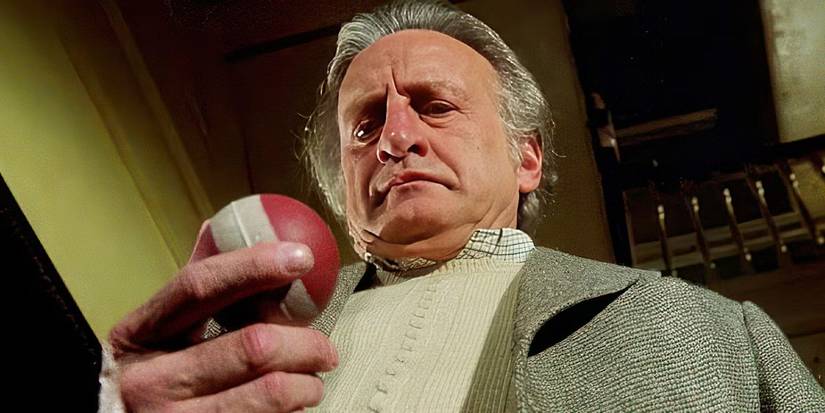
There are haunted-house movies that throw things at the walls and scream until something sticks. Then there is The Changeling, which knows that grief is already a haunting before the ghost does anything. That is why it works so beautifully. John Russell (George C. Scott) is not just sad but hollowed. The film understands that bereavement makes silence louder.
So when he moves into that giant old house, the supernatural elements feel like pressure. A noise. A ball. A space in the house that starts to feel occupied by memory that is not his. And because the movie is patient, every revelation lands harder. The séance is an excellent ghost. The wheelchair. The attic. The tape recorder. That incredible sense that the house is not merely inhabited by an angry spirit but by a buried crime demanding narrative completion. What I love most is that the film never loses the sorrow underneath the mystery. This is not fun haunting. It is a bereaved man being forced into contact with another trapped pain, another life wronged and unfinished. That overlap gives the horror a human ache a lot of ghost stories never find. People remember The Changeling if they know horror, sure. They still do not talk about it enough.
6
‘Pin’ (1988)

Pin is one of those movies I almost do not want to summarize too cleanly, because its power comes from how queasy and psychologically intimate it feels. It is nominally about a brother and sister, a doctor father, emotional damage, and a medical dummy named Pin that becomes a vessel for projection, control, repression, and psychic fracture. But saying that out loud does not really explain the movie’s sickness. Pin is about what happens when childhood loneliness and sexual confusion and parental coldness never get metabolized into anything healthy. They just keep sitting there, mutating in private.
What makes it so great is how little it needs to do to feel unbearable. The dummy is horrible, obviously, but not because the movie treats it like a simple horror object. Pin becomes horrible because of the emotional vacancy around him, because of what people need him to hold. That is what makes the film so much more upsetting than standard killer-doll nonsense. It is not really about the object. It is about the people using that object to survive, dominate, deny, and split themselves. There is something humiliatingly intimate about Pin.
5
‘The Reflecting Skin’ (1990)

This is one of the strangest films on the list and maybe the hardest to pitch to someone who wants neat genre lines. It is horror, yes, though horror refracted through childhood perception so intensely that the whole world starts looking mythic and diseased at once. The Reflecting Skin follows Seth (Jeremy Cooper) who lives in this vast, sun-blasted rural landscape that ought to feel open and innocent, and instead it feels poisoned.
Vampires are whispered about. Adults are broken in half by private despair. Violence enters the world in ways the child mind can sense before it can understand. The result is a movie where dread and innocence are fused so tightly you can barely separate them. And that is why it is great. It gives you spiritual damage. It comes with sickness, sexual terror, wartime trauma, and death. It is forgotten because it is too uncanny to file easily. That is exactly why fans should find it.
4
‘Session 9’ (2001)

This is one of the best examples of a horror movie understanding that place can do half the writing for you if you let it. The abandoned Danvers State Hospital in Session 9 is the movie’s nervous system. Every corridor, every flaked wall, every shaft of dead light feels like it has already heard something it should not have. Then the film puts inside that space a crew of asbestos cleaners, working-class men with financial pressure, emotional strain, ego friction, and just enough unresolved pain to give the building something to feed on. That is all it needs.
And the beauty of Session 9 is how uncertain the possession really is. Is the place haunted? Is one mind cracking under preexisting damage? Is evil something in the tapes, in the architecture, in the history, in the air? The answer is less important than the atmosphere of narrowing psychological space. The session tapes themselves are masterful, not because they overexplain, but because they make identity feel divisible in a way that echoes what the whole film is doing. I love how dry and underplayed the movie is. It never begs for your nerves. It lets dread crystallize slowly until that final note lands, and when it lands, it lands like a whisper from the pit.
3
‘Pontypool’ (2008)

I will defend Pontypool forever because it takes a premise that sounds almost like a joke and turns it into one of the freshest horror films of the 2000s. A virus spreads through language. Not saliva. Not scratches. Language. That is an extraordinary horror idea because language is already intimate. It enters the mouth, the ear, the brain. It is how we organize reality, how we reassure each other, how we control panic. So when Pontypool starts suggesting that speech itself might become the vector of collapse, the movie becomes terrifying in a way that bypasses ordinary zombie mechanics entirely.
And then it has the intelligence to set most of the story inside a radio station. That is genius. You are trapped with voices, reports, static, half-confirmed details, fragments of public breakdown, and one man, Grant Mazzy (Stephen McHattie), who has made a career out of language-as-performance and suddenly has to face language as plague. Stephen McHattie is phenomenal in this, giving the movie its cracked, skeptical, old-radio soul. What I love most is that Pontypool never loses its eerie wit. It is not humorless. It is intellectually playful right up until the point it becomes spiritually hideous. That combination is rare. Horror this smart usually gets too pleased with itself. Pontypool stays hungry.
2
‘Noroi: The Curse’ (2005)

Found-footage horror has so many dead zones in it now that people forget how powerful it can be when the form is actually used as excavation instead of gimmick. Noroi: The Curse gets it. It does not just pretend to be real. It understands that the true pleasure of investigative horror is accumulation. A psychic here. A missing person there. A TV appearance that suddenly feels wrong. Old rituals. Buried names. Strange sounds. A child. A documentary structure that keeps telling you this all belonged to one man’s final work and that you are watching the pieces after the fact. The film builds dread the way some stories build weather. Quietly, then all at once.
What makes Noroi: The Curse one of the greatest forgotten horror movies is that it thinks so much bigger than its surface. It begins like localized weirdness and keeps widening until it feels as if the whole contemporary media landscape has become a delivery system for ancient malice. That is not easy to do. Most found-footage horror shrinks the world. Noroi: The Curse expands it.
1
‘Lake Mungo’ (2008)

This is #1 because Lake Mungo does something almost no horror movie manages: it makes grief and haunting indistinguishable without cheapening either one. A teenage girl dies. Her family mourns. Strange images emerge. A documentary framework begins assembling memory, testimony, footage, speculation. That sounds simple enough. But the film’s genius is that it never lets the question “Is there really a ghost?” replace the much sadder, more frightening question “How well did we ever know the person we lost?” That is where the movie starts cutting deep.
And once it gets there, it never lets go. The interviews, the fake-documentary restraint, the incremental revelations about Alice’s (Talia Zucker) interior life, the sense that her family is grieving one version of her while another version remains hidden in the dark, that is what makes the film devastating. Then there is the image. The image. One of the most frightening and heartbreaking things in 21st-century horror, not because it jumps at you, but because it feels like time itself has become unbearable. Lake Mungo understands that the dead can terrify us not just because they return, but because they may have gone toward their own ending alone, carrying knowledge we were nowhere near ready to see. That is profound horror. That is partially why it belongs at number one.



You must be logged in to post a comment Login