Entertainment
10 Forgotten Martial Arts Movies That Are Perfect From Start to Finish

Some movie genres are meant for a dedicated audience. Not that the genre isn’t widely popular — it’s just that, in the larger picture of mainstream media, it doesn’t always break through. But when they do, they’re quite glorious. Such is the case for martial arts films. In these movies, hand-to-hand combat and physical discipline drive the story. These films prioritize meticulous fight choreography over complex plots, featuring charismatic martial artists, themes of honor, and the physical poetry of combat.
For martial arts movies, moviegoers have seen some extraordinary films like Enter the Dragon and Crouching Tiger, Hidden Dragon. But in between those masterpieces were some really great films that were somehow forgotten. It’s those films we are going to celebrate here. The 10 movies on this list are high-octane thrillers that put martial arts ideals front and center. Though devoted followers of the genre may remember these films, we’re here to remind everyone else.
1
‘Black Dynamite’ (2009)

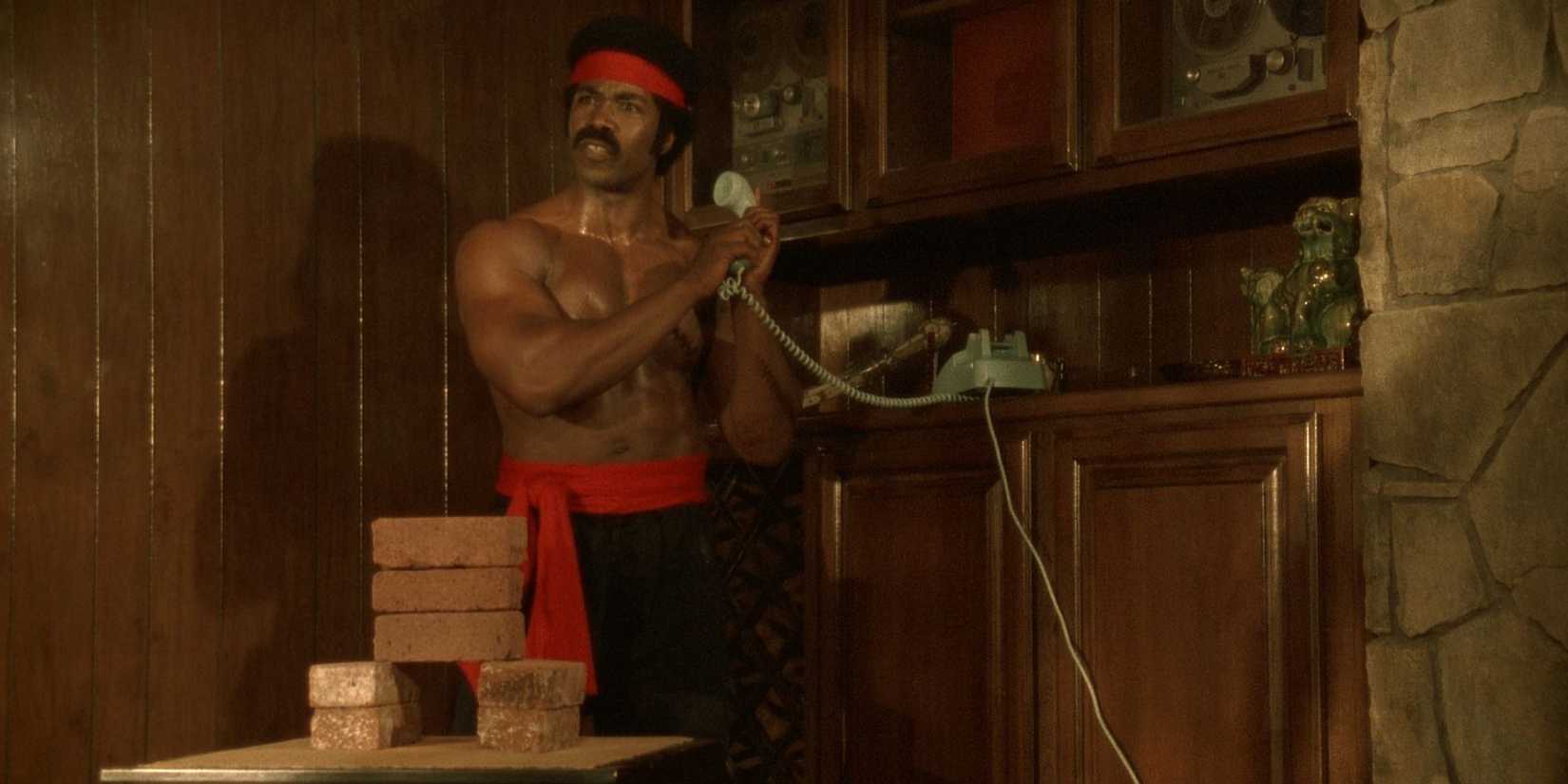
There are certainly subgenres within the grander martial arts genre. These films allow for an extension of martial arts to be introduced through a different lens. While some may not call Black Dynamite an outwardly martial arts film, its reliance on it within the blaxploitation realm is exceptional. The 2009 film directed by Scott Sanders pays homage to and parodies the 1970s blaxploitation movies. It centers on Black Dynamite (Michael Jai White), an ex-CIA agent and kung-fu master who, upon discovering a shadowy syndicate is pumping heroin into local orphanages and flooding the streets with tainted malt liquor, goes on a relentless crusade to clean up the neighborhood. Black Dynamite wages a one-man war against pimps, mobsters, and the government to avenge his brother Jimmy’s (Baron Vaughn) death. With a spot-on emulation of the ’70s aesthetic paired with meta-humor and charming odes to low-budget films, Black Dynamite‘s allure is the central character.
Black Dynamite flourishes thanks to the eccentricities of the titular character. He is a lethal martial artist, but he’s also a bona fide ladies’ man. Joined by an equally colorful crew, including his cunning, rhyming sidekick Bullhorn (Byron Minns), the streetwise and soft-hearted pimp Cream Corn (Tommy Davidson), and the beautiful social activist Honey Bee (Kym Whitley), Black Dynamite’s characters bring the necessary charm. Black Dynamite is pure entertainment. Its authenticity to the period is spot on, providing just enough subtle Easter eggs and references to fans of the films it mocks to enjoy. It’s a B-movie made well. Thanks to White’s real-life experience as a martial artist, the fight sequences are crisp with a highly disciplined display of technique. While it mocks the “chop socky” era in which almost every ’70s action hero was thrust into a kung-fu showdown, the genius of the film is the gravity-defying combat played with straightness. It allows for the over-the-top commitment to the alpha male types to be poked fun at. Black Dynamite is a legitimate love letter to the genre.
2
‘Blood and Bone’ (2009)


Now, for something similar but completely different: Blood and Bone. Another film starring Michael Jai White, this film is more on the serious side. Blood and Bone follows Isaiah Bone (White), an ex-con and former Marine who enters the Los Angeles underground street-fighting scene to fulfill a promise to a dead prison friend, Danny Soto (Kevin Phillips). When he learns that the man’s wife, Angela (Michelle Belegrin), has been forced into drug addiction and abducted by a ruthless mob boss named James (Eamonn Walker), Bone’s goal is to win fights, gain the mob’s trust, and dismantle James’ operation from the inside. An intense film with a brutal final showdown, Blood and Bone became an instant cult classic in the martial arts genre.
Blood and Bone relies heavily on practical fight choreography. In order to create its great authenticity, the film populates the underground fighting ring with actual combat sport legends, including Kimbo Slice, Bob Sapp, and Gina Carano. By straying away from stunt doubles, Blood and Bone looks like the world it’s portraying. Once again, it’s White’s star power and martial arts prowess that lead the film to victory. The film allows him to showcase his explosive technique through a character that is a calm, terrifyingly competent force of nature. The film honors the spirit of classic samurai films as Bone fights for a personal, moral code and a promise of loyalty. With this core theme, Blood and Bone isn’t just another mindless brawler movie; there’s a profound purpose and message for its action.
3
‘Equilibrium’ (2002)

This entry is more of a mainstream film that has had a mixed bag of reactions. That said, there’s no denying the entertainment factor that Equilibrium brings action from start to finish. Written and directed by Kurt Wimmer, the science fiction thriller is set in a dystopian world in which a totalitarian regime eliminates war and conflict by forcing its citizens to take daily doses of emotion-suppressing drugs. Should one feel emotion or possess banned art, books, or music, they are labeled a “sense offender” and executed. John Preston (Christian Bale), a top-ranking government agent known as a Cleric, hunts down sense offenders. After accidentally missing one of his daily doses of the suppressant, he begins to experience human emotions for the first time, leading him to an awakening that forces him to question his reality. Now, Preston is on a mission to overthrow the regime alongside an underground resistance movement. A gritty thriller that brilliantly invented Gun Kata, Equilibrium is a massively important film in the larger martial arts picture.
To begin, Gun Kata is a stylized combat system that blends Wing Chun and Goju-ryu karate with dual-wielded pistols. This makes nearly every sword fight appear like a stylized sword dance. Through its impeccable fight choreography, Gun Kata redefined on-screen gunplay by treating firearms as both weapons and defensive martial arts tools. Further, math is used as a superpower in the sense that the Clerics know the geometric distribution of attackers, creating a lethal auto-dodge and targeted precision. Released in 2002, Equilibrium looks and feels very much like a product of the new century. It has shades of The Matrix; it just lacks the prestige and masterful precision. Nevertheless, it’s still an amazing film. Bale does a great job rising to the occasion in his journey that will ultimately lead him to play Batman. He takes on the elite enforcer while balancing a robotic killing machine with an eventual rage-fueled aura by the end. Equilibrium was an early precursor to John Wick, though that franchise one-upped it.
4
‘Fist of Legend’ (1994)

When it comes to legends of the genre, one of the most important and prominent names is the brilliant Jet Li. With a rich resume of films, some of his greatest have been forgotten over time. One such title is Fist of Legend. A remake of Bruce Lee’s 1972 film Fist of Fury, the film is set in 1937 during the Japanese occupation of Shanghai. Upon returning home from studying in Japan, Chen Zhen (Li) discovers his revered master, Huo Yuanjia, died after a match with a Japanese fighter. Suspecting foul play, Chen exhumes the body and proves his master was poisoned. Chen fights to clear his name, avenge his teacher, and protect his school against corrupt military leaders and oppressive martial arts rivals. One of the greatest martial arts films ever made, Fist of Legend abandoned flashy, exaggerated acrobatics in favor of realistic combat while highlighting profound themes.
Directed by Gordon Chan, Fist of Legend is more than just a fantastical action movie. Fist of Legend addresses severe ethnic and cultural tensions, but also breaks away from simple stereotypes by showing that not all Japanese characters are corrupt. By introducing characters like his Japanese love interest Mitsuko Yamada (Shinobu Nakayama) and the honorable sensei Funakoshi Fumio (Yasuaki Kurata), the movie champions individual respect and martial discipline over blind nationalism. Now, to the performance. Li is at his peak. He brings a surprisingly dramatic performance, finding layers of vulnerability to build upon that Lee’s character lacked. It’s all thanks to pushing against a singular revenge plot and into a culturally significant story. The film’s legacy is quite profound. It inspired the Wachowskis to hire Yuen Woo-ping as a fight choreographer for The Matrix.
5
‘Iron Monkey’ (1993)

Some legends are worth telling. That’s why Iron Monkey is such a prolific film. The 1993 film directed by Yuen Woo-ping tells the tale of a masked vigilante known as the Iron Monkey (Yu Rongguang), who relentlessly fights to give hope to the oppressed from an unjust land plagued by government corruption. By day, he operates as a mild-mannered physician who treats the poor at no charge. When a skilled traveling physician named Wong Kei-ying (Donnie Yen) and his young son, Wong Fei-hung (Angie Tsang), arrive in town, the corrupt officials mistake the father for the Iron Monkey. To force Wong Kei-ying into hunting down the real Iron Monkey, the governor (James Wong) kidnaps his son. Eventually, the two martial arts masters discover they share the same righteous ideals and team up to take down the corrupt regime. Filled with mind-blowing, gravity-defying fight choreography and a relatable Robin Hood-like narrative, Iron Monkey serves as a loose prequel to the famous Chinese folk hero Wong Fei-hung, exploring his martial arts origins as a young boy.
A genuine masterpiece, Iron Monkey expertly balances breathtaking “wire-fu” choreography with a universally appealing, folklore-driven story. The narrative embraces the vigilante tale as the hero in question is relatable and someone to cheer for. Iron Monkey gets every bang for its buck with a tight 90-minute thrill ride. There’s no excess, as every minute of its quick runtime is warranted. It’s a universally rewatchable film thanks to its easy tone, mixing serious themes of political corruption with lighthearted humor. Woo-ping’s direction is sharp, ensuring his film’s action is both poetic and acrobatic. The usage of traditional kung fu, seamless wirework, and inventive props like umbrellas and spinning poles allows for non-stop thrills. Iron Monkey is a delightfully fun period film that serves as a great gateway flick.
6
‘Police Story’ (1985)

While Western audiences know Jackie Chan from his mainstream Hollywood films, his career in Hong Kong was quite extraordinary. In 1985, he wrote, directed, and starred in Police Story. A film that inspired stories and sequences in cinema after, the movie follows a dedicated detective named Chan Ka-Kui (Chan), who, after single-handedly capturing a notorious drug lord, must protect a key witness, Chu Tao’s (Chor Yuen) secretary, Selina Fong (Brigitte Lin), who plans to testify in court about her boss’s illegal activities. Wanting revenge, Chu Tao captures Selina. When Ka-Kui comes to the rescue, he is ambushed and framed for the murder of a corrupt police inspector who was on the drug lord’s payroll. Now, he must clear his own name and take down the criminal syndicate before it’s too late. Though it did launch a mega franchise of its own, Police Story’s mainstream legacy tends to be from future projects, and it deserves to be rediscovered and celebrated once again.
Police Story was an important film in the grander scheme of martial arts cinema, and we have Chan to thank. The film revolutionized stunt work and how it was filmed. Chan helped to pioneer fluid, wide-angle fight choreography, which allowed the audience to clearly see Chan and his stunt team performing complex martial arts combinations and taking real impacts. Filmed at full speed, Chan utilized the full environment surrounding him. The stunt-driven sequences strayed away from mystical martial arts of the past to make way for a gritty, modern police procedural. Whether hanging off a double-decker bus or sliding down a pole through arcing electric lights, the action went full throttle. Police Story was a brilliant blend of high-stakes thrills and slapstick physical comedy, redefining what audiences could expect from an action-comedy martial arts film.
7
‘The Eight Diagram Pole Fighter’ (1984)

Another great film straight out of Hong Kong was 1984’s The Eight Diagram Pole Fighter, or Invincible Pole Fighter, as released in North America. Directed by Lau Kar-leung, the film is based on the legends of the Generals of the Yang Family. Beginning with a devastating ambush, the influential Yang family of warriors is trapped by Mongol forces, having been betrayed from within. One brother, Fifth Brother (Gordon Liu), goes mad from grief and takes refuge in a Shaolin Temple. Another brother, Sixth Brother (Alexander Fu), escapes but returns home deeply traumatized. Seeking to avenge his slaughtered family, Fifth Brother devotes himself to martial arts at the temple. Because he cannot use traditional Shaolin weapons, as monks are forbidden to shed blood, he adapts the Shaolin staff into a deadly new eight-diagram pole-fighting technique. It is celebrated by martial arts fans for its intense choreography, incredible staff-fighting sequences, and its status as one of the ultimate Shaw Brothers epics.
The heart of the film stems from the titular technique. Kar-leung showcases stunning, intricate choreography that elevates the humble wooden staff into a dynamic weapon. Through training with the unique weapon, the film showcases our hero transforming his blind rage into a disciplined technique, training against life-sized, articulated wooden wolves with giant silver teeth. These creatures also serve as a powerful metaphor for overcoming inner demons and animalistic threats, and the finale is often considered one of the greatest in the genre. The history behind it is quite storied, as it was originally meant to be a co-starring vehicle for Fu. Tragically, he died in a car crash during production, causing a major rewrite to occur. This made the remaining brother’s story darker and deeply poignant, turning the movie into a cinematic tribute to the fallen star. The climax, though, resulted in a fight with the intention of incapacitating rather than killing: bizarre yet brilliantly executed moves where they literally rip the teeth out of their opponents using the poles. If that doesn’t make you want to watch, I don’t know what will!
8
‘The Night Comes For Us’ (2018)

Now, for an action thriller straight from Indonesia, The Night Comes For Us was originally conceived as a graphic novel before transforming into the 2018 flick. The hyper-violent thriller written and directed by Timo Tjahjanto follows Ito (Joe Taslim), a high-ranking assassin and enforcer for the South East Asian Triad. When he spares a young girl named Reina (Asha Kenyeri Bermudez) and kills his own men during a village massacre, he becomes the target of a relentless, bloodthirsty gangland hunt. The Triad unleashes legions of assassins to eliminate Ito, including his estranged childhood best friend, Arian (Iko Uwais). Should he succeed, Adrian is promised an elite position in the syndicate. Widely lauded for its relentless pacing, incredible silat choreography, and extreme, almost horror-movie levels of gore, The Night Comes For Us pushed martial arts thrillers to new heights.
The film is honest in its mission: being action-oriented. With an easy conceit of protecting the innocent, it served as a capable framework for spectacular, escalating fight sequences. With audiences seeking something visceral, The Night Comes For Us fired on all cylinders. The thriller elevated the martial arts genre into an extraordinary, hyper-violent ballet. Focusing on silat, the Indonesian style of combat, the choreography highlighted lightning-fast strikes, brutal joint locks, and vicious takedowns. Add in the slasher-level mentality, and The Night Comes For Us was an unrelentingly brutal showcase that doesn’t skimp on the gore. Tjahjanto utilized pool balls, meat hooks, caution signs, and even a cow femur. I mean, have you ever seen something so wild and creative?
9
‘The Paper Tigers’ (2020)

Riding high on the mainstream allure of Netflix’s Cobra Kai came The Paper Tigers, a coming-into-middle-age action comedy. The Bao Tran-directed film follows three estranged, middle-aged former kung fu prodigies: Danny Eight Hands (Alain Uy), Hing (Ron Yuan), and Jim (Mykel Shannon Jenkins), who, in their youth, were an unbeatable trio known as “The Three Tigers.” They must now overcome old grudges, dad duties, and rusty skills to avenge the murder of their beloved master, Sifu Cheung (Roger Yuan). The ultimate battle that’s overshadowing their midlife crises, the high-energy martial arts comedy puts a heartfelt, comedic exploration of aging, brotherhood, and fatherhood at the forefront.
Unlike any other film on this list, The Paper Tigers subverts the genre as it replaces invincible, youthful warriors with out-of-shape, middle-aged men wrestling with real-life responsibilities. In turn, it comes across as a refreshing, light-hearted story where the messy fights are endearing. These firmer prodigies are bogged down by bad knees, so we watch them stretch, pop their hamstrings, and catch their breath during a fight. The fight choreography by Ken Quitugua perfectly matches the characters’ current limitations. Tran paid homage to the classic structure of the Shaw Brothers kung fu films through a calmer, more reflective pace that ultimately builds to a series of duels and a final confrontation with the antagonist, Zhen Fan (Quitugua).
10
‘Wheels on Meal’ (1984)

To round out our journey, we finish with another quirky film by Jackie Chan called Wheels on Meals. Written and directed by Sammo Hung, the action comedy set in Barcelona follows two cousins — Thomas (Chan) and David (Yuen Biao) — who operate a modified food truck called “Everybody’s Kitchen.” They cross paths with Sylvia (Lola Forner), a cunning pickpocket with a mysterious past. She is unaware that she is actually a wealthy heiress being targeted by an organized criminal syndicate. Enter Moby (Hung), a clumsy, bumbling private investigator hired to track down the missing heiress. A pinnacle film of the “Three Brothers” collaboration of Chan, Hung, and Biao, Wheels on Meals is as eccentric as its title, which got its name after the production company’s superstition after two previous movies starting with the letter “M” flopped at the box office.
Wheels on Meals is a masterful display of athleticism and comedy synergy. The action sequences are sublime, thanks to Chan’s direction. The film plays host to one of the very best one-on-one martial arts duels in cinema history: Chan’s Thomas versus former professional kickboxing champion Benny “The Jet” Urquidez’s thug. The film’s legacy comes in the form of an arcade game: Spartan X. It is a loose adaptation of the film’s final part, which involves Thomas climbing the castle to rescue Sylvia. This helped to lay the foundation for the beat ‘em up games of the time, including inspired Super Mario Bros., Street Fighter, and Red Ribbon Army in Dragon Ball.


Wheels on Meals
- Release Date
-
August 17, 1984
- Runtime
-
108 minutes
- Director
-
Sammo Hung
- Writers
-
Edward Tang, Johnny Lee Kwing-Kai
You must be logged in to post a comment Login