Entertainment
10 Genuinely Perfect Fantasy Movies

Okay, so “perfect” is a big word to throw around for a whole list, and it does not mean that these movies have zero flaws if you go looking for them. They are here because, let’s be honest, watch any one of these and try to think of a single change that would actually make it better. You can’t, not really. Every choice, every weird creature design, every slow scene, is doing exactly what it’s supposed to be doing.
A few of these can easily show up on other lists and rightfully so they’re talked about a lot more. Some movies are genuinely great enough to earn a spot no matter what angle you’re ranking them from. So here they are, worst to best, ten fantasy movies that don’t really have a weak spot to poke at.
10
‘The Princess Bride’ (1987)

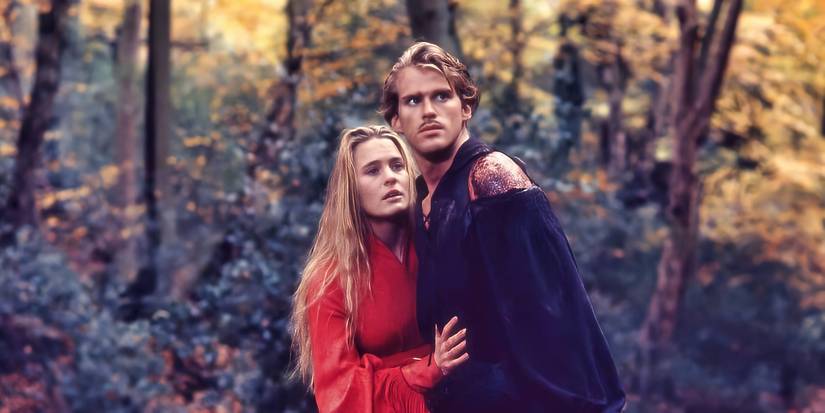
This movie is just endlessly quotable, and I think that’s actually the best sign a script is doing its job right. Westley (Cary Elwes) and Buttercup (Robin Wright) are the actual love story, but everyone remembers Inigo Montoya (Mandy Patinkin) and his whole “you killed my father, prepare to die” thing way more, because Rob Reiner and William Goldman clearly cared just as much about the side characters as the leads.
It flopped in theaters when it came out, which is wild to think about now, and only became the beloved thing it is once people started renting it on VHS and passing it around. It’s a swordfight movie, a comedy, and a genuine romance all at once, and none of those parts ever get in each other’s way.
9
‘Pan’s Labyrinth’ (2006)

Guillermo del Toro built the Pale Man, one of the creepiest creatures in movie history, entirely as a practical suit worn by Doug Jones, no CGI doing its magic. That’s kind of the whole deal with this movie where every fantasy creature looks like it’s actually standing in the room with Ofelia, because it usually was.
It won three Oscars, for cinematography, makeup, and art direction, and all of those awards were well-deserved. The fantasy stuff and the real-world horror of fascist Spain sit right next to each other the entire runtime, and del Toro never once lets one half feel like it’s just decorating the other.
8
‘The Green Knight’ (2021)

David Lowery made a movie where almost nothing gets explained outright, and it works precisely because he never flinches from that choice. Dev Patel is at his best here yet again as he plays Gawain with real nervous energy, like a guy who knows he’s not ready for what he agreed to, and the whole thing is shot so beautifully you’d watch it with the sound off and still feel something.
Most movies this ambiguous end up frustrating people. This one earns the ambiguity, because every unanswered question feels intentional instead of lazy. That’s a hard needle to thread, and it’s a big part of why this belongs on a perfect list instead of just a good one.
7
‘The Wizard of Oz’ (1939)
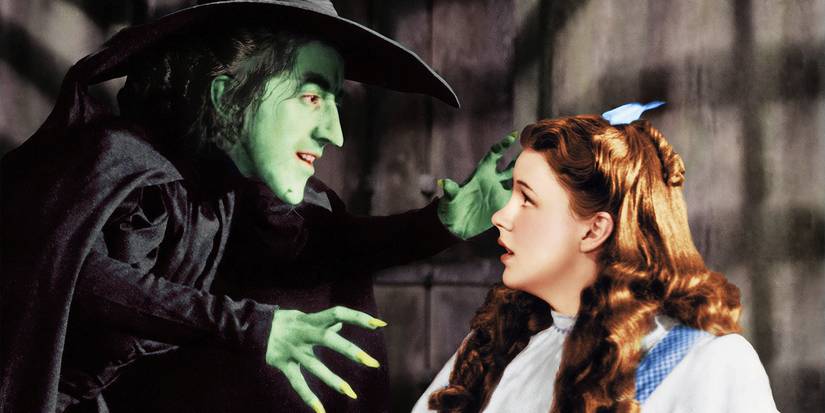
The Wizard of Oz is literally everyone’s childhood at this point. The moment Dorothy opens that door and the movie switches from black-and-white Kansas into full color Oz still gets me, and that was an insanely bold technical choice for 1939. Judy Garland carries the whole thing on “Over the Rainbow” alone, honestly.
They actually changed the slippers from silver, like in the book, to ruby red just because red popped better on the new Technicolor film. That’s such a small, practical decision, and it ended up becoming one of the most iconic images in movie history. Almost ninety years later, the effects still hold up in a way a lot of far more expensive fantasy movies don’t.
6
‘Princess Mononoke’ (1997)
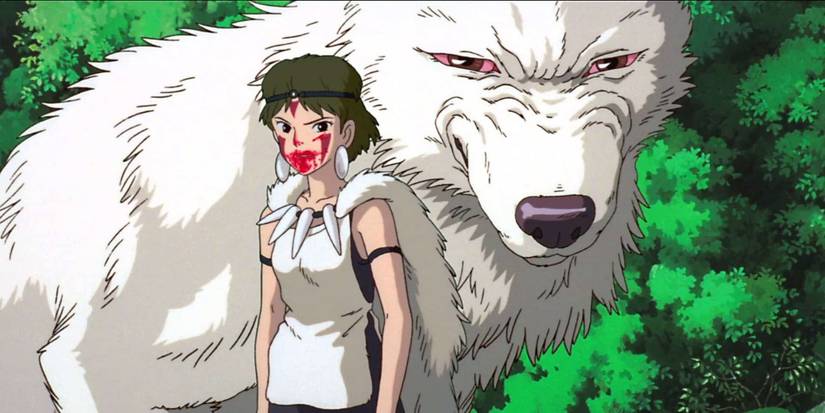
Hayao Miyazaki’s team hand-drew something like 144,000 individual frames for this movie, without any shortcuts, and you can feel that effort in every single shot of the forest. San and Ashitaka don’t get a clean, easy love story either, which some people complain about, but that’s exactly why the movie earns its ending instead of just handing you one.
Nobody in this movie is fully good or fully evil, not even the woman literally destroying the forest, and Miyazaki trusts the audience enough to sit with that discomfort; he beautifully painted characters in the grey areas for them to be more realistic.
5
‘Spirited Away’ (2001)
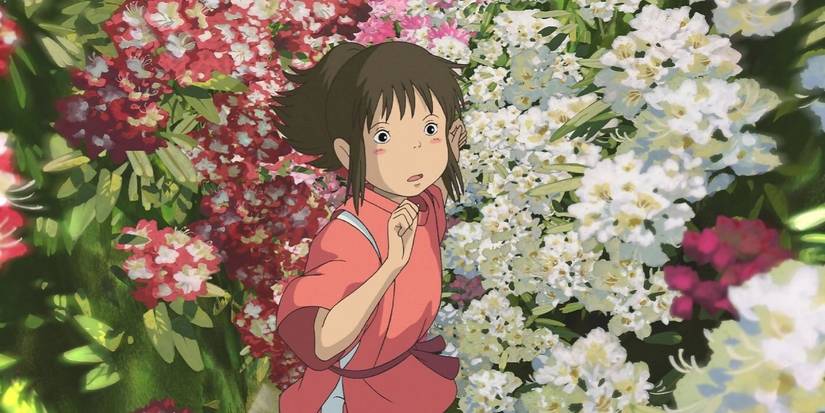
This was the first anime to ever win the Oscar for Best Animated Feature, and it also broke Japan’s all-time box office record for years afterward, which tells you it wasn’t just critics who loved it. Chihiro’s world is packed with stuff like No-Face and the bathhouse spirits, and none of it feels like filler, every creature actually means something by the end.
Miyazaki apparently came up with the idea partly to make something for his friends’ daughters. There were kids who were bored of typical princess stories, and you can feel that specific care in how seriously the movie takes a ten-year-old’s fear and boredom and courage. It is one of the best children movies to exist.
4
‘The Lord of the Rings: The Fellowship of the Ring’ (2001)
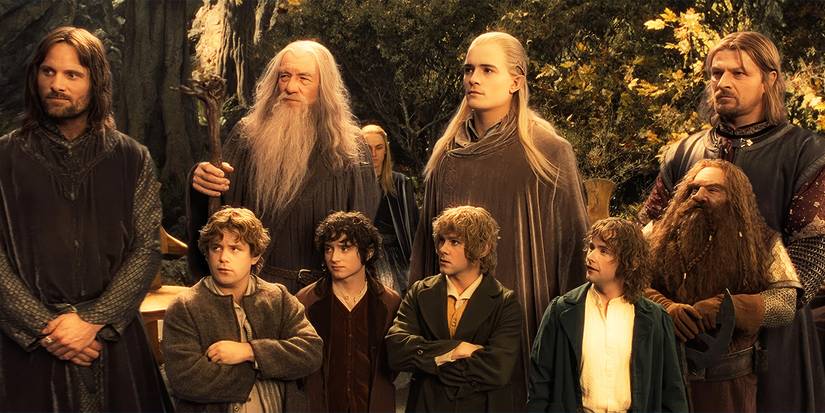
Peter Jackson shot this whole trilogy back to back in New Zealand with actual mountains and actual forests standing in for Middle-earth, and that groundedness is honestly why the fantasy stuff lands as hard as it does. The locations were real and that made it 100x better. The crew arranged a WETA Workshop built with real armor and real weapons the actors could actually move in, instead of a bunch of CGI.
This first one especially still gets me every time the Fellowship breaks apart at the end, Boromir’s death, Frodo and Sam heading off alone. It’s a long movie and it never once feels like it’s just killing time waiting to get somewhere. The trilogy is the best one to exist and every movie in its feather is just better than the other one.
3
‘The Lord of the Rings: The Two Towers’ (2002)

Gollum is the reason this one belongs on a perfect list, honestly. Andy Serkis did full motion-capture performance work for a character that’s mostly just eyes and a voice, and he still made Gollum feel more human, more genuinely torn apart inside, than most fully CGI characters manage today.
Helm’s Deep took months to film and it shows, since it’s still one of the best battle sequences ever put on screen. There was no shaky-cam nonsense hiding bad choreography, and everything was just so beautifully flowing that it genuinely felt like a wholesome cinematic experience. This is the middle chapter of a trilogy, technically the hardest one to make work on its own, and it still holds together completely.
2
‘The Lord of the Rings: The Return of the King’ (2003)

This movie won eleven Oscars, every single category it was nominated for, which basically never happens, and it earned every one of them. The Battle of Pelennor Fields alone probably took more actual planning than most entire movies get, which is why for most people this one is the best movie in the trilogy.
What really gets me about this one is how much time it spends on the ending after the ending, Frodo coming home and not being able to feel okay again, the Grey Haven, etc. Most trilogies would’ve just cut to credits after the ring gets destroyed. This one trusts you to sit with what the war actually cost everyone first and probably that’s why it still lingers on the minds of viewers.
1
‘The Dark Crystal’ (1982)

Every single character in this movie is a puppet, hand-built and operated by Jim Henson’s team, and there’s not a frame of CGI anywhere near it because it came out in 1982, before that was even an option. Brian Froud designed the Skeksis and the Mystics, and they’re still genuinely unsettling to look at, way darker than anything you’d expect from the Muppets guy.
It’s a kids’ movie that never once talks down to kids, dark tone and all. Jen and Kira’s whole quest has real stakes and danger, and the fact that it still is talked about as one of the most fully realized fantasy worlds ever built, entirely by hand, is why it takes the top spot here.


The Dark Crystal
- Release Date
-
December 17, 1982
- Runtime
-
93 minutes
- Director
-
Frank Oz
- Writers
-
David Odell, Jim Henson
-
Jim Henson
Jen / High Priest, Ritual Master
-

Kathryn Mullen
Kira, a Gelfling

You must be logged in to post a comment Login