Entertainment
10 Genuinely Perfect Psychological Thrillers, Ranked

We love watching a good mind game unfold before us. The allure of a psychological thriller lies in seeing how characters inflict psychological terror or overcome it. Throughout movie history, there have been some extraordinary masterpieces of psychological thriller cinema, but only ten are genuinely perfect.
From timeless legends to modern classics, these films have served as the blueprint for the genre over time. Some have haunted our nightmares while others reshaped the rules of cinema. No matter how they played with your mind, these movies continue to be some of the very best of all time.
10
‘Donnie Darko’ (2001)


A brilliantly underrated cult classic, Donnie Darko earned its way into psychological thriller history. Written and directed by Richard Kelly, the film follows Donnie (Jake Gyllenhaal), a troubled teenager who, after sleepwalking, narrowly escapes death from a falling jet engine and is guided by Frank (James Duval), a mysterious, grotesque figure in a giant rabbit suit to uncover secrets of time and destiny. Donnie Darko deliberately blurs the line between clinical paranoid schizophrenia and actual supernatural destiny for a powerful coming-of-age drama about teenage isolation, death, and existential purpose.
The brilliance of Donnie Darko lies in being forced to see the world through a troubled teen’s vantage point. Gyllenhaal is pitch perfect in his breakout role, guiding the film to its final destination. By questioning the validity of Frank and the time-travel scenario, or whether it’s all a symptom of his disease, viewers are kept on their toes. His ability to humanize isolation and anxiety is profound. The film is not a flat-out obvious story, as Kelly tasks the audience to personally interpret every single moment and image. With a haunting atmosphere and a brilliant soundtrack that included “Mad World” by Gary Jules, it serves as the perfect aesthetic world-building. Donnie Darko is a terrifyingly accurate story of being misunderstood.
9
‘Rosemary’s Baby’ (1968)

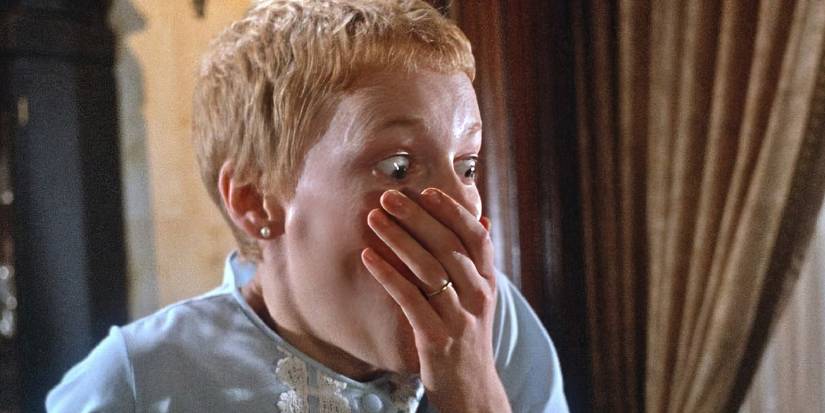
One of the most iconic physiological horror thrillers of all time, Rosemary’s Baby took Ira Levin’s novel and transformed it into a stellar and sinister story. Directed by Roman Polanski, the film follows Rosemary Woodhouse (Mia Farrow) and her husband Guy (John Cassavetes) as they move into an old, eerie apartment building in New York City. Rosemary begins to suspect her odd neighbors, Roman and Minnie Castevet (SydneyBlackmer and Ruth Gordon), and her ambitious husband belong to a satanic cult plotting to use her unborn child for evil rituals. A story built on psychological dread and paranoia, Rosemary’s Baby taps into how society strips away a pregnant woman’s personal choice and agency.
With deep-seated social fears, gaslighting, and slow-building paranoia, Rosemary’s Baby traps you in Rosemary’s mind. You’re forced to determine if Rosemary’s fears of a satanic conspiracy are real or just the paranoid delusions of a pregnant woman. As Rosemary is gaslit by everyone she believes she can trust, she loses her autonomy and power, exposing a universal sense of unease. The terror of Rosemary’s Baby is not entirely the threat of giving birth to the devil but the revelation that it’s the unsuspecting individuals around you that make up the cultist monsters. It may be a period piece today, but Rosemary’s Baby remains poignant today.
8
‘Mulholland Drive’ (2001)

Many will try, but no one will have a mind quite like David Lynch. The visionary has given the world some of the most daring projects, including Mulholland Drive. His 21st-century classic is a surrealistic psychological mystery about an actress in Los Angeles and an amnesiac car crash survivor who try to uncover the survivor’s true identity. Betty (Naomi Watts), an ambitious, bright-eyed aspiring actress who’s new to Los Angeles, and Rita (Laura Harring), an enigmatic woman with amnesia, try to piece together Rita’s past, only for reality and illusion to crash into one as Betty and Rita are anything but. Mulholland Drive explores psychological collapse, guilt, and the dark underbelly of Hollywood by depicting a warped nature of ambition, betrayal, and a shattered mind.
Mulholland Drive is a mind-blowing thriller that demands close attention to the story Lynch proposes. The first two-thirds of the film operates as a a fantasy created by a failed and heartbroken actress. She imagines herself as something grander when, in truth, it couldn’t be further from reality. Lynch presumes that severe trauma is shielded by a safer identity, despite who it hurts in the process. Yet the dark landscape of Los Angeles is an illusion she uses to excuse her failure. Mulholland Drive is a brilliant script brought to life flawlessly, earning itself as Lynch’s very best.
7
‘Black Swan’ (2010)

The obsession for artistic perfection is put on full display in the mind-bending Black Swan. A brilliant psychological masterpiece from Darren Aronofsky, Black Swan follows Nina Sayers (Natalie Portman), a dedicated, perfectionist ballerina, who loses her grip on reality when rival dancer Lily (Mila Kunis) earns the role she greatly desires. Nina’s relentless drive for technical perfection turns into a mental prison, pushing her past the brink. Black Swan takes the duality of the White and Black Swan to represent the inner battle between a sheltered, fragile young girl and an indecent, sexually revitalized young woman.
Black Swan represents the mindset all artists experience as they strive for greatness. Nina’s mental breakdown comes from the desire to become the best through perfection as she’s pushed by the pressure of her career, the industry, and her overprotective mother, Erica (Barbara Hershey). Through visceral body horror and spellbinding visual direction, Black Swan puts you squarely inside Nina’s mind. It’s a high-tension, claustrophobic atmosphere that dives deep into Nina’s repressed self and her darker desires. A mesmerizing film that redefined Portman’s career, Black Swan is a true work of art.
6
‘Fight Club’ (1999)

If you love Fight Club, defy the rules and talk about Fight Club! Director David Fincher brought Chuck Palahniuk’s novel to life in perfect fashion. The narrative (Edward Norton) tracks an unnamed office worker whose mundane profession turns him into an insomniac. He finds emotional relief by attending a fake terminal illness support group where he meets Marla Singer (Helena Bonham Carter), another impostor. Then he forms an underground fight club with a charismatic soap salesman named Tyler Durden (Brad Pitt). As the group transforms into a radical, destructive anti-capitalist organization called Project Mayhem, the truth comes out about Tyler’s true twisted identity. The psychological thriller traps the audience in a fractured, unreliable mind where the line between objective reality and delusion blurs.
Fight Club is a fervent mix of psychological turmoil and philosophical dread. Tyler embodies everything the narrator desires to be. He embodies freedom, danger, and confidence that the narrator simply lacks. By the time the big twist is revealed, it all makes complete sense, as Fincher spelled it out in plain sight. That said, it reframes everything prior, making a subsequent watch more than worthwhile. Rather than just a critique of modern life, consumerism, and corporate monotony that creates a numb society, the chaotic nature and danger of a broken identity. Fight Club remains a cinematic game changer.
5
‘The Shining’ (1980)

Even though Stephen King wasn’t completely satisfied with The Shining, it remains a sensational work. Directed by Stanley Kubrick, the big-screen adaptation follows Jack Torrance (Jack Nicholson) as he takes a job as a winter caretaker of the Overlook Hotel. Moving in with his wife, Wendy (Shelley Duvall), and their son, Danny (Danny Lloyd), they become isolated and trapped within the confines of the estate where evil spirits exploit Jack’s past struggles with alcohol and anger, slowly driving him to madness. A haunting portrayal of addiction, trauma, and isolation, The Shining is a masterclass in psychological horror.
The Shining uses the hotel to represent the sick cycle of violence and cruelty that traps people who ignore the past. Using Sigmund Freud’s concept of “the uncanny,” Kubrick built the locale to evoke the unsettling feeling of the familiar feeling wrong. Every set piece, architectural element, and visual trigger dread and unease. The Shining taps into pure dread and fear, thanks to some of the moldy iconic moments in horror history. From the twins to the bloody elevator, “redrum” to “Here’s Johnny!” The Shining remains a profound part of cinematic history.
4
‘Get Out’ (2017)
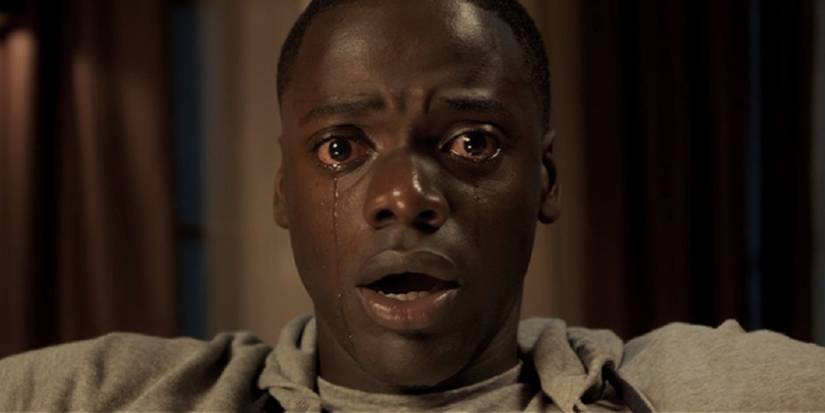
The horror genre has been elevated thanks to the genius of Jordan Peele and Get Out. The subversive thriller follows Chris Washington (Daniel Kaluuya), a young Black photographer, who uncovers a terrifying, racially motivated conspiracy when he visits his white girlfriend’s, Rose Armitage (Allison Williams), family estate. He uncovers a terrifying truth that the Armitage family runs a sinister cult in which Black individuals are lured to the estate in order to surgically transplant the consciousness of wealthy white buyers into their healthy bodies, trapping the original victims in a paralyzed mental state known as the “sunken place.”
Get Out uses horror and satire to critique modern racism, microaggressions, cultural appropriation, and the commodification of Black bodies in America. Locked into Chris’ perspective, the audience is forced to see and feel every microaggression and racist comment. The horror comes from the complete and utter gaslighting as how the “villains” cause Chris and the audience to question if they are truly a present threat. Get Out flips the horror tropes of dark locales into a bright, out-in-the-open seemingly safe suburban neighborhood. Get Out’s perfect blend of comedy, mystery, and heavy social commentary weaves a modern classic.
3
‘Psycho’ (1960)
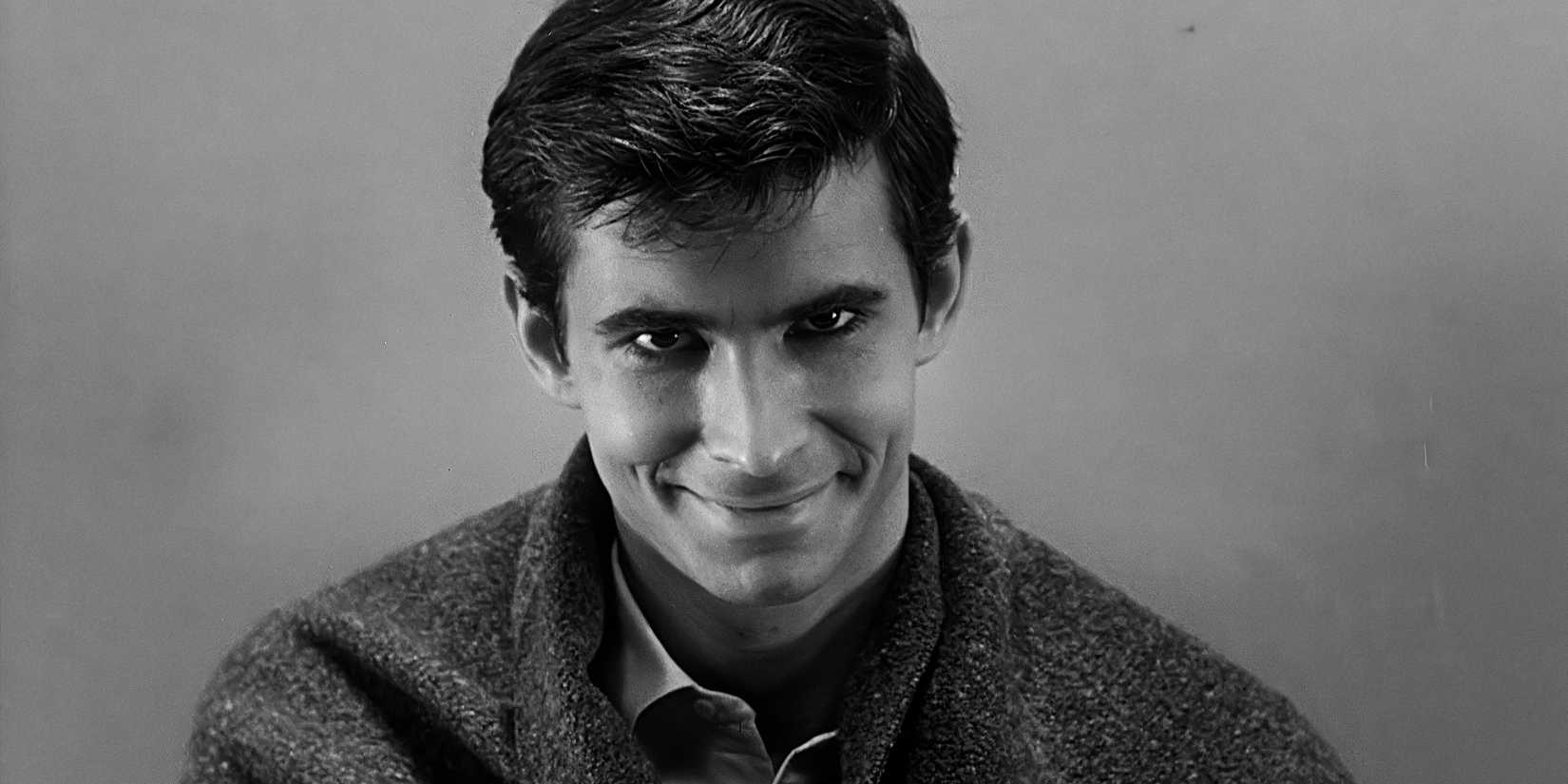
Alfred Hitchcock proved that with one big twisted decision, the trajectory of cinema would change forever. Bringing Robert Bloch‘s novel to life, Psycho follows Marion Crane (Janet Leigh), who steals $40,000 and escapes to the remote Bates Motel, run by the fascinatingly intriguing Norman Bates (Anthony Perkins). After being brutally stabbed in the shower the next morning, Marion’s sister Lila (Vera Miles) and boyfriend Sam Loomis (John Gavin) search for her, only to discover the truth about Norman and the Bates Motel. An iconic film that defined horror within pop culture, Psycho subverted audiences’ attention while providing a masterful exploration of the human psyche.
Psycho is a brilliant story, but the film soars to great heights thanks to Hitchcock’s risky decision to kill off his star within the film’s first act. In doing so, it forces the audience to be on their toes as anything can and will happen. Leaving them in suspense became the film’s greatest asset. Psycho is grounded in ordinary reality, where a seemingly shy, polite, and regular guy is anything but. Norman serves as the ultimate ordinary monster that may be lurking around the corner. With sensational direction and a shrieking score from Bernard Herrmann, Psycho is fear and terror to the max, serving as an inspiration for the genre.
2
‘Inception’ (2010)

There are some extraordinary films across multiple genres on Christopher Nolan‘s resume, but when it comes to psychological thrillers, it doesn’t get much better than Inception. A sci-fi action thriller, Dom Cobb (Leonardo DiCaprio) commits corporate espionage by infiltrating his target’s mind during shared sleep states. Hired by Saito (Ken Watanabe), Dom is offered a clean slate and a reunion with his children should he commit the perfect crime: perform inception by planting a new idea in the mind of his rival CEO, Robert Fischer (Cillian Murphy). Assembling a specialized team to commit the mission, Cobb and company must maintain stability across deeper dream layers as he’s haunted by psychological projections of his dead wife, Mal (Marion Cotillard).
A richly layered dream drama, Inception uses a high-concept, high-stakes framework to pull off a brilliant sci-fi heist movie. Nolan builds the perfect architecture to play within. Guilt, grief, and self-sabotage play the role of the antagonist, as the only way Cobb can succeed is to defeat his own demons. Inception weaves the mechanics of the human subconscious directly into the narrative. Nolan evokes a unique pacing structure as time slows in each layer, making the pressure-cooker race against the clock even harder to sustain. Using Nolan’s signature production style, practical sets and stunts give the film a tangible feel. Inception is the perfect psychological thriller because we’re still debating the ending and that damn spinning top.
1
‘The Silence of the Lambs’ (1991)

Cinema has some of the greatest villains, but no one is more terrifying than Hannibal Lecter (Anthony Hopkins). And yet, even behind bars, he is a terrifying threat because of the incredible mind games he plays. In The Silence of the Lambs, FBI trainee Clarice Starling (Jodie Foster) is assigned to track down serial killer Buffalo Bill (Ted Levine), who abducts and skins women. To get inside the killer’s mind, she interviews Hannibal in exchange for offering her own personal traumas from her past. The Silence of the Lambs is a tense battle of wits and psychological leveraging that gave the horror genre a seat at the awards table.
The Silence of the Lambs is pure horror, but rather than jump scares, the terror and suspense come through psychological warfare. It’s a truly twisted tale that is acted to the max. Foster and Hopkins deliver career-defining performances that set the gold standard for this subgenre of crime thriller. Director Jonathan Demme opts for dread over gore, stillness over chaos, and claustrophobic tension over high-stakes action. Earning the Big Five at the Academy Awards, the thriller doesn’t get more thrilling than this film.

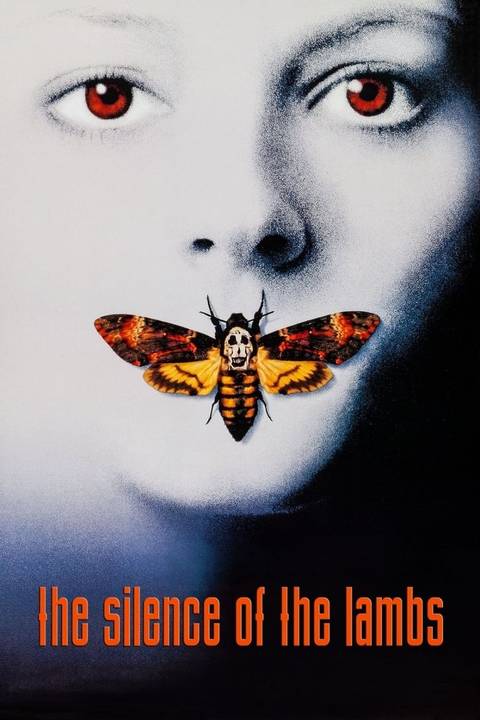
The Silence of the Lambs
- Release Date
-
February 14, 1991
- Runtime
-
119 minutes
- Director
-
Jonathan Demme
- Writers
-
Ted Tally, Thomas Harris
You must be logged in to post a comment Login