Entertainment
10 Greatest Adventure Book Masterpieces of All Time

Adventure stories go way back. We’re talking centuries, or even millennia. Long before fantasy epics, spy thrillers, and action blockbusters dominated popular culture, readers were captivated by tales of daring voyages, hidden treasure, dangerous quests, and journeys into the unknown.
With that in mind, this list looks back at the greatest adventure books ever written, the ones that truly built the genre into what it is today. From 17th-century classics to more modern bangers, these tales have come to define what adventure should be. They span a range of styles and tones, but all offer entertaining plots, memorable characters, and a sheer sense of unadulterated excitement at venturing into the unknown.
10
‘Robinson Crusoe’ (1719)


“I learned to look more upon the bright side of my condition, and less upon the dark side.” Robinson Crusoe remains surprisingly readable for a novel that’s over 300 years old. The title character is stranded on a deserted island following a shipwreck, where he must draw on all his resourcefulness to make it out alive. It’s one of the most influential adventure books, introducing so many of the genre’s core ingredients: the castaway hero, the struggle against nature, survival through ingenuity, and the exploration of unknown lands.
Beyond its impact on the adventure genre, Robinson Crusoe is widely regarded as a milestone in English literature more generally, and a major breakthrough in the development of realist fiction. Indeed, the book’s attention to detail was unusual for the time, going in-depth with everything from building shelter and growing crops to taming animals.
9
‘Don Quixote’ (1605)

“Too much sanity may be madness.” At first glance, Don Quixote boasts a simple premise: an aging man reads too many chivalric romances, loses his grip on reality, and wanders Spain believing himself to be a heroic knight. Accompanied by his practical and increasingly loyal squire Sancho Panza, Don Quixote embarks on a series of wandering misadventures, mistaking inns for castles, windmills for giants, and ordinary people for figures from epic legend.
Yet Miguel de Cervantes transforms that setup into one of the most important novels ever written. The protagonist’s delusions create endless humor, but the novel never treats him as merely a joke. Readers laugh at his mistakes while also admiring his courage and idealism. In many ways, he’s more noble than the supposedly sane people around him. Indeed, the character gave us the word “quixotic,” someone or something that is exceedingly idealistic.
8
‘Eye of the Needle’ (1978)

“You can’t stop what you can’t see.” Eye of the Needle is a taut espionage story from Ken Follett, the author of beloved historical epics like The Pillars of the Earth. It follows Henry Faber, a ruthless German spy operating in Britain during World War II, who uncovers crucial intelligence about the upcoming Allied invasion plans. As British intelligence closes in, Faber becomes trapped on a remote island alongside a lonely, unhappily married woman, creating a deadly psychological cat-and-mouse game.
The narrative momentum here is off the charts. Follett keeps us hooked by constantly escalating the danger and upping the stakes. Readers understand the danger Faber poses, which makes every close call feel agonizingly suspenseful. It also helps that Faber himself is an unusually complex antagonist. Rather than being a cartoon villain, he’s intelligent, disciplined, resourceful, and often disturbingly sympathetic despite his brutality.
7
‘Master and Commander’ (1969)

“The lesser of two weevils.” This book was the basis for the Russell Crowe blockbuster Master and Commander: The Far Side of the World. In it, Captain Jack Aubrey and ship surgeon Stephen Maturin navigate naval warfare during the Napoleonic era aboard the HMS Sophie. A huge part of what makes the novel extraordinary is its immersive authenticity. Author Patrick O’Brian convincingly shows us the ups and downs of shipboard life, down to the painstaking details of nautical maneuvering.
At the same time, the book is no dry history lesson. The characters are colorful and the action scenes compelling. The naval battles, in particular, are among the finest ever written, emphasizing leadership and strategy as much as raw violence. Every engagement becomes a tense contest of intelligence and nerve, where so much comes down to the captain’s ability to make split-second decisions.
6
‘Twenty Thousand Leagues Under the Seas’ (1870)

“The sea is everything. It covers seven tenths of the terrestrial globe.” Another classic that practically spawned a whole subgenre, Twenty Thousand Leagues Under the Seas follows Professor Aronnax after he is captured aboard the Nautilus, a revolutionary submarine commanded by the mysterious, brilliant Captain Nemo. Together, they journey across the oceans, encountering underwater forests, giant sea creatures, shipwrecks, and hidden civilizations beneath the waves.
The book radiates a sense of wonder throughout, envisioning the sea as an almost magical frontier, boasting hidden treasures as well as threats like monstrous squids. This central idea, that of cutting-edge technology transporting people to completely unknown worlds, would form one of the pillars of the entire sci-fi genre. Finally, Nemo himself is simply a great character, idealistic and troubled, neither hero nor villain, driven by competing motivations.
5
‘The Count of Monte Cristo’ (1844)

“All human wisdom is contained in these two words: wait and hope.” Revenge stories existed long before The Count of Monte Cristo, but few have ever matched the sheer scale and satisfaction of Alexandre Dumas‘ masterpiece. It centers on Edmond Dantès, a young sailor falsely imprisoned after being betrayed. After years of isolation, Dantès escapes, discovers a hidden fortune, and reinvents himself as the mysterious Count of Monte Cristo in order to systematically destroy the men who ruined his life.
Every stage of the protagonist’s journey feels like an adventure in its own right. The prison escape is thrilling, the treasure hunt is exhilarating, and the Count’s carefully orchestrated campaign of revenge unfolds with the suspense of a masterfully constructed thriller. The novel constantly introduces new twists, disguises, schemes, and revelations to keep readers engaged across its considerable length (1200 pages!).
4
‘The Hobbit’ (1937)

“I’m going on an adventure!” The Hobbit is one of the most imaginative, groundbreaking fantasy stories ever, but it’s also simply a wonderful and breezy adventure. Here, the quiet life of comfort-loving hobbit Bilbo Baggins is interrupted when the wizard Gandalf recruits him to accompany thirteen dwarves on a quest to reclaim their mountain homeland from the dragon Smaug. Along the way, Bilbo encounters trolls, goblins, giant spiders, elves, and the mysterious creature Gollum deep beneath the Misty Mountains.
It’s classic hero’s journey stuff. Bilbo’s growth from a timid homebody into a resourceful adventurer gives the story its emotional power. While the plot is relatively straightforward, it’s hugely elevated by the rich, vivid backdrop. Middle-earth is one of the fully realized places in all of literature, thanks to the depth and care with which J. R. R. Tolkien fleshed out its history, cultures, and languages.
3
‘The Three Musketeers’ (1844)

“All for one, and one for all!” Alexandre Dumas strikes again. In The Three Musketeers, young swordsman d’Artagnan travels to Paris hoping to join the King’s Musketeers, only to become entangled in political conspiracies, forbidden romances, and dangerous rivalries alongside Athos, Porthos, and Aramis. Dumas writes his story with infectious enthusiasm, constantly propelling the story through duels, secret missions, betrayals, and narrow escapes.
The pace is truly relentless. The plot constantly moves forward, carrying readers from one thrilling situation to the next. Duels lead to conspiracies, conspiracies lead to secret missions, and secret missions lead to even greater dangers. The novel also excels at combining adventure with political intrigue. Set during the reign of Louis XIII, it weaves fictional heroes into real historical events involving powerful figures like Cardinal Richelieu.
2
‘The Lord of the Rings’ (1954)
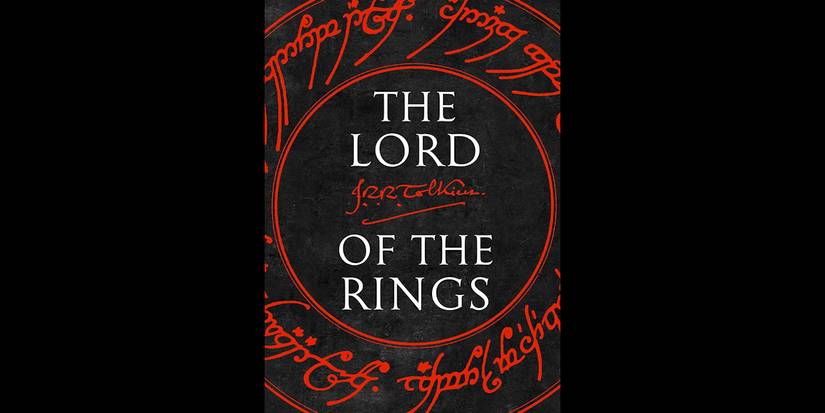
“I wish it need not have happened in my time.” Fantasy literature is divided into two eras: before The Lord of the Rings and after it. Building on the solid foundation of The Hobbit, Tolkien’s magnum opus follows Frodo Baggins after he inherits the One Ring and embarks on a journey to destroy it. He’s joined by a lovable fellowship of companions, though their path is perilous and haunted by tragedy.
Importantly, the adventure here is driven by character rather than spectacle alone. The protagonists each undergo meaningful growth throughout the story. Sam’s loyalty, in particular, has become legendary because it embodies the novel’s belief that ordinary acts of courage can change the course of history. Aside from the magic and balrogs and giant spiders and orcs, The Lord of the Rings is fundamentally a story about friendship, sacrifice, hope, mortality, corruption, and the burden of responsibility.
1
‘Treasure Island’ (1883)

“Fifteen men on the dead man’s chest. Yo-ho-ho, and a bottle of rum!” The Platonic ideal of the adventure novel, and the origin point for modern pirate mythology. Treasure Island follows young Jim Hawkins after he discovers a treasure map connected to the legendary pirate Captain Flint. Jim joins an expedition to locate the buried treasure, only to discover that many of the crew members, including the charismatic Long John Silver, are secretly pirates planning mutiny.
The plot wastes very little time, moving quickly from mystery to voyage to conflict. Every stage of the adventure introduces new threats and complications. That said, the book’s greatest strength is probably the characters. Long John Silver, in particular, is a phenomenal creation. He’s charming, intelligent, humorous, ruthless, and endlessly adaptable. Both Jim and the reader are often unsure whether to trust him, fear him, admire him, or all three at once.


You must be logged in to post a comment Login