Entertainment
10 Greatest American Book Masterpieces of the 21st Century

Coined all the way back in 1968, the term “Great American Novel” has been a subject of interminable debate for well over a century, but what about the Great American Novel of the 21st century? That’s a question that’s not often talked about nearly enough, a question that can bring up several unforgettable books—even ones that aren’t actually novels—that will likely go down in history as some of the greatest from these first three decades of the 21st century.
Whether it’s a sharply modern behemoth of a novel of the caliber of Honorée Fanonne Jeffers‘ The Love Songs of W.E.B. Du Bois, or a non-fiction masterpiece like Isabel Wilkerson‘s The Warmth of Other Suns, the best American books published since 2001 are all proof of the remarkably quality of the country’s literary output in modern times.
10
‘All the Light We Cannot See’ (2014)

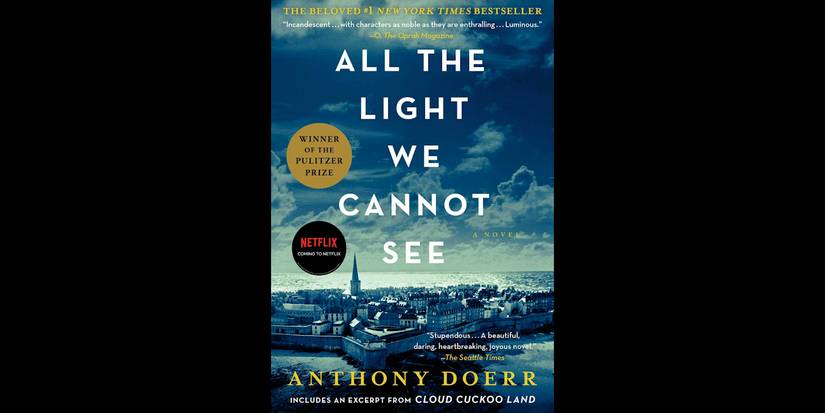
Inspired by a train ride where he overheard a passenger being frustrated over having no cell phone signal, which he felt was neglecting the miracle of long-distance communication, Anthony Doerr came up with the idea for the World War II drama All the Light We Cannot See. For it, he won the Pulitzer Prize for Fiction and the Andrew Carnegie Medal for Excellence in Fiction.
Those were fully deserved awards, too, because All the Light We Cannot See is one of those book masterpieces that are perfectly written. Doerr’s prose is beautifully poetic and powerfully visual, greatly elevating the book’s thematic exploration of things like empathy, fate, and the beauty of the world. Rarely has an American novel seen a use of alternating perspectives this effective or emotionally striking.
9
‘The Love Songs of W.E.B. Du Bois’ (2021)


The debut novel of the poet Honorée Fanonne Jeffers, The Love Songs of W.E.B. Du Bois is a sprawling 800-page behemoth of a novel spanning from the time right before the Civil War until the present. It’s an incredibly ambitious, absolutely engrossing family saga that takes full advantage of each and every last page of that daunting length. But as challenging as it may look, the book is so impeccably written that it becomes surprisingly easy to breeze through it as if it were 400 pages shorter.
The way Jeffers explores the trauma of Black and Indigenous families in the American South while also celebrating their heritage and resilience is truly remarkable, the whole book feeling like a work of art centuries in the making because of it. And like all the best historical epics, The Love Songs of W.E.B. Du Bois does a phenomenal job of balancing the scope of its premise with surprisingly intimate and intricate character development.
8
‘The Fifth Season’ (2015)
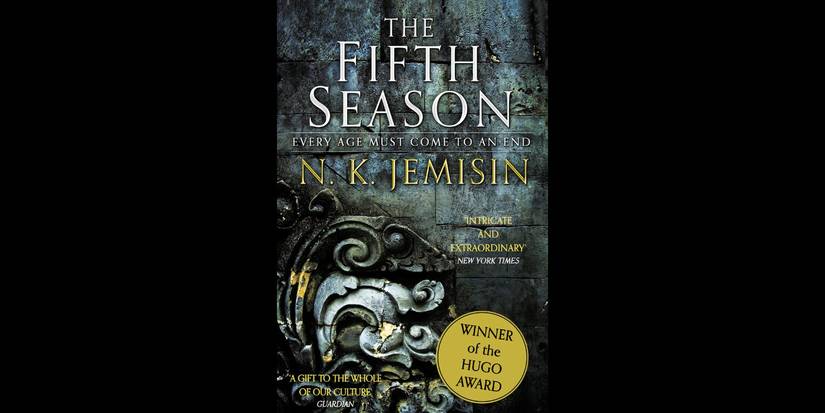
American speculative fiction has been top-notch throughout the entirety of the 21st century, too, as perfectly demonstrated by N. K. Jemisin‘s science fantasy masterpiece The Fifth Season. Winner of the Hugo Award for Best Novel in 2016, it served as the first volume in Jemisin’s acclaimed Broken Earth series. But fantastic though its sequels may be, there’s simply no beating the original in this particular case.
The Fifth Season is one of those fantasy books better than most movies, a scathing critique of systemic oppression, impressive in its thematic depth, its groundbreaking structure, and its unique worldbuilding. Jemisin’s writing here is bold, incredibly immersive, and even shockingly experimental at times, which includes some parts written in second person. That’s only the tip of the iceberg when it comes to the creativity contained within The Fifth Season.
7
‘There There’ (2018)

The debut novel of Cheyenne and Arapaho author Tommy Orange, There There is perhaps the highest-quality example of a category of American books that has seen a tremendous boom and resurgence throughout the 21st century: Native American literature. In fact, the novel as a whole is a powerful exploration and celebration of Native American history and identity, the sort that anyone intrigued by that facet of the United States’ identity as a country ought to check out at least once.
Whereas many Indigenous books from around the world end up being period pieces about Indigenous trauma and suffering, Orange crafts a stunning, absolutely gripping account of what it’s like to be Native American in the modern-day US. Wonderfully character-driven, masterfully structured and paced, and treating complicated topics like violence and addiction with the utmost sensitivity, it’s a true must-read chapter of 2010s American literature.
6
‘James’ (2024)

Another example of why American literature has been absolutely exceptional throughout the 2020s so far, Percival Everett‘s James is a potent reinterpretation and reimagining of Mark Twain‘s Adventures of Huckleberry Finn. For it, Everett won multiple awards, including the Kirkus Prize, the National Book Award for Fiction, and the Pulitzer Prize for Fiction. It would be difficult for anyone to read James and think that the hype was entirely unwarranted.
One would think that radically revising one of the books that’s most often brought up in the Great American Novel debate would likely result in a novel that feels pretentious, overly ambitious, or even just downright disastrous. Not James. Everett’s dissection of how imposed social roles and internal self-identity relate to systemic racism is as fascinating as it is sensitively explored, and it’s a story that couldn’t have been told without Huckleberry Finn as its scaffolding. James shows why and how any nation’s literary canon, the United States’ included, can never be fully finished, but simply reinterpreted and forced to evolve.
5
‘The Sympathizer’ (2015)
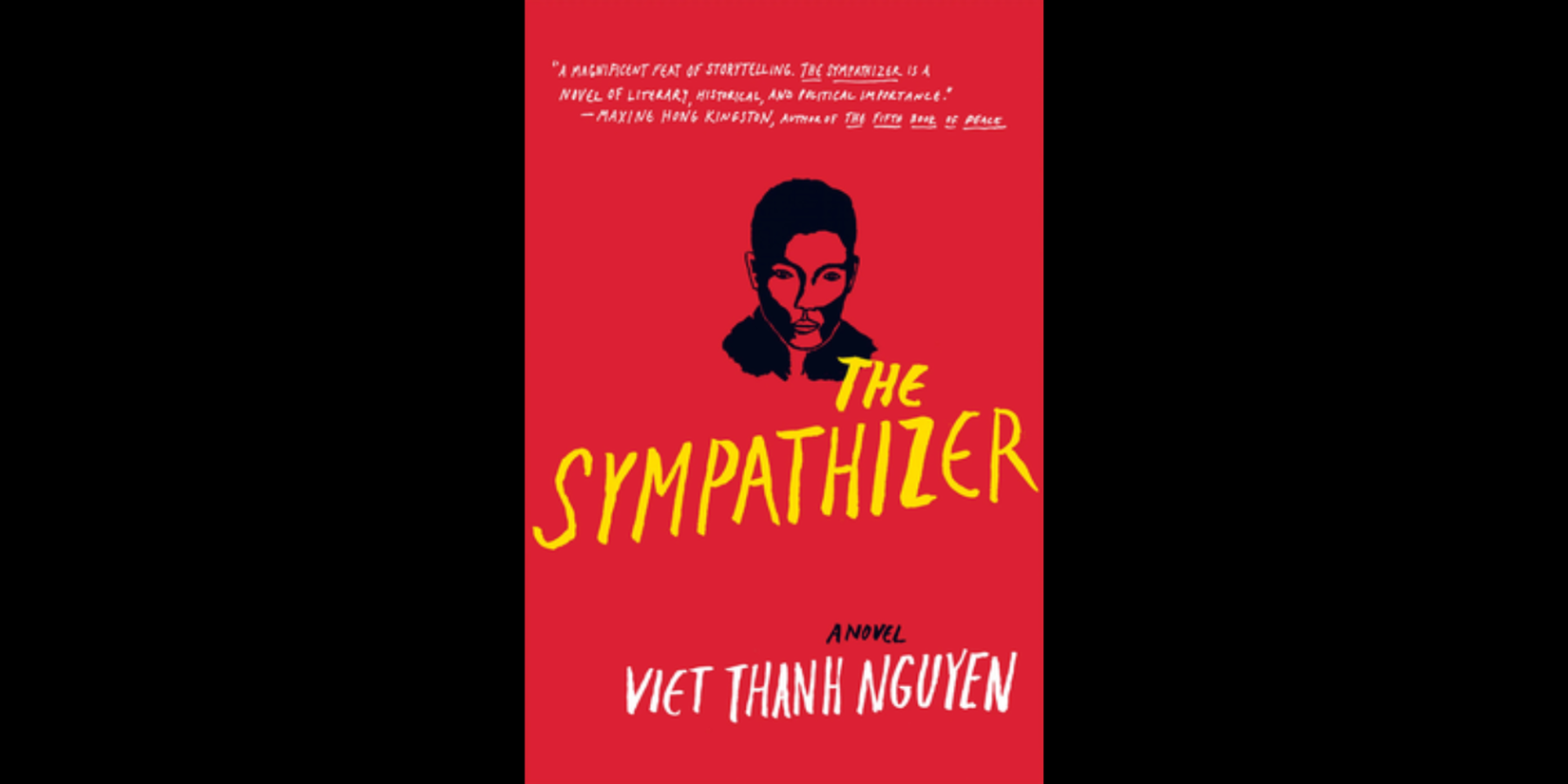
The inspiration for one of the most underappreciated HBO miniseries of the 2020s so far, Vietnamese-American professor Viet Thanh Nguyen‘s debut novel, The Sympathizer, is considered by some to be one of the best books of the last 100 years. Winner of the 2016 Pulitzer Prize for Fiction, it’s a genre-bending masterpiece that functions equally well as a mystery spy thriller, a dark comedy, and a war drama.
The Sympathizer deals with a multitude of themes and interweaves them in a way so complex that it’s surprisingly re-readable.
Like all the best American novels, The Sympathizer deals with a multitude of themes and interweaves them in a way so complex that it’s surprisingly rereadable. At its core, though, it’s a deeply tragic story about how dual identity can be a curse, and about how the media flattens and trivializes the haunting realities of war. It’s definitely not a feel-good novel, but it’s one so impeccably crafted that everyone should read it at least once in their lives.
4
‘The Nickel Boys’ (2019)

Yet another instance of an award-winning novel that’s just about as far as you can get from a feel-good book, The Nickel Boys is based on the infamously abusive Florida reform school Dozier School. For it, Colson Whitehead won the 2020 Pulitzer Prize for Fiction. Whitehead has written other exceptional books that deserve to be counted among the best in America’s 21st-century bibliography, most notably The Underground Railroad, for which he also won the Fiction Pulitzer. However, it’s the book that made him the fourth author in history ever to win the Pulitzer for Fiction twice that’s arguably his very best.
Before it inspired one of the best movie masterpieces of the last 10 years, The Nickel Boys presents its hauntingly horrific story—made all the more horrific by the fact that it was inspired by true events—with a refreshing amount of restraint. Instead of exploiting the subject matter for sensationalized melodrama, Whitehead creates an emotionally stirring critique of institutional violence and racism so deeply tied to America’s cultural identity that not counting it among the country’s best 21st-century books would be a crime.
3
‘The Corrections’ (2001)

Though Jonathan Franzen‘s The Corrections was published exactly 10 days before the September 11th attacks in New York City, the way the book explores the culture, domestic anxieties, and economic unease of late-capitalist America proved terrifyingly prophetic. A whopping 25 years after its publication, The Corrections still reads as a surprisingly modern book, having aged like fine wine. For it, Franzen won the 2001 National Book Award.
It’s a novel that captures the thematic, emotional, and psychological complexities of the contemporary United States to absolute perfection. Pulling American literature out of the postmodernism that had come to dominate it throughout the late 20th century, The Corrections almost single-handedly breathed new life into the Great American Novel conversation. It proved that books could still intimately tap into the American psyche without the detachment of postmodernism and the Internet age.
2
‘The Road’ (2006)

Cormac McCarthy is widely regarded as one of the greatest, most important and influential authors of the late 20th and early 21st centuries, the mind behind masterpieces as groundbreaking as the incredible The Road. It’s one of the best post-apocalyptic books of all time, winner of a Pulitzer Prize for Fiction and a phenomenal introduction to McCarthy’s whole oeuvre.
What makes The Road one of the most universally fascinating Great American Novels of the 21st century is that even though it is set in a post-apocalyptic United States, and even though its thematic core can be interpreted as a portrayal of the death of the American Dream, it’s built on an almost mythological premise that anyone should be engrossed by. Written with a powerfully stripped-down prose and the thought-provoking central question of what morality means when civilization has withered away, it’s a 21st-century American classic for a reason.
1
‘The Warmth of Other Suns: The Epic Story of America’s Great Migration’ (2010)

As incredible as the United States’ literary output in the fictional department has been throughout the last 26 years, American non-fiction in particular has seen a resurgence ever since the turn of the century. This shift has resulted in many a non-fiction book that’s still a must-read in 2026, most notably Isabel Wilkerson’s The Warmth of Other Suns. It’s a study of the Great Migration that turns the topic into a surprisingly accessible epic.
Wilkerson spent a whopping 15 years conducting research to write The Warmth of Other Suns, and all that effort absolutely paid off. Far from ever feeling tedious or didactic, the book humanizes the subjects of its story to a level never before seen in any book about the Great Migration. It’s such a complex, beautifully crafted, wonderfully novelistic work of non-fiction that it should be considered essential reading for anyone who loves 21st-century literature, no matter where they’re from.
You must be logged in to post a comment Login