Entertainment
10 Greatest American Books of All Time

The Great American novel is a kind of mythical concept, an ideal that critics still argue about and that a few ambitious (delusional?) writers still strive to reach. Nevertheless, there are some consensus picks for contenders, books that capture crucial aspects of the American experience and which have hugely influenced the country’s literature.
Just as delusional is the rather daunting task of ranking these masterpieces, but here we are. The titles below span a range of styles and settings, from the Mississippi River to the Dust Bowl, Jazz Age mansions to the violence of the Old West. However, they are all essential in their own way, titanic entries into the ongoing medium.
10
‘Beloved’ (1987)


“Freeing yourself was one thing; claiming ownership of that freed self was another.” Beloved confronts one of the darkest chapters in American history. Set after the Civil War, the novel follows Sethe, a formerly enslaved woman whose home is haunted by the ghost of the daughter she killed rather than allow her to be returned to slavery. When a mysterious young woman calling herself Beloved appears, buried trauma resurfaces in devastating ways.
Here, Toni Morrison fuses historical realism with supernatural elements, using ghosts to represent memories too painful to suppress. The haunting becomes as literal as it is symbolic, switching between intimate emotional moments and broader historical reflections and making the book both personal and political. Not for nothing, Beloved earned Morrison the Pulitzer. Even now, the book still hits hard, and it continues to be challenged and banned in many American school districts.
9
‘A Farewell to Arms’ (1929)

“The world breaks everyone.” One could make the case for several Hemingway novels to appear on this list, though perhaps the most well-rounded of them is A Farewell to Arms. Set during the First World War, it centers on American ambulance driver Frederic Henry and his romance with British nurse Catherine Barkley. Their relationship develops against a backdrop of military collapse and relentless violence.
One of the greatest anti-war novels ever written, and drawing heavily upon Hemingway’s wartime experiences, the novel strips away romantic notions of heroism in favor of emotional honesty. Here, war is chaotic and indifferent, unforgiving, unpredictable, and inescapable. Frederic’s and Catherine’s love offers a fragile refuge from it, yet it can’t fully avoid the surrounding devastation. The book’s prose style is minimalist, objective, and stark, mostly built out of short, unadorned sentences.
8
‘The Corrections’ (2001)

“We all live with the consequences of our choices.” This book caused a sensation on release, with some critics immediately hailing it as one of the best novels of the 21st century. The Corrections is Jonathan Franzen‘s vivid portrait of the Lambert family. Aging parents Alfred and Enid Lambert attempt to reunite their three adult children for one final Christmas together, but decades of resentment and unresolved conflict gradually come to the surface.
Franzen combines razor-sharp social observation with extraordinary psychological insight. Each member of the Lambert family is three-dimensional, with a layered backstory and competing motivations. Through them, the book paints a powerful picture of family dynamics and generation gaps. Frequently funny but never flippant, The Corrections takes its characters’ emotions seriously, delving deep into their ambitions, failures, romantic disappointments, and lingering childhood wounds.
7
‘Invisible Man’ (1952)

“I am invisible, simply because people refuse to see me.” Invisible Man by Ralph Ellison (not to be confused with the H.G. Wells sci-fi story) is an exploration of race and individuality. Its unnamed narrator recounts his extraordinary journey through American society, moving from the segregated South to Harlem while repeatedly discovering that people refuse to see him as a complete human being. Instead, they continually impose their expectations, prejudices, and political agendas upon him.
Along the way, the story oscillates between realism, surrealism, and satire, balancing social critique with character study. It gets incredibly philosophical, too, commenting on many different ideologies, from Marxism and Black nationalism to the work of Booker T. Washington. Invisible Man went on to win the National Book Award and, notably, Barack Obama has said that he used it as a model for the structure of his memoir Dreams From My Father.
6
‘The Sound and the Fury’ (1929)

“Caddy smelled like trees.” Chronicling the decline of the once-proud Compson family in Mississippi, William Faulkner‘s magnum opus unfolds through four radically different perspectives, each revealing another aspect of the family’s collapse. The book’s use of stream of consciousness, shifting chronology, and fragmented POVs was groundbreaking and transformed the possibilities of fiction. In particular, the famously difficult opening section, narrated by the intellectually disabled Benjy Compson, is one of literature’s boldest achievements.
The book is challenging the whole way through, certainly no beach read, yet it rewards those who stick with it. It’s a dark but masterful Southern Gothic, with a lot to say about modernity and tradition, nihilism, and even religion — famously, several of its scenes mirror or subvert Jesus stories. Many people found all this way too bleak back in 1929, but in the following decades, The Sound and the Fury slowly matured into a classic.
5
‘The Catcher in the Rye’ (1951)


“Don’t ever tell anybody anything.” The greatest YA novel of all time. The Catcher in the Rye plunges us into the vivid, unstable mind of 16-year-old Holden Caulfield. Following his expulsion from boarding school, he wanders through New York City over several lonely days, struggling to make sense of a world he increasingly dismisses as “phony.” We experience Holden’s growing emotional crisis from the inside, making even ordinary encounters carry surprising weight.
The character’s distinctive voice transformed American fiction. Cynical, vulnerable, funny, contradictory, and emotionally raw, Holden feels real and surprisingly relatable, even 75 years later. His story makes for a quintessential coming-of-age tale, as well as a powerful study of loss and mental health. Holden’s grief over his younger brother Allie’s death quietly shapes nearly every aspect of his behavior. His tough exterior hides profound sadness and melancholy, making him resonate with millions.
4
‘The Grapes of Wrath’ (1939)

“Wherever they’s a fight so hungry people can eat, I’ll be there.” The quintessential novel of the Great Depression. Forced from their Oklahoma farm by drought and economic hardship, the Joad family joins thousands of other migrants traveling west to California in search of work and a better life. Instead, they encounter exploitation, poverty, prejudice, and a society unwilling to provide dignity to those most in need.
In telling their story, Steinbeck combines intimate family drama with sweeping social commentary, transforming the Joads into representatives of countless Americans displaced by the upheavals of that era. However, he never reduces them to caricatures or mere symbols, instead portraying them with remarkable empathy. Likewise, while the book is frank, never watering down or softening the edges of the characters’ struggles, The Grapes of Wrath does contain some seeds of hope. The Joads’ resilience is inspiring, even against all odds.
3
‘The Great Gatsby’ (1925)
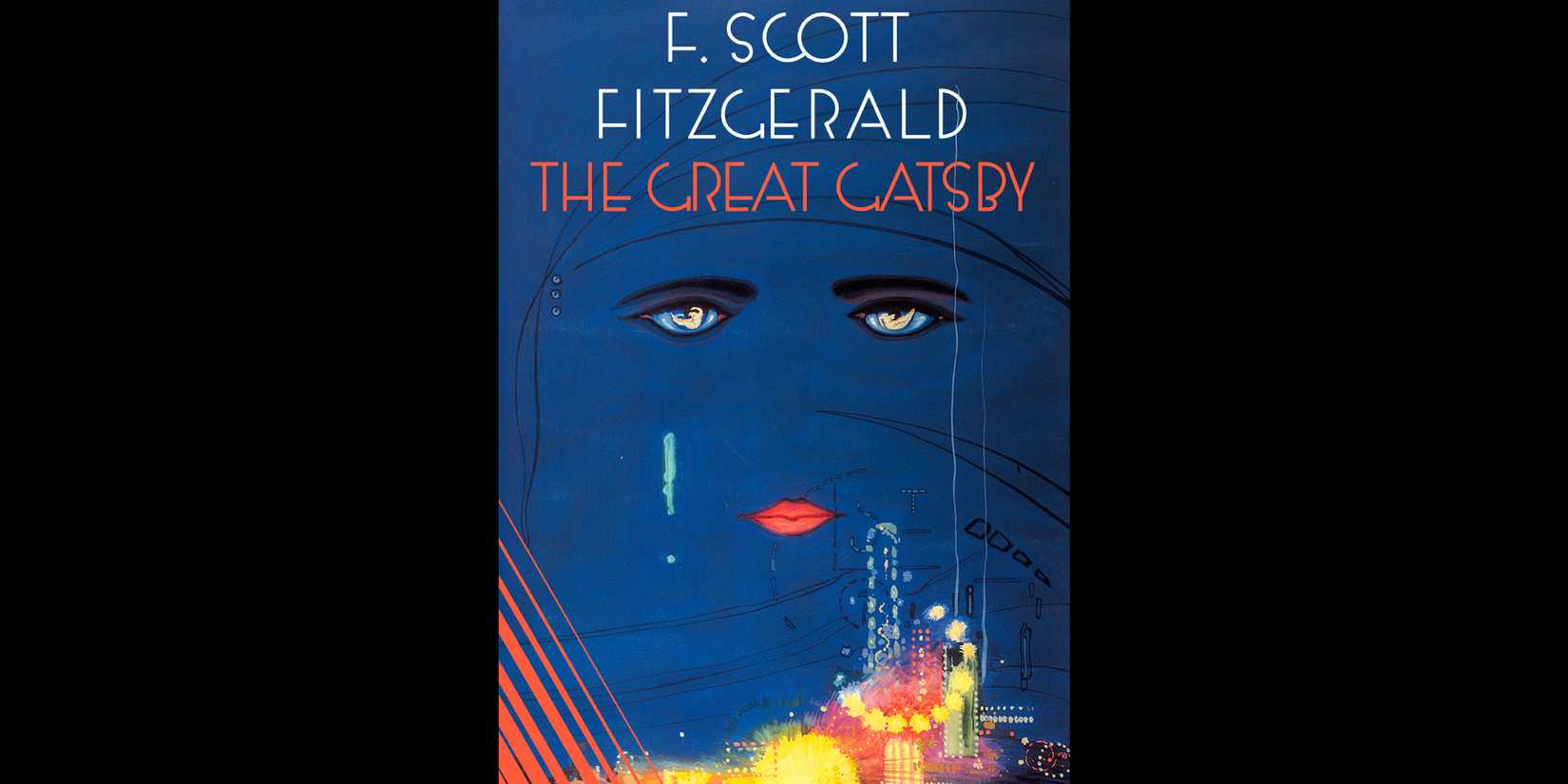
“So we beat on, boats against the current…” If The Grapes of Wrath is an emblem of the Depression, then The Great Gatsby is the Roaring Twenties preserved in amber. Narrated by the thoughtful Nick Carraway, the novel follows the mysterious millionaire Jay Gatsby, whose extravagant parties conceal an all-consuming desire to reunite with his first love, Daisy Buchanan. His relentless pursuit of an impossible ideal becomes a powerful metaphor for ambition, reinvention, and the American Dream.
Despite clocking in at less than 200 pages, The Great Gatsby is full of wisdom and great lines, like “There are only the pursued, the pursuing, the busy and the tired”, and “I hope she’ll be a fool. That’s the best thing a girl can be in this world, a beautiful little fool.” Not to mention, its symbolism, from the green light to the eyes of Doctor T. J. Eckleburg, has become permanently embedded in pop culture.
2
‘Blood Meridian’ (1985)
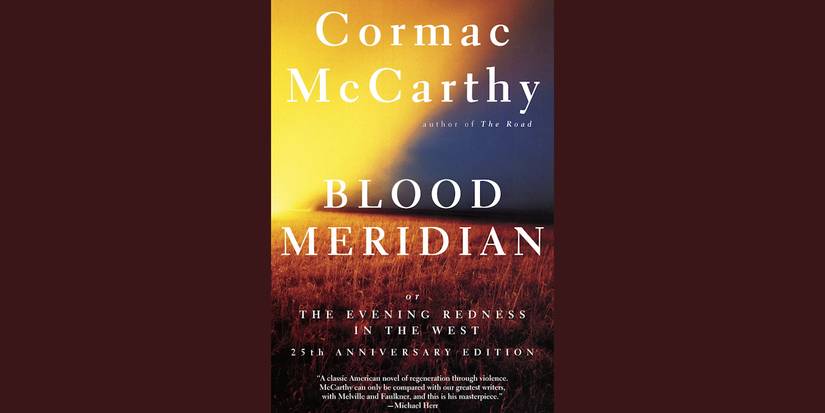
“War was always here.” The defining project by Cormac McCarthy. Loosely inspired by historical events, Blood Meridian follows the Kid, a runaway teenager who joins the notorious Glanton gang as they roam the American-Mexican borderlands during the mid-19th century. There, they commit unimaginable acts of brutality while pursuing profit through scalp hunting. The gang includes Judge Holden, one of the greatest antagonists in 20th-century fiction.
Holden is brilliant, charismatic, physically imposing, and intellectually enigmatic, prone to delivering impromptu philosophical speeches that are as haunting as they’re insightful. Blood Meridian descends into the darkest depths of the Western, presenting the American frontier as a landscape of mythic violence, a place where civilization is gossamer-thin. Here, the world offers little protection against humanity’s most destructive instincts. To hammer the message home, McCarthy tells the story through grand, almost biblical prose.
1
‘The Adventures of Huckleberry Finn’ (1884)

“All right, then, I’ll go to hell.” The Adventures of Huckleberry Finn is widely regarded as the cornerstone of American literature, the reference point for everything that came after. Escaping his abusive father, young Huck Finn joins the runaway enslaved man Jim on a journey down the Mississippi River. Their shared adventures touch on the contradictions at the heart of American society. In particular, Huck’s decision to help Jim despite believing society condemns it is a moving act of ethical courage.
Themes aside, Mark Twain revolutionized American fiction through his use of vernacular language here. Rather than using formal literary conventions, he allows Huck’s distinct voice to guide the entire narrative, giving the reader direct access to the character’s feelings. This approach lends the book an authenticity and relatability that influenced generations of writers. Today, its impact appears inexhaustible, as authors continue to draw on and reimagine ideas and plot points from it.
You must be logged in to post a comment Login