Entertainment
10 Greatest American Movies of the ’90s

American cinema has had its fair share of golden eras over the past century, from the grandeur and glamour of Old Hollywood to the innovative grit of the new wave movement of the ‘70s, and even to an emerging age of blockbuster brilliance today. However, the 1990s remain perhaps the most fascinating decade for Hollywood, as the striking flourish of indie experimentation conjured an era of daring originality, technological advancement, and astute storytelling that continues to influence the medium.
Given that this list is intended to focus solely on American films, it is important to note that pictures co-funded by other countries have not been considered, meaning defining classics like The Matrix, Before Sunrise, and Fargo won’t be here. Even with these exclusions being made, the movies that do make up the list epitomize the conviction, expertise, and pioneering dare of American cinema throughout the 1990s.
10
‘Good Will Hunting’ (1997)


Beautifully human, emotionally gratifying, and faultlessly written and performed, Good Will Hunting was one of the major success stories of the late ‘90s. Following Will Hunting (Matt Damon) as he attends court-mandated therapy while being torn between an unlikely professional opportunity, the comfort of his hard-edged friends, and possibly the love of his life, it juggles comedic wit, poignant depth, and heartbreaking drama with aplomb.
The true stroke of brilliance is that it never once feels forced or manufactured. Instead, it runs as an authentic tale of life’s complexity compounded by themes of self-worth, vulnerability, and the agony of opportunity. The film is further elevated by Robin Williams’ Oscar-winning turn as Hunting’s psychologist, which has come to be one of the most beloved performances in cinematic history. Good Will Hunting continues to soar as a timeless masterpiece of grounded and uplifting drama, a defining icon of ‘90s cinema, and an emblem of underdog success in Hollywood.
9
‘Jurassic Park’ (1993)

Steven Spielberg had already proven himself to be the maestro of blockbuster brilliance over the course of the two decades prior, but he took his game to a new level entirely with Jurassic Park. Based on Michael Crichton‘s novel, it follows a small group of scientists and special guests whose visit to an amusement park housing cloned dinosaurs turns into a frantic nightmare when the park’s safety measures fail, allowing the dinosaurs to roam free.
Every aspect is handled with craftsmanship and creative majesty, from the revolutionary visual effects that pioneered a new age of digital filmmaking to the deftness and depth of the performances, the thematic punch of the screenplay, and, of course, John Williams‘ gorgeous score. Scenes like the grand reveal of the Brachiosaurus, the T-Rex chasing the Jeep, and the Raptors stalking about the kitchen are all ingrained in the lifeblood of Hollywood splendor, presenting an awe-inspiring spectacle that epitomizes trademark Spielbergian movie magic.
8
‘The Lion King’ (1994)
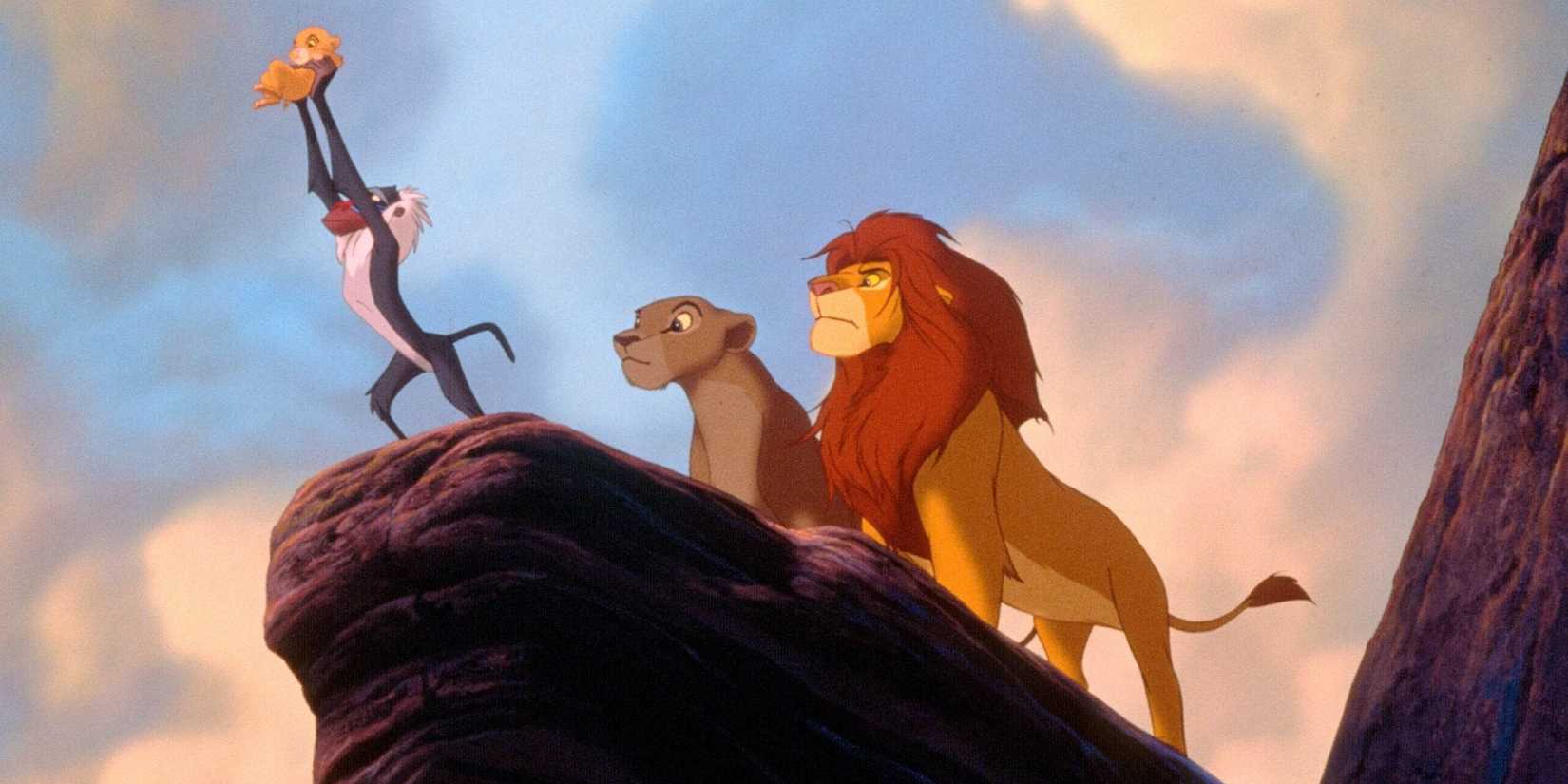
A defining triumph of animated cinema, an ageless marriage of family storytelling and Shakespearean drama, and a foundational cultural pillar of ‘90s entertainment, The Lion King is as iconic and important as any movie made in the past 40 years. Inspired by Hamlet, it follows the young lion prince of Pride Rock as he is forced to flee his home and abandon his crown after his scheming uncle kills his father. When Simba (Matthew Broderick) returns years later, he must confront his evil uncle in order to save the kingdom.
Its basis in William Shakespeare’s classic story imbues it with a dramatic weight that is rare in animated family adventures. However, The Lion King is adept at marrying this narrative intensity with vibrant animation, gleefully enjoyable characters, and a litany of truly unforgettable musical numbers courtesy of Hans Zimmer and Elton John’s work on the score. Its appeal is truly universal, and its brilliance has transcended generations for 32 years to see it stand as one of the most beloved and enduring masterpieces of ‘90s cinema.
7
‘Toy Story’ (1995)

Outside of the birth of the format in the 1930s, the 1990s mark the single most important decade for animated cinema. It was a time of cultural resurgence that was defined by a noticeable pivot to more mature storytelling and groundbreaking advancements in the form. Toy Story is the perfect beacon of this, with its ability to juxtapose its fun-loving story of the secret life of toys against piercing thematic ideas of abandonment and jealousy, all while pioneering the future of animated cinema by being the first full-length picture made entirely with computer graphics.
Furthermore, it marks the feature film debut of Pixar Animation Studios, setting a standard of visual splendor, accessible brilliance, and poignant depth that has become the trademark of the production company. Toy Story remains unsurpassed as both Pixar’s greatest ever release and as the most influential animated movie of all time, a perfect marriage of technical innovation, universally accessible storytelling, and imaginative awe that is every bit as spellbinding today as it was in 1995.
6
‘The Silence of the Lambs’ (1991)

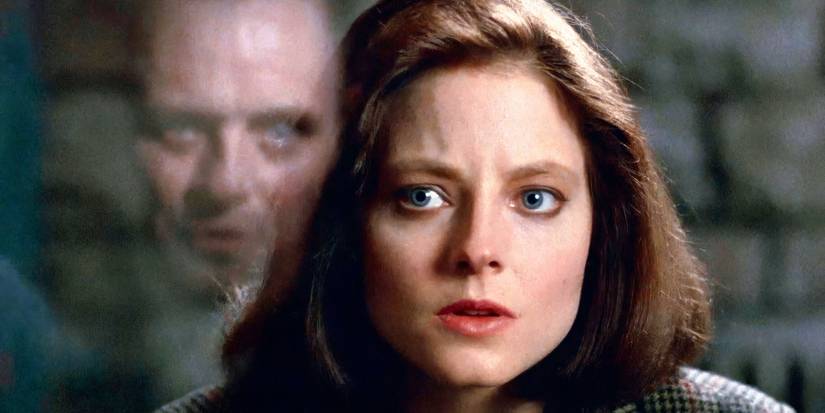
A visceral marriage of grueling crime thrills and terrifying psychological horror, The Silence of the Lambs is a macabre masterpiece of ‘90s cinema defined by its astonishing performances and Jonathan Demme‘s faultless direction. Jodie Foster stars as Clarice Starling, an FBI cadet sent to question imprisoned serial killer and former psychiatrist Dr. Hannibal Lecter (Anthony Hopkins) to gain his insights on an active investigation. Thus follows an intense mental duel between the young agent and the criminal mastermind.
With just 16 minutes of screen time, Hopkins commands the screen as the chilling and volatile cannibalistic psychopath, making him one of the defining villains in cinematic history. However, the movie around him is ceaselessly excellent, exuding a patient and meticulous control that keeps viewers enthralled from beginning to end. The Silence of the Lambs became just the third movie to win the “Big Five” at the Academy Awards as well as the only horror movie to win Best Picture in the history of the ceremony.
5
‘Terminator 2: Judgment Day’ (1991)
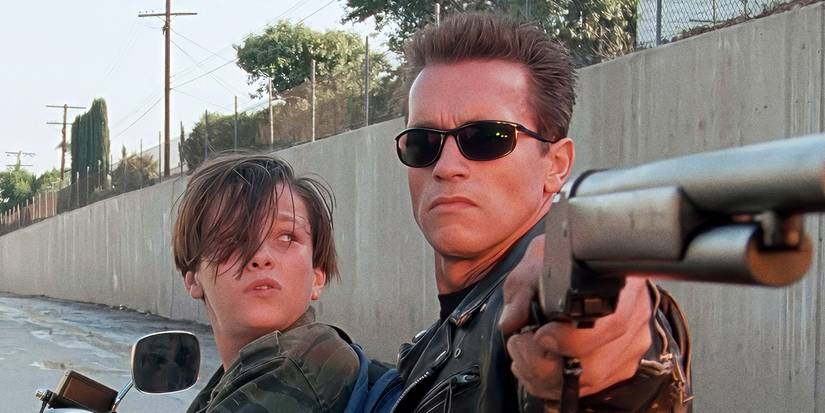
The early part of any decade is always going to feature some overlapping trends and elements of the decade it succeeded. Nothing defined ’80s cinema quite like action bombast, and yet arguably the greatest action movie ever made didn’t hit cinemas until 1991. Directed by James Cameron, Terminator 2: Judgment Day delivers an invigorating spin on its predecessor as the T-800 (Arnold Schwarzenegger) is sent back in time to protect John Connor (Edward Furlong) from an advanced Terminator machine. Meanwhile, Sarah Connor (Linda Hamilton) plots to eradicate Skynet before it can start its war against humanity.
A masterclass in blockbuster filmmaking, it combines the engrossing crunch of practical effects with groundbreaking CGI, leading to an immaculate spectacle of high-octane carnage. However, Terminator 2: Judgment Day also treats viewers to an emotionally engrossing story of connection, humanity, and hope as well, delivering one of the most moving blockbuster masterpieces in Hollywood history as well as one of the most ageless and perfect.
4
‘Pulp Fiction’ (1994)

The definitive spearhead of indie filmmaking, Pulp Fiction reinvented mainstream cinema overnight when it premiered in 1994. A sublime marriage of comedic irreverence and brutal high-stakes crime that is given even more panache by its non-linear narrative structure, it revolves around the bizarre and manic experiences of several figures embedded within the Los Angeles criminal underworld.
It was a lightning bolt of genre-mixing brilliance that took the cinematic world by storm. Pulp Fiction not only spawned a litany of imitators that copied its infectious blending of effortless cool, ultra-violence, and low-key yet highly stylized conversations, but it also enshrined Quentin Tarantino as one of the most influential modern filmmakers. It remains one of the most feverishly entertaining movies ever made, an exuberant gem of addictive cinema that revels in everything from black comedy to gangland chaos.
3
‘Schindler’s List’ (1993)
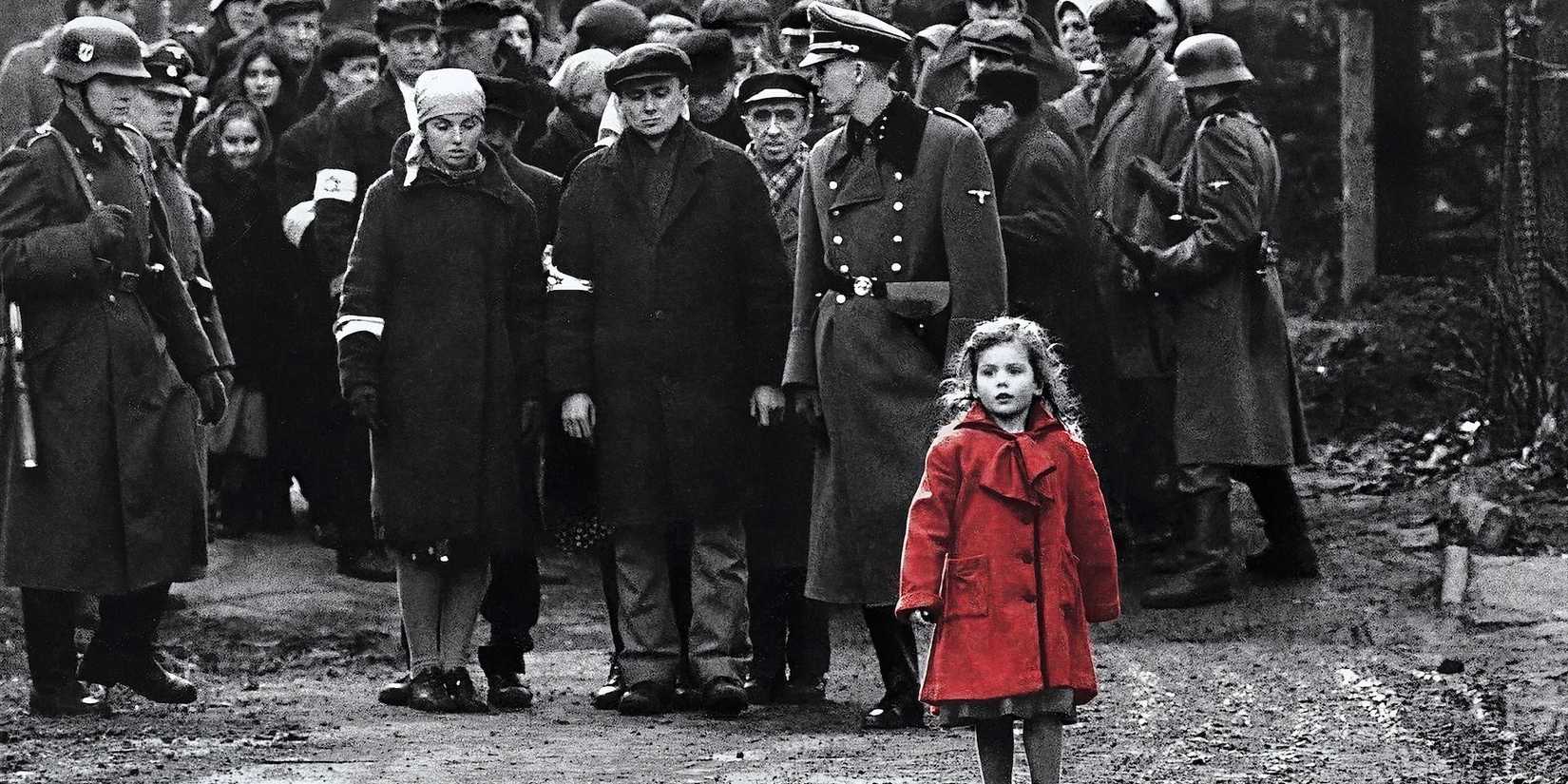
In November 1992, Steven Spielberg finished principal photography on the aforementioned Jurassic Park. Just three months later, production began on Schindler’s List in Poland. It’s difficult to comprehend, simply from the perspective of how much time, effort, and preparation go into a feature film production. It becomes borderline impossible to conceive how it was achieved when one looks at the monumental scale, harrowing might, and ceaseless perfection of Schindler’s List.
The Holocaust drama follows Oskar Schindler (Liam Neeson) as he uses his occupation and his favorable standing with the Nazi Party to recruit Jewish workers to his factories, ensuring they are spared from almost certain death in the concentration camps. Spielberg masterfully grounds the incomprehensible evil of the Holocaust in intimate moments of character depth and connection. Bolstered by the visceral rawness of the violence, a litany of exceptional performances, another outstanding score from John Williams, and the stark beauty of its black-and-white cinematography, Schindler’s List is a masterpiece on all fronts and one of the greatest movies of all time.
2
‘Goodfellas’ (1990)

Martin Scorsese has directed 27 feature-length films throughout his career, including other ‘90s classics like Casino, The Age of Innocence, and Cape Fear. Given the extensive range of his body of work and the consistent quality of his films, it speaks volumes that 1990’s Goodfellas is so widely regarded as being his crowning glory. A biographical gangster movie, it follows the life of Henry Hill (Ray Liotta) as he rises from an impoverished youth to a major figure in the mafia.
Goodfellas brilliantly immerses viewers in the luxury, power, and prestige of life in organized crime before turning the infectious fantasy into a ferocious nightmare of paranoia. Manic performances and sequences like the mercurial Copacabana tracking shot endow it with a liveliness that still feels fresh and hypnotic 36 years later. It is unquestionably one of the greatest gangster movies of all time and a defining triumph of ‘90s cinema at large.
1
‘The Shawshank Redemption’ (1993)
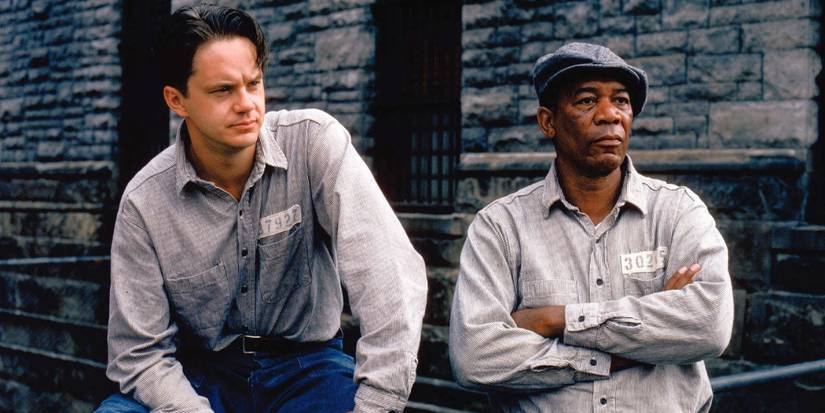
Given its cultural status and universal admiration in today’s world, it is difficult to comprehend that The Shawshank Redemption finished its theatrical run as an agonizing box office flop. It’s ample proof that commercial performance is far from everything in cinema, as the 1993 classic delivers a truly timeless story of friendship, hope, and resilience. It follows Andy Dufresne (Tim Robbins), a banker who gradually adjusts to life behind bars as he forms a tight-knit friendship with Red (Morgan Freeman) and uses his skills to gain favour with the warden in exchange for minor luxuries for his fellow inmates.
Steeped in old-fashioned storytelling, The Shawshank Redemption excels at holding humanistic warmth and brutal realism hand-in-hand. The grim reality of Andy’s first years and Brooks’ (James Whitmore) inability to adjust to life outside illustrate the painful depths of the story, but the irresistible and pervasive tone of camaraderie ensures there is meaning and beauty to the movie as well. Complimented by a note-perfect ending, The Shawshank Redemption is a quintessential and easily admired classic that stands tall among the best-told stories in cinematic history.
You must be logged in to post a comment Login