Entertainment
10 Greatest Animated Movie Villains Not From Disney

Villains are some of the best parts of any given movie, and for good reason. A well-constructed villain acts as a foil to the heroes, either by showing them a dark reflection of what they could end up as, or by presenting a formidable obstacle that the hero must overcome to achieve their goals. The most iconic villains become staples of popular culture, representing the many faces of evil and standing as inspirations for storytellers to create their own brand of wickedness.
Animated films have had a great selection of villains, with the vast majority coming from Disney, which is unsurprising, since the studio has contributed to the vast majority of animated films over the years. However, other companies have created baddies that are just as good as the best from Disney, and it’s high time we start to celebrate them.
10
Jenner (Paul Shenar) – ‘The Secret of NIMH’ (1982)

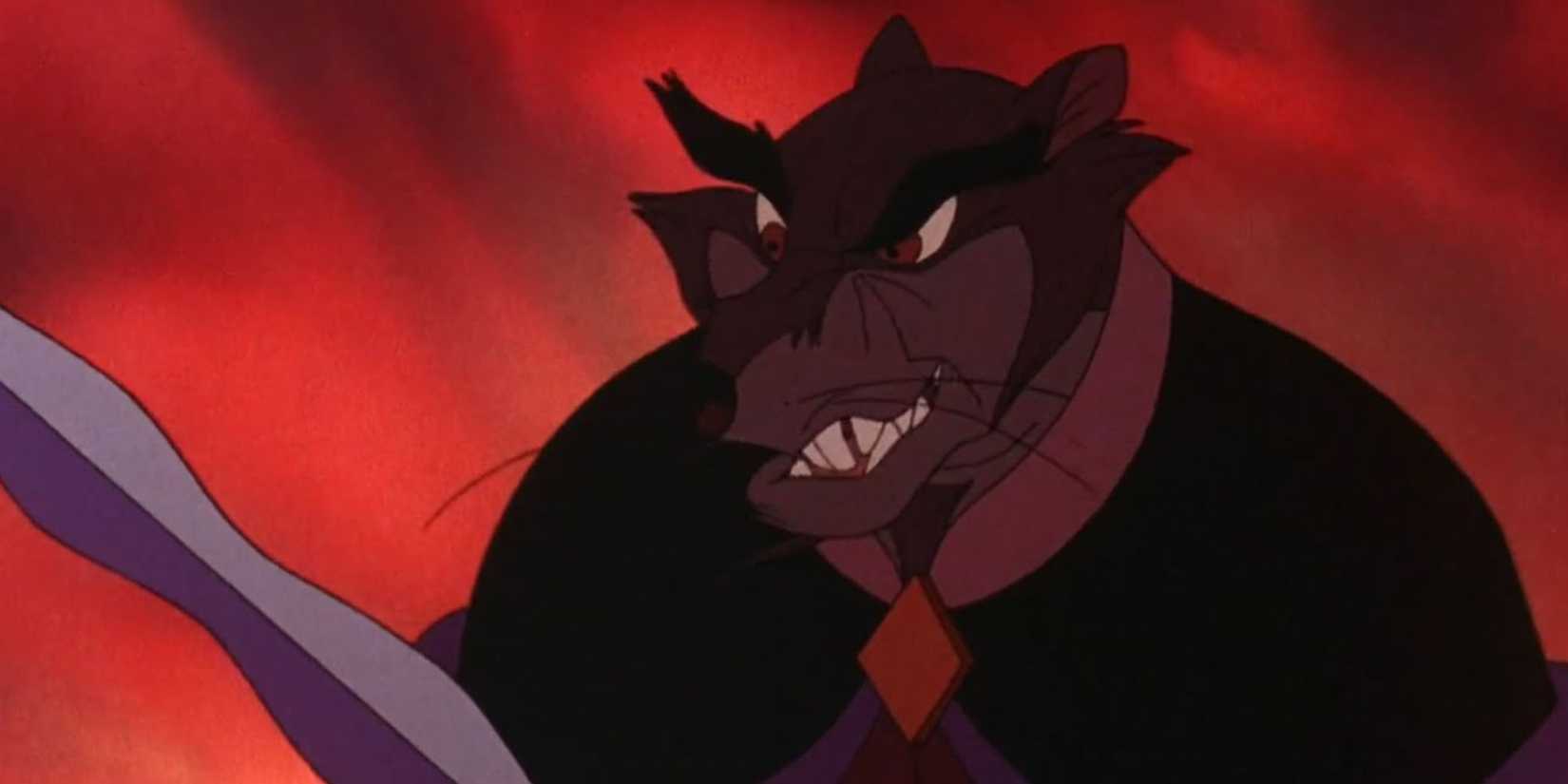
As one of several rats and mice experimented on by the National Institute of Mental Health, Jenner (Paul Shenar) obtained advanced intelligence, and escaped with the others to establish a colony underneath a farmer’s rosebush. As the rats made advancements in science that bordered on magical, they needed to steal more and more electricity from the farmers, so their leader, Nicodemus (Sir Derek Jacobi), began preparations for the rats to migrate to Thorn Valley and make a new home. However, Jenner saw no reason to leave and voiced his opposition to the plan, while also waiting for the right opportunity to kill Nicodemus and seize control.
Jenner only appears in under 10 minutes of The Secret of NIMH, but he leaves a very strong impression thanks to his design, Shenar’s fantastic delivery, and for what he represents. Initially, Jenner serves as the conservative voice of opposition who wants to keep to the old ways, and has more than enough charisma to mask his true intentions as deep passion for his beliefs. However, the fact that he is willing to resort to underhanded murder shows that, while their enhanced intelligence allows the rats to create many wonders, it also leaves them susceptible to vices like pride, ambition, and greed.
9
General Woundwort (Harry Andrews) – ‘Watership Down’ (1978)
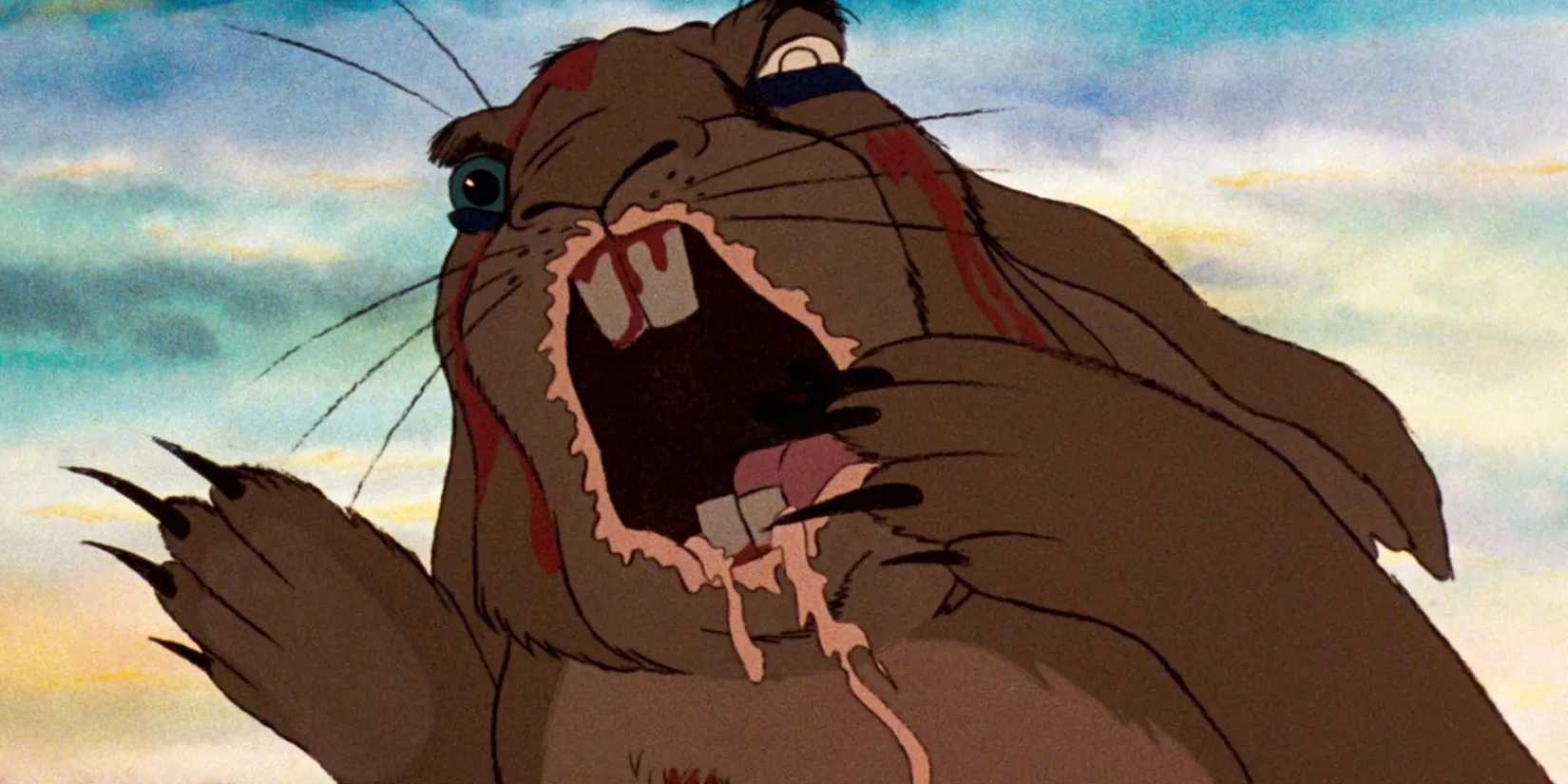
You might not think that rabbits could be scary, but General Woundwort (Harry Andrews) manages to make such a cute animal horrific. The tyrannical ruler of the Efrafa warren, Woundwort holds onto power with authoritarianism and fear, battling the leaders of other warrens to the death to add to his ranks, and rewarding loyalty by allowing his followers to rise higher in his hierarchy. However, his need for control results in his warren becoming too overcrowded, which leads several members to risk their lives and try and find a means of escape or a new warren to join.
Woundwort combines the darkest parts of nature and humanity to present Watership Down with an unforgettable antagonist. He’s not entirely heartless towards the rabbits under his rule, but his pride and need for control is so great that he perverts the animal’s natural instincts to survive into totalitarianism and brutality. In combat, Woundwort’s an absolute monster, killing his fellow rabbits with ease and even standing his ground against predators.
8
Thrax (Laurence Fishburne) – ‘Osmosis Jones’ (2001)
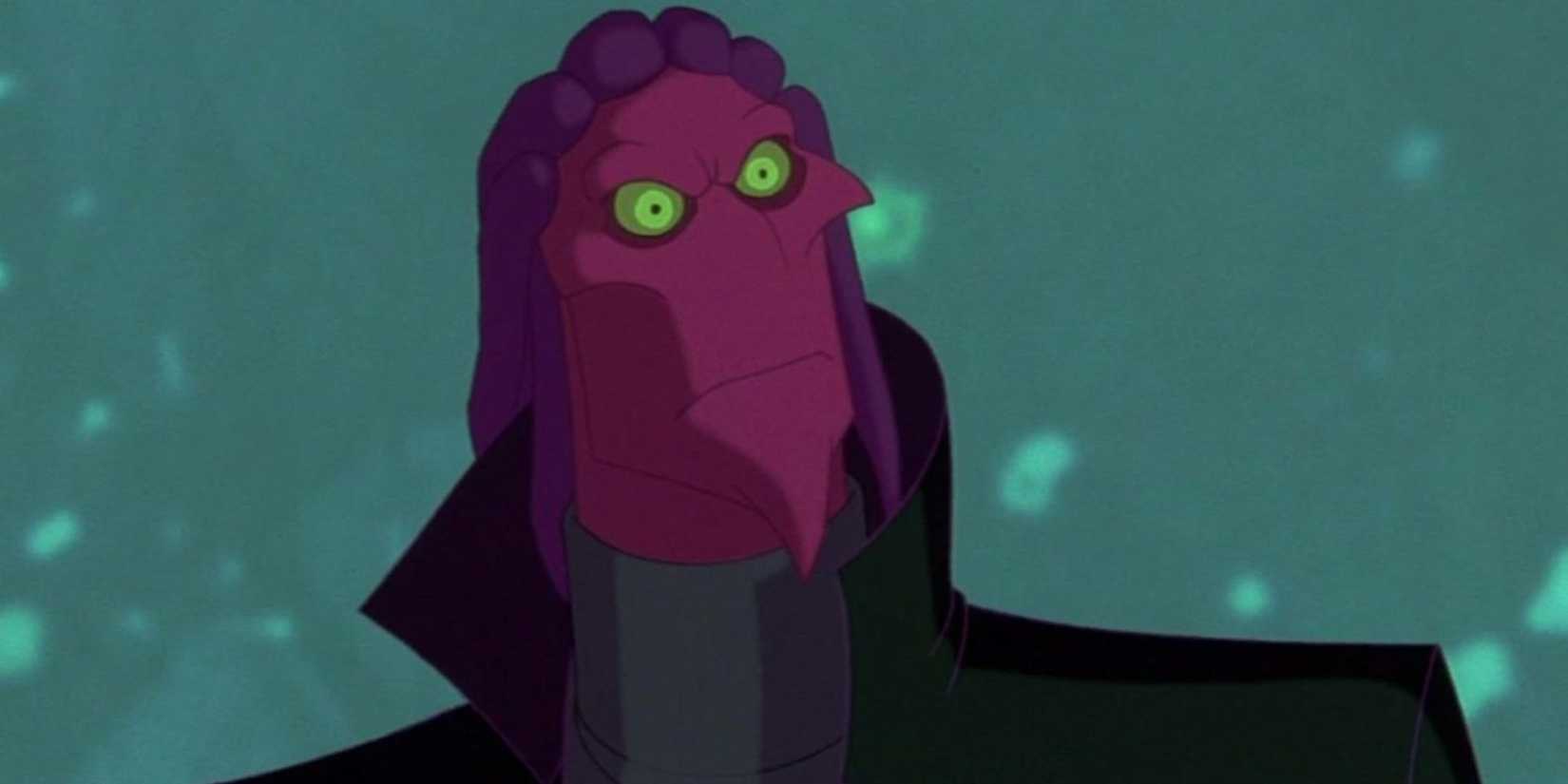
When zookeeper Frank DeTorre (Bill Murrey) eats a hard-boiled egg spat out by a chimpanzee, he brings a large host of germs and viruses into his body, including Thrax (Laurence Fishburne). With his elongated talon on his left hand, Thrax can ignite any cell he touches, and quickly makes his way through Frank’s body in order to sabotage the hypothalamus and cause him to overheat. His ultimate plan is to kill Frank within 24 hours before moving on to a new human to get his own chapter in the medical books.
Osmosis Jones suffered due to the live-action segments, but the animated ones are well praised, and Thrax is a big reason for it. Not only does he have a slick design that oozes confidence and power, but he has the personality to boot, presenting himself as a suave and charismatic villain, helped by Fishburne’s deliciously wicked performance. However, beneath this debonair mask lies a cunning predator who delights in the process of building up to his next kill, and won’t hesitate to incinerate anyone in his way.
7
Grigori Rasputin (Christopher Lloyd) – ‘Anastasia’ (1997)
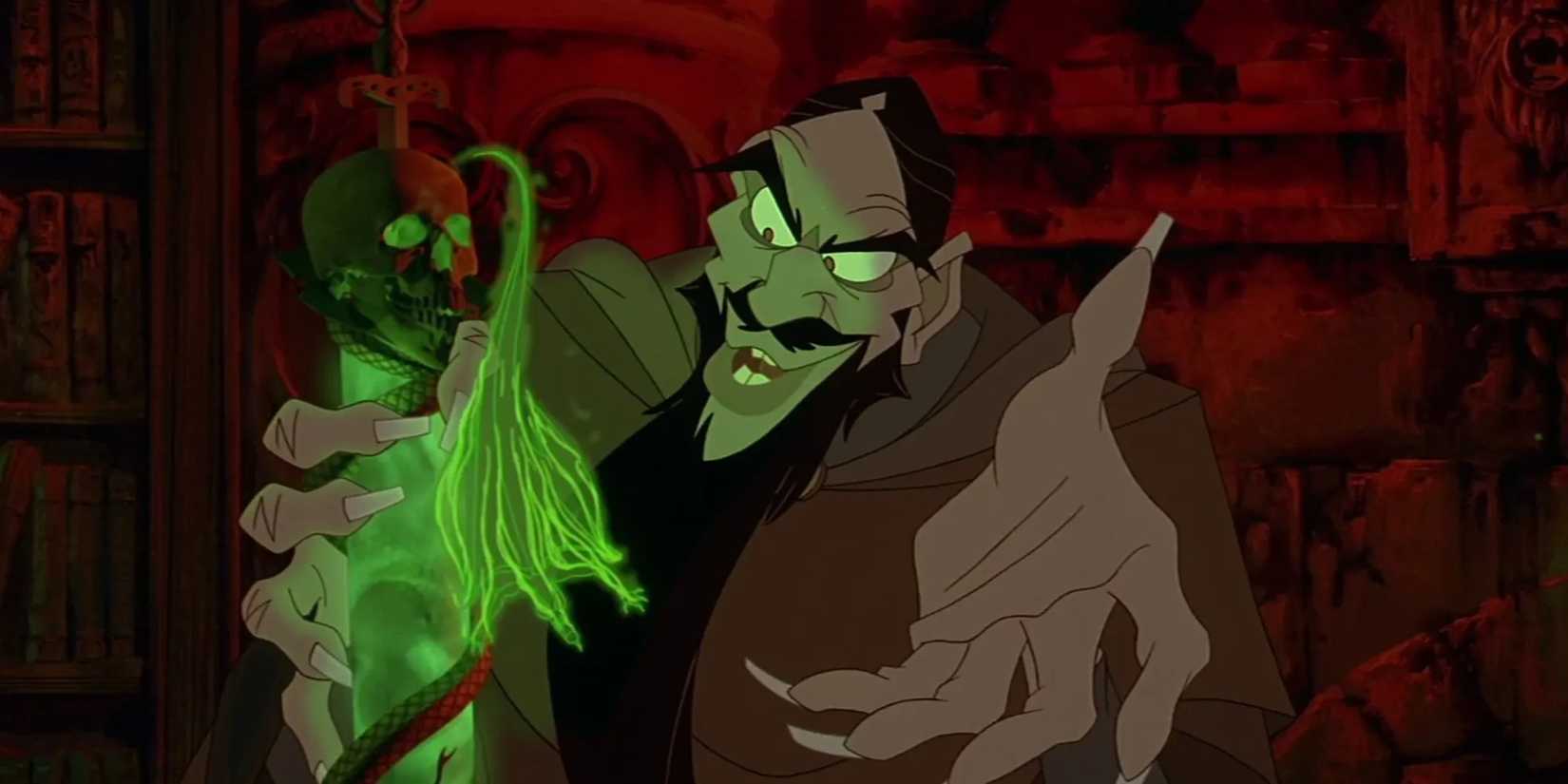
Once the advisor to Tsar Nicolas II (Rick Jones) of the Russian Empire, Grigori Rasputin (Christopher Lloyd) was exposed as a power-hungry charlatan and banished, leading to him selling his soul to dark powers in exchange for a magic reliquary. He used it to curse the Romanov family, who were toppled from power during the Russian Revolution, while Rasputin drowned trying to kill the youngest daughter, Anastasia (Meg Ryan). The reliquary kept his soul alive in limbo, and when his bat minion, Bartok (Hank Azaria), found Anastia as a young amnesiac woman, Rasputin swore to kill the last of the Romanovs personally.
Anastasia takes a lot of liberties in transforming Russian history into a fairy tale romance, and the changes to Rasputin are among the best. He’s basically a lich—a powerful undead sorcerer whose soul is tied to a magic artifact—allowing the movie to have fun playing around with his undead nature through physical comedy, and genuine moments of horror. Lloyd’s voice work is also impeccable, especially in the scenes where Rasputin unleashes his dark magic and truly lives up to the title of the Mad Monk.
6
King Haggard (Christopher Lee) – ‘The Last Unicorn’ (1982)
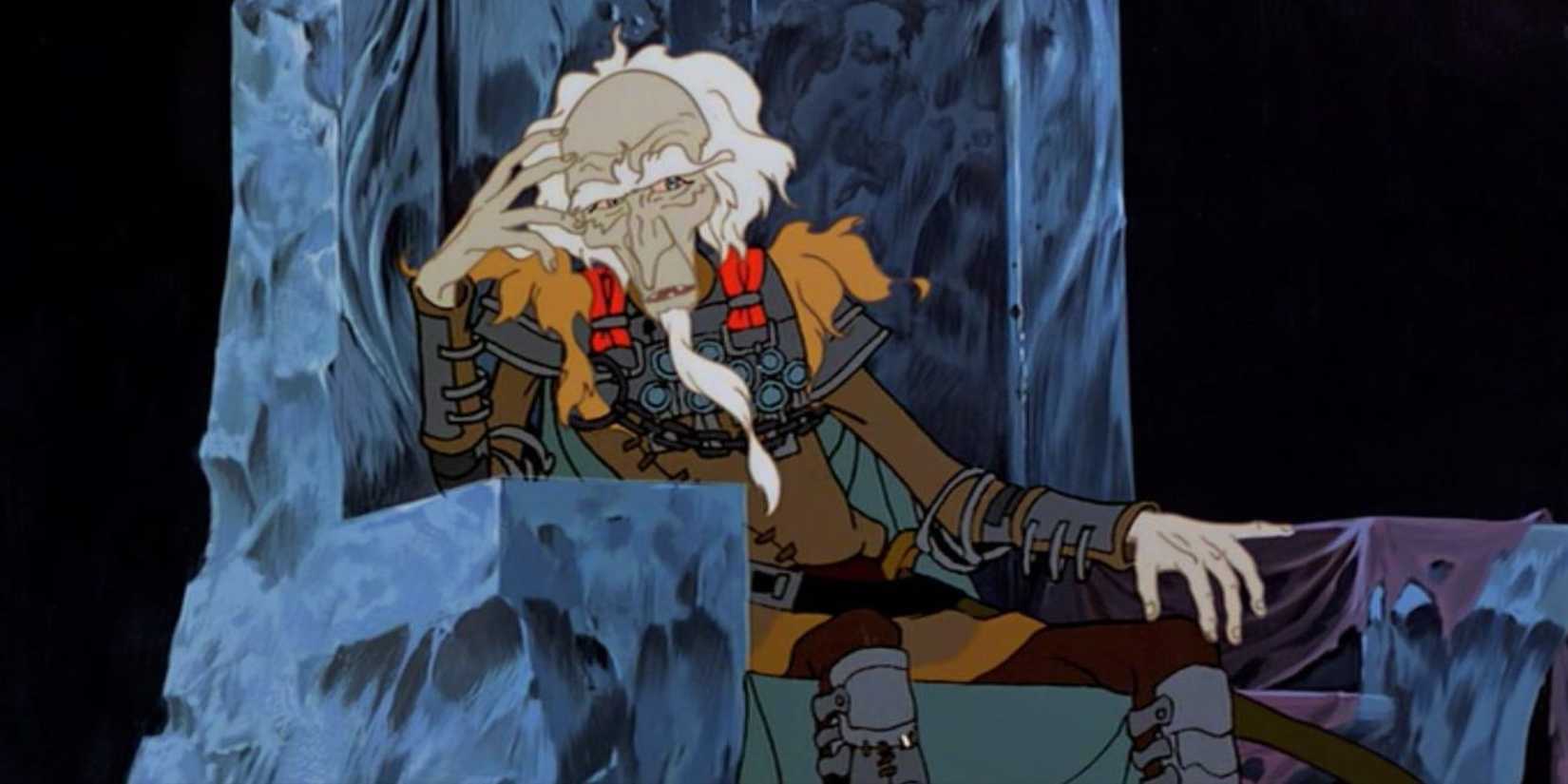
In a crumbling castle by the sea lives King Haggard (Sir Christopher Lee). Despite ruling over a kingdom, he is cursed with a melancholy so deep that he practically lives alone in his castle aside from the most minimal of staff and his adopted son, Prince Lir (Jeff Bridges). The only thing that brought him any joy were unicorns, so he sent forth his demonic red bull to round them up and drive them into the waves beneath his castle so that he could look upon them whenever he wished.
Though The Last Unicorn is a modern fairy tale, author Peter S. Beagle, who wrote the film script, understands his genre well enough to write King Haggard with Shakespearean levels of tragedy. Haggard’s intense depression that sees him live in empty halls and rule over a barren wasteland would be pitiable, except that, by stealing the unicorns to bring himself joy, he deprives the world of something beautiful and pure and cares nothing for the consequences. Lee, as expected, gives a stellar performance full of power and gravitas, and even voiced Haggard in the German dub.
5
The Beldam (Teri Hatcher) – ‘Coraline’ (2009)
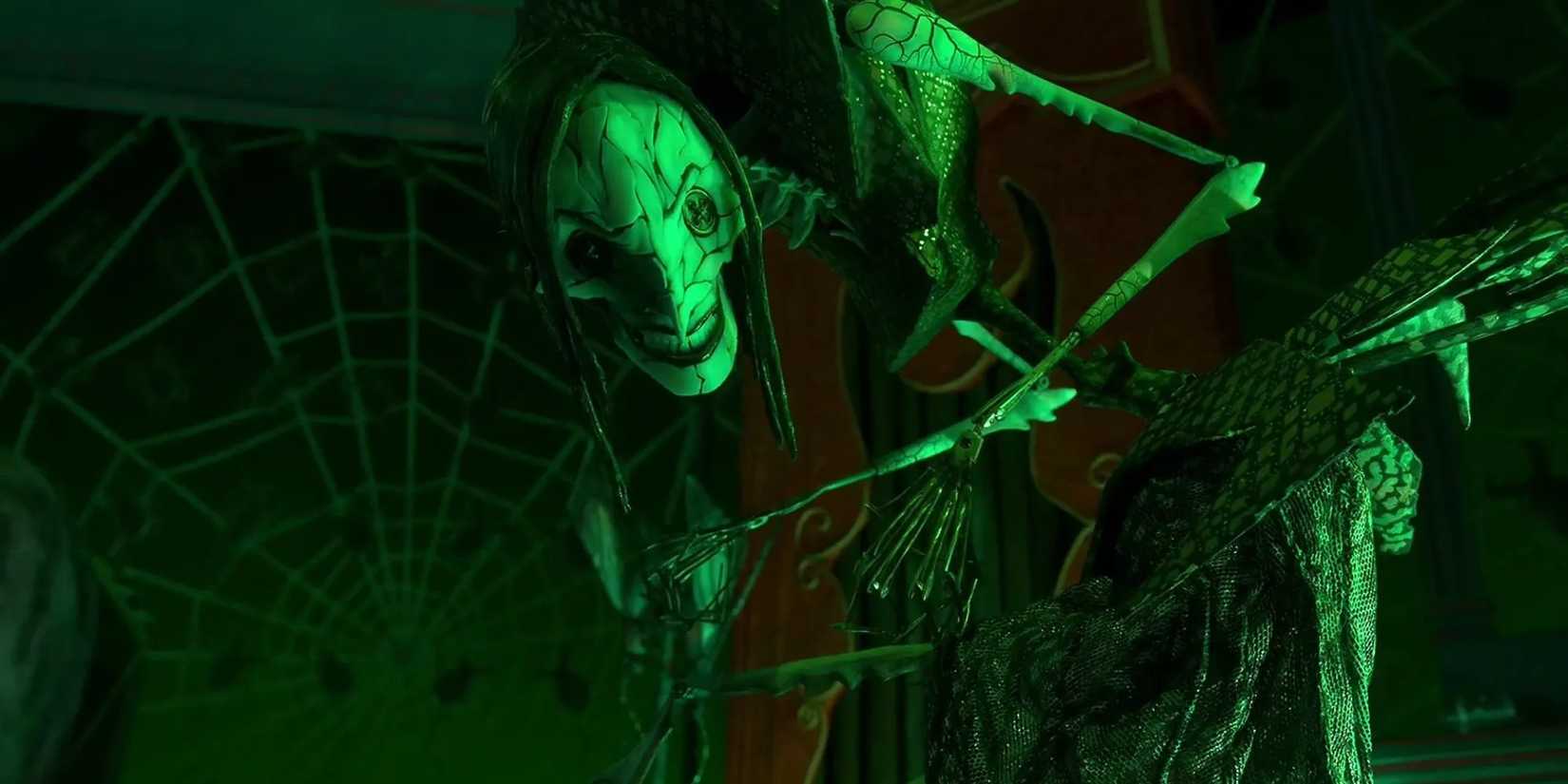
Also known as the Other Mother, the Beldam (Teri Hatcher) is a spider-like monster who lives in a pocket dimension and spies on our world using animated puppets. Once she finds a miserable child, she lures them into her world, which is altered to cater to their every whim, and offers to let them stay if she can sew black buttons onto their eyes. Once the child accepts, they become trapped in her world, their lives sacrificed to sustain the Beldam, and their souls left as her eternal prisoners.
The Beldam is a horrific antagonist that helped Coraline earn its spot as one of the darkest animated films for kids. Though exaggerated for the fantastical setting, her methods are terrifying thanks to how close to home they are: she lures kids with false love, gifts, and attention, but once she gets what she wants, she disposes of them and moves on to the next victim. Fittingly, her true self is spider-like with needle-like fingers and a skeletal body, which represents everything from the webs she spins to trap her prey to the hollow promises she offers.
4
Fairy Godmother (Jennifer Saunders) – ‘Shrek 2’ (2004)
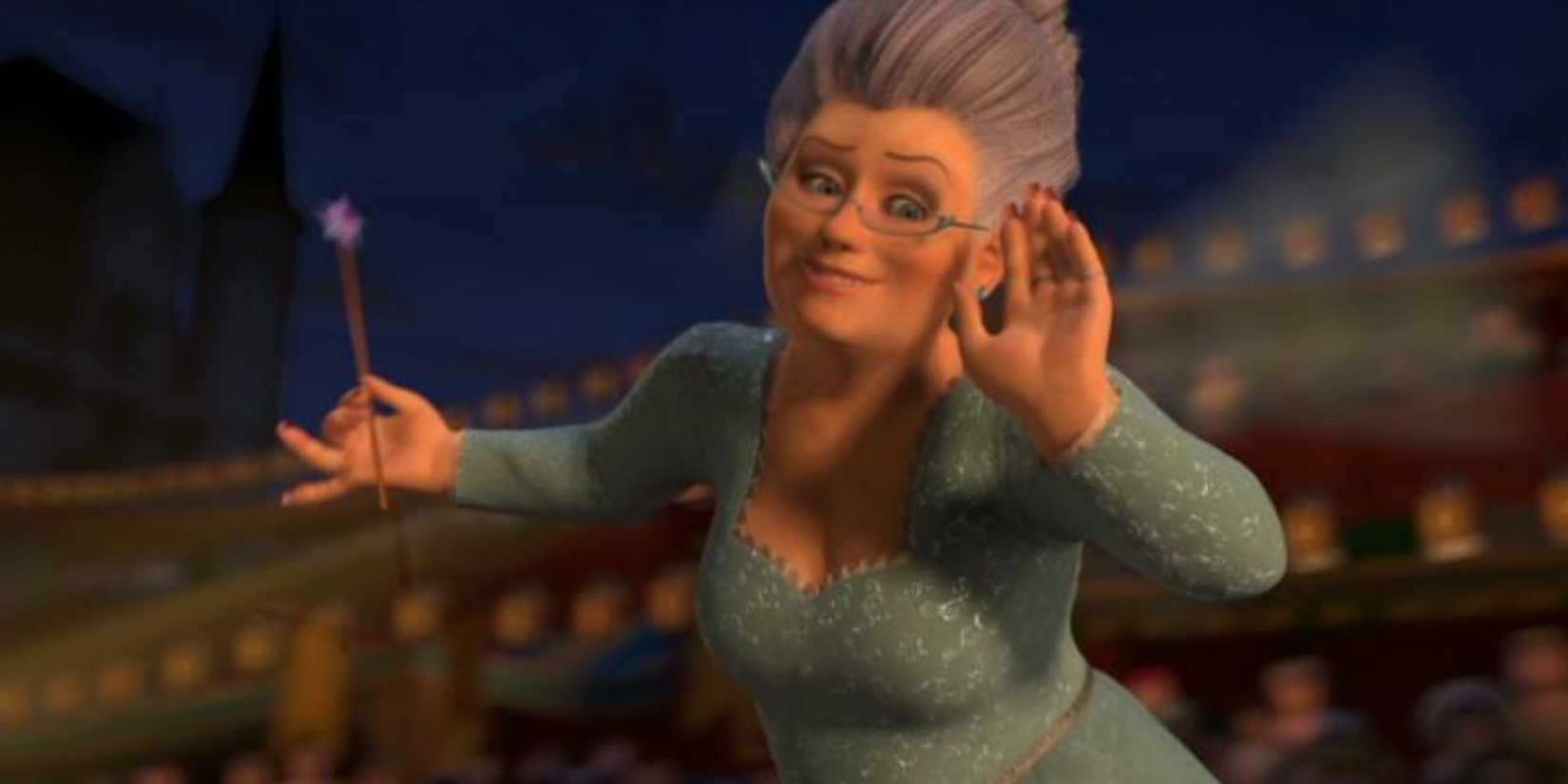
To wed the human princess, Lillian (Dame Julie Andrews), a fog named Harold (John Cleese) makes a deal with the Fairy Godmother (Jennifer Saunders) to become a prince in exchange for his future daughter marrying her son, Prince Charming (Rupert Everett). Thus, the Fairy Godmother is not happy to learn that Princess Fiona (Cameron Diaz) has instead been rescued from her dragon-guarded tower by an ogre named Shrek (Mike Myers), and that she is now permanently an ogre. She blackmails Harold into trying to have Shrek killed, but later realizes she can manipulate Shrek’s insecurities to get what she wants.
Shrek 2 is one of those rare sequels that surpasses the original movie, and Fairy Godmother is the perfect villain to continue a franchise known for satirizing fairy tale clichés. Rather than being a kind, matronly figure who rewards kindness and empathy, this Fairy Godmother is a cutthroat businesswoman who treats happily ever afters like a commodity that can be bought and sold, allowing her to dictate who or what gets their fairy tale endings and eliminate anything that doesn’t fit her idea. Then there is Saunders’ performance, which is just perfect; she nails the ruthless and manipulative side of the character, while still managing to get some comedy through moments like her fawning over her son or failing to maintain her diet due to stress.
3
Lord Shen (Gary Oldman) – ‘Kung Fu Panda 2’ (2011)
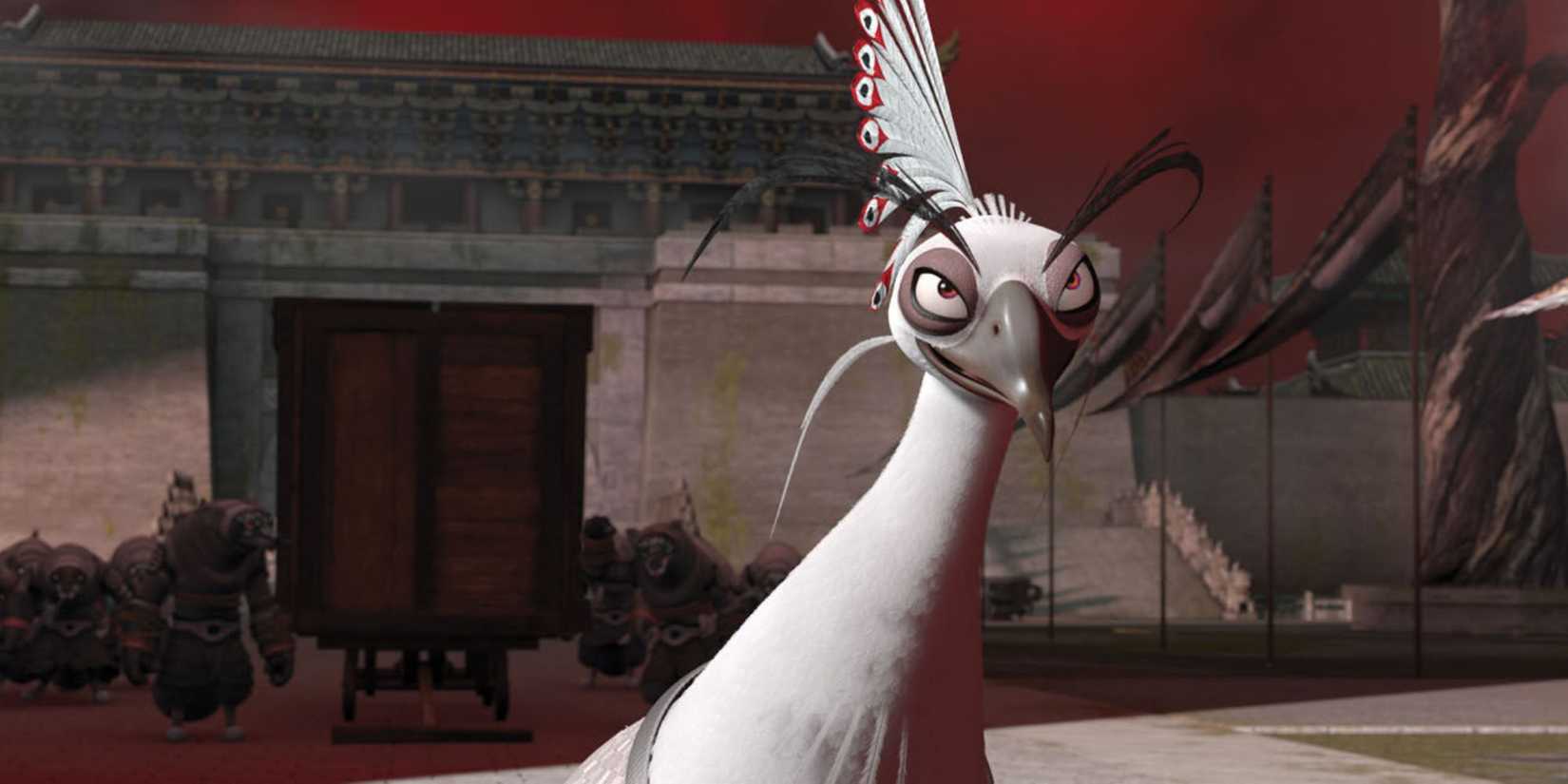
When Lord Shen (Gary Oldman) began experimenting with his family’s fireworks as weapons, his parents asked a Soothsayer (Michelle Yeoh) about his future, and she said Shen would meet his end at the hands of a warrior of black and white. Overhearing the prophecy, Shen decided to prove that he was the master of his fate by massacring a village of pandas, but his parents were horrified by his actions and banished him from Gongmen City. Heartbroken, Shen vowed to reclaim his home city and eventually all of China, and spent the next 20 years building an army of followers and an arsenal of cannons.
Lord Shen is a masterclass in villain writing, and his personal relationship with Po (Jack Black) is the central conflict of Kung Fu Panda 2. He truly is Po’s dark mirror: both of them suffered trauma from loss and battle insecurities, but while Po was able to make peace with his trauma and choses to help others, Shen became bitter and decided to fill the void by taking what he believed he was owed. Yet his interactions with the Soothsayer reveal that beneath his cold, calculated demeanor is a wounded soul who knows that what he is doing is wrong and may even show some remorse, but also believes that he’s too far gone to change and must instead stay the course. Lord Shen is one of the best villains in a martial arts movie, full stop.
2
Yubaba (Suzanne Pleshette) – ‘Spirited Away’ (2001)
Within an abandoned Japanese amusement park is a portal to a village in the spirit world centered around a bathhouse run by the witch Yubaba (Mari Natsuki/Suzanne Pleshette). Due to an ancient promise she made, she accepts anyone who comes to her asking for a job, but as part of the contract, she takes their true names, binding them to her unless they can somehow reclaim them. Yubaba spends most of her days counting her profits, doting on her son Boh (Ryūnosuke Kamiki/Tara Strong), and messing with her good-hearted twin sister, Zaneba (Mari Natsuki/Suzanne Pleshette).
Like most things in Spirited Away, every detail about Yubaba is meticulously chosen for its symbolism. She initially represents greed and decadence with her obsession with profit and the iron grip she has over her staff, but when paired up with her sister, she becomes a dichotomy of the human spirit, representing the negative aspects. Yet Yubaba is not entirely evil: she deeply loves her son to the point of flying into a fiery rage if he’s threatened, always keeps her word, and even shows begrudging respect to those who do a good job or even manage to beat her at her own game.
1
Rameses II (Ralph Fiennes) – ‘The Prince of Egypt’ (1998)
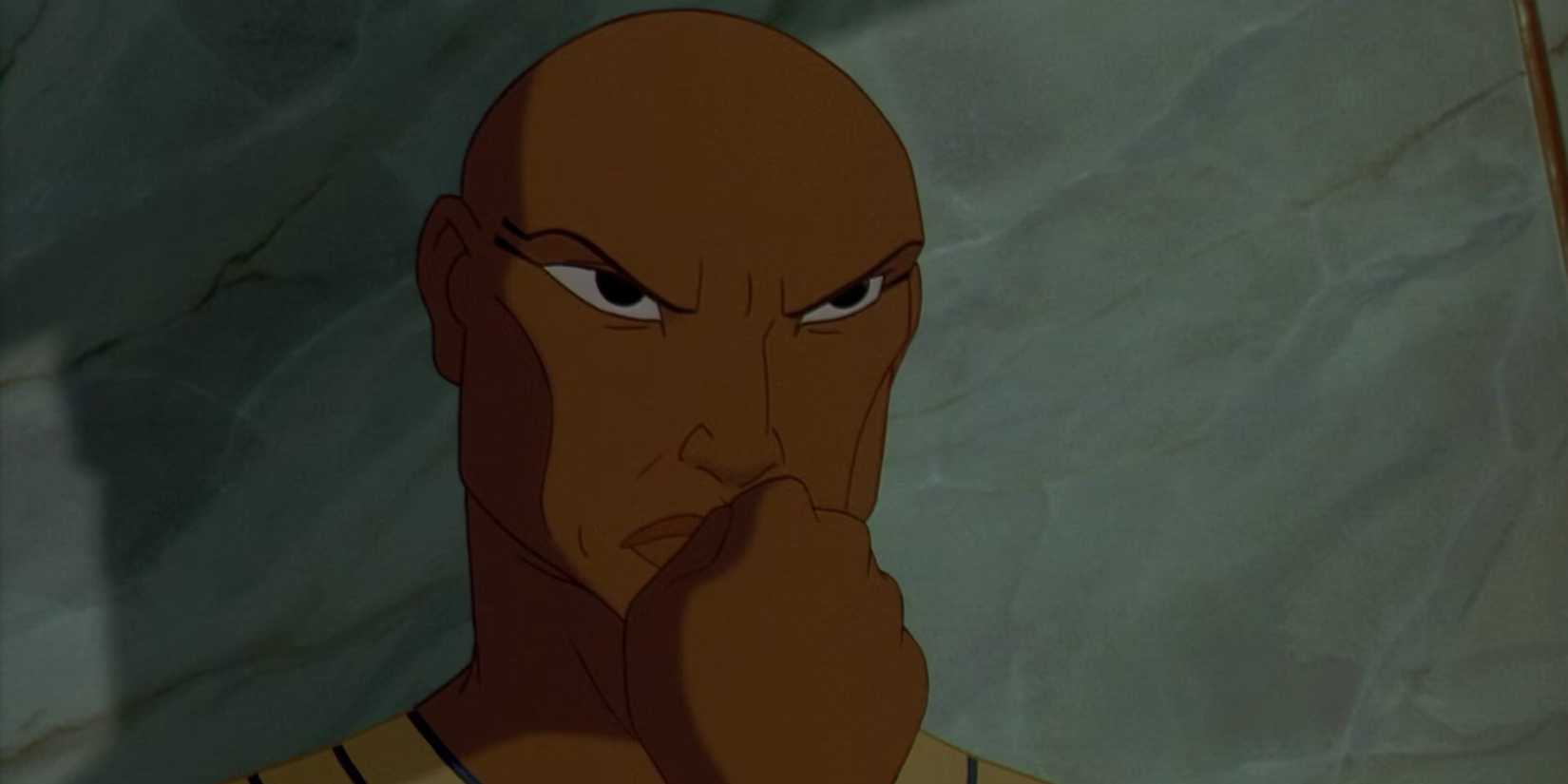
As the heir of Pharaoh Seti I (Sir Patrick Steward), Rameses (Ralph Fienns) has the incredible burden of one day taking over the Egyptian Empire and the legacy of upholding his family dynasty. He is supported in his youth by his adopted brother, Moses (Val Kilmer), until Moses learns the truth of his origins and runs off into the desert after killing an Egyptian taskmaster. Thus, when Rameses takes the throne after Seti’s death, he becomes committed to upholding his family legacy, even when Moses returns to ask Rameses to free the Hebrew slaves of Egypt.
The Prince of Egypt is one of the most epic animated movies of all time. Logically, Rameses is a fittingly epic villain because the writers emphasize his inner turmoil between his insecurities about breaking his dynastic chain and his love for Moses and the life they used to have. And, like any great villain, Rameses’ attempts to show strength and maintain his power doom him, all of which is captured through the phenomenal facial animation and Fiennes’ stellar performance.
You must be logged in to post a comment Login