Entertainment
10 Greatest Book Masterpieces of the 20th Century

Literature saw a drastic transformation—or rather, several—throughout the 20th century. From the experimental nature of modernism, to the surge of global voices that came from postcolonial literature, to the post-Tolkien fantasy revolution, to the transformation of science fiction into a genre as respectable as any other—well, it’s no mystery why many of the greatest books ever written were published between 1901 and 1999.
Whether it’s a generation-defining Latin American gem like Pedro Páramo, a genre masterpiece like the revolutionary Dune, or a postmodernist masterpiece like Gravity’s Rainbow, the greatest book masterpieces of the 20th century are fascinating to study. These 100 years were perhaps the most radically transformative in literary history, and as such, the best books they produced are all essential reading.
10
‘Pedro Páramo’ (1955)


Studying the history and trajectory of 20th-century literature could never possibly be complete without looking at Latin America’s output during the era. Fittingly, no study of 20th-century Latin American literature could ever possibly be complete without reading Mexican writer Juan Rulfo‘s magnum opus, Pedro Páramo, one of the greatest and most important works of magical realism in the genre’s entire history.
Legendary Argentine writer Jorge Luis Borges once called Pedro Páramo one of the greatest texts ever written in any language, and it’s hard to disagree. Though it was originally a critical and commercial failure, Pedro Páramo nowadays stands as a paragon of Latin American literature. Framed with a revolutionary non-linear structure and full of haunting surrealism that makes the book hard to put down, it’s one of the most influential modern literary works not in the English language.
9
‘In Cold Blood’ (1966)


It’s difficult to pinpoint the origins of the non-fiction novel all the way back to a single book, but one thing is certain: the genre saw its boom around the mid-20th century. One of the most important non-fiction novels in history is Truman Capote‘s In Cold Blood, one of the best books of the 1960s, detailing the 1959 Clutter family murders that took place in Holcomb, Kansas.
Widely hailed as the grandfather of the true crime novel, In Cold Blood has aged like fine wine, and some 21st-century critics even call it the first true non-fiction novel. It’s a masterpiece built on surprisingly cinematic and free-flowing prose, without ever sacrificing Capote’s journalistic attention to detail. Exhaustively researched, perfectly paced, and wonderfully complex, it’s a must-read for anyone interested in the true crime genre.
8
‘The Wind-Up Bird Chronicle’ (1994–1995)

Published as a three-volume novel between 1994 and 1995, and later published in English in 1997, The Wind-Up Bird Chronicle is almost universally regarded as the best 20th-century book by one of the greatest Japanese authors of all time, Haruki Murakami. Wildly ambitious and beautifully surreal, it’s a thought-provoking exploration of historical trauma and the search for personal identity.
It may be a bit too long, dark, and dense for someone who hasn’t read Murakami before, but that doesn’t detract from the fact that The Wind-Up Bird Chronicle is one of the greatest Japanese novels in history. Bolstered by Murakami’s uniquely dreamlike prose, a fascinating protagonist, and imagery that lends itself perfectly to infinite analysis and multiple re-reads, it’s yet another instance of flawless 20th-century magical realism.
7
‘Dune’ (1965)
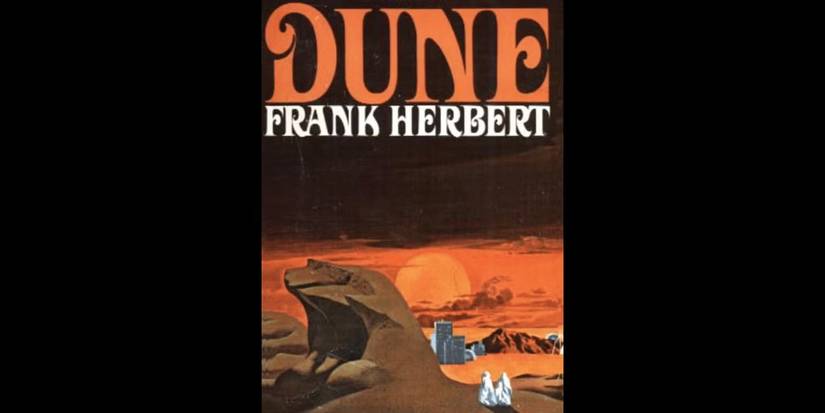
Upon release, Frank Herbert‘s Dune was an immediate commercial and critical success. In the years since, praise for it has only kept growing larger, more widespread, and more mainstream. Today, few would be against saying that this is the single most important and influential work of science fiction of the 20th century.
Simply put, Dune is one of the best sci-fi book masterpieces of all time, a hugely ambitious and complex work that has only gotten better with age. It’s a cautionary tale against the dangers of messianic leaders and religious fanaticism, a study of the relationship between politics and religion, and a meditation on the way humans seek to control the environment. Epic in scale yet deeply intimate when it needs to be, Dune is a must-read even for those who typically don’t love science fiction.
6
‘The Great Gatsby’ (1925)
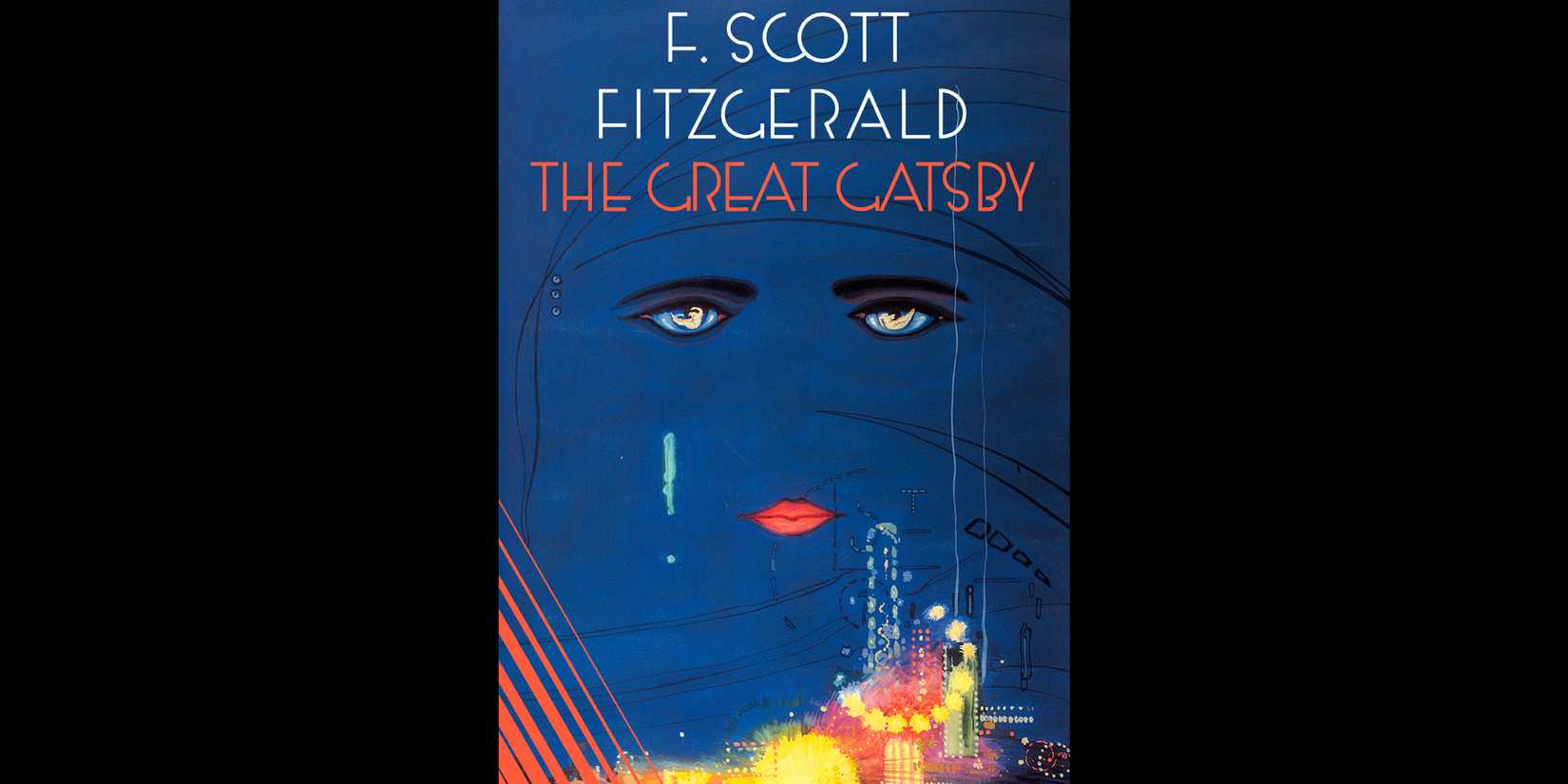
F. Scott Fitzgerald was primarily a short story writer, having written only four novels; and even though he died thinking he was a failure whose works were destined to oblivion, history remembers him among the greatest American writers of the 20th century. Who, if not one of the greats, could have written The Great Gatsby, a remarkably strong contender for the title of “The Great American Novel”?
It’s one of the most powerful tragedy novels of the 20th century, inspired by a romance Fitzgerald had with socialite Ginevra King in his youth. The book was a commercial disappointment, but in the years following, it became the subject of deep academic and critical re-evaluation. Today, it’s one of the most beloved classics of its time, a deeply nuanced and thought-provoking critique of the dark underbelly of the American Dream.
5
‘The Catcher in the Rye’ (1951)

Another book that some would dare to refer to as the greatest American novel of all time, J. D. Salinger‘s The Catcher in the Rye is at the very least a remarkable masterpiece. Partially serialized between 1945 and 1946, until finally being novelized in 1951, it has aged as one of the most important coming-of-age novels written in the modern era.
The book has become an icon for teenage angst and rebellion, thanks to its profound exploration of themes of loss, innocence, and identity.
Calling it one of the best books of the 1950s is quite the understatement. Originally written for adults, the book has since become an icon for teenage angst and rebellion, thanks to its profound exploration of themes of loss, innocence, and identity. Imbued with a raw emotional honesty and highly accessible, colloquial prose that feels refreshing even today, it’s a classic that’s incredibly easy—and crucial—to read.
4
‘The Lord of the Rings’ (1954–1955)

Published in three volumes, J. R. R. Tolkien‘s The Lord of the Rings was originally envisioned as a simple sequel to Tolkien’s iconic children’s novel The Hobbit, but gradually started transforming into something far larger and more epic. Today, it’s widely remembered as the greatest work of fantasy literature of the 20th century, a true turning point for the entire genre.
Since 1955, many books have tried to be “the next Lord of the Rings,” yet not even the best ones have ever managed to match the level of quality of Tolkien’s writing. It really is one of the greatest genre novels ever written and one of the best fantasy book masterpieces, boosted by Tolkien’s gorgeously detailed use of language and the worldbuilding’s tremendous depth and density. One can’t fully understand the history of 20th-century literature without reading The Lord of the Rings.
3
‘Gravity’s Rainbow’ (1973)

Thomas Pynchon is far and away one of the most important postmodern writers ever, an author whose deep imagination and perfectly effective sense of humor helped him reshape modern literature. In order to understand Pynchon’s importance to 20th-century literature, one needn’t go any further than the book typically recognized as his very best: Gravity’s Rainbow, one of the heaviest sci-fi books ever written.
It’s a sprawling monster of a book whose cultural impact and deep influence can still be seen today. Gravity’s Rainbow is a work of true genius full of complex ideas and the sort of aesthetic experiments that you can expect from any Pynchon book, a techno-paranoid gem whose analysis of the dehumanizing effects of technology has tragically aged like fine wine. It’s not an easy read, but it’s an essential one nonetheless.
2
‘One Hundred Years of Solitude’ (1967)

It’s a very nuanced and subjective debate, but if any book has a claim to the title of “most important work of Spanish-language literature since Cervantes‘ Don Quixote,” it’s Colombian author Gabriel García Márquez‘s One Hundred Years of Solitude. Heavily inspired by Pedro Páramo, this is arguably the greatest work of magical realism in the history of literature.
One Hundred Years of Solitude proved that the major axis of world literature in the mid-20th century was Latin America, and it’s just as profoundly engrossing a read today as it was almost 60 years ago. Masterfully structured, gorgeously atmospheric, and profoundly human in ways that very few books have ever been, it’s a masterpiece that absolutely everyone should read at least once in their lives, regardless of what their native language is.
1
‘Ulysses’ (1922)

James Joyce‘s Ulysses is to the modernist literature of the first half of the 20th century what Gravity’s Rainbow is to the postmodernist literature of the century’s latter half. It’s a modern take on Homer‘s The Odyssey, modeled after both the structure and story of the foundational epic poem. But where many classics can be a bit of a chore to get through nowadays, the uniquely experimental style with which Joyce approached Ulysses makes it a thoroughly enjoyable read to this day.
There’s not much of a plot here. Instead, Joyce structures the story with the free-flowing pace of a stream of consciousness, exploring an entirely ordinary day in Dublin with entirely extraordinary detail and vibrancy. Joyce toys around with the English language in ways that you just can’t get in any other book ever written, and that alone is more than enough to make Ulysses an essential read. It’s hard to point to a single novel and call it the best of the 20th century, but if any one deserves it, it’s this one.
You must be logged in to post a comment Login