Entertainment
10 Greatest Crime Caper Movies of All Time

There’s a difference between a regular heist film and a true crime caper. Whereas a heist film is often more serious and focused on upping the stakes every chance it gets, a caper is a crime movie that is more laid-back, lighthearted, and even comedic. The people stealing things in a heist movie are absolute pros, while the criminals in a caper are just having fun alongside the audience.
The crime caper is a genre that has delivered several great movies over the years, from dramatic thrillers like the Argentinian Nine Queens to full-on comedies like Paper Moon. When done right, caper movies can be some of the most charming crime films imaginable, perfectly blending meticulous plotting, satisfying twists, and an irresistible sense of humor.
10
‘Snatch’ (2000)
Guy Ritchie is practically the king of the modern British crime caper, and it all started from the moment he made his feature directing debut. But as great as Lock, Stock and Two Smoking Barrels is, there’s simply no beating the legendary Snatch. It’s one of the most universally beloved Jason Statham movies ever, also starring a staggering number of other immensely charismatic actors.
Snatch only runs for a little over an hour and a half, but its masterfully intertwined web of storylines runs at such an exquisitely fast pace that it feels even shorter. With its quotable dialogue, razor-sharp dark humor that never gets old, and vast ensemble of endearing characters, it’s also the sort of caper that only gets better with every subsequent rewatch.
9
‘The Italian Job’ (1969)


Yet another legendary British crime caper, Peter Collinson‘s The Italian Job stars Michael Caine in one of the most underrated crime movies of the 1960s. Though critics loved it, it underperformed at the box office upon release, causing it to end on a literal cliffhanger without ever getting the sequel it so deserved. But even then, it’s a masterpiece that all those who enjoy crime capers should consider essential viewing.
The film doesn’t take itself seriously for so much as a single second, making it the perfect option for those looking for a fun caper to breeze through on a weekend night. Brilliantly satirical and funny, delightfully stylish, quintessentially British, and featuring one of the greatest car chase sequences ever filmed, The Italian Job is a landmark of the genre that often doesn’t get the love it deserves.
8
‘A Fish Called Wanda’ (1988)

Starring and written by Monty Python’s John Cleese, Charles Crichton‘s A Fish Called Wanda is one of the funniest movies of not just the ’80s, but arguably of all time. Perfectly crafted and sharply hilarious in equal measure, it’s undoubtedly one of the best 1988 movie classics, an absolute masterclass in how to make a genre-bending caper that never needs to take itself seriously at all.
A Fish Called Wanda‘s sense of humor is absolutely ridiculous, and that’s precisely what makes it such a magical cinematic experience. It’s one of the most perfect screwball comedies of the modern era, filled with some of the most intricately constructed gags in the history of comedy cinema. It’s frantic, eccentric, and exceptionally performed all across the board, and the cast is top-notch, particularly as Oscar-winning Kevin Kline.
7
‘The Lavender Hill Mob’ (1951)


Directed by Charles Crichton, the ’50s classic The Lavender Hill Mob provides even more proof that no one does crime capers quite like the British. Starring Alec Guinness and featuring one of Audrey Hepburn‘s earliest roles, it’s one of the 45 movies recommended by the Vatican in 1995—but just about anyone who loves crime films, regardless of what religion they profess (if any), should watch this paragon of the British caper genre.
The Lavender Hill Mob essentially laid down the DNA for the British caper, and over 70 years after its release, it has only gotten better as it has aged. Though gritty, it’s also delightfully laid-back, cleverly subverting everything that the crime and heist genres had come to represent up to that point. It breathed new life into the heist film by proving just how well the modern caper formula could work.
6
‘Nine Queens’ (2000)

Though the world of English-language capers should contain more than enough gems for any one fan of the genre to satisfy their cravings, looking over at Latin America is bound to reveal quite a few underappreciated masterpieces. Case in point: Fabián Bielinsky‘s modern thriller classic Nine Queens, one of the best heist thriller movies of all time.
Whereas many capers are so comedy-oriented that they don’t need to spend too much attention on building a complex, overly elaborate plan for the characters to execute, this staple of Argentinian cinema is one big psychological puzzle where nothing is what it seems. Intense though it may be, however, Nine Queens never forgets to relax and have some lighthearted fun with the material, leading to one of the most satisfying final twists of 2000s cinema.
5
‘Ocean’s Eleven’ (2001)

The Rat Pack was a group of singers that originated in the late ’40s and went on to make some films together. 1960’s Ocean’s Eleven is perhaps their most iconic, but that’s only because Steven Soderbergh improved upon it tenfold when he made his 2001 remake. It’s the first installment of a trilogy, and calling it one of the best thriller movies of 2001 would be the understatement of the century.
The film has a cast that oozes charisma and chemistry, Soderbergh’s effortlessly cool directing style, and a meticulously constructed plot.
The film immediately became the blueprint for how to make a star-studded, big-budget studio comedy caper in the 21st century—and since then, it has remained the gold standard of the genre’s modern form. With a cast that oozes charisma and chemistry, Soderbergh’s effortlessly cool directing style, and a meticulously constructed plot that never lets up, Ocean’s Eleven is the caper that everyone who thinks they don’t like capers should watch at least once.
4
‘Reservoir Dogs’ (1992)

Before he became one of the most acclaimed and widely celebrated filmmakers in the modern history of Hollywood, Quentin Tarantino was a debuting feature filmmaker. The thing is that from the moment Reservoir Dogs splashed into the scene, critics and audiences alike knew that they were in the presence of someone special. Decades have passed, and some still point to this one as their favorite Tarantino movie.
Who can blame them? After all, Tarantino came up with a premise that’s nothing short of brilliant: a witty deconstruction of the caper genre that skips over the heist sequence altogether. Instead, all you see here is a casual chat right before the crime and the bloody, chaotic, twist-filled aftermath. Leading all the way to one of the best climaxes of any heist movie, Reservoir Dogs remains one of the most intense and energetic capers the genre has ever seen.
3
‘The Sting’ (1973)
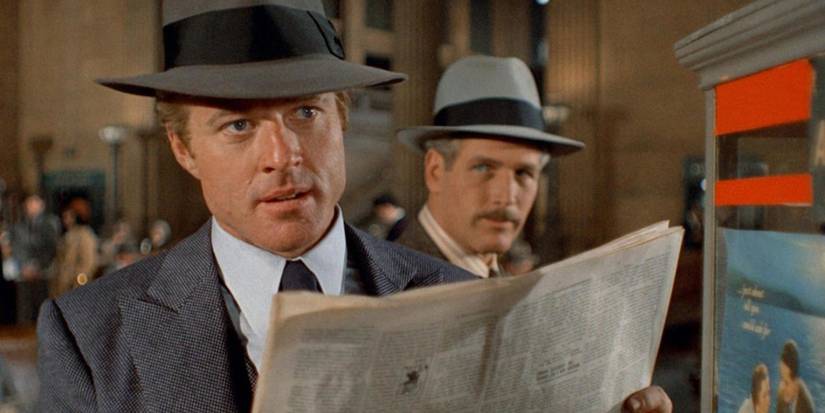
The fact that the weakest gangster movie that’s won the Best Picture Oscar is still one of the greatest crime movies of the ’70s speaks volumes about the genre’s quality. It was the second and final collaboration between Paul Newman and Robert Redford, one of the most iconic actor duos in film history, and the way their chemistry elevates the timeless energy of this caper masterpiece is remarkable.
But aside from having two stars who provide an acting masterclass over the course of two delightful hours, this George Roy Hill gem is one of the crown jewels of the caper genre. In its complex, vibrant construction of a riveting long con, The Sting makes the viewer feel like they’re in on the action, but eventually surprises them with one of the biggest gotcha climaxes in the history of crime caper films.
2
‘Paper Moon’ (1973)

Paper Moon is no traditional crime caper in any way imaginable, and that uniqueness is the source of all of its timeless charm and magic. Whereas most capers tend to be about an ensemble of characters working to pull off a grand, layered heist, this Peter Bogdanovich masterpiece is more so about a road trip and the bond between a grifter and an orphaned girl that it causes to blossom.
That twist on the formula, mixed with the undeniable chemistry shared between real-life father and daughter Ryan and Tatum O’Neal, makes for a film that’s just as much of a caper as it is a sweet character study. The caper elements here come from small-time grifting and petty crimes, allowing the audience to focus on the irresistibly moving bond between these two deeply compelling characters.
1
‘Dog Day Afternoon’ (1975)

Whether Sidney Lumet‘s Dog Day Afternoon is or isn’t a caper is very much open to debate, but that brilliant tonal ambiguity is a big part of why it’s not open to debate that it’s one of the greatest films of the New Hollywood movement. Whereas most serious heist films are about cool characters pulling off a complicated but ultimately smooth crime, this biopic is all about a heist gone comically wrong.
Dog Day Afternoon starts with the sort of amateur criminal chaos that would automatically make it an undeniable caper; but as soon as the police surround the bank, Lumet shifts gears into a psychologically intense, utterly claustrophobic crime drama. It’s one of the best single-location thrillers ever, brilliantly satirizing ’70s counterculture and the American media. Though this ’70s masterpiece is overwhelmingly suspenseful far more often than it is lighthearted or comedic, that only goes to show that the caper genre has many facets.
You must be logged in to post a comment Login