Entertainment
10 Greatest Disco Songs from Rock Artists


The ignominious end of disco is popularly linked to Disco Demolition Night, an ill-advised promotional stunt for the Chicago White Sox that saw Chicago DJ Steve Dahl blow up a dumpster filled with disco records between games, sparking a riot from the hundreds of rock fans in attendance celebrating the event. But for a time, disco really was king, with the likes of Saturday Night Fever and its iconic, Bee-Gees-heavy soundtrack glorifying the groovy music and the halter top, flare pants and jumpsuits that were part of the discotheque scene. It had so pervaded the music scene at the time that, to the horror of many a rocker, some of rock’s greatest bands opted to “get down and boogie” with their own entries in the genre. A shameful thing, to be sure, but some turned out pretty darn good, particularly these here, the ten best disco songs from rock bands, aka “disco songs that don’t suck.”
10
10. “Shakedown Street” – Grateful Dead
Deadheads may not buy singles, but do they boogie down? Hard to say, but at least their band of choice, the Grateful Dead, gave them the track to do it: “Shakedown Street,” from their 1978 album of the same name. Of course, the thought of the proudly non-commercial band giving into the dance trend, a distinct move away from the loose, laid-back, jam template that had defined their work – and built their devoted fan-base – to that point. Some fans speak derisively of the era they call “Disco Dead,” while others maintain it’s more a funky rock song than a pure disco song.
Sorry: it’s a disco song. Yes, it has that Parliament-Funkadelic groove to it, and Jerry Garcia‘s voice is more bluesy than boogie. But it has the unmistakable earmarks that define the genre, particularly the “four-on-the-floor” percussion and the funky bassline. More damning is its immediate hit-the-dance-floor vibe. It’s okay, though, Deadheads. Despite its disco trappings, “Shakedown Street” failed to hit the Billboard Hot 100, so the Grateful Dead didn’t really sell out, at least not until 1987’s “Touch of Grey.”
9
9. “Shine a Little Love” – Electric Light Orchestra
“Evil Woman.” “Strange Magic.” “Mr. Blue Sky.” “Don’t Bring Me Down” (Bruce!). “Shine a Little Love.” Which one of these hit songs is not like the other? That’s right, “Shine a Little Love,” a disco tune from Electric Light Orchestra, aka ELO, and its Bob Ross doppelgänger, big-ass-aviator-glasses-wearing lead singer Jeff Lynne. Its defenders will say it’s more disco-infused rock than pure disco, but let’s see, shall we? Steady “mirror ball bass pulse”: Check. A driving, galloping drum rhythm: Check. String section: Check. Falsetto Bee-Gee background harmonies in the chorus: Also check.
Lynne himself said in the liner notes for the 2001 remaster of Discovery that there’s a “bit of a disco beat on this one, and quite a lot of things going on, forty-piece string section and all. It’s very jolly and bouncy and I must have been in a very good mood when I wrote it!” Calls that they were selling out, however, were a little harsh, given only “Shine a Little Light” and “Last Train to London” are the only two tracks on 1979’s Discovery with a disco-bend.
8
8. “One of These Nights” – The Eagles
In 1975, drummer Don Henley of the Eagles, talking about “One of These Nights,” said, “We wanted to get away from the ballad syndrome with ‘One of These Nights.’ With Don Felder in the band now, we can really rock. He’s made us nastier and done a great guitar solo on the single.” Yes, the song does have a great blues-infused solo, but “really rock?” I don’t think so, Mr. Henley. In fact, the guitar solo is really the only thing that keeps the track from being a “true” disco song.
And between Henley and Glenn Frey, the two admitted hearing “One of These Nights” at clubs in New York, Rotterdam, and Miami, and, well, disco clubs don’t play non-disco songs. It may not entirely be their fault, however: While recording the album, they shared a studio in Miami with disco demi-gods the Bee Gees, and as you may or may not know, disco is contagious (if you contract disco, take two Metallica albums before bedtime).
7
7. “Another One Bites the Dust” – Queen
“Another One Bites the Dust” from Queen actually came out after the so-called death of disco, but so, too, did Donna Summer‘s “Bad Girls” and Chic‘s “Good Times.” It was the latter that inspired bassist John Deacon to create the song’s iconic bassline, which, with Roger Taylor‘s straightforward, minimalist drumming, created the club-friendly vibe that drove the track to reach number two on the Disco Top 100 chart (yes, there were enough disco songs to have a top 100). It would also reach number one on the Billboard Hot 100, thanks to the rock-edge of Freddie Mercury‘s vocals and Brian May‘s subdued, accentuating guitar. “Another One Bites the Dust” would be among the last rock/disco fusion songs to reach that level of success, just as Queen and others on this list were just getting the balance right.
6
6. “Disco Inferno” – Dread Zeppelin
American reggae rock band Dread Zeppelin formed in 1989, becoming best known for performing Led Zeppelin songs in a reggae style, sung by 300-pound Elvis impersonator Tortelvis (Greg Tortell). It worked significantly better than one might think, with “Immigrant Song,” “Your Time Is Gonna Come,” and a cover of Bob Marley‘s “Stir It Up” particular highlights. Then, in 1992, the band inexplicably pivoted to covering disco songs, with drummer Put-Mon (Gary Putnam) taking over as lead vocalist after Tortelvis left the band, giving himself the moniker Gary B.I.B.B. The ensuing album, It’s Not Unusual, was ironically deemed too unusual for the band, and whether it was the switch to disco or the loss of Tortelvis, or both, the divisive album didn’t sell as hoped, and Dread Zeppelin was dropped from I.R.S. Records.
So, long story short, the first release from the album, Dread Zeppelin’s cover of The Trammps‘ classic “Disco Inferno,” is technically a rock cover of a disco song, as opposed to the others on this list, which are rock bands with a disco song. But we’re splitting afro hairs here. “Disco Inferno” is electrifying, a high-energy cover that reinvents the iconic original. And while Gary B.I.B.B.’s Elvis-tinged vocals aren’t as good as Tortelvis’ – how could they be? – they work, giving the song a surreal edge, and even somewhat redeems my pick for Elvis Presley‘s worst song, “In the Ghetto,” in the process. Somewhat.
5
5. “Another Brick in the Wall, Part 2” – Pink Floyd
Sacrilege, you say? Alas, it’s true: Pink Floyd’s legendary hit “Another Brick in the Wall, Part 2” is a disco song, but begrudgingly so on the part of the band, if that helps. As David Gilmour tells it: “It wasn’t my idea to do disco music, it was Bob’s [Ezrin, producer]. He said to me, ‘Go to a couple of clubs and listen to what’s happening with disco music,’ so I forced myself out and listened to loud, four-to-the-bar bass drums and stuff and thought, Gawd, awful!” But they did it anyway, selecting one of the “Another Brick in the Wall” parts, part 2, and adding the disco-friendly four-on-the-floor drums.
Ezrin realized it was a hit, but with one verse and one chorus clocking in at one minute 20, it needed another verse and two choruses. But according to Ezrin, the band said, “Well, you’re not bloody getting them. We don’t do singles, so fuck you.” They left, and Ezrin figured out how to do it anyway, bringing in the iconic children’s choir to record the additional vocals. He brought Roger Waters in to listen to the completed track, and the rest is history. Interestingly, Pink Floyd received no grief over their flirtation with disco, with most agreeing with Gilmour’s opinion: “It doesn’t, in the end, not sound like Pink Floyd.”
4
4. “Da Ya Think I’m Sexy” – Rod Stewart
To paraphrase a quote from Charles Caleb Colton in 1820: “Parody is the sincerest form of flattery.” And, according to co-writer Duane Hitchings, that is exactly what Rod Stewart’s foray into disco, “Da Ya Think I’m Sexy,” is. More specifically, he’s cited it as a “spoof on guys from the ‘cocaine lounge lizards’ of the Saturday Night Fever days.” Truthfully, it’s pretty evident that Stewart is leaning on his reputation as a Lothario, with tongue firmly in cheek with the brazen nature of the chorus.
It’s just that he did it so damn well. The four-beat drumming, the driving bass line, the synthesizer riff, all of it: “Da Ya Think I’m Sexy” is as much a disco song as the ones it purports to spoof. It also happens to be one of four appearances by Stewart at the top of the Billboard Hot 100, as well as topping out the Billboard Dance Club Songs chart. The song’s iconic hook, however, can’t be fully credited to its songwriting team, with Stewart “unconsciously plagiarizing” a song by Brazilian songwriter Jorge Ben called “Taj Mahal.” A plagiarism lawsuit followed, and after Ben won, they agreed that royalties for the song go to UNICEF. Perhaps its royalties should have gone to a GoFundMe for pipers that go down from playing it.
3
3. “Miss You” – The Rolling Stones
The Rolling Stones haven’t endured as long as they have by disregarding contemporary music trends, but rather embracing and giving them a Stones-makeover. And with “Miss You” from 1978, they did just that with disco. There’s a difference of opinion between frontman Mick Jagger and guitarist Keith Richards – shockingly – as to its genesis, with Jagger claiming it was never conceived as a disco song, while Richards claims “‘Miss You’ was a damn good disco record; it was calculated to be one.”
Leave it to the band’s mediator, drummer Charlie Watts, to find the middle ground, revealing: “A lot of those songs like ‘Miss You’ were heavily influenced by going to the discos. You can hear it in a lot of those four-on-the-floor rhythms and the Philadelphia-style drumming. Mick and I used to go to discos a lot… It was a great period.” Bill Wyman‘s cool bass line groove, meanwhile, originated with “the fifth Beatle” Billy Preston, who adapted Preston’s ideas into the brilliant final product. There was the predictable outrage from die-hard fans about selling out, of course, but “Miss You” would end up as the Stones’ eighth, and final, number one U.S. single.
2
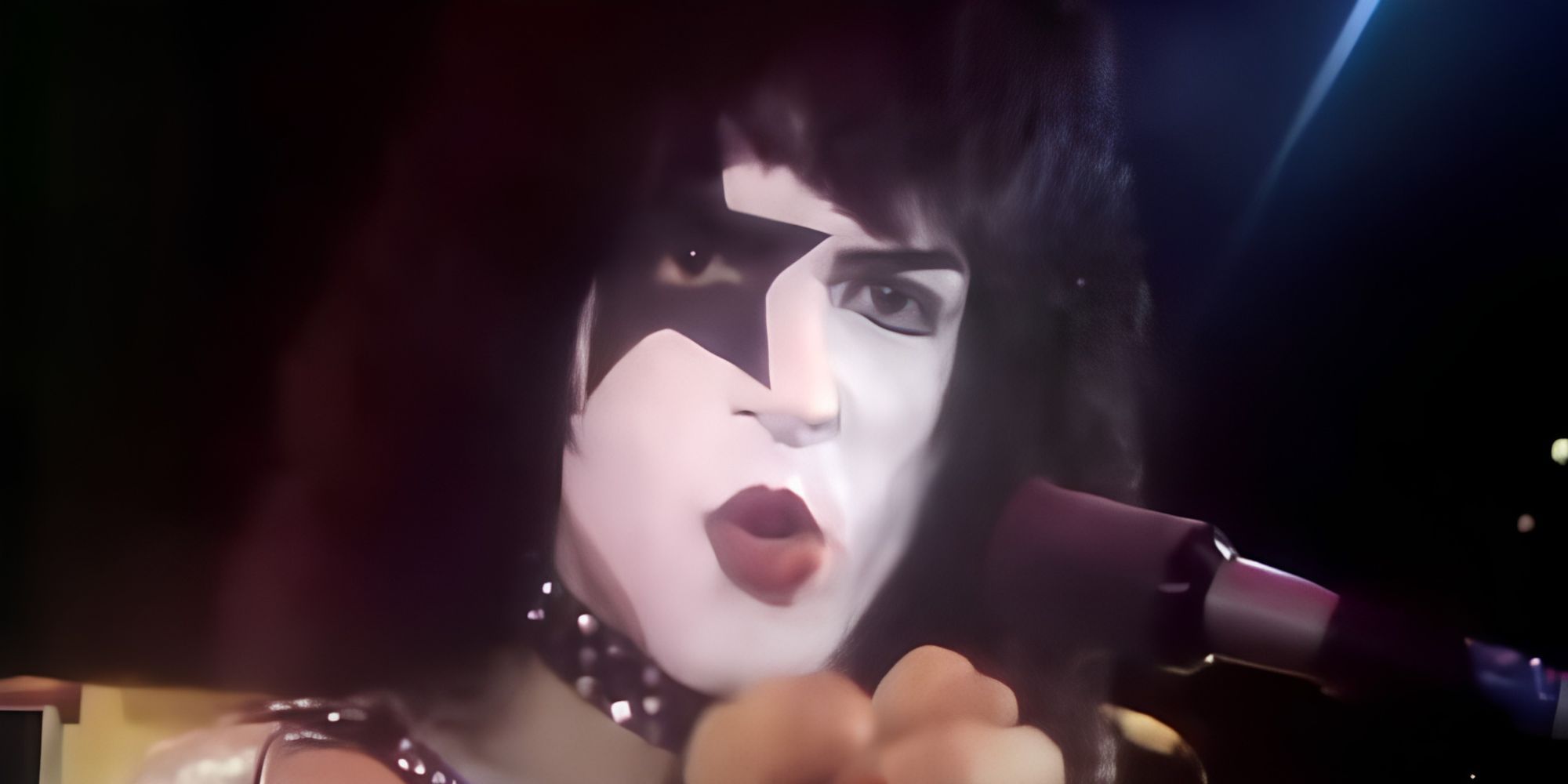
2. “I Was Made for Lovin’ You” – Kiss
It probably shouldn’t be all that surprising that Kiss would release a disco song at the height of disco’s popularity, given their propensity for marketing their brand. But, an unsubstantiated story suggests that “I Was Made for Lovin’ You” wasn’t a purposeful attempt at jumping on the bandwagon. As the tale goes, the producers wanted a more radio-friendly, popular sound, and the band argued against it, with Paul Stanley saying it was easy to write, and record, a hit disco song in a short time frame. The bet was on, and within hours the song’s demo was completed. It’s safe to say Stanley won the bet, reaching number 11 on the Billboard Hot 100, and years later joining Spotify‘s exclusive “Billions Club” with 1.64 billion streams.
Not just a hit disco song, mind you, but a great one at that. It has the driving bass and drums of the genre, the infectious “do do do do do” chorus, and one of Ace Frehley‘s shortest, but great all the same, guitar solos. But it’s Stanley’s powerhouse vocal performance in the song that pushes it over the edge. “I Was Made for Lovin’ You” allows Stanley to show off his truly impressive vocal range, from low tenor to codpiece-crunching falsetto. Needless to say, the KISS Army was less than impressed with the track, but it’s okay: neither is Gene Simmons.
1
1. “Heart of Glass” – Blondie
Blondie‘s “Heart of Glass” is the one song on this list that does more than incorporate disco elements: it pushes disco’s boundaries, experimenting with the genre while remaining true to it. As a result, Debbie Harry and band earn the top spot on this list. It goes beyond the simple four-beat norm with a groove that incorporates a Roland CompuRhythm CR-78 drum machine, one of the first, with the brilliant, metronomic-precise drumming of drummer Clem Burke, one of rock’s all-time greatest. The syncopated groove, however, takes a turn at the bridge, going into 7/8 time before resuming.
Then there’s Debbie Harry’s siren-like vocals, effortlessly enticing while remaining emotionally detached. That detachment is in line with the song’s tale of a woman who found a lover who “‘was a gas’ and ‘seemed like the real thing’, only to prove untrustworthy, only to shrug it off. As Harry once said (per the previously cited Financial Times), “I was tired of hearing girl singers write or sing about being beaten by love. So I said, ‘Well listen, there are also a lot of girls who just walk away.’” It’s a very new wave, punk attitude in the confines of a disco track, a true bridging of the underground and mainstream music scenes.
You must be logged in to post a comment Login