Entertainment
10 Greatest DreamWorks Animation Movie Endings, Ranked

Spoiler Alert: This list contains spoilers for the movies mentioned.
What is the most important part of a movie? Is it the beginning, the middle, or the end? Ideally, a good film would do all of these elements well, and in this list, we will be focusing on the best DreamWorks Animated movie endings.
The ending of a movie is a very important element. If a movie does not have a satisfactory conclusion, it can leave audiences with a bad taste in their mouths. It can spark feelings of confusion, disappointment, or even anger and frustration that the two-hour-long emotional journey viewers invested in was for naught. Luckily, these 10 examples finished strong and left fans happy, satisfied, and sometimes wanting more.
10
‘Shrek the Third’ (2007)


Body swapping, shipwrecks, and more. The third installment in the highly successful Shrek franchise is a solid addition to the canon, but some would argue not one of the best. Despite its flaws, Shrek the Third throws the beloved characters into some fascinating circumstances, namely parenthood.
As Shrek (Mike Myers) finds out he’s about to be a dad, a swirl of emotions rages inside him. As the movie goes on, he works his way through apprehension and feelings of inadequacy. The end of the movie is highly rewarding as audiences get to see Shrek be the hero once again, diving into fatherhood with gusto. The character design of Shrek’s triplets is absolutely adorable, and watching Shrek and Fiona (Cameron Diaz) add another chapter of life to their “happily ever after” is sublime.
9
‘Madagascar’ (2005)

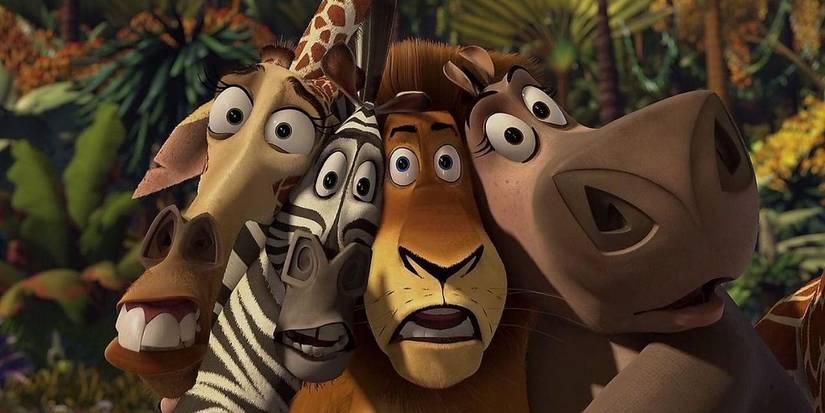
When four animals team up to leave the city zoo, they are in for a wild adventure in Madagascar. Featuring the voices of Ben Stiller, Chris Rock, David Schwimmer, and Jada Pinkett Smith, Madagascar is a hilarious comedy that is full of talent and humor. Watching the protagonists, who have spent most of their lives in the urban jungle, adapt to feral conditions and learn to hunt and fend for themselves is highly entertaining. At the end of the film, many plotlines are tied up, and Alex the lion (Stiller) and Marty the zebra (Rock) are able to resolve their conflict with a creative solution. Tensions between the two best friends were high after Alex bit Marty when his wild nature started to take over, but a beach full of fresh sushi provides a happy alternative to Marty’s hunger, and there can be harmony in the friend group again.
One of the best moments in the finale comes from the penguins. The flippered foursome of Skipper (Tom McGrath), Kowalski (Chris Miller), Rico (Jeffrey Katzenberg), and Private (Christopher Knights) stole every scene they were in. The penguins were so popular that they got several spinoff movies and TV shorts. The ending to Madagascar finishes with their trademark humor. As the main characters wave goodbye from the bow of a large ship, the penguins lazily sunbathe on the beach nearby. When one of the penguins asks Skipper if they should tell the others that the boat is out of gas, he replies, “Nah, just smile and wave boys. Smile and wave.”
8
‘The Bad Guys 2’ (2025)

Everybody dies. At least that’s what the end of The Bad Guys 2 wants viewers to believe. It is a punchy and hilarious edit when the action cuts mid-sentence from a shuttle crashing into the atmosphere with all of the heroes inside to a funeral with all of their photos next to a casket and public mourners.
The Bad Guys and The Bad Guys 2 use misdirection very well, and with their sleek animation and thrilling action, the movies feel more like James Bond or Bourne installments than anything else. The true motive behind the fake deaths is revealed as the main characters are recruited to be secret agents. It is a more than fitting end for the unlikely heroes, and it is a sophisticated and smart conclusion that befits the Bad Guys franchise.
7
‘Puss in Boots: The Last Wish’ (2022)

After racing against each other and fighting to have a solitary magical wish for their own, the characters in Puss in Boots: The Last Wish come together at the very end of the movie to defeat a common enemy. It is a rousing ending full of action and excitement, and the emotional sentiments that follow are heartfelt and touching.
Throughout the movie, Puss in Boots (Antonio Banderas) is grappling with his own mortality as he realizes he is down to his last life and Death (Wagner Moura) is literally staring him in the face. After the wish that could have given him more lives is destroyed, Puss turns to his lost love, Kitty Softpaws (Salma Hayek), and says, “Kitty, one life spent with you is all that I could wish for.” The emotional hits keep coming as Goldi (Florence Pugh) realizes she has had the perfect family all along, and the little dog known as Perrito (Harvey Guillén) decides to keep his name, because that is what his friends call him, and he has finally found a place to belong.
6
‘Kung Fu Panda 2’ (2011)

A sequel to the highly successful first film, Kung Fu Panda 2, saw many of the stars like Jack Black, Jackie Chan, Angelina Jolie, and Dustin Hoffman reprise their roles. The story of the second movie follows the main characters as they face a new enemy. However, one of the most interesting elements of the sequel is the character journey Po (Black) embarks on as he discovers the truth about his past and his birth family.
After learning about the circumstances that led to his adoption by Mr. Ping (James Hong), Po returns at the end of the movie and talks to him. As he explains that he has learned about where he came from and the tragic circumstances that led to their meeting, he says, “I know who I am,” and adds, “I’m your son.” It is a stirring moment full of emotion, and it speaks volumes about found family, identity, and the love between parent and child.
5
‘Sinbad: Legend of the Seven Seas’ (2003)

After an arduous journey with numerous perils and a life-or-death wager, the goddess Eris (Michelle Pfeiffer) asks Sinbad (Brad Pitt) a simple question. If he gets the Book of Peace, it would be a happy ending, but if he didn’t, would he go back and take the place of his friend Proteus (Joseph Fiennes), who had wagered his life on Sinbad’s success? The stakes couldn’t have been higher, as not only were the lives of the two heroes at risk, but the well-being of everyone else that depended on them, Proteus’ subjects and Sinbad’s crew.
At the very moment Sinbad has gone back and agreed to give his life instead of Proteus’, the blade of the executioner shatters into pieces, and Eris appears again. It turns out it was all a test to see if Sinbad would keep his word and go back to die. It is a fascinating and dramatic ending full of tension. From the stained blood on the executioner’s block to the subtle gestures and vocal nuances given in the performances, it is exceptional. Sinbad: Legend of the Seven Seas is one of DreamWorks’ most underrated triumphs and definitely has one of its best endings.
4
‘How to Train Your Dragon’ (2010)
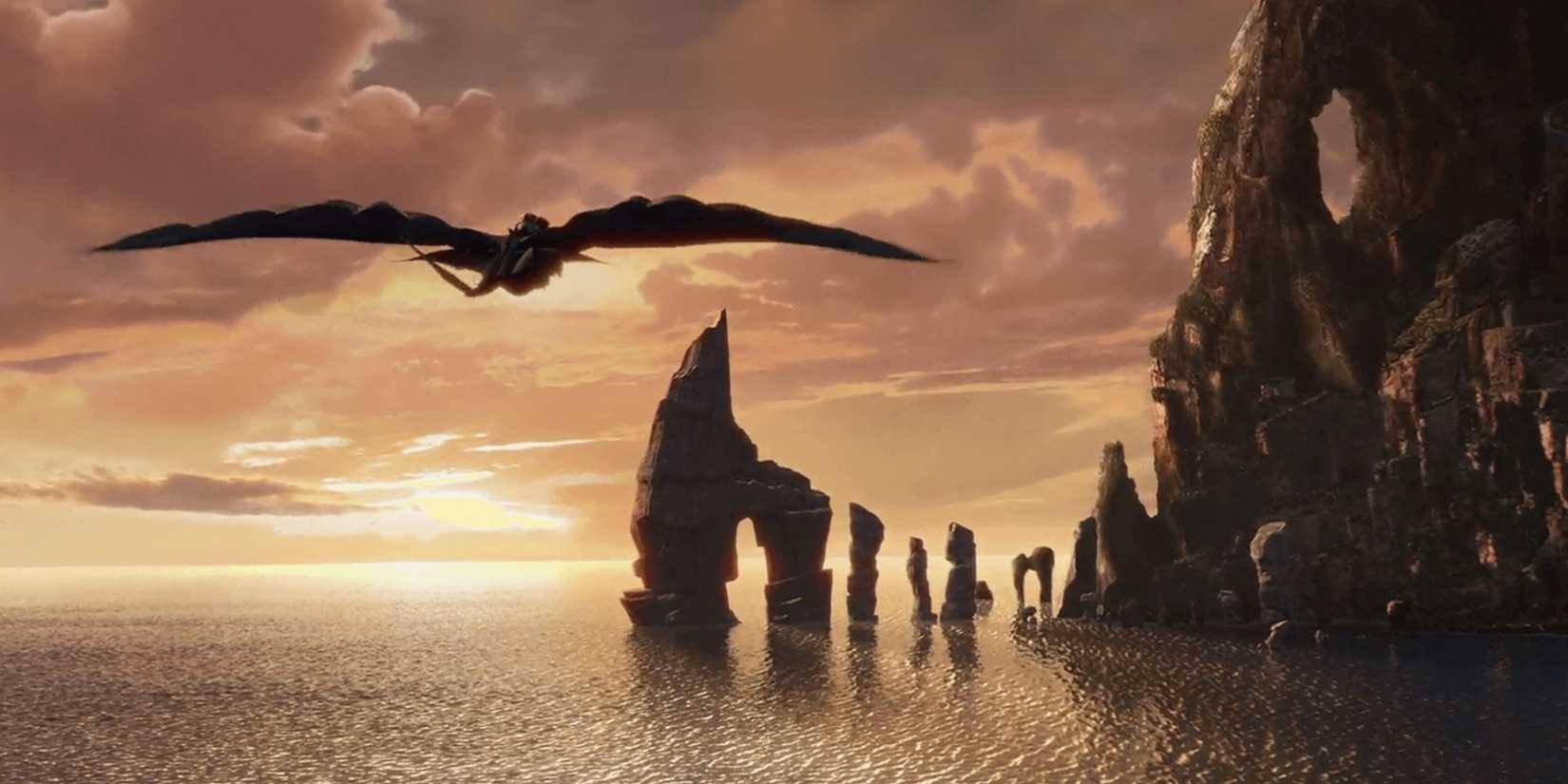
Not only does How to Train Your Dragon have an awesome intro and starts strong, but it also has a surprising finale and ends with a flourish. After Toothless (Randy Thom) saves Hiccup’s (Jay Baruchel) life, Hiccup awakes in his house to find two shocking surprises. The first is that Toothless, a dragon, is allowed to be inside his house, especially given his father, Stoick’s (Gerard Butler), predisposition towards dragons. And the second is that he has had the lower part of his left leg amputated.
The fact that Hiccup lost his leg was quite a shock for audiences as well, especially in the genre of kids’ movies which tend to play it safe. Having a real consequence to battle, and the significance that Toothless was missing the left part of his tail, is not lost on viewers. As Hiccup takes the first few, unsteady steps on his new leg, he is met with another surprise when he opens the front door to the house and sees dragons and citizens of Berk living together in harmony. The end monologue narrated by Hiccup ties back to the beginning of the story, and it is a fantastic finale.
3
‘The Prince of Egypt’ (1998)

Based on the life of Moses, The Prince of Egypt was DreamWorks second animated film ever and one of its most accomplished. The predominantly hand-drawn animation is visually stunning, and the music and voice acting are superb. The cast is packed full of talent, including Val Kilmer, Sandra Bullock, Ralph Fiennes, and Michelle Pfeiffer. The entire movie is a masterpiece, and the ending has three great takeaways.
At the end of the movie, after Rameses (Fiennes) has reluctantly let the Hebrew people go after subjecting them to slavery, he has a change of heart and decides to pursue and overtake them in the desert. As Moses (Kilmer) and the people are pinned with Rameses and his soldiers behind them and a vast sea in front of them, God intervenes, and a miracle takes place. The parting of the Red Sea is a fantastic achievement in animation and reportedly took around two years to complete.
After the people reach safety and the sea crashes down behind them, drowning their pursuers, Tzipporah (Pfeiffer) turns to her husband and says, “Look. Look at your people, Moses. They are free.” This moment signifies the full-circle story arch the movie has shown where Moses started out as the son of a slave, was adopted to be a prince of Egypt, and is now the leader of a nation. For the third and final bookmark at the end, as the very last few frames of the movie roll, Moses walks down the mountain holding two stone tablets with the 10 Commandments written on them. The melody “Deliver Us” from the opening of the movie plays, and the voice of Moses’ mother is heard one last time. There is so much meaning in this conclusion that now the people have been physically delivered from bondage, there is a need for spiritual delivery from sin, and these new Commandments will begin a whole new era in Israel’s political and religious history. It is a finale full of meaning and symbolism and a perfect 10/10.
2
‘Shrek’ (2001)
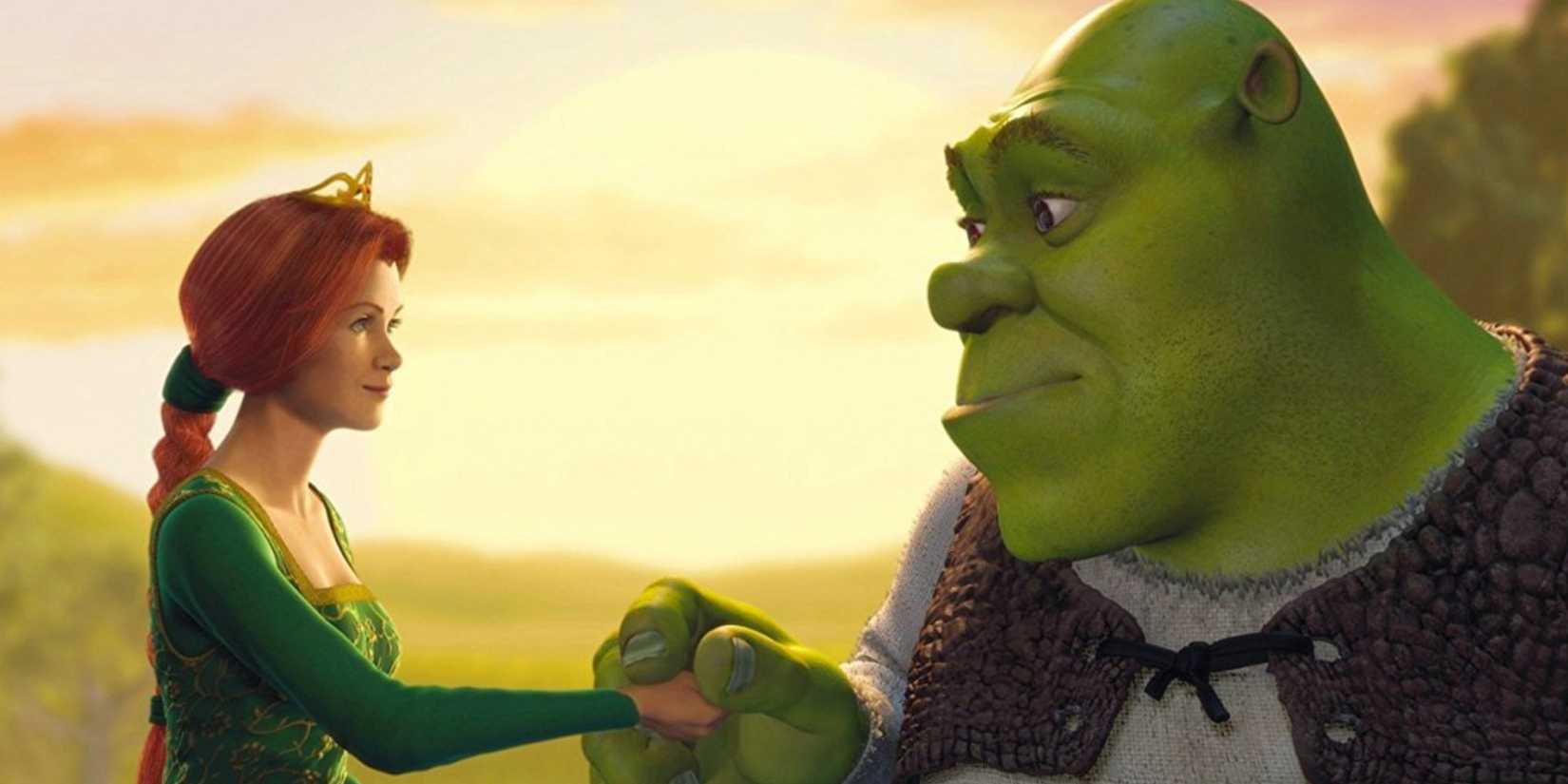
A fairy tale like none other, Shrek blew the fantasy genre apart, and the ending was as outrageous and unexpected as the rest of the film. After the unlikely hero, an ogre named Shrek (Myers), had fallen in love with the princess he was sent to rescue, he crashed her wedding to Lord Farquaad (John Lithgow). After Shrek kisses Fiona (Diaz), the shapeshifting spell she had been under her whole life is lifted, and she remains an ogre.
The ending to Shrek is a fantastic, fractured fairy tale moment. Flipping so many tales like The Frog Prince and Beauty and the Beast on their head, where being anything but human is a form of curse or punishment, Fiona’s “love’s true form” is revealed as an ogre, not a human. This surprising ending is all the sweeter because Shrek finds out that Fiona loves him, too, and he never thought romance would be a storyline he would be a part of. Shrek’s ending suited the rest of the film perfectly. It was surprising, unique, and it told the story it wanted to tell without making any apologies.
1
‘How to Train Your Dragon: The Hidden World’ (2019)

As the third feature-length movie in the How to Train Your Dragon franchise, The Hidden World saw Hiccup (Baruchel) and Toothless (Thom) step into pivotal roles. As both Hiccup and Toothless become rulers of their respective communities, their character journeys are fulfilled as they grow into the leaders they were always meant to be. At the end of the film, Hiccup realizes that he has been trying to build a world based on his wants, and it is time to think about Toothless and the other dragons’ needs. In a moving scene, the people of Berk take the saddles off their dragons and bid tearful farewells.
If this scene wasn’t emotional enough, an even more poignant moment happens within a flash forward. The final sequence shows Hiccup and Astrid (America Ferrera) with their two children, sailing to a location surrounded by mist. Through the fog, Toothless, his mate, and three little dragons become visible. After a moment of trepidation, wondering if Toothless would remember him or not, all fears are put to rest, and Toothless and Hiccup have a beautiful and joyous reunion. Hiccup also gets the opportunity to teach his children how to respect and interact with dragons. It is a lovely conclusion full of heart and emotional payoff for fans of the films. Hiccup’s final words about dragons waiting until the world is worthy enough for them to return are the icing on the cake.
You must be logged in to post a comment Login